downloadGroupGroupnoun_press release_995423_000000 copyGroupnoun_Feed_96767_000000Group 19noun_pictures_1817522_000000Member company iconResource item iconStore item iconGroup 19Group 19noun_Photo_2085192_000000 Copynoun_presentation_2096081_000000Group 19Group Copy 7noun_webinar_692730_000000Path
Skip to main content
Default Banner Image

Business

Registration

Group Discounts Codes—

  • SMC3 - Register 3: 15% off (must register all 3 on same order)
  • SMC5 - Register 5: 20% off (must register all 5 on same order)
  • SMC10 - Register 10: 25% off (must register all 10 on same order)

NOTE:  For Group Discounts, Attendees must be registered within the same order.

For more information, please contact Karen Popp, Senior Program Manager, at [email protected].

Registration is final. Cancellations will not be accepted. No refunds provided. Substitutions are only accepted with written permission from the original registrant.

+
United States REGISTER NOW SEMI SMC Strategic Materials Conference Business Executive

Hotel

SMC24 Hayes Mansion San Jose Photo

HAYES MANSION
200 Edenvale Avenue
San Jose, CA, CA 95136


HEALTH & SAFETY

Your health and safety are our top priority. The personal preference of the attendees to wear masks is respected at all SEMI events. SEMI Americas (“SEMI") monitors developing federal, state, and local health and safety recommendations as well as requirements regarding COVID to determine the most appropriate safety protocols for our in-person events.

SMC24 Hayes Mansion San Jose Photo

Gold

Edwards Vacuum Logo 170x65
EFC Gases & Advanced Materials NEW
Huntsman

Silver

Applied Materials
Lam Research
SCREEN Logo 170x65

Event

EMD Electronics Logo 170x65
Entegris 170x65
JSR Micro
Mitsubishi Chemical Group Logo 170x65
Sundt

BECOME A SPONSOR FOR SMC

Sponsorship opportunities can be tailored to meet your specific branding and marketing objectives. Become a sponsor and brand your company to an influential audience at SMC.


CONTACT

Shane Poblete
Director, Sales & Business Development - Expo and Events, SEMI
Tel: +1 202-847-5983
Email: [email protected]

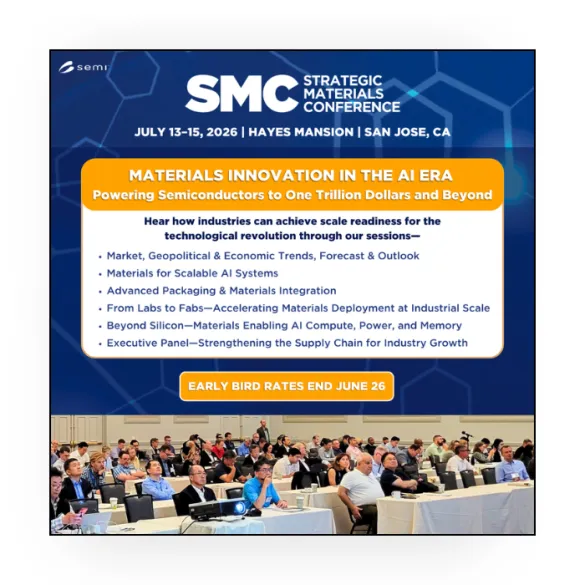
Materials Innovation in the AI Era: Powering Semiconductors to One Trillion Dollars and Beyond

Beyond the AI boom lies a challenge—and opportunity—that is far more foundational: ensuring the materials ecosystem underpinning a $2.5 trillion industry is resilient enough to support the next era of innovation. As artificial intelligence accelerates demand for advanced hardware, energy infrastructure, and high‑performance components, the pressure on global materials supply chains has never been greater.

This year, SMC explores how industries can achieve scale readiness through smarter design, diversified sourcing, sustainable processes, and breakthrough materials science. It invites leaders to look past the excitement of AI itself and toward the essential building blocks that will determine whether this technological revolution is secure and sustainable.

Sessions

  • ​Market, Geopolitics & Outlook 
  • ​Materials for Scalable AI Systems​
  • Advanced Packaging & Materials Integration​
  • From Labs to FabsAccelerating Materials Deployment at Industrial Scale
  • ​Quantum & Emerging Devices

Executive Panel–Strengthening the Supply Chain​

REGISTRATION INCLUDES

  • Approved speaker PDF presentations
  • Breakfast, lunch, coffee breaks
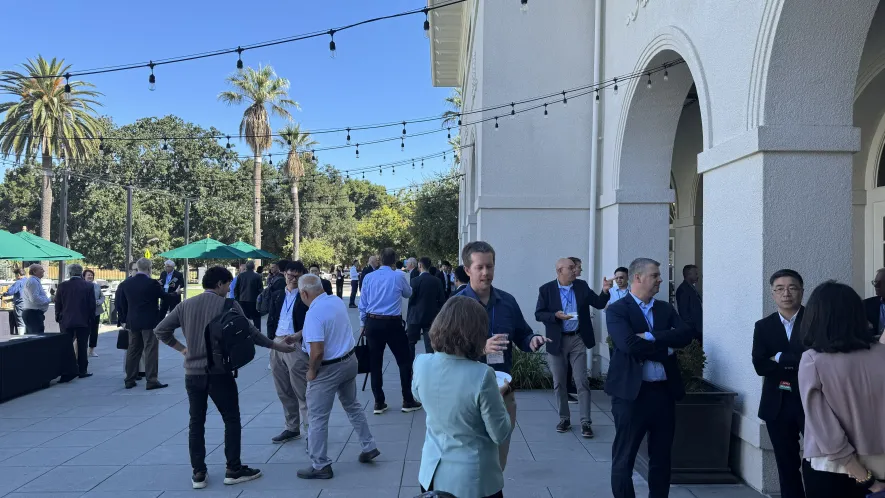
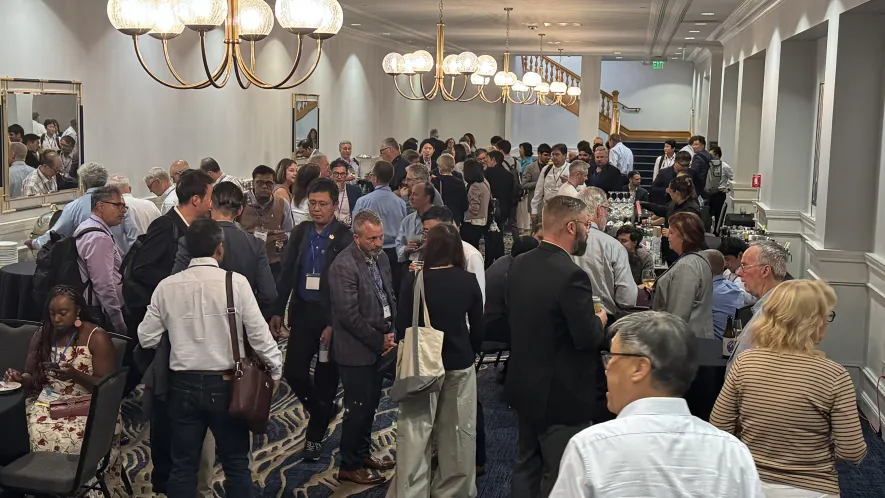
  • Two networking receptions
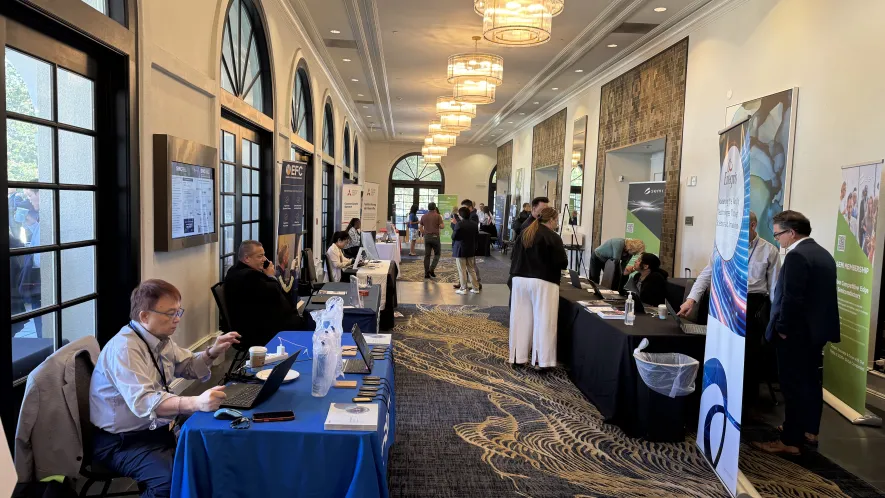
  • Tabletop exhibits

WHO SHOULD ATTEND

SMC offers valuable content and unprecedented networking opportunities for semiconductor industry professionals who share common strategic objectives on materials innovation, management, and business success. 

CEO  ●  CTO  ●  Presidents & General Managers  ●  Executive VP & Senior Executives  ●  Engineering & Fab Managers ●  Academia  ●  Startup Founders  ●  Financial Analysts  ●  Market Researchers  ●  Consulting Firms  ●  Consortiums
 

2026 ORGANIZING COMMITTEE

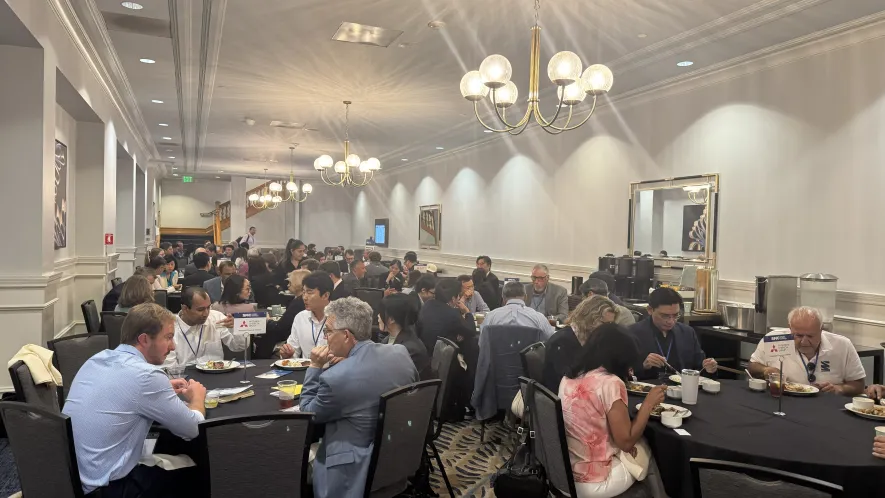
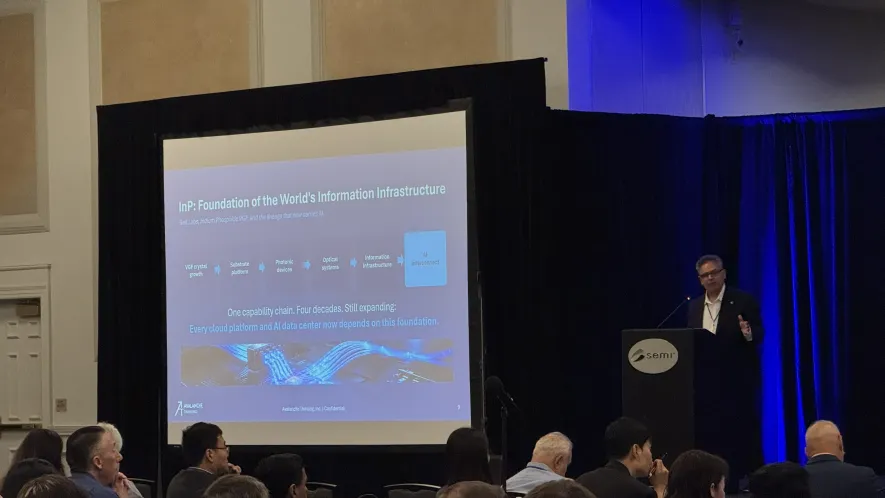
SMC Photo Gallery
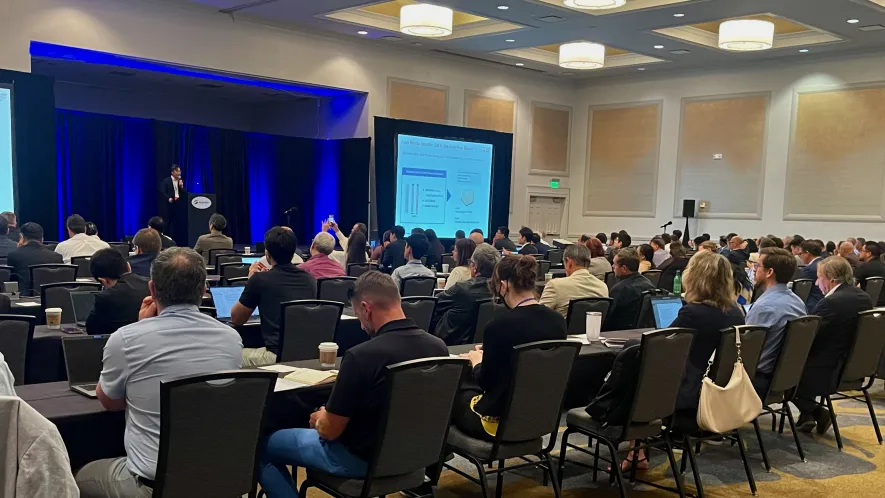
Hayes Mansion
200 Edenvale Avenue
San Jose, CA, CA 95136
United States

MONDAY, JULY 13, 2026

5:30 pm - 7:00 pm

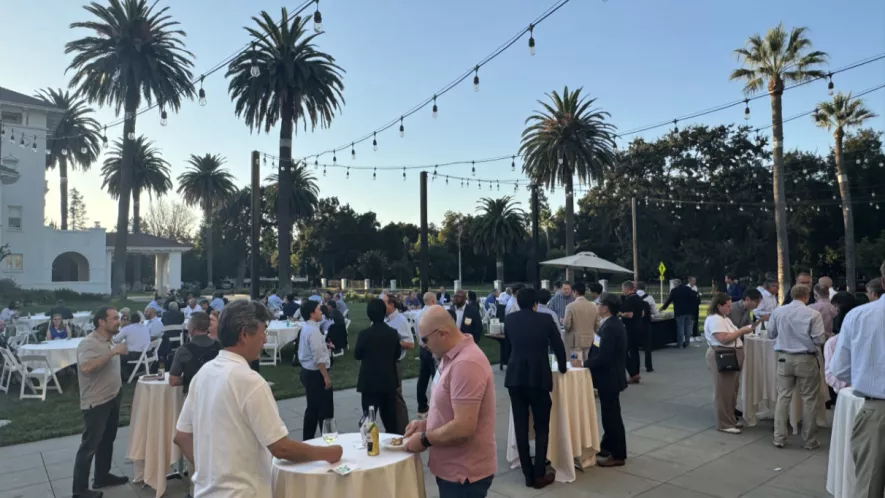
Welcome Reception

Entegris 170x65
Joe Stockunas, SEMI Americas
Joe Stockunas
President
SEMI Americas

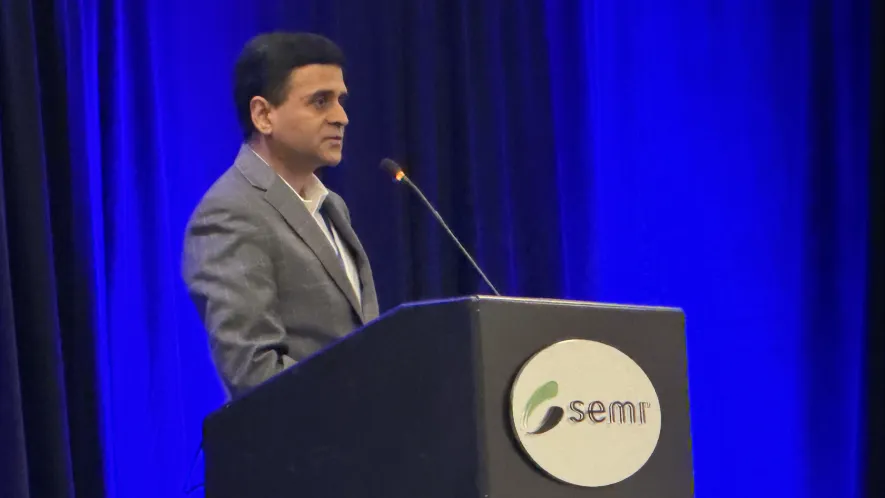
Welcome Remarks

TUESDAY, JULY 14, 2026

8:00 am - 8:30 am

Registration, Check-In/Continental Breakfast

Mitsubishi Chemical Group Logo 170x65
8:30 am - 8:40 am
Joe Stockunas, SEMI Americas
Joe Stockunas
President
SEMI Americas

Welcome Remarks

8:40 am - 8:50 am
Sanjiv Bhatt, Mitsubishi
SMC Co-Chair
Sanjiv Bhatt, PhD
Senior Director, Global Marketing and Business Development, Semiconductor Business
Mitsubishi Chemical Group

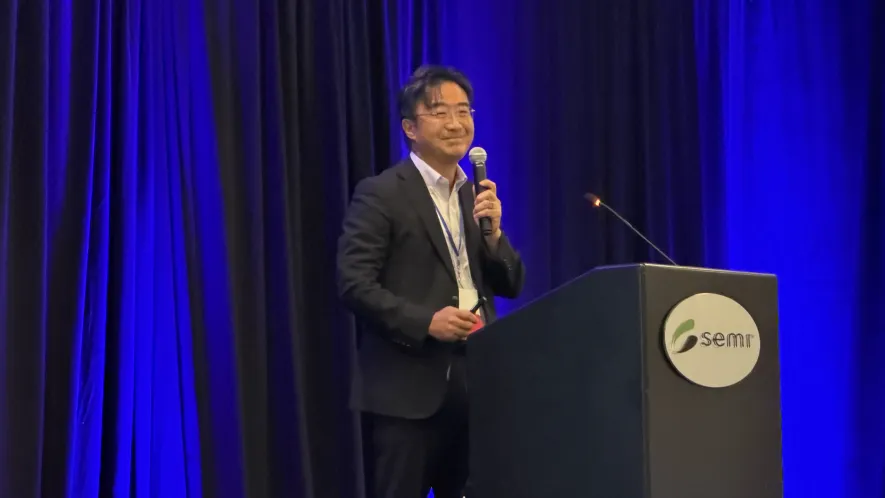
Opening Remarks

8:50 am - 9:20 am
Hideaki Okamoto, Mitsubishi Headshot
Hideaki Okamoto
Director, New Generation Business Development
Mitsubishi Chemical

Keynote—A Strategic Approach in the Era of Materials Innovation

9:20 am - 9:50 am
Prahalad Parthangal, Lam Research
Prahalad Parthangal, PhD
Technical Director, Advanced Packaging
Lam Research

Keynote—Co-Engineering the AI Era: How Materials, Process and Equipment Innovations Converge in Advanced Packaging

9:50 am - 10:20 am

Networking Break

JSR Micro

Session 1—Market, Geopolitical & Economic Trends, Forecast & Outlook

10:20 am - 10:25 am
Aldo Orsi, Momentive Technologies
Aldo Orsi
Global Business Director, Quartz Solids
Momentive Technologies

Opening Remarks

Sundt
10:25 am - 10:55 am
Charles Shi, Needham & Company
Charles Shi, PhD
Managing Director
Needham & Company

AI Is Finally Moving Needles for Semi Equipment. Now What?

11:25 am - 11:55 am
Joe Stockunas, SEMI Americas
Joe Stockunas
President
SEMI Americas

News from Washington and Beyond

11:55 pm - 1:15 pm

Lunch

Mitsubishi Chemical Group Logo 170x65

Session 2—Materials for Scalable AI Systems

1:15 pm - 1:20 pm
Lu Gan, EMD Electronics
Lu Gan, PhD
Head of Technology Strategy & Roadmap
EMD Performance Materials, a subsidiary of Merck KGaA

Opening Remarks

EMD Electronics Logo 170x65
1:20 pm - 1:50 pm
Katherine Hutchinson, EMD Electronics
Katherine Hutchinson, PhD
Vice President and General Manager, Metallics, Thin Film Business
EMD Electronics

Materials Discovery in the Era of Scientific Super Intelligence

1:50 pm - 2:20 pm
Mark O'Neill, Entegris
Mark O'Neill, PhD
Vice President, R&D and Engineering
Entegris

Taming AI Scaling Stresses—Digital Materials Discovery for Manufacturing-Ready Adoption

2:20 pm - 2:50 pm
Mingqi Li, Qnity Electronics
Mingqi Li, PhD
Technical Fellow
Qnity Electronics

Pioneering Lithographic Materials for the AI Era—Next Generation EUV materials and Path to Sustainable Patterning

2:50 pm - 3:20 pm

Networking Break

3:20 pm - 3:50 pm
Chris Baldwin, Boston Materials
Chris Baldwin
Vice President, Product
Boston Materials

Thermal Materials Implications of the Explosion in AI Compute Demand

Session 3—Advanced Packaging & Materials Integration

3:50 pm - 3:55 pm
Kamran Akhtar, Samsung Semiconductor
Kamran Akhtar, PhD
Senior Director, Process Development
Samsung

Opening Remarks

3:55 pm - 4:25 pm
Sony Varghese, Applied Materials
Sony Varghese, PhD
Managing Director, Technology Strategy
Applied Materials

Materials-Driven Approaches to Improve HBM and Chiplet Integration

4:25 pm - 4:55 pm
Kazuyuki Mitsukura, Resonac
Kazuyuki Mitsukura, PhD
Technical Director
Resonac America

Advanced Packaging Materials Innovation Through Co-Creative Evaluation Platform

4:55 pm - 5:25 pm
Rozalia Beica, Rapidus Design Solutions
Rozalia Beica
Field CTO, Packaging Technologies
Rapidus Design Solutions

Advanced Packaging at the Heart of the AI Age

5:30 pm - 6:30 pm

Networking Reception

WEDNESDAY, JULY 15, 2026

7:30 am - 8:00 am

Registration, Check-In/Continental Breakfast
8:00 am - 8:05 am
Arun Karamcheti, Applied Materials
SMC Co-Chair
Arun Karamcheti, PhD
Managing Director, Product Marketing and Strategy
Applied Materials

Opening Remarks

8:05 am - 8:35 am
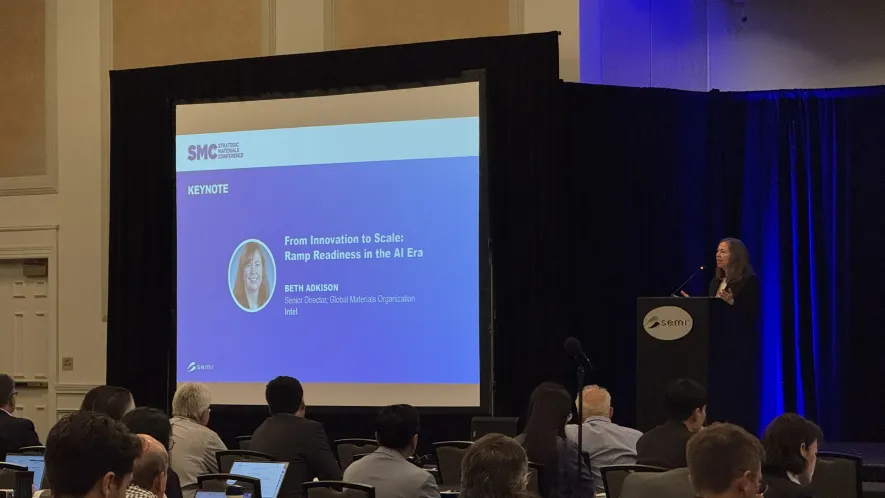
Beth Adkison, Intel
Beth Adkison
Senior Director, Global Materials Organization
Intel

Keynote—From Innovation to Scale: Ramp Readiness in the AI Era

8:35 am - 9:05 am
Chuck Mattera, Avalanche Thinking
Chuck Mattera, PhD
Founder and CEO
Avalanche Thinking

Keynote—Compound Semiconductors in the Cognitive Age

Session 4—From Lab to Fab—Accelerating the Industrialization of Next Generation Materials Deployment and Manufacturing

9:05 am - 9:10 am
Kamran Akhtar, Samsung Semiconductor
Kamran Akhtar, PhD
Senior Director, Process Development
Samsung

Opening Remarks

9:10 am - 9:40 am
Mitchell Hsing, InchFab
Mitchell Hsing, PhD
Co-Founder and CEO
InchFab

How Democratizing Fab Enables Rapid Innovation

9:40 am - 10:10 am
Adrian Alvarez, RASIRC
Adrian Alvarez
Business Development Director, Deputy CTO
RASIRC

The Hedgehog and the Fab

10:10 am - 10:40 am

Networking Break

10:40 am - 11:10 am
Asif Khan, Georgia Institute of Technology
Asif Khan, PhD
Associate Professor, School of Electrical and Computer Engineering
Georgia Institute of Technology

From Lab to Fab—Emerging Materials for the AI-Era Memory Hierarchy

11:10 am - 11:40 am
Brian Larabee, General Graphene
Brian Larabee
Chief Commercial Officer
General Graphene

Industrialization of Graphene to Enable Next-Generation Processing

11:40 am - 12:40 pm

Lunch

Session 5—Quantum and the Future of Emerging Devices

12:40 pm - 12:45 pm
Kevin Peterson
Kevin D. Peterson
Vice President, Sales and Marketing
JX Nippon Mining & Materials

Opening Remarks

12:45 pm - 1:15 pm
Pooya Tadayon, Ayar Labs
Pooya Tadayon, PhD
VP and Senior Fellow
GlobalFoundries

Enabling Quantum Computing Through Advanced Packaging

1:15 pm - 1:45 pm
Elica Kyoseva, NVIDIA
Elica (Elitsa) Kyoseva
Director, Quantum Algorithm Engineering
NVIDIA

Defining the Quantum-GPU Supercomputer
1:45 pm - 2:15 pm
Percy Gilbert, PhD, SkyWater Technology
Percy Gilbert, PhD
Senior Vice President, Engineering
SkyWater Technology

Industrializing the Next Compute Era—From Materials to Manufacturing

2:15 pm - 2:45 pm

Networking Break

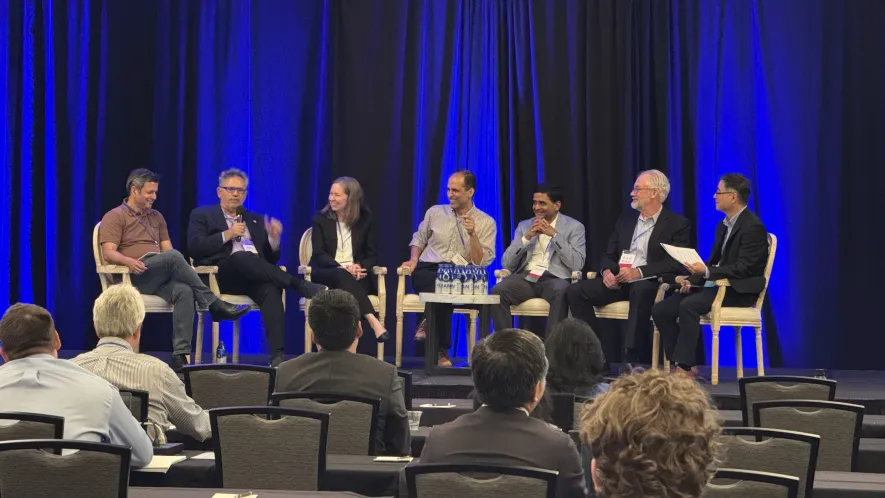
Session 6—Executive Panel: Strengthening the Supply Chain for Industry Growth

2:45 pm - 2:50 pm

Opening Remarks

2:50 pm - 4:00 pm
Wenge Yang, Entegris
MODERATOR
Wenge Yang, PhD
Vice President, Market Strategy
Entegris
Chuck Mattera, Avalanche Thinking
Chuck Mattera, PhD
Founder and CEO
Avalanche Thinking
Brian Larabee, General Graphene
Brian Larabee
Chief Commercial Officer
General Graphene
Pooya Tadayon, Ayar Labs
Pooya Tadayon, PhD
VP and Senior Fellow
GlobalFoundries
Beth Adkison, Intel
Beth Adkison
Senior Director, Global Materials Organization
Intel
Prahalad Parthangal, Lam Research
Prahalad Parthangal, PhD
Technical Director, Advanced Packaging
Lam Research
4:00 pm - 4:10 pm
Sanjiv Bhatt, Mitsubishi
SMC Co-Chair
Sanjiv Bhatt, PhD
Senior Director, Global Marketing and Business Development, Semiconductor Business
Mitsubishi Chemical Group

Closing Remarks

- APHI EMG Off Add to Calendar 2026-07-13 00:00:00 2026-07-15 00:00:00 SMC 2026—Strategic Materials Conference Hayes Mansion 200 Edenvale Avenue San Jose, CA, CA 95136 United States SEMI.org [email protected] America/Los_Angeles public America/Los_Angeles 1

Share On LinkedIn

SMC26 Social Media Kit Preview

Let your LinkedIn connections know you’re attending SMC! 

Spread the word and share our social media content with your connections so that they can join you there, too.


SMC26 Social Media Kit Preview
Event format
Promote in calendar
Off

Registration

For questions, please contact [email protected]

United States Japan Taiwan South Korea Malaysia Singapore Vietnam Business Training Featured Speakers

Leverage SEMI U learning opportunities to accelerate your professional development in 2027. Our commitment remains focused on delivering comprehensive technical education that helps you build the knowledge and skills needed to thrive in the semiconductor industry.

Join us for our upcoming, "Kickoff to SEMI U 2027," where you'll get an exclusive preview of new learning opportunities, upcoming training events, and special savings available to learners. 

During this webinar, you will:

  • Discover the latest updates and enhancements to SEMI U's on-demand course catalog.  
  • Explore upcoming virtual and in-person instructor-led training programs scheduled for the first half of 2027. 
  • Learn how to maximize your professional development with SEMI U resources and learning pathways. 
  • Receive access to a special 10% discount on all on-demand courses

Don't miss this opportunity to plan your learning journey and stay ahead in a rapidly evolving industry. Register today to reserve your spot.

United States

Headshot of Naresh Naik
Naresh Naik
Director, SEMI University
SEMI
SEMI U Workforce Development

Join us to explore SEMI U's current course offerings and upcoming virtual and in-person training opportunities designed to support your professional growth in the semiconductor industry. You'll also have the chance to engage directly with our team during a live Q&A session. As a thank you for attending this free webinar, you'll receive:

  • A 10% discount code valid on all SEMI U on-demand courses. 
  • Entry into a raffle to win a complimentary course bundle valued at $100
6:00 pm - 6:30 pm Off Add to Calendar 2027-01-27 18:00:00 2027-01-27 18:30:00 Kickoff to SEMI U - Free Webinar (PM Session) - ASIA Join us to explore SEMI U's current course offerings and upcoming virtual and in-person training opportunities designed to support your professional growth in the semiconductor industry. You'll also have the chance to engage directly with our team during a live Q&A session. As a thank you for attending this free webinar, you'll receive:A 10% discount code valid on all SEMI U on-demand courses. Entry into a raffle to win a complimentary course bundle valued at $100.  United States SEMI.org [email protected] America/Los_Angeles public
Event format
Promote in calendar
Off

Registration

For questions, please contact [email protected]

United States Belgium France Germany Ireland Italy Business Training Featured Speakers

Leverage SEMI U learning opportunities to accelerate your professional development in 2027. Our commitment remains focused on delivering comprehensive technical education that helps you build the knowledge and skills needed to thrive in the semiconductor industry.

Join us for our upcoming, "Kickoff to SEMI U 2027," where you'll get an exclusive preview of new learning opportunities, upcoming training events, and special savings available to learners. 

During this webinar, you will:

  • Discover the latest updates and enhancements to SEMI U's on-demand course catalog.  
  • Explore upcoming virtual and in-person instructor-led training programs scheduled for the first half of 2027. 
  • Learn how to maximize your professional development with SEMI U resources and learning pathways. 
  • Receive access to a special 10% discount on all on-demand courses

Don't miss this opportunity to plan your learning journey and stay ahead in a rapidly evolving industry. Register today to reserve your spot.


United States

Headshot of Naresh Naik
Naresh Naik
Director, SEMI University
SEMI
SEMI U Workforce Development

Join us to explore SEMI U's current course offerings and upcoming virtual and in-person training opportunities designed to support your professional growth in the semiconductor industry. You'll also have the chance to engage directly with our team during a live Q&A session. As a thank you for attending this free webinar, you'll receive:

  • A 10% discount code valid on all SEMI U on-demand courses. 
  • Entry into a raffle to win a complimentary course bundle valued at $100
8:00 am - 8:30 am Off Add to Calendar 2027-01-27 08:00:00 2027-01-27 08:30:00 Kickoff 2027 to SEMI U - Free Webinar (AM Session) - US/EU Join us to explore SEMI U's current course offerings and upcoming virtual and in-person training opportunities designed to support your professional growth in the semiconductor industry. You'll also have the chance to engage directly with our team during a live Q&A session. As a thank you for attending this free webinar, you'll receive:A 10% discount code valid on all SEMI U on-demand courses. Entry into a raffle to win a complimentary course bundle valued at $100.  United States SEMI.org [email protected] America/Los_Angeles public
Event format
Promote in calendar
Off
United States Seeq webinar 3 Business Executive Technical Keynotes
Highlighted content

Featured Speakers

Subhadra Sampathkumar

Subhadra Sampathkumaran, M.S. in Computer Science, is a Software Engineering Manager at Intel Corporation with over 20 years of experience leading digital transformation, data engineering, and automation across global semiconductor fabs. She has built and scaled solutions spanning software architecture, advanced analytics, manufacturing operations, big

data integration, IoT, workflow automation, and agentic AI, helping improve efficiency, reduce costs, enhance operational resilience, strengthen compliance, and enable predictive maintenance, lights-out manufacturing, and real-time decision support. Passionate about orchestrating intelligence across facilities and sub-fabs, she envisions a future where maintenance and operations evolve from reactive, time-based models into adaptive, anticipatory ecosystems that redefine reliability engineering.


Sean Tropsa

Sean Tropsa began his career as an engineer in the semiconductor manufacturing industry, where he developed expertise in large-scale data analysis, root cause analysis, and process optimization. As Head of Technical Solutions, Growth Markets at Seeq, he helps semiconductor customers use analytics and AI to turn data into business value, supporting sustainability goals while improving reliability, yield, and quality. Sean earned BS and MS degrees in Chemical Engineering from Arizona State University.

United States

Learn how Intel is using agentic AI-supported workflows in Seeq to transform maintenance operations across its global semiconductor manufacturing footprint. With thousands of critical assets across multiple sites, Intel is projecting 30% faster anomaly detection in ultrapure water systems, a 15-20% reduction in technician workload through autonomous work order generation, and more than 120,000 labor hours saved annually.

These results are powered by a shift from time-based and alarm-driven maintenance to condition-based operations. Intel leverages Seeq to continuously monitor asset health, detect abnormal conditions earlier, forecast maintenance needs, generate work orders, and provide engineers with actionable context. By codifying the expertise of its global engineering and operations teams into scalable workflows, Intel is extending institutional knowledge across facilities, improving consistency, and accelerating action. With human oversight built into every step, Intel is on a practical, governed journey toward semi-autonomous maintenance operations.

This session will explore real-world applications in ultrapure water and compressor maintenance and share practical lessons for implementing agentic AI at scale, including governance, repeatability, and scaling AI-driven reliability programs across a global manufacturing enterprise.

9:00 am - 10:00 am Off Add to Calendar 2026-09-29 09:00:00 2026-09-29 10:00:00 Scaling Smarter Maintenance in Semiconductor Facilities with AI Agents Learn how Intel is using agentic AI-supported workflows in Seeq to transform maintenance operations across its global semiconductor manufacturing footprint. With thousands of critical assets across multiple sites, Intel is projecting 30% faster anomaly detection in ultrapure water systems, a 15-20% reduction in technician workload through autonomous work order generation, and more than 120,000 labor hours saved annually.These results are powered by a shift from time-based and alarm-driven maintenance to condition-based operations. Intel leverages Seeq to continuously monitor asset health, detect abnormal conditions earlier, forecast maintenance needs, generate work orders, and provide engineers with actionable context. By codifying the expertise of its global engineering and operations teams into scalable workflows, Intel is extending institutional knowledge across facilities, improving consistency, and accelerating action. With human oversight built into every step, Intel is on a practical, governed journey toward semi-autonomous maintenance operations.This session will explore real-world applications in ultrapure water and compressor maintenance and share practical lessons for implementing agentic AI at scale, including governance, repeatability, and scaling AI-driven reliability programs across a global manufacturing enterprise. United States SEMI.org [email protected] America/Los_Angeles public America/Los_Angeles Register
Event format
Promote in calendar
Off

SEMI Members:  $75

Use your corporate email address during log in to be recognized as a SEMI Member.

Non-Members:  $149

Students:  Free

Contact Basak Ulutas Ozturkler ([email protected]) with a picture of your student ID to receive your discount code.

United States Taiwan Belgium Germany Singapore femc30 Business Executive Technical
Highlighted content

High-temperature materials are critical for applications in harsh-environment circuitry, where devices must operate reliably under extreme thermal, chemical, and mechanical stress. In this Master Class, Dr. Shenqiang (Shen) Ren will present a high-throughput ink materials development strategy enabled by non-equilibrium processing and hybrid additive manufacturing. This approach enables rapid synthesis, combinatorial screening, and direct integration of functional materials onto diverse substrates. The resulting materials exhibit strong electrical performance, robust adhesion, and long-term stability under harsh operating conditions. This high-throughput framework accelerates the discovery and deployment of printable materials for interconnects, heaters, and EMI shielding, providing a versatile pathway toward next-generation printed electronics designed for extreme environments.

ABOUT THE SPEAKER

Shenqiang (Shen) Ren, PhD
Dr. Shenqiang Ren is a Professor of Materials Science and Engineering at the University of Maryland, College Park, with research interests in emerging functional and structural materials. He received his Ph.D. in Materials Science and Engineering from the University of Maryland, College Park, and subsequently completed postdoctoral training at the Massachusetts Institute of Technology (MIT). 

United States

Shenqiang Ren
Shenqiang (Shen) Ren , PhD
Department of Materials Science and Engineering, Professor
University of Maryland, College Park
Gity Samadi
Moderator
Gity Samadi, PhD
Sr. Director, R&D Programs
SEMI
NBMC Smart MedTech FlexTech

Join us for a focused Master Class with Dr. Shenqiang (Shen) Ren, exploring the development of high‑temperature materials for harsh‑environment printed and flexible hybrid electronics (FHE). This session will examine how devices can be engineered to operate reliably under extreme thermal, chemical, and mechanical stress—conditions where conventional materials and processes often fail.

The Master Class will also highlight how this high‑throughput framework accelerates the discovery and deployment of printable materials for interconnects, heaters, and EMI shielding, offering a versatile pathway toward next‑generation printed electronics designed for extreme conditions.

10:00 am - 12:00 pm Off Add to Calendar 2026-08-26 10:00:00 2026-08-26 12:00:00 FEMC#30 High Throughput Material Development for Extreme Environment Printed Electronics Join us for a focused Master Class with Dr. Shenqiang (Shen) Ren, exploring the development of high‑temperature materials for harsh‑environment printed and flexible hybrid electronics (FHE). This session will examine how devices can be engineered to operate reliably under extreme thermal, chemical, and mechanical stress—conditions where conventional materials and processes often fail.The Master Class will also highlight how this high‑throughput framework accelerates the discovery and deployment of printable materials for interconnects, heaters, and EMI shielding, offering a versatile pathway toward next‑generation printed electronics designed for extreme conditions. United States SEMI.org [email protected] America/Los_Angeles public America/Los_Angeles watch on-demand
Event format
Promote in calendar
Off

Registration

Registration

※ Early-bird Registration Deadline: July 8 (Wed), 2026, 17:00 PM (KST)  

 Early BirdOn-siteGroup
SEMI MemberKRW 308,000KRW 385,000KRW 275,000
Non-MemberKRW 363,000KRW 330,000

※ Group registration fee applies to groups of five or more from the same company.
※ For group registration inquiries, please contact SEMI Korea Program Team at [email protected].

Registration
South Korea APS 2026 Business Technical

OVERVIEW

  • Date: July 15(Wed), 2026
  • Time: 08:30 - 17:00
  • Venue: Convention Hall 1, 3F, Suwon Convention Center
  • Language: Korean/English (Simultaneous interpretation will be provided)
  • Organizer: SEMI Korea  


SPONSORS


NOTICE

  • The agenda is subject to change at the discretion of the speakers.
  • Presentation files agreed by speakers will be provided to attendees after the event through SEMI registration website.


CONTACT

Convention Hall 1, 3F, Suwon Convention Center South Korea
South Korea

8:30 am - 9:00 am

Welcome Reception

9:00 am - 9:30 am
Greg Roh
Greg Roh
Head of Research Center
Hyundai Motor Securities

2026 Outlook for the Advanced Packaging Industry

9:30 am - 10:00 am
Chee ping Lee
Chee ping Lee
Managing Director, Strategic & Technical Marketing, Advanced Packaging
Lam Research

Making 3DIC Manufacturable for AI: From Vertical Integration to Scalable Production

As AI systems push requirements for higher bandwidth, lower power, and increased integration density, 3D integrated circuits (3DIC) are moving rapidly from development to production. However, scaling 3DIC introduces complex application challenges across the manufacturing flow, where process interactions and control become critical.
This talk examines key 3DIC applications and process challenges, including high aspect ratio TSV etch, void free TSV fill, and dielectric deposition, required for reliable wafer and die level stacking. Emerging applications such as inter die gap fill for advanced chiplets integration and plasma dicing for improved yield, edge quality, and die strength further increase integration complexity and productivity demands.
The presentation highlights Lam Research innovations across etch, deposition and clean processes that enable tighter process windows, improved uniformity, and higher throughput. In addition, equipment intelligence and data driven control are increasingly essential to enhance yield learning and manufacturing productivity. Together, these advances are enabling scalable, high volume 3DIC manufacturing for next generation AI systems.

※ Biography

10:00 am - 10:30 am
Ingu Yin Chang
Yin Chang
ASE

Advanced Packaging: Enabling AI at Scale

The future of compute will not be defined by silicon alone. As AI reshapes industries and economies, advanced packaging has become the foundation of the next era of innovation, enabling unprecedented gains in performance, efficiency, and scale. During his keynote, Yin Chang will explore how breakthroughs in heterogeneous integration, chiplets, and advanced manufacturing are transforming bold AI ambitions into deployable systems, and why AI leadership will depend not only on compute power, but on the ability to integrate and manufacture at scale.

※ Biography

10:30 am - 11:00 am
Shinji Baba
Shinji Baba
Vice President / Head of ATJ R&D Center
Amkor Japan

Advanced Power Module Packaging Technologies

The rapid electrification of automotive and industrial systems is placing increasingly stringent demands on power semiconductor devices in terms of voltage capability, thermal performance, reliability, and system integration. This presentation reviews recent trends in power devices and power module packaging technologies aimed at improving performance while addressing cost and manufacturability constraints.
First, the fundamental differences between digital and power devices are outlined, followed by an overview of power device applications based on silicon (Si), silicon carbide (SiC), and gallium nitride (GaN) technologies, together with Amkor’s product portfolio.

Next, power module packaging technologies are discussed with a focus on key electrical and thermal challenges. Representative solutions, including advanced interconnects, cooling architectures, and embedded power modules, are introduced, along with a brief overview of Amkor’s technology roadmap.

Finally, the role of the Amkor Technology Japan R&D Center in supporting open innovation and global collaboration is briefly discussed.

※ Biography

11:00 am - 11:20 am

Networking Break

11:20 am - 12:30 pm

Panel Discussion

12:30 pm - 1:30 pm

Lunch

1:30 pm - 2:00 pm
minwoo rhee
Minwoo Lee
Master
Samsung Electronics

Advanced Packaging Technology for AI/HPC

The presentation explores advanced packaging technologies designed to meet the escalating performance and power efficiency demands of AI and High-Performance Computing (HPC). To overcome the limitations of traditional semiconductor architectures, System Technology Co-Optimization (STCO) is introduced as a critical framework for managing thermal crosstalk and enhancing heterogeneous integration. The discussion highlights key innovations, including Customized HBM (cHBM) for optimized base-die performance and Samsung's 2.xD packaging portfolio, which encompasses Cube S, Cube E, and Cube R. Specifically, the 2.3D Cube E leverages panel level packaging to enable larger interposers and increased HBM integration, significantly improving productivity and reducing silicon fab burdens. The technical achievements in PLP—such as precise warpage control and the realization of fine RDL patterns (2/2μm)—are detailed to demonstrate their viability for large-scale AI chips. Furthermore, the roadmap extends toward 3D integration and Co-Packaged Optics (CPO) to maximize bandwidth and energy efficiency. Finally, the importance of an ecosystem-wide collaboration is emphasized as the driver for future innovation in "More than Moore" technology. These advancements collectively provide a scalable path toward the next generation of AI hardware acceleration.

※ Biography

2:00 pm - 2:30 pm
YASUSHI ARAKI
Yasushi Araki
Corporate Officer, GM(General Manager) of R&D Div.
SHINKO ELECTRIC INDUSTRIES

Latest Development Status of Glass Core Build-up Substrate

Glass core substrates exhibit low CTE and significantly higher rigidity than conventional organic substrates and are therefore regarded as promising core materials for next-generation build-up packages. However, a major challenge lies in the occurrence of SeWaRe defects (delamination in glass), which arise from thermal stresses induced by the mismatch in the coefficients of thermal expansion (CTE) between the glass material and the build-up resin.
To mitigate this issue, we proposed a structure in which the corner regions of each individual piece are formed from resin. However, considering the thermal history during chip mounting, it became evident that the suppression effect was insufficient. Therefore, an edge‑protection material was applied to relieve the stress concentrated at the edges of each individual piece. As a result, it was confirmed that SeWaRe defects could be effectively suppressed even under thermal loading.
Through these efforts, we successfully developed a glass core build-up package substrate incorporating 11 layers of single‑sided copper wiring (22 layers in total).

※ Biography

2:30 pm - 3:00 pm
Sandeep Sane
Sandeep Sane
Vice President
Lightmatter

Beyond Moore's Law: How Silicon Photonics and Advanced Packaging Are Redefining HPC

AI and data-intensive workloads are outpacing what conventional semiconductor technology can deliver. Two innovations are stepping in to close the gap: Silicon Photonics, which brings optical-speed, low-power data transmission into the data center, and Advanced Packaging, which uses chiplets and 2.5D/3D integration to maximize performance and efficiency at the chip level.
This talk examines how these complementary technologies are reshaping HPC architecture—covering their current state, how they work in tandem, and the key technical and commercial barriers to large-scale adoption.

※ Biography

3:00 pm - 3:30 pm
Amit Oren
Amit Oren
Director CPO Packaging
NVIDIA

CPO Packaging: Challenges and Opportunities

Co-packaged optics (CPO) is emerging as a key enabler for scaling bandwidth while containing power and cost in next-generation AI and cloud infrastructure. By moving optical engines closer to the switch ASIC and shortening high-speed electrical reaches, CPO can reduce SerDes power, ease signal-integrity constraints, and increase overall front-panel bandwidth density. However, delivering these benefits at volume requires new approaches across package architecture, manufacturing, and system integration.
This presentation reviews the main packaging challenges that must be solved to industrialize CPO, including thermal management and heat spreading near high-power silicon, fiber attach and optical alignment tolerances, photonics/laser integration choices, high-density optical and electrical I/O, substrate and interposer selection, and reliability risks such as warpage, CTE mismatch, and contamination control. Test and rework strategy, yield learning, and supply-chain readiness (materials, assembly, and metrology) are highlighted as practical barriers to adoption.
The talk also outlines opportunities created by CPO packaging innovations—such as modular optical tiles, standardized fiber interfaces, advanced lid/heat-sink concepts, and co-design of electrical, mechanical, and optical domains—to unlock higher radix switches and lower system power. Attendees will leave with a structured view of technology tradeoffs, a roadmap of near-term versus long-term packaging options, and actionable considerations for bringing CPO from prototypes to deployable products.

※ Biography

3:30 pm - 3:50 pm

Networking Break

3:50 pm - 5:00 pm

Panel Discussion

Advanced Packaging Summit 2026, under the theme “Packaging the Future of AI – From Silicon to Photon,” will examine the evolution of packaging technologies in the AI era and their broader implications for the semiconductor industry. Featuring presentations by leading industry experts, the summit will explore market shifts driven by the growing demand for AI semiconductors, along with key technologies enabling advanced packaging. The program will also highlight the innovation journey from silicon-based integration technologies to photonics-based interconnects, which are essential to enhancing packaging productivity and scalability. Panel discussions in each session will further provide opportunities to exchange insights on real-world applications, technical challenges, and possibilities for cross-industry collaboration, while exploring new business opportunities and strategic perspectives created by advanced packaging technologies in the AI era.

8:30 am - 5:00 pm Off Add to Calendar 2026-07-15 08:30:00 2026-07-15 17:00:00 ADVANCED PACKAGING SUMMIT 2026 Advanced Packaging Summit 2026, under the theme “Packaging the Future of AI – From Silicon to Photon,” will examine the evolution of packaging technologies in the AI era and their broader implications for the semiconductor industry. Featuring presentations by leading industry experts, the summit will explore market shifts driven by the growing demand for AI semiconductors, along with key technologies enabling advanced packaging. The program will also highlight the innovation journey from silicon-based integration technologies to photonics-based interconnects, which are essential to enhancing packaging productivity and scalability. Panel discussions in each session will further provide opportunities to exchange insights on real-world applications, technical challenges, and possibilities for cross-industry collaboration, while exploring new business opportunities and strategic perspectives created by advanced packaging technologies in the AI era. Convention Hall 1, 3F, Suwon Convention Center South Korea South Korea SEMI.org [email protected] Asia/Seoul public Asia/Seoul
Event format
Promote in calendar
Off
Belgium China France Germany India Ireland Italy Japan Malaysia Singapore South Korea Taiwan United States Vietnam Download the white paper Cost Benefit Calc cropped for events page Business Technical Training
Highlighted content

SEMI
United States

9:00 am - 9:15 pm
Peilun Sun headshot
Peilun Sun
Consortium Manager
SEMI

Setting the Stage: Industry Drivers & SCC Initiative Context

• Semiconductor Industry Decarbonization Challenges
• The Need for Quantified Business Cases
• SCC Initiative Background & Development Journey
• Vision for Industry Adoption & Collaboration

9:16 am - 9:34 am
Ben Gross Headshot
Ben Gross
Director DTMS - Sustainability
Applied Materials

SCC Cost-Benefit Calculator Overview & Walkthrough

• Tool Architecture & Methodology
• Key Inputs & Assumptions
• Understanding the Outputs & Metrics
• Live Demonstration & Example Scenario
• Current Limitations & Future Development Opportunities

9:36 am - 9:50 am
Jeff Rudnik Headshot
Jeff Rudnik
Director of Environmental Sustainability & Net Zero
ASM

Industry Use Cases & Practical Applications

• Evaluating Decarbonization Projects
• Comparing Alternative Mitigation Strategies
• Supporting Internal Investment Decisions
• Lessons Learned from Early Applications
• Opportunities for Industry Collaboration

9:51 am - 10:00 am

Open Discussion & Q&A

• Audience Questions
• Feedback & Enhancement Opportunities
• Next Steps & SCC Engagement Opportunity

Smart MFG Sustainability

The semiconductor industry is under increasing pressure to decarbonize its operations, particularly with regard to Scope 1 emissions — direct greenhouse gas emissions (GHG) from owned or controlled sources. Yet many companies face a persistent challenge: how to make a clear, consistent, and financially credible case for emissions reduction investments. To help address this need, the Semiconductor Climate Consortium (SCC) has developed a Cost-Benefit Calculator — a simplified and flexible tool that offers a structured starting point for evaluating carbon emissions reduction projects. The calculator enables users to estimate the Net Present Cost (NPC) per ton of CO₂ equivalent emissions reduction, helping to translate environmental impact into business-relevant terms.

Join SEMI's Semiconductor Climate Consortium (SCC) Scope 1 Working Group and document authors for a webinar discussing their journey creating the Cost-Benefit Calculator and outlining the use cases for this tool.  The Cost-Benefit Calculator is a functional spreadsheet with built in report creation tools. For business managers who need to calculate emissions for Scope 1.

SCC members can download the Cost Benefit Calculator Report here.

9:00 am - 10:00 am Off Add to Calendar 2026-06-16 09:00:00 2026-06-16 10:00:00 SCC: Cost Benefit Calculator Webinar The semiconductor industry is under increasing pressure to decarbonize its operations, particularly with regard to Scope 1 emissions — direct greenhouse gas emissions (GHG) from owned or controlled sources. Yet many companies face a persistent challenge: how to make a clear, consistent, and financially credible case for emissions reduction investments. To help address this need, the Semiconductor Climate Consortium (SCC) has developed a Cost-Benefit Calculator — a simplified and flexible tool that offers a structured starting point for evaluating carbon emissions reduction projects. The calculator enables users to estimate the Net Present Cost (NPC) per ton of CO₂ equivalent emissions reduction, helping to translate environmental impact into business-relevant terms.Join SEMI's Semiconductor Climate Consortium (SCC) Scope 1 Working Group and document authors for a webinar discussing their journey creating the Cost-Benefit Calculator and outlining the use cases for this tool.  The Cost-Benefit Calculator is a functional spreadsheet with built in report creation tools. For business managers who need to calculate emissions for Scope 1.SCC members can download the Cost Benefit Calculator Report here. SEMI United States SEMI.org [email protected] America/Los_Angeles public America/Los_Angeles Register Today!
Event format
Promote in calendar
Off
United States AI Techniques in Semiconductor MFG Business Executive Technical

Suggested Hotels:

Embassy Suites by Hilton Milpitas Silicon Valley

901 East Calaveras Boulevard

Milpitas, CA 95035

(408) 942-0400


Courtyard by Marriott Milpitas Silicon Valley

1480 Falcon Dr.

Milpitas, CA 95035

(408) 719-1966


Event Sponsors

Sponsorship Opportunities

Enhance your brand with our exclusive sponsorship packages. For details, contact:

Karim Somani
Email: [email protected]

Highlighted content

SEMI HQ
673 S Milpitas Blvd.
Milpitas, CA 95035
United States

Morning, Day 1: August 5th, 2026

9:00 am - 10:30 am
Surya Kalidindi
Multiscale

Emergent AI/ML Tools for Semiconductor Manufacturing Technology Optimization

Semiconductor manufacturing faces a broad set of complex challenges addressed through Yield Management Systems (YMS), Fault Detection and Classification (FDC), Run-to-Run (R2R) control, Design of Experiments (DOE), and Statistical Process Control (SPC). Existing machine learning approaches are predominantly scoped to individual process steps or short loops, leaving full-traveler analysis — essential for informed tool decisions such as hold, parameter adjustment, and recipe modification — largely unaddressed. Bespoke, step-specific models do not generalize across process nodes or design variants, and manually configuring analytical workflows for each new use case is time-intensive and error-prone as technology nodes diversify. General-purpose coding agents built on large language models (LLMs) partially close this gap by automating workflow generation, but they lack the semiconductor-specific domain knowledge required for robust, production-grade solutions: open-source ML packages carry no fab context, and proprietary data curation and signal-processing conventions are rarely captured in public training corpora.

This session shows how a fab-aware agentic approach closes that gap, focusing on three use cases: YMS, FDC, and Process DOE. It opens with a technical primer built on a common pipeline — preprocessing and feature reduction, uncertainty-aware imputation, regime-aware modeling (physics and virtual-metrology priors when data is scarce, data-driven as it grows), and interpretable attribution rather than black-box scores — instantiated differently across the three, with emphasis throughout on when a result can be trusted. YMS downselects high-dimensional metrology, imputes sparse measurements, and trains a tuned regressor ensemble (GPR, gradient-boosted trees, neural nets), with feature attribution (SHAP) mapped to process step and tool. FDC aligns traces, then layers univariate control limits (SPC) with multivariate anomaly detection (PCA, Hotelling T², MEWMA), per-sensor attribution, and alarm-budgeted limits that transfer across chambers. Process DOE designs experiments, fits uncertainty-aware surrogates (Gaussian processes), reduces dimensionality (PCA), and selects runs sequentially (single- and multi-objective Bayesian optimization). Attendees then see these techniques operationalized live by a domain-specific agentic platform and work directly with the agents on curated datasets.

By the end, attendees will understand how problem formulation, data characteristics, and method selection shape outcomes, and what distinguishes a domain-aware agentic workflow from a general-purpose coding agent. The session is interactive by design — participant choices steer the live analysis, and attendee input shapes how these capabilities evolve.

10:30 am - 11:00 am
Maryia Kurdina
AI R&D Group Leader
TEL and AI Design (TTAD)

Real-Time Equipment Health Monitoring Using Gaussian Process Regression on Sensor Signals

Will present a real-time health monitoring method for semiconductor equipment using multi-sensor time-series signals. From a small set of baseline runs (typically 5–20), Gaussian Process Regression is used to learn expected sensor behavior and associated confidence bands over repeatable operating segments. At runtime, deviations from these bands are aggregated into health scores per sensor and segment to identify abnormal behavior early. The system automatically reports anomalies and raises warnings to support proactive maintenance and reduce unplanned downtime and quality risk. To address the O(N^3) training cost of standard GPR, we use a split-training approach that achieves linear scaling, keeping computation practical for production use.​

11:00 am - 11:20 am

Break

11:20 am - 12:20 pm
Viraj Modak, Aditi Gautam, Saira Qureshi
Nvidia

Predict Before Failure: A Predictive Maintenance Blueprint with NV-Tesseract and NeMoClaw

Semiconductor fabs generate high-volume, multivariate sensor telemetry from process tools, ambient monitoring systems, sub-fab equipment, etc. Scheduling maintenance operations depends on more than just reacting to alarms/alerts: teams need to forecast how equipment will behave and detect abnormal trajectories/baseline shifts before failures occur.​

This session introduces an open Predictive Maintenance Blueprint that embeds NV-Tesseract as the core time series AI component. The pipeline performs multivariate forecasting on equipment sensor data, then runs diffusion-based anomaly detection on the forecasted window to flag emerging degradation patterns. ​

The blueprint is packaged as a reusable, deployable workflow with Hugging Face weight retrieval, configurable sensor channels, and structured outputs for downstream automation.​

We extend this blueprint with NVIDIA NeMoClaw, treating predictive maintenance as an always-on agent workflow: an autonomous agent ingests sensor streams, invokes the NV-Tesseract pipeline, interprets anomaly scores, and produces operator-ready summaries and recommended actions under OpenShell runtime guardrails. ​

Together, this shows how foundational time series models and agent orchestration can be coupled to build a production-style Predictive Maintenance stack for semiconductor operations.​

What the Audience Will Learn​:
Predictive maintenance is shifting from threshold-based SCADA alarms to forecast-then-detect workflows that catch drift earlier on multivariate equipment signatures.​

Foundational time series models (like NV-Tesseract) are increasingly deployed as components inside larger agent systems, not as standalone notebooks.​

Semiconductor and industrial teams are adopting blueprint + agent patterns (similar to NeMoClaw deployments in EDA, simulation, and factory ops) to move from prototype to governed, repeatable workflows.​

Practical lessons: multivariate sensor alignment matters; model weights and configs should be versioned and auto-retrieved; anomaly outputs must be explainable enough for maintenance engineers to trust and act on.​

Architecture takeaways:​
When to use multivariate forecasting vs. single-signal monitoring.​

Why diffusion-based anomaly detection fits correlated, high-dimensional fab sensor data better than univariate reconstruction approaches.​

How NeMoClaw can orchestrate the pipeline: data ingest → inference → thresholding → alert routing → human-in-the-loop review.

12:20 pm - 1:30 pm

Lunch

1:30 pm - 2:00 pm
Sean Tropsa & Kyle Clark
SEEQ

Practical Agentic AI at Scale for Manufacturing: Lessons Learned from Large-Scale Deployments​

Agentic AI is nearing mainstream adoption, yet many organizations still lack a clear strategy for deployments at scale. In order to bring LLM capabilities to manufacturing, companies need to go beyond what mainstream AI suppliers can deliver; they need AI deployments to be governed, reliable, repeatable, and scalable enough to earn trust and deliver measurable results. Most importantly, it must be grounded in and continuously integrate the knowledge of subject matter experts who understand the complexity of real systems and processes.​


In this session, we will share lessons learned from deploying large-scale agentic AI solutions in the semiconductor industry. We will explore how SME expertise and operational context can be embedded into Agentic AI systems to create trusted, high-value results. Specifically, we will show how an auto-Triage/RCA a Facilities Anomaly event workflow can be set up such that, as the event triggers, an AI agents completes a first pass investigation that is ready for consumption by the end user shortly after an event triggers with an optional integration with CMMS systems to ease the creation of a work order to drive faster time to resolution and greater consistency in event disposition. We will also demonstrate how engineers can build custom apps and AI agents on demand, without requiring an AI specialist or extensive coding skills, while maintaining the structure and scalability needed for enterprise adoption. Attendees will leave with practical insights for enabling better, faster decisions across engineering, technician, and operator workflows.

Afternoon, Day 1: August 5th, 2026

2:00 pm - 3:00 pm
Steven Sheets
Lam Research

Human-Machine Collaboration for Improving Semiconductor Process Development

One of the bottlenecks to building semiconductor chips is the increasing cost required to develop chemical plasma processes that form the transistors and memory storage cells1,2. These processes are still developed manually using highly trained engineers searching for a combination of tool parameters that produces an acceptable result on the silicon wafer3. The challenge for computer algorithms is the availability of limited experimental data owing to the high cost of acquisition, making it difficult to form a predictive model with accuracy to the atomic scale. Here we study Bayesian optimization algorithms to investigate how artificial intelligence (AI) might decrease the cost of developing complex semiconductor chip processes. In particular, we create a controlled virtual process game to systematically benchmark the performance of humans and computers for the design of a semiconductor fabrication process. We find that human engineers excel in the early stages of development, whereas the algorithms are far more cost-efficient near the tight tolerances of the target. Furthermore, we show that a strategy using both human designers with high expertise and algorithms in a human first–computer last strategy can reduce the cost-to-target by half compared with only human designers. Finally, we highlight cultural challenges in partnering humans with computers that need to be addressed when introducing artificial intelligence in developing semiconductor processes.​

What the Audience will Learn:
How Bayesian optimization can help enhance speed-to-solution for semiconductor manufacturing.

3:00 pm - 3:20 pm

Break

3:20 pm - 5:20 pm
Sainyam Galhotra
Third AI Automation

From Prediction to Action: Causal AI for Real-Time Root-Cause Analysis in Semiconductor Manufacturing

Semiconductor fabs generate massive volumes of data across tools, sensors, inspection systems, and process logs—yet most AI deployments remain predictive, identifying anomalies without explaining their root cause. This results in prolonged root cause analysis (RCA), costly downtime, and repeated trial-and-error fixes.​

In this talk, we present a practical approach to moving from prediction to action using causal AI. By unifying multi-modal data like images, time-series signals, and process metadata into a single intelligence layer, we enable systems that reason about cause-and-effect relationships rather than correlations.​

We will discuss how such systems can be trained efficiently using weak supervision and deployed at the edge to meet latency, privacy, and reliability requirements. We also highlight how continuous monitoring and model refinement in production ensure sustained performance in dynamic manufacturing environments.​

Drawing from real-world deployments, we show how this approach reduces RCA time from hours to minutes, improves diagnostic accuracy, and enables prescriptive actions for faster yield recovery and improved operational efficiency.​

What the Audience will Learn:​
1. Why predictive AI falls short for RCA and how causal AI bridges the gap​
2. How to build an “intelligence layer” on top of MES and traceability systems​
3. Practical methods for leveraging limited labeled data ​
4. How to integrate multi-modal data (inspection images + sensor logs + process flows)​
5. How to build AI agents that improve with more data​

How this AI technique is being used in industry today (real deployments, lessons learned, impact): In semiconductor manufacturing environments, causal AI systems are being deployed alongside existing inspection and MES infrastructure to accelerate and improve root cause analysis.​

In one deployment, defect patterns observed across multiple inspection stages were correlated with tool-level and process metadata. Instead of manual investigation across dozens of steps, the system identified a specific tool-stage interaction responsible for recurring defects. This reduced RCA time from 20–40 hours to under 10 minutes while improving diagnostic consistency.​

Demo: Yes​

Hands-on Session:
Yes,​ Applying weak supervision to label defect data with minimal manual effort​
Interpreting causal relationships across process steps​
Monitoring and updating models in a production-like setting​

5:20 pm - 7:20 pm

Reception

Morning, Day 2: August 6th, 2026

9:00 am - 10:00 am
Akhilesh Kumar​ ​
Synopsys/ANSYS

Get More from Your Sign-off Flow: Agentic AI That Makes Power & Signal Integrity Engineers Radically More Productive

Agentic AI is moving from research demos to production EDA flows, and the leverage is very clear in power and signal integrity sign-off, where engineers routinely write 1000+-API Python scripts, search for root causes through ~100 GB log files, and stitch results across half a dozen vendor tools. This talk presents our experiences with building, shipping, and supporting a multi-agent system for a production sign-off tool used on modern VLSI and 3DIC designs — covering what it took to move from a single LLM "wrapper" to a hardened agentic system that customers can actually trust with their IP.​

We will walk through the full stack: a multi-agent architecture (code-generation, log-debug, RCA/diagnostics) built on a Deep-Agent framework; an Agent Skills pattern that makes diagnostic workflows modular, composable, and customer-extensible; MCP used in both directions (the Copilot consumes vector-DB and API knowledge as MCP, and the tool itself is exposed as an MCP server so other EDA agents and customer orchestrators can drive it); and a governance layer covering tiered action approval, API-hallucination guards, prompt sanitization, audit trails, and on-premise / air-gapped local-LLM deployment. We will close on the next frontier: cross-vendor agent-to-agent flows, for example, place-and-route → parasitic extraction → power integrity → timing — orchestrated through MCP, with humans setting policy at well-defined checkpoints rather than copy-pasting between tools.​

The session is built for practitioners. A curated set of short demo videos recorded from real Agentic AI sessions on representative designs showing the agent generate scripts and run a multi-step RCA end-to-end, with explanations on what is happening under the hood at each step.​

What the Audience Will Learn​:
1. Reference architecture for a production EDA Copilot: Multi-agent decomposition (code-gen, log-debug, RCA), RAG over manuals/API catalogs, and tool execution inside the host EDA product.​
2. The Agent Skills pattern for RCA / diagnostics: Composable Agent Skills (IR-drop RCA, anomaly detection, comparative run analysis) the orchestrator plans over and that customers can extend without touching the core.​
3. MCP as a two-way integration framework: Consuming knowledge and tool capabilities as MCP and exposing the EDA tool itself as an MCP server so customer or partner agents can drive it.​
4. Governance and guardrails for production: Tiered action approval, API-validation against the catalog to block hallucinations, prompt sanitization for IP, audit trails, and runaway controls.​
5. A practical LLM strategy: Cloud frontier models, qualified open-weight local LLMs for air-gapped customers, and distillation + RL fine-tuning strategies with LLM-as-judge and production feedback.​
6. The feedback flywheel: What to instrument to drive weekly prompt fixes, monthly workflow updates, and quarterly model improvements.​
7. Cross-vendor agentic flows: Sequential chaining, parallel fan-out, and iterative loops across EDA tools over MCP.​

How This AI Technique Is Being Used in Industry Today​

The Copilot is a shipped, per-user binary that launches alongside a production sign-off tool, attaches to the user's interactive session, and runs entirely on customer infrastructure (cloud LLM or fully on-premise).​

Demo Session: Curated Videos (20 min)​

Rather than a live hands-on segment, the demo is a curated set of short, pre-recorded clips captured from real Copilot sessions on representative designs. This keeps the demonstration crisp and reproducible, and the speaker narrates each clip — calling out which agent, skill, or MCP call is firing and why.​

10:00 am - 10:20 am

Break

10:20 am - 11:20 am
Abhinav Kumar
Applied Materials

From Data Silos to Autonomous Discovery: Agentic AI in Semiconductors

Semiconductor manufacturing is increasingly challenged not by the availability of data, but by the difficulty of integrating and reasoning across fragmented, heterogeneous information sources spanning process data, metrology, and engineering knowledge. This session introduces a practical, system-level perspective on building agentic AI capabilities for semiconductor applications, beginning with foundational considerations in data definition, representation, and consistency across structured and unstructured domains.​

The discussion focuses on how these foundations enable a transition from isolated analytics toward more integrated, decision-oriented systems. Architectural patterns are explored for combining data-driven models, simulation, and domain knowledge into cohesive workflows, with emphasis on reliable orchestration, traceability of reasoning, and appropriate human oversight—elements that are critical for deploying AI in high-stakes manufacturing environments.​

The session concludes with an overview of how emerging approaches are extending these ideas toward more adaptive and semi-autonomous optimization systems. Attendees will gain a structured view of the end-to-end stack—from data preparation to decision support—and practical insights into considerations for adopting agentic AI methodologies in semiconductor manufacturing settings.

11:20 am - 11:50 am
Justin Hayes
VP of Field Engineering and Semiconductor SME
Vectara​

Building a Trustworthy Semiconductor Knowledge Base for Agentic Insight Generation

Semiconductor organizations face doubling advanced-node design costs, compressing design cycles, and scarce engineering talent while their most valuable asset, engineering knowledge, sits fragmented across schematics, waveforms, 8D reports, JIRA tickets, fab SOPs, and decades of tribal expertise. Generic search and AI tools routinely fail on this dense, technical content. ​

Drawing on real-world deployments at Broadcom, SanDisk, Altera, and Texas Instruments, Vectara will explore the solution architecture and real-world deployment of their domain-specialized Knowledge Hub and Agentic AI Platform designed specifically for the semiconductor lifecycle. ​

We'll walk through the multi-stage ingestion pipeline that preserves formulas, nested tables, and schematics natively; Vectara unified retrieval fabric that replaces fragmented, separately licensed point tools; and the agent layer that runs multi-hop, semantically deep queries across technical logs and historical failures - letting engineers surface root-cause indicators in plain language, no SQL required. ​

Crucially, the session will focus on what production-grade accuracy demands: grounded, citation-backed answers over complex IP for generating net-new insights, and streamline cross-team knowledge reuse that engineering teams, and agents can trust.

11:50 am - 1:00 pm

Lunch

Afternoon, Day 2: August 6th, 2026

1:00 pm - 2:30 pm
Garima Sharma
Mathworks

Making Sense of Equipment Time‑Series Data: From Signals to Insight

Modern semiconductor equipment generates vast amounts of time-series and inspection data, but much of it remains under-utilized. This session presents a practical, end-to-end workflow—from data preparation and AI modeling (including anomaly, defect, and drift detection) to validation and deployment—using familiar manufacturing data. It also highlights how synthetic data and generative AI can accelerate model development while maintaining robust validation and engineering control.​​

What the Audience will Learn:​
Attendees will learn how to turn equipment data into actionable insights using an end-to-end AI workflow—from data preparation to deployment. They will also see how multiple AI approaches, synthetic data, and generative AI can accelerate development while maintaining rigorous engineering validation.​

Demo / Hands-on Session: Yes

2:30 pm - 2:45 pm

Break

2:45 pm - 4:15 pm
Jon Herlocker
Cohu

Achieving Business Results from Air-gapped Agentic AI Automation in Semiconductor Manufacturing - Lessons from the Field

Agentic AI has crossed a capability line where it can now effectively automate non-trivial portions of work that previously was only done by factory engineers - process engineers, yield engineers, test engineers, maintenance engineers. At Cohu, we have been working closely every week with our customers to roll out agentic capabilities that are leading to significant automation, yield, and capacity improvements. Along the way, we have needed to overcome significant constraints - such as prohibitions on providing sensitive process data to cloud AI providers - and had to manage the more complicated issue of integrating agentic AI into legacy systems and processes. In this talk I can share some of ways that our customers are benefiting from agentic AI and talk about some of the learnings gained through these various deployments. ​

What the Audience will Learn:​
Key learnings for the audience a) real use cases of agentic AI in global semiconductor manufacturing companies; b) practical recommendations for how to prepare for and be successful with the deployment of agentic AI in semiconductor manufacturing. ​

Demo:​
FDC model creation, and fault analytics​
Yield analytics​
Tester Operations Management​
Test Engineering - lot disposition analytics ​
Maintenance optimization and predictive maintenance​
Line support optimization

- Smart MFG


The SEMI Smart Manufacturing Initiative is hosting a two-day workshop titled "AI Techniques in Semiconductor Manufacturing" at SEMI HQ in Milpitas, CA, on August 5–6, 2026. This event is part of a continuing series focused on integrating advanced AI into the semiconductor landscape. The workshop is designed to help participants understand: The real-world deployment, impact, and lessons learned from AI techniques. Strategies for building observable and scalable multi-agent workflows. The industry transition from restrictive data silos toward autonomous discovery. Methods for achieving tangible business results and automation through diverse AI applications.

8:00 am - 5:00 pm Off Add to Calendar 2026-08-05 08:00:00 2026-08-06 17:00:00 AI Techniques in Semiconductor Manufacturing  The SEMI Smart Manufacturing Initiative is hosting a two-day workshop titled "AI Techniques in Semiconductor Manufacturing" at SEMI HQ in Milpitas, CA, on August 5–6, 2026. This event is part of a continuing series focused on integrating advanced AI into the semiconductor landscape. The workshop is designed to help participants understand: The real-world deployment, impact, and lessons learned from AI techniques. Strategies for building observable and scalable multi-agent workflows. The industry transition from restrictive data silos toward autonomous discovery. Methods for achieving tangible business results and automation through diverse AI applications. SEMI HQ 673 S Milpitas Blvd. Milpitas, CA 95035 United States SEMI.org [email protected] America/Los_Angeles public America/Los_Angeles Register Now
Event format
Tab Order
Overview
Agenda
Registration
Sponsors
Travel
Promote in calendar
Off
  • SEMI Member:  $249

  • Non-Members:  $349


Cancellation Policy:

Cancellation request received on or before August 12 will be eligible for a refund. After this date, only substitutions will be accepted.  Please email your cancellation request to Agnes Cobar at [email protected]. Substitutions will only be accepted with written permission from the originally registered attendee.

For questions, please contact Pushkar Apte at [email protected]

+
United States FOC 2026 Tile Business Executive Technical

Artificial intelligence (AI) continues to grow rapidly, driving unprecedented transformation. And for all the hype, the best is yet to come! But AI's energy footprint is growing rapidly and the global “data center gold rush” is already straining energy grids and natural resources around the world. This is a formidable challenge that cannot be ignored.

For industry, this is a strategic business imperative. AI access costs are mounting, and there is increasing stakeholder pressure to show ROI on AI investments. Competitive advantage derives from running AI systems as efficiently as possible, maximizing performance and minimizing energy consumption. And for the next big application of physical AI, efficiency becomes absolutely critical.

No entity can address this alone. The SEMI Smart Data-AI Initiative has been working to build a meaningful collaboration across the entire AI ecosystem to “bend the curve.” In this workshop, together with our alliance partner San Jose, we bring together distinguished leaders across the spectrum to share insights and chart the future course. Please join us at this exciting interactive event.

Mexican Heritage Plaza
1700 Alum Rock Ave
San Jose, CA 95116
United States

Registration

8:00 am - 8:55 am

Registration, Coffee/Tea + Pastries

8:55 am - 9:00 am
pushkar apte
Pushkar Apte
Global Lead for Smart Data-AI Initiative
SEMI

Opening Remarks: Welcome

Workshop opening and introduction

9:00 am - 9:10 am
Ajit Manocha Headshot
Ajit Manocha
President & CEO
SEMI

Opening Remarks: SEMI

Overview of SEMI and Strategic Direction

9:10 am - 9:20 am
Matt Mahan, City of San Jose Mayor
Matt Mahan
Mayor
City of San Jose

Opening Remarks: Mayor Matt Mahan

9:20 am - 9:25 am
Jen Baker
Jen Baker
Director, Economic Development & Cultural Affairs
City of San Jose

Opening Remarks: City of San Jose

Innovating Together: Public-Private Sector Synergies

9:25 am - 9:45 am
Trelynd Bradley
Trelynd Bradley
Deputy Director, Innovation & Emerging Technologies
Governors Office

Keynote: State of California

From AI to Quantum, the Future is Now in California

9:45 am - 10:05 am
David Fried, Lam Research
David Fried
Chief AI Officer & Corporate VP
Lam Research

Keynote: Lam Research

From Chips to Tokens:  Efficiency and Velocity in the AI Era

10:05 am - 10:25 am
Mahmut Sinangil
Dr. Mahmut Ersin Sinangil
Distinguished Research Scientist
NVIDIA

Keynote: NVIDIA

From Watts to Intelligence: Building the Efficient AI Factory

10:25 am - 10:45 am
Yvonne Ferrier headshot
Yvonne Ferrier
Associate Principal
McKinsey & Co

Keynote: McKinsey & Co

Unlocking Efficient AI Inference at Scale

Break

10:45 am - 11:05 am

Networking Coffee Break

11:05 am - 11:10 am
Gity Samadi
Gity Samadi
Sr. Director R&D Programs
SEMI

Session Introduction: SEMI

11:10 am - 11:30 am
Vikrant Lal
Vikrant Lal
Fellow
Optical Networks Division

Session Keynote: Nokia

At the Intersection of Photonics Innovation and AI's Energy Challenge

11:30 am - 12:15 pm

Panel Discussion

Chair, Gity Samadi
• Nokia – Vikrant Lal
• Aeluma - Jonathan Klamkin, CEO
• Avicena – Nigel Alvares, VP of Product & Marketing
• Veeco – Peter Porshnev, CTO
• ASE - Speaker TBD

Networking Break

12:15 pm - 1:30 pm

Lunch

1:30 pm - 1:40 pm
Melissa
Melissa Grupen-Shemansky
VP & CTO
SEMI

Introduction to SEMI Technology Coalitions and Afternoon Sessions

1:40 pm - 2:00 pm
Christopher wellise
Christopher Wellise (CW)
VP-Sustainability
Equinix

Session Keynote: Equinix

2:00 pm - 2:10 pm
Sundeep Bajikar_Applied Materials
Sundeep Bajikar
CVP Corporate Strategy & Marketing
Applied Materials

Panel Introduction: Applied Materials

Chip-to-Grid

2:10 pm - 3:00 pm

Panel Discussion

Chair, Sundeep Bajikar
• Equinix - Christopher Wellise (CW), VP of Sustainability
• City of San Jose - Erica Garaffo, Strategic Energy Customer Development Lead
• PG&E - Karen Khamou Ornelas, Senior Director of Data Center & Technology Growth
• Deloitte Consulting - Craig Lobdell, Senior Manager, Strategy, Growth, and Transformation

Networking Break

3:00 pm - 3:20 pm

Coffee Break

3:20 pm - 3:40 pm
Nuwan Jayasena
Nuwan Jayasena
Fellow
AMD

Session Keynote: AMD

Managing Memory Architecture

3:40 pm - 4:00 pm
Cliff Young
Cliff Young
TPU & Anton Architect, MLPerf co-founder
Google

Session Keynote: Google

Bounded Revolutionary Jumps

4:00 pm - 4:45 pm

Panel Discussion

Chair, Pushkar Apte
• Google – Cliff Young
• AMD – Nuwan Jayasena
• SK Hynix – John Kim
• Siemens/Mentor – Mark Malinoski, Solutions Director, Digital Transformation Engg.
• Qualcomm - Roberto Mijat, Director for AI Product Architecture and HW Systems

4:45 pm - 5:00 pm

Wrap-up & Next Steps

5:00 pm - 6:30 pm

Reception

Smart Data & AI 8:00 am - 6:45 pm Off Add to Calendar Disabled America/Los_Angeles

Alliance Partner

City of San Jose Tile

The SEMI Smart Data-AI Initiative is organizing this workshop with our Alliance Partner, the City of San Jose. We are uniting the entire AI ecosystem including devices, materials, packaging, photonics, quantum, architectures and algorithms. Please join us in this exciting interactive workshop.

City of San Jose Tile
Register Now
Event format
Tab Order
Overview
Agenda
Registration
New Tab 1
Promote in calendar
Off