Abstract
Science Foundry innovates on the traditional MEMS foundry business in three key ways: robust Multi-Project Wafer (MPW) offerings, a custom Manufacturing Execution System (MES), and a modular approach to our manufacturing capabilities. Some of our MPW offerings have been around for decades, while others were designed to serve the rapidly growing brain-computer interface industry, but all of our offerings provide production quality manufacturing at a fraction of the cost of custom wafer runs. We designed our MES for flexibility, enabling a level of efficiency beyond traditional wafer fabrication facilities and empowering us to engage with customers earlier in their development. Ultimately, this unlocks bandwidth from our technical staff to focus on creative problem solving and faster iteration cycles. We are expanding into a new facility with a modular upgrading plan that will add new process capabilities and strategically scale for the right partners. Our adaptability is our greatest strength, not only meeting our customers' needs but proactively anticipating the needs of nascent and burgeoning industries.

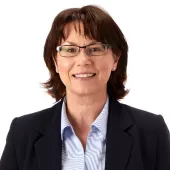
Kara Zappitelli, Foundry Director
Dr. Kara Zappitelli is the Lead Engineer & Foundry Director at Science Corporation’s pure-play MEMS foundry in RTP, North Carolina. She is a physicist-gone-engineer with a penchant for hard problems and more than a decade of experience in micro and nano fabrication for applications in neural engineering and MEMS. Kara joined Science at its inception and helped drive the initial R&D for the Science Eye device before moving to head up production of both internal and external devices. Kara received a B.S. in Physics from California Polytechnic State University in San Luis Obispo and a Ph.D. in Physics from the University of Oregon, where she was fabricating high surface area electrodes for applications in retinal prostheses. Before joining Science, she completed a post-doc investigating 2-photon lithography integration with 2D planar processing for complex neural interfaces.
Scott Smyser, VP of Sales
Scott has over 25 years of experience in the semiconductor industry leading commercial teams as a strategy, corporate marketing, and sales and business development professional. He has spent much of his career working with MEMS based products including timing devices, inertial sensors, and spectral sensors. At Science Foundry, Scott leads the go-to-market strategy developing long-term relationships with companies that need MEMS foundry services. Scott earned a BS in Electrical Engineering and an MBA from the University of Southern California.
United States
MSIG 8:00 am - 9:00 am Off Add to Calendar 2025-02-12 08:00:00 2025-02-12 09:00:00 Innovating in the MEMS Foundry Business United States SEMI.org [email protected] America/Los_Angeles public Register