Understanding Export Regulations Affecting the Electronic System Design Ecosystem
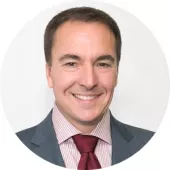
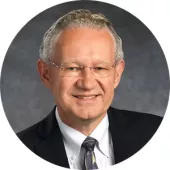
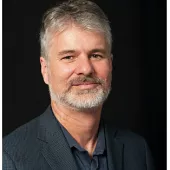
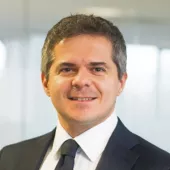
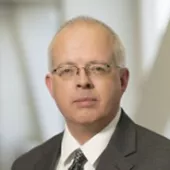
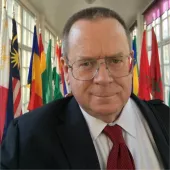
The world of export compliance is increasingly complex and perplexing. No one in the electronic system design ecosystem knows this better than Larry Disenhof, ESD Alliance Export Committee Chair and Group Director of Cadence's Export Compliance and Government Relations.
Join us on Wednesday, September 15, 2021 at 9am PDT to:
Hear Larry's perspective and invaluable insights into today's export climate.
Learn how to navigate export regulations.
Larry's expertise on behalf of ESD Alliance's Export Committee is a valued resource for our members. The committee represents the electronic system design ecosystem in Washington, D.C., with agencies overseeing export regulations and other regulatory organizations. Its goal is to educate government agencies about our products and how they are classified in the Commerce Control List to ensure the correct level of export controls are applied. It also serves to educate our members on export and other government regulatory issues affecting our industry and each company's ability to sell and support its products.
Attendees can expect Larry to present up-to-the-minute and easily understood information about the changeable export landscape, followed by a live Q&A session.
United States
ESD Alliance Export Committee Chair
Larry Disenhof
Director, Cadence Export Compliance and Government Relations
Join us at the ESD Alliance webinar to hear Larry Disenhof's perspective and invaluable insights into today's export climate and learn how to navigate export regulations. Free registration for members.
Understanding Export Regulations Affecting the Electronic System Design Ecosystem
ESD Alliance Webinar
September 15, 2021
9–10am PDT
9:00 am - 10:00 am
Off
Add to Calendar2021-09-15 09:00:002021-09-15 10:00:00ESD Alliance Webinar - Understanding Export Regulations Affecting the Electronic System Design EcosystemJoin us at the ESD Alliance webinar to hear Larry Disenhof's perspective and invaluable insights into today's export climate and learn how to navigate export regulations. Free registration for members.United StatesSEMI.org[email protected]America/Los_Angelespublic
America/Los_Angeles
Join us online May 18 from 2–3pm PDT for the 2021 ESD Alliance CEO Outlook! Free registration for members.
ESD Alliance CEO Outlook
May 18, 2021
2–3pm PDT
2:00 pm - 3:00 pm
Off
Add to Calendar2021-05-18 14:00:002021-05-18 15:00:00ESD Alliance CEO OutlookJoin us online May 18 from 2–3pm PDT for the 2021 ESD Alliance CEO Outlook! Free registration for members.United StatesSEMI.org[email protected]America/Los_Angelespublic
America/Los_Angeles
Fabrication in the cleanroom, and in the newer printed electronics tools, are often a function of time-varying parameters of the equipment, environment, and materials. The parameters often have co-dependencies across different process steps and tool sets. Physics based models and linear regression have been used traditionally, which are often not sufficient to learn the underlying variabilities.
This course will teach the material needed to connect cleanroom and printed electronics science and technology to that of advanced data processing capabilities enabled by Artificial Intelligence and Machine Learning. Cleanroom tools inherently can have millions of internal variables and can learn from the datasets, providing a powerful and complementary approach to traditional feedback control and process stabilization approaches.
Learning models are developed on images (CD-SEMS, optical images), time history data (Optical Emission Spectroscopy), and textual process information. A subset of the class will include: (1) Approaches to preprocess image data and create learning-based models, (2) model verification, (3) application to nanomechanical switch fabrication, and (4) cloud based implementation, data security, and data standardization.
Course Outline:
1.Introduction – The need for AI in microfabrication and printed electronics
a.Microfabrication: Tool variability, process variations
d.Deep Neural Nets (e.g. Image to Image translation using Pix2Pix)
5.Results and outlook
a.Improvement in linewidths
b.Cloud based implementations
About the Instructors
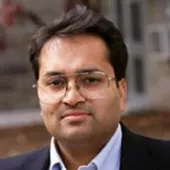
Amit Lal Amit Lal is the Robert M. Scharf 1977 Professor in the School of Electrical and Computer Engineering at Cornell University, Ithaca, NY. His work has resulted in new fabrication approaches and architectures in Micro/Nano-Electromechanical Systems, Physical Acoustics and Ultrasonics, Inertial Sensors, Biomedical MEMS, Analog Circuit Design, Solid-State Electronics, Radioactive Thin Films for Autonomous Microsystems, and Nanofabrication. The current focus of his research is on: (1) Gigahertz Ultrasonic for chip-scale communications, sensing, and computation, (2) Near zero power sensors for long-lifetime IoT, (3) Ultrasonic inertial sensors based on surface acoustic waves.
Peter C. Doerschuk Peter C. Doerschuk is a professor in the School of Electrical and Computer Engineering and the Meinig School of Biomedical Engineering at Cornell University in Ithaca NY. His interests in signal and image understanding have resulted in new algorithms for a variety of problems from microfabrication to single-particle cryo electron microscopy of biological particles.
Benyamin Davaji Benyamin Davaji is a postdoctoral research associate in the School of Electrical and Computer Engineering at Cornell University. Ben works with Prof. Amit Lal at SonicMEMS Laboratory on developing solid-state acoustic wave inertial sensors, ultrasound neuromodulation microdevices, event-powered sensors, and methods to use machine learning and artificial intelligence to enhance micro and nanosystem design and manufacturing. He is the recipient of the 2019 Cornell achievement award for excellence in mentoring and the 2016 MEMS shark pub tank prize at the Hilton Head Conference. Before joining Cornell, Ben worked with Prof. Chung Hoon Lee on microthermal analysis and thermal microfluidic systems at Nanodevices Laboratory at Marquette University and received a Ph.D. in electrical engineering. During his Ph.D., he received the 2014 IEEE Larry Hause award and the 2014 College of Engineering outstanding TA award.
Flexible Hybrid Master Classes are offered on many topics! Visit this page for entire list and links to more detailed information on each one.
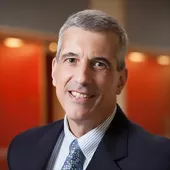
J. Devin MacKenzie is the Washington Research Foundation Professor of Clean Energy and an Associate Professor of Materials Science and Engineering and Mechanical Engineering at UW. Dr. MacKenzie is also the director of the Washington Clean Energy Testbeds, an open access laboratory with world-class printed electronics, flexible electronics and energy device fabrication and testing capabilities. Dr. MacKenzie has 20 years of experience co-founding or leading startups in novel fabrication including as a co-founder and CEO of Imprint Energy commercializing printed flexible batteries, as CTO of Add-Vision, a printed flexible OLED display company that was acquired in 2011, and as a VP at Kovio, an MIT spin out, leading printed Si RF device integration. Devin also co-founded the world’s first printed electronics company, Plastic Logic Ltd. in the United Kingdom. Previously Dr. MacKenzie was a researcher at AT&T Bell Laboratories. Prior to entering the start-up world, Devin was a postdoc in Physics at the University of Cambridge and earned PhD, MS, and BS degrees from the University of Florida and MIT. Dr. MacKenzie has over 220 patents and publications and has been cited over 10,000 times.
The Master Class covers the basics of battery terminology, chemistry and structures relevant to flexible electronics. The unique challenges related to the practical use and manufacturing of flexible batteries is discussed, as well as a summary of the current state of the art and emerging flexible battery technologies. The presentation is 90 minutes with 30 minutes of Q&A and discussion from the participants who attended the live recording on April 20, 2021.
Flexible Hybrid Master Classes are offered on many topics! Visit this page for entire list and links to more detailed information on each one.
Flexible Batteries
A Flexible Electronics Master Class On Demand
10:00 am - 12:00 pm
Off
Add to Calendar Disabled
America/Los_Angeles
-
Off
Add to Calendar2021-07-08 00:00:002021-08-09 00:00:00Fundamentals of Product Marketing for the Semiconductor Equipment and Materials Industry, Online EditionUnited StatesSEMI.org[email protected]America/Los_Angelespublic
Device scaling has brought about a great increase in the diversity of materials used in semiconductor fabrication. While planar (horizontal) scaling continues to drive great improvements in device density and performance, it has been joined by vertical scaling, adding to the palette of options in the race to develop novel architectures, particularly around device memory.
2DNAND is giving way to 3DNAND, with 3DNAND structures reaching and exceeding 100 layers. This, in turn, creates new challenges for fab equipment, processes, and the materials used to form these novel structures. In this webinar, we will explore trends in material requirements for new generations of device architecture, with special focus on the evolution of 3DNAND devices and the impact of the 3rd dimension on these materials. Mark Thirsk, Managing Partner of Linx Consulting, will address trends impacting the overall materials industry and discuss the significance of 3DNAND to the materials market. He will be followed by Scotten Jones, Founder and President of IC Knowledge, who will review the evolution of 3DNAND devices and the impact of these devices on key materials.
The continued strong growth of the semiconductor industry has led to increased demand for wafer fab materials. This talk will assess relevant trends impacting key materials segments, overall wafer fab materials landscape. It will also review key suppliers and importance of 3DNAND to the overall materials industry.
10:26 am
Scotten Jones
President & Owner
IC Knowledge
The Evolution of 3D NAND and the Impact on Materials
Over 90% of NAND bits shipped today are fabricated with a 3D NAND process. 3D NAND is evolving with structural and material changes that will have significant impact on the material types and usages. 3D NAND has two major approaches in production: Floating Gate, a gate-first process with an oxide/poly memory stack was introduced by Intel-Micron, and continues to be used by Intel with SK Hynix set to take over from Intel. And, Charge Trap, a gate-last process with an oxide/nitride stack is in use at Kioxia, Micron, SK Hynix, Samsung, and others. Charge trap uses tungsten as the replacement word line material after etching out the nitride in the memory stack, whereas Floating gate uses poly that is retained as the word-line from the original memory stack. In addition to these high-level distinctions, changes in the placement of the peripheral CMOS, slot fill, word line and channel materials and others will all impact the materials needs. In this talk I will present the 3D NAND family tree and explore the structural changes by company and time, and the impact on material types and usage.
10:00 am - 11:00 am
Off
Add to Calendar2021-03-31 10:00:002021-03-31 11:00:00Memory and Materials in the 3rd DimensionUnited StatesSEMI.org[email protected]America/Los_Angelespublic
During the workshop recording, you will hear perspectives from the key stakeholder segments and develop a greater understanding of the overall efforts and progress of the task force.
The workshop is focused on diagnosing and improving SEMI F47, Specification for Semiconductor Processing Equipment Voltage Sag Immunity, widely adopted across the industry, the governing standard that defines voltage sag test levels and requirements for semiconductor tools.
Since the implementation of SEMI F47, the vulnerability of semiconductor manufacturing to single-phase and two-phase voltage sags has improved greatly. However, semiconductor manufacturers continue to experience significant product loss and downtime due to voltage sag events.
Given the ongoing issues with semiconductor plant downtime, a new SEMI Voltage Sag Immunity Task Force was formed to take a fresh look at the issue. The workshop and the task force:
Reviews the characteristics of the power quality events that cause downtime.
Takes a new look at the sensitivities in the process equipment.
Determines any potential adjustments to equipment design, facility design, utility systems, or SEMI Standards to further reduce voltage sag induced losses by the semiconductor industry.
Principal Project Manager & Leader, Voltage Sag Immunity Task Force
EPRI
Introduction to the SEMI Voltage Sag Immunity Task Force Effort
A review of the key objectives of the voltage sag task force will be discussed along with the characteristics of the power quality events that are still causing semiconductor plant process downtime. A new look at the sensitivities in the tooling and process equipment is required to determine any potential adjustments to equipment design, facility design, utility systems or standards to further reduce voltage sag induced losses by the semiconductor industry. This important work will help utilities, semiconductor manufacturers, and tool equipment providers to better understand the tolerance and susceptibility of today’s generation of semiconductor processing tools and then to develop effective strategies to improve uptime and lower product losses due not only to single-phase (Type I) and two-phase (Type II) voltage sag events but for three-phase (Type III) events as well.
10:25 am
-
10:50 am
Clayton Burns
Principal Engineer
National Grid
Regional Voltage Sags- Importance of Addressing Three-Phase Voltage Sags in SEMI F47
A review of voltage sags at a National Grid substation which were produced by two lightning-caused three-phase transmission faults at locations fairly remote to the substation. This will show the regional effect of transmission level faults on voltage. The voltage sags will be compared to the existing SEMI-F47 standard and the accepted sag definition. Additionally, a proposed regional voltage sag study will be considered in light of the changing make-up of the future electric system and the influx of large inverter-based resources.
10:50 am
-
11:15 am
Ed McGann
Manager of Engineering
VELCO
Utility Dynamic VAR device fault response, fault mitigation techniques, and power quality measures addressed with protection design
VELCO recently conducted a refurbishment of its STATCOM facility as part of a planned controls system upgrade. The system planning need for this facility is to provide area voltage support during transmission system contingencies. The refurbishment project team recognized the benefits of the STATCOM’s ability to provide voltage support during system faults and specified fault performance requirements in the vendor specifications. This presentation will discuss those performance requirements, review pre and post project upgrade system fault record’s and review project lessons learned. The second half of the presentation will cover utility fault mitigation design strategies for substation and transmission line assets as well as protective relaying techniques to improve power quality
11:15 am
-
11:50 am
Michael Noth
Power System Managing Engineer
Austin Energy
Seeing it from both sides: The importance of Power Quality Metering at the utility and inside the Fab Distribution System.
In this presentation we will discuss the importance of having power quality-based metering on both sides of the point of connection and other parts of the distribution system. Mike will share some examples and stories of how important that can be.
11:50 am
-
12:15 pm
Dan Sabin & Tony Hunt
Schneider Electric
Waveform captures of voltage sag events can be automatically analyzed by software to determine their source and impact
This presentation will summarize efforts to categorize events automatically that exceed SEMI F47 limits, and to determine the source of those disturbances. It will also present recent efforts to analyze the impact of voltage sags automatically on electrical loads. This research has resulted in automatic algorithms to determine which voltage sags caused downtime and which ones did not. Combining all of this information together provides a means to more precisely and effectively diagnose, manage, and mitigate voltage sag disturbances.
12:15 pm
-
12:25 pm
Christopher "Dale" Moffitt
Electrical Systems Engineering
HP
Power Quality and Monitoring, What Does the Data Tell Us?
Power Quality (PQ) has a long and diverse history dating back to the first power grids in the United States. Impacts and concerns about PQ events have evolved and will continue to evolve as our usage of electricity changes. Recent natural disasters have highlighted the importance of a robust power grid and the changing landscape of power generation presents new PQ challenges. As power consumers, a key element in any PQ strategy is adequate power monitoring. This provides the data that can drive conversation with the utility, discover opportunities in our infrastructure and deliver to our facilities the power quality necessary to sustain our businesses.
12:25 pm
-
12:50 pm
Willem Meijs & Giel Croonen
Low Voltage expert in electrical engineering on supply distribution system for machines
ASML
SEMI F47 and Power Quality Perspectives and Considerations from a Tool OEM
This presentation will address power quality perspectives and consideration from the point of a lithographic tools manufacture. Effect of different test methods on the sag immunity, test strategy on systems, sub-systems and components. How to divide a large installation up in to testable units and maintaining performance integrity. 3 phase type III test generator topology and the impact on harmonic emission and immunity in relation to voltage sag immunity.
12:50 pm
-
1:15 pm
Josh Pankratz
Director of Engineering
Advanced Energy, Inc.
Power Supply Considerations and Standards for Voltage Sag Ride Through
Disturbances in utility power during semiconductor manufacturing can result in loss of revenue, productivity, production yields, and product quality. Focus on power quality continues to grow as new fabs are built in developing regions, which historically suffer from poor infrastructure. Highly automated fabs have driven a demand for systems that can ride through power glitches without shutting down tools and production lines. This presentation examines how power quality, most typically resulting in voltage sag events, affects semiconductor manufacturing and how industry standards and guidelines for tool immunity to those events affect the design of power supplies.
1:15 pm
-
1:40 pm
Steve Lewis
Lam Research
Round Table Discussion & Q&A
1:40 pm
-
1:55 pm
Mark Stephens
Principal Project Manager
EPRI
Next Steps for SEMI Voltage Sag Immunity Task Force
Based on the initial findings from utility and fab power quality data, the task force is poised to move forward to re-evaluate semiconductor tools against voltage sag additional characteristics that are indicative of measured events still causing downtime. Utilities, semiconductor fabs and equipment OEMs will be invited to actively participate in this effort to obtain the required test data.
SEMI & EPRI invite you to view a workshop held on April 21, 2021, to hear perspectives from all stakeholders on a persistent and difficult issue in microelectronics manufacturing - uncertain power quality. As work on SEMI Standard F47, the Specification for Semiconductor Processing Voltage Sag Immunity, continues this is the opportunity to hear from distinct parts of the supply chain.
Voltage Sag for Manufacturing Fabs - A Workshop
10:00 am - 2:00 pm
Off
Add to Calendar2021-04-21 10:00:002021-04-21 14:00:00Voltage Sag Workshop for Manufacturing FabsSEMI & EPRI invite you to view a workshop held on April 21, 2021, to hear perspectives from all stakeholders on a persistent and difficult issue in microelectronics manufacturing - uncertain power quality. As work on SEMI Standard F47, the Specification for Semiconductor Processing Voltage Sag Immunity, continues this is the opportunity to hear from distinct parts of the supply chain. United StatesSEMI.org[email protected]America/Los_Angelespublic
America/Los_Angeles
[NOTICE] Due to the Social Distancing for preventing COVID-19, MEMS & Sensor Forum 2021 will be held as a Virtual Conference.
Sensors: Transforming How We Live and Work
The age of sensorization is upon us as the world becomes more connected with more devices that monitor our surroundings to transform how we work and live.
Industry leaders and visionaries will gather at the SEMI MEMS & Sensors Forum 2021, a premier business and technology event in Korea, to provide insights into the latest MEMS and sensors technologies, innovation challenges and opportunities, market trends and new business opportunities.
Join us to meet speakers, industry leaders and peers as the event features 18 presentations accessible on-demand 24/7.
MEMS & Sensor Forum 2021
July 7(Wed) - 13(Tue), 2021 | Online
Off
Add to Calendar2021-07-07 00:00:002021-07-13 00:00:00MEMS & Sensor Forum 2021[NOTICE] Due to the Social Distancing for preventing COVID-19, MEMS & Sensor Forum 2021 will be held as a Virtual Conference.
Sensors: Transforming How We Live and Work
The age of sensorization is upon us as the world becomes more connected with more devices that monitor our surroundings to transform how we work and live.
Industry leaders and visionaries will gather at the SEMI MEMS & Sensors Forum 2021, a premier business and technology event in Korea, to provide insights into the latest MEMS and sensors technologies, innovation challenges and opportunities, market trends and new business opportunities.
Join us to meet speakers, industry leaders and peers as the event features 18 presentations accessible on-demand 24/7.Virtual South KoreaSEMI.org[email protected]Asia/Seoulpublic
Asia/Seoul
[NOTICE] Due to the Social Distancing for preventing COVID-19, SMC Korea 2021 will be held as a Virtual Conference.
Materials: Driving a New Leap Forward
Reshoring, the trade war and mergers and acquisitions have reshaped the global semiconductor supply chain, presenting new challenges. Join us at SMC Korea 2021, May 12-18, for insights into the latest technology trends and how the chip ecosystem can tackle these challenges and uncover new opportunities.
SMC Korea 2021, a virtual event, will highlight developments across more topics than ever including EUV, packaging, foundry and materials.
SMC (Strategic Materials Conference) Korea 2021
May 12-18, 2021 | Online Webinar
Off
Add to Calendar2021-05-12 00:00:002021-05-18 00:00:00SMC Korea 2021[NOTICE] Due to the Social Distancing for preventing COVID-19, SMC Korea 2021 will be held as a Virtual Conference.
Materials: Driving a New Leap Forward
Reshoring, the trade war and mergers and acquisitions have reshaped the global semiconductor supply chain, presenting new challenges. Join us at SMC Korea 2021, May 12-18, for insights into the latest technology trends and how the chip ecosystem can tackle these challenges and uncover new opportunities.
SMC Korea 2021, a virtual event, will highlight developments across more topics than ever including EUV, packaging, foundry and materials. South KoreaSEMI.org[email protected]Asia/Seoulpublic
Asia/Seoul
SEMI Professional Development Seminar—Connecting College Students to the Semiconductor Industry
Learn about career opportunities in high tech and acquire valuable, practical information that will help you choose career directions and plan for your success.
Come learn about careers in the semiconductor industry at the SEMI Professional Development Seminar hosted by Arizona State University.
Listen to professionals in the industry talk about their roles and find out how to prepare for jobs in the Semiconductors Industry.
Discover semiconductor job opportunities you didn't know existed (internship and entry-level) and how you can prepare for them through job searches, interviews, resumes, and more.
Meet with professionals and executives during our speed mentoring, mock interview, and networking sessions.
All majors are welcome! Students with a background in Engineering, Computer Science, Chemistry, Physics, Math, Data Science, and Business are strongly encouraged to attend.
Enjoy free food, free swag, and giveaways.
Students can come and go.
EVENT is FREE but registration is required. Register now to save your seat!
Arizona State University AZ United States
TUESDAY, MARCH 18, 2025 (Times in MST)
9:00 am
-
9:30 am
Check-In
9:30 am
-
9:35 am
Chase Farnsworth
Project Development Executive
Mortenson
Welcome & SEMI Arizona Chapter Introduction
9:35 am
-
9:45 am
Kyle D. Squires, Ph.D.
Dean, Ira A. Fulton Schools of Engineering
Arizona State University
ASU Welcome
9:45 am
-
10:05 am
Kyle D. Squires, Ph.D.
Dean, Ira A. Fulton Schools of Engineering, Senior Vice Provost - Engineering, Computing & Technology, Vice Provost - Polytechnic Campus, Founding CEO, Southwest Advanced Prototyping (SWAP) Hub, Foundation Professor, Mechanical & Aerospace Engineering
Arizona State University
Evolution of the Semiconductor Industry in Arizona & Opportunities with the CHIPS Act
10:05 am
-
10:20 am
Professor Binil Starly
SWAP-Hub Consortium Workforce Development Lead & School Director and Professor, School of Manufacturing Systems & Networks (MSN)
Ira A. Fulton Schools of Engineering at Arizona State University
Microelectronics Workforce Development
10:20 am
-
10:40 am
Randy Tully
Chief Executive Officer
ROI Analysis Management Systems
Semiconductors 101: A Brief History of the Semiconductor Industry
10:40 am
-
11:00 am
Arlene Lanz
Account Manager - Semiconductors
Hitachi Energy
Your Career Journey in the Industry
11:00 am
-
11:20 am
Erin Coté Martin
Manager, Recruiting & Office Management
Amkor Technology
Personal Branding + Resume Best Practices
11:20 am
-
11:40 am
Summer Miller
HR Manager
EVG Group
Interview Like a Pro: Perfect Your Pitch
11:40 am
-
11:55 am
Students Pick Up Boxed Lunches
11:55 am
-
12:40 pm
Moderator
Francesca Domingo
EMD Electronics
Kaylie Lam
Senior Engineer, FlipChip Products
Amkor Technology
Alex Lee
Machine Learning Engineer
EMD Electronics
Haidyn Moroz
Systems Engineer
Intel
Nate Bradford
Project Engineer
JE Dunn
Victoria Lanz
General Sales & Marketing Specialist Professional
Hitachi
Thomas Peters
ASML
Ask Me Anything Panel Discussion—A Day in the Life of a Former Sun Devil
Bring your questions to the Ask Me Anything PANEL! Moderated by Francesca Domingo, EMD Electronics, panelists will discuss life as a Semiconductor engineer and their transition from Academia to the Semiconductor workforce.
12:40 pm
-
1:00 pm
Job & Internship Opportunities; SEMICON West Workforce Pavilion