This course describes how machine learning and AI-based approaches to research, development, and production brings advantages to cleanroom processes. AI-based identification of time-varying equipment performance, and the effects of the previous recipe used on the outcome of the current desired methods, are just some of the ways AI can be used to reduce the process variability.
The team from Cornell has applied AI approaches to optimize lithography and etching processes involved in the development of an RF wake-up NEMS (Nano ElectroMechnical system) switch that needs a well-controlled gap between a moving shuttle and a contact. We report on a decision tree based AI model for predicting lithography outcomes.
This work is being applied to plasma etching and the combined prediction of lithography and thin-film etching, using CD-SEM imagery for feature extraction and modeling process variables. Additional approaches to train process-modeling CAD tools to result in better process development experience are developed.
This course describes how machine learning and AI-based approaches to research, development, and production brings advantages to cleanroom processes. AI-based identification of time-varying equipment performance, and the effects of the previous recipe used on the outcome of the current desired methods, are just some of the ways AI can be used to reduce the process variability.
Originally recorded August, 2020, this course is now offered On-Demand.
Artificial Intelligence in Thin Film Manufacturing
The COVID Pandemic has caused a worldwide shortage of many consumable supplies that SEMI members require. Increased safety and PPE usage by new industries have strained the supply chain, forcing buyers to identify and establish relations with new providers, as many providers are in allocation mode working only with established customers. Thomas Scientific is hosting this session to provide insights into how to address this current predicament.
United States
10:00 am
-
10:05 am
MODERATOR
Darryl Buck
Head of SEMI’s Cost Saving Program, Group Purchasing Solutions (GPS)
Welcome and Intro
Biography: As Business Director in Supply Chain, Darryl helped Lam Research’s found CapOneSource (later named GPS), an Semi industry trade group supporting the business needs of the capital equipment suppliers. Darryl held various Sales, Marketing, and Supply chain roles at both Applied Materials and Lam Research before moving to SEMI in 2013. Darryl held executive Sales and Marketing roles in the aerospace industry after receiving his MBA from Cal Berkley and double DB from Carnegie Mellon.
10:05 am
-
10:10 am
Kareem Dossa
Senior Vice President, Thomas Scientific
Problem Statement - PPE Shortage
Biography: Kareem Dossa cultivated his expertise in leadership, sales, business development, and general management through 20 years of professional experience in start-ups and Fortune 500 distribution, product, technology and service companies in life science, clinical trials, healthcare markets, cleanroom, and industrial markets. Kareem has held Senior VP positions at BioCision, VWR International and Merch KGaA and has an MBA from Pepperdine and a BS from Washington State.
10:10 am
-
10:15 am
Problem Impact
10:15 am
-
10:20 am
John Westland
Vice President, Sales and Marketing, Thomas Scientific (American CleanStat)
Steps Procurement Individuals Can Take to Secure Supplies
Biography: John Westland brings 37 years of industry experience in the distribution and sales of cleanroom and static safe assembly products and supplies experience to Thomas Scientific CE Cleanroom Solutions.
John started as a technical field salesrep for American Scientific Products and Baxter Scientific Products in the 1980’s. In 1988 John was the founder and President of Eastwater Scientific Products which was a cleanroom and static control supplies distributor which was acquired by Cintas Cleanroom Resources in 1998. In 2000 he started a Microstat Labs, a cleanroom products and materials test lab John was also the founder and President of American Cleanstat from 2003 through 2018 until it was acquired by the Carlyle Private Equity Group in 2018. American Cleanstat was coupled together with Thomas Scientific and now represents the new CE Cleanroom Solutions Division of Thomas Scientific. John is the current director of CE Technology for Thomas Scientific CE Cleanroom Solutions Division.
John has also been a contributing member of the Safety Marketing Group of North America for PPE products and has been a participating past member of the IEST. John holds a BS in Business Administration - Finance Degree from the University of Southern California and is married to Shannon Needham. He has two sons, Jack 28 and Nick Westland 24, a professional free-ride skier and a stepson, Nikolas Needham who is an NFL football player playing defensive back with the Miami Dolphins.
10:20 am
-
10:25 am
Q&A
10:25 am
-
10:30 am
Darryl Buck
Head of SEMI’s Cost Saving Program, Group Purchasing Solutions (GPS)
Supply Assurance During Times of Shortages – SEMI CSP Back to Work
10:00 am - 10:30 am
Off
Add to Calendar2020-07-28 10:00:002020-07-28 10:30:00Supply Assurance During Times of Shortages – SEMI CSP Back to Work Session 1Session 1United StatesSEMI.org[email protected]America/Los_Angelespublic
As new materials and process emerge to enable the integration of high performance micro-electronics into paper-thin, flexible hybrid electronics (FHE), there is an increasing demand for new power sources that also support the goals of ultra-thin and flexible.
Among the key challenges is the ability to achieve high energy densities as the battery thickness decreases to a point where the packaging becomes an increasing fraction of the total volume. The challenge is further complicated by the demanding duty cycles for many FHE systems that require both high power (periodic, large current bursts) and high energy (operation across many years in some cases).
At the same time, the new power sources must meet the typical high standards for safety, durability, compatibility with a wide range of storage and operation temperatures, and the needs to support effective integration into the FHE platforms.
The session reviews the challenges and progress for new power supplies that are emerging to meet the needs of the FHE community.
Course provided by Brian Berland, Chief Technology Officer, ITN Energy Systems
#2 AI in Thin-Film Manufacturing (2 hours)
This session describes how machine learning and AI-based approaches to research, development, and production brings advantages to clean room processes. AI-based identification of time-varying equipment performance, and the effects of the previous recipe used on the outcome of the current desired methods, are just some of the ways AI can be used to reduce the process variability.
The team from Cornell University has applied AI approaches to optimize lithography and etching processes involved in the development of an RF wake-up NEMS (Nano Electro Mechnical system) switch that needs a well-controlled gap between a moving shuttle and a contact. The work is applied to plasma etching and the combined prediction of lithography and thin-film etching, using CD-SEM imagery for feature extraction and modeling process variables. Additional approaches to train process-modeling CAD tools to result in better process development experience are developed and explained in this session.
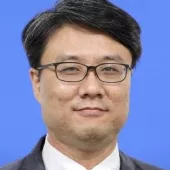
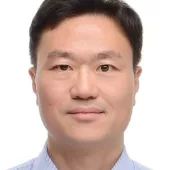
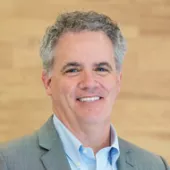
Course instructors includes Amit Lal, Chris Ober, Peter Doerschuk, Banyamin Davaji from Cornell University, and Garry Bordonaro and Jeremy Clark with the Cornell NanoScale Facility.
#3 Hybrid Integration Techniques for Flexible Electronics (1.5 hours)
The 1-hour class describes techniques practiced at PARC for the fabrication of flexible hybrid electronics. Topics include printing interconnects, logic circuits and resistors, bonding integrated circuits and integrating sensors of different types. The techniques are illustrated with various examples of wireless sensor prototypes on flexible substrates, and also development of electronics on textiles.
Specific topics covered in this session include:
printing interconnects
printing fine lines, pads and pad pitches with < 100um
logic circuits and resistors
bonding integrated circuits
integrating sensors of different types on flexible substrates without significant performance degradation
pick and place with micron-level accuracy
Course instruction given by Robert Street, Palo Alto Research Center
#4 Flexible Electronics Reliability Testing and Challenges (1.5 hours)
This online Reliability Engineering Master class is for people with an engineering or science background, who want to learn and use methods and techniques to conduct reliability analysis and improvement. This course is intentionally structured to show you a wide variety of reliability engineering knowledge and important applications.
This session outlines the foundation reliability engineering concepts and methods, and how to apply fundamental failure investigation techniques. You will also learn a range of effective workplace improvement solutions and risk analyses used to implement reliability engineering strategies.
Course Instruction given by Dave Rasmussen and Tom Seputis, Molex.
Flexible Hybrid Master Classes for 2021 are offered on many additional topics! Visit this page for entire list and links to more detailed information on each one.
SEMI FlexTech organizes this series of Flexible Electronics Master Classes on topics proving most challenging to the design, manufacture and use of flexible and printed electronics. The series enables product designers, integrators, and others new to the fields to evaluate technologies and components and make the best choices for their product.
The courses were offered to a live audience July-October, 2020, and are now available on-demand.
Flexible Electronics Master Class Series
Power Sources, Integration & AI and Reliability in Thin-Film Manufacturing
Master Class Abstract:As new materials and process emerge to enable the integration of high performance micro-electronics into paper-thin, flexible hybrid electronics (FHE), there is an increasing demand for new power sources that also support the goals of ultra-thin and flexible.
Among the key challenges is the ability to achieve high energy densities as the battery thickness decreases to a point where the packaging becomes an increasing fraction of the total volume. The challenge is further complicated by the demanding duty cycles for many FHE systems that require both high power (periodic, large current bursts) and high energy (operation across many years in some cases).
At the same time, the new power sources must meet the typical high standards for safety, durability, compatibility with a wide range of storage and operation temperatures, and the needs to support effective integration into the FHE platforms.
The webinar will review challenges and progress for new power supplies that are emerging to meet the needs of the FHE community.
SEMI FlexTech offers a series of Flexible Electronics Master Classes on topics proving most challenging to the use of flexible and printed electronics. The series enables product designers, integrators, and others new to the fields to evaluate technologies and components and make the best choices for their product.
The first course in the series is on Flexible Power Sources: Challenges, Progress and Integration. This course was offered to a live audience on July 29, 2020, and is now available on-demand.
Flexible Power Sources: Challenges, Progress, and Integration
The first in the FlexTech Master Class Series
11:00 am - 12:00 pm
Off
Add to Calendar Disabled
America/Vancouver
Master Class Abstract:As new materials and process emerge to enable the integration of high performance micro-electronics into paper-thin, flexible hybrid electronics (FHE), there is an increasing demand for new power sources that also support the goals of ultra-thin and flexible.
Among the key challenges is the ability to achieve high energy densities as the battery thickness decreases to a point where the packaging becomes an increasing fraction of the total volume. The challenge is further complicated by the demanding duty cycles for many FHE systems that require both high power (periodic, large current bursts) and high energy (operation across many years in some cases).
At the same time, the new power sources must meet the typical high standards for safety, durability, compatibility with a wide range of storage and operation temperatures, and the needs to support effective integration into the FHE platforms.
The webinar reviews challenges and progress for new power supplies that are emerging to meet the needs of the FHE community.
SEMI FlexTech offers a series of Flexible Electronics Master Classes on topics proving most challenging to the use of flexible and printed electronics. The series enables product designers, integrators, and others new to the fields to evaluate technologies and components and make the best choices for their product.
The first course in the series is on Flexible Power Sources: Challenges, Progress and Integration. This course was offered to a live audience on July 29, 2020, and is now available on-demand.
Flexible Power Sources: Challenges, Progress, and Integration
The first in the FlexTech Master Class Series
12:00 am - 12:00 am
Off
Add to Calendar Disabled
America/Vancouver
[NOTICE] Due to the Social Distancing for preventing COVID-19, SEMI decided to hold MEMS & SENSOR FORUM 2020 as a Virtual Event.
Presentations will be live-streamed only on Wednesday, September 2.
How to access to the Online Forum will be informed to the registrants.
Translation will not be provided.
SENSE & CONNECT
MEMS & Sensor Forum is one-day event, intended to boost the MEMS & Sensor industry and create effective network among Korean MEMS & Sensor industry leaders.
In this forum, you can hear not only the latest technologies but also global market trends from key players.
Join this must-attend event to expand your knowledge and business networks.
MEMS & Sensor Forum 2020
Sept 2 (Wed), 2020
9:00 am - 4:50 pm
Off
Add to Calendar2020-09-02 09:00:002020-09-02 16:50:00MEMS & Sensor Forum 2020[NOTICE] Due to the Social Distancing for preventing COVID-19, SEMI decided to hold MEMS & SENSOR FORUM 2020 as a Virtual Event.
Presentations will be live-streamed only on Wednesday, September 2.
How to access to the Online Forum will be informed to the registrants.
Translation will not be provided.
SENSE & CONNECT
MEMS & Sensor Forum is one-day event, intended to boost the MEMS & Sensor industry and create effective network among Korean MEMS & Sensor industry leaders.
In this forum, you can hear not only the latest technologies but also global market trends from key players.
Join this must-attend event to expand your knowledge and business networks.Virtual South KoreaSEMI.org[email protected]Asia/Seoulpublic
Asia/Seoul
The close-knit FOA Device-Maker-to-Device-Maker information sharing has always been one of the key benefits of the organization. While in-person meetings continue to be a challenge amid the pandemic, the FOA is still looking to facilitate best practice & information sharing virtually. Similar to the first open forum, the second one will be based on a purpose-driven survey and will focus on return-to-work/business continuity during the pandemic.
For information on the open forum, please contact the FOA staff: [email protected]
Fab Owner's Alliance (FOA), a SEMI technology community, is hosting an open forum to discuss how members are handling the return to work for non–essential employees.
This event is by invitation only.
FOA: Return to Work Open Forum
11:00 am - 12:30 pm
Off
Add to Calendar Disabled
America/Los_Angeles
Sensorization will enable next generation of transportation: Autonomous, Connected, Electric, and Shared (ACES) vehicles. Join McKinsey & Company and SEMI Smart Mobility for this webinar detailing the opportunities for sensors in vehicles and smart infrastructure.
McKinsey & Company have identified several major disruptions that will impact the mobility sector. For example, the automotive sensor market for light vehicles is expected to grow from around $30 billion to $60+ billion by 2030 (Mapping the Automotive Software and Electronics Landscape through 2030, McKinsey.com, July 2019). While current cars with L1 automation (and internal combustion engine) have around $300 worth of sensors, a purpose-built robo-taxi (BEV) in 2030 will have around $2,000 worth of sensors. An increase in the adoption of cameras, radars, and LiDARs contributes to large per vehicle sensor value and enables the data collection necessary for advanced features. Additionally, the sensor market related to smart roads/infrastructure is also growing rapidly and creating opportunities for sensor manufacturers and related players.
The MSIG community is a critical partner in contributing to SEMI's Smart Mobility initiative to connect and synchronize the automotive/mobility and semiconductor/sensor supply chains around issues that matter to both. By creating collaborative platforms and bringing communities together, Smart Mobility will streamline the transition to highly-sensorized ACES vehicles and provide business opportunities to MSIG members. One such community is the SEMI’s Global Automotive Advisory Council (GAAC) where auto manufacturers and suppliers meet to address common challenges, share information and align priorities.
This webinar will provide details on market projections, GAAC activities, Smart Mobility initiates, and provide examples of how MSIG members should participate. Together, MSIG and Smart Mobility can help the Transportation Evolution.
United States
8:00 am
-
8:05 am
Moderator: Tim Brosnihan
Executive Director, MSIG
SEMI
Welcome Remarks
8:05 am
-
8:10 am
Bettina Weiss
Chief of Staff and Global Smart Mobility Lead
SEMI
Introduction: Smart Mobility Initiative
8:10 am
-
8:25 am
Andreas Breiter
Partner
McKinsey & Company
Biography
Andreas leads McKinsey’s capital-investment work for advanced industries in North America as well as our Center for Future Mobility on the West Coast. In his advisory work, Andreas serves a broad range of companies in the automotive sector, including car and truck manufacturers and their suppliers, as well as companies in the utilities and renewables space. He helps executives make strategic choices around product development while reducing material costs and optimizing the purchasing function. Andreas helps companies stay ahead of emerging trends, such as autonomous driving, connectivity, electric vehicles, and shared mobility.
Andreas holds a PhD in Operations Management and studied in Germany, France, the USA and Canada.
8:25 am
-
8:40 am
Armen Mkrtchyan
Associate Partner
McKinsey & Company
Biography
Armen Mkrtchyan is an Associate Partner in McKinsey’s Los Angeles Office and is a co-leader of McKinsey’s Center for Future Mobility on the West Coast.
At the Firm, Armen’s clients primarily include Automotive passenger and truck manufacturers and their suppliers. He also serves electronics and semiconductor players across the value chain both on operational and strategic topics.
Previously, Armen was the Founding Director of the Entrepreneurship and Product Innovation Center (EPIC) at the American University of Armenia and served as an Assistant Professor in the College of Engineering.
Armen has a PhD in Aeronautics and Astronautics from MIT and has worked on the development of various autonomous air and ground vehicles. He received his Bachelor’s degree in Electrical Engineering from the University of North Dakota and has multiple publications in the area of control systems, test and simulation, product development optimization.
Smart Mobility: Next Generation Transportation Enabled by Sensorization
8:00 am - 9:00 am
Off
Add to Calendar2020-08-19 08:00:002020-08-19 09:00:00Smart Mobility: Next Generation Transportation Enabled by SensorizationUnited StatesSEMI.org[email protected]America/Los_Angelespublic
Future mobility disruptions include the development of autonomous and connected vehicles, electric powertrains, and shared mobility solutions. These trends will shape and impact the semiconductor design value chain:
The development of autonomous vehicles will impact chip design, verification, and IP through demand for high-performance computing, connectivity, functional safety, security, and reliability.
Software-rich automotive solution-specific EDA products will serve the needs of automotive OEMs and Tier 1 suppliers to accelerate R&D, verification, and testing.
Partnerships in the semiconductor value chain will play an important role to make these mobility disruptions reality. Suppliers in the design ecosystem could partner on system architecture, design, development, and verification
Join McKinsey & Company and SEMI's Electronic System Design Alliance at this webinar to learn about emerging new opportunities in Design and IP being driven by the rapid growth and disruptions in the global automotive markets and supply chains.
United States
10:00 am
-
10:05 am
Moderator: Bob Smith
Executive Director, ESDA
SEMI
Welcome Remarks
10:05 am
-
10:10 am
Bettina Weiss
Chief of Staff and Global Smart Mobility Lead
SEMI
Introduction: Smart Mobility Initiative
10:10 am
-
10:25 am
Andreas Breiter
Partner
McKinsey & Company
Biography
Andreas leads McKinsey’s capital-investment work for advanced industries in North America as well as our Center for Future Mobility on the West Coast. In his advisory work, Andreas serves a broad range of companies in the automotive sector, including car and truck manufacturers and their suppliers, as well as companies in the utilities and renewables space. He helps executives make strategic choices around product development while reducing material costs and optimizing the purchasing function. Andreas helps companies stay ahead of emerging trends, such as autonomous driving, connectivity, electric vehicles, and shared mobility.
Andreas holds a PhD in Operations Management and studied in Germany, France, the USA and Canada.
10:25 am
-
10:40 am
Armen Mkrtchyan
Associate Partner
McKinsey & Company
Biography
Armen Mkrtchyan is an Associate Partner in McKinsey’s Los Angeles Office and is a co-leader of McKinsey’s Center for Future Mobility on the West Coast.
At the Firm, Armen’s clients primarily include Automotive passenger and truck manufacturers and their suppliers. He also serves electronics and semiconductor players across the value chain both on operational and strategic topics.
Previously, Armen was the Founding Director of the Entrepreneurship and Product Innovation Center (EPIC) at the American University of Armenia and served as an Assistant Professor in the College of Engineering.
Armen has a PhD in Aeronautics and Astronautics from MIT and has worked on the development of various autonomous air and ground vehicles. He received his Bachelor’s degree in Electrical Engineering from the University of North Dakota and has multiple publications in the area of control systems, test and simulation, product development optimization.
As a testament to the strategic importance of our industry, the fabs continue to produce. Many parts of our industry supply chain became officially designated as essential businesses.
SEMICON West Exhibitors are taking the opportunity to position their organizations as lead solution providers as the industry transforms once again.
Discover how simple it is to exhibit in the digital world. Leverage a flexible virtual space to customize your exhibitor booth, offer on-demand content, and provide chat forums, for optimal prospect engagement. You'll get:
Convenience—Manage From Anywhere
Easy Lead Generation Solutions
Broad Attendee Reach
A Unique Way to Showcase Your Company
Visit our Exhibitor Directory to see who will exhibit at Virtual SEMICON West 2020.