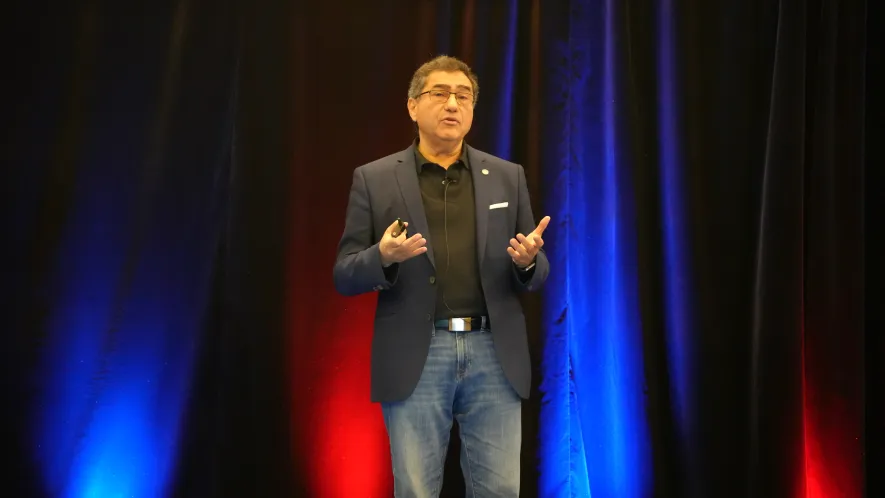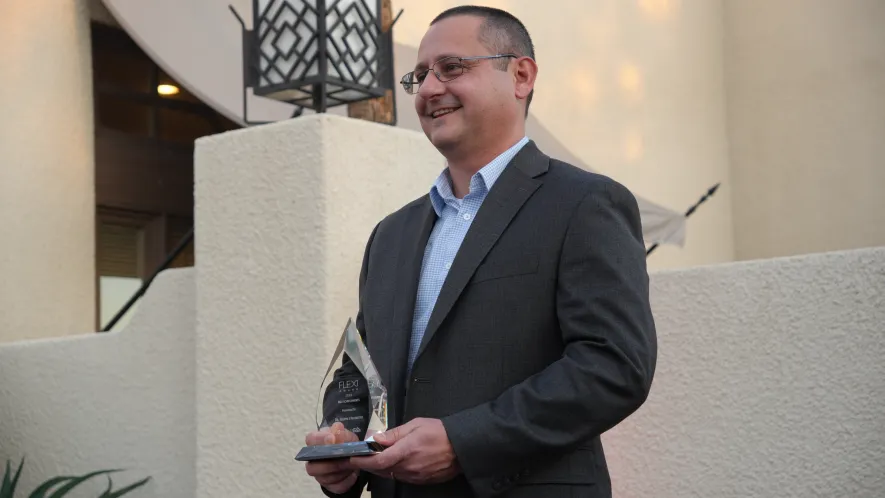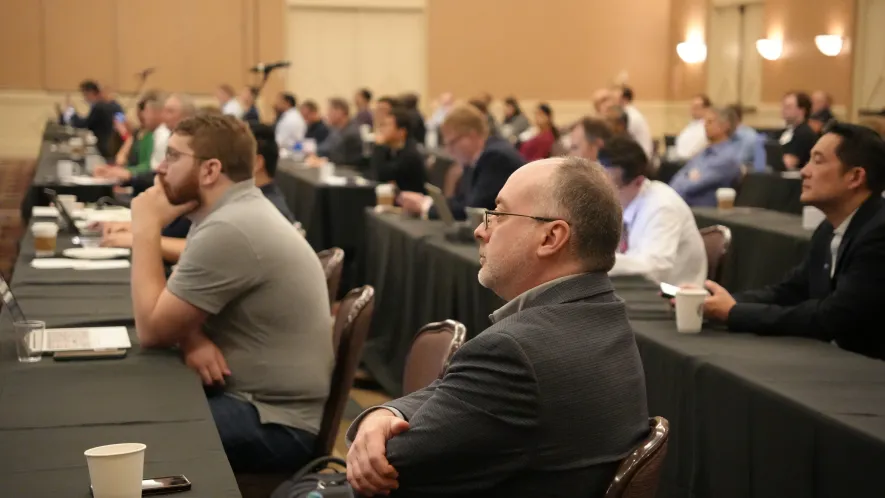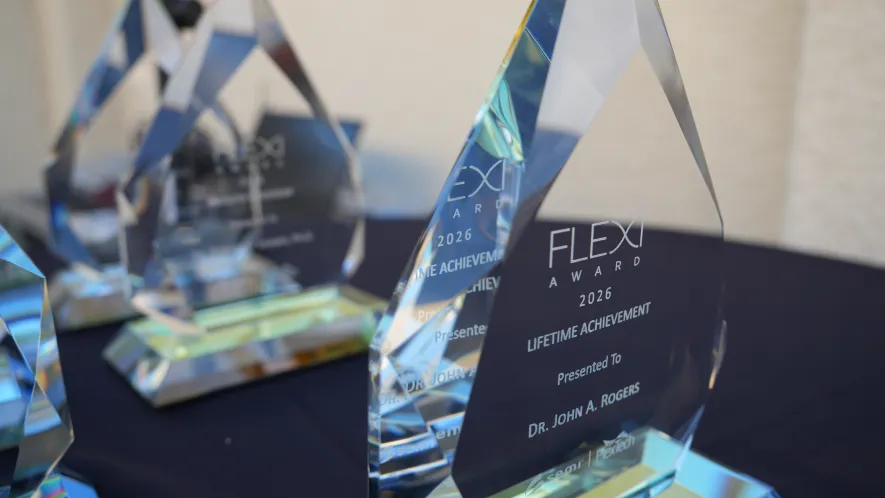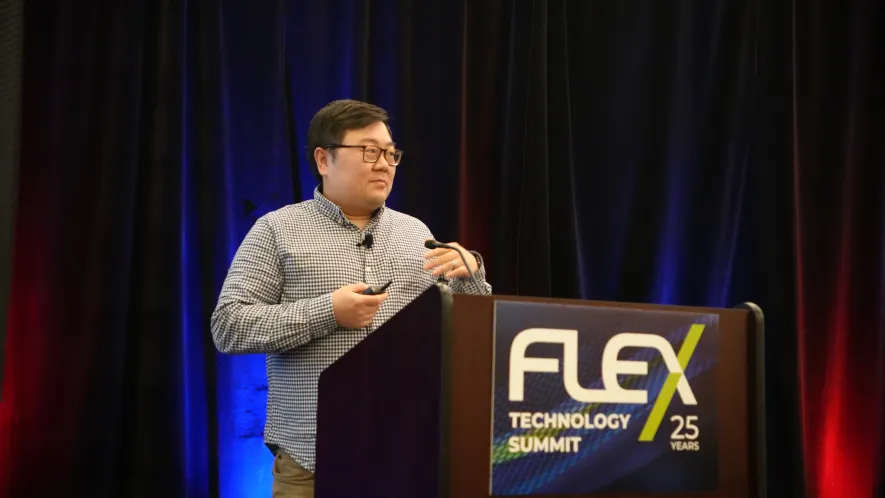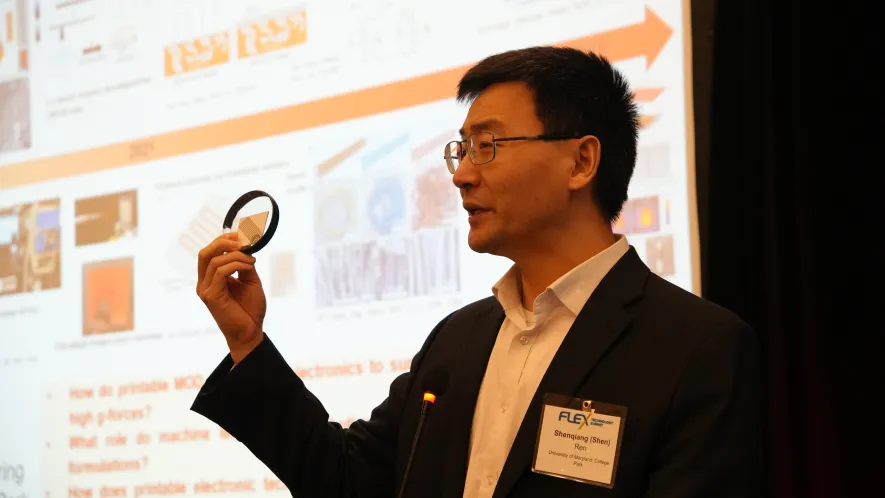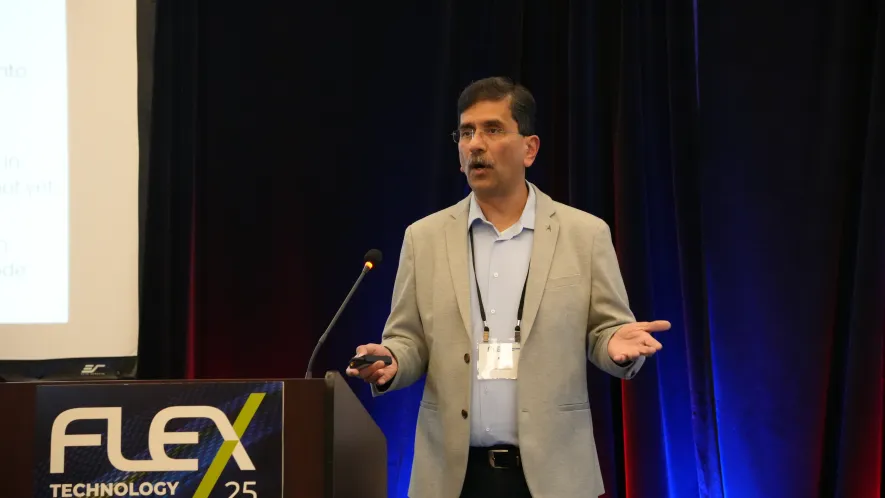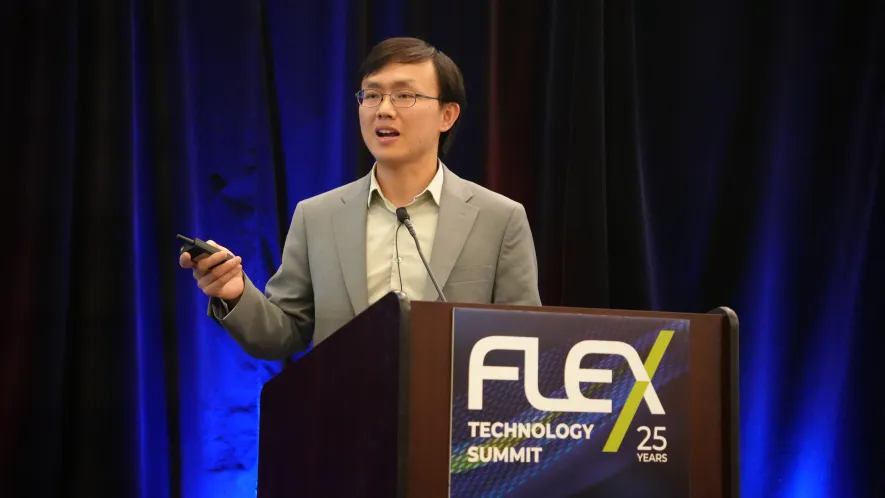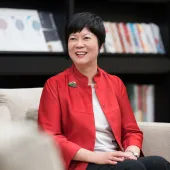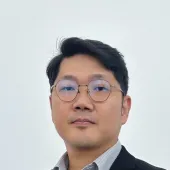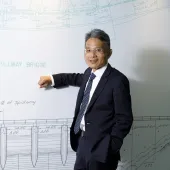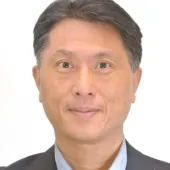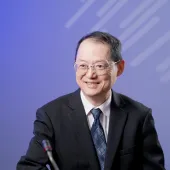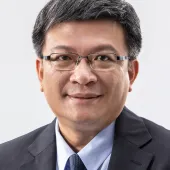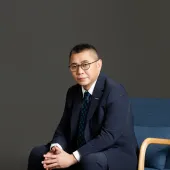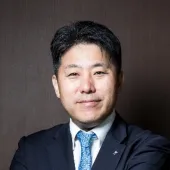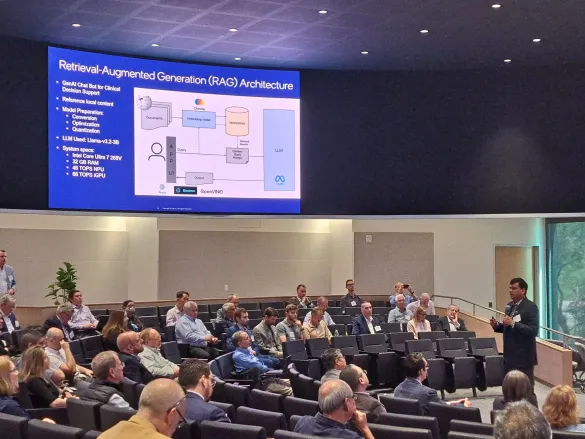
Artificial intelligence (AI) is scaling at a pace that is reshaping semiconductor roadmaps, data center design, and long-term infrastructure strategy. This promises many economic and social benefits, but this trajectory is now testing energy availability limits and power consumption has become the significant limiter to performance gains. The global “data center gold rush” is already straining energy grids around the world and may slow AI’s progress. To address this formidable challenge, radical efficiency improvement in both performance and energy consumption is needed. This requires radical innovation, not just by individual segments, but by meaningful collaboration that “connects the dots” across the entire system stack.
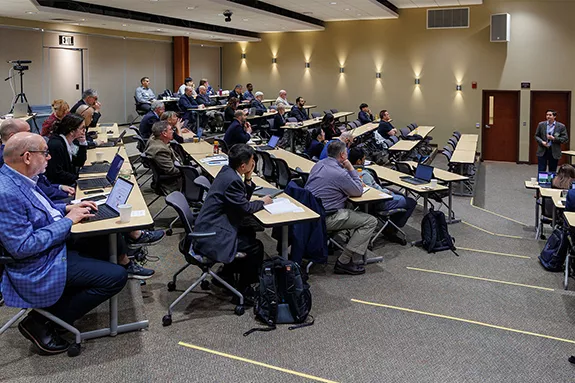
SEMI, a global electronics industry association serving ~4000 companies, is organizing this workshop under its Smart Data-AI Initiative; together with the city of San Jose. We are uniting the entire AI ecosystem – including devices, materials, packaging, photonics, quantum, architectures and algorithms. This is the fifth workshop in the series. Building on learnings from previous workshops, we are focusing on three high-impact areas – co-optimization of system-technology and hardware-software, and sustainable AI infrastructure operation. The overarching objective is to drive these from discussion to action. Please join leaders and experts from industry and academia in this exciting interactive workshop.
-
Off
Add to Calendar2026-09-02 00:00:002026-09-04 00:00:00SEMICON Taiwan 2026Nangang District, Taipei City TaiwanSEMI.org[email protected]America/Los_Angelespublic
Cancellations received on or before July 27, 2026, are fully refunded with a $50 processing fee. Refunds will not be issued for cancellations (including no-shows) made after July 27, 2026, and only substitutions are accepted with a written note from the registered attendee. Please email your cancellations or substitutions on company letterhead to [email protected].
This Smart MedTech Summit brings together semiconductor and medical device leaders to address shared challenges, strengthen supply chain collaboration, and enable the next generation of medical devices. Designed for leaders at the forefront of a rapidly evolving landscape, it provides a focused forum for dialogue and cross-industry collaboration. Participants will engage with peers and experts to exchange perspectives and gain actionable insights into how advanced semiconductor technologies are enabling smarter, more connected medical solutions.
Semiconductor-MedTech Ecosystem Summit
A Smart MedTech event sponsored by GlobalFoundries
8:00 am - 6:00 pm
Off
Add to Calendar2026-08-27 08:00:002026-08-27 18:00:00Semiconductor-MedTech Ecosystem SummitThis Smart MedTech Summit brings together semiconductor and medical device leaders to address shared challenges, strengthen supply chain collaboration, and enable the next generation of medical devices. Designed for leaders at the forefront of a rapidly evolving landscape, it provides a focused forum for dialogue and cross-industry collaboration.Participants will engage with peers and experts to exchange perspectives and gain actionable insights into how advanced semiconductor technologies are enabling smarter, more connected medical solutions. SEMI Headquarters 673 S. Milpitas Boulevard Milpitas, CA 95035 United StatesSEMI.org[email protected]America/Los_Angelespublic
Venue: Convention Hall 2, 3F, Suwon Convention Center
Language: Korean/English (Simultaneous interpretation will be provided)
NOTICE
The agenda is subject to change at the discretion of the speakers.
Presentation materials will be available for download after the conference via the SEMI Korea program registration website(https://semikrprogram.com), only for materials approved by the speakers for distribution.
VP, Advanced Technology Integration, Office of the CTO
Lam Research
How Wafer Processing Is Reshaping the 3D Era for AI
AI is fueling unprecedented growth and accelerating demand for advanced devices. Its requirements for performance, power, and area scaling are driving memory and logic devices toward 3D architectures.
At the heart of this 3D transformation, processing steps must enable taller, perpendicular structures as well as smaller features. Meeting these requirements calls for new deposition and etch capabilities that did not exist before, leading to breakthroughs needed in areas such as atomic-level deposition and etch (ALD and ALE), high-aspect-ratio processing, dry resist EUV patterning, and the adoption of new materials like molybdenum (Mo). As a result, the transition to 3D devices will drive increased intensity of deposition and etch processing.
This presentation will explore how deposition and etch are critical to unlocking the future of 3D devices, with increasing velocity required to meet the demands of AI-driven innovation.
Head of Technology & Innovation and President of Intermolecular®
Merck
Integrated Materials Innovation in the AI Era
As the semiconductor industry navigates the challenges of dimensional and functional scaling in the artificial intelligence (AI) era, advanced materials science has emerged as a critical enabler for performance enhancement. Modern AI-centric architectures demand the integration of increasingly complex system-on-chip (SoC) designs with non-traditional material systems.
This work details a high-throughput methodology for the rapid down-selection and optimization of multi-element thin films, ensuring alignment with both physical and electrical key performance indicators (KPIs). Utilizing combinatorial physical vapor deposition (PVD) in conjunction with unit-cell electrical test vehicles, we systematically screen an expansive elemental compositional space to identify optimal candidates. Advanced machine learning (ML) algorithms are integrated into each phase of the development lifecycle—spanning precursor synthesis, process optimization, and heterogeneous integration—to satisfy the rigorous specifications of emerging device applications. The synergy between integrated materials engineering and AI-driven informatics significantly reduces the temporal gap between material discovery and device-level implementation.
Chemical and materials research faces increasing demands for data-driven automation and autonomous research systems due to vast exploration spaces and complex decision-making processes. In this talk, we introduce EXAONE Discovery as a Chemical Agentic AI system and present an integrated research framework designed to accelerate scientific discovery.
EXAONE Discovery is an agent-based system that tightly integrates property prediction, molecular generation, synthesis prediction, and literature/data extraction. Based on given research objectives, the system accumulates relevant data, generates candidate molecules using model-driven approaches, evaluates their properties, and derives feasible synthetic routes—automating the end-to-end discovery pipeline. Furthermore, it is designed to enable a closed-loop research paradigm by interfacing with autonomous laboratories, connecting design–prediction–synthesis–validation cycles. This allows hypotheses proposed by AI to be experimentally validated, with results continuously fed back into the system for iterative model improvement and optimization.
In this talk, we will demonstrate how this integrated approach enhances research productivity across various industrial use cases in materials discovery and optimization, and discuss future directions of Chemical Agentic AI.
Emerging Etching Chemistry for Advanced Semiconductor Manufacturing
The rising technical demands for advanced semiconductor device manufacturing, and the industry’s ambitious net-zero commitments necessitate the development of novel etch chemistries that deliver both technical excellence and environmental sustainability. This talk will present an overview of the emerging etching chemistries developed by Air Liquide for variety-targeted applications. These innovative chemistries focus on delivering improved performance with unique technical merits to address current industry challenges. Exemplified by a novel low Global Warming Potential (GWP) designed for general dielectric etch, its synergistic integration with advanced abatement solutions, and a simplified Life Cycle Analysis (LCA) - from raw material extraction through processing, manufacturing, distribution, and use, this presentation aims to provide insights into a pathway towards more sustainable semiconductor manufacturing processes.
Enabling Advanced Metallization with Selective Deposition
As device architectures scale toward the angstrom era, metallization has emerged as one of the most critical bottlenecks to continued improvements in power and performance. Shrinking feature dimensions increase resistance, heighten reliability risks, and add complexity in interconnects and contacts. At these scales, traditional approaches which uniformly affect all wafer surfaces are increasingly ineffective. They rely heavily on lithography to define placement, and struggle to address tighter geometries and growing sensitivity to interfaces. Selective deposition is a solution which enables atomicscale control of where metals grow, placing material only where it is needed, without relying on patterning. It also enables monocrystalline metal growth, eliminating grain boundaries to minimize contact resistance.
This presentation will highlight how Applied Materials’ integrated materials solutions are enabling multiple inflections through area selective metallization. Selective Cobalt Capping technology encapsulates copper interconnects, improving adhesion, suppressing electromigration, and extending copper reliability to advanced nodes. Applied’s Selective Barrier eliminates a highly resistive interface at the interface of interconnect wiring. For contact fill, Applied developed Selective Tungsten (W) as a liner-less gap-fill solution that eliminates traditional liner/barrier layers and enables bottomup, seamfree metal fill. Finally, we introduce Selective Molybdenum (Mo) deposition that carries lowresistivity contact scaling forward as dimensions approach the fundamental scaling limits of W. Applied’s state-of-the-art atomic layer deposition tool for molybdenum delivers bottom-up, single-crystal Mo growth, enabling the next generation of contact scaling.
Cleaning processes originally relied on wet etch based patterning. However, dry etching now performs the majority of the patterning work, so wet etching is no longer needed for most pattern creation steps. Consequently, the focus of cleaning has shifted from patterning to the removal of contaminants. To obtain a clean surface, we must eliminate unwanted contaminants without any side effects such as pattern damage, collapse, material loss, or corrosion.
However, in the current era of 3 D structured devices such as V NAND, GAA, and 3 D DRAM, lateral wet etching is essential for patterning 3 D devices, and the proportion of wet etching in cleaning processes is increasing. Additionally, different kinds of selectivity such as concentration selectivity and area selectivity, have become important, in addition to conventional material selectivity. Sometimes we have to remove a film uniformly even though there are seams and voids. In addition, pattern loading has become a critical factor in lateral removal processes. We must solve these loading issues to achieve better performance and yield.
From time to time we must use more flexible, multi step processes; therefore, premixed chemistry is not enough to meet our purpose. Due to the flexibility of dry (gas phase) cleaning, the portion of dry cleaning has been increasing sharply. Area selectivity has also become another challenge. We must etch without corner rounding or climbing, and we want to perform anisotropic etching.
Conversely, based on the generic clean roadmap, high aspect ratio cleaning and low consumption cleaning will remain continuous challenges. Super critical CO2 drying is a solution for pattern collapse in HAR patterns, yet a dryer that is milder than CO2 but better than conventional IPA dryer technology is still required. In terms of chemical reduction, the puddle process may be a solution, but some side effects related to temperature consistency and cleanliness differences due to fluid dynamics must be resolved before implementation.
AI Enabled Materials Breakthroughs: From Molecules to Manufacturing
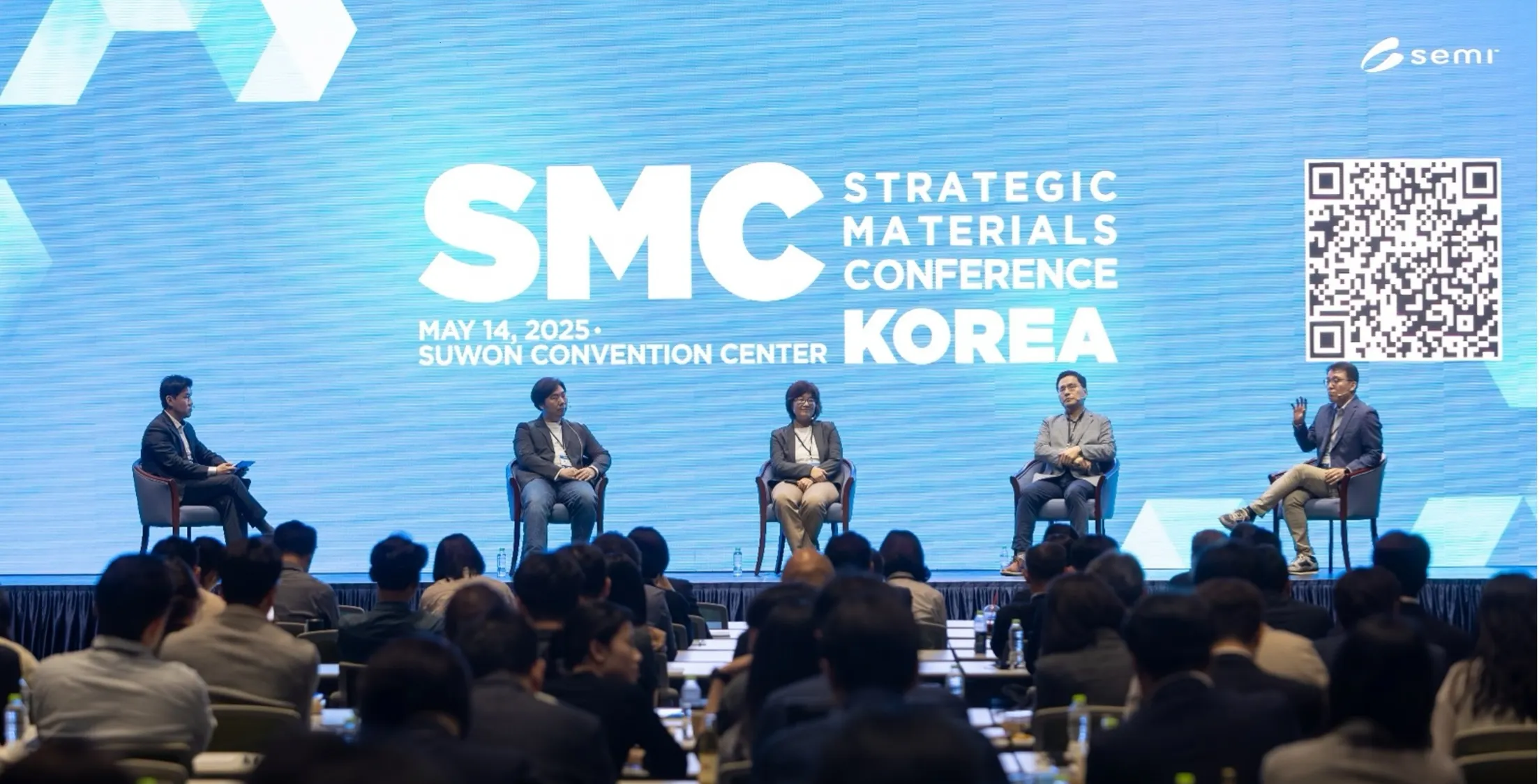
The transition toward an AI-driven technological landscape is redefining the paradigm of materials innovation across the semiconductor industry. In response, SMC (Strategic Materials Conference) Korea will spotlight next-generation semiconductor materials and process innovation strategies that enable and accelerate AI-driven advancements.
This conference brings together leading companies representing the global semiconductor ecosystem to share strategic directions and practical insights into materials innovation, from material design to real-world manufacturing processes.
The first session will focus on materials strategies for the AI era, exploring market and technology trends as well as AI-driven development approaches to provide a comprehensive view of next-generation semiconductor innovation. The second session will offer an in-depth exploration of process-ready materials essential for advanced semiconductor manufacturing, highlighting practical applications in areas such as photoresists, etching chemistry, and cleaning processes.
By convening key players across the semiconductor ecosystem, this conference provides a unique platform to gain a holistic perspective on the present and future of materials innovation in the AI era. Participants will have the opportunity to gain valuable technical insights while fostering collaboration and connections across the industry.
SMC (Strategic Materials Conference) Korea 2026
May 12(Tue), 2026 | Convention Hall 2, 3F, Suwon Convention Center
8:30 am - 4:30 pm
Off
Add to Calendar2026-05-12 08:30:002026-05-12 16:30:00SMC (Strategic Materials Conference) Korea 2026AI Enabled Materials Breakthroughs: From Molecules to ManufacturingThe transition toward an AI-driven technological landscape is redefining the paradigm of materials innovation across the semiconductor industry. In response, SMC (Strategic Materials Conference) Korea will spotlight next-generation semiconductor materials and process innovation strategies that enable and accelerate AI-driven advancements. This conference brings together leading companies representing the global semiconductor ecosystem to share strategic directions and practical insights into materials innovation, from material design to real-world manufacturing processes. The first session will focus on materials strategies for the AI era, exploring market and technology trends as well as AI-driven development approaches to provide a comprehensive view of next-generation semiconductor innovation. The second session will offer an in-depth exploration of process-ready materials essential for advanced semiconductor manufacturing, highlighting practical applications in areas such as photoresists, etching chemistry, and cleaning processes. By convening key players across the semiconductor ecosystem, this conference provides a unique platform to gain a holistic perspective on the present and future of materials innovation in the AI era. Participants will have the opportunity to gain valuable technical insights while fostering collaboration and connections across the industry.Suwon Convention Center South KoreaSEMI.org[email protected]Asia/Seoulpublic
Asia/Seoul
Please be sure to check / understand the followings before applying
Due to the nature of this product, we do not accept cancellations or refunds after the application has been made. Please understand this in advance.
When applying for this event, please register using a corporate email address.
SEMI Member Price is avilable for those who work for a SEMI member company or a wholly owned subsidiary that is registered as a subsidiary. If you are unsure, please click HERE to inquire. Please note that if your membership status cannot be confirmed, you will be charged the general price.
Payment is only possible by credit card. You can download your receipt from Receipt / Application History in your My Page.
Please note that places will be allocated on a first-come, first-served basis, so please apply as soon as possible.
First deadline: June 5 (Fri.) Final deadline: June 25 (Thu.)
Symposium Fee SEMI Members : 280,000 JPY (Excluding tax) Please note that you will be responsible for the cost of local accommodation, transportation and participation in the golf competition. A shuttle bus service is scheduled to run between New Chitose Airport and the venue.
Accommodation Charge 51,460JPY - 78,660JPY per night (including Breakfast and tax)
1 person usage: 51,460 JPY / night (per person) 2 people usage: 28,800 JPY / night (per person)
Superior Room Lake Side (40㎡) (Non-smoking)
1 person usage: 54,760 JPY / night (per person) 2 people usage: 30,450 JPY / night (per person)
Junior Suite Room Sea Side (58㎡) (Non-Smoking)
1 person usage: 72,060 JPY / night (per person) 2 people usage: 38,700 JPY / night (per person)
Junior Suite Room Lake Side (58㎡) (Non-Smoking)
1 person usage: 78,660 JPY / night (per person) 2 people usage: 42,000 JPY / night (per person)
*Breakfast, consumption tax, bathing tax, and service charge are included.
[Outbound] July 8 (Wed) New Chitose Airport → Windsor Hotel Toya Resort & Spa
Duration: 120 minutes
Fare: Free (application is required)
Meeting / Departure: Please arrive on a flight landing at New Chitose Airport between 8:30 and 10:00. Multiple shuttle services will be arranged to coincide with your flight arrival time.
[Return] July 10 (Fri) The Windsor Hotel Toya Resort & Spa → New Chitose Airport
Travel Time: Approx. 120 minutes
Fare: Free (Advance reservation required)
Departure:
Departures will begin from around 14:50, operating sequentially. (Please note that departure times may vary depending on the program’s end time.) *If you are taking the return bus, please book a flight departing at 6:30 PM or later.
JTB Global Marketing & Travel ISS Japan 2026 Desk
*Inquiries can be received only by e-mail. E-mail: [email protected] Office Hours: 10:00-16:30 (Mon-Fri except Saturdays, Sundays and Holidays)
We will be holding “ISS Japan 2026”, a conference to discuss strategies and issues with an eye on the future of the industry. As digital technology supports global prosperity, we will provide opportunities for exchanging opinions and networking on important issues such as sustainability, energy issues, and the latest technology, in order for Japan to demonstrate leadership as an important base for semiconductor manufacturing.
Advancing Tools & Materials to Empower 3DIC Manufacturing for AI Innovations
The roadmap for advanced packaging in AI applications presents significant challenges, particularly with scaling up and incorporating more chiplets.
This expansion poses obstacles in terms of yield and productivity.
To address these challenges, CoP (Chip-on-Panel) technology will be introduced to complement current CoW (Chip-on-Wafer) to accelerate 3DIC scale up. However, this shift requires substantial infrastructure development, especially for tool development and material innovations. Meanwhile, material usage will be significantly increased, raising concerns about supply chain resilience.
All of which will play a pivotal role in enabling this critical technology expansion and requires seamless collaborations across backend eco-system.
Representative Director, Japan Association of Corporate Executives
Technological Evolution and Economic Growth
As global change accelerates and the international environment becomes increasingly uncertain, the effective use of technologies such as AI is essential for Japan to achieve sustainable economic growth. At the same time, building a “Collaborative Growth Model” rooted in empathy enables us to realize true prosperity. This lecture explores the latest technological trends and discusses Japan’s vision for sustainable growth.
National Technology Office・Chief Technology Officer
Microsoft Japan
An Autonomous Digital World Powered by AI Agents: The New Frontier of Value Creation Enabled by Generative AI
Generative AI is beginning to create an “autonomous digital world,” in which operations and decision-making are orchestrated autonomously through AI agents.
In this session, we will provide an overarching view of how these technological advancements are transforming corporate business processes, organizational structures, and executive decision-making, and examine the fundamental impact these changes have on competitiveness and business strategy.
In addition, the session will offer insights for Japanese companies and the Japanese market from a global perspective, while sharing Microsoft’s vision for the future and strategic perspectives on driving new value creation.
Deputy Director General for Semiconductor and Information Policy Deputy Director General for Economic Security
Ministry of Economy, Trade and Industry
Economic Security and Semiconductor
This presentation will discuss the growing importance of the semiconductor industry amid concurrent geopolitical tensions,
supply chain disruptions, and technological advancements; outline strategies for fostering innovation and strengthening supply chain resilience;
and introduce the Japanese government’s AI and semiconductor strategy in light of these developments.
Inside Taiwan’s Semiconductor Strategy: Technology, Supply Chains, and Geopolitics
This presentation explores Taiwan’s semiconductor development strategy as a "pivotal fulcrum" of the global AI industry. First, it examines how Taiwan maintains its technological leadership by leveraging advanced process nodes and the unique cluster advantage of "zero distance between R&D and production". Second, from a supply chain perspective, it analyzes innovative models for the global deployment of the industrial ecosystem. Furthermore, the session addresses the strategic management of key technical know-how amidst geopolitical challenges and defines a collaborative positioning of "deep coupling" with global partners. Finally, it highlights the evolution and vision
of government policy as it transforms from a "regulator" into an "enabler".
Geopolitics, Economic Security, and Asia (China/India)
This session explains approaches to addressing economic security risks, incorporating the latest developments in export and investment regulations in the semiconductor sector. In particular, it focuses on risks associated with business operations in China and India.
In March this year, the Chinese Communist Party and government adopted the 15th Five-Year Plan (2026–2030), reaffirming their commitment to accelerating “self-reliance and self-strengthening” in high-tech industries centered on semiconductors. This presentation examines how far China’s semiconductor supply chain has advanced toward greater autonomy amid prolonged U.S.–China technology tensions. By analyzing developments in key firms, it also considers how Japanese companies should respond to these changes.
Session 5 The Insights from Round Table Discussion
9:40 am
Break
10:50 am
Session 6 Leadership and Strategy to Forge Japan's Future
11:00 am
Shingo Yamagami
Special Advisor
TMI Associates
How Should Japan Respond to the Turbulent World?
The world has witnessed the Russian invasion of Ukraine, China’s wolf warrior diplomacy and a series of economic coercion, and the US military operations in Venezuela as well as Iran.
How should Japan react to the measures by major powers that shake the foundations of the rules-based international order established after WWII?
Fawning China, worshipping the US, and the deterioration of Japan’s presence in the world.
How could Prime Minister Takaichi extricate Japan’s diplomacy from such a stalemate that has continued since PM Suga through PM Kishida and Ishiba?
These will be discussed candidly in light of the speaker’s 40-year-long experience as a diplomat.
AI is dominating the semiconductor market. As AI-related semiconductor prices rise and demand continues to grow, the outlook for the Semiconductor Production Equipment (SPE) market is improving. In addition to demand fueled by technological innovations unique to AI semiconductors, the industry faces an urgent need to construct new fabrication facilities and add production lines to keep up with increased volumes. In this seminar, we will explore the outlook for both the semiconductor and SPE markets.
We would like to examine the current status and future prospects of Japan's Semiconductor Materials Industries that not only provides solutions for BEOL where semiconductor elements are formed on wafer surface but also for BEOL where thermal and insulation managements are vital. We would like to briefly touch the implications of geopolitical risks.
AI progress continues to accelerate. Frontier development is shifting from scaling pretraining to optimizing inference and strengthening agent/orchestration layers. This drives demand beyond GPUs to DPUs and data center infrastructure. As physical AI and multimodal models rise, this talk examines the implications for the semiconductor industry.
Toward a Science and Technology-oriented Nation: The Future of Japan
As the world grapples with challenges such as population decline and intensifying global competition, how can Japan achieve sustainable growth? This session will highlight technologies such as space, AI, and robotics from a broad perspective that spans industry, society, and philosophy. We will explore Japan’s future and strategic direction through “science and technology-oriented nation,” a concept advocated by Keidanren. Biography
On the afternoon of the second day, we invite you to relax and enjoy a moment of calm surrounded by the wide open skies and lush greenery of Hokkaido’s magnificent natural landscape. As part of ISS Japan’s off-site networking activities designed to foster connections among participants, we offer not only a golf competition but also a variety of alternative activities for those who do not wish to participate in golf.
Schedule 12:00-13:00 Lunch 13:00-18:30 Golf Tournament 19:00-20:30 Dinner Party
Activities
For those not participating in the golf tournament, we invite you to enjoy a variety of activities that allow you to experience the magnificent natural landscapes of Hokkaido. A wide range of activity programs offered by the hotel is available. https://www.windsor-hotels.co.jp/en/activity/
Reservations can be made via the link below. Reservation Contact Information Tel: +81-142-73-1177 (Hours: 8:00 AM – 5:00 PM) Email: [email protected] * When making your reservation, please mention that you will be attending “ISS JAPAN."
Asia/Tokyo
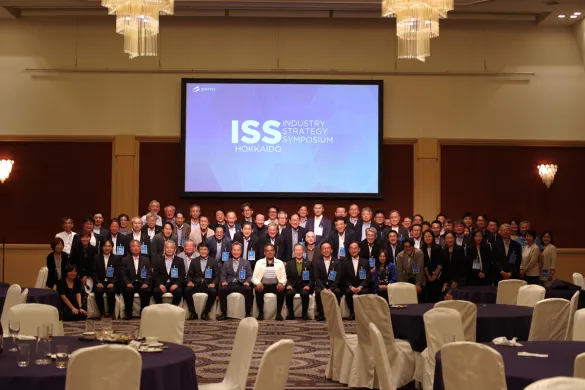
ISS Hokkaido 2025 Event Report
We have compiled an overview of the 2025 event, along with photos of participants and their comments.
Europe’s Semiconductor Strategy: Navigating Geopolitics, Building Resilience
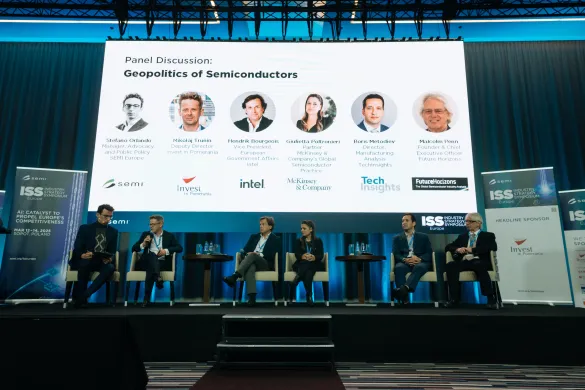
As geopolitical dynamics continue to influence global industries, the semiconductor sector finds itself at a pivotal crossroad. During the SEMI Industry Strategy Symposium (ISS Europe) held in Sopot, Poland, a high-level panel on the Geopolitics of Semiconductors brought together leaders from across the ecosystem to explore Europe’s role in an increasingly fragmented world shaped by strategic dependencies and evolving alliances.
This course will stress the impace of the IC and End product requirements, i.e., smaller, better, cheaper" and their influence on the manufacturing processes. Topics include area packaging - ball grid arrays, flip chip, fanout, attaching dies and chip scale packages, and the assembly technologies - chip & wire, tape automated bonding, and flip chip, as well as emerging technologies, namely, 3-D and stacked die, and packaging reliability issues.
Who Should Attend
This course is intended for both manufacturing and R&D know-how in IC packaging professionals, including but not limited to:
Engeineers
Managers
Process Engineers
R&D Engineers
Sales and Application Engineers who supply packaging materials and tools
Learning Objectives
Identify the wide variety of package types and how they align with different application uses.
Understand chip interconnection technologies (such as wirebond, flip chip, or thin film) and chip encapsulation
Identify the materials and processes used in packaging.
Summarize the current state of the art packages, such as chiplets and heterogeneous packaging.
Gain a foundational understanding of what packaging is and its importance to the microelectronics industry.
Instructor
Terry Alford
Important Information
Note that only the person who registered will receive a certificate of completion. This virtual training will not be recorded. Attendees must be present to access the course knowledge.
Can't find the training link on the day of? After you register, you will receive the link to the live training via the email address you provided. In addition, you will receive email reminders about 24 hours in advance and an hour before with the same link. Please keep these emails on hand to access the training on time. If you do not see any confirmation emails, please check your junk/spam folders before contacting SEMI U for support.
Aloft Tempe 951 East Playa Del Norte Dr. Meeting Room - Tactic Tempe, AZ85281 United States
This course offers a solid foundation in semiconductor manufacturing, from basic concepts to advanced techniques, providing practical insights into the tools, processes, and technologies driving the industry.
Learning Objectives
Gain a comprehensive understanding of the semiconductor industry and manufacturing process, design, and eco-system of the semiconductor industry
Understand the jargon, tools, and materials used in the design and fabrication of an integrated chip
Effectively be able to communicate semiconductor manufacturing concepts with other associates and industry professionals
Course Topics
Basic Electronics and Microelectronics: Definitions of essential electronic terms/concepts and introduction to microelectronics and integrated circuits
Process Nodes: Process nodes and their impact on device performance and cost
Device Physics and Transistor Operation: Principles of device operation and transistor functionality
Crystal Growth and Wafer Preparation: Crystal growth techniques and wafer preparation processes
Advanced Transistor Technologies: FDSOI, FinFETs, and Gate-All-Around (GAA) transistors and their impact on device performance
Circuit Design and Layout: Introduction to circuit design, layout techniques, and tools
Wafer Processing:
Mask Making and Lithography: Techniques and materials used in mask making and various lithographic methods (DUV, Immersion, EUV)
Clean Room Environments: Importance of clean rooms in semiconductor manufacturing and contamination issues
Etching and Cleaning Processes: Plasma and wet etching processes
Ion Implantation and Diffusion Techniques: Methods for doping and controlling diffusion in semiconductor fabrication
Deposition Techniques: RTP, CVD, ALD, and ALE techniques and their effect on device performance
Electroplating and Sputtering: Metal deposition techniques used in manufacturing
Packaging and Testing: Techniques such as wire bonding, die stacking, flip chip, and chiplets packaging, semiconductor testing processes
Metrology and Measurement Tools: Tools and methods used for precision measurement in semiconductor manufacturing
Semiconductor Industry Ecosystem: The major players in the industry
Who Should Attend
Anyone interested in understanding semiconductor manufacturing, including new employees, professionals in related industries, and those seeking to broaden their knowledge of the field.
Note that only the person who registered will receive a certificate of completion. This virtual training will not be recorded. Attendees must be present to access course knowledge.
Can't find the training link day of? After you register, you will receive the link to the live training via the email address you provided. In addition, you will receive email reminders about 24 hours in an advance and an hour before with the same link. Please keep these emails on hand to access the trainings on time. If you do not see any confirmation emails, please check your junk/spam folders before contacting SEMI U for support.
Aloft Tempe 951 East Playa Del Norte Dr. Meeting Room - Tactic Tempe, AZ85281 United States
Gain a comprehensive understanding of the semiconductor industry and the integrated circuit (IC) manufacturing process. This course is designed for new personnel in the field or anyone seeking a well-rounded knowledge of the tools, materials, and terminology used in semiconductor manufacturing.
Pricing
Early Bird Pricing: $100 off
Members:$1,295 $1,195
Non-Members:$1,395 $1,295
* Group pricing for up to 20+ attendees: $12,900 Any questions, please contact [email protected]
Overview of Semiconductor Manufacturing
In-Person Training
8:00 am - 5:00 pm
Off
Add to Calendar2026-06-23 08:00:002026-06-24 17:00:00Overview of Semiconductor Manufacturing (Tempe, AZ) Gain a comprehensive understanding of the semiconductor industry and the integrated circuit (IC) manufacturing process. This course is designed for new personnel in the field or anyone seeking a well-rounded knowledge of the tools, materials, and terminology used in semiconductor manufacturing.Pricing Early Bird Pricing: $100 offMembers: $1,295 $1,195Non-Members: $1,395 $1,295* Group pricing for up to 20+ attendees: $12,900Any questions, please contact [email protected]Aloft Tempe 951 East Playa Del Norte Dr. Meeting Room - Tactic Tempe, AZ 85281 United StatesSEMI.org[email protected]America/Phoenixpublic
America/Phoenix
Register Now
The first part of the course provides a brief overview of semiconductor design and fabrication steps, encompassing IC design techniques, all wafer processing steps, assembly, and packaging. It delves into semiconductor jargon in laypeople terms, and various substrate types such as Si, SiGe, FDSOI, GaAs, SiC, GaN. Additionally, it discusses different types of transistors like pMOS, nMOS, Bipolar, BiCMOS, CMOS, FinFets, and GAA and their evolution and what applications they are used in.
The second part of the course focuses on semiconductor business aspects such as silicon economics, wafer processing costs, semiconductor revenue forecasts, driving forces in the industry, top semiconductor IDMs, market competitors based on market share, OEMs, foundries, top tool vendors, and Fabless companies. Addresses the fastest-growing semiconductor markets based on geographic locations and applications, identifies semiconductor competitors/customers, and discusses major semiconductor markets like Automotive, PC, Mobile, Memory, Wireless, Cell phones, Consumer, Gaming, AI, IoT, Digital TV, Radio, Automotive, MEMS, and Emerging Technology & Impact on Industry.
Learning Objectives
Understand the fundamental principles and theories semiconductor technology.
Communicate with other associates and understand wafer processing steps.
Understand semiconductor business aspects such as silicon economics, wafer processing costs, semiconductor revenue forecasts, driving forces in the industry, top semiconductor IDMs, market competitors based on market share, OEMs, foundries, top tool vendors, and Fabless companies.
Review the semiconductor eco-system as it relates to design and fabrication of a semiconductor device.
Gain knowledge of major semiconductor markets like Automotive, PC, Mobile, Memory, Wireless, Cell phones, Consumer, Gaming, AI, IoT, Automotive, MEMS, and Emerging Technology & Impact on Industry.
Demonstrate effective communication skills through written reports, presentations, and discussions related to semiconductor subjects.

Collaborate effectively with peers in group projects or discussions regarding semiconductor subjects.

Analyze and evaluate research literature in semiconductor technology.
Develop critical thinking and problem-solving skills applicable to semiconductor technology.

Who Should Attend
This course is suitable for anyone seeking a better understanding of the semiconductor industry, market leaders, terminology, business, and the semiconductor ecosystem.

Note that only the person who registered will receive a certificate of completion. This virtual training will not be recorded. Attendees must be present to access course knowledge.
Can't find the training link day of? After you register, you will receive the link to the live training via the email address you provided. In addition, you will receive email reminders about 24 hours in an advance and an hour before with the same link. Please keep these emails on hand to access the trainings on time. If you do not see any confirmation emails, please check your junk/spam folders before contacting SEMI U for support.
Aloft Tempe 951 East Playa Del Norte Dr. Meeting Room - Tactic Tempe, AZ85281 United States
Embark on a journey through semiconductor design, manufacturing, and business in this illuminating course. Explore IC design techniques, transistor evolution, and market dynamics. Delve into substrate types and industry economics, discovering the fastest-growing markets and key players shaping the semiconductor landscape.
Pricing
Early Bird Pricing $100 off
Member $995 $895
Non-Member $1095 $995
* Group pricing for 20+ attendees: $9900 Any questions, please contact [email protected]
Understanding Semiconductor Technology and Business
In-Person Training
8:00 am - 5:00 pm
Off
Add to Calendar2026-06-22 08:00:002026-06-22 17:00:00Understanding Semiconductor Technology and Business (Tempe, AZ) Embark on a journey through semiconductor design, manufacturing, and business in this illuminating course. Explore IC design techniques, transistor evolution, and market dynamics. Delve into substrate types and industry economics, discovering the fastest-growing markets and key players shaping the semiconductor landscape.Pricing Early Bird Pricing $100 off Member $995 $895 Non-Member $1095 $995* Group pricing for 20+ attendees: $9900Any questions, please contact [email protected]Aloft Tempe 951 East Playa Del Norte Dr. Meeting Room - Tactic Tempe, AZ 85281 United StatesSEMI.org[email protected]America/Phoenixpublic
America/Phoenix
Register Now
SEMI U
Off
Add to Calendar2026-05-11 00:00:002026-05-11 00:00:00ASMC - Advanced Semiconductor Manufacturing Conference SEMI-U TrainingsHilton Albany, NY United StatesSEMI.org[email protected]America/Los_AngelespublicRegister now