

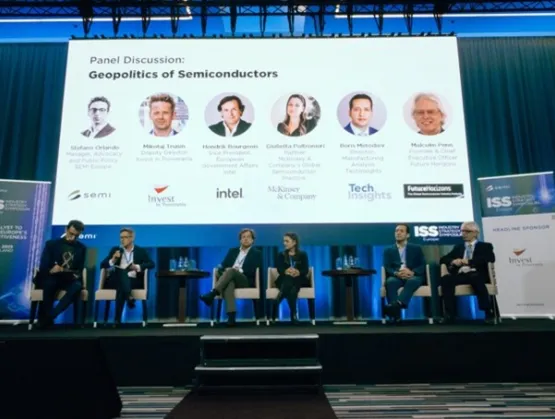
As geopolitical dynamics continue to influence global industries, the semiconductor sector finds itself at a pivotal crossroad. During the SEMI Industry Strategy Symposium (ISS Europe) held in Sopot, Poland, a high-level panel on the Geopolitics of Semiconductors brought together leaders from across the ecosystem to explore Europe’s role in an increasingly fragmented world shaped by strategic dependencies and evolving alliances.
Moderated by Stefano Ramundo Orlando, Advocacy Manager at SEMI Europe, the panel convened industry executives, strategic advisors, and policy experts for a forward-looking dialogue on the challenges and opportunities shaping Europe’s semiconductor future.
The session opened by acknowledging the rapidly changing geopolitical landscape and its impact on the global semiconductor supply chain. Export controls, investment screening mechanisms, and economic security strategies are no longer abstract policy discussions — they are reshaping investment decisions, manufacturing strategies, and even workforce planning across the globe. While these disruptions present undeniable challenges, panellists underscore that they also mark a pivotal opportunity. For Europe, this is not a moment to retreat but a call to adapt with purpose.
Closing the Gaps: Building on Europe’s Strategic Advantages
Giulietta Poltronieri, Partner at McKinsey & Company, mapped out Europe’s strategic position in the global value chain. While Europe boasts global leadership in intellectual property (IP), lithography, and research and development (R&D), key gaps remain in foundry capabilities and backend manufacturing. The solution lies not only in plugging these gaps but in securing Europe’s existing strengths — a balancing act between resilience and competitiveness.
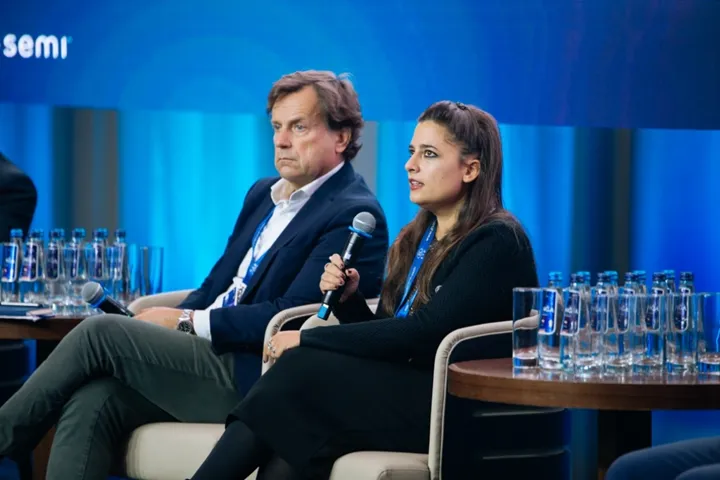
Giulietta Poltronieri, Partner, McKinsey & Company’s Global Semiconductor Practice
Malcolm Penn, Founder & CEO of Future Horizons, echoed this sentiment and emphasized that success in semiconductors requires long-term vision and a global mindset. Penn argued that Europe must look beyond its local market, citing Taiwan’s TSMC as a model of how small domestic markets need not constrain global leadership, “The excuse of having no end market in Europe is just an excuse.” Europe, Penn contended, must have the courage to think big and act boldly.
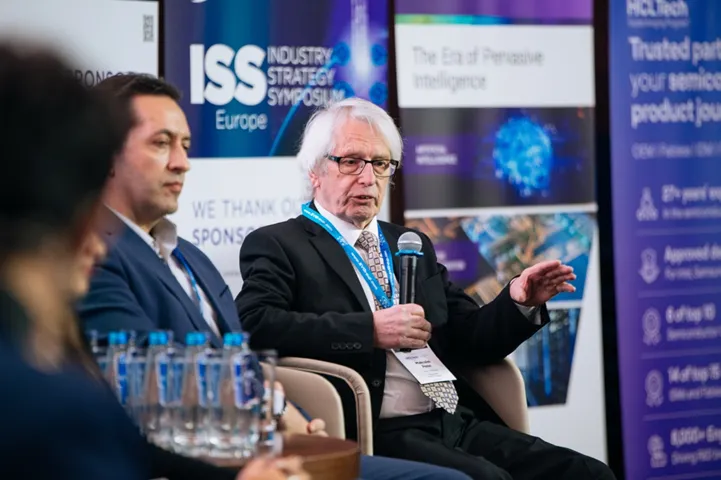
Malcolm Penn, Founder & Chief Executive Officer, Future Horizons
Corporate Strategy Amid Uncertainty
Hendrik Bourgeois, Vice President of European Government Affairs at Intel, offered insight into how geopolitical risk has become an embedded factor in corporate strategy. Intel’s decision to expand manufacturing in both the U.S. and Europe was directly influenced by a recognition of over-reliance on certain global regions.
Bourgeois stressed that while business can adapt to restrictive policy, uncertainty remains the greatest challenge to long-term decision-making. Consistency, trust, and engagement with governments are crucial — and businesses must invest in building political capital just as they do in infrastructure or talent.
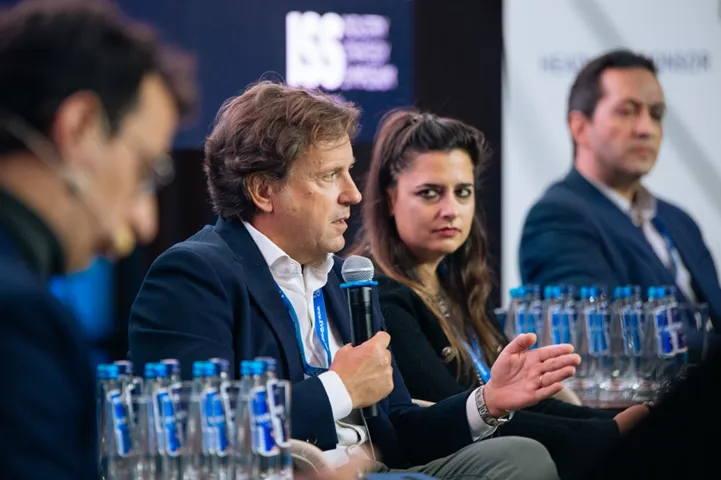
Hendrik Bourgeois, Vice President, European Government Affairs, Intel
China: Partner, Competitor, and Geopolitical Puzzle
Boris Metodiev, Director at TechInsights offered a balanced view of China’s role — acknowledging it as both a vital market and a strategic competitor. With nearly 40% of global semiconductor demand and significant state backing, China presents both irresistible opportunity and real systemic risks.
Key concerns include technology transfer, the impact of heavy subsidization, and growing market concentration. Addressing these issues, Metodiev suggested, will require a balanced approach focused on diversifying supply chains, protecting intellectual property, and reinforcing trade enforcement — all while maintaining open channels for cooperation and avoiding the pitfalls of full decoupling.
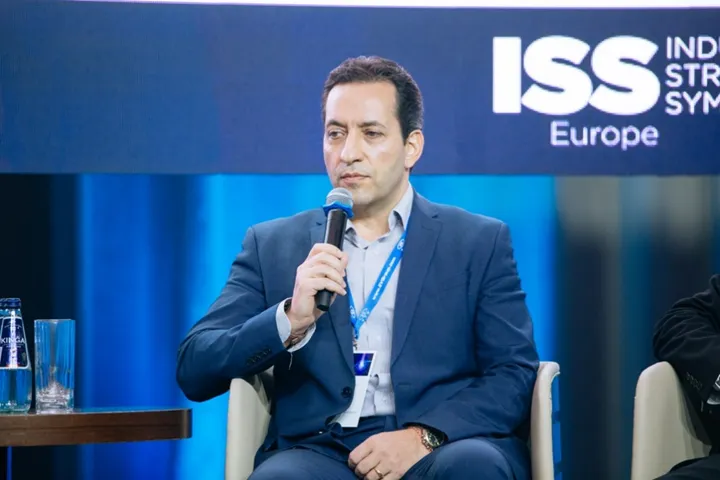
Boris Metodiev, Director, Manufacturing Analysis, TechInsights
Talent: The Silent Bottleneck
Panellists identified talent shortages as one of the most yet under-discussed threats to Europe’s semiconductor future. Europe lacks the scale of skilled STEM graduates to meet current and projected demand.
Companies like Intel are investing heavily in partnerships with universities and training institutions. However, regulatory obstacles — especially for intra-European mobility of non-EU nationals — remain significant. The call to action was clear: Europe must rethink migration and education policy through the lens of economic strategy, not just under traditional policy frameworks, aligning policy with industrial goals and scaling efforts to match future workforce needs.
Central and Eastern Europe: Emerging Pillars of European Strategy
The panel explored how Central and Eastern Europe are increasingly integral to Europe’s semiconductor strategy. Mikołaj Trunin, Deputy Director at Invest in Pomerania, noted that despite geopolitical headwinds, the region continues to attract strong foreign direct investment (FDI). Poland has emerged as a trusted investment destination and a budding semiconductor hub, with Pomerania positioned as a key region for advanced packaging.
With nations like Poland taking on higher political and industrial profiles—such as upcoming leadership of the EU Council— the region is positioned to serve as a strategic bridge between Europe’s industrial core and frontier markets. This momentum underscores the importance of embedding these regions more fully into the broader semiconductor ecosystem.
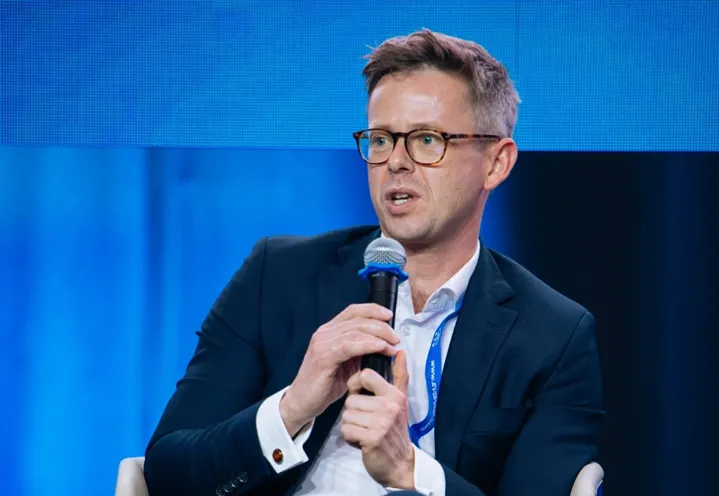
Mikołaj Trunin, Deputy Director, Invest in Pomerania
A Call for Coordinated Action
The panel concluded on a note of clarity: geopolitical disruption is not a temporary deviation, but a defining characteristic of the coming industrial era. With semiconductors positioned at the intersection of technology, security, and sovereignty, Europe must act decisively. Companies must continue to evolve, engage politically, and remain agile. To ensure long-term competitiveness and resilience, policymakers and industry leaders must work hand in hand to shape an integrated European semiconductor ecosystem. The stakes are high — but so is the potential.
SEMI Contact
Iranda Chaki, Senior Policy Coordinator
Email: [email protected]


