downloadGroupGroupnoun_press release_995423_000000 copyGroupnoun_Feed_96767_000000Group 19noun_pictures_1817522_000000Member company iconResource item iconStore item iconGroup 19Group 19noun_Photo_2085192_000000 Copynoun_presentation_2096081_000000Group 19Group Copy 7noun_webinar_692730_000000Path
Skip to main content
Default Banner Image

In Person

REGISTRATION

Registration
  • Early-Bird Registration Deadline: Wed, July 9, 5PM (KST)
  • Group Registration Deadline: Fri, July 4, 5PM (KST)
  • Registration fee includes a boxed lunch provided at the venue.  


[Group]

  • SEMI Member : KRW 275,000
  • Non Member: KRW 330,000
    * Group registration fee applies to groups of five or more from the same company.
    * For group registration inquiries, please contact SEMI Korea Program Team([email protected]).

[Early Bird]

  • SEMI Member: KRW 308,000
  • Non Member: KRW 363,000

[On site]

  • SEMI Member: KRW 385,000
  • Non Member: KRW 385,000
Registration
South Korea APS2025_banner Business Technical

OVERVIEW

  • Date: July 16(Wed), 2025
  • Time: 09:00 - 17:00
  • Venue: Convention Hall 2, 3F, Suwon Convention Center
  • Language: Korean (Simultaneous interpretation will NOT be provided.)
  • Organizer: SEMI Korea  


SPONSORS


NOTICE

  • The agenda is subject to change at the discretion of the speakers.
  • Presentation files agreed by speakers will be provided to attendees after the event through SEMI registration website.


CONTACT

  • SEMI Korea Program Team ([email protected])
  • Simultaneous interpretation will NOT be provided.

Convention Hall 2, 3F, Suwon Convention Center
South Korea

9:00 am - 9:30 am
Choon Lee
Choon Lee
Intel

System Level Advanced Packaging

Rapidly evolving progress of AI and HPC has significantly increased computational and memory needs such as higher performance, lower power consumption, and wider memory bandwidth with reduced latency. An end application of AI/HPC comes down to Datacenter construction. Meeting the challenge of delivering this processing power in the datacenter requires systematic innovation from the device to the datacenter level. It starts with integrating highly optimized, domain-specific accelerators which should be integrated into advanced 2.5D and 3.5D packaging that minimize losses and power for high-speed communication while taking advantage of workload power management. AI computing introduces significant challenges for energy consumption and thermal management. Power delivery network is crucial for CPU, GPU and NPU power and performance of which solution can be DTC, IVR, mtal-insulator-metal (MIM) capacitor and thin film inductor, backside power rail, etc..  While Moore’s law has continued to yield transistor scaling necessary for these applications, the ever growing demand from models for AI training and inference pushes Si scaling in conjunction with the advent of advanced interconnects via disaggregation and reaggregation of chips in advanced packaging.  
We will discuss with examples and the challenges of utilizing packaging elements to their full potential and discuss how co-optimization is crucial to achieving the best results for any given set of system requirements and constraints.  

※Biography

9:30 am - 10:00 am
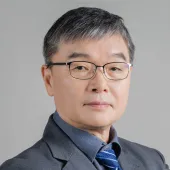
TaeKyeong Hwangv
TaeKyeong Hwang
Amkor Technology Korea

Advanced Packages for AI/HPC

10:00 am - 10:30 am
신상훈
SangHoon Shin
Assistant Professor,
Hanyang University

Advanced Packaging and Reliability: Technologies Shaping the Next Generation

Advanced semiconductor packaging is now central to enabling continued performance scaling as conventional transistor scaling slows. This seminar introduces cutting-edge trends in advanced packaging, including 2.5D and 3D integration, fan-out wafer-level packaging, chiplet-based architectures, and glass interposers for optical I/O in AI and HPC systems. These technologies offer enhanced performance, form factor reduction, and system-level integration capabilities critical for future computing platforms.
Leveraging prior industry experience, this talk highlights real-world applications and challenges in designing and qualifying advanced SoC packages. Examples include CoWoS-based AI chip packaging, hybrid bonding techniques, and thermal design optimization for high-power systems.
As packaging structures become increasingly complex, reliability emerges as a critical bottleneck. The seminar explores major failure mechanisms such as thermal-mechanical fatigue, electromigration, interfacial delamination, and Through Glass Via (TGV) degradation. Reliability analysis methods including FEA-based stress modeling, time-to-failure prediction, and advanced failure diagnostics will be introduced.
By combining packaging innovation with reliability engineering, the talk aims to provide a comprehensive perspective on the technological and practical issues that must be addressed to enable robust, high-performance semiconductor systems in the AI and data-driven era.

※ 연사정보

10:30 am - 11:00 am
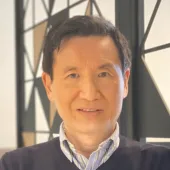
Sang Hyun Han
Sang Hyun Han
NOVA

Pushing the Boundaries: Challenges and Opportunities in Panel-Level Packaging Technology

As the AI era progresses, semiconductor devices are increasingly adopting 3D architectures to boost performance and power efficiency. At the same time, system technology co-optimization (STCO) is advancing through the use of chiplets and advanced wafer-level packaging. As the industry integrates more chips into chiplets, the size of interposers continues to grow. However, wafer-level packaging faces limitations in accommodating large interposers due to the constraints of 300mm wafer shapes and temporary carriers.
This trend is driving a shift toward panel-level packaging (PLP) to support higher packaging unit counts. Despite its potential, PLP still faces significant challenges—particularly in terms of process development and process control.
This paper explores the technical trends in panel-level packaging, focusing on the current challenges and potential solutions related to process control.

※ Biography

11:00 am - 11:20 am

Break

11:20 am - 12:30 pm
All speakers

Panel Discussion

1:30 pm - 2:00 pm
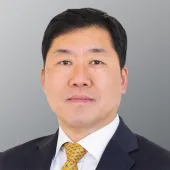
Jinho_An
Jinho An
Senior Director/ Technologist,
Applied Materials

Presentation New Innovations Enabling Fine Pitch D2W Hybrid Bonding

Heterogenous integration and advanced packaging is behind the technology that is enabling today’s AI and high-performance computing. This is done through complex architecture that utilizes platforms including microbumps, through silicon vias (TSV), high density fanout and hybrid bonding (HB). The integration of chiplets using any combination of these technologies is allowing the industry to extend the Moore’s law and overcome limitations of the Von Neumann architecture. Hybrid bonding is an especially appealing technology that helps improve power and performance (higher I/O density), as well as thermal management. Sub-10 ㎛pitch die-to-wafer (D2W) HB is already in production1) for 3DIC and the industry working on HB technology for High Bandwidth Memory as well2). However, there are continuous challenges for D2W that require new innovation in both processing and metrology & inspection (M&I), and also unique challenges for both logic and memory applications specific to its integration. The presentation will discuss how logic and memory HB technologies are different and what process and M&I technologies are needed to facilitate HVM of the HB technology across different applications. Process challenges including low temperature bonding, die warpage management and dicing will be discussed, while M&I challenges include the transition to e-beam technology for HB enablement.

1) R. Agarwal et al., “3D Packaging for Heterogeneous Integration”, IEEE ECTC, July 2022
2) Lee et al., “A Study on D2W Cu Bonding Technology for HBM Multi-die Stacking”, IEEE ECTC, May 2024

※Biography

2:00 pm - 2:30 pm
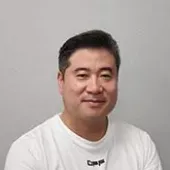
Taehong Min
Taehong Min
Samsung Electro-mechanics

Trend and Technology of Glass Package Substrate

2:30 pm - 3:00 pm
이동환
Dong Hwan Lee
Samsung SDI

Design and Development of High Thermal Conductive Molding Compounds for Advanced Packaging Applications

The ongoing miniaturization and increased integration density in electronic circuit systems, particularly in advanced technologies such as DRAMs for Through-Silicon Via (TSV) and High Bandwidth Memory (HBM), have elevated thermal management to a critical challenge in microelectronic packaging. The functional performance, operational lifespan, and reliability of electronic devices fundamentally depend on efficient thermal dissipation. As power densities escalate, enhancing the thermal conductivity of EMCs has become imperative for effective heat removal from increasingly complex electronic components. Consequently, research efforts focused on developing epoxy resins with superior thermal conductivity and identifying appropriate high-conductivity fillers represent the most viable approaches to addressing thermal management challenges in contemporary microelectronic systems.
Recently, we have successfully developed a high-performance epoxy molding compound (EMC) that solves critical thermal management challenges in advanced microelectronic packaging applications. Not only do these compounds provide extremely safe protection of integrated circuits from moisture, mobile ion contaminants and adverse environmental conditions, including temperature fluctuations, humidity and mechanical stress, but the enhanced thermal and mechanical properties of EMC formulations address the heat dissipation requirements of advanced technologies such as small electronic circuit systems, especially TSV and HBM applications.

3:00 pm - 3:30 pm
Prof. Yunhyeok Im
Prof. Yunhyeok Im
Georgia Institute of Technology

Next-Generation Thermal Strategies: The Liquid Cooling Revolution for AI Chips

3:30 pm - 3:50 pm

Break

3:50 pm - 5:00 pm
All Speakers

Panel Discussion

Next-generation semiconductor packaging technologies are advancing rapidly in response to the explosive growth of high-performance semiconductor markets, including AI chips and HBM. At the Advanced Packaging Summit 2025, industry leaders from top global companies will share the latest developments and insights in advanced packaging technologies. The morning session will spotlight core technologies such as SLP and PLP, while the afternoon session will feature in-depth presentations on essential next-generation packaging technologies including hybrid bonding, glass substrates, materials for heat control, and liquid cooling solutions. Each session will also include panel discussions to encourage broad and practical exchanges of technical experiences, offering valuable opportunities for networking. We invite you to explore the future direction of next-generation semiconductor packaging with global industry experts and expand both your insights and business horizons at this premier event.

9:00 am - 5:30 pm Off Add to Calendar 2025-07-16 09:00:00 2025-07-16 17:30:00 Advanced Packaging Summit 2025 Next-generation semiconductor packaging technologies are advancing rapidly in response to the explosive growth of high-performance semiconductor markets, including AI chips and HBM. At the Advanced Packaging Summit 2025, industry leaders from top global companies will share the latest developments and insights in advanced packaging technologies. The morning session will spotlight core technologies such as SLP and PLP, while the afternoon session will feature in-depth presentations on essential next-generation packaging technologies including hybrid bonding, glass substrates, materials for heat control, and liquid cooling solutions. Each session will also include panel discussions to encourage broad and practical exchanges of technical experiences, offering valuable opportunities for networking. We invite you to explore the future direction of next-generation semiconductor packaging with global industry experts and expand both your insights and business horizons at this premier event. Convention Hall 2, 3F, Suwon Convention Center South Korea SEMI.org [email protected] Asia/Seoul public Asia/Seoul
Event format
Promote in calendar
Off
United States Image Training

Don't miss this chance to grow your knowledge, build your network, and accelerate your journey in the semiconductor industry.  


Course Options: 

PFAS Compounds in Semiconductor Environment: Half Day Course

  • Per- and Polyfluoroalkyl substances (PFAS) are a group of over 15,000 compounds which have been used in a variety of different industries due to their unique properties. Over the past two decades, their presence in water and the human body has become of increasing concern, with studies linking certain PFAS to adverse effects in the organisms studied. This has led to increasing consumer awareness, litigation, and the regulation of PFAS compounds. This course provides an in-depth review of PFAS compounds, their history, market drivers, regulations, current uses in the semiconductor industry, and methods for sampling and analysis, over the entire semiconductor value chain.

Semiconductor Device Manufacturing in a Cleanroom (Best Practices to Improve Product Reliability and Yield)

  • This course is designed for people who utilize cleanrooms. Semiconductor device manufacturing is a complex process that involves working in a cleanroom with a wide range of specialized equipment and materials. Many challenges must be overcome to meet production goals. This course provides the fundamentals and thought processes to improve your production reliability and yield. This course is intended for mechanical engineers, process engineers, test engineers, quality assurance engineers, and technicians.

Overview of Semiconductor Manufacturing

  • This course offers a solid foundation in semiconductor manufacturing, from basic concepts to advanced techniques, providing practical insights into the tools, processes, and technologies driving the industry.

Phoenix Convention Center
100 N 3rd St
Phoenix, AZ 85004
United States

SEMI U

Finish your show experience with SEMI U training sessions! 

Learn from experienced industry leaders across a wide range of topics. Choose a course that aligns with your goals and gain valuable insights to advance your role in the dynamic world of semiconductors.

Following the overwhelming success of last year’s inaugural trainings—where 125+ industry professionals, both seasoned and new, participated in five pre-show sessions—we’re expanding! This year, we’re offering three sessions the last day of the show to meet the growing training demand as the industry’s talent gap continues to widen. 


8:00 am - 4:00 pm Off Add to Calendar 2025-10-09 08:00:00 2025-10-09 16:00:00 Trainings at SEMICON West Finish your show experience with SEMI U training sessions! Learn from experienced industry leaders across a wide range of topics. Choose a course that aligns with your goals and gain valuable insights to advance your role in the dynamic world of semiconductors.Following the overwhelming success of last year’s inaugural trainings—where 125+ industry professionals, both seasoned and new, participated in five pre-show sessions—we’re expanding! This year, we’re offering three sessions the last day of the show to meet the growing training demand as the industry’s talent gap continues to widen.   Phoenix Convention Center 100 N 3rd St Phoenix, AZ 85004 United States SEMI.org [email protected] America/Phoenix public America/Phoenix Register Now
Event format
Promote in calendar
Off
United States Image Training

Don't miss this chance to grow your knowledge, build your network, and accelerate your journey in the semiconductor industry.  


Course Options: 

Advanced Packaging (Chiplets, WLP, Flip Chip, 3D Stacking)

  • This 1-day course addresses IC packaging, assembly, and package/substrate interconnections. It stresses the impact of the IC and end product requirements, i.e., “smaller, better, cheaper” their influence on the manufacturing processes. Topics include area packaging- ball grid arrays, flip chip, fanout, stacking die and chip scale packages, and the assembly technologies – chip & wire, tape automated bonding, and flip chip, as is emerging technologies namely, 3-D and stacked die, and packaging reliability issues.

Basic Electronics & Troubleshooting

  • This course provides students with a fundamental understanding of electronics and troubleshooting techniques. Topics covered include current, voltage, resistors, capacitors, inductors, diodes, and transistor fundamentals. Students will learn to differentiate between AC and DC power, understand digital and analog circuits, and interpret electronic component datasheets.  The course offers a comprehensive overview of the theory, operation, and applications of essential testing equipment, including the Volt-Ohm-Meter, Digital Multi-Meter, and Oscilloscope. Through hands-on training, students will build breadboard circuits and develop troubleshooting skills using multi-meters.

Fundamentals of Atomic Layer Deposition (ALD)

  • Discover how atomic-scale precision is revolutionizing semiconductor manufacturing with Atomic Layer Deposition (ALD) and Etching (ALE). This course provides a practical introduction to Atomic Layer Deposition, an essential technique in semiconductor manufacturing. You'll learn about ALD foundational concepts including growth, advantages, measurements, and more, chemical precursors for use in ALD, selected ALD processes, area-selective deposition, and atomic layer etching. Overall, the applications and chemistry used in semiconductor processing as it relates to ALD and ALE are heavily discussed.

Fundamentals of EUV

  • This course provides attendees with an overview of the fundamentals, current status, and technical challenges of EUV Lithography. The course will begin with a review of lithography in general drawing parallels between EUV and DUV lithography. The course will then go on to review EUV specific challenges/solutions including sources (lithography and metrology), optics, metrology, masks, and patterning materials. Two areas where EUV specific challenges are particularly significant are patterning materials and photomasks; this course will cover these two areas in more detail including topics such as resist stochastics, radiation chemistry, reflective thick masks, off-axis mask illumination, phase shift masks, and mask stochastics.

Fundamentals of Microsystems (MEMs) Fabrication and Applications

  • This introductory course is designed to educate people from any background that are new to Microsystems Fabrication and Applications, no prior knowledge is expected. We begin with some historical applications to set the stage for diving into how these devices are made.

Plasma Etching, ALE, & RIE

  • This course discusses the fundamentals of plasma assisted phenomena and reactive ion etching (RIE) processes. The emphasis is on the physical and chemical processes that determine the consequences of a reactive gas plasma/surface interaction. The role of energetic ions as encountered in RIE systems is discussed in detail and the factors which influence anisotropy of etching are highlighted. Plasma-assisted etching equipment is described including capacitively coupled, inductively coupled and wave-generated plasmas sources. The instructor discusses the applied aspects of plasma-assisted etching from a general point of view. The emphasis is on mechanistic understanding. The etching of Si and its compounds is covered in detail. The chemistries used in the etching of other technology-related materials such as Al, organics, and III-V compounds are summarized. Other topics presented include selectivity, loading, ARDE and feature scale problems, damage, and issues associated with high-density plasma RIE. A section on plasma diagnostics and ion-beam based etching methods is briefly discussed.

Understanding Semiconductor Technology & Business

  • The first part of the course provides a brief overview of semiconductor design and fabrication steps, encompassing IC design techniques, all wafer processing steps, assembly, and packaging. It delves into semiconductor jargon in laypeople terms, and various substrate types such as Si, SiGe, FDSOI, GaAs, SiC, GaN. Additionally, it discusses different types of transistors like pMOS, nMOS, Bipolar, BiCMOS, CMOS, FinFets, and GAA and their evolution and what applications they are used in. The second part of the course focuses on semiconductor business aspects such as silicon economics, wafer processing costs, semiconductor revenue forecasts, driving forces in the industry, top semiconductor IDMs, market competitors based on market share, OEMs, foundries, top tool vendors, and Fabless companies. Addresses the fastest-growing semiconductor markets based on geographic locations and applications, identifies semiconductor competitors/customers, and discusses major semiconductor markets like Automotive, PC, Mobile, Memory, Wireless, Cell phones, Consumer, Gaming, AI, IoT, Digital TV, Radio, Automotive, MEMS, and Emerging Technology & Impact on Industry.

Wet Processing in the Semiconductor Industry

  • This one-day course provides a working knowledge of surface conditioning and cleaning techniques used in the manufacture of integrated circuits. Fundamentals of the techniques used for cleaning the wafer surface will be discussed. Practical applications and methods for cleaning will be presented. Upon completing this course participants will have an understanding of all types of cleaning processes used in IC manufacturing; surface conditioning for pre-diffusion clean, in particular pre-gate oxide clean, post-etch and post-implant photoresist removal, particle removal, post-CMP clean. Participants will be able to understand the cleaning roadmaps and limitations of clean technologies as the node sizes decrease. The course participant should be able to make informed decisions on the surface conditioning and cleaning processes and techniques to utilize for IC manufacturing. Course topics include surface conditioning and cleaning technologies, processes and equipment, wet, plasma, and dry cleaning, surface conditioning and cleaning techniques, cleaning technologies, effects, and challenges.

Phoenix Convention Center
100 N 3rd St
Phoenix, AZ 85004
United States

SEMI U

Start your show experience with SEMI U training sessions! 

Learn from experienced industry leaders across a wide range of topics. Choose a course that aligns with your goals and gain valuable insights to advance your role in the dynamic world of semiconductors.

Following the overwhelming success of last year’s inaugural trainings—where 125+ industry professionals, both seasoned and new, participated in five pre-show sessions—we’re expanding! This year, we’re offering eight sessions the day before the show to meet the growing training demand as the industry’s talent gap continues to widen. 


8:30 am - 5:30 pm Off Add to Calendar 2025-10-06 08:30:00 2025-10-06 17:30:00 Pre-Show Trainings at SEMICON West Start your show experience with SEMI U training sessions! Learn from experienced industry leaders across a wide range of topics. Choose a course that aligns with your goals and gain valuable insights to advance your role in the dynamic world of semiconductors.Following the overwhelming success of last year’s inaugural trainings—where 125+ industry professionals, both seasoned and new, participated in five pre-show sessions—we’re expanding! This year, we’re offering eight sessions the day before the show to meet the growing training demand as the industry’s talent gap continues to widen.   Phoenix Convention Center 100 N 3rd St Phoenix, AZ 85004 United States SEMI.org [email protected] America/Phoenix public America/Phoenix Register Now
Event format
Promote in calendar
Off
United States https://www.semiconwest.org/ SCW-Graphics_Reg_360x317@2_SCW_Event Tile_1.jpg Business Executive Expositions
Highlighted content

San Francisco, CA
United States

- APHI CAST EHS NBMC SCM Smart MFG Smart Mobility Smart MedTech Smart Data & AI SMG Sustainability EMG ESD Alliance FlexTech FOA ITL MSIG SCIS SE&A SiPAT SOI Standards Workforce Development Off Add to Calendar 2026-10-13 00:00:00 2026-10-15 00:00:00 SEMICON West 2026 San Francisco, CA United States SEMI.org [email protected] America/Los_Angeles public
Event format
Promote in calendar
Off

Registration

SEMI Members: FREE
Use your corporate email address during log in to be recognized as a SEMI Member.

Non-Members:
Early-Bird Pricing: $40
Regular Pricing (begins May 22): $50

United States Exec Outlook Event Page Tile update.jpg Business Executive Technical

Event Host

Highlighted content

How Will Agentic AI Change Chip Design and Verification?” features EDA and emerging agentic AI company executives and entrepreneurs discussing changes within chip design and verification as agentic AI tools become more mainstream. Panelists will distill the excitement surrounding the innovation in chip design and verification, collaboration between traditional EDA and agentic AI startups and broader implications for technological advancements.

Cadence Design Systems
2655 Seely Avenue
San Jose, CA 95134
United States

5:30 pm - 6:45 pm

Registration and Networking with Dinner and Beverages

6:45 pm - 7:00 pm
Julie Rogers
Julie Rogers
Executive Director
ESD Alliance
Chuck Alpert
Chuck Alpert
Fellow
Cadence

Welcome and Speaker Introductions

7:00 pm - 8:30 pm
Ed Sperling
Moderator
Ed Sperling
Editor-in-Chief
Semiconductor Engineering
Dave Kelf
Dave Kelf
CEO
Breker Verification Systems
Wally Rhines
Walden Rhines
CEO
Silvaco
Vince Wong
Vince Wong
Head of AI Development
Verific
Shelly Henry
Shelly Henry
CEO
Moores Lab AI
Ann Wu
Ann Wu
CEO
Silimate
Cindy Cui
Cindy Cui
VP of Global Customer Success
ChipAgents
ESD Alliance

Join ESDA for our Executive Outlook event, "How Will Agentic AI Change Chip Design and Verification?"

5:30 pm - 8:30 pm Off Add to Calendar Disabled America/Los_Angeles Register Now!
Event format
Tab Order
Overview
Agenda
Registration
New Tab 1
Travel
Sponsors
Call for Abstracts
Call for Papers
Technology Showcase
Press
New Tab 2
Photo Gallery
Promote in calendar
Off

Registration

Registration
  • Early-Bird Registration Deadline: Wed, May 7, 5PM (KST)
  • Group Registration Deadline: Fri, May 2, 5PM (KST)

Registration Fee

  • Early Bird
    • SEMI Member: KRW 308,000
    • Non Member: KRW 363,000
  • On site
    • SEMI Member : KRW 385,000
    • Non Member: KRW 385,000
  • Group
    • SEMI Member : KRW 275,000
    • Non Member: KRW 330,000
      *Group registration fee applies to groups of five or more from the same company.
      *For group registration inquiries, please contact SEMI Korea Program Team([email protected]).
Registration
South Korea SMCKorea2025_thumnail Business Technical

OVERVIEW

  • Date: May 14(Wed), 2025  
  • Time: 9:00-16:20
  • Venue: Convention Hall 2, 3F, Suwon Convention Center  


NOTICE

  • The agenda is subject to change at the discretion of the speakers.
  • Registration fee includes a boxed lunch provided at the venue.
  • Simultaneous interpretation will be provided.
  • Presentation files agreed by speakers will be provided to attendees after the event through SEMI registration website.   


SPONSORS

SMC-Korea-2023-Sponsor_DW.jpg SMC-Korea-2023-Sponsor_DP.jpg SMC-Korea-2023-Sponsor_JSR.jpg
SMC-Korea-2023-Sponsor_DS_0.jpg SMC-Korea-2023-Sponsor_ET.jpgHuntsman
Air Liquide  

line_2.jpg

CONTACT

Convention Hall 2, 3F, Suwon Convention Center
South Korea

9:00 am - 9:30 am

Welcome Reception

Sukgu Hong
SukKoo Hong
Head of Material Development Team,
Samsung Electronics

Materials Innovation for 3D DRAM/ CFET

As the era of lateral shrink is coming to a cliff, the need for looking at the remaining axis is uprising - the Z-axis. For DRAM, the introduction of vertical channel is very near, and even the introduction of a full 3D-DRAM is not far away. Fortunately, we have experience of VNAND, which could tell us many things about the difficulties following the 3D stacking structures. Starting from the change in the material we've gone through regarding the conversion of planar to vertical NAND, prospection of the material innovation for 3D-DRAM will be shared. The introduction of materials for the construction of deep holes and lengthy lines will be addressed. Also, needs for innovative sacrificial and auxiliary materials will be presented.

※ Biography

Inhee Lee
Inhee Lee
Program Director / Active Memory Program,
imec

Memory technologies : Status and Scaling

As DRAM scaling approaches fundamental limits, advanced architectures such as 3D DRAM and 4F² DRAM have emerged as promising solutions. The industry initially anticipated the adoption of these technologies around the 1d to 0a nm nodes; however, they remain in development, with mass production likely postponed until the 0b node. For instance, current 3D DRAM samples feature 8–12 layers, while the target is approximately 90 layers. Recent advancements include 3D DRAM with vertical bit-line architecture, demonstrating improved on-current performance and gate control through 5-layered cell stacks utilizing Si/SiGe sacrificial layers and hybrid bonding. Meanwhile, novel 4F² DRAM transistor structures exhibit enhanced operational margins and mitigate floating body effects through dual-gate designs. Additionally, a 3D stackable DRAM architecture with horizontally stacked transistors has been proposed to address challenges such as gate-induced drain leakage (GIDL) and row hammer effects, supported by both experimental and simulation results. Collectively, these innovations underscore the potential of 3D and 4F² DRAM as next-generation solutions to overcome scaling bottlenecks and meet the growing demand for high-density, low-power memory.

※ 연사정보

Changhwan Choi
Prof. Changhwan Choi
Hanyang University

Materials and Process Technology Perspectives for CFET Device

The development of semiconductor technology can be continuously achieved through the collaboration of materials, processes, devices, and systems, and 3D devices and 3D integration process technologies will be essential in the future. From this perspective, the structural change of semiconductor transistors is expected to evolve from the current Gate-All-Around FET (GAAFET) to a new Complementary FET (CFET) device. This structural change of semiconductor devices requires new materials and process technologies. Various technologies are required, such as Monolithic or Sequential 3D integration, Si/Si or Si/Non-Si substrates, new low-resistivity metals, CMP, Bonding, TSV, and Back-Side Power Network Delivery (BSPDN). In this presentation, we will examine the technological trends from the materials and process perspectives for the development of CFET device technology.

※ Biography

blank
Linghzhi Zhang
Director of Product Management,
Air Liquide

Si, Ge, B Hydrides for Next Generation Semiconductor Devices – Challenges and Perspectives

For the past six decades, hazardous gas hydrides like GeH4, Si2H6, and B2H6 have been essential to the semiconductor industry. Their high reactivity, strong reducing power, and ability to grow high-quality, carbon-free layers have made them vital for applications ranging from Si and SiGe epitaxy to tungsten metallization. In recent years, new applications and integration schemes have emerged, demanding higher-performance hydride sources for low-temperature Chemical Vapor Deposition (CVD) and epitaxy. This increased global demand drives production investments, despite the challenges of handling, facilitating, and logistics constraints such as limited shelf-life, pyrophoricity, and toxicity. In this talk, we will provide an overview of the current gaseous hydrides landscape and its challenges. We will discuss how the gas industry can ensure the semiconductor industry's continued safe access to these critical materials through enhanced stewardship, optimized supply chains, packaging, and manufacturing techniques. Furthermore, we will provide insights into technology trends towards new-generation, extra-low-temperature epitaxy and high dopant sources, and their potential use in future transistor architectures.

Networking Break

Panel Discussion

Lunch

1:30 pm - 2:00 pm
Prayudi Lianto
Prayudi Lianto
Technology Manager,
Applied Materials

Materials Engineering Innovations to Address HBM Challenges for AI Applications

Emergence of artificial intelligence (AI) is predicted to drive global chip sales to ~$1 trillion revenue by 2030. This surge of AI-targeted chip demand is driving ever-increasing requirement in compute speed to >109 petaFLOPS. High-bandwidth memory (HBM) architecture is well-suited to fulfill this requirement, currently offering >1TB/s bandwidth. To continue improving HBM performance, materials engineering innovations are required in critical packaging building blocks, such as TSV and Hybrid Bonding. Solutions from equipment manufacturer standpoint were presented, in relation to TSV gapfill, low-temperature (<300˚C) hybrid bonding enablement, and bond strength consideration for higher I/O count in the future. Timely solutions to the dynamic HBM integration challenges should be seen holistically and to this end, active partnerships and collaboration across the ecosystem are encouraged.

※ Biography

2:00 pm - 2:30 pm
Andy Tuan
Andy Tuan
Managing Director - Asia,
Linx Consulting

Semiconductor Materials Supply Chain and Market Development Trends

The semiconductor industry continues to advance, propelled by growing demand for AI-driven computing and storage technologies and diverse digital applications. However, this growth is tempered by rising economic uncertainty and escalating trade tensions, particularly due to recent U.S. tariff policies, which threaten to disrupt global supply chains. The semiconductor materials sector faces multifaceted challenges, including increasing rapid technological innovation, geopolitical volatility, large-scale capacity expansions and climate change actions. While the market remains relatively stagnant in 2024 compared to 2023, a rebound is anticipated in 2025–2026, driven by long-term demand for advanced computing and storage solutions. A shifting supplier landscape is emerging, marked by the rise of regional players—notably in China—and consolidation among multinational corporations pursuing economies of scale through mergers and acquisitions. Geopolitical pressures are driving localization and dual sourcing, which raise costs, reduce efficiency, and complicate supply chains. This talk highlights the need for a delicate balance between innovation-driven growth and the escalating operational challenges in the semiconductor materials industry.

※ 연사정보

2:30 pm - 2:50 pm

Networking Break

2:50 pm - 3:20 pm
Yohan Ahn
Yohan Ahn
Senior Director,
Entegris

Technological Trends and Necessity of Material Contamination & Filtration for Wafer Defectivity Control in HBM Manufacturing

As the commercialization of artificial intelligence (AI) and the advancement of technologies such as high-performance computing (HPC) and deep learning (DL) progress, the need to process large amounts of data quickly has emerged. Traditional DDR and GDDR memory have limited bandwidth, so HBM, which offers higher performance, has been commercialized, driving the development of new technologies.
Compared to traditional memory chips, HBM has increased chip size and higher defectivity vulnerability due to chip stacking processes. This has led to new technical approaches for wafer defectivity control across the entire material ecosystem.
This presentation reviews the latest trends in filtration/purification technologies aimed at minimizing the impact of particles and impurities in this material ecosystem. By examining current HVM devices and next-generation HBM-related technologies, we aim to contribute to wafer defect control.

※ Biography

3:20 pm - 3:50 pm
Mikko Utriainen
Mikko Utriainen
CEO, Ph.D.,
Chipmetrics

Advancing ALD Tool Qualification Using Ultra-High-Aspect-Ratio Test Structures

As semiconductor manufacturers continue the vertical scaling of 3D memory devices, advanced metrology and process control strategies are becoming increasingly essential for maintaining yield and reliability. The rising aspect ratios (AR > 100) of device features present significant challenges for conformal thin-film deposition via atomic layer deposition (ALD). Ultra-thin dielectric films and multilayer stacks—widely used in 3D memory channel holes—are particularly sensitive to process variations. Even minor deviations in ALD process conditions can result in non-uniform film coverage, defect formation, or electrical performance issues, all of which are difficult to detect and monitor within high-aspect-ratio structures.
To address these challenges, Chipmetrics has developed a novel method based on lateral ultra-high-aspect-ratio test structures (PillarHall®) for ALD process development, monitoring, and tool qualification. In the PillarHall® test wafers, the aspect ratio exceeds 1000, enabling practical and non-destructive measurement of film conformality. The method offers a sensitive and scalable solution for improving ALD process qualification, benchmarking tool performance, and enhancing production stability.
This presentation will highlight recent advancements in PillarHall® technology, with a focus on its application in ALD tool qualification and ALD process window control.

※ Biography

3:50 pm - 4:20 pm
Deoksin Kil
Deoksin Kil
Senior Fellow/Head of Structuring Material,
SK hynix

The Role and the Challenge of the Process Material for the Future of Semiconductor

There have been lots of technical advances in the fileld of semiconductor industry for the last dacades ever since DRAM and NAND were invented and commercialized. Meanwhile, form factor was changed from 8F2 to 6F2 in DRAM, and the concept of 3D stacking was adopted in NAND flash memory. Furthermore, EUV tool has been adopted and are being successfully used to make the fine pattern in logic and DRAM as well. And also, it has been very long since ALD was taken as a new advanced depostion technology to meet the need for excellent conformality. But all these new process technologies couldn’t have been possible without the advances in process materials such as advanced photo resist, precursors, functional chemicals and CMP slurries. Recently, those process materials are beginning to open the new possibilities for the innovation of process integations, resulting in cost reduction and giving an extra performance to the process tools. In this talk, the role, the current issues and future challenges will be discussed focusing on the process materials in semiconductor industry.
Starting from photo resist, thin and etch resistant resist has been cosistantly required to suppress the pattern collapse and wiggling during the patterning process. Since the EUV was adopted in DRAM and Logic, high sensitivity EUV resist is now being intensively explored to obtain low DtS as well as good CD uniformity to make the best use of the enomoursly high-priced EUV tool in a cost effective way. For the sake of that, even metal-containing resist is also being tried for high quality patterning. Additionally, thick KrF resist is also required at 3D NAND flash memory with the increase of ON stack and especially for the new platform to be. And for the future, the new concept of PR based on small sized polymer will be worth trying and dry type developer would be also necessary to keep the pattern stable without collapse or wiggling.
With regard to the wet chemicals and CMP slurries, advanced functional chemicals are getting more and more important rather than convetnional cleaning chemicals that are used after etch and CMP process. W or Mo recess chemical in 3D NAND would be that very case. Those chemicals should assure the good uniformity in terms of recess amount in the vertical direction. Most of all etch and CMP prcesses need post cleaning steps to clean the residue, but during that, some unwanted part of the surroundings is apt unavoidably to be removed deteriorating the device proformance in the end. Therefore, special clean chemical will be also needed to minimize the unwanted film loss as well as residue removal. When it comes to the slurry, the shape of the abbrasive particles consistently has been changing from sharp and pointed to the rounded one by adopting colloidal synthesis to suppress the scratch during CMP. The size of the abrasive particle tends to get smaller but slurry is required to make up the decreased removal rate by properly regulating components within slurry. With the change of material to be polished such as Mo or Carbon, new slurry for those new materials will be a new drive for CMP related materials.
Precursor and some functional gases have been contributing to the quality improvement or deposition modication of functional materials such as high-k materials in DRAM. As always, there should be more technical areas, in which precursor and gas will be able to play an important role in ASD(Areal Selective Deposition) or ALE(Atomic Layer Etching) process.
Since process materials needs to be considered from the operation of FAB line unlike the process tools, it must be managed well from the aspect of consistent quality control and risk management of supply chain and safety. In the past, process material used to play a simple and supporting role in the process and tools as well. But now, it is becoming a time for the process materials to play a more active role in cost reduction and risk management as well as providing technology for semiconductor industry. Especially, new process materials are also required to meet the needs for low carbon emission during the process and safety issues from the using PFAS containg materials that are hazardous to human body. Way of doing work needs to be also changed in a way that R&D activities have to be shifted to the earlier engagement. And plus, the collaboration between device maker and process material supplier shoud be much closer and earlier than before so that the developed materials can be successfully adopted at a targeted process and a tool for it. As the material supply chain has been becoming very unstable since corona pandemic and US-China trade conflict, it needs to be managed with a good predictability and balance as well in order for consistent and stable supply in case of unexpected issues at a supply chain.

※ Biography

4:20 pm

Adjourn

EMG

Empowering the AI Era: Advancements in Next-Generation Memory and Materials 

The arrival of the AI era demands transformative advancements in memory technology and semiconductor materials. This year, SMC (Strategic Materials Conference) Korea will focus on the innovative materials and manufacturing technologies driving the development of next-generation memory technologies in response to the AI-driven technological revolution. The first session will explore material innovations emerging from the evolution of next-generation memory semiconductor technologies, such as 3D DRAM and CFET. The second session will offer in-depth discussions on the future of semiconductor materials related to cutting-edge memory manufacturing, such as HBM, from diverse perspectives, including global equipment and material suppliers, integrated device manufacturers (IDMs), and semiconductor research institutions. Additionally, a panel discussion featuring all speakers will provide an opportunity for deeper exchanges of valuable insights. We encourage your active participation in this conference to engage in meaningful discussions and gain a more comprehensive understanding of the topics.

9:00 am - 4:20 pm Off Add to Calendar 2025-05-14 09:00:00 2025-05-14 16:20:00 SMC (Strategic Materials Conference) Korea 2025 Empowering the AI Era: Advancements in Next-Generation Memory and Materials The arrival of the AI era demands transformative advancements in memory technology and semiconductor materials. This year, SMC (Strategic Materials Conference) Korea will focus on the innovative materials and manufacturing technologies driving the development of next-generation memory technologies in response to the AI-driven technological revolution. The first session will explore material innovations emerging from the evolution of next-generation memory semiconductor technologies, such as 3D DRAM and CFET. The second session will offer in-depth discussions on the future of semiconductor materials related to cutting-edge memory manufacturing, such as HBM, from diverse perspectives, including global equipment and material suppliers, integrated device manufacturers (IDMs), and semiconductor research institutions. Additionally, a panel discussion featuring all speakers will provide an opportunity for deeper exchanges of valuable insights. We encourage your active participation in this conference to engage in meaningful discussions and gain a more comprehensive understanding of the topics. Convention Hall 2, 3F, Suwon Convention Center South Korea SEMI.org [email protected] Asia/Seoul public Asia/Seoul
Event format
Tab Order
Overview
Agenda
Registration
New Tab 1
Travel
Sponsors
Call for Abstracts
Call for Papers
Technology Showcase
Press
New Tab 2
Photo Gallery
Promote in calendar
Off