In the foreseeable data-driven world, Smart MedTech has come from focusing only on treatment to the realms of preventive care and precision medicine. Let’s take a look at how Medtronic, onsemi, JelloX Biotech, Singular Wings Medical, and Neurobit Technologies are shaping the healthcare industry for the future.
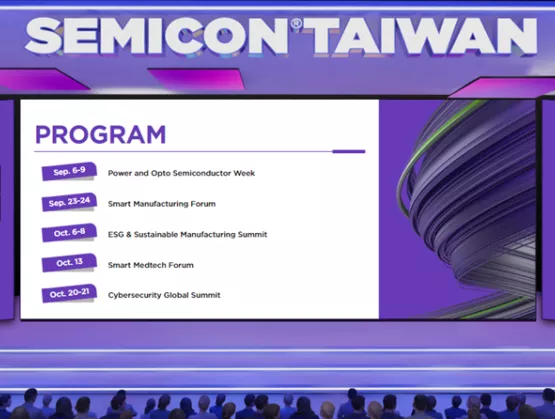
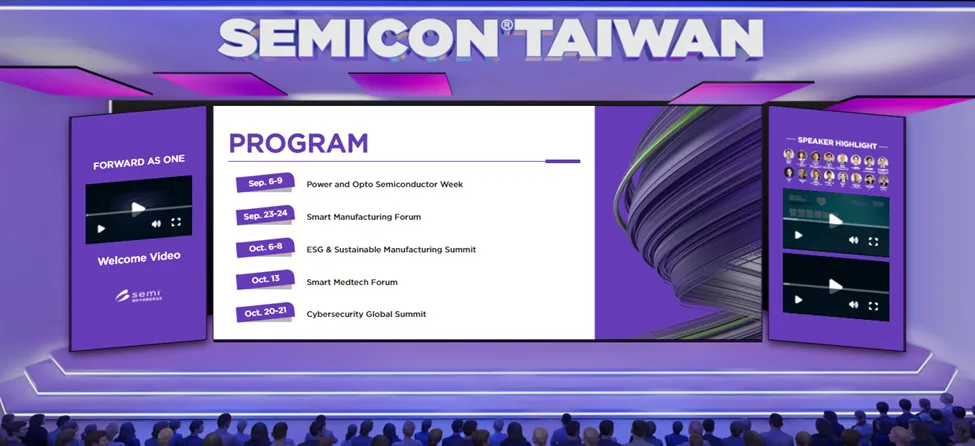
Following the unprecedented trend of digital transformation empowered by the COVID-19 pandemic, the biomedical industry is making huge strides towards an era of precision health via cross-domain integration of medicine and technology, developing cutting-edge applications such as detection chips, bio-sensors, and smart drug delivery devices. To speed up cross-industry cooperation, this year’s SEMICON Taiwan started with online forums first in September, and its virtual ‘Smart MedTech Forum’ that was co-organized by Taiwan’s Ministry of Science and Technology (MOST) and SEMI just ended days ago and has made interdisciplinary cooperation possible through all kinds of cross-domain dialogues, hoping to make Taiwan the best partner for big international companies in developing smart medicine, and jointly optimizing precision healthcare services.
A New Look of Smart Healthcare Intertwined with Semiconductors, Microelectronics, Artificial Intelligence (AI), Digital Technology and Biomedicine
Those who have an in-depth observation on the global development will definitely see a blend of medicine and technology coming. Three particular trends stand out in this process: The first one is that semiconductors and microelectronics will change how healthcare is done in the future. “Medtronic is committed to developing innovative treatment models, addressing inequalities in the global healthcare landscape, and producing high-value healthcare services,” said Dr. Trevor Gunn, Vice President of International Relations at Medtronic. Increasing chronic disease prevalence, rapidly growing elderly population and demand for home care, as well as the ever-rising need for respiratory treatment have all led to a surge in global demand for medical devices. It is estimated that the global medical device market will grow from US$432.2 billion in 2021 to US$658 billion in 2028, with a compound annual growth rate up to 5.4%. “Semiconductor technology is the core for the new-generation medical devices, not only making them smaller, portable and powerful, but also further enhancing the quality of implantable medical devices, and thus bringing us one step closer to the world of precision medicine. That is exactly what Medtronic would like to achieve.”
Personalized medical innovation and care are the second big one to watch for. Mr. Henry Yang, APAC Senior Marketing Manager, Industrial Solutions Division, onsemi pointed out: “Responding to ageing population, longer life-spans, rising health awareness and other trends, more and more medical devices are going custom-made and personalized. Easy to carry, 24/7 monitoring via internet connection, and smartphones as the human-machine interactive interface, these are all the things we are doing with medical devices right now.” Standing on the side for changes, onsemi is working tirelessly on technological upgrades, making highly integrated, portable, power-efficient, embedded/wireless, and one-stop-solution products to ensure that care providers are equipped with better medical devices to give better-personalized services.
The last and also the most important trend is changing the future of healthcare through digital technology. For example, JelloX Biotech helps doctors make an accurate diagnosis and right treatment decisions for cancer patients through its 3D digital pathology imaging and AI-assisted analysis and diagnosis platform, whereas Singular Wings Medical is using its self-titled ‘Singular Wings’ non-invasive wearable device to monitor the heart rate and respiration rate in real-time of isolated infected persons, vaccinated teenagers, or participants of new drug clinical trials, and locate them immediately for the handling of any abnormal events. Neurobit Technologies on the other hand has launched the only medical-grade AI-assisted decision-making system in the market - ‘Neuro Speed’ that can be used for rapid screening of dizziness in the emergency department and in-hospital strokes. Neurobit has had the system clinically verified and plans to apply for US FDA and EU CE certifications soon.
Pursue Cooperation with International Partners and Usher in a Greater Future for Precision Medicine!
Taiwan boasts the world's most comprehensive semiconductor industry supply chain and ICT manufacturers, along with a sound healthcare system that encompasses many top-notch clinical/medical talents, making it an ideal place to develop smart health and precision medicine. What’s next is how to connect with the international market and take it to the next level through strategic cooperation.
Trevor shared Medtronic’s take on international cooperation by saying: “What we do is implantable and other advanced medical devices, such as the world’s smallest wireless pacemaker Micra TPS that was launched a few days ago. It’s implanted in the human body and has to stay there for a long time, so the technical requirements for a partner are quite different from those of basic medical devices such as MRI. In addition to looking into whether the technical capacity is up to our standard, we will also take the supply chain and financial operational resilience into consideration when choosing potential partners.”
On the other hand, onsemi pays close attention to how well its strategic partners understand the market. Henry said: “What we produce are semiconductors, not services directly provided to the end-users like medical workers and patients. Therefore, we need a strategic partner to bridge with the real market, giving us feedback on product performance and users' opinions, etc. That’s the critical information we need to make our products better and create a multiple win situation.”
The idea that ‘the synergy is maximized only through cross-domain cooperation’ reads particularly true for the startups in Taiwan’s healthcare industry. Mr. David Lee, founder and CEO of Singular Wings Medical stressed the importance of balancing risks and creating profits for startups. That is why they take finding the right partner very seriously, hoping to work with someone who shares the same idea on the things they care about.
JelloX and Neurobit also believe that partners matter - a good one not only accelerates the integration of technology and healthcare but also acts as the key to creating patient-centered precision medical services.
JelloX Biotech’s CEO Dr. Yen-Yin Lin pointed out: “Our clients are medical professionals, and IP is from different practitioners in this field. How to reuse these data in a compliant, safe and efficient manner through strategic cooperation is a question we constantly ask ourselves. We also have to work closely with semiconductor and other hardware manufacturers to make sure our 3D digital pathology imaging and AI-assisted analysis and diagnosis platform works okay and performs well.”
It is the resources and experiences of partners that decide how the cooperation goes, emphasized by Dr. Travis Yang, CEO of Neurobit Technologies. He said: “We will go deep into the ideas, strategies and actions of our partners through market research and other means to ensure our cooperative relationship does bring something good for the development of the ecosystem such as improving quick screening results for dizziness at ER and in-hospital strokes, to make this smart-health model more mature and prevalent.”
To further promote the development of smart medicine and precision healthcare, SEMI will continue to put in resources for Taiwan's semiconductor, ICT, and medical-related industries to work with major international players and to play a key role in taking healthcare to a new high in the future. Sign up before November 30 to watch the ‘Smart MedTech Forum’ to have a grasp of the latest trends in smart healthcare. The Taiwanese startups featured in the forum have received subsidies or support from the Ministry of Science and Technology to help Taiwan's smart healthcare industry grow and prosper. We have some of the most representative success cases for you.