本講演では、半導体パッケージ技術の進化を振り返り、AI時代を支えるチップレット技術の最新動向を概説します。日本発のビルドアップ基板技術からチップレットアーキテクチャへの発展を紹介するとともに、Rapidusが推進する600mm角パネル、RDLインターポーザ、独自接続技術MICS(Micro-scale Interconnect by Cured-Polymer and Solder)の取組みを解説します。さらに、次世代AIインフラを実現する光電融合・CPO(Co-Packaged Optics)の展望と、産学連携による開発体制、日本の半導体エコシステムの可能性について考察します。
Clark Tseng SEMI Market Intelligence Senior Director
「AI Demand Meets Semiconductor Reality Global Market Growth, Fab Investment, and Capacity in the Next Industry Cycle」
Artificial intelligence is accelerating semiconductor demand and driving a new cycle of investment in leading-edge logic, advanced memory, packaging, and manufacturing infrastructure. At the same time, market growth remains uneven, with AI-related technologies expanding rapidly while many consumer and traditional end markets recover more gradually. Using SEMI’s latest semiconductor market, fab investment, equipment, and capacity forecasts, this presentation will examine how AI demand is translating into manufacturing investment across key device segments and regions. It will highlight changes in the global capacity mix, the concentration of spending in advanced logic and memory, and the increasing importance of packaging, test, and supply-chain execution. The discussion will also consider implications for the global equipment and materials ecosystem, including Japan’s important role in manufacturing technology, specialty devices, equipment, materials, and supply-chain support.
この度SEMIジャパンと九州半導体・デジタルイノベーション協議会(SIIQ)では、ご好評をいただいております会員イベント「SEMI/SIIQ Members Day in 九州」を博多にて開催いたします。 「業界全体の動向を知るのに大変有益」「なかなか交流が持てない分野の方々との 出会いが出来た」と毎回満席のイベントです。今回は、日本の半導体業界を代表するアルバック、荏原製作所、ディスコの各社より、技術動向、戦略、展望について語って頂きます。本イベントへの参加費は無料です。会員企業の方はどなたでもご参加いただけます。ぜひ奮ってご参加ください。
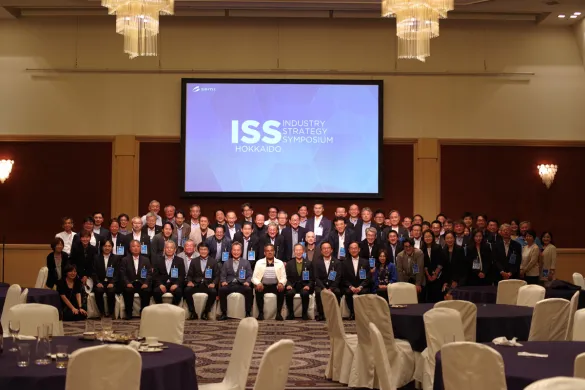
業界の未来を見据えた戦略と課題を議論する「ISS Japan 2026」を開催します。 デジタル技術が世界の繁栄を支える中、日本が半導体製造の重要拠点としてリーダーシップを発揮する為に、サステナビリティやエネルギー問題、最新技術などの重要課題についての意見交換やネットワーキングの機会を提供いたします。
Advancing Tools & Materials to Empower 3DIC Manufacturing for AI Innovations
The roadmap for advanced packaging in AI applications presents significant challenges, particularly with scaling up and incorporating more chiplets.
This expansion poses obstacles in terms of yield and productivity.
To address these challenges, CoP (Chip-on-Panel) technology will be introduced to complement current CoW (Chip-on-Wafer) to accelerate 3DIC scale up. However, this shift requires substantial infrastructure development, especially for tool development and material innovations. Meanwhile, material usage will be significantly increased, raising concerns about supply chain resilience.
All of which will play a pivotal role in enabling this critical technology expansion and requires seamless collaborations across backend eco-system.
Inside Taiwan’s Semiconductor Strategy: Technology, Supply Chains, and Geopolitics
This presentation explores Taiwan’s semiconductor development strategy as a "pivotal fulcrum" of the global AI industry. First, it examines how Taiwan maintains its technological leadership by leveraging advanced process nodes and the unique cluster advantage of "zero distance between R&D and production". Second, from a supply chain perspective, it analyzes innovative models for the global deployment of the industrial ecosystem. Furthermore, the session addresses the strategic management of key technical know-how amidst geopolitical challenges and defines a collaborative positioning of "deep coupling" with global partners. Finally, it highlights the evolution and vision
of government policy as it transforms from a "regulator" into an "enabler".
Shaping the Future of High-Value-Added Electronic Products
Artificial Intelligence (AI) has push the semiconductor industry toward a great challenge of energy efficiency. AI rely on massive infrastructure that are converting electricity into token. The demand is very high at either device level (high transistor density, huge amount of memory, etc.), technology level (3D integration, 3D partitioning, etc.) and infrastructure (power management, optical interconnection, etc.). These challenges are a unique opportunity to promote innovation at system level to reach a sustainable way to support AI requirements in terms of energy.
AIと半導体が国家の競争力、社会基盤の安定、経済安全保障を左右する基盤となりつつある構造的な変化を整理し、バーティカルAIとフィジカルAIへの進展という技術潮流を示す。その上で、我が国が有する現場データという強みを新たな競争力へと変換することの重要性を示し、System to Sliliconの実現に向けた戦略について説明する。
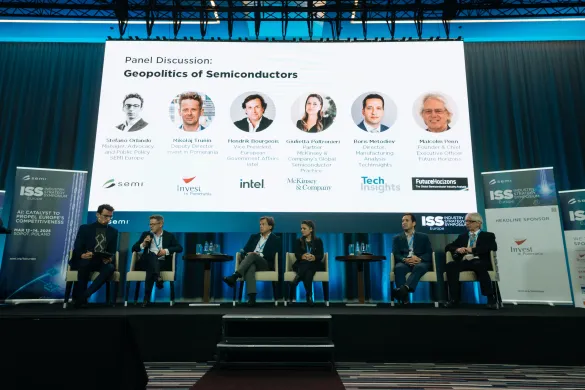
地政学的力学が世界の産業に影響を与える中、半導体産業は極めて重要な岐路に立たされています。ポーランドのソポトで開催されたSEMI Industry Strategy Symposium(ISS Europe)では、半導体地政学をテーマにしたエグゼクティブパネルディスカッションが行われ、分断化する世界にあって、戦略的な依存関係と進化する同盟関係が形作る欧州の役割を議論しました。