downloadGroupGroupnoun_press release_995423_000000 copyGroupnoun_Feed_96767_000000Group 19noun_pictures_1817522_000000Member company iconResource item iconStore item iconGroup 19Group 19noun_Photo_2085192_000000 Copynoun_presentation_2096081_000000Group 19Group Copy 7noun_webinar_692730_000000Path
Skip to main content
Default Banner Image

South Korea

Belgium China France Germany India Ireland Italy Japan Malaysia Russia Singapore South Korea Taiwan United States Vietnam Webinar-Critical Minerals-v1_360x317_Event_Calendar_CM Business Executive Technical
Highlighted content

As world leaders act to secure access to these minerals, companies come under pressure to follow due diligence guidelines to promote ethical sourcing of these materials for their supply chains.  Regulations such as the US Dodd-Frank Wall Street Reform and Consumer Protection Act (Section 1502), EU Regulation 2017/821 and the EU Corporate Sustainability Due Diligence Directive require companies to trace materials through their supply chains and report to the public about their use of conflict minerals. 

Several industry associations, including the Responsible Business Alliance’s Responsible Minerals Initiative, were created to help companies with their due diligence efforts. Reports such as those issued by the US Government Accountability Office on Conflict Minerals offer insights into the efficacy of these regulations and suggest improved approaches for industry engagement. 

The SEMI Responsible Supply Chain (RSC) working group was recently formed to host discussions on these topics. This webinar will provide insights from speakers Jennifer Peyser, Responsible Business Alliance Senior Vice President of Responsible Sourcing, and Kimberly Gianopoulos, Managing Director for the International Affairs and Trade team at the U.S. Government Accountability Office (GAO).

United States

8:00 am - 8:05 am
Kim Harrison
Dr. Kimberly Harrison, Ph.D
Senior MEMS Engineer
AMFitzgerald & Associates

Welcome and Introductions of RSC working group

Dr. Harrison is a MEMS Engineer with AMFitzgerald & Associates, a design firm located in the Bay Area California. She has a doctoral degree in mechanical engineering from Stanford University, and has worked as a designer and process engineer in the semiconductor industry for 10 years. She was nominated as a 2022 MEMS & Sensors Industry Group Emerging Leader. As a founding member and leader of the SEMI Responsible Supply Chain Working Group, she hopes to bring SEMI members together to discuss solutions to human rights issues in the semiconductor supply chain.

Conflict Minerals Supply Chain Overview

8:05 am - 8:35 am
Kimberly Gianopoulos
Managing Director for the International Affairs and Trade
U.S. Government Accountability Office (GAO)

Report Review

Director Gianopoulos oversees a 140-person team that reviews a wide variety of federal government oversight issues, including International Security Assistance, Bilateral and Multilateral Foreign Assistance, International Trade and Finance, and U.S. Diplomatic Presence and Management. She serves as a facilitator in GAO’s Learning Center and participates in recruiting activities. Ms. Gianopoulos has received several awards, including a Distinguished Service Award, a Meritorious Service Award, a Client Service Award, and several Results Through Teamwork awards. Ms. Gianopoulos earned a Bachelor’s degree in Mathematics and a Master’s degree in Public Analysis and Administration from the State University of New York at Binghamton. She is a Certified Government Financial Manager and a member of Pi Alpha Alpha, the Global Honor Society for Public Affairs and Administration.

Jen Peyser
Jennifer Peyser
Executive Director
Responsible Minerals Initiative

RMI Activity Overview

“The RMI supports over 500 downstream, midstream, and upstream member companies with a suite of due diligence standards and tools, data, guidance, training, and other resources for global responsible sourcing and regulatory compliance. Our facility and supply chain due diligence standards are rooted in longstanding international norms while reflecting emerging corporate and stakeholder priorities for regulatory compliance, managing sustainability risks and impacts, and fostering responsible mineral supply chains.”

8:35 am - 8:55 am

Q&A

8:55 am - 9:00 am

Summary and Closing Remarks

SCM 8:00 am - 9:00 am Off Add to Calendar 2025-07-09 08:00:00 2025-07-09 09:00:00 Critical Minerals, Due Diligence and the Semiconductor Supply Chain United States SEMI.org [email protected] America/Los_Angeles public America/Los_Angeles Register for On-demand
Event format
Promote in calendar
Off
South Korea standards-500w.jpg Technical
Highlighted content

Seoul
South Korea

Standards

EHS Korea TC Chapter 

Summer Meetings 2025 

Date: Friday, July 11, 2025 

Time: 10:00-12:00 (KST) 

via Hybrid


(subject to change) 

Last updated: June 9, 2025


NOTE: 

Standards meetings are open to all, but you must be a SEMI Standards Program Member to attend. 

If you are not a Member, please register for the International SEMI Standards Program and start making a big contribution to the industry’s progress, complete an application form today! 

Questions? Contact your local staff coordinator: Click here 

10:00 am - 12:00 pm Off Add to Calendar 2025-07-11 10:00:00 2025-07-11 12:00:00 EHS Korea TC Chapter Meeting EHS Korea TC Chapter Summer Meetings 2025 Date: Friday, July 11, 2025 Time: 10:00-12:00 (KST) via Hybrid AGENDA (subject to change) Last updated: June 9, 2025 NOTE: Standards meetings are open to all, but you must be a SEMI Standards Program Member to attend. If you are not a Member, please register for the International SEMI Standards Program and start making a big contribution to the industry’s progress, complete an application form today! Questions? Contact your local staff coordinator: Click here  Seoul South Korea SEMI.org [email protected] Asia/Seoul public Asia/Seoul
Event format
Promote in calendar
Off

REGISTRATION

Registration
  • Early-Bird Registration Deadline: Wed, July 9, 5PM (KST)
  • Group Registration Deadline: Fri, July 4, 5PM (KST)
  • Registration fee includes a boxed lunch provided at the venue.  


[Group]

  • SEMI Member : KRW 275,000
  • Non Member: KRW 330,000
    * Group registration fee applies to groups of five or more from the same company.
    * For group registration inquiries, please contact SEMI Korea Program Team([email protected]).

[Early Bird]

  • SEMI Member: KRW 308,000
  • Non Member: KRW 363,000

[On site]

  • SEMI Member: KRW 385,000
  • Non Member: KRW 385,000
Registration
South Korea APS2025_banner Business Technical

OVERVIEW

  • Date: July 16(Wed), 2025
  • Time: 09:00 - 17:00
  • Venue: Convention Hall 2, 3F, Suwon Convention Center
  • Language: Korean (Simultaneous interpretation will NOT be provided.)
  • Organizer: SEMI Korea  


SPONSORS


NOTICE

  • The agenda is subject to change at the discretion of the speakers.
  • Presentation files agreed by speakers will be provided to attendees after the event through SEMI registration website.


CONTACT

  • SEMI Korea Program Team ([email protected])
  • Simultaneous interpretation will NOT be provided.

Convention Hall 2, 3F, Suwon Convention Center
South Korea

9:00 am - 9:30 am
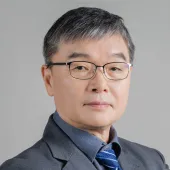
Choon Lee
Choon Lee
Intel

System Level Advanced Packaging

Rapidly evolving progress of AI and HPC has significantly increased computational and memory needs such as higher performance, lower power consumption, and wider memory bandwidth with reduced latency. An end application of AI/HPC comes down to Datacenter construction. Meeting the challenge of delivering this processing power in the datacenter requires systematic innovation from the device to the datacenter level. It starts with integrating highly optimized, domain-specific accelerators which should be integrated into advanced 2.5D and 3.5D packaging that minimize losses and power for high-speed communication while taking advantage of workload power management. AI computing introduces significant challenges for energy consumption and thermal management. Power delivery network is crucial for CPU, GPU and NPU power and performance of which solution can be DTC, IVR, mtal-insulator-metal (MIM) capacitor and thin film inductor, backside power rail, etc..  While Moore’s law has continued to yield transistor scaling necessary for these applications, the ever growing demand from models for AI training and inference pushes Si scaling in conjunction with the advent of advanced interconnects via disaggregation and reaggregation of chips in advanced packaging.  
We will discuss with examples and the challenges of utilizing packaging elements to their full potential and discuss how co-optimization is crucial to achieving the best results for any given set of system requirements and constraints.  

※Biography

9:30 am - 10:00 am
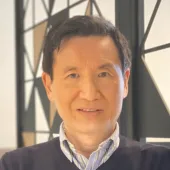
TaeKyeong Hwangv
TaeKyeong Hwang
Amkor Technology Korea

Advanced Packages for AI/HPC

10:00 am - 10:30 am
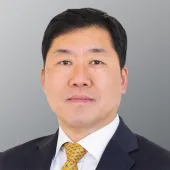
신상훈
SangHoon Shin
Assistant Professor,
Hanyang University

Advanced Packaging and Reliability: Technologies Shaping the Next Generation

Advanced semiconductor packaging is now central to enabling continued performance scaling as conventional transistor scaling slows. This seminar introduces cutting-edge trends in advanced packaging, including 2.5D and 3D integration, fan-out wafer-level packaging, chiplet-based architectures, and glass interposers for optical I/O in AI and HPC systems. These technologies offer enhanced performance, form factor reduction, and system-level integration capabilities critical for future computing platforms.
Leveraging prior industry experience, this talk highlights real-world applications and challenges in designing and qualifying advanced SoC packages. Examples include CoWoS-based AI chip packaging, hybrid bonding techniques, and thermal design optimization for high-power systems.
As packaging structures become increasingly complex, reliability emerges as a critical bottleneck. The seminar explores major failure mechanisms such as thermal-mechanical fatigue, electromigration, interfacial delamination, and Through Glass Via (TGV) degradation. Reliability analysis methods including FEA-based stress modeling, time-to-failure prediction, and advanced failure diagnostics will be introduced.
By combining packaging innovation with reliability engineering, the talk aims to provide a comprehensive perspective on the technological and practical issues that must be addressed to enable robust, high-performance semiconductor systems in the AI and data-driven era.

※ 연사정보

10:30 am - 11:00 am
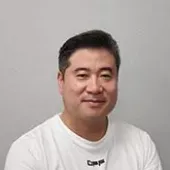
Sang Hyun Han
Sang Hyun Han
NOVA

Pushing the Boundaries: Challenges and Opportunities in Panel-Level Packaging Technology

As the AI era progresses, semiconductor devices are increasingly adopting 3D architectures to boost performance and power efficiency. At the same time, system technology co-optimization (STCO) is advancing through the use of chiplets and advanced wafer-level packaging. As the industry integrates more chips into chiplets, the size of interposers continues to grow. However, wafer-level packaging faces limitations in accommodating large interposers due to the constraints of 300mm wafer shapes and temporary carriers.
This trend is driving a shift toward panel-level packaging (PLP) to support higher packaging unit counts. Despite its potential, PLP still faces significant challenges—particularly in terms of process development and process control.
This paper explores the technical trends in panel-level packaging, focusing on the current challenges and potential solutions related to process control.

※ Biography

11:00 am - 11:20 am

Break

11:20 am - 12:30 pm
All speakers

Panel Discussion

1:30 pm - 2:00 pm
Jinho_An
Jinho An
Senior Director/ Technologist,
Applied Materials

Presentation New Innovations Enabling Fine Pitch D2W Hybrid Bonding

Heterogenous integration and advanced packaging is behind the technology that is enabling today’s AI and high-performance computing. This is done through complex architecture that utilizes platforms including microbumps, through silicon vias (TSV), high density fanout and hybrid bonding (HB). The integration of chiplets using any combination of these technologies is allowing the industry to extend the Moore’s law and overcome limitations of the Von Neumann architecture. Hybrid bonding is an especially appealing technology that helps improve power and performance (higher I/O density), as well as thermal management. Sub-10 ㎛pitch die-to-wafer (D2W) HB is already in production1) for 3DIC and the industry working on HB technology for High Bandwidth Memory as well2). However, there are continuous challenges for D2W that require new innovation in both processing and metrology & inspection (M&I), and also unique challenges for both logic and memory applications specific to its integration. The presentation will discuss how logic and memory HB technologies are different and what process and M&I technologies are needed to facilitate HVM of the HB technology across different applications. Process challenges including low temperature bonding, die warpage management and dicing will be discussed, while M&I challenges include the transition to e-beam technology for HB enablement.

1) R. Agarwal et al., “3D Packaging for Heterogeneous Integration”, IEEE ECTC, July 2022
2) Lee et al., “A Study on D2W Cu Bonding Technology for HBM Multi-die Stacking”, IEEE ECTC, May 2024

※Biography

2:00 pm - 2:30 pm
Taehong Min
Taehong Min
Samsung Electro-mechanics

Trend and Technology of Glass Package Substrate

2:30 pm - 3:00 pm
이동환
Dong Hwan Lee
Samsung SDI

Design and Development of High Thermal Conductive Molding Compounds for Advanced Packaging Applications

The ongoing miniaturization and increased integration density in electronic circuit systems, particularly in advanced technologies such as DRAMs for Through-Silicon Via (TSV) and High Bandwidth Memory (HBM), have elevated thermal management to a critical challenge in microelectronic packaging. The functional performance, operational lifespan, and reliability of electronic devices fundamentally depend on efficient thermal dissipation. As power densities escalate, enhancing the thermal conductivity of EMCs has become imperative for effective heat removal from increasingly complex electronic components. Consequently, research efforts focused on developing epoxy resins with superior thermal conductivity and identifying appropriate high-conductivity fillers represent the most viable approaches to addressing thermal management challenges in contemporary microelectronic systems.
Recently, we have successfully developed a high-performance epoxy molding compound (EMC) that solves critical thermal management challenges in advanced microelectronic packaging applications. Not only do these compounds provide extremely safe protection of integrated circuits from moisture, mobile ion contaminants and adverse environmental conditions, including temperature fluctuations, humidity and mechanical stress, but the enhanced thermal and mechanical properties of EMC formulations address the heat dissipation requirements of advanced technologies such as small electronic circuit systems, especially TSV and HBM applications.

3:00 pm - 3:30 pm
Prof. Yunhyeok Im
Prof. Yunhyeok Im
Georgia Institute of Technology

Next-Generation Thermal Strategies: The Liquid Cooling Revolution for AI Chips

3:30 pm - 3:50 pm

Break

3:50 pm - 5:00 pm
All Speakers

Panel Discussion

Next-generation semiconductor packaging technologies are advancing rapidly in response to the explosive growth of high-performance semiconductor markets, including AI chips and HBM. At the Advanced Packaging Summit 2025, industry leaders from top global companies will share the latest developments and insights in advanced packaging technologies. The morning session will spotlight core technologies such as SLP and PLP, while the afternoon session will feature in-depth presentations on essential next-generation packaging technologies including hybrid bonding, glass substrates, materials for heat control, and liquid cooling solutions. Each session will also include panel discussions to encourage broad and practical exchanges of technical experiences, offering valuable opportunities for networking. We invite you to explore the future direction of next-generation semiconductor packaging with global industry experts and expand both your insights and business horizons at this premier event.

9:00 am - 5:30 pm Off Add to Calendar 2025-07-16 09:00:00 2025-07-16 17:30:00 Advanced Packaging Summit 2025 Next-generation semiconductor packaging technologies are advancing rapidly in response to the explosive growth of high-performance semiconductor markets, including AI chips and HBM. At the Advanced Packaging Summit 2025, industry leaders from top global companies will share the latest developments and insights in advanced packaging technologies. The morning session will spotlight core technologies such as SLP and PLP, while the afternoon session will feature in-depth presentations on essential next-generation packaging technologies including hybrid bonding, glass substrates, materials for heat control, and liquid cooling solutions. Each session will also include panel discussions to encourage broad and practical exchanges of technical experiences, offering valuable opportunities for networking. We invite you to explore the future direction of next-generation semiconductor packaging with global industry experts and expand both your insights and business horizons at this premier event. Convention Hall 2, 3F, Suwon Convention Center South Korea SEMI.org [email protected] Asia/Seoul public Asia/Seoul
Event format
Promote in calendar
Off
Belgium France Germany Ireland Italy Japan Malaysia Singapore South Korea Taiwan United States Vietnam Image Business Training Featured Speakers

Leverage SEMI U learning offerings to wrap up your 2025 professional development journey! Our pledge remains unwavering: providing comprehensive, technical education to equip you with the skills needed for a prosperous journey in the semiconductor sector.

Are you ready to take your semiconductor industry knowledge to the next level? We're thrilled to invite you to our upcoming webinar titled "SEMI University - 2025 and beyond." This webinar promises to be an informative session where you'll gain insights into the latest updates, exciting live trainings at SEMICON West and virtually the remainder of this year and beyond. 

During this webinar, you can expect to:  

  • Discover the latest updates and enhancements to SEMI U's course catalog.  
  • Learn about the exciting live, in-person training courses scheduled for SEMICON West.
  • Review upcoming virtual instructor-led trainings.
  • Gain access to a special 10% discount on ALL on-demand courses.  


United States

Headshot of Naresh Naik
Naresh Naik
Director, SEMI University
SEMI
SEMI U Workforce Development

Join us to discover our current course offerings, upcoming in-person and virtual trainings, and more. Engage in a Q&A session. Plus, by attending this free webinar, you'll receive a 10% discount code for all on-demand courses and will be entered into a raffle to win a FREE course bundle ($100 value). 

Choose your session:

8:00 am - 8:30 am Off Add to Calendar 2025-09-25 08:00:00 2025-09-25 08:30:00 SEMI University - 2025 & Beyond Join us to discover our current course offerings, upcoming in-person and virtual trainings, and more. Engage in a Q&A session. Plus, by attending this free webinar, you'll receive a 10% discount code for all on-demand courses and will be entered into a raffle to win a FREE course bundle ($100 value). Choose your session:US/EU: 8:00 AM – 8:30 AM PT [Register Now]Asia/US: 5:00 PM – 5:30 PM PT [Register Now] United States SEMI.org [email protected] America/Los_Angeles public Register Now
Event format
Promote in calendar
Off

Nijmegen, The Netherlands, 14 May 2025 — Trymax Semiconductor Equipment (Trymax), a leading provider of plasma- and UV-based solutions for semiconductor manufacturing, announces the installation of its 500th process chamber in Asia. This milestone reflects continued momentum across key regional markets—including China, Taiwan, South Korea, Malaysia, and the Philippines—and signals strong progress toward the company’s goal of 1,000 global installations by the end of 2025.

“Reaching 500 installations in Asia is a significant milestone for Trymax,” said Peter Dijkstra, Chief Commercial Officer at Trymax Semiconductor Equipment. “It reflects our team’s dedication to delivering practical, high-performance solutions with the speed and reliability that our customers need in order to stay competitive.”

Responsiveness as a Competitive Edge

In an industry where uptime, productivity, and reliability are critical, Trymax has earned a reputation for being highly responsive—from the inquiry stage to post-installation support. The company’s nimble structure allows it to take action quickly and decisively, enabling customers to manufacture with confidence. Many partners have cited the ease of communication with Trymax, and the timely support received, as reasons for early and continued engagement.

Supporting Asia’s Semiconductor Surge

Asia continues to lead global semiconductor growth, driven by accelerated adoption in high-demand sectors. Customers across the region are pushing forward with innovation and scale, particularly in:

• Automotive: The transition from internal combustion engine (ICE) vehicles to electric vehicles (EVs) is reshaping the industry. EVs require significantly more semiconductors—often up to 3,000 chips per vehicle—due to greater electrification, power management, and onboard computing systems. This shift is fueling demand for reliable, high-throughput semiconductor processing solutions.

• Artificial Intelligence (AI): The rise of AI and machine learning applications—from data centers to edge devices—is creating a surge in demand for advanced microprocessors and high-density memory. Backend processes play a critical role in ensuring the performance and yield of these complex chips, making equipment reliability and process control essential.

• 5G & Connectivity: Asia’s rapid deployment of 5G networks, combined with its mobile-first population and high-volume data consumption, is pushing the limits of semiconductor performance. This growth requires advanced packaging technologies, faster interconnects, and increased wafer-level precision—all of which depend on stable, repeatable backend processing steps.

Trymax’s plasma and UV curing technologies are designed to meet these demands, delivering proven results in ashing, descum, surface cleaning and activation, and isotropic etching. With a strong footprint across the region, the company continues to support customers at the forefront of innovation.

Forward Plans and Strategic Vision

To support its continued growth in Asia and globally, Trymax is advancing several strategic initiatives. The company is exploring plans to establish local manufacturing in China, a move aimed at strengthening supply chain resilience and improving responsiveness to regional customer needs.

As part of its 2025–2030 roadmap, Trymax is also deepening its collaborations with leading semiconductor manufacturers. By taking on selective, non-core process steps—particularly those related to backend wafer processing—Trymax helps larger players free up internal resources and maintain operational focus where it matters most.

In parallel, Trymax is expanding its role in advanced packaging. As integrated circuit (IC) designs evolve toward increasingly complex multi-layered stacks—sometimes comprising up to 16 layers—ensuring pristine, activated surfaces between each layer is critical. Trymax’s plasma solutions are engineered to meet these exacting standards, enabling customers to maintain high yield and reliability in next-generation device architectures.

Meet Trymax at SEMICON Southeast Asia 2025

Trymax will be showcasing its latest plasma-based innovations at SEMICON Southeast Asia 2025, from 20–22 May at the Sands Expo and Convention Centre, Marina Bay Sands, Singapore. Attendees are invited to meet the Trymax team at Booth #B1633 to learn more about the company’s technology roadmap and expansion plans.

###

About Trymax Semiconductor Equipment

Trymax’s core business is to support semiconductor manufacturers through the world with innovative plasma-based solutions for photoresist removal, surface cleaning, isotropic etch, as well as UV curing and charge erase applications, that are used in the fabrication of integrated circuits and other semiconductor devices. Trymax is a privately held company headquartered in Nijmegen, The Netherlands. Trymax operates regional sales and service offices in Europe, UA, China, Southeast Asia, Taiwan, and Japan.

Learn more at www.trymax-semiconductor.com.

Test Research, Inc. (TWSE: 3030), the leading test and inspection systems provider for the electronics manufacturing industry, is proud to announce its successful partnership with Bosch in the development of an AI visual check solution for MEMS packaging.

Bosch has recognized TRI's valuable contribution to their success in MEMS packaging in 2025 with a Certificate of Appreciation. The certificate acknowledges the successful completion of the AI visual check for MEMS packaging, highlighting the strong cooperation and partnership between the two companies.

This collaboration demonstrates TRI's expertise in AI-driven inspection solutions and its commitment to providing valuable solutions for the electronics manufacturing industry. TRI's AI-powered solutions include the AI Defect Detection, AI Smart Programming, AI Verify Host, AI training tool, AI Station, and more.

Please visit the following link to learn more about TRI's AI Solutions:
https://www.tri.com.tw/en/about/about-107-2-2.html

Learn more about the Bosch Group by following the link below:
https://www.bosch-presse.de/pressportal/de/en/company-page.html

###

About Test Research, Inc. (TRI)

TRI (TWSE: 3030), offers the most robust product portfolio in the industry for Automatic Test and Inspection solutions. Learn more at http://www.tri.com.tw. For sales and service information, please write to us at [email protected] or call +886-2-2832 8918.

Stanton Chase is pleased to announce that Sundar Rajan Ramalingam has joined the firm as a Partner in North America. His addition strengthens the firm's executive search and leadership consulting capabilities for the semiconductor sector at a time of rapid transformation.

Sundar brings nearly three decades of leadership experience across manufacturing and global technology sectors. He has scaled a multi-billion-dollar global engineering division and supported the growth of several Global Capability Centers (GCCs). Within the semiconductor ecosystem, he has played a pivotal role in building and advising leadership teams across chip design, chip-to-cloud platforms, semiconductor fabs, and foundry operations.

This deep operational and strategic background gives Sundar a unique perspective on the evolving talent needs of semiconductor organizations.

"The semiconductor industry is entering a pivotal era—what I call a 'perfect leadership storm'—driven by generative AI, strategic autonomy imperatives, and breakthroughs like 3nm and advanced packaging," said Sundar. "While these trends are accelerating innovation, the industry also faces a growing talent gap. Companies need capable leaders who can navigate complexity, scale innovation, and build resilient teams. I plan to use my experience in technology and manufacturing to help semiconductor companies find executives who deliver results and foster sustainable growth."

Sundar's career spans both strategic HR leadership and general management with P&L responsibility, offering clients a rare blend of technical insight and leadership development expertise.

"Sundar fits well with our North American team and fills a specific need in our practice," said Mickey Matthews, Managing Director at Stanton Chase in North America and Chair of the Governance Committee. "His time working across borders gives him a genuine understanding of how global teams function. Blending this multicultural understanding with Sundar's deep technology products and services vertical expertise matters a lot to the clients we serve and specifically in the semiconductor space."

Jan-Bart Smits, Managing Partner at Stanton Chase Amsterdam and Global Sector Leader for Semiconductors, added: "Sundar joins us when the semiconductor industry sits at a turning point. Firms in this sector are looking for something different in their executives—people who understand both market forces and engineering details. Sundar knows this world and will further enhance our ability to serve chip makers and their suppliers."

As the semiconductor industry moves into a new chapter—marked by AI-driven demand, geopolitical shifts, and the race toward next-gen nodes—Sundar's appointment signals Stanton Chase's commitment to helping clients lead with confidence and clarity.

Sundar holds an MBA from XLRI Jamshedpur (India) and completed executive education programs, including the Chief Human Resource Officer Program at Wharton, University of Pennsylvania.

He will serve clients from Stanton Chase offices in Baltimore and Raleigh, USA, as well as Bangalore, Hyderabad, and Chennai, India—locations near semiconductor business centers.

Click here to learn more about Sundar.

Click here to learn more about Stanton Chase's semiconductor expertise.

About Stanton Chase

Stanton Chase ranks among the top global retained executive search firms with more than 76 offices in 45 countries and a worldwide team of senior consultants. Stanton Chase serves clients across multiple industry specialties and places C-suite executives, senior managers, and board members for companies ranging from global corporations to emerging businesses. Stanton Chase belongs to the Association of Executive Search and Leadership Consultants (AESC), adhering to the highest industry standards of professionalism and ethics.

Belgium China France Germany India Ireland Italy Japan Malaysia Singapore South Korea Taiwan United States Vietnam Register Now Scope 3.11 800x800 Business Executive
Highlighted content

The webinar will address the following:

  1. Overall Contents of the Guidance
  2. Topics explored in creating the Guidance
  3. Intention of why the Guidance was developed
  4. Who was involved in the development
  5. Who should use the Guidance
  6. How it differs from existing standards and protocols

United States

Sustainability

Join the Leaders of the Semiconductor Climate Consortium Scope 3 Working Group, plus other industry experts, to review the recently released Scope 3 Category 11 GHG Assessment and Guidance for the Semiconductor Value Chain.  Compiled with the expert assistance of ERM, with input from all levels of the ecosystem, this document has been designed to align on reporting Scope 3, Category 11, an important step in measuring the impact of reduction efforts across the industry.

Download the Guidance Document

8:00 am - 9:00 am Off Add to Calendar 2025-06-12 08:00:00 2025-06-12 09:00:00 Webinar - Category 3.11 Review Join the Leaders of the Semiconductor Climate Consortium Scope 3 Working Group, plus other industry experts, to review the recently released Scope 3 Category 11 GHG Assessment and Guidance for the Semiconductor Value Chain.  Compiled with the expert assistance of ERM, with input from all levels of the ecosystem, this document has been designed to align on reporting Scope 3, Category 11, an important step in measuring the impact of reduction efforts across the industry.Download the Guidance Document United States SEMI.org [email protected] America/Los_Angeles public America/Los_Angeles
Event format
Promote in calendar
Off

Registration

Registration
  • Early-Bird Registration Deadline: Wed, May 7, 5PM (KST)
  • Group Registration Deadline: Fri, May 2, 5PM (KST)

Registration Fee

  • Early Bird
    • SEMI Member: KRW 308,000
    • Non Member: KRW 363,000
  • On site
    • SEMI Member : KRW 385,000
    • Non Member: KRW 385,000
  • Group
    • SEMI Member : KRW 275,000
    • Non Member: KRW 330,000
      *Group registration fee applies to groups of five or more from the same company.
      *For group registration inquiries, please contact SEMI Korea Program Team([email protected]).
Registration
South Korea SMCKorea2025_thumnail Business Technical

OVERVIEW

  • Date: May 14(Wed), 2025  
  • Time: 9:00-16:20
  • Venue: Convention Hall 2, 3F, Suwon Convention Center  


NOTICE

  • The agenda is subject to change at the discretion of the speakers.
  • Registration fee includes a boxed lunch provided at the venue.
  • Simultaneous interpretation will be provided.
  • Presentation files agreed by speakers will be provided to attendees after the event through SEMI registration website.   


SPONSORS

SMC-Korea-2023-Sponsor_DW.jpg SMC-Korea-2023-Sponsor_DP.jpg SMC-Korea-2023-Sponsor_JSR.jpg
SMC-Korea-2023-Sponsor_DS_0.jpg SMC-Korea-2023-Sponsor_ET.jpgHuntsman
Air Liquide  

line_2.jpg

CONTACT

Convention Hall 2, 3F, Suwon Convention Center
South Korea

9:00 am - 9:30 am

Welcome Reception

Sukgu Hong
SukKoo Hong
Head of Material Development Team,
Samsung Electronics

Materials Innovation for 3D DRAM/ CFET

As the era of lateral shrink is coming to a cliff, the need for looking at the remaining axis is uprising - the Z-axis. For DRAM, the introduction of vertical channel is very near, and even the introduction of a full 3D-DRAM is not far away. Fortunately, we have experience of VNAND, which could tell us many things about the difficulties following the 3D stacking structures. Starting from the change in the material we've gone through regarding the conversion of planar to vertical NAND, prospection of the material innovation for 3D-DRAM will be shared. The introduction of materials for the construction of deep holes and lengthy lines will be addressed. Also, needs for innovative sacrificial and auxiliary materials will be presented.

※ Biography

Inhee Lee
Inhee Lee
Program Director / Active Memory Program,
imec

Memory technologies : Status and Scaling

As DRAM scaling approaches fundamental limits, advanced architectures such as 3D DRAM and 4F² DRAM have emerged as promising solutions. The industry initially anticipated the adoption of these technologies around the 1d to 0a nm nodes; however, they remain in development, with mass production likely postponed until the 0b node. For instance, current 3D DRAM samples feature 8–12 layers, while the target is approximately 90 layers. Recent advancements include 3D DRAM with vertical bit-line architecture, demonstrating improved on-current performance and gate control through 5-layered cell stacks utilizing Si/SiGe sacrificial layers and hybrid bonding. Meanwhile, novel 4F² DRAM transistor structures exhibit enhanced operational margins and mitigate floating body effects through dual-gate designs. Additionally, a 3D stackable DRAM architecture with horizontally stacked transistors has been proposed to address challenges such as gate-induced drain leakage (GIDL) and row hammer effects, supported by both experimental and simulation results. Collectively, these innovations underscore the potential of 3D and 4F² DRAM as next-generation solutions to overcome scaling bottlenecks and meet the growing demand for high-density, low-power memory.

※ 연사정보

Changhwan Choi
Prof. Changhwan Choi
Hanyang University

Materials and Process Technology Perspectives for CFET Device

The development of semiconductor technology can be continuously achieved through the collaboration of materials, processes, devices, and systems, and 3D devices and 3D integration process technologies will be essential in the future. From this perspective, the structural change of semiconductor transistors is expected to evolve from the current Gate-All-Around FET (GAAFET) to a new Complementary FET (CFET) device. This structural change of semiconductor devices requires new materials and process technologies. Various technologies are required, such as Monolithic or Sequential 3D integration, Si/Si or Si/Non-Si substrates, new low-resistivity metals, CMP, Bonding, TSV, and Back-Side Power Network Delivery (BSPDN). In this presentation, we will examine the technological trends from the materials and process perspectives for the development of CFET device technology.

※ Biography

blank
Linghzhi Zhang
Director of Product Management,
Air Liquide

Si, Ge, B Hydrides for Next Generation Semiconductor Devices – Challenges and Perspectives

For the past six decades, hazardous gas hydrides like GeH4, Si2H6, and B2H6 have been essential to the semiconductor industry. Their high reactivity, strong reducing power, and ability to grow high-quality, carbon-free layers have made them vital for applications ranging from Si and SiGe epitaxy to tungsten metallization. In recent years, new applications and integration schemes have emerged, demanding higher-performance hydride sources for low-temperature Chemical Vapor Deposition (CVD) and epitaxy. This increased global demand drives production investments, despite the challenges of handling, facilitating, and logistics constraints such as limited shelf-life, pyrophoricity, and toxicity. In this talk, we will provide an overview of the current gaseous hydrides landscape and its challenges. We will discuss how the gas industry can ensure the semiconductor industry's continued safe access to these critical materials through enhanced stewardship, optimized supply chains, packaging, and manufacturing techniques. Furthermore, we will provide insights into technology trends towards new-generation, extra-low-temperature epitaxy and high dopant sources, and their potential use in future transistor architectures.

Networking Break

Panel Discussion

Lunch

1:30 pm - 2:00 pm
Prayudi Lianto
Prayudi Lianto
Technology Manager,
Applied Materials

Materials Engineering Innovations to Address HBM Challenges for AI Applications

Emergence of artificial intelligence (AI) is predicted to drive global chip sales to ~$1 trillion revenue by 2030. This surge of AI-targeted chip demand is driving ever-increasing requirement in compute speed to >109 petaFLOPS. High-bandwidth memory (HBM) architecture is well-suited to fulfill this requirement, currently offering >1TB/s bandwidth. To continue improving HBM performance, materials engineering innovations are required in critical packaging building blocks, such as TSV and Hybrid Bonding. Solutions from equipment manufacturer standpoint were presented, in relation to TSV gapfill, low-temperature (<300˚C) hybrid bonding enablement, and bond strength consideration for higher I/O count in the future. Timely solutions to the dynamic HBM integration challenges should be seen holistically and to this end, active partnerships and collaboration across the ecosystem are encouraged.

※ Biography

2:00 pm - 2:30 pm
Andy Tuan
Andy Tuan
Managing Director - Asia,
Linx Consulting

Semiconductor Materials Supply Chain and Market Development Trends

The semiconductor industry continues to advance, propelled by growing demand for AI-driven computing and storage technologies and diverse digital applications. However, this growth is tempered by rising economic uncertainty and escalating trade tensions, particularly due to recent U.S. tariff policies, which threaten to disrupt global supply chains. The semiconductor materials sector faces multifaceted challenges, including increasing rapid technological innovation, geopolitical volatility, large-scale capacity expansions and climate change actions. While the market remains relatively stagnant in 2024 compared to 2023, a rebound is anticipated in 2025–2026, driven by long-term demand for advanced computing and storage solutions. A shifting supplier landscape is emerging, marked by the rise of regional players—notably in China—and consolidation among multinational corporations pursuing economies of scale through mergers and acquisitions. Geopolitical pressures are driving localization and dual sourcing, which raise costs, reduce efficiency, and complicate supply chains. This talk highlights the need for a delicate balance between innovation-driven growth and the escalating operational challenges in the semiconductor materials industry.

※ 연사정보

2:30 pm - 2:50 pm

Networking Break

2:50 pm - 3:20 pm
Yohan Ahn
Yohan Ahn
Senior Director,
Entegris

Technological Trends and Necessity of Material Contamination & Filtration for Wafer Defectivity Control in HBM Manufacturing

As the commercialization of artificial intelligence (AI) and the advancement of technologies such as high-performance computing (HPC) and deep learning (DL) progress, the need to process large amounts of data quickly has emerged. Traditional DDR and GDDR memory have limited bandwidth, so HBM, which offers higher performance, has been commercialized, driving the development of new technologies.
Compared to traditional memory chips, HBM has increased chip size and higher defectivity vulnerability due to chip stacking processes. This has led to new technical approaches for wafer defectivity control across the entire material ecosystem.
This presentation reviews the latest trends in filtration/purification technologies aimed at minimizing the impact of particles and impurities in this material ecosystem. By examining current HVM devices and next-generation HBM-related technologies, we aim to contribute to wafer defect control.

※ Biography

3:20 pm - 3:50 pm
Mikko Utriainen
Mikko Utriainen
CEO, Ph.D.,
Chipmetrics

Advancing ALD Tool Qualification Using Ultra-High-Aspect-Ratio Test Structures

As semiconductor manufacturers continue the vertical scaling of 3D memory devices, advanced metrology and process control strategies are becoming increasingly essential for maintaining yield and reliability. The rising aspect ratios (AR > 100) of device features present significant challenges for conformal thin-film deposition via atomic layer deposition (ALD). Ultra-thin dielectric films and multilayer stacks—widely used in 3D memory channel holes—are particularly sensitive to process variations. Even minor deviations in ALD process conditions can result in non-uniform film coverage, defect formation, or electrical performance issues, all of which are difficult to detect and monitor within high-aspect-ratio structures.
To address these challenges, Chipmetrics has developed a novel method based on lateral ultra-high-aspect-ratio test structures (PillarHall®) for ALD process development, monitoring, and tool qualification. In the PillarHall® test wafers, the aspect ratio exceeds 1000, enabling practical and non-destructive measurement of film conformality. The method offers a sensitive and scalable solution for improving ALD process qualification, benchmarking tool performance, and enhancing production stability.
This presentation will highlight recent advancements in PillarHall® technology, with a focus on its application in ALD tool qualification and ALD process window control.

※ Biography

3:50 pm - 4:20 pm
Deoksin Kil
Deoksin Kil
Senior Fellow/Head of Structuring Material,
SK hynix

The Role and the Challenge of the Process Material for the Future of Semiconductor

There have been lots of technical advances in the fileld of semiconductor industry for the last dacades ever since DRAM and NAND were invented and commercialized. Meanwhile, form factor was changed from 8F2 to 6F2 in DRAM, and the concept of 3D stacking was adopted in NAND flash memory. Furthermore, EUV tool has been adopted and are being successfully used to make the fine pattern in logic and DRAM as well. And also, it has been very long since ALD was taken as a new advanced depostion technology to meet the need for excellent conformality. But all these new process technologies couldn’t have been possible without the advances in process materials such as advanced photo resist, precursors, functional chemicals and CMP slurries. Recently, those process materials are beginning to open the new possibilities for the innovation of process integations, resulting in cost reduction and giving an extra performance to the process tools. In this talk, the role, the current issues and future challenges will be discussed focusing on the process materials in semiconductor industry.
Starting from photo resist, thin and etch resistant resist has been cosistantly required to suppress the pattern collapse and wiggling during the patterning process. Since the EUV was adopted in DRAM and Logic, high sensitivity EUV resist is now being intensively explored to obtain low DtS as well as good CD uniformity to make the best use of the enomoursly high-priced EUV tool in a cost effective way. For the sake of that, even metal-containing resist is also being tried for high quality patterning. Additionally, thick KrF resist is also required at 3D NAND flash memory with the increase of ON stack and especially for the new platform to be. And for the future, the new concept of PR based on small sized polymer will be worth trying and dry type developer would be also necessary to keep the pattern stable without collapse or wiggling.
With regard to the wet chemicals and CMP slurries, advanced functional chemicals are getting more and more important rather than convetnional cleaning chemicals that are used after etch and CMP process. W or Mo recess chemical in 3D NAND would be that very case. Those chemicals should assure the good uniformity in terms of recess amount in the vertical direction. Most of all etch and CMP prcesses need post cleaning steps to clean the residue, but during that, some unwanted part of the surroundings is apt unavoidably to be removed deteriorating the device proformance in the end. Therefore, special clean chemical will be also needed to minimize the unwanted film loss as well as residue removal. When it comes to the slurry, the shape of the abbrasive particles consistently has been changing from sharp and pointed to the rounded one by adopting colloidal synthesis to suppress the scratch during CMP. The size of the abrasive particle tends to get smaller but slurry is required to make up the decreased removal rate by properly regulating components within slurry. With the change of material to be polished such as Mo or Carbon, new slurry for those new materials will be a new drive for CMP related materials.
Precursor and some functional gases have been contributing to the quality improvement or deposition modication of functional materials such as high-k materials in DRAM. As always, there should be more technical areas, in which precursor and gas will be able to play an important role in ASD(Areal Selective Deposition) or ALE(Atomic Layer Etching) process.
Since process materials needs to be considered from the operation of FAB line unlike the process tools, it must be managed well from the aspect of consistent quality control and risk management of supply chain and safety. In the past, process material used to play a simple and supporting role in the process and tools as well. But now, it is becoming a time for the process materials to play a more active role in cost reduction and risk management as well as providing technology for semiconductor industry. Especially, new process materials are also required to meet the needs for low carbon emission during the process and safety issues from the using PFAS containg materials that are hazardous to human body. Way of doing work needs to be also changed in a way that R&D activities have to be shifted to the earlier engagement. And plus, the collaboration between device maker and process material supplier shoud be much closer and earlier than before so that the developed materials can be successfully adopted at a targeted process and a tool for it. As the material supply chain has been becoming very unstable since corona pandemic and US-China trade conflict, it needs to be managed with a good predictability and balance as well in order for consistent and stable supply in case of unexpected issues at a supply chain.

※ Biography

4:20 pm

Adjourn

EMG

Empowering the AI Era: Advancements in Next-Generation Memory and Materials 

The arrival of the AI era demands transformative advancements in memory technology and semiconductor materials. This year, SMC (Strategic Materials Conference) Korea will focus on the innovative materials and manufacturing technologies driving the development of next-generation memory technologies in response to the AI-driven technological revolution. The first session will explore material innovations emerging from the evolution of next-generation memory semiconductor technologies, such as 3D DRAM and CFET. The second session will offer in-depth discussions on the future of semiconductor materials related to cutting-edge memory manufacturing, such as HBM, from diverse perspectives, including global equipment and material suppliers, integrated device manufacturers (IDMs), and semiconductor research institutions. Additionally, a panel discussion featuring all speakers will provide an opportunity for deeper exchanges of valuable insights. We encourage your active participation in this conference to engage in meaningful discussions and gain a more comprehensive understanding of the topics.

9:00 am - 4:20 pm Off Add to Calendar 2025-05-14 09:00:00 2025-05-14 16:20:00 SMC (Strategic Materials Conference) Korea 2025 Empowering the AI Era: Advancements in Next-Generation Memory and Materials The arrival of the AI era demands transformative advancements in memory technology and semiconductor materials. This year, SMC (Strategic Materials Conference) Korea will focus on the innovative materials and manufacturing technologies driving the development of next-generation memory technologies in response to the AI-driven technological revolution. The first session will explore material innovations emerging from the evolution of next-generation memory semiconductor technologies, such as 3D DRAM and CFET. The second session will offer in-depth discussions on the future of semiconductor materials related to cutting-edge memory manufacturing, such as HBM, from diverse perspectives, including global equipment and material suppliers, integrated device manufacturers (IDMs), and semiconductor research institutions. Additionally, a panel discussion featuring all speakers will provide an opportunity for deeper exchanges of valuable insights. We encourage your active participation in this conference to engage in meaningful discussions and gain a more comprehensive understanding of the topics. Convention Hall 2, 3F, Suwon Convention Center South Korea SEMI.org [email protected] Asia/Seoul public Asia/Seoul
Event format
Tab Order
Overview
Agenda
Registration
New Tab 1
Travel
Sponsors
Call for Abstracts
Call for Papers
Technology Showcase
Press
New Tab 2
Photo Gallery
Promote in calendar
Off

[March 26, 2025 – Singapore] Test Research, Inc. (TRI), the leading test and inspection systems provider for the electronics manufacturing industry, will join SEMICON SEA held at the SANDS Expo and Convention Centre in Singapore from May 20 - 22, 2025. Visit booth #L2632 to learn about AI-powered AOI solutions for Advanced WLP/PLP and SEMI Back-End Package processes.

TRI will be exhibiting the new Wafer Inspection Platform, TR7950Q SII, featuring a High-resolution 2.5 μm 25MP camera and the TSV Metrology Module. The TR7950Q SII can perform Wafer Macroscopic 3D Inspection and micro measurement metrology. The TR7950Q SII can inspect Advanced WLP, Wafer Frame, Patterned Wafer, Wafer Bumping, WLCSP, through-silicon via (TSV), and more. The TR7950Q SII can measure TSV at ultra-high speeds, measuring sensing TSV depth, trench depth, oxide, nitride, PR, and PI film thickness.

Additionally, TRI will showcase the TR7007Q SII-S, the high-accuracy 3D SEMI SPI for precise solder measurements, supporting applications such as Mini-LED, C4 bumps (~100 μm Ø), and 008004 paste inspection. The lineup will also feature an X-ray Inspection Demo Station.

Join us at booth #L2632 at SEMICON SEA 2025 to discover TRI's cutting-edge SEMI inspection and metrology solutions!