




downloadGroupGroupnoun_press release_995423_000000 copyGroupnoun_Feed_96767_000000Group 19noun_pictures_1817522_000000Member company iconResource item iconStore item iconGroup 19Group 19noun_Photo_2085192_000000 Copynoun_presentation_2096081_000000Group 19Group Copy 7noun_webinar_692730_000000Path
Skip to main content
Default Banner Image

Singapore

Singapore REGISTER NOW Vietnam An Emerging Force in Asias Microelectronics Supply Chain Banner JPG Business

Sponsorship Opportunities

Become a sponsor at this webinar to get unlimited corporate passes and logo acknowledgement.
For more information, contact [email protected].

Vietnam: An Emerging Force in Asia's Microelectronics Supply Chain

Given the on-going China-U.S. trade tensions, companies have been moving production bases to Vietnam to diversify risk. At the same time, foreign Multinational Corporations (MNCs) have been setting up new manufacturing bases or expanding existing capacities. Vietnam’s political stability and a young, vibrant, and productive middle class, coupled with solid economic growth, means that the country is poised to become the next manufacturing hub of the world. Companies looking to invest in Vietnam can also take advantage of several Free Trade Agreements (FTAs), with many agreements signed through its membership in the Association of Southeast Asian Nations (ASEAN) and the recent RCEP.

The electronics industry, a priority sector set by the Vietnamese government, has impressively developed since 2010.  Vietnam’s active participation in the global integration of electronics manufacturing has enabled it to engage deeply in global value chains. Today, Vietnam is a favourable investment hotspot for the electronics and semiconductor industry, with major MNCs having a manufacturing presence in the country. This webinar brings together speakers from the government, industry park developers, and major MNCs to provide an update on Vietnam’s investment climate, benefits of investing, and sharing of investors’ experiences. The goal is to promote and grow the electronics and semiconductor industry in Vietnam as a compliment to the entire Southeast Asian electronics and semiconductor eco-system.

Who Should Attend

  • Existing companies/investors looking to expand capacities
  • Potential companies/investors looking to set up presence in Southeast Asia/Vietnam
  • Companies/Investors looking to understand and engage the electronics/semiconductor eco-system

Organized by SEMI Southeast Asia
semi logo


Online via Zoom
Singapore

Wednesday, June 23, 2021

10:00 am - 10:10 am
Ms. Bee Bee NG, President, SEMI Southeast Asia, Singapore
Ms. Bee Bee NG
President
SEMI Southeast Asia, Singapore

Welcome Remarks and Semiconductor Market Outlook

10:10 am - 10:25 am
Mrs. HOANG Thanh Tam
Head of Investment Promotion Division
Foreign Investment Agency (FIA), Ministry of Planning and Investment (MPI), Hanoi, Vietnam

Vietnam's Investment Landscape

10:25 am - 10:40 am
Mr. Filippo BORTOLETTI
Senior Manager, International Business Advisory
Dezan Shira and Associates, Hanoi, Vietnam

The Semiconductor Supply Chain Ecosystem in Vietnam
10:40 am - 10:55 am
Kim Huat OOI
Mr. Kim Huat (KH) OOI
Vice President, Manufacturing, Supply Chain & Operations and General Manager
Intel Products Vietnam, Ho Chi Minh City, Vietnam​

Investing in Vietnam: Experience From An Investor's Viewpoint

10:55 am - 11:10 am
Mr. Bruno JASPAERT
Mr. Bruno JASPAERT
General Director
Deep C Industrial Zones, Hai Phong, Vietnam

Investing in Vietnam: Experience From An Industrial Park's Viewpoint
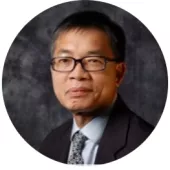
11:10 am - 11:25 am
Nhan DO
Dr. Nhan DO
Managing Director
Microchip Vietnam, United States

Investing in Vietnam: Experience From A Technology Innovator's Viewpoint

11:25 am - 11:55 am
Stuart Schaag
Moderator
Mr. Stuart SCHAAG
Principal
E-Ward Trade Consulting, LLC, United States

Panel Discussion and Q&A

11:55 am - 12:00 pm

Closing and End of Webinar

10:00AM – 12:00PM SGT

09:00AM – 11:00PM ICT

07:00PM – 09:00PM PDT (22 June 2021)

Vietnam is the third-largest market in Southeast Asia and rising to take its place as Asia’s new tiger. According to the World Bank, Vietnam’s estimated GDP growth rate of approximately 7 percent is three times higher than the world average and the second fastest in East Asia.

Join this 2 hours webinar to learn how you can promote, grow the electronics and semiconductor industry in Vietnam, and compliment the entire Southeast Asia’s electronics and semiconductor eco-system.

Admission: SGD30 (Member) / SGD50 (Non-Member) 
 

Contact: [email protected] for any questions

10:00 am - 12:00 pm Off Add to Calendar Disabled Asia/Singapore
Event format

ESG progress, industry-first sustainability leadership and long-term governance goals

Rolla, Mo. — June 2, 2026 — Brewer Science, a global leader in developing and manufacturing next-generation materials and technologies for the semiconductor industry, today released its 2026 Impact Report, detailing continued progress across environmental stewardship, people-first initiatives, community engagement, and collaborative innovation. Additionally, the company announced it has earned GreenCircle Certified Zero Waste to Landfill certification for the eleventh consecutive year, remaining the first and only company in the semiconductor and microelectronics industry to achieve this designation.

Explore Brewer Science’s 2026 Impact Report

“The consistency matters,” said Matthew Beard, Executive Director of Strategic Planning, Management Systems, and Sustainability at Brewer Science. “Eleven consecutive years of Zero Waste to Landfill certification demonstrates our commitment to improving our processes, finding more innovative ways to reduce, reuse, and recycle our waste, thus leading to more sustainable business operations and having a positive impact on our supply chain.”

Environmental leadership rooted in verification and results

The 2026 Impact Report highlights continued momentum toward Brewer Science’s climate and waste-reduction goals, including:
• More than 631 tons of material diverted from landfills over the past decade
• 56% of generated waste reused or recycled during the most recent reporting period
• Over 75% of hazardous waste volume diverted annually to reuse applications
• 100% renewable energy consumption achieved annually
• 5% reduction in Scope 3 greenhouse gas emissions year over year
• Continued progress toward reducing Scope 1 and Scope 2 emissions by 80% by 2030 (from a 2018 baseline) and achieving net-zero carbon emissions by 2050

Brewer Science’s Zero Waste to Landfill certification verifies that 100% of waste leaving company facilities is diverted through approved methods such as reuse, recycling, composting, or source reduction. GreenCircle Certified’s program is widely regarded as one of the most rigorous third-party validations of waste diversion claims.

People, community, and industry impact

Beyond environmental performance, the Impact Report details how Brewer Science’s sustainability commitments extend to its workforce, communities, and industry partnerships:
• Named a Top Workplace in the Manufacturing Industry for the fifth consecutive year
• Employee-owners volunteered more than 3,200 hours to 129 organizations
• Supported STEM education, early childhood education, and workforce development initiatives across local and national communities
• Continued leadership as a founding member of the Semiconductor Climate Consortium, collaborating with peers to reduce emissions across the global semiconductor supply chain
• Ongoing innovation in PFAS free materials development, aligning product performance with environmental responsibility

A platform for collaboration and accountability
The 2026 Impact Report also highlights Brewer Science’s Sustainability Outreach Program, which provides tools and education for employees, customers, suppliers, and community partners to drive meaningful, scalable environmental action.

“Zero waste is not a finish line, it’s a responsibility we share,” Beard added. “We encourage our partners across the supply chain to align around verified sustainability standards and measurable impact.”

The full 2026 Impact Report is available on Brewer Science’s Going Green page at:
www.brewerscience.com/going-green

About Brewer Science
Brewer Science is a global leader in developing and manufacturing next-generation materials and processes that enable cutting-edge technology. Since 1981, the company has expanded its technology portfolio within advanced lithography, advanced packaging, smart devices, and printed electronics to support microdevices and industrial monitoring solutions. Brewer Science’s relationship-focused approach ensures critical outcomes for its partners worldwide. Headquartered in Rolla, Missouri, Brewer Science operates globally. Learn more at www.brewerscience.com.

About GreenCircle Certified, LLC
GreenCircle Certified, LLC provides independent, third-party certification of environmental claims to ensure transparency and credibility in the marketplace. Since 2009, GreenCircle Certified has helped organizations validate sustainability performance through rigorous evaluation. Its certifications, including Zero Waste to Landfill, are accredited by the ANSI National Accreditation Board (ANAB). Learn more at www.greencirclecertified.com.

###

SEMI Members:  $75

Use your corporate email address during log in to be recognized as a SEMI Member.

Non-Members:  $149

Students:  Free

Contact Basak Ulutas Ozturkler ([email protected]) with a picture of your student ID to receive your discount code.

Belgium Germany Singapore Taiwan United States FEMC30 Business Executive Technical
Highlighted content

High-temperature materials are critical for applications in harsh-environment circuitry, where devices must operate reliably under extreme thermal, chemical, and mechanical stress. In this Master Class, Dr. Shenqiang (Shen) Ren will present a high-throughput ink materials development strategy enabled by non-equilibrium processing and hybrid additive manufacturing. This approach enables rapid synthesis, combinatorial screening, and direct integration of functional materials onto diverse substrates. The resulting materials exhibit strong electrical performance, robust adhesion, and long-term stability under harsh operating conditions. This high-throughput framework accelerates the discovery and deployment of printable materials for interconnects, heaters, and EMI shielding, providing a versatile pathway toward next-generation printed electronics designed for extreme environments.

ABOUT THE SPEAKER

Shenqiang (Shen) Ren, PhD
Dr. Shenqiang Ren is a Professor of Materials Science and Engineering at the University of Maryland, College Park, with research interests in emerging functional and structural materials. He received his Ph.D. in Materials Science and Engineering from the University of Maryland, College Park, and subsequently completed postdoctoral training at the Massachusetts Institute of Technology (MIT). 

United States

Shenqiang Ren
Shenqiang (Shen) Ren , PhD
Department of Materials Science and Engineering, Professor
University of Maryland, College Park
Gity Samadi
Moderator
Gity Samadi, PhD
Sr. Director, R&D Programs
SEMI
NBMC Smart MedTech FlexTech

Join us for a focused Master Class with Dr. Shenqiang (Shen) Ren, exploring the development of high‑temperature materials for harsh‑environment printed and flexible hybrid electronics (FHE). This session will examine how devices can be engineered to operate reliably under extreme thermal, chemical, and mechanical stress—conditions where conventional materials and processes often fail.

The Master Class will also highlight how this high‑throughput framework accelerates the discovery and deployment of printable materials for interconnects, heaters, and EMI shielding, offering a versatile pathway toward next‑generation printed electronics designed for extreme conditions.

10:00 am - 12:00 pm Off Add to Calendar 2026-08-26 10:00:00 2026-08-26 12:00:00 FEMC#30 High Throughput Material Development for Extreme Environment Printed Electronics Join us for a focused Master Class with Dr. Shenqiang (Shen) Ren, exploring the development of high‑temperature materials for harsh‑environment printed and flexible hybrid electronics (FHE). This session will examine how devices can be engineered to operate reliably under extreme thermal, chemical, and mechanical stress—conditions where conventional materials and processes often fail.The Master Class will also highlight how this high‑throughput framework accelerates the discovery and deployment of printable materials for interconnects, heaters, and EMI shielding, offering a versatile pathway toward next‑generation printed electronics designed for extreme conditions. United States SEMI.org [email protected] America/Los_Angeles public America/Los_Angeles REGISTER NOW
Event format
Promote in calendar
Off
Belgium China France Germany India Ireland Italy Japan Malaysia Singapore South Korea Taiwan United States Vietnam Download the white paper Cost Benefit Calc cropped for events page Business Technical Training
Highlighted content

SEMI
United States

9:00 am - 9:15 pm
Peilun Sun headshot
Peilun Sun
Consortium Manager
SEMI

Setting the Stage: Industry Drivers & SCC Initiative Context

• Semiconductor Industry Decarbonization Challenges
• The Need for Quantified Business Cases
• SCC Initiative Background & Development Journey
• Vision for Industry Adoption & Collaboration

9:16 am - 9:34 am
Ben Gross Headshot
Ben Gross
Director DTMS - Sustainability
Applied Materials

SCC Cost-Benefit Calculator Overview & Walkthrough

• Tool Architecture & Methodology
• Key Inputs & Assumptions
• Understanding the Outputs & Metrics
• Live Demonstration & Example Scenario
• Current Limitations & Future Development Opportunities

9:36 am - 9:50 am
Jeff Rudnik Headshot
Jeff Rudnik
Director of Environmental Sustainability & Net Zero
ASM

Industry Use Cases & Practical Applications

• Evaluating Decarbonization Projects
• Comparing Alternative Mitigation Strategies
• Supporting Internal Investment Decisions
• Lessons Learned from Early Applications
• Opportunities for Industry Collaboration

9:51 am - 10:00 am

Open Discussion & Q&A

• Audience Questions
• Feedback & Enhancement Opportunities
• Next Steps & SCC Engagement Opportunity

Smart MFG Sustainability

The semiconductor industry is under increasing pressure to decarbonize its operations, particularly with regard to Scope 1 emissions — direct greenhouse gas emissions (GHG) from owned or controlled sources. Yet many companies face a persistent challenge: how to make a clear, consistent, and financially credible case for emissions reduction investments. To help address this need, the Semiconductor Climate Consortium (SCC) has developed a Cost-Benefit Calculator — a simplified and flexible tool that offers a structured starting point for evaluating carbon emissions reduction projects. The calculator enables users to estimate the Net Present Cost (NPC) per ton of CO₂ equivalent emissions reduction, helping to translate environmental impact into business-relevant terms.

Join the SEMI's Semiconductor Climate Consortium (SCC) Scope 1 Working Group and document authors for a webinar discussing their journey creating the Cost-Benefit Calculator and outlining the use cases for this tool.  The Cost-Benefit Calculator is a functional spreadsheet with built in report creation tools. For business managers who need to calculate emissions for Scrope 1.

SCC members can download the Cost Benefit Calculator Report here.

9:00 am - 10:00 am Off Add to Calendar 2026-06-16 09:00:00 2026-06-16 10:00:00 SCC: Cost Benefit Calculator Webinar The semiconductor industry is under increasing pressure to decarbonize its operations, particularly with regard to Scope 1 emissions — direct greenhouse gas emissions (GHG) from owned or controlled sources. Yet many companies face a persistent challenge: how to make a clear, consistent, and financially credible case for emissions reduction investments. To help address this need, the Semiconductor Climate Consortium (SCC) has developed a Cost-Benefit Calculator — a simplified and flexible tool that offers a structured starting point for evaluating carbon emissions reduction projects. The calculator enables users to estimate the Net Present Cost (NPC) per ton of CO₂ equivalent emissions reduction, helping to translate environmental impact into business-relevant terms.Join the SEMI's Semiconductor Climate Consortium (SCC) Scope 1 Working Group and document authors for a webinar discussing their journey creating the Cost-Benefit Calculator and outlining the use cases for this tool.  The Cost-Benefit Calculator is a functional spreadsheet with built in report creation tools. For business managers who need to calculate emissions for Scrope 1.SCC members can download the Cost Benefit Calculator Report here. SEMI United States SEMI.org [email protected] America/Los_Angeles public America/Los_Angeles Register Today!
Event format
Promote in calendar
Off

Semiconductor industry leader takes the helm to accelerate Beneq’s next phase of growth in atomic layer deposition

Espoo, Finland, 8 May, 2026 – Beneq Oy, the home of atomic layer deposition (ALD), today announced the appointment of Dr. Jason Harrison as Chief Executive Officer. Dr. Harrison succeeds Dr. Tommi Vainio and will lead Beneq into its next phase of growth across semiconductor, optical, and emerging technology markets.

A Strategic Leadership Transition
Beneq enters its next phase of growth from a position of strong commercial momentum. Recent milestones include the qualification of the Beneq Transform® cluster tool for volume production of GaN power and RF filter devices; the introduction of Beneq Transmute™ and Beneq Transform® XP, both engineered for high-volume manufacturing (HVM) of specialty semiconductors; growing adoption of the P-Series for coating critical chamber parts in advanced node devices; and selection of the C2R™ for AR waveguide production in next-generation XR optics.

Against this backdrop, the Board of Directors has determined that the time is right to align executive leadership with the company's evolving strategic priorities. As part of this transition, Dr. Tommi Vainio has decided to step down as CEO to pursue other opportunities. The Board of Directors extends its sincere thanks to Tommi, whose leadership advanced Beneq's technology platform, strengthened its market position in thin film deposition, and guided the company through important stages of its development.

A Proven Leader for a Scaling ALD Business
Dr. Harrison brings extensive global experience across the semiconductor and advanced technology sectors. He holds a Ph.D. in Quantum Chemistry and has built a distinguished career spanning device manufacturing, process development, and equipment solutions, with senior leadership roles at Intel, Lam Research, Veeco, and Applied Materials covering research and development, new product introduction, global account management, and business unit leadership. This combination of technical depth and commercial acumen positions him to scale Beneq’s commercial execution and growth across its global customer base.

Looking Ahead
Under Jason’s leadership, Beneq will accelerate strategic execution across its expanding portfolio, deepen customer engagement across North America, Asia, and Europe, and continue investing in innovative ALD solutions from R&D to HVM to deliver long-term value to customers, employees, and stakeholders.

Dr. Patrick Rabinzohn, Member of the Board of Directors, Beneq, said: “Jason brings the technical depth, the business and account management experience, and the global perspective Beneq needs at this stage of its growth. His academic background and compelling track record across the semiconductor industry positions Jason to build on the momentum the company generated especially.”

Dr. Jason Harrison, Chief Executive Officer, Beneq, added: “Beneq has a strong technology foundation, a talented team, and a growing pipeline of customers in some of the most important markets in semiconductors and optics. I look forward to working with the team to accelerate execution and deliver on the trust our customers place in us.”

About Beneq
Beneq pioneered industrial production of Atomic Layer Deposition (ALD) with the introduction of the first commercial ALD equipment in 1984. Today, Beneq advances ALD adoption and validation with a portfolio that includes the Beneq Transform®, Transform XP, Transform 300, and Transmute™ for specialty semiconductor device fabrication; TFS 200 and TFS 500 for R&D; the P400A, P800, and P1500 batch systems for coating critical semiconductor chamber components and complex part geometries; and spatial ALD platforms such as the C2R™ and roll-to-roll processing equipment. Headquartered in Espoo, Finland, Beneq enables ALD integration from lab to fab for semiconductors, optics, and functional coatings.

Press Contacts
Lie Luo
Head of Marketing
[email protected]

ROSENHEIM, Germany / KUALA LUMPUR, 5 May 2026 — esmo group (esmo), a leading global full-service systems integrator, developer, and supplier of advanced automation solutions for the semiconductor test industry, today announces the debut of its X-change Cart. A dedicated, semi-automated Device Interface Board (DIB) exchange system that enables a complete load board changeover by a single operator in under one minute, the X-change Cart addresses the safety, efficiency, and reliability challenges associated with manual board handling on the semiconductor test floor.

In high-mix semiconductor test environments, load board changeovers are a frequent and operationally significant activity. The reliance on manual handling has long presented challenges around changeover time, operator safety, and the risk of damage to high-value boards.

“Across test floors, we kept seeing the same pattern,” said Josef Weinberger, Head of Business Unit, esmo semicon. “Board changeovers were slow, physically demanding, and too dependent on individual technique. In tight spaces, that's where mistakes happen and time is lost. That observation drove us to build a dedicated solution that makes changeovers fast, repeatable, and manageable by a single operator in under a minute.”

Engineered for the Modern Test Floor

The X-change Cart removes the physical demands and variability of manual board handling from the equation entirely. Through a structured, HMI-controlled process, a single operator can lock, rotate, and transfer a board to the tester within a minute. The ability to carry two boards in a single trip makes that timescale achievable in practice. Thoughtful design details, including a ±180° rotation at the locking mechanism and a ±90° tower swivel, address the real-world constraints of a busy test floor.

Broad compatibility with leading ATE platforms (e.g. Teradyne, Advantest, SPEA and more) facilitates integration into existing multi-vendor environments without reconfiguration, allowing OSATs and IDMs to realise multiple benefits without disruption to their current setup.

For facilities with longer-term automation objectives, an optional configuration allows the interface tower to be mounted onto a customized AGV or AMR, providing a practical upgrade path toward autonomous test floor operations. The modular design further allows additional features to be incorporated as operational requirements evolve.

Weinberger added, “Reliability in production comes down to the details. The gripper head is engineered to perform consistently under real production conditions, with ESD-safe construction ensuring the board is protected at every point of contact. That level of engineering discipline is what makes the difference on a real production floor.”

X-change Cart Key Features

  • Modular DIB exchange system for reliable, error-free board loading and unloading
  • One-person operation — complete board change in under one minute
  • Transports two load boards simultaneously for rapid exchange
  • Full multi-axis rotation: ±180° at locking mechanism | ±180° Y-axis | ±90° Z-axis
  • Compatible with leading ATE platforms — Teradyne, Advantest, SPEA and more
  • Interfaces with test head, prober, DIB-loader, storage rack, and maintenance workbench
  • Tower swivels ±90° for use in narrow corridors and constrained test floor layouts
  • Integrated Human-Machine Interface (HMI), sensor detection, safety hand-brake, and modular battery
  • Optional: fully automated configuration mountable on AGV or AMR

The X-change Cart will be available for live demonstration at the esmo booth throughout SEMICON Southeast Asia 2026. Visit esmo at Booth 2145, Hall 8, Level 2, MITEC Kuala Lumpur from 5–7 May 2026, or contact [email protected] to arrange a meeting or request further information.

Kuala Lumpur, Malaysia, 29 April 2026 – DAS Environmental Experts presents its latest sustainable technologies at SEMICON SEA 2026 (May 5–7, MITEC, Booth 1174). The focus is on closing resource loops in semiconductor manufacturing through integrated waste gas and water treatment.

Integrated environmental technologies for next-generation fabs

DAS Environmental Experts demonstrates how point-of-use waste gas treatment can be seamlessly combined with advanced water recycling to create an integrated solution. This approach reduces both resource consumption and emissions, actively supporting closed-loop concepts for water and materials.

By strategically linking waste gas and wastewater management, the company enables measurable efficiency and sustainability gains directly at the source. DAS Environmental Experts provides a comprehensive range of point-of-use (POU) and end-of-pipe solutions, all tailored to specific customer requirements. This holistic strategy reflects the growing industry imperative for integrated waste and water management in modern semiconductor fabs.

Reliable waste gas treatment: LARCH PLUS DUO

The LARCH PLUS DUO is engineered for maximum operational reliability. This burn-dry system is specifically designed to treat waste gases from MOCVD processes for LEDs, μLEDs and GaN, as well as from EUV processes, directly at the point of use.

It combines two fully independent units running in parallel. Intelligent piping and internal data exchange provide full redundancy and ensure continuous operation, even during maintenance or in the event of a malfunction on one side.

The system operates without fresh water, generates no wastewater, and minimizes environmental impact with zero CO₂ emissions and low NOx emissions.

Resource Recovery & Water Recycling

The company also highlights solutions for material recovery and water reuse. By treating wastewater from grinding and abatement processes, valuable materials like gallium, germanium, and copper are recovered. The modular design allows easy integration into existing fabs and supports retrofit applications, helping operators improve environmental performance while reducing dependency on primary raw materials.

Expert presentation

As part of the conference program, Falk Allmrodt (Key Account Manager) will present "Raising CF₄ Abatement Efficiency Standards in Semiconductor Manufacturing: Beyond Industry Benchmarks" on Thursday, May 7, at 14:55 hrs (Novel 1, Level 1A).

The team welcomes visitors at Booth 1174 to discuss innovative paths to sustainable manufacturing.

About DAS Environmental Experts
DAS Environmental Experts (DAS EE) is a leading international provider of comprehensive environmental technology solutions in the fields of waste gas and water treatment. Founded in Dresden, Germany, in 1991, the company supports industrial enterprises worldwide in safely treating emissions, using resources efficiently and reliably complying with environmental standards.

With 950+ employees and locations in nine countries, the DAS Group combines global expertise with local presence. These solutions, developed and manufactured in Germany, stand for the highest quality and technological innovation.

As one of the top three companies in waste gas treatment, DAS EE offers the semiconductor industry unique, integrated solutions combining waste gas and wastewater treatment.

The company’s portfolio encompasses plants, system solutions and services across the entire process chain—from planning and implementation through to operation. Enhanced by digital solutions, the technologies ensure maximum efficiency and reliable operations.

Its customers include companies from the semiconductor, LED, solar, chemical, pharmaceutical, cosmetics and food industries. The range of services is complemented by Innovation and Support Centers (ISC) in Dresden, Taiwan and the USA.

China India Malaysia Singapore South Korea Taiwan Vietnam Reshaping Moore's Law with Advanced Packagin4 Training
Highlighted content

Course Description 

This workshop explores how advanced packaging is redefining the trajectory of Moore's Law. Participants will gain insight into cutting-edge approaches, such as heterogeneous integration and chiplet architectures, that enable continued performance growth beyond traditional scaling limits. 

We will delve into key packaging, including wafer-level packaging, fan-out wafer and panel-level solutions, 3D integration, and embedded packaging- highlighting how each enhances transistor density and system performance, along with the associated technical challenges. The session will also cover next-generation interconnect and bonding techniques, including thermocompression and hybrid bonding used in advanced die-stacking solutions such as SoIC-X and SoIC-P. 

In addition, the workshop will examine evolving interposer architectures (2.1D, 2.3D, 2.5D, and beyond), including platforms such as CoWoS-S, CoWoS-L, and CoWoS-R. It will also explore emerging interposer materials like glass substrates, covering their benefits, fabrication processes, technical challenges, and supply chain landscape in supporting the continued evolution of Moore's Law.

Who Should Attend

This course is intended for both manufacturing and R&D know-how in IC packaging professionals, including but not limited to:

  • Directors
  • Managers
  • Process Engineers
  • R&D Engineers
  • Sales and Application Engineers who supply packaging materials and tools

Learning Objectives

  • Understand the principles in the evolution of IC packaging and how the semiconductor industry has evolved with time.
  • Understand the principles of Interconnections ranging from TAB, and Wirebond to various Flip Chip bonding, such as thermocompression bonding with NCP, C4, ACF for manufacturing and R&D development.
  • Review the interposer of leadframe, ceramic, flex to BT substrates for Microelectronics packaging.
  • Explain the assembly flow and new assembly techniques from backgrinding to singulation.
  • Describe the material characterization from bulk to interfaces to reduce stress and enhance interfacial adhesion for reliability enhancement.

Course Topics

  • Advanced packaging and material characterization.
  • Packaging principles and how packaging evolves into heterogeneous packaging.
  • Packaging concepts such as Fan-in, Fan-out WLP, Embedded packaging technology, 3D packaging, TSV.
  • Wirebond and Flip chip interconnect technologies inclusive of interposer technologies, such as leadframe, ceramic, flex and substrate.
  • Assembly processes from backgrinding to singulation for QFP and FBGA packages.
  • Material characterization to select materials to reduce stress and strengthen the interface for reliability enhancement.

Instructor

Dr. Lee Teck Kheng

Institue of Technical Education

Instructor Bio

Important Information

Note that only the person who registered will receive a certificate of completion. This virtual training will not be recorded. Attendees must be present to access course knowledge. 

Can't find the training link day of? After you register, you will receive the link to the live training via the email address you provided. In addition, you will receive email reminders about 24 hours in an advance and an hour before with the same link. Please keep these emails on hand to access the trainings on time. If you do not see any confirmation emails, please check your junk/spam folders before contacting SEMI U for support.

Singapore

SEMI U

As transistor scaling slows under the physical limits of lithography, the semiconductor industry is entering a new era-one where innovation is driven not just by node shrink, but by how chips are integrated and packaged.

Pricing
  • Members: $599
  • Non-Members: $649

* For group orders with 10+ attendees, and for Students/Veterans discounted pricing, please contact [email protected]

8:30 am - 5:00 pm Off Add to Calendar 2026-08-03 08:30:00 2026-08-03 17:00:00 Reshaping Moore's Law with Advanced Packaging (Asia) As transistor scaling slows under the physical limits of lithography, the semiconductor industry is entering a new era-one where innovation is driven not just by node shrink, but by how chips are integrated and packaged.PricingMembers: $599Non-Members: $649* For group orders with 10+ attendees, and for Students/Veterans discounted pricing, please contact [email protected] Singapore SEMI.org [email protected] Asia/Singapore public Asia/Singapore Register Now
Event format
Promote in calendar
Off

SEMI Members:  $75

Use your corporate email address during log in to be recognized as a SEMI Member.

Non-Members:  $149

Students:  Free

Contact Basak Ulutas Ozturkler ([email protected]) with a picture of your student ID to receive your discount code.

Belgium Germany Singapore Taiwan United States FEMC31 Business Executive Technical
Highlighted content

This comprehensive course will cover the underlying fundamentals, the interrelationship between materials and processes, and the hardware used in printed electronics.  The masterclass will also explore how printed electronics can be applied currently in example applications including practical aspects of the technology, its highlights and challenges and scalability.  We will also explore emerging new technologies at the cutting edge of FHE, semiconductor packaging, photonics and quantum materials.  Throughout the course there will be opportunities for Q/A and discussions and case studies based on participant's interest.

ABOUT THE SPEAKER

J. Devin MacKenzie, PhD
Dr. Devin MacKenzie is the Washington Research Foundation Professor and an Assoc. Prof. of Materials Science and Engineering and Mechanical Engineering at UW. He is also the Technical Director of the Washington Clean Energy Testbeds, a lab that provides open-access to world-class advanced manufacturing and characterization tools for printed optoelectronics, sensors and energy device research and scale-up. Devin also has 25 years of entrepreneurial experience in sustainable materials and manufacturing of semiconductors, optoelectronics and energy devices. Prior to UW he was CEO and co-founder of printed battery company, Imprint Energy (acquired CCL/Avery), Previously, as the CTO of Add-Vision, Inc. (acquired Sumitomo Chemical), Dr. MacKenzie led R&D for roll-to-roll printed flexible OLEDs at Add-Vision with licensing in Europe and Asia. Prior to Add-Vision, he led printed silicon RF device and product engineering at Kovio, Inc. a Si Valley MIT spin-out (acquired Thin Film Electronics). Dr. MacKenzie also co-founded, Plastic Logic, from Cambridge University as a postdoc and subsequently a visiting scientist in Physics at the Cavendish Laboratory. Prior to that he worked at Bell Labs and NASA. Dr. MacKenzie has authored over 240 publications and patents that have been licensed globally and has been cited over 12,900 times in fields ranging from rare earth-doped nitrides to quantum materials. He holds Ph.D, MS, and undergraduate degrees in Materials Science and Engineering from the University of Florida and the Massachusetts Institute of Technology.

United States

J. Devin MacKenzie
J. Devin MacKenzie, PhD
Washington Research Foundation Professor of Clean Energy, Associate Professor
University of Washington
Gity Samadi
Moderator
Gity Samadi, PhD
Sr. Director, R&D Programs
SEMI
NBMC Smart MedTech FlexTech

Join us for a comprehensive Master Class with Dr. Devin MacKenzie, as he dives into the fundamentals and real-world applications of printed and flexible hybrid electronics (FHE). This session will explore the critical interrelationship between materials, processes, and hardware used in printed electronics, providing a strong foundation for understanding how these systems are designed and manufactured.

Participants will gain insight into current applications of printed electronics, along with practical considerations such as performance, scalability, and manufacturing challenges. The course will also highlight emerging technologies at the forefront of innovation, including advances in FHE, semiconductor packaging, photonics, and quantum materials

10:00 am - 12:00 pm Off Add to Calendar 2026-09-30 10:00:00 2026-09-30 12:00:00 FEMC#31 Advancing Printed Electronics Technology: From Macroelectronics to Quantum Devices Join us for a comprehensive Master Class with Dr. Devin MacKenzie, as he dives into the fundamentals and real-world applications of printed and flexible hybrid electronics (FHE). This session will explore the critical interrelationship between materials, processes, and hardware used in printed electronics, providing a strong foundation for understanding how these systems are designed and manufactured.Participants will gain insight into current applications of printed electronics, along with practical considerations such as performance, scalability, and manufacturing challenges. The course will also highlight emerging technologies at the forefront of innovation, including advances in FHE, semiconductor packaging, photonics, and quantum materials United States SEMI.org [email protected] America/Los_Angeles public America/Los_Angeles REGISTER NOW
Event format
Promote in calendar
Off
India Japan Malaysia Singapore South Korea Taiwan United States Vietnam Inside the Fab Training

Course Description 

This course provides a comprehensive introduction to semiconductor manufacturing, guiding participants through the complete journey from silicon fundamentals to chip fabrication and packaging. Designed for professionals new to the semiconductor industry, the course explains key concepts, terminology, devices, and manufacturing processes used in modern fabs. 

Who Should Attend

Anyone interested in understanding semiconductor manufacturing, including new employees, professionals in related industries, and those seeking to broaden their knowledge of the field.  

Learning Objectives

Upon completion of the course, participants should be able to:

  • Explain fundamental semiconductor concepts, including silicon materials, doping, PN junctions, and basic device behavior. 
  • Identify and correctly use common semiconductor manufacturing terminology.
  • Outline the key steps involved in front-end wafer fabrication, from bare silicon to patterned wafers.
  • Summarize back-end manufacturing processes, including assembly, packaging, and testing.

Topics Included

  • Basic Electronics and Microelectronics
  • Process Nodes
  • Device Physics and Transistor Operation
  • Crystal Growth and Wafer Preparation
  • Advanced Transistor Technologies
  • Circuit Design and Layout
  • Wafer Processing

Important Information

Note that only the person who registered will receive a certificate of completion. This virtual training will not be recorded. Attendees must be present to access the course knowledge. 

Can't find the training link on the day of the training? After you register, you will receive the link to the live training via the email address you provided. In addition, you will receive email reminders 24 hours in advance and 1 hour before, with the same link. Please keep these emails on hand to access the training on time. If you do not see any confirmation emails, please check your junk/spam folders before contacting SEMI U for support.


Kalya Shubhakar
Kalya Shubhakar
Senior Lecturer


Singapore

- SEMI U

Strengthen your knowledge and skills by learning about the journey from silicon fundamentals to chip fabrication and packaging. 

Pricing                     
  • Members:  $399
  • Non-Members:  $449

* * Group pricing for 10+ attendees: $3,800 and 20+ attendees: $7,600
Any questions, please contact [email protected]

10:00 am - 2:00 pm Off Add to Calendar 2026-08-10 10:00:00 2026-08-13 14:00:00 Inside the Fab: An Introduction to Semiconductor Manufacturing (Asia) Strengthen your knowledge and skills by learning about the journey from silicon fundamentals to chip fabrication and packaging. Pricing                     Members:  $399Non-Members:  $449* * Group pricing for 10+ attendees: $3,800 and 20+ attendees: $7,600Any questions, please contact [email protected] Singapore SEMI.org [email protected] Asia/Singapore public Asia/Singapore Register Now
Event format
Promote in calendar
Off