-
SEMI U
Off
Add to Calendar2025-03-24 00:00:002025-03-25 00:00:00Conference of Science & Technology for Integrated Circuits (CSTIC) 2025Shanghai ChinaSEMI.org[email protected]America/Los_Angelespublic
SiC—Silicon Carbide Webinar #7
Registration
Member: $49 Non-Member: $99
Registrants will receive the presentation recording and PDFs of Webinar #7.
SiC Planar and Trench MOSFETs: Design, Fabrication, and Key Applications
Silicon Carbide (SiC) MOSFETs exploit the material’s favorable properties, which allow for highly efficient power devices with reduced form-factor and cooling requirements. Having been commercially introduced in 2011, SiC MOSFETs have gone through several generations of improvements and are currently offered in planar and trench configurations by major semiconductor chip manufacturers. This webinar will provide an impartial overview of planar/trench design and fabrication aspects, highlight their key competitive advantages, and provide an independent overview of what real-world converters require in terms of application-specific performance parameters. Exemplary applications to be discussed include aviation, servo drivers, energy storage, and traction drives.
View other webinars in the SiC Series
Webinar #1—Silicon Carbide Material Properties, Key Applications, and Fabrication Basics: Making the Transition from Silicon
Webinar #2—Non-CMOS Compatible SiC Power Device Fabrication in Volume Si Fabs
Webinar #3—Bidirectional SiC and GaN Switch Technology
Webinar #4—Understanding SiC Chip Cost, the Impact of Defects, and the Case of Price Parity with Si at the System Level
Cancellations received on or before August 16, 2025 are fully refunded with a $100 processing fee. Refunds will not be issued for cancellations (including no-shows) made after August 16, 2025, and only substitutions are accepted with a written note from the registered attendee. Please email your cancellations or substitutions on company letterhead to:
SEMI is proud to partner with the following media and associations to bring you news about this event. Click below to read, subscribe, or visit their website to learn more about each of them.
Speakers represent the MEMS and sensors supply chain and adjacent industries. The conference will explore cutting-edge topics including photonics, digital twins and AI, machine learning, environmental sensors, quantum sensors, entrepreneurialism, innovation and collaboration. The programming is curated to appeal to the “NextGen” MEMS and sensors professionals through programming features of the conference that include networking, problem-solving, and skill development.
TOPICS
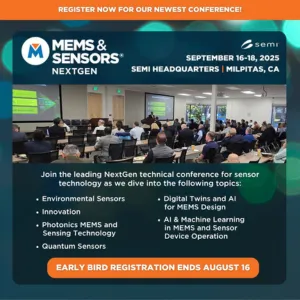
Gain insights as we dive into the following topics:
Environmental Sensors
Innovation
Photonics MEMS and Sensing Technology
Quantum Sensors
Digital Twins and AI for MEMS Design
AI & Machine Learning in MEMS and Sensor Device Operation
WHO SHOULD ATTEND
This conference is open to all MEMS & sensors professionals interested in NextGen technology.
System Approach in Boosting Sensitivity, Selectivity, and Stability of Modern Environmental and Industrial Gas sensors to Deliver Broad Societal Impact
The Computer History Museum (CHM) is a computer museum in Mountain View, California. The museum presents stories and artifacts of Silicon Valley and the Information Age, and explores the computing revolution and its impact on society. Transportation will be provided.
MEMS & Sensors NextGen—MSNG 2025 is the leading NextGen sensor technology technical conference for NextGen professionals related to designing, building, and using sensors.
MEMS & Sensors NextGen 2025
September 16-18, 2025
SEMI HQ, Milpitas, CA
2:30 pm - 6:30 pm
Off
Add to Calendar2025-09-16 14:30:002025-09-18 18:30:00MEMS & Sensors NextGenMEMS & Sensors NextGen—MSNG 2025 is the leading NextGen sensor technology technical conference for NextGen professionals related to designing, building, and using sensors. SEMI HQ 673 South Milpitas Boulevard Seminars 1 & 2 Milpitas, CA 95035 United StatesSEMI.org[email protected]America/Los_Angelespublic
America/Los_Angeles
Standards meetings are open to all, but you must be a SEMI Standards Program Member to attend.
If you are not a Member, please register for the International SEMI Standards Program and start making a big contribution to the industry’s progress, complete an application form today!
Questions? Contact your local staff coordinator: Click here
10:00 am - 12:00 pm
Off
Add to Calendar2025-06-25 10:00:002025-06-25 12:00:00EHS Japan TC Chapter MeetingEHS Japan TC Chapter Meeting Date: Wednesday, June 25, 2025Time: 10:00 AM - 12:00 PM JSTvia Official Virtual TC Chapter Meeting + SEMI Japan (Hybrid) AGENDA Standards Contact Information:Akiko YoshidaSenior Coordinator, Standards & EHS, SEMI JapanEmail: [email protected] NOTE:Standards meetings are open to all, but you must be a SEMI Standards Program Member to attend.If you are not a Member, please register for the International SEMI Standards Program and start making a big contribution to the industry’s progress, complete an application form today!Questions? Contact your local staff coordinator: Click hereSEMI Japan 26F, xLINK Marunouchi Eiraku Bldg. 1-4-1 Marunouchi Chiyoda-ku, Tokyo 1010005 JapanSEMI.org[email protected]Asia/Tokyopublic
Asia/Tokyo
Hardware is at the heart of computing systems. However, recent years have seen increased attacks exploiting hardware vulnerabilities and exploits, which even traditional software-based protections cannot prevent. Hardware fuzzing has shown promise in detecting vulnerabilities in large-scale designs like modern processors. In this talk, we will describe the hardware vulnerabilities in hardware description languages, such as Verilog and VHDL. Then, we will explain a new and radical approach called hardware fuzzing to find these vulnerabilities and detail how fuzzing techniques can be combined with existing formal verification techniques to detect vulnerabilities efficiently. Finally, we will discuss a strategy for pinpointing vulnerabilities to accelerate the mitigation process and briefly talk about improving the efficiency of hardware fuzzing using ML/AI techniques, such as multi-armed bandit (MAB) and large language models (LLM).
Meet the Speakers
Guest Speaker
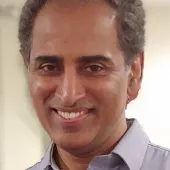
Jeyavijayan (JV) Rajendran Associate Professor Department of Electrical and Computer Engineering Texas A&M University Biography
Moderator
Warren Savage Researcher at University of Maryland Applied Research Laboratory for Intelligence and Security Biography
The ESD Alliance, a SEMI Technology Community, is hosting a webinar series, "Savage on Security," moderated by Warren Savage, Researcher at University of Maryland, Applied Research Laboratory for Intelligence and Security.
10:00 am - 11:00 am
Off
Add to Calendar2025-03-27 10:00:002025-03-27 11:00:00ESD Alliance Webinar: Savage on Security 2: Mar 27, 2025The ESD Alliance, a SEMI Technology Community, is hosting a webinar series, "Savage on Security," moderated by Warren Savage, Researcher at University of Maryland, Applied Research Laboratory for Intelligence and Security. United StatesSEMI.org[email protected]America/Los_AngelespublicRegister Now to Watch the Recorded Event
NOTE: This webinar has been indefinitely postponed.
The FDA’s Center for Devices and Radiological Health (CDRH) launched the voluntary Total Product Life Cycle (TPLC) Advisory Program (TAP) Pilot to help spur more rapid development of high-quality, safe, effective, and innovative medical devices that are critical to public health. TAP’s primary goal is to expedite patient access to innovative medical devices by providing early, frequent, and strategic communications with the FDA and by facilitating engagement with other key parties for developers of devices of public health importance. To achieve this goal, a dedicated cadre of FDA TAP Advisors proactively provide solutions-focused engagement that is tailored to each TAP Innovator’s needs in advancing devices to market and patient access. In this seminar, FDA TAP Advisors will discuss this pilot program and provide participants input on when in their regulatory journey TAP may be an option for them.
ABOUT THE SPEAKERS:
Kimberly Knish, MS, CCRP, RAC Kimberly is a TAP Advisor within FDA’s Center for Devices and Radiological Health, Total Product Life Cycle (TPLC) Advisory Program (TAP). In this role, she establishes and cultivates a wide network of synergistic relationships across the entire medical technology innovation ecosystem and integrates ecosystem, sponsor, and lead reviewer input into strategic planning options intended to reduce stakeholder risk and maximize the opportunities of timely commercial rollout and sustainable patient access. She brings to the FDA 30 years of medical technology industry experience within clinical affairs, regulatory affairs, health economics, reimbursement and quality systems. She has been involved with all phases of medical device development (concept through obsolescence) involving device types from Class III implantables to wearables and remote monitors. Therapeutic expertise spans cardiovascular, nervous, digestive, endocrine, respiratory, and skeletal systems. Kimberly holds a B.A. degree in Biology from the College of St. Benedict, a M.S. degree in Management from Cardinal Stritch University and has professional certifications in clinical research (CCRP) and regulatory affairs (RAC).
April Marrone, PhD, MBA April is a Senior Advisor in the FDA/CDRH Total Product Lifecycle Program (TAP) since November 2023. Prior to her current role, April has served on the Obesity and Hepatobiliary Devices Team as the acting Assistant Director, Team Lead, Lead Reviewer, and chemistry consultant since 2014. In addition to supervisory, leadership, and medical device review responsibilities, April has promoted improvement in product manufacturing and quality through developing device specific FDA guidance documents, creating review tools to ensure consistency and quality in device review, and publishing external manuscripts on topics relevant to the FDA and industry on topics in the obesity and hepatobiliary device space. April has served as a Commissioner Fellowship Program (CFP) preceptor, mentor to new reviewers and advisors, and has developed and instructed Reviewer Certification Program courses.
Prior to joining CDRH in 2014, April was a Commissioner Fellow at FDA’s National Center for Toxicology Research (NCTR) and has served on the CFP Advisory Board. During her tenure at the NCTR, April did research to develop novel epigenetic approaches to safely assess the safety and carcinogenicity of FDA regulated products. Prior to joining the FDA, April was a post-doctoral scientist at the University of Pittsburgh, Children’s Hospital of Pittsburgh where she studied epigenetic regulation of congenital kidney disease in a mouse model. April also completed post-doctoral training at the Max Planck Institute for Biophysical Chemistry where she studied genetic and epigenetic regulation of neuromuscular disease. April has a PhD in Chemistry and BS in Physics from the University of Central Florida and an MBA from Florida Institute of Technology.
Plan now to join fellow semiconductor industry professionals at SEMI Headquarters in Milpitas, California at the 2025 SEMI EHS Summit.
Industry experts will present on the regulatory matters that will impact the industry in 2025 and beyond, followed by discussions on taking collective action to strengthen semiconductor manufacturing.
Topics will include:
US Regulatory Landscape under second Trump Administration and global impact
US EPA New Chemical Authorization Process
Europe: PFAS restriction, F-Gas restriction, GENESIS Consortium, REACH restriction, etc.
US EPA Technology Transition Rule
UN Plastics Treaty and related policies
US EPA TSCA New Substances of Concern
PFAS taxonomy
Overview of SEMI EHS activities, including SEMI PFAS Initiative
Attend, network and strategically prepare your company. This is an in-person event only.
EHS Summit 2025
Regulations, Rules, Allocations & Proposals
8:30 am - 3:30 pm
Off
Add to Calendar2025-02-11 08:30:002025-02-11 15:30:002025 EHS SummitPlan now to join fellow semiconductor industry professionals at SEMI Headquarters in Milpitas, California at the 2025 SEMI EHS Summit.Industry experts will present on the regulatory matters that will impact the industry in 2025 and beyond, followed by discussions on taking collective action to strengthen semiconductor manufacturing. Topics will include:US Regulatory Landscape under second Trump Administration and global impactUS EPA New Chemical Authorization ProcessEurope: PFAS restriction, F-Gas restriction, GENESIS Consortium, REACH restriction, etc.US EPA Technology Transition RuleUN Plastics Treaty and related policiesUS EPA TSCA New Substances of ConcernPFAS taxonomyOverview of SEMI EHS activities, including SEMI PFAS Initiative Attend, network and strategically prepare your company. This is an in-person event only.SEMI 673 South Milpitas Avenue Milpitas, CA 95035 United StatesSEMI.org[email protected]America/Los_Angelespublic
America/Los_Angeles
From Concept to Reality: Advancing Digital Twin in Semiconductor Manufacturing
This event is now sold out. Please register if you'd like to receive access to presentation materials.
SEMI Member: $225
Non-Members: $295
Cancellations received on or before November 17, 2023 will be fully refunded. After this date, only substitutions will be accepted.
Please email your cancellation request to Agnes Cobar at [email protected]. Refunds will not be issued for cancellations (including no-shows) made after November 17th, 2023.
Substitutes are only accepted with written permission from the original registrant.
Digital Twin technology has gained significant traction in a variety of industries and is now in its early stages of adoption by the semiconductor industry. In this workshop, we will hear from across the ecosystem (OEMs, Platforms, end users, and more) as to the various levels of Digital Twins needed, the development challenges, opportunities, and recommendations. The development of full tool or full-process level semiconductor digital twins is challenging but has the potential to significantly improve the productivity & quality of operations.
Primarily beneficial for developers, and end-users of DT’s to attend so that we can understand the challenges, and scope of development effort required to create and deploy such DT systems in manufacturing.
Hosted by the SEMI Smart Manufacturing Initiative.
SEMI HQ 673 S Milpitas Blvd. Milpitas, CA95035 United States
Morning, Day 1: December 4, 2024
8:00 am
-
12:20 pm
Equipment Level Digital Twins (Equipment Makers)
Digital twins from equipment makers are virtual replicas of their physical products. They are created using data collected from sensors on the equipment, as well as from design and engineering drawings.
8:00 am
-
9:00 am
Registration & Breakfast
9:00 am
-
9:15 am
Mark Da Silva
SEMI
Welcome All
9:15 am
-
9:40 am
Supika Mashiro
Sr. Expert/TEL, Co-chair of the IRDS Factory Integration IFT (Focus Team)
TEL
Emergence of Digital Twin technology in the IRDS Factory Integration focus roadmap
9:40 am
-
10:05 am
Ala Moradien
Director, CAE Programs and Digital Twin Initiatives
Applied Materials
AppliedTwin™: A Digital Twin Platform for Semiconductor Manufacturing, Use Case in Sustainability
10:05 am
-
10:30 am
Joe Ervin
Senior Director and Product Line Head, Semiverse™ Solutions
Lam Research
A Single Digital Twin for Semiconductor Manufacturing? Semiverse™ Solutions and Building the Digital Family
10:30 am
-
10:45 am
Coffee Break
10:45 am
-
11:10 am
Sean Glazier
Software Engineer IV
Onto Innovation
Building a digital twin model is EASY. Getting the model deployed and used every day, now that’s the challenge
11:10 am
-
11:35 am
Basil Milton
Senior Manager, Ball Bonder Process R&D
Kulicke & Soffa
Digital Twin Improvements for Wire Bond Process Optimization
11:35 am
-
12:20 pm
Moderator
Mark Huntington
McKinsey
Open Forum/Panel/Breakout
12:20 pm
-
1:30 pm
Lunch
Afternoon, Day 1: December 4, 2024
1:30 pm
-
5:00 pm
Chamber Process, Operations & Planning Level Digital Twin (Solution Providers)
Solution providers offer a variety of products and services to help companies implement and manage digital twins (physics-based process models for components or sub-systems).
1:30 pm
-
1:55 pm
Sarbajit Ghosal
Lead Research Engineer
SC Solutions, Inc.
Fast, Physics-based Models for Real-time Process Control And Monitoring
1:55 pm
-
2:20 pm
Norman Chang
Ansys/IEEE Fellow and Chief Technologist of Electronics, Semiconductor, and Optics BU
Ansys Inc.
Enabling ML-augmented Digital Twin for Semiconductor Manufacturing
2:20 pm
-
2:45 pm
Holland Smith
Director of Technical Marketing, INFICON IMS (Intelligent Manufacturing Systems)
INFICON
The Operations Digital Twin: Why Every Factory Needs One, and Why Many Don't Have One (Yet)
2:45 pm
-
3:00 pm
Coffee Break
3:00 pm
-
3:25 pm
Chandra Reddy
Senior Technical Staff Member, AI Applications
IBM Research
Generative AI enabled Digital Twins
3:25 pm
-
3:50 pm
Jon Herlocker
Founder & CEO
Tignis
Practical Machine Learning Applications for the Process Modelling and Optimization of Manufacturing Process Tools and Process Lines
3:50 pm
-
4:15 pm
Ken Smerz
CEO
Zelus
Digital Twin Creation and Application
4:15 pm
-
5:00 pm
Moderator
John Behnke
GM FPS Product Line
INFICON
Open Forum/Panel/Breakout
5:00 pm
-
7:00 pm
Networking Reception
Morning, Day 2: December 5, 2024
8:00 am
-
12:20 pm
DT Adoption & Implementation (Device Makers)
As a device maker, a digital twin is a critical tool for improving productivity, quality, and efficiency. A digital twin is a virtual representation of your physical devices or fab, and it can be used to simulate and optimize operations.
8:00 am
-
9:00 am
Breakfast
9:00 am
-
9:05 am
Mark Da Silva
SEMI
Day 2 - Welcome
9:05 am
-
9:30 am
Prof. Phillip Wong
Professor of Electrical Engineering, Willard R. and Inez Kerr Bell Professor in the School of Engineering Stanford University
Stanford
A Vision for the Future Semiconductor Fab
9:30 am
-
9:55 am
Steven J Meyer
General Manager and Sr. Principal Engineer, Advanced Industrial Systems
Intel Corporation
High Value from Digital Twins in Semiconductor Manufacturing
9:55 am
-
10:20 am
Jae Y. Park
VP of Technology
Samsung
AI Powered Digital Twin: Transforming Smart Manufacturing
10:20 am
-
10:45 am
Coffee Break
10:45 am
-
11:10 am
Rosa Javadi
Principal Engineer
Jabil
Smart Manufacturing Technology for Complex Integrated Systems
11:10 am
-
11:35 am
Amit Lal
Professor
Cornell University
Peter Doerschuk
Professor
Cornell University
Ben Davaji
Assistant Professor
Northeastern University
Digital Twin Frameworks for an Academic Research and Development Cleanroom
11:35 am
-
12:20 pm
Moderator
Bobby Mitra
Deloitte
Open Forum/Panel Discussion - Developing Full Process Level Digital Twin – Challenges
12:20 pm
-
1:30 pm
Lunch
Afternoon, Day 2: December 5, 2024
1:30 pm
-
5:00 pm
DT Connectivity and Platform Integration (Cloud, Facilities, & Supply Chain)
Solution providers offer a variety of products and services to help companies implement and manage digital twins including integration, connectivity, & security including horizontal integration across the supply chain.
1:30 pm
-
1:55 pm
Rad Desiraju
Director , WW Industry Advisory
Microsoft
Unlocking Innovation with Digital Twins
1:55 pm
-
2:20 pm
Gautham Unni
Head of Solutions & Business Development (Semiconductor)
AWS
Accelerate your Digital Twin journey with AWS
2:20 pm
-
2:45 pm
David Gross
Portfolio Development Executive, Manufacturing Digitalization, Semiconductor Industry
Siemens
Srividya Jayaram
Principal Product Engineering ManagerSiemens EDA
Siemens EDA
Siemens: Accelerating technology From Design to HVM
2:45 pm
-
3:00 pm
Coffee Break
3:00 pm
-
3:25 pm
Slava Libman
CEO
FTD Solutions INC
Digital Twins Enabling Environmental Sustainability
3:25 pm
-
3:50 pm
Becky Kelderman
Manager
Rockwell Automation
The Nimble Supply Chain with Digital Twin
3:50 pm
-
4:15 pm
Ram Walvekar
VP and PLM Head, Digital Transformation Unit
HCL Technologies
Integrated Cognitive Digital Twin for Semiconductor Equipment
4:15 pm
-
5:00 pm
Paul Trio - Moderator
SEMI
Required Standards for Digital Twin Technology - Open Forum/Panel/Breakout
-
Join us for a 2-day deep dive into the expanding world of Digital Twin (DT) technology in the semiconductor realm. Understand its potential challenges and opportunities, and discover its transformative power in enhancing operational productivity and quality. Calling all DT developers and end-users: collaborate, learn, and pave the way for DT's integration into manufacturing!
This event is now sold out. Please register if you'd like to receive notifications about available spaces or access to presentation materials.
From Concept to Reality: Advancing Digital Twin in Semiconductor Manufacturing
[IN-PERSON EVENT]
December 4-5, 2024
8:00 AM – 5:00 PM PT
8:00 am - 5:00 pm
Off
Add to Calendar2024-12-04 08:00:002024-12-05 17:00:00From Concept to Reality: Advancing Digital Twin in Semiconductor ManufacturingJoin us for a 2-day deep dive into the expanding world of Digital Twin (DT) technology in the semiconductor realm. Understand its potential challenges and opportunities, and discover its transformative power in enhancing operational productivity and quality. Calling all DT developers and end-users: collaborate, learn, and pave the way for DT's integration into manufacturing!
This event is now sold out. Please register if you'd like to receive notifications about available spaces or access to presentation materials.SEMI HQ 673 S Milpitas Blvd. Milpitas, CA 95035 United StatesSEMI.org[email protected]America/Los_Angelespublic
America/Los_Angeles
On-demand
2025 Technology Workshops Shaping the Future of Electronics
Registration
Early Bird Pricing (until March 25, 2025) $375 members $525 non-members
Regular Pricing (After March 25, 2025) $525 members $699 non-members
MDM2 members please contact Michelle Fabiano, [email protected], for discount information.
Complimentary student registration is available but has limited capacity. Students can Register here to be contacted about complimentary attendance after March 15th.
Cancellation Policy
Cancellations received on or before March 25, 2025, are fully refunded with a $50 processing fee. Refunds will not be issued for cancellations (including no-shows) made after March 25, 2025, and only substitutions are accepted with a written note from the registered attendee. Please email your cancellations or substitutions on company letterhead to Michelle Fabiano at [email protected].
Industry Tours Take advantage of an exclusive industry tour at Medtronic on April 21, just before our workshop begins! Please note that space is limited and transportation will not be provided. Don't miss this unique opportunity!
Shaping the Future of Flexible Hybrid Electronics: FHE Technical Gap Analysis workshop Join us on April 22 for a focused technical gap analysis workshop on Flexible Hybrid Electronics (FHE) to shape FlexTech’s 2025 Request for Proposals (RFP). With a history of over five dozen R&D projects, FlexTech has driven advancements in flexible batteries, energy harvesting, and system integration. Hear from principal investigators on the latest developments and join breakout sessions to explore challenges, gaps, and priorities for future innovation with industry, government, and academic leaders.
Why Attend: Contribute to FlexTech’s 2025 priorities, learn about cutting-edge developments, and Join breakout sessions and network with key experts.
The day will conclude with a Mayo Clinic Lab for function tour followed by a Student Poster Networking Reception.
Advancing Human Performance Technologies: NBMC Technical Gap Analysis Workshop Join us on April 23 for the Nano-Bio Materials Consortium (NBMC) Technical Gap Analysis Workshop, a focused forum on wearables and bio-signal sensing technologies for real-time cognitive and physical state monitoring, augmentation, and intervention. Participants will address critical technical gaps in preparation for the next NBMC Request for Proposal.
NBMC brings together industry, government, and academia to advance early-stage nano and bio technologies, driving innovations in low-cost wearable sensors and communication systems through over three dozen R&D projects.
The day will conclude at the Phoenix Bioscience Core, located in the heart of the innovator's district in downtown Phoenix, Attendees will enjoy guided tours, a reception and a keynote presentation on "Bridging Clinical Needs and Emerging Technology: Emerging Device-Based Health Intervention Platforms: Wearables, Robotics, and BioHybrids." Networking opportunities will be available throughout these activities.
Clinician Insights Shaping the Future of Electronics: MDM2 and Smart MedTech Forum Join us on April 24, for an inspiring and dynamic session spotlighting the collaboration between MDM2 (Medical Device Manufacturing Multiplier ) and the Smart MedTech Initiative. This forum highlights the critical role of clinician and patient perspectives in driving innovation for next-generation medical devices.
Together, MDM2—a consortium dedicated to positioning Greater Phoenix as a leading hub for digital medical device manufacturing—and SEMI Smart MedTech Initiative are working to bridge the gap between emerging technologies and real-world needs. Discussions will explore how clinician insights can spark innovation in medical devices, accelerate technology adoption and commercialization and leverage AI and machine learning to advance manufacturing processes.
An evening event will be hosted by Venture Cafe at the end of the workshop to engage with the local innovation community.
Including with registration are breakfasts, breaks, lunches and receptions.
ASU Health Futures Center 6161 E Mayo Blvd Phoenix, AZ85054 United States
Monday, April 21 (Medtronic Tour)
2:00 pm
Medtronic Tour
(Tour sold out. Sign up for the waitlist.)
Join us for an exclusive one-hour tour of Medtronic’s facility, to explore its advanced operations in designing and manufacturing microelectronics for implantable medical devices.
Attendees will break into groups for smaller discussions to identify challenges, prioritize those challenges and identify opportunities on critical issues discussed throughout the morning session.
3:05 pm
-
3:20 pm
Break
3:20 pm
-
4:10 pm
Breakout Sessions Readout
4:30 pm
-
6:00 pm
Student Poster Networking Reception & Mayo Clinic Lab for Function Tour
Mayo Clinic
IERB Building
5951 E. Mayo Blvd
Phoenix, AZ 85054
Mayo Lab Tour: If you're interested, please sign up at the registration desk. Space is limited to 20 participants and will be available on a first-come, first-served basis.
Note: Transportation to this reception will not be provided. (2 minute drive.)
Attendees will break into groups for smaller discussions to identify challenges, prioritize those challenges and identify opportunities on critical issues discussed throughout the morning session.
3:05 pm
-
3:20 pm
Break
3:20 pm
-
4:10 pm
Breakout Sessions Readout
5:00 pm
-
7:00 pm
Networking Reception and Tours of Wexford Connect
Enjoy Networking, concurrent tours, and presentation content
850 Phoenix Bioscience Core
850 N 5th Street
Phoenix, AZ 85004 https://850pbc.com
5:00 pm - 5:30 pm: Tours of Wexford Connect (Limited to 30 people)
6:15 pm - 7:00 pm: Panel Discussion:
Bridging Clinical Needs and Emerging Technology: Research, Implementation, and Scale. Moderator: Chris Yoo, General Partner, Xcellerant Ventures Panelists: Suman Bose, Assistant Professor of Biomedical Engineering, Mayo Clinic Hakan Ceylan, Assistant Professor and Principal Investigator, Mayo Clinic Ross Bundy, CEO, CRISPRQC Elsa Abruzzo, CEO, Anuncia Medical Allen Waziri, CEO and Co-Founder, iCE Neurosystems
Note: Transportation will not be provided. (30+ minute drive.)
Panel Discussion: The Arizona MDM2 Consortium - Investing in the Medical Technology Manufacturing Renaissance
Moderator: Chris Yoo, Founder and CEO and Regional Innovation Officer, MDM2 Consortium Panelists: Kiran Avancha, Chief Innovation Officer, HonorHealth Rochelle Rivas, District Director for Healthcare Innovation, Maricopa Community Colleges Alex Tessmer, Associate Director, BD Peripheral Intervention, Ideation
9:45 am
-
10:10 am
Jonathon Parker
Neurosurgeon, Director of Device-Based Neuroelectronics Lab
Mayo Clinic, Arizona
Aman Verma
Hospitalist
Mayo Clinic, Arizona
FIRESIDE CHAT: How can wearables and implantables improve care of the acutely ill patient?
Moderator: Jonathon Parker , Neurosurgeon, Director of Device-Based Neuroelectronics Lab, Mayo Clinic - Arizona Participants: Aman Verma, Hospitalist, Mayo Clinic, Arizona
10:10 am
-
10:25 am
Break
10:25 am
-
11:10 am
Moderator
Kiran Avancha
Chief Innovation Officer
Honor Health Innovations
Craig Norquist
Chief Innovation Officer
Honor Health
Matthew Anderson
Chief Medical Information Officer - Ambulatory
Honor Health
PANEL DISCUSSION: Health Data 2035: How do we Capture, Integrate, and Secure Health Data Streams From Wearables and Implantables to Improve Patient Care?
Moderator: Kiran Avancha, Chief Innovation Officer, Honor Health Innovations Panelists: Craig Norquist, Chief Innovation Officer, Honor Health Matthew Anderson, Chief Medical Information Officer - Ambulatory, Honor Health
11:10 am
-
11:45 am
Jonathon Parker
Neurosurgeon, Director of Device-Based Neuroelectronics Lab
Mayo Clinic, Arizona
Bart M. Demaerschalk
Vascular Neurologist
Mayo Clinic, Arizona
Chandan Krishna
Neuro-endovascular Neurosurgeon
Mayo Clinic - Arizona
FIRESIDE CHAT: Stroke Care 2035- How Can Digital Health Data Transform Stroke Care?
Moderator: Jonathon Parker , Neurosurgeon, Director of Device-Based Neuroelectronics Lab, Mayo Clinic - Arizona Participants: Bart M. Demaerschalk, Vascular Neurologist, Mayo Clinic, Arizona Chandan Krishna, Neuro-endovascular Neurosurgeon, Mayo Clinic, Arizona
11:45 am
-
12:15 pm
Jonathon Parker
Neurosurgeon, Director of Device-Based Neuroelectronics Lab
Mayo Clinic, Arizona
Nandita Khera
Oncologist, Associate Chair of Digital Health
Mayo Clinic
FIRESIDE CHAT: Real-Time Oncology - How Can Wearables and Implantables Reshape Oncology Care in 2035?
Moderator: Jonathon Parker , Neurosurgeon, Director of Device-Based Neuroelectronics Lab, Mayo Clinic - Arizona Participants: Nandita Khera, Oncologist, Associate Chair of Digital Health, Mayo Clinic
12:15 pm
-
1:00 pm
Moderator
Randal Schulhauser
Founder and CEO
Schulhauser Associates LLC
Jonathon Parker
Neurosurgeon, Director of Device-Based Neuroelectronics Lab
Mayo Clinic
Allen Waziri
Neurosurgeon, Co-Founder iCE Neurosystems
iCE Neurosystems
Paul Gerrish
VP, Technology and Medtronic Fellow
Medtronic
Panel Discussion: The New Frontier of Long-Term Brain Monitoring: Brain Computer Interface Re-Imagined
Moderator: Randal Schulhauser, Founder and CEO, Schulhauser Associates LLC Panelists: Jonathon Parker, Neurosurgeon, Director of Device-Based Neuroelectronics Lab, Mayo Clinic Allen Waziri, Neurosurgeon, Co-Founder iCE Neurosystems, iCE Neurosystems Paul Gerrish, VP, Technology and Medtronic Fellow, Medtronic
Division Director, Integrative Health and Performance Sciences
BlueHalo
Deon Chen
Sr. Manager, HEOR Strategic Planning
BD
Panel Discussion: Digital Health Revolution: Insights and Innovations
Moderator: Douglas Kiehl, BioCrossroads/Purdue Panelists: Bharath Rajagopalan , Director – Strategic Marketing, Health & Wellness, STMicroelectronics Anirban Bandyopadhyay, Senior Director, Global Foundries Stephaney Shanks, Division Director, Integrative Health and Performance Sciences, BlueHalo Deon Chen, Sr. Manager, HEOR Strategic Planning, BD
4:30 pm
-
7:00 pm
Evening Program Hosted by Venture Café
850 Phoenix Bioscience Core
850 N 5th Street
Phoenix, AZ 85004 https://venturecafephoenix.org/
Venture Café Phoenix is a dynamic weekly gathering where entrepreneurs, innovators, and business leaders connect to exchange ideas and build meaningful relationships.
Note: Transportation to this program will not be provided (30+minute drive)
5:40 pm
-
6:30 pm
Nandini Tandon
Co-Founder of Silicon Valley based VC in HealthTech
IndUS Setu Global Foundation
Jami Mei
VP of Business Development
Arizona Commerce Authority
Douglas E. Kiehl
Sr. Vice President
BioCrossroads
Mark Dydyk
Director of Engineering & Operations
Medtronic
Fireside Chat: Harnessing Semiconductor For transformational Advancements in HealthTech
Abstract Moderator: Nandini Tandon Panelists: Jami Mei, VP of Business Development, Arizona Commerce Authority Douglas E. Kiehl, Sr. Vice President, BioCrossroads Mark Dydyk, Director of Engineering & Operations, Medtronic
Join us for a three-day workshop uniting FlexTech, NBMC, Smart MedTech, and the Medical Device Manufacturing Multiplier (MDM2) — a consortium of companies, institutions, and statewide organizations working to establish Greater Phoenix as a premier hub for medical device manufacturing. This collaborative event will drive innovation in electronics and medical technologies by bringing together industry leaders, innovators, and stakeholders.
The workshop will delve into advancements, challenges, and gaps in critical technologies such as flexible hybrid electronics, hybrid electronics, and bio-signal sensing for real-time cognitive and physical state monitoring and augmentation and will highlight the collaboration between the Smart MedTech Initiative and MDM2, focusing on the voice of the customer—clinicians and patients.
2025 Technology Workshop Shaping the Future of Advancing Electronics and Medical Technologies
- FHE Gap Analysis and NBMC Gap Analysis
- MDM2 and Smart Medtech Workshop
8:00 am - 6:00 pm
Off
Add to Calendar2025-04-22 08:00:002025-04-24 18:00:002025 Technology Workshops Shaping the Future of ElectronicsPresented By
Join us for a three-day workshop uniting FlexTech, NBMC, Smart MedTech, and the Medical Device Manufacturing Multiplier (MDM2) — a consortium of companies, institutions, and statewide organizations working to establish Greater Phoenix as a premier hub for medical device manufacturing. This collaborative event will drive innovation in electronics and medical technologies by bringing together industry leaders, innovators, and stakeholders.The workshop will delve into advancements, challenges, and gaps in critical technologies such as flexible hybrid electronics, hybrid electronics, and bio-signal sensing for real-time cognitive and physical state monitoring and augmentation and will highlight the collaboration between the Smart MedTech Initiative and MDM2, focusing on the voice of the customer—clinicians and patients. ASU Health Futures Center 6161 E Mayo Blvd Phoenix, AZ 85054 United StatesSEMI.org[email protected]America/Phoenixpublic
America/Phoenix
Register Now
New horizons for semiconductors have been revealed by innovations in heterogeneous integration, especially due to the availability of an abundance of inter-chiplet wires. All this has implications on security leading to new challenges as well as opportunities. This talk presents an overview on how prior work on 2D SoCs may or may not be helpful in addressing this challenge.
Meet the Speakers
Guest Speaker
Ankur Srivastava Director of the Institute for Systems Research University of Maryland Biography
Moderator
Warren Savage Researcher at University of Maryland Applied Research Laboratory for Intelligence and Security Biography
The ESD Alliance, a SEMI Technology Community, is hosting a webinar series, "Savage on Security," moderated by Warren Savage, Researcher at University of Maryland, Applied Research Laboratory for Intelligence and Security.
ESD Alliance Webinar: Security Constructs for Heterogenous Integration
Savage on Security Webinar Series #1
Recording
Recorded January 23, 2025