downloadGroupGroupnoun_press release_995423_000000 copyGroupnoun_Feed_96767_000000Group 19noun_pictures_1817522_000000Member company iconResource item iconStore item iconGroup 19Group 19noun_Photo_2085192_000000 Copynoun_presentation_2096081_000000Group 19Group Copy 7noun_webinar_692730_000000Path
Skip to main content
Default Banner Image

Featured Speakers

United States From Automated to Autonomous: Rethinking Fab Design for the Future Business Executive Featured Speakers

The decisions made at the design stage of today's greenfield fabs will shape U.S. semiconductor performance for the next two decades. This webinar explores how organizations can move beyond traditional automation toward adaptive and ultimately autonomous fabs—starting with the foundational design of the built environment. Focusing on greenfield projects, Siemens experts will outline how early integration of power distribution, building systems, and automation technologies enables scalable, resilient, and future-ready facilities. Attendees will learn why designing autonomy requires a holistic approach—one that connects infrastructure, process, and production through a unified technology stack. The webinar will address challenges in adapting global fab designs to U.S. markets, highlighting the need for local expertise, regulatory alignment, and lifecycle planning. It will also explore how digitalization, predictive maintenance, and connected ecosystems drive efficiency in brownfield sites. Join the webinar and discover how to design facilities ready for autonomous, high-performance fabs. 

Key takeaways: 
Shift from automation to autonomy starts with design 
Future fabs require rethinking the built environment upfront—not just layering automation later. 

Early integration is critical for scalability and resilience 
Aligning power distribution, building systems, and automation from the start enables flexible, future-ready facilities. 

A unified technology stack connects infrastructure to production 
Achieving autonomy depends on a holistic approach that links physical infrastructure, processes, and operations end-to-end. 

Localization and lifecycle planning are key for U.S. fabs 
Adapting global designs requires navigating local regulations, leveraging regional expertise, and planning for long-term operations. 

Digitalization drives performance across both greenfield and brownfield sites 
Technologies like predictive maintenance and connected ecosystems improve efficiency and enable continuous optimization. 

This webinar is in collaboration with

Siemens logo

United States

Virtual Webinar | Tuesday, August 25, 2025 | 11am Pacific Time
11:00 am
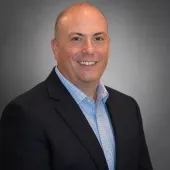
ben green headshot
Ben Green
Senior Digitalization Consultant
Siemens Digital Industries 

Matthew hamilton headshot
Matthew Hamilton
Semiconductor Market Leader 
Siemens Smart Infrastructure 

Opening Remarks

Early integration is critical for scalability and resilience 

A unified technology stack connects infrastructure to production 

Localization and lifecycle planning are key for U.S. fabs 

Digitalization drives performance across both greenfield and brownfield sites 

11:45 am

Q&A Session

12:00 pm

Closing Remarks

Ben Green

Ben Green is a Senior Digitalization Consultant at Siemens Digital Industries, where he leads strategic customer engagements focused on digital transformation and industrial innovation. He works with manufacturers to develop and execute digitalization strategies that integrate automation, control systems, and advanced software solutions. With nearly two decades of experience at Siemens, Ben has held a variety of customer-facing roles spanning sales, business development, and technical consulting. He previously led the Siemens Industrial Automation Solution Partner Program, collaborating with system integrators across the United States. Ben specializes in helping organizations define a clear vision for their digital future and translating that vision into practical, actionable steps that deliver measurable results. Ben holds a B.S. focused in Industrial Distribution from Texas A&M University. 
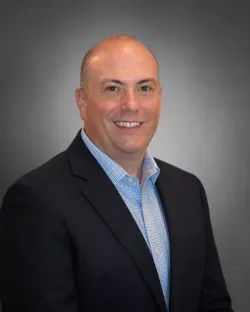
ben green headshot

Matthew Hamilton

Matthew Hamilton leads Siemens Smart Infrastructure's Semiconductor Vertical segment. A mechanical engineer by training, Matthew began his career in product development and manufacturing before spending a decade delivering complex energy and infrastructure programs at scale. His eight years at Siemens have centered on executive-level engagement with large-scale, mission-critical facilities where power resilience, decarbonization, and built-environment performance converge. His technical depth spans MV/LV power distribution, microgrid integration, solar and battery storage, central utility plants, building automation, fire and life safety, and enterprise digitalization — giving him a distinctive lens on how energy architecture and built-environment strategy shape fab performance, resilience, and the long path toward operational autonomy. Matthew holds a B.S. in Mechanical Engineering from the University of California Santa Barbara and an MBA in Finance from the Graduate School of Management at the University of California, Davis. 

Matthew hamilton headshot

Register now to join the live webinar in collaboration with Siemens!

11:00 am - 12:00 pm Off Add to Calendar Disabled America/Los_Angeles 2 Register
Event format
Promote in calendar
Off
United States Laser Annealing Graphic Featured Speakers
Highlighted content

Laser Annealing: Revolutionizing Sensor and Semiconductor Manufacturing


3D-Micromac, a leader in high-precision laser-based semiconductor processing and micromachining, has consistently adapted to meet evolving market demands. As the need for greater precision and efficiency in semiconductor and sensor technology grows, traditional production methods began to show their limitations. To address these challenges, 3D-Micromac has applied its laser technology expertise to develop selective laser annealing, offering innovative solutions that enhance both production quality and efficiency while also enabling the creation of entirely new products.

Laser annealing offers a transformative alternative to conventional annealing methods, particularly in the production of Giant Magnetoresistance (GMR) and Tunneling Magnetoresistance (TMR) sensors. Traditional techniques, such as large magnetic annealing furnaces, significantly limit the throughput for complex sensor designs and increase production costs. The furnace approach also introduces potential yield losses due to its inherent processing complexity.

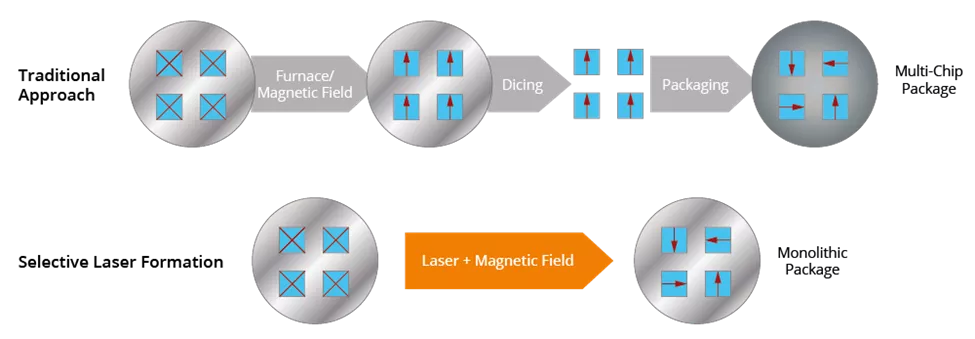
In contrast, selective laser annealing enables heating only illuminated wafer areas and not the entire wafer to provide extremely precise process control and enable closer placement of sensors to logic elements, laying the foundation for an integrated, monolithic sensor design (Fig. 1). This laser-based sensor programming enables a one-step process, eliminating the need for additional production steps such as dicing or chip transfer, which results in higher throughput and reduced costs.

Another semiconductor processing application that benefits from laser annealing is ohmic contact formation, which is a critical and challenging step in manufacturing silicon carbide (SiC)-based power devices. Traditionally, rapid thermal processing (RTP) has been used to generate well-controlled silicide interfaces because of its small thermal budget, but even RTP limitations become evident as SiC devices become thinner. Pulsed laser sources offer extremely small thermal budgets which enable ohmic contact formation on thinned SiC substrates resulting in superior device performance.

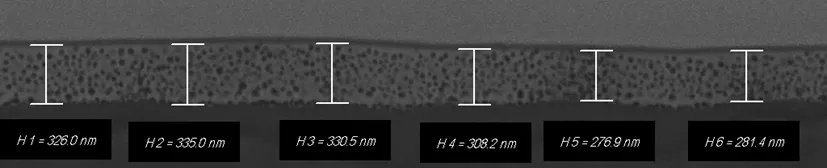
Both of these applications have already been successfully implemented in industrial machining solutions by 3D-Micromac. This webinar will provide in-depth insights into the processes and results (Fig. 2), while also exploring potential new applications of selective laser annealing. This innovative approach enhances device quality and streamlines manufacturing, marking a significant shift towards more efficient and cost-effective production methods in the sensor and semiconductor industries.


Fig. 1. Comparison traditional approach vs. selective laser annealing approach in magnetic sensor annealing


Fig. 2. Result of backside annealing for ohmic contact formation: SEM of NixSiy interface showing outstanding homogeneity


FEATURED SPEAKER


Maurice Clair | Team Lead Technology & Innovation Management

Maurice Clair

Maurice Clair studied Mechanical Engineering at the University of Technology Chemnitz (Germany). He joined 3D-Micromac in 2005 as a development engineer and is now team leader of the technology and innovation management department. In his current role, he serves as the technical lead for ohmic contact formation on SiC (silicon carbide) materials, a critical area in advancing semiconductor technologies.

Through his expertise in laser technologies, he has been instrumental in the development of innovative laser micromachining processes, including: laser trimming techniques for fine-tuning electronic components with both digital and analogue approaches and beam shaping for ultra-short pulsed lasers.


United States

MSIG Off Add to Calendar 2024-12-04 00:00:00 2024-12-04 00:00:00 Laser Annealing: Revolutionizing Sensor and Semiconductor Manufacturing United States SEMI.org [email protected] America/Los_Angeles public Register
Event format
Belgium France Germany India Ireland Italy Japan Malaysia Russia Singapore South Korea Taiwan United States Vietnam Register Now (8-9am PT) Register Now (5-6pm PT) [email protected] Business Executive Featured Speakers
Highlighted content

In today’s fast-paced and interconnected world, the electronics industry faces unprecedented challenges from global disruptions, geopolitical uncertainties, and supply chain vulnerabilities. To remain competitive and resilient, organizations must adopt robust risk management frameworks that proactively identify and mitigate risks.


This webinar is brought to you by the Resiliency Working Group, part of the SEMI Supply Chain Management Initiative. We will explore the creation and implementation of an industry-standard risk management framework tailored to the unique complexities of the electronics supply chain. Attendees will learn how to assess potential risks, develop mitigation strategies, and leverage cutting-edge tools to improve visibility and responsiveness across their supply networks.

Key topics include:


•     The critical risks impacting electronics supply chains and how to address them.
•     Best practices for building a resilient and adaptable risk management framework.
•     Strategies for real-time risk monitoring, supplier risk assessments, and scenario planning.
•     How to align your supply chain with industry standards for business continuity and operational stability.

Who should attend:


•    Supply chain managers
•    Risk officers
•    Operations executives
•    Anyone involved in supply chain planning and resilience in the electronics sector

Join us to discover actionable insights and practical approaches to future-proof your electronics supply chain, ensuring it remains resilient, efficient, and prepared for any disruption.
 

Speaker bio:

Austin Evans is the Director of Supply Chain Risk Management at Intel.  He is responsible for overseeing risk management for Intel’s supply chain as well as Intel’s Contingent Workforce Program Office.  His organization is responsible for business continuity, governance, resilience, supply chain security and compliance. 

United States

Austin Evans.jpg
Austin Evans
Director of Supply Chain Risk Management
Intel
Standards

Join us for a deep dive into the new industry-standard risk management framework tailored to the unique complexities of the electronics supply chain. Hosted by the SEMI Resiliency Working Group, this webinar will equip supply chain professionals with actionable insights on assessing critical risks, developing robust mitigation strategies, and leveraging advanced tools for real-time monitoring.

Off Add to Calendar 2024-10-24 00:00:00 2024-10-24 00:00:00 Building Resilient Supply Chains Join us for a deep dive into the new industry-standard risk management framework tailored to the unique complexities of the electronics supply chain. Hosted by the SEMI Resiliency Working Group, this webinar will equip supply chain professionals with actionable insights on assessing critical risks, developing robust mitigation strategies, and leveraging advanced tools for real-time monitoring. United States SEMI.org [email protected] America/Los_Angeles public America/Los_Angeles
Event format
United States AMFitz Webinar Featured Speakers
Highlighted content

Accelerating Piezoelectric MEMS Product Development with AMFitzgerald and MEMS Infinity

There is an increasing need for sensors and smart devices in optical communications, medical devices, automotive navigation and every market in between. MEMS technology is at the center of this groundswell, presenting new revenue opportunities to companies of all sizes.

As companies seek to push performance and manufacturing limits, a new generation of commercial MEMS devices that use piezoelectric thin films has been emerging. The global piezoelectric MEMS wafer volume is forecast to exceed 1.5M wafers per year or 30% of all MEMS wafers by 2029*.

Piezoelectric thin films, particularly PZT, are the new foundation for high-growth MEMS products like microspeakers and micromirrors, gas sensors, image stabilizers, and ultrasonic transducers.

An alliance between MEMS product development firm AMFitzgerald and foundry service MEMS Infinity, Sumitomo Precision Products, Co.,Ltd. is opening new paths for commercialization of PZT MEMS. Together, AMFitzgerald and MEMS Infinity offer an integrated design-to-production service that expedites commercialization by leveraging production-proven processes from day one. 

Join this webinar to learn:

  • Trends that are driving the adoption of PZT MEMS 
  • Why access to production-quality PZT is especially important for early-stage development
  • MEMS Infinity’s distinctive foundry service and PZT lineup for actuators, sensors, and transducers
    • 150mm and 200mm wafer lines
    • The world’s highest piezoelectric coefficient e31f for actuators
    • Combined high e31f and low relative permittivity for sensors and transducers
    • Extreme e31f using dual-layer PZT actuators
  • How to access the highest-quality PZT thin films for your product development

* Status of MEMS Industry 2024. Yole Intelligence

United States

Andrew Fung, AM Fitzgerald and Associates
Andrew O. Fung, PhD
Director of Business Development
A. M. Fitzgerald & Associates
Mario Kiuchi, MEMS Infinity Sumitomo Precision Products
Mario Kiuchi, PhD
Manager, Design & Consulting Group
MEMS Infinity, Sumitomo Precision Products
MSIG

8:00 am - 9:00 am Off Add to Calendar 2024-09-18 08:00:00 2024-09-18 09:00:00 Accelerating Piezoelectric MEMS Product Development with AMFitzgerald and MEMS Infinity United States SEMI.org [email protected] America/Los_Angeles public Register here
Event format
Belgium France Germany Ireland United States Register Now EAGS Image Business Executive Featured Speakers
Highlighted content

United States

Michael Doescher NXP
Michael Doescher
NXP
Mani Goswami, DuPont
Manibarsha Goswami
DuPont
Wojtek Lam
Wojtek Osowiecki
Lam Research
Justin Harris, CEC SEMI
Justin Harris
SEMI / Climate Equity Collaborative
Sustainability Workforce Development

Join this webinar to find out how companies across the semiconductor value chain are prioritizing employee-driven climate action and social impact,. Hear how employee-driven initiatives are enhancing sustainability and equity -- and gain ideas on how you and your organization might benefit.

With the Paris Climate Agreement and growing awareness of the climate crisis, many people are asking "how can I contribute in my private and professional life?"  

This Employee Action Workshop, organized by the Climate Equity and Social Impact (CESI) workgroup of SEMI will focus on setting up sustainability-based employee groups within your company. How to engage speakers and attendees, and the resources that exist to help.  

We will show you how to create an in-house, bottom-up sustainability network and offer concrete ideas for action. Industry leaders will share their experiences and successes, providing valuable insights into volunteerism, ESG innovation, and impactful employee initiatives.

For anyone who wants to use your biggest multiplier - your workplace - to make a difference in Climate Change.

This webinar takes place 8:00 AM - 9:00 AM Pacific Time Zone

8:00 am - 9:00 am Off Add to Calendar Disabled America/Los_Angeles
Event format

Registration

SEMI Members:  $49

Use your corporate email address during log in to be recognized as a SEMI Member.

Non-Members:  $75

Students:  Free

Contact [email protected] with a picture of your student ID to receive your discount code.

Belgium France Germany Ireland Italy United States FEMC 18 Tile Recorded Business Executive Featured Speakers
Highlighted content

Bio

The Department of Defense needs non-linear advances in gas-phase sensing to identify chemical threats, toxic industrial compounds, and physiological changes present in human breath. Currently, fieldable instruments for gas analysis are large (>0.5 cubic feet), expensive (>$50,000), and slow. Hand-held devices are limited to identification of specific targets such as nitrogen oxide, oxygen, and carbon dioxide or generalized estimated concentration of total volatile organic compounds (VOCs). Biohybrid sensing involves combining biological sensory elements with electronic components in a SWaP-C solution for fast and accurate detection of VOCs. Unprecedented VOC sensing potential lies within the biological sense of olfaction, which boasts rapid, selective, and sensitive capability to identify hundreds of thousands of compounds in complex environments. However, there are currently no commercially available devices harnessing the capability of olfaction due to the challenges in the bioelectronic interfacing necessary for maintaining long-term stability and environmental conditions necessary to sustain olfactory signaling elements (whether it be at the organ-, cell-, or protein-level). This course will provide an overview of the current state of biohybrid VOC sensing comparing and contrasting examples utilizing olfactory organ/tissue-based, cell-based, and protein-based modalities.

ABOUT THE SPEAKER

Dr. Elisabeth Steele is a biomedical engineer at Blue Halo serving as a Lead Scientist and Team Lead supporting sensor development at the Air Force Research Laboratory (AFRL). Her expertise is in neural tissue engineering and electrophysiology with recent focus in the design and testing of biohybrid gas sensors inspired by insect olfaction. Dr. Steel conducted neuromodulation research as a post-doctoral fellow with Dr. Tim Bruns at the University of Michigan. Additionally, she served as a Technical Sales Engineer with NeuroNexus Technologies, the industry leader in microelectrode array technology for neuroscience electrophysiology applications. She received her PhD (2018) and M.S. (2013) in Biomedical Engineering from Wayne State University in Detroit, Michigan. She completed her B.S. in Bioengineering in 2007 from University of Toledo.  
 

United States

Dr. Elisabeth Steele
Lead Scientist and Team Lead
UES
Gity Samadi
Dr. Gity Samadi
Director, R&D Programs
SEMI
FlexTech

This webinar features Dr. Elisabeth Steele of UES covering the status of non-linear advances in gas-phase sensing to identify chemical threats, toxic industrial compounds, and physiological changes present in human breath.

10:00 am - 12:00 pm Off Add to Calendar Disabled America/Los_Angeles Watch Now!
Event format
Promote in calendar
Off
United States Register Pulsus webinar Business Technical Featured Speakers
Highlighted content

Arjen Janssens, Senior Director PLD, Lam Research Corporation


Arjen Janssens initially worked on Pulsed Laser Deposition (PLD) during his Master’s Degree in Applied Physics at the University of Twente in 2001, and then during his internship at Stanford University on superconducting thin films.


Arjen started his career as a strategic consultant at Arthur D. Little, and after a year become a shareholder and consultant of Quintel Management Consultancy (spin-out of Arthur D. Little). In 2004 he started studying for his PhD. at the University of Twente, focusing on depositing Piezo materials with PLD. During his PhD, he completed the Executive MBA at TSM Business School of Technology, and co-founded Solmates. Currently Arjen is Senior Director PLD at Lam Research and is very proud of how the PLD technology has matured into a high-volume production system at Lam.

United States

arjen janssens
Dr. Arjen Janssens
MSIG

And yes, we’ve got a solution for that.

MEMS devices have become well established as critical components in a wide range of everyday applications. Accelerometers and gyroscopes improve safety in automotive applications, RF filters enable wireless connectivity in mobile phones, and MEMS microphones are at the heart of voice control technologies that connect us to an ever-increasing range of smart, consumer products.

Developers are now looking to the next generation of MEMS devices that will enable new applications and improve the performance of existing solutions. Capacitive based MEMS devices have proven to be highly successful, but after significant improvements of both design and manufacturing it is becoming increasingly difficult to improve their performance. To overcome this challenge, designers are looking to Piezoelectric based MEMS devices that can offer a paradigm shift in capability.

In this webinar, discover Lam Research’s solution– a pioneering approach to thin film deposition.

8:00 am - 9:00 am Off Add to Calendar 2024-03-27 08:00:00 2024-03-27 09:00:00 Enabling PiezoMEMS applications for today and tomorrow And yes, we’ve got a solution for that.MEMS devices have become well established as critical components in a wide range of everyday applications. Accelerometers and gyroscopes improve safety in automotive applications, RF filters enable wireless connectivity in mobile phones, and MEMS microphones are at the heart of voice control technologies that connect us to an ever-increasing range of smart, consumer products.Developers are now looking to the next generation of MEMS devices that will enable new applications and improve the performance of existing solutions. Capacitive based MEMS devices have proven to be highly successful, but after significant improvements of both design and manufacturing it is becoming increasingly difficult to improve their performance. To overcome this challenge, designers are looking to Piezoelectric based MEMS devices that can offer a paradigm shift in capability.In this webinar, discover Lam Research’s solution– a pioneering approach to thin film deposition. United States SEMI.org [email protected] America/Los_Angeles public
Event format
Belgium France Germany Ireland Italy Japan Malaysia Singapore South Korea Taiwan United States Vietnam 360x317_Event_Calendar_Ad_SURoadmap_v6@2x (1).png Business Featured Speakers
Highlighted content

SEMI University celebrates its first anniversary! Our pledge remains unwavering: providing comprehensive, technical education to equip you with the skills needed for a prosperous journey in the semiconductor sector.

Are you ready to take your semiconductor industry knowledge to the next level? We're thrilled to invite you to our upcoming webinar titled "SEMI University - Introduction and 2024 Roadmap." This webinar promises to be an informative session where you'll gain insights into the latest updates, exciting live trainings, new certifications, and courses offered by SEMI U in 2024.  

During this webinar, you can expect to:  

  • Discover the latest updates and enhancements to SEMI U's course catalog.  
  • Learn about the exciting live, in-person training courses scheduled for spring of 2024.  
  • Get insights into new certifications and courses designed to keep you ahead in the industry.  
  • Gain access to a special 10% discount on ALL courses.  

Choose your session:

United States

Naresh Naik
Naresh Naik
Director, SEMI University
SEMI
Workforce Development

Join us to discover our current course offerings, upcoming additions, new certifications, and more! Engage in a Q&A session. Plus, by attending this free webinar, you'll receive a 10% discount code for all our courses.

Off Add to Calendar 2024-03-19 00:00:00 2024-03-19 00:00:00 SEMI University - Introduction and 2024 Roadmap Join us to discover our current course offerings, upcoming additions, new certifications, and more! Engage in a Q&A session. Plus, by attending this free webinar, you'll receive a 10% discount code for all our courses. United States SEMI.org [email protected] America/Los_Angeles public
Event format

Registration

SEMI Members:  $49

Use your corporate email address during log in to be recognized as a SEMI Member.

Non-Members:  $75

Students:  Free

Contact [email protected] with a picture of your student ID to receive your discount code.

Belgium France Germany Ireland Italy United States FEMC 17 Tile Recorded Business Executive Featured Speakers
Highlighted content

Bio

The healthcare industry has transformed over the last twenty-five years due to the co-development of diagnostics along with state-of-the-art therapeutics and treatments; notably, this has led to the field of companion diagnostics. The best example of this is the prescribed use of insulin based on glucose levels monitored via test strips or the continuous glucose monitor. The future goal of medicine is to have truly personalized treatment protocols based on an individual’s biometrics, physiology, and exposure.  

However, this goal requires further identification and quantitation of biomarkers and health exposures, both biological and chemical, both at the point-of-care as well as in real-time.  Therefore, technologies are needed that can miniaturize current diagnostics to make them inexpensive, simple-to-use, and ideally wearable. 

However, where and what to sense remains a critical question to solve, as each biofluid, including blood, sweat, saliva, tears, breath, and exhaled breath condensate contains a different profile of biomarkers. Additionally, biomarkers have vastly different physiochemical properties and abundances, which present different challenges as well as require a range of sensing modalities.  Therefore, this course will be an overview of the “What, Where, and How of Sensing to Meet Current and Future MedTech Needs”.  At the end of the course, a perspective of where these technologies can impact the future of health outcomes will be presented as well as key considerations for future technologies to gain commercial acceptance

ABOUT THE SPEAKER

Dr. Michael Brothers, PMP currently is a Principal Scientist and Technical Program Manager at UES, a Blue Halo Company. In these roles, Dr. Brothers supervises contractors executing research to identify biomarkers indicative of human performance, develop novel sensors, as well as field research. Dr. Brothers also serves as a subject matter expert on biochemical sensors, both in the liquid phase and gas phase, for the 711th Human Performance Wing at Wright Patterson Air Force Base. 

Notably, Dr. Brothers has co-authored multiple publications and patents on using novel sensing modalities to sense in complex fluids and environments, including jet fuel, sweat, saliva, and breath. Dr. Brothers has also served as the Principal Investigator on sensor development efforts for both optical based gas sensors and flexible, ink-printed gas sensors for wearable applications.  

Dr. Brothers has his Ph.D. from the University of Illinois Urbana-Champaign in Chemical Biology and his B.S. in Chemistry and Biology from the University of Cincinnati.  
 

United States

Dr. Michael Brothers
Principal Scientist and Technical Program Manager
UES, a Blue Halo Company
Gity Samadi
Dr. Gity Samadi
Director, R&D Programs
SEMI
FlexTech

This webinar featured Dr. Michael Brothers of UES, a Blue Halo Company, outlining the status of personalized medical treatment protocols based on an individual’s biometrics, physiology, and exposure. This course will be an overview of the “What, Where, and How of Sensing to Meet Current and Future MedTech Needs"

10:00 am - 12:00 pm Off Add to Calendar Disabled America/Los_Angeles Watch Now
Event format
Promote in calendar
Off
United States Spectrochip tile Business Technical Featured Speakers

Kevin (Cheng-Hao) Ko received his Physics Ph.D. from State University of New York, Stony Brook (SUNY, Stony Brook) in 1995. During his thesis research, he worked at Beamline X1A of the National Synchrotron Light Source (NSLS) at Brookhaven National Laboratory (BNL) to construct the world's first Mult-channel Scanning Photoemission Electron Microscope (SPEM) by focusing soft X-rays using a zone plate under the supervision of Prof. Janos Kirz. After receiving his Ph.D. degree, he was invited by Taiwan Nation Synchrotron Radiation Research Center (NSRRC) to lead a team to develop X-ray Microcopy technology in Taiwan. By 1999 Ko’s team had successfully developed the world’s most advanced SPEM. After that, Dr. Ko started to devote his efforts to developing the SpectroChip technology. After nearly 20 years of research and development, Ko’s team was finally able to mass produce the SpectroChip using wafer-based methodology and founded the company SpectroChip, Inc. This technology received 9 national best innovation awards in Taiwan and one international best application award in Asia. To enable further global business development of the SpectoChip technology, in 2023, Dr. Ko and Dr. Sean Lin founded SPU System Inc.

United States

dr. ko
Dr. Kevin (Cheng-Hao) Ko
MSIG

SpectroChip is a breakthrough technology that integrates all the functions of an optical spectrometer on a chip with the size of half an SD card.  It is designed and fabricated using X-ray lithography and microelectromechanical systems (MEMS) technology.  The current chip module includes the slit, micro concave grating and mirror and has a spectral range from 300 to 1000 nm. SpectroChip technology has the advantage of high performance with high sensitivity and accuracy while achieving chip-size miniaturization.  This technology is being applied to the development of ultra-compact optical sensors and/or devices that can deliver real-time spectral data and analysis. Examples include novel optical sensor modules and ultra-compact, high-performance spectrophotometers capable of UV/VIS and florescence analysis for research lab and educational purposes.

In this webinar Dr. Ko will describe the SpectroChip technology, its integration into optical spectrum processing units, and real-world sensing applications in Health Care, Food Safety, and Semiconductor Processing and Metrology.

8:00 am - 9:00 am Off Add to Calendar 2024-02-21 08:00:00 2024-02-21 09:00:00 SpectroChip: an Optical System-on-Chip Enabling Ultra-Portable Devices for Broad Industrial Sensing Applications SpectroChip is a breakthrough technology that integrates all the functions of an optical spectrometer on a chip with the size of half an SD card.  It is designed and fabricated using X-ray lithography and microelectromechanical systems (MEMS) technology.  The current chip module includes the slit, micro concave grating and mirror and has a spectral range from 300 to 1000 nm. SpectroChip technology has the advantage of high performance with high sensitivity and accuracy while achieving chip-size miniaturization.  This technology is being applied to the development of ultra-compact optical sensors and/or devices that can deliver real-time spectral data and analysis. Examples include novel optical sensor modules and ultra-compact, high-performance spectrophotometers capable of UV/VIS and florescence analysis for research lab and educational purposes.In this webinar Dr. Ko will describe the SpectroChip technology, its integration into optical spectrum processing units, and real-world sensing applications in Health Care, Food Safety, and Semiconductor Processing and Metrology. United States SEMI.org [email protected] America/Los_Angeles public America/Los_Angeles Watch On-demand
Event format