This course describes how machine learning and AI-based approaches to research, development, and production brings advantages to cleanroom processes. AI-based identification of time-varying equipment performance, and the effects of the previous recipe used on the outcome of the current desired methods, are just some of the ways AI can be used to reduce the process variability.
The team from Cornell has applied AI approaches to optimize lithography and etching processes involved in the development of an RF wake-up NEMS (Nano ElectroMechnical system) switch that needs a well-controlled gap between a moving shuttle and a contact. We report on a decision tree based AI model for predicting lithography outcomes.
This work is being applied to plasma etching and the combined prediction of lithography and thin-film etching, using CD-SEM imagery for feature extraction and modeling process variables. Additional approaches to train process-modeling CAD tools to result in better process development experience are developed.
This course describes how machine learning and AI-based approaches to research, development, and production brings advantages to cleanroom processes. AI-based identification of time-varying equipment performance, and the effects of the previous recipe used on the outcome of the current desired methods, are just some of the ways AI can be used to reduce the process variability.
Originally recorded August, 2020, this course is now offered On-Demand.
Artificial Intelligence in Thin Film Manufacturing
As new materials and process emerge to enable the integration of high performance micro-electronics into paper-thin, flexible hybrid electronics (FHE), there is an increasing demand for new power sources that also support the goals of ultra-thin and flexible.
Among the key challenges is the ability to achieve high energy densities as the battery thickness decreases to a point where the packaging becomes an increasing fraction of the total volume. The challenge is further complicated by the demanding duty cycles for many FHE systems that require both high power (periodic, large current bursts) and high energy (operation across many years in some cases).
At the same time, the new power sources must meet the typical high standards for safety, durability, compatibility with a wide range of storage and operation temperatures, and the needs to support effective integration into the FHE platforms.
The session reviews the challenges and progress for new power supplies that are emerging to meet the needs of the FHE community.
Course provided by Brian Berland, Chief Technology Officer, ITN Energy Systems
#2 AI in Thin-Film Manufacturing (2 hours)
This session describes how machine learning and AI-based approaches to research, development, and production brings advantages to clean room processes. AI-based identification of time-varying equipment performance, and the effects of the previous recipe used on the outcome of the current desired methods, are just some of the ways AI can be used to reduce the process variability.
The team from Cornell University has applied AI approaches to optimize lithography and etching processes involved in the development of an RF wake-up NEMS (Nano Electro Mechnical system) switch that needs a well-controlled gap between a moving shuttle and a contact. The work is applied to plasma etching and the combined prediction of lithography and thin-film etching, using CD-SEM imagery for feature extraction and modeling process variables. Additional approaches to train process-modeling CAD tools to result in better process development experience are developed and explained in this session.
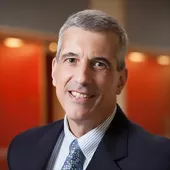
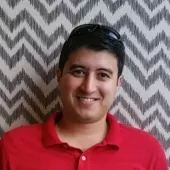
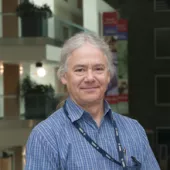
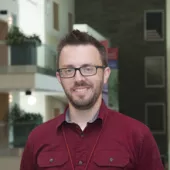
Course instructors includes Amit Lal, Chris Ober, Peter Doerschuk, Banyamin Davaji from Cornell University, and Garry Bordonaro and Jeremy Clark with the Cornell NanoScale Facility.
#3 Hybrid Integration Techniques for Flexible Electronics (1.5 hours)
The 1-hour class describes techniques practiced at PARC for the fabrication of flexible hybrid electronics. Topics include printing interconnects, logic circuits and resistors, bonding integrated circuits and integrating sensors of different types. The techniques are illustrated with various examples of wireless sensor prototypes on flexible substrates, and also development of electronics on textiles.
Specific topics covered in this session include:
printing interconnects
printing fine lines, pads and pad pitches with < 100um
logic circuits and resistors
bonding integrated circuits
integrating sensors of different types on flexible substrates without significant performance degradation
pick and place with micron-level accuracy
Course instruction given by Robert Street, Palo Alto Research Center
#4 Flexible Electronics Reliability Testing and Challenges (1.5 hours)
This online Reliability Engineering Master class is for people with an engineering or science background, who want to learn and use methods and techniques to conduct reliability analysis and improvement. This course is intentionally structured to show you a wide variety of reliability engineering knowledge and important applications.
This session outlines the foundation reliability engineering concepts and methods, and how to apply fundamental failure investigation techniques. You will also learn a range of effective workplace improvement solutions and risk analyses used to implement reliability engineering strategies.
Course Instruction given by Dave Rasmussen and Tom Seputis, Molex.
Flexible Hybrid Master Classes for 2021 are offered on many additional topics! Visit this page for entire list and links to more detailed information on each one.
SEMI FlexTech organizes this series of Flexible Electronics Master Classes on topics proving most challenging to the design, manufacture and use of flexible and printed electronics. The series enables product designers, integrators, and others new to the fields to evaluate technologies and components and make the best choices for their product.
The courses were offered to a live audience July-October, 2020, and are now available on-demand.
Flexible Electronics Master Class Series
Power Sources, Integration & AI and Reliability in Thin-Film Manufacturing
Master Class Abstract:As new materials and process emerge to enable the integration of high performance micro-electronics into paper-thin, flexible hybrid electronics (FHE), there is an increasing demand for new power sources that also support the goals of ultra-thin and flexible.
Among the key challenges is the ability to achieve high energy densities as the battery thickness decreases to a point where the packaging becomes an increasing fraction of the total volume. The challenge is further complicated by the demanding duty cycles for many FHE systems that require both high power (periodic, large current bursts) and high energy (operation across many years in some cases).
At the same time, the new power sources must meet the typical high standards for safety, durability, compatibility with a wide range of storage and operation temperatures, and the needs to support effective integration into the FHE platforms.
The webinar will review challenges and progress for new power supplies that are emerging to meet the needs of the FHE community.
SEMI FlexTech offers a series of Flexible Electronics Master Classes on topics proving most challenging to the use of flexible and printed electronics. The series enables product designers, integrators, and others new to the fields to evaluate technologies and components and make the best choices for their product.
The first course in the series is on Flexible Power Sources: Challenges, Progress and Integration. This course was offered to a live audience on July 29, 2020, and is now available on-demand.
Flexible Power Sources: Challenges, Progress, and Integration
The first in the FlexTech Master Class Series
11:00 am - 12:00 pm
Off
Add to Calendar Disabled
America/Vancouver
Master Class Abstract:As new materials and process emerge to enable the integration of high performance micro-electronics into paper-thin, flexible hybrid electronics (FHE), there is an increasing demand for new power sources that also support the goals of ultra-thin and flexible.
Among the key challenges is the ability to achieve high energy densities as the battery thickness decreases to a point where the packaging becomes an increasing fraction of the total volume. The challenge is further complicated by the demanding duty cycles for many FHE systems that require both high power (periodic, large current bursts) and high energy (operation across many years in some cases).
At the same time, the new power sources must meet the typical high standards for safety, durability, compatibility with a wide range of storage and operation temperatures, and the needs to support effective integration into the FHE platforms.
The webinar reviews challenges and progress for new power supplies that are emerging to meet the needs of the FHE community.
SEMI FlexTech offers a series of Flexible Electronics Master Classes on topics proving most challenging to the use of flexible and printed electronics. The series enables product designers, integrators, and others new to the fields to evaluate technologies and components and make the best choices for their product.
The first course in the series is on Flexible Power Sources: Challenges, Progress and Integration. This course was offered to a live audience on July 29, 2020, and is now available on-demand.
Flexible Power Sources: Challenges, Progress, and Integration
The first in the FlexTech Master Class Series
12:00 am - 12:00 am
Off
Add to Calendar Disabled
America/Vancouver
In the American economy, connections between learning and work get lost in translation. Employers struggle to find people with the right experience, workers struggle to demonstrate their qualifications, and colleges and universities struggle to communicate value and relevance to the job market. Whether we’re experiencing the full employment of the recent past, or facing today’s unprecedented rates of unemployment, addressing these misalignments is key for the future of workforce development.
In this talk we will discuss how to better connect people, education, and work through the common language of skills. We’ll explore how real-time labor market data focused on skills can improve how people write resumes and profiles, businesses write job postings, and learning providers create training and educational curriculum.
United States
Moderator
Dave Anderson
President, SEMI Americas
Moderator
Dave Toole
CEO, The Gig Economy Group
Speaker
Andrew Crapuchettes
Chief Executive Officer, Emsi
Speaker
Janet Salm
Managing Director, Strada Institute for the Future of Work
Webinar Series #6: How the Common Language of Skills Will Write the Future of Workforce Development
Join us online for the last webinar in the SEMI Virtual Forum series, Work & Life in the 21st Century.
Work & Life in the 21st Century
SEMI Virtual Forum: How the Common Language of Skills Will Write the Future of Workforce Development
1:30 pm - 2:30 pm
Off
Add to Calendar Disabled
America/Los_Angeles
Digital technology requires access to data to deliver value. The challenge is that trust in all of our institutions is eroding and, in the absence of trust, people and companies are going to be less willing to provide access to data about themselves.
The fundamental challenge and opportunity is to re-build trust and gain privileged access to data. One of the key ways to re-build trust is to provide more tangible value back to those who are providing data based on the data they have provided.
Companies today generally focus on using the data they are provided to increase the efficiency of their operations and to more efficiently target customers to generate more revenue. Is that all there is?
United States
Dave Anderson
President, SEMI Americas
Dave Toole
CEO, The Gig Economy Group
John Hagel
Managing Director, Deloitte Consulting & Co-Chairman, Center for the Edge
Webinar Series #5: Designing the Future of Work—
The Untapped Data Opportunity
Join us online for the fifth webinar in the SEMI Virtual Forum series, Work & Life in the 21st Century.
Work & Life in the 21st Century
SEMI Virtual Forum:
Designing the Future of Work—The Untapped Data Opportunity
1:30 pm - 2:30 pm
Off
Add to Calendar Disabled
America/Los_Angeles
SEMI & McKinsey & Co. invites you to the 3rd COVID-19 Impact Webinar: Restarting Economies & the Consequences for Business. This 75-minute session will examine international and state-wide strategies and results of government policies on logistics, supply chains, and worker health. Our speakers will bring you deeper insights into China, takeaways from examining the microelectronics production and demand, and the global recovery picture across all industries from an international banking perspective. Virtual registration is limited, so please register to reserve your ‘seat’. Registrants not able to attend the live webinar will receive a link to watch/listen to the recording.
United States
4:00 pm
Heidi Hoffman
Sr. Director, Product Marketing, SEMI
Introduction
4:02 pm
Ajit Manocha
President & CEO, SEMI
Welcome
4:10 pm
Jennie Raubacher
Global Head of Semiconductor, CleanTech & Auto Tech Investment Banking, Wells Fargo Securities
Current State of the Semiconductor Industry
4:25 pm
Handel Jones
CEO, International Business Strategies
Focus on China
4:35 pm
McKinsey & Company, Inc.
The updated semiconductor outlook and initial progress in the new normal
Ondrej Burkacky
Partner, Munich & Leader of Semiconductors and Business Technology
McKinsey & Company
Mark Patel
Senior Partner, Leader Semiconductor Practice
McKinsey & Company
Karel Eloot
Senior Partner, Shanghai
McKinsey & Company
4:55 pm
Survey Review
4:56 pm
Q&A
5:13 pm
Ajit Manocha
President & CEO, SEMI
Closing Remarks
WEBINAR: Restarting Economies and the Consequences for Business
4:00 pm - 5:15 pm
Off
Add to Calendar2020-05-21 16:00:002020-05-21 17:15:00WEBINAR: Restarting Economies and the Consequences for BusinessUnited StatesSEMI.org[email protected]America/Los_Angelespublic
America/Los_Angeles
In this session, Gary A. Bolles, will share various scenarios and tactics individuals, organizations, communities and countries are taking to put themselves in a position to thrive as all of us continue the transition toward a more digital economy.
Gary is a thought leader and business strategist who advises a wide variety of stakeholders to develop actionable strategies around what he refers to as “The Great Reset.”
United States
Moderator
Dave Anderson
President, SEMI Americas
Moderator
Dave Toole
CEO, The Gig Economy Group
Gary A. Bolles
Chair for the Future of Work, Singularity University
Webinar Series #3: The Great Reset & the Near Future of Work
Join us online for the third webinar in the SEMI Virtual Forum series, Work & Life in the 21st Century.
Work & Life in the 21st Century
SEMI Virtual Forum: The Great Reset & the Near Future of Work
1:30 pm - 2:30 pm
Off
Add to Calendar Disabled
America/Los_Angeles
In the face of COVID-19, many companies have decided – or will soon decide – to perform all work virtually. Work is changing, and companies must explore new ways of working to sustain and thrive in uncertain times. These are the moments that matter, and how you rally your team will be key.
In this webinar, we will discuss how companies can execute a cohesive business strategy and response through three deeply connected dimensions of an organization: work (the what), workforce (the who), and workplace (the where).
United States
Moderator
Dave Anderson
President, SEMI Americas
Moderator
Dave Toole
CEO, The Gig Economy Group
Speaker
Matt Shepard
Human Capital Semiconductor Lead, Deloitte Consulting
Webinar Series #2: Elements of the Future of Work
Join us online for the second webinar in the SEMI Virtual Forum series, Work & Life in the 21st Century. You'll hear industry experts discuss how companies can execute a cohesive business strategy during a global pandemic.
Work & Life in the 21st Century
SEMI Virtual Forum: Elements of the Future of Work
1:30 pm - 2:30 pm
Off
Add to Calendar Disabled
America/Los_Angeles
Jim and Simon will take their audience on a stroll through the story of a fledgling, bootstrapped startup that’s become a profitable player in a new category called IP Lifecycle Management — IPLM, for short — targeting chip designers.
With Jim navigating, they will explore Simon’s vision and reasons why Methodics pursued this application space. Audience members will learn how Methodics expanded the definition of product lifecycle management (PLM) in the Enterprise Software segment into IPLM for a design-centric view of the semiconductor IP lifecycle. Along the way, as they will explain, Methodics became profitable and paved PLM’s “last mile,” allowing for the completion of the “digital thread” from system design all the way to the semiconductor level.
WEBCAST: Jim Hogan & Methodics’ Simon Butler Explore the Path from Bootstrapped Startup to Profitability
11:00 am - 12:00 pm
Off
Add to Calendar2020-05-01 11:00:002020-05-01 12:00:00WEBCAST: Jim Hogan & Methodics’ Simon Butler Explore the Path from Bootstrapped Startup to ProfitabilityUnited StatesSEMI.org[email protected]America/Los_Angelespublic
America/Los_Angeles