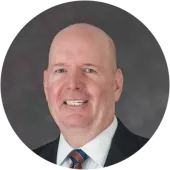
About the Speaker: Rich Boardman is a 15-year veteran of the Semiconductor industry whose expertise lies in equipment sets, process technology and consumables related to wafer or substrate dicing, grinding or polishing. Rich is a Senior Sales Engineer at GDSI, located in San Jose, California.
United States
Richard Boardman
Senior Sales Engineer
GDSI
Join us for this second webinar in the MSIG series on foundries, dicing, and packaging considerations in MEMS fabrication.
In this session, GDSI will provide an introduction of the Stealth Dicing process, highlight the applications it is most well suited to, and share design rules and process window specifications.
The Stealth laser dicing process is a water-free, particle-free wafer singulation method. It is particularly well suited to MEMS, Quantum, bio-sensing and Silicon Photonics to name a few use cases. Secondarily, it offers great value for multi-project wafer (MPW) applications since it allows singulation of the whole wafer in a single process step, negating the need for wafer sub-dicing and remounting.
Find out if your current wafer layout is compatible with the Stealth Dicing process, and if not, what must be done to ensure initial success with this innovative dicing technology. .
MSIG Webinar: The New GDSI Dicing Process
March 30, 2002 8-9 AM PT
8:00 am - 9:00 am
Off
Add to Calendar2022-03-30 08:00:002022-03-30 09:00:00MSIG Webinar GDSI Dicing ProcessJoin us for this second webinar in the MSIG series on foundries, dicing, and packaging considerations in MEMS fabrication.
In this session, GDSI will provide an introduction of the Stealth Dicing process, highlight the applications it is most well suited to, and share design rules and process window specifications.
The Stealth laser dicing process is a water-free, particle-free wafer singulation method. It is particularly well suited to MEMS, Quantum, bio-sensing and Silicon Photonics to name a few use cases. Secondarily, it offers great value for multi-project wafer (MPW) applications since it allows singulation of the whole wafer in a single process step, negating the need for wafer sub-dicing and remounting.
Find out if your current wafer layout is compatible with the Stealth Dicing process, and if not, what must be done to ensure initial success with this innovative dicing technology. .United StatesSEMI.org[email protected]America/Los_Angelespublic
America/Los_Angeles
About the Speaker: Robert MacDonald is a MEMS engineer at GE’s Research. His research is focused on high performance inertial sensors. He has over 20 years of experience in the MEMS and semiconductor industries. His work has covered the product life cycle of chemical, inertial and optical sensors from design through market introduction and manufacturing.
Join us for this first webinar in the MSIG series on foundries, dicing, and packaging considerations in MEMS fabrication.
In this first in the series, GE Research will present their new MEMS process suitable for bulk silicon motion sensors. The process aims to deliver many features of complex MEMS flows, such as wafer level packaging with through silicon vias (TSVs), with a short cycle times and low mask counts. This webinar will introduce the Polaris process within the GE Research foundry and explain how to design the process, and our model for delivering new designs.
Designing MEMS with GE’s Polaris Process for Motion Sensor Fabrication
8:00 am - 9:00 am
Off
Add to Calendar2022-03-02 08:00:002022-03-02 09:00:00MSIG Webinar GE Polaris ProcessJoin us for this first webinar in the MSIG series on foundries, dicing, and packaging considerations in MEMS fabrication.
In this first in the series, GE Research will present their new MEMS process suitable for bulk silicon motion sensors. The process aims to deliver many features of complex MEMS flows, such as wafer level packaging with through silicon vias (TSVs), with a short cycle times and low mask counts. This webinar will introduce the Polaris process within the GE Research foundry and explain how to design the process, and our model for delivering new designs.United StatesSEMI.org[email protected]America/Los_Angelespublic
America/Los_Angeles
Moore’s Law continues to evolve - dramatically changing the Field Effect Transistor (FET). As FinFETs reach their performance limits, attention is turning to Gate All Around (GAA) architectures based on Horizontal Nanosheet technology. Such a fundamental shift in transistor architecture will create new challenges to processes and materials, presenting opportunities for companies well-positioned for this shift.
In this webinar, SEMI EMG brings experts to explain the technology trends driving the industry adoption of Gate All Around, how the major players are approaching this transition, and the implications this will have on the material supply chain
Gate All Around Transistors - Opportunities Abound
Position yourself for the next chapter of Moore's Law
10:00 am - 11:00 am
Off
Add to Calendar Disabled
America/Los_Angeles
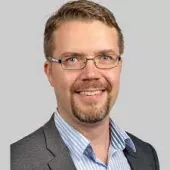
Dr. Toni Mattila is the Head of Sustainable Manufacturing at Business Finland, which is a governmental agency for R&D and innovation funding, business development and internationalization services. Toni leads a national business development program with the goal of transforming Finnish manufacturing industries towards sustainable development. Toni worked for fourteen years in academia as a researcher in the field of microelectronics. Toni is an active member of IEEE Electronics Packaging Society, and a frequent attendee of various electronics conferences.
This Master Class was held live on December 1, 2021. It is still available On Demand.
Sustainability is more a way of thinking than a technological solution. To achieve sustainability, a company must develop a comprehensive approach that covers multiple levels and segments of its business.
Watch this course to develop an understanding of the essential components of industrial carbon footprint and discuss actions companies and industry can take to reduce theirs. Throughout the course, we paid particular attention to the electronics industry; what the sector has already contributed and what remains to be achieved.
The role of new technologies – e.g. FHE - was discussed and what role they play in reducing the carbon footprint so that ‘sustainability’ can become a sustainable business.
Watch this course to focus on a broader picture of sustainability in the electronics sector.
Environmental Sustainability and Flexible & Printed Electronics
9:00 am - 11:00 am
Off
Add to Calendar Disabled
America/Los_Angeles
Electromechanical evaluation of printed interconnects
Additive manufacturing of resistors and capacitors
Highly stretchable conductors
Interconnecting in the z direction - printed vias
Printed RF devices and antennas
Device and component placement and assembly
Thinned semiconductor devices
Approaches to bond devices and components to flexible substrates
Concepts of operation and evaluation of performance and reliability
Applications to medical and industrial sensors will be incorporated throughout
About the Instructor
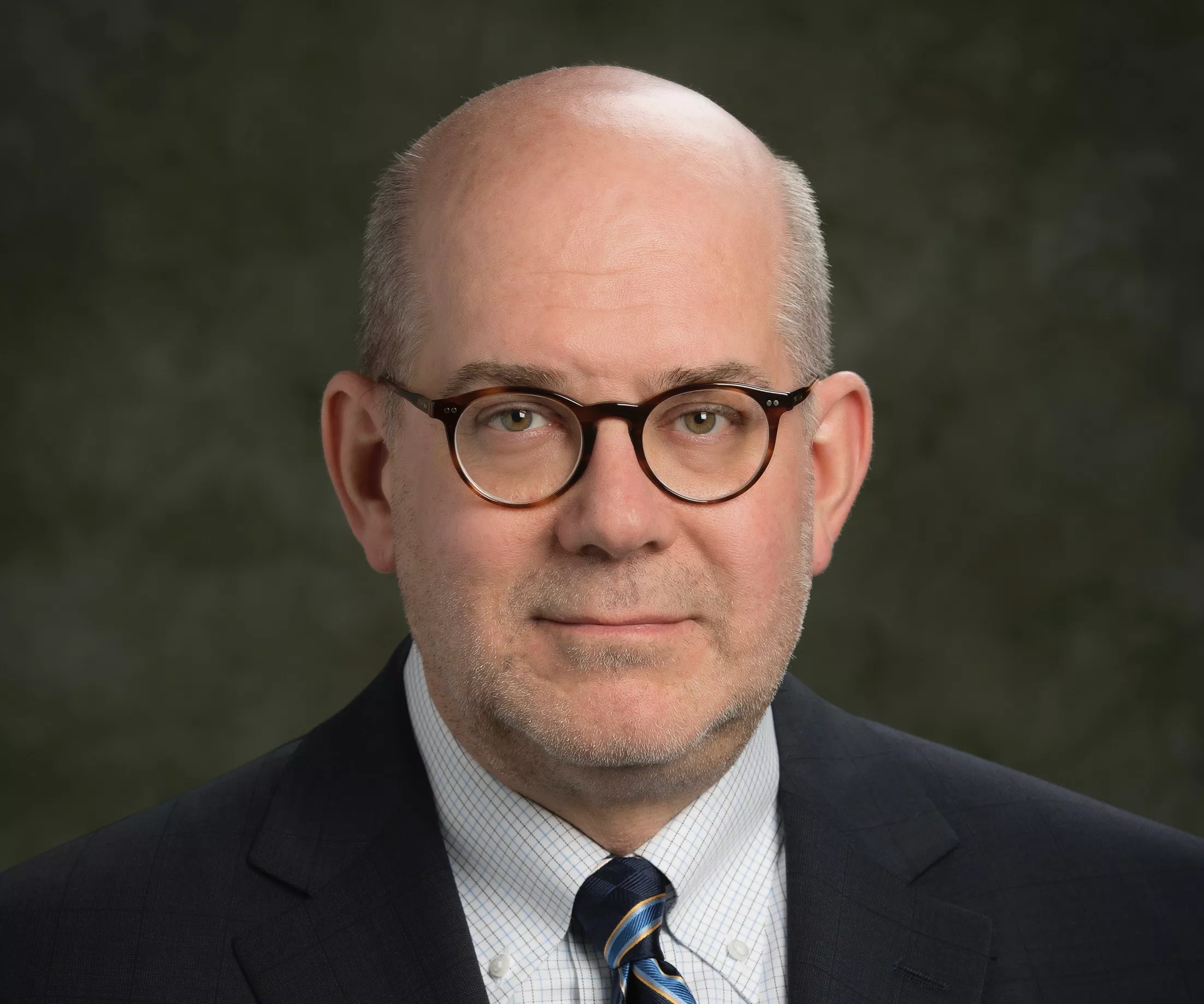
Mark D. Poliks, Ph.D. is a SUNY Distinguished Professor of Engineering and Empire Innovation Professor in Systems Science and Industrial Engineering and Materials Science and Engineering at the State University of New York at Binghamton. He is director of the Center for Advanced Microelectronics Manufacturing (CAMM), a New York State Center of Advanced Technology and home to the New York Node of NextFlex. He serves as Chair of the Smart Energy Transdisciplinary Area of Excellence at the Binghamton campus.
His research is in the areas of industry relevant topics that include high performance electronics packaging, flexible hybrid electronics, medical and industrial sensors, printed RF components, materials, processing, aerosol jet printing, roll-to-roll manufacturing, in-line quality control and reliability of electronics. He is the recipient of the SUNY Chancellor’s Award for Excellence in Research.
He received SEMI FLEXI awards for leadership in Technology and Education in 2009 and 2019. He has authored over one hundred fifty technical papers and holds forty-eight US patents. He was the General Chair of the 69th IEEE ECTC and serves as a IEEE Electronics Packaging Society (EPS) Distinguished Lecturer and an elected member of the IEEE EPS Board of Governors.
This course, the 9th in the FlexTech Master Class Series, takes a deep dive into best known methods for optimizing flexible electronics into medical devices and industrial products. Our expert speaker cover the most important considerations when designing flexible and printable parts and circuits into systems or subsystems and the many approaches to consider.
This course is appropriate for those new to electronics design, as well as those familiar but looking for a refresher on the latest materials and techniques.
Optimizing Design and Fabrication of FHE for Medical and Industrial Applications
ON DEMAND
10:00 am - 12:00 pm
Off
Add to Calendar Disabled
America/Los_Angeles
Glenn Snyder, Deloitte’s Medtech Practice Leader, will present Deloitte’s latest thinking on the tech trends shaping the healthcare industry, the ways the pandemic has impacted these trends, and the implications for medtech and ultimately for semiconductors.
8:40 am
-
8:55 am
Doug Kiehl
Research Advisor, Bioproduct Research & Development
Join you for checking out this complimentary webinar reviewing Smart MedTech products and markets are experiencing unprecedented demand driven by both consumers and medical professionals. The webinar was recorded on July 20, 2021. It is still available, but please register for our Smart MedTech Interest List to listen in!
Glenn Snyder, Principal in Deloitte's MedTech practice will explore the challenges and opportunities of the Smart MedTech market, and then follow with a conversation with Doug Kiehl, Eli Lilly. SEMI will also provide an overview of the trends being covered in the upcoming Smart MedTech Symposium.
Don't miss this opportunity to take a closer look and engage with the experts in one of the hottest new markets around.
Smart MedTech Webinar
8:00 am - 9:00 am
Off
Add to Calendar Disabled
America/Los_Angeles
During this sharing, SEMI invites Globalfoundries to share not only their wisdom and experience, how they use smart manufacturing as tool to ease the pain points; actions and suggestions that Taiwan can benefit from will also be included.
Online Taiwan
Dan Steele
Senior Director and the APAC Head of Environmental, Health, Safety, and Security (EHS&S)
GLOBALFOUNDRIES (GF) Singapore
1:15 pm
Online Registration
1:30 pm
Welcome Remark
Ms. Ana Li, senior director, SEMI
1:35 am
Navigating Our Way Through the Pandemic: People, Company & Government
Keynote: TBD
Speaker: Mr. Dan Steele, Senior Director and the APAC Head of Environmental, Health, Safety, and Security (EHS&S)
2:15 pm
QA & Networking Time
SEMI Taiwan host member seminar regularly to update member current market information, industry observation, current trends. During the COVID infection is outbreaking and starting affecting the workforce in semiconductor industry from foreign workers confirmed cases in Taiwan recently, how to stay healthy and at the same time sustain manufacturing operation is truly a difficult question, Singapore met similar challenges when the COVID outbreak in 2020, what they did to keep manufacturing fabs production sustained can also be a good reference.
Learn From Singapore: COVID Challenges And Practice Sharing to Taiwan High-Tech Manufacturers
1:30 pm - 2:30 pm
Off
Add to Calendar2021-07-06 13:30:002021-07-06 14:30:00Learn From Singapore: COVID Challenges And Practice Sharing to Taiwan High-Tech Manufacturers SEMI Taiwan host member seminar regularly to update member current market information, industry observation, current trends. During the COVID infection is outbreaking and starting affecting the workforce in semiconductor industry from foreign workers confirmed cases in Taiwan recently, how to stay healthy and at the same time sustain manufacturing operation is truly a difficult question, Singapore met similar challenges when the COVID outbreak in 2020, what they did to keep manufacturing fabs production sustained can also be a good reference.
Online TaiwanSEMI.org[email protected]America/Los_Angelespublic
FlexTech Master Class #8 Materials
SEMI Members: $49
Use your corporate email address during log in to be recognized as a SEMI Member.
Non-Members: $99
Students: Free
Contact Gity Samadi ([email protected]) with a picture of your student ID to receive your discount code.
Flexible Hybrid Master Classes are offered on many topics! Visit this page for entire list and links to more detailed information on each one.
Strengths & weaknesses of printed conductor and filler types
Understanding the performance criteria of conductive inks
Resistance measurement, sheet resistance vs volume resistivity, unit conversion, measuring film thickness and surface roughness
Understanding the microstructure of low temperature printable conductors
Percolation conductors: silver filled Polymer Thick Film (PTF) inks and isotropic ECAs
Sinterable conductors: nanoparticle, metalorganic/particle hybrids, and copper inks
Semi-sinterable conductors
Test methods for mechanical and environmental reliability
Overview of how printing methods work
Methods with a master: Screen, flexo, gravure, gravure offset
'Digital' or direct write methods for 2D & 3D: jet based, microdispense,
Conventional, non-equilibrium photonic, chemical, and mechanical methods for curing
Understand the resolution and sheet resistance limits to AM of circuits
Calculating the tradeoffs to selecting the appropriate conductor for achieving a specific sheet resistance
Transparent printable conductors and films
About the Instructor
Mike Mastropietro has spent his entire 20+ year career working with printable electronically functional materials and additive manufacturing methods for FHE devices including: formulation, conventional printing, direct write printing, equilibrium and non-equilibrium curing methods, and application development. Prior to joining ACI, he spent two years at NextFlex managing their printing/direct write programs, and overseeing material selection and integration into devices.
At 27, he cofounded a nanoparticle ink company, PChem Associates, whose unique low temperature sintering ink technology was acquired a decade later by NovaCentrix. He started his career at Parelec Inc., pioneers of hybrid particle-metalorganic decomposition (MOD) based inks. He has received an IPC Distinguished Committee Service award for his contributions PE/FHE standards and is a Nextflex fellow. Mike holds a M.S degree in chemical engineering from The Pennsylvania State University where his research on synthesis of surfactant stabilized nanoparticles was awarded a 2000 Materials Research Institute Xerox Research Award.
This FHE Master Class covers all the basics of using printable conductors for additive manufacture of circuits on polymer substrates. Attendees will learn about the different types classes of conductive inks available, and how to characterize their performance and cost. Students will also procure an overview of traditional and digital printing methods, drying/curing/sintering methods, and design and assembly differences compared to traditional ‘printed’ circuit boards.
This class is offered OnDemand.
Printing, Curing and Characterization Methods for Printable Conductors
Flexible Electronics Master Class
Originally recorded - September 8, 2021
10:00 am - 12:00 pm
Off
Add to Calendar2021-09-08 10:00:002021-09-08 12:00:00FlexTech Master Class #8 MaterialsThis FHE Master Class covers all the basics of using printable conductors for additive manufacture of circuits on polymer substrates. Attendees will learn about the different types classes of conductive inks available, and how to characterize their performance and cost. Students will also procure an overview of traditional and digital printing methods, drying/curing/sintering methods, and design and assembly differences compared to traditional ‘printed’ circuit boards.
This class is offered OnDemand. United StatesSEMI.org[email protected]America/Los_Angelespublic
America/Los_Angeles
In a flash last March, employees worked from home, and teleconferencing became a way of life. Executives adopted new guidelines and ensured employees had the proper technology and secure networks to be productive. The workforce adapted, engineers are designing around the world around the clock, and employers are more open to where people work.
Learn about—
Increased productivity
New physical office space setup
Using the cloud to overcome technology issues
Corporate travel
Plus more
Learn why some companies offer more flexibility for employees to work from home at least part of the time. Also, why others may not require new employees to re-locate; perhaps something technology has made easier.
The co-hosts, ESD Alliance and Accellera are looking beyond the pandemic as companies start bringing employees back to the office. A panel of experts explores an executive view and strategies of how the transition from remote work back to the office will unfold.
The Executive View—Returning to the Office
Hosted by ESD Alliance and Accellera
August 11, 2021
9–10am PDT
Understanding Export Regulations Affecting the Electronic System Design Ecosystem
The world of export compliance is increasingly complex and perplexing. No one in the electronic system design ecosystem knows this better than Larry Disenhof, ESD Alliance Export Committee Chair and Group Director of Cadence's Export Compliance and Government Relations.
Join us on Wednesday, September 15, 2021 at 9am PDT to:
Hear Larry's perspective and invaluable insights into today's export climate.
Learn how to navigate export regulations.
Larry's expertise on behalf of ESD Alliance's Export Committee is a valued resource for our members. The committee represents the electronic system design ecosystem in Washington, D.C., with agencies overseeing export regulations and other regulatory organizations. Its goal is to educate government agencies about our products and how they are classified in the Commerce Control List to ensure the correct level of export controls are applied. It also serves to educate our members on export and other government regulatory issues affecting our industry and each company's ability to sell and support its products.
Attendees can expect Larry to present up-to-the-minute and easily understood information about the changeable export landscape, followed by a live Q&A session.
United States
ESD Alliance Export Committee Chair
Larry Disenhof
Director, Cadence Export Compliance and Government Relations
Join us at the ESD Alliance webinar to hear Larry Disenhof's perspective and invaluable insights into today's export climate and learn how to navigate export regulations. Free registration for members.
Understanding Export Regulations Affecting the Electronic System Design Ecosystem
ESD Alliance Webinar
September 15, 2021
9–10am PDT
9:00 am - 10:00 am
Off
Add to Calendar2021-09-15 09:00:002021-09-15 10:00:00ESD Alliance Webinar - Understanding Export Regulations Affecting the Electronic System Design EcosystemJoin us at the ESD Alliance webinar to hear Larry Disenhof's perspective and invaluable insights into today's export climate and learn how to navigate export regulations. Free registration for members.United StatesSEMI.org[email protected]America/Los_Angelespublic
America/Los_Angeles









 Mark D. Poliks, Ph.D. is a SUNY Distinguished Professor of Engineering and Empire Innovation Professor in Systems Science and Industrial Engineering and Materials Science and Engineering at the State University of New York at Binghamton. He is director of the Center for Advanced Microelectronics Manufacturing (CAMM), a New York State Center of Advanced Technology and home to the New York Node of NextFlex. He serves as Chair of the Smart Energy Transdisciplinary Area of Excellence at the Binghamton campus.






 and
and