
Smart Medtech Resources
Strategic Outlook
Medicalizing Consumer Silicon
The future of healthcare is being reshaped by the rapid advancement of biosensing technologies embedded in wearable devices and the rise of machine learning, generative AI, and agentic intelligence , technologies that promise non-invasive monitoring, personalized therapies, and a fundamental shift in how care is delivered. Yet despite this progress, most of these innovations face significant barriers for clinical adoption.
This paper from the SEMI Smart MedTech Initiative examines why. It identifies the root cause as the "Missing Middle", a persistent gap between promising innovation and scalable real-world deployment. While digital health products continue to proliferate rapidly, only a fraction have achieved the clinical validation needed for broad healthcare adoption. The problem is not a lack of innovation. It is a lack of alignment across biosignal acquisition, algorithm validation, regulatory pathways, cybersecurity, interoperability, and reimbursement models that were not built with these technologies in mind.
Drawing on ECG monitoring as a case study, the paper maps these structural barriers and argues for a shift from isolated product development toward integrated, platform-based systems , built through coordinated cross-sector collaboration that aligns technical innovation with clinical workflows, regulatory frameworks, and sustainable economics from the start.
Feature Article
STMicroelectronics and Medtech: Enabling Personalized Healthcare and Wellness through the Integration of Electronics
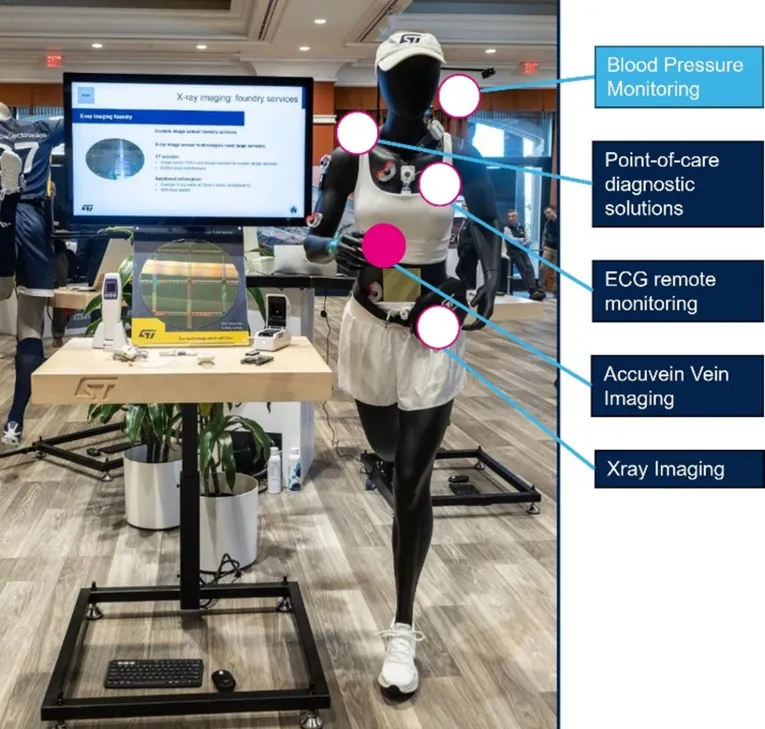
The healthcare industry is experiencing significant advancements enabled by the increasing integration of new electronic technologies. One example is the development of semiconductor biosensors which have been widely adopted into wearable devices. As a result of these innovations, the U.S. Food & Drug Administration (FDA) recently created a fast-track for product development through the Medical Device Development Tool process (MDDT, 2024). In this article, we share the rationale for STMicroelectronics’ (ST) deeper engagement in the healthcare and wellness industry, highlight some opportunities leveraging ST’s core competencies to deliver compelling solutions, and discuss some of the challenges in this market. We will also outline some of the approaches taken to enable success in this rapidly expanding market.
There is a great synergy between the Smart MedTech Initiative at SEMI and STMicroelectronics. We are both striving to build an effective ecosystem to bring semiconductor and integrated devices to market in the healthcare industry. SEMI has been able to bring a breadth of companies across the supply chain to identify barriers and facilitate the creation of cross-company teams to address these challenges. We are suppliers, partners, and competitors, all working together to bring Medtech to the masses.
Medical Microelectronics Industry Capability and Resiliency Assessment (M2ICRA)
SEMI conducted and published the results of a 9-month study in 2021. Ten risk areas were identified and examined in the report. Those categories were:
| • National Strategy • Industry Best Practices • Data Transparency • Supply Chain Sole Source • Supply Chain Single Source | • Unbalanced Geographical Dependency • Manufacturing Capacity • Technology Limitations • Implementation Limitations • Human Capital |
The M2ICRA study illustrated supply chain bottlenecks and vulnerabilities similar to those experienced by other market segments (automotive for example). But the study also illustrated microelectronics supply chain weaknesses that are uniquely medical market related. The emergency demands brought on by Covid served to exemplify the vulnerabilities that were either directly associated with medical devices or could have been mitigated through microelectronic features. Furthermore, solid-state biotechnology has now been highlighted as one of the critical semiconductor technologies for national security and technology leadership and is expected to be an area of investment as the CHIPS Act funds are deployed.

NBMC - Nano Bio Materials Consortium
In the U.S., SEMI-NBMC has been working since 2013 with the US Air Force Research Laboratory, to develop materials, electronics, microfluidic devices and process, and algorithms to create low cost, wearable sensors to detect biomarkers from sweat, focused on the Aeromedical and Human Augmentation missions. The group has created sensors for electrocardiography, functionalized biomarker sensors, hydration sensors, some of which were self-powered. Most of these devices communicate wirelessly, are flexible and incorporate high performance silicon devices that are bendable. Learn more about the NBMC. SEMI is also closely connected to MedTech companies and consortia in all of our SEMI Regions.

Events
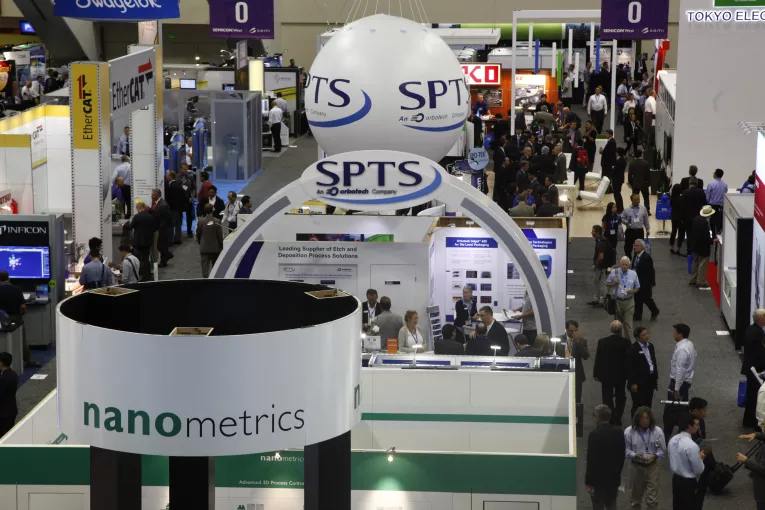
Utilizing the event and exposition operational capability in SEMI, the commercial platform creates venues to showcase leading edge medical electronics products, services, materials, and equipment. SEMICON West, the premier North American semiconductor manufacturing exposition held annually in San Francisco, hosts the SMART MedTech pavilion. Invited speakers present the latest innovations and panel discussions address challenges of today’s industry such as supply chain verification and cognitive sensing needs/challenges for human performance monitoring. These platforms enable the industry dialogue spanning the supply chain, highlighting the challenges and risks, enabling the industry to move toward solutions
Educational
The educational platform is being developed to break down barriers to market adoption through educational series and to train the workforce of the future in digital medicine. SEMI has incorporated a learning management system upon which SEMI University is being built. This platform, beta released October 2022, houses a range of educational material from basic semiconductor educational courses to specialized Master Classes. Future MedTech curriculum may help medical professionals gain early insight into medical electronic innovations and enable semiconductor professionals to better understand the needs of medical professionals

For more information on participating in these working groups, please reach out to [email protected].