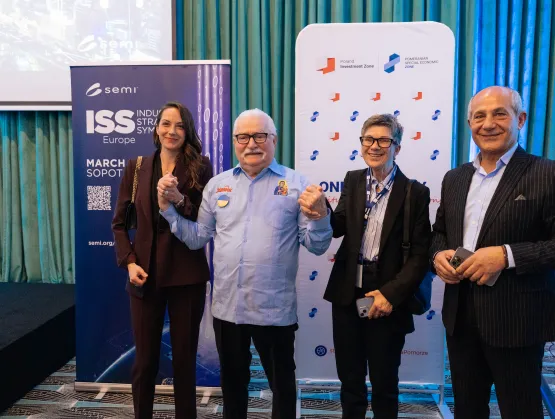
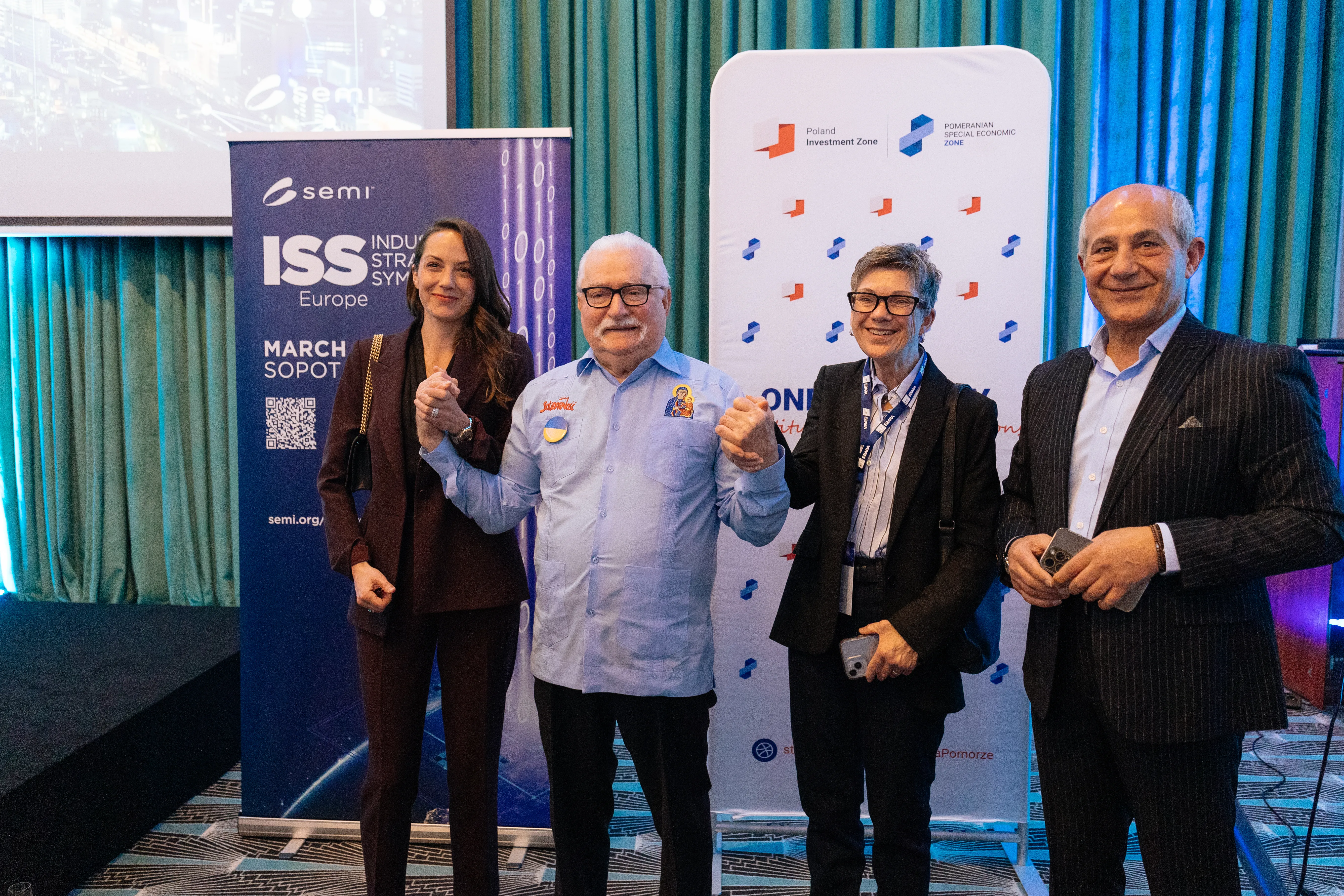
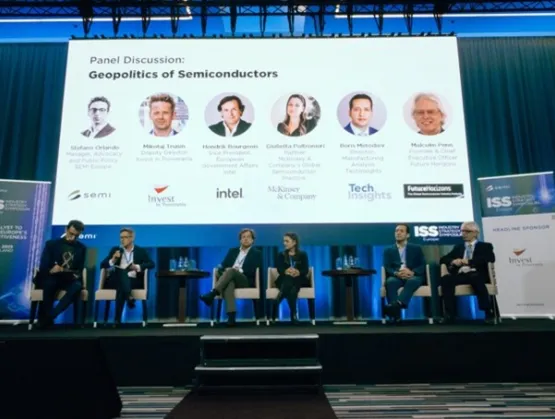
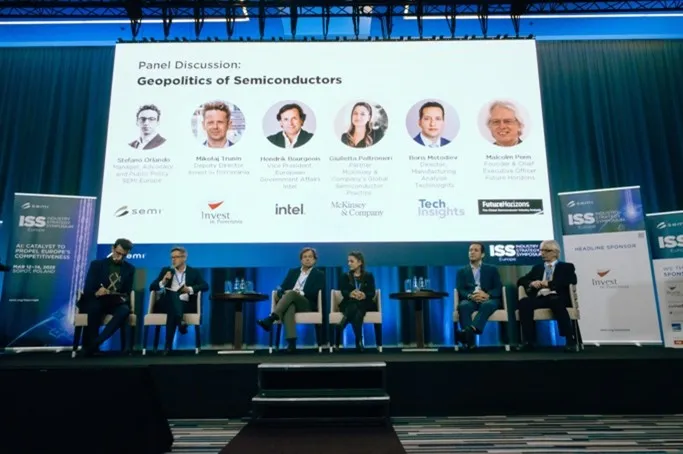
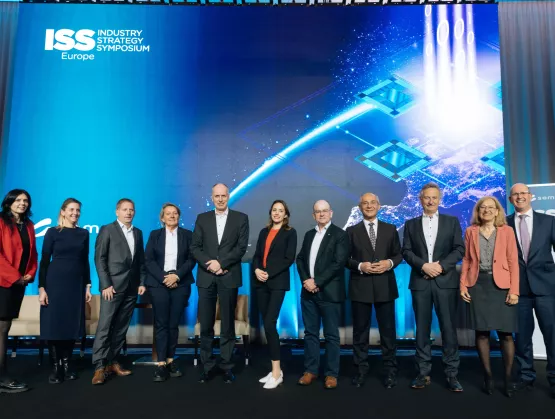
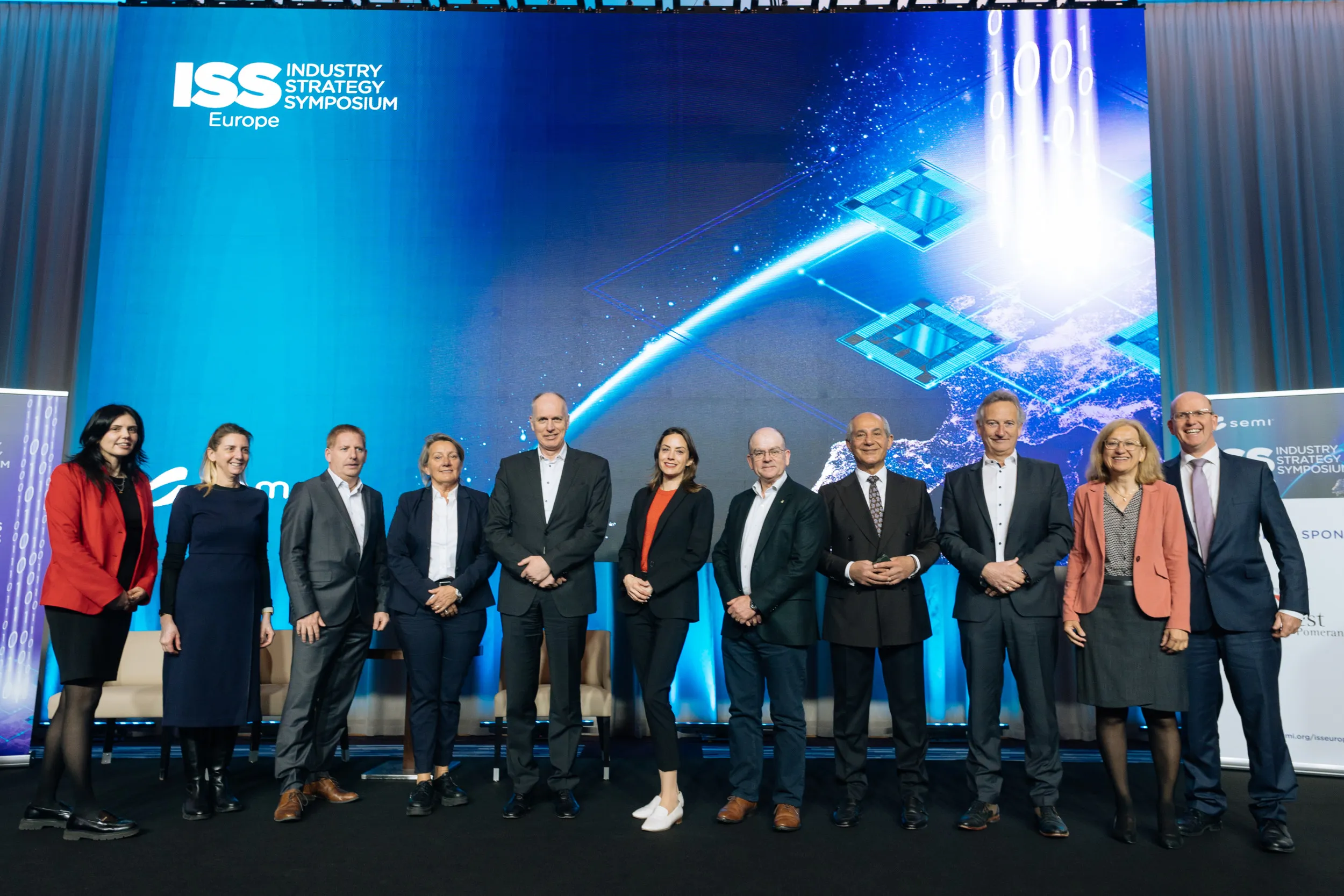
As competition within the semiconductor industry continues to intensify, the need for Europe to strengthen its current position within the global supply chain and develop new partnerships are more important than ever. How can Europe forge a unified semiconductor strategy amidst geopolitical tensions, fast‑moving technological change, and ongoing supply‑chain challenges? These dynamics set the stage for the 2026 Industry Strategy Symposium (ISS) Europe taking place in March in Sopot, Poland for the second consecutive year, bringing together leaders from across the semiconductor ecosystem to assess a rapidly shifting global landscape and define Europe’s path toward greater competitiveness and resilience.The symposium opened with a welcome speech featuring Lech Wałęsa, Nobel Peace Prize Laureate and former leader of the Solidarnosc movement which led Poland’ s resistance to its authoritarian Communist regime in the 1980s. Wałęsa shared a strong message on the importance of collaboration: “Old geopolitical structures and the bipolar world order have reached their limits, and as we transition toward a new global order, it is essential to rebuilding a system better suited to today’s realities”. In this uncertain moment, the Nobel Peace Prize called for peaceful dialogue and collective action to shape a new, more suitable world order rather than relying on conflict.Lech Wałęsa, Nobel Peace Prize LaureateAmidst geopolitical tensions, accelerating technological change, and intensifying global competition, a clear message emerged: semiconductors are now foundational to European economic security and technological leadership. As Laith Altimime, President of SEMI Europe, emphasized, “Semiconductors are the infrastructure of the modern world, and only through close collaboration can we master the challenges ahead and strengthen Europe’s technological leadership.”Laith Altimime, President, SEMI EuropeEurope plays a vital role in this industry, with global revenues expected to reach $2 trillion by 2035. As Altimime noted, “Europe has strong foundations, leading in manufacturing equipment and innovation. We must maintain this leadership while reducing dependencies.”A central theme throughout the symposium was how Europe can build on its leadership positions while strengthening its role across the value chain. As Leonard Hobbs, Director of Government Affairs at Intel Ireland, said, “No region controls the entire supply chain. Europe has to figure out how to differentiate itself within the various parts of the supply chain.” Marc Hijink, author of the book Focus – The ASML Way highlighted Europe’s deep supplier ecosystem, and explained that “more than 80% of the value in the products that ASML makes comes from suppliers who are mostly based in Europe.” Marc Hijink, Author of Focus – The ASML WayAt the same time, significant investments are reshaping Europe’s manufacturing footprint. Joerg Recklies, Executive Vice President Frontend at Infineon, drew the audience’s attention to Infineon’s upcoming Smart Power fab opening in summer 2026 “six months ahead of schedule.” Recklies added, “The new ESMC facility in Dresden is expected to produce 40,000 300mm wafers per month, and will provide the first FinFET capability in Europe.” Joerg Recklies, Executive Vice President Frontend, Infineon TechnologiesLooking at opportunities in advanced semiconductors, Cesc Guim, CEO of Open Chip, said, “25 years ago, the only way to learn how to do advanced chip design was in one of the large US companies. That’s no longer the case. Europe now has the capabilities, supported by RISC-V and a full supply chain backed by the wealth of hardware and software engineering talent in regions such as Pomerania.” Left to Right: Mikołaj Trunin, Deputy Director, Invest in Pomerania and Cesc Guim, CEO, Open ChipTo reinforce the sense of opportunity in a changing world, futurist Christian Kromme gave a whirlwind tour through the revolutions to come in technology and society. He described how each wave of technological change, from the internet to AI to autonomous machines, is arriving faster than the one before. “The internet wave commoditized media and knowledge. In the AI wave, we will see the same value compression, but this time squeezing out human skills such as problem-solving and system design,” said Kromme.Kromme urged delegates to “shift from hard skills to heart skills: imagination, empathy, curiosity and integrity, this is where the value of humans lies, because machines cannot do these things.”Christian Kromme, FuturistTrade tensions and international conflictGeopolitics and supply chain dynamics were central to the discussions. Martin Zech, Senior Director at FTI Consulting, described how the US’s approach to the semiconductor industry had shifted from incentives to restrictions. Zech warned that “a new section 301 investigation into the European semiconductor industry could lead to new tariffs.” Johan Rauer, Partner at McKinsey, added that the threat extends beyond tariffs. “Regions will apply a range of measures, including export controls and IP protection.”Martin Zech, Senior Director, FTI ConsultingJohan Rauer, Partner, McKinsey CompanyChristopher Frieling, Director of Advocacy and Public Policy at SEMI Europe, outlined the EU’s response, including its evolving economic security framework and the concept of “trusted chips,” reflecting a preference for products with strong European involvement.Christopher Frieling, Director of Advocacy and Public Policy, SEMI EuropeThe question of technological leadership was addressed by Carlos Pardo, CEO of KD, who stated, “If Europe wants a relevant position in semiconductors, it needs to invest more.” He added that even in automotive semiconductors, European players hold relatively limited shares. Carlos Pardo, CEO, KDProviding another perspective, Dr. Rafał Bugyi, CEO of TRUMPF Huettinger said, “We don’t need to cover the entire supply chain, but we must be indispensable.” Dr. Rafał Bugyi, CEO, TRUMPF Hüttinger GmbH Co. KGSpeakers also addressed how Europe could adapt to the new reality of supply chain dependency. Benoit Chassagne, End-to-End Supply Chain Manager at Edwards, presented a model of a systems response which his company has implemented to mitigate its exposure to supply chain volatility, while David Forrest, Director of Sustainability and Criticality at Vital Materials, emphasized the role of waste materials recovery, saying that “circularity is an industrial mechanism for supply chain resilience, not an environmental add-on.”Benoit Chassagne, End-to-End Supply Chain Manager, EdwardsDavid Forrest, Director of Sustainability and Criticality, Vital MaterialsCarl van Vugt Luning, Chief Commercial Officer at Resilicon, highlighted the need for greater resilience in polysilicon supply, noting Europe lacks dual sourcing. “Polysilicon is often seen as a commodity, but it is critical. Sovereign chips require a resilient polysilicon supply chain,” said van Vugt Luning.Carl van Vugt Luning, Chief Commercial Officer, ResiliconTurning innovation into commercial revenueIn the session ‘From lab to fab’, speakers examined how Europe can improve its track record in converting innovation into commercial success, for example, by companies such as NVIDIA and Qualcomm.An important part of the EU’s strategy was the creation of technology pilot lines. Jari Kinaret, Executive Director of the Chips Joint Undertaking (Chips JU), told the symposium that the pilot lines are an example of successful collaboration between the state and the private sector. Kinaret said, “The total cost of the NanoIC pilot line (for advanced semiconductor fabrication) is €2.5 billion, but this includes €1 billion of funding from ASML.”Jari Kinaret, Executive Director, Chips Joint Undertaking (Chips JU)The role and value of the pilot lines was the subject of a panel discussion at the symposium. Panelist Anne Van den Bosch, Vice President of Public R D Policies and Programs at imec, said the pilot lines “give the European semiconductor ecosystem faster access to advanced process technology.” Patrick Bressler, Director of Fraunhofer Mikroelektronik, agreed. “Pilot lines are a lab-to-industry scheme to give access to prototype manufacturing for SMEs, start-ups and fabless companies which would not otherwise be able to afford advanced manufacturing,” he said.Moderating the discussion, Laith Altimime asked, “How do we ensure that the products which emerge from innovations developed thanks to the pilot lines get manufactured in Europe? Are boutique fabs the answer?” Kevin Williams, Deputy Director of the PIXEurope pilot line, responded: “There are certainly opportunities in building new types of chips and new types of fabs. We have the know-how in the pilot lines, and the equipment for them is made in Europe.” Bruno Paing, Vice President Europe at CEA-Léti, added, “We need to aim for indispensability, replicating what we have with ASML in the EUV field. For instance, the world needs better memories and better interconnects. There are many opportunities in AI. It is not just about the GPU.”Left to Right: Moderator, Laith Altimime, President, SEMI Europe; Panelists: Anne Van den Bosch, Vice President of Public R D Policies and Programs, imec; Bruno Paing, Vice President Europe, CEA-Léti; Patrick Bressler, Director, Fraunhofer Mikroelektronik; Kevin Williams, Deputy Director, PIXEurope.The symposium also highlighted examples of European innovation from two startups developing new technologies. Antonio Mesquida Küsters, Strategic Advisor to Euclyd, presented a processor system combining 16,384 cores with ultra-high bandwidth memory using advanced 2.5D and 3D packaging, offering an alternative to GPUs for AI inference. As he said, “We want to break the hyperscaler/cloud model of AI to build sovereign AI capability for Europe by 2030.”Antonio Mesquida Küsters, Strategic Advisor, EuclydJekaterina Viktorova, Founder and CEO of Syenta, introduced additive manufacturing technology enabling denser interconnects for advanced AI systems, noting, “Our roadmap is set to produce a 20x increase in bandwidth over the next 10 years.”Jekaterina Viktorova, Founder and CEO, SyentaNew strategies for competitiveness in semiconductor manufacturingIf these types of innovative products are to be manufactured in Europe, the region’s fab operations will need to combat the growing competition from China and elsewhere. Giovanni Notarnicola, Partner at Porsche Consulting, said, “Our position in Europe is under attack. The next threat is not from a new product, but from how chips are designed and produced.”Giovanni Notarnicola, Partner, Porsche ConsultingThomas Altenmüller, Vice President of Manufacturing Analytics at Infineon, highlighted the role of automation: “We get more automation in the transition from 8” to 12” wafers, which gives us an advantage in Europe because of our higher labor cost compared to China. But to compete, we still need more AI smart workflows to increase the automation.” Carina Lainer, Principal at Roland Berger, added, “Today we optimize operations with tools built for a human-centric process, which has reached its limit. We can instead use digitalization and AI to fundamentally change the way that semiconductor innovation takes place.”Thomas Altenmüller, Vice President of Manufacturing Analytics, InfineonLeft to Right: Carina Lainer, Principal, and Thomas Kirschstein, Partner, Roland BergerOded Tal, CEO of MAX Group, cautioned that the barrier to increased implementation of automation was not technical but social. “Humans can be very flexible, but leadership is crucial. “You have to give training and clear instructions. It’s about structure, making people’s roles and responsibilities crystal-clear,” he said.Oded Tal, CEO, MAX GroupThe symposium closed with a panel discussion about the implementation of AI and automation in the fab. Moderator Cassandra Melvin, Senior Director of Business Development and Operations at SEMI Europe, pointed out that “intelligence is moving beyond the tool to the control room, a development which is powered by AI.” The panelists were quick to acknowledge the radical impact that AI is having on fab operations. Dirk Drescher, Plant Manager at Bosch Semiconductor, said, “We built the Bosch fab in Dresden around a standardized data architecture, which is what enables us to implement AI. That is a contrast to a 20 year old fab, which can only see a patchwork of different data systems.”Thomas Richter, Senior Vice President and Managing Director at Infineon, added, “digitalization is about much more than just AI. We have had great success in getting rid of boring, routine tasks through digitalization. This makes a huge difference, and helps our fabs to stay competitive.”The panel also debated the potential impact of humanoid robots on the scale and impact of automation. Richter said, “In our fabs, I can see rooms in which it has never been possible to automate before, but humanoid robots give me hope that we can automate more in future.”Matthias Bonkass, Vice President of Advanced Manufacturing Engineering at GlobalFoundries, agreed. “By 2035, we will see collaboration between humans and humanoids. This wave is coming!” Going even further, Dirk Drescher looked forward to an era of total automation. He said, “We will see a lights-out fab by 2035. This is definitely a tailwind for the European semiconductor industry, making it faster, reducing cost, and giving us more opportunity to build semiconductors in Europe.”Thomas Morgenstern, Executive Vice President of Manufacturing at STMicroelectronics, concluded, “We must not let culture be a barrier to AI. Technical strategies to implement AI are all very well, but you need people to buy in. Morgenstern added, “The name of the game is productivity. The most advanced fabs have to be dark, with remote operating centers somewhere in the world, running clusters of fabs. I am extremely confident that by 2035, if not before, the first dark fab will be in operation.”Left to Right: Moderator, Cassandra Melvin, Senior Director of Business Development and Operations, SEMI Europe; Panelists, Dirk Drescher, Plant Manager, Bosch Semiconductor; Matthias Bonkass, Vice President of Advanced Manufacturing Engineering, GlobalFoundries; Thomas Morgenstern, Executive Vice President of Manufacturing, STMicroelectronics; Thomas Richter, Senior Vice President and Managing Director, Infineon.During the event, SEMI Europe announced recipients of the SEMI European Award and Special Service Award for 2025. Dr Peter O’Brien, Head of Research in Photonics Packaging and Systems Integration at Tyndall National Institute, was honored with the SEMI European Award and, Eric Beyne, Senior Fellow at imec, with the Special Service Award. Peter O’Brien, Head of Research in Photonics Packaging and Systems Integration, Tyndall National InstituteAnne Van den Bosch, Vice President Public R D Policies and Programs, imec receiving the award on behalf of Eric Beyne, Senior Fellow, imecOn behalf of SEMI, the SEMI Europe team and ISS Europe committee, we would like to thank all speakers, sponsors, and attendees for making the event a great success. ISS Europe 2027 will take place in Dresden, Germany from March 8-10.Serena Brischetto is Director, Marketing and Digital Engagement at SEMI Europe.