downloadGroupGroupnoun_press release_995423_000000 copyGroupnoun_Feed_96767_000000Group 19noun_pictures_1817522_000000Member company iconResource item iconStore item iconGroup 19Group 19noun_Photo_2085192_000000 Copynoun_presentation_2096081_000000Group 19Group Copy 7noun_webinar_692730_000000Path
Skip to main content
Default Banner Image

Belgium

Advancing Thermal Scanning Probe Lithography

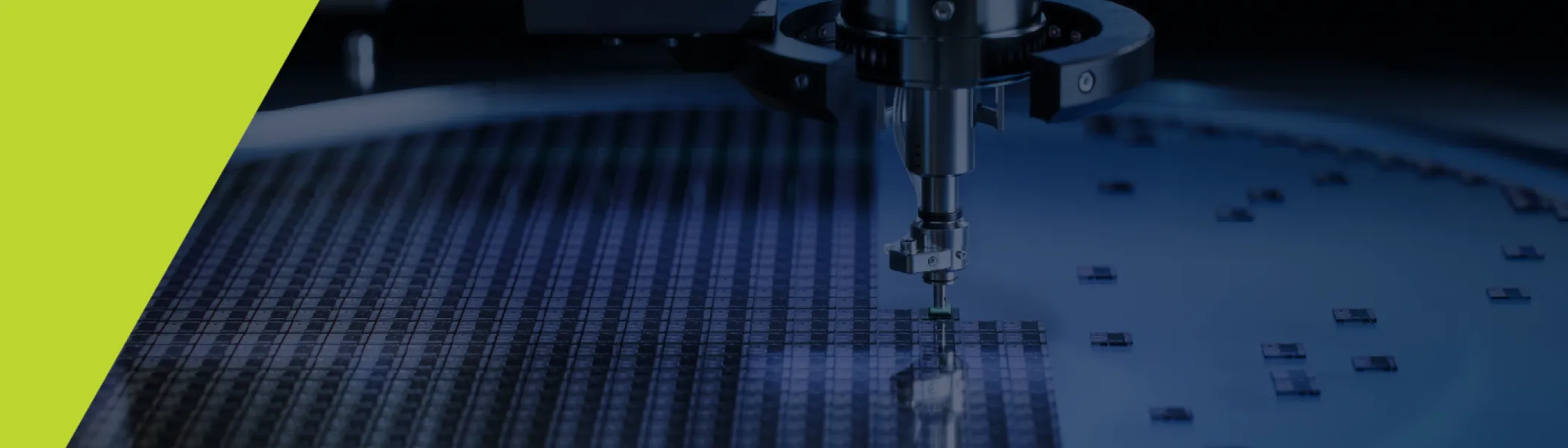
Zurich, Switzerland — Following the successful introduction of the modular NanoFrazor nanolithography system in 2024, Heidelberg Instruments is proud to announce the installation of the newest NanoFrazor. The system is equipped with the recent modules, enabling parallelized thermal scanning probe lithography (t-SPL). The beta site is hosted by the research partner EPFL, the Swiss Federal Institute of Technology in Lausanne, Switzerland. The installation marks a significant step forward in joint efforts to bring next-generation nanofabrication technologies into practice, promising advances in nanoscale research and applications.

Designed for high-resolution lithography down to 20 nm, with application flexibility and increased throughput, the system features parallelized t-SPL with ten heated tips writing simultaneously, Direct Laser Sublimation (DLS), and advanced automation. “Parallelizing t-SPL was the logical next step in advancing thermal nanolithography. The implementation, however, was far from trivial.” states Dr. Emine Cagin, CTO of Heidelberg Instruments Nano AG. “Parallelization required a decade of development, culminating in a new and scalable framework for electronics and software that now powers the new NanoFrazor.”

The new module, named the Decapede, increases the throughput up to tenfold, without compromising on high-resolution capabilities. “With improved throughput, we are considering upscaling grayscale nano surfaces that enable deterministic and localized strain engineering of 2D materials from chip-level to wafer-scale for potential industrial integration”, says Berke Erbas, Postdoctoral Researcher in the Microsystems Laboratory at EPFL. “We also aim to upscale grayscale nanoimprint lithography stamps fabricated through t-SPL and dry-etching approaches.”

EPFL — A Hub for Innovation
EPFL’s expertise in t-SPL and broad nanofabrication capabilities make it an ideal beta site and mark the continuation of a long-standing, trusted partnership with Heidelberg Instruments. The consortium of research groups involved brings together a combination of deep knowledge in t-SPL and diverse nanofabrication techniques, along with fresh ideas and challenging applications. The generous commitment to providing continuous feedback will help Heidelberg Instruments further validate the system performance and refine user interfaces.

From Nanoelectronics to Quantum Devices, a Look Ahead
The EPFL beta site is not only a testing and validation site for the system’s capabilities but first and foremost a catalyst for innovation in nanolithography. Applications at the EPFL beta site span nanoelectronics, plasmonics, quantum devices, and bio-nano-sensors. Jürgen Brugger, Professor in Microengineering and Materials Science at EPFL, highlights: “t-SPL has proven to be an excellent tool for educating junior researchers due to its capabilities for fast prototyping with a low threshold to create nano-patterns in short time scales. We are excited to expand towards parallel writing capabilities.” For example, the Laboratory of Nanoscience for Energy Technologies (LNET), Professor Giulia Tagliabue, is exploring the use of its gray-scale functionalities for realizing advanced metasurfaces that can strongly confine light at nanoscale dimensions for energy conversion and probing of interfacial processes.

We are looking forward to seeing how the beta site will accelerate discoveries and enable new possibilities in nanoscale science, both in research and educational use of the NanoFrazor system.

Further information: https://heidelberg-instruments.com/product/nanofrazor/

High-tech systems developer Demcon has established a local presence in North America by opening a new office in San Jose, California. The Dutch contract engineering company brings decades of expertise and know-how in hardware research, design and development to the heart of Silicon Valley, where software and AI are the main focus areas.

Hardware-centric development and engineering

The brand-new office will function as a local point of contact for US customers, delivering direct project management and system architecting support. The full Demcon engineering power in the Netherlands is available for early-phase concept development, engineering, prototyping and testing, with manufacturing as an optional service. Demcon has over 30 years of experience in systems engineering for high-tech solutions, in amongst others semiconductors, photonics and quantum technology.

Demcon’s capabilities range from fundamental and essential domains such as mechanics, mechatronics, software and electronics, to crucial additional competences in multiphysics simulation, thermal management, optics & vision, and data science & AI. "With our extensive group of engineers and specialists, we have the critical mass necessary to uphold an extremely high level in all these domains", says Amir Bar, general manager at Demcon USA. "For every customer project and every challenge they bring, we pick and choose the best possible team to find the optimal solution for our customers."

As a decades-long engineering professional in the American semiconductor industry, with leading roles at Applied Materials and KLA Tencor, Bar knows firsthand what Demcon has to offer: "With the focus on software and AI, there is a shortage in hardware engineers in the US. The Netherlands, home to some of the world’s leading hardware-centric semiconductor companies, have a much stronger base in that area. Through Demcon’s US office, American customers can tap into that potential."

Expanding horizons in the American market
For Demcon, the expansion in North America is very much a strategic decision. The company is already active in the US market for 20 years. "But we see ample room for growth", says Eric Slakhorst, Vice President Demcon high-tech systems. "The country is home to many potential large customers that prefer to keep their research and development close by. Often, they are challenged by time-to-market demands and capacity constraints. We set ourselves apart by offering the possibility to outsource part of their R&D, without the obligation to give away IP, and by our fast development cycle, from feasibility study to functional prototype in 12-15 months."

As our engineers are deeply embedded in the research process with our customers, proximity is key. "To ensure an optimal result, we need to be close, as regular face-to-face interaction is vital," says Slakhorst. "That’s why we are building an engineering hub in the US to support local partners with project management and system architecting. Detailed engineering can take place in the Netherlands."

Belgium France Germany Ireland Italy SCSA Germany Tile Business Executive Technical Training
Highlighted content

Join us for an interactive workshop focused on strengthening cybersecurity across the semiconductor manufacturing supply chain. This session will introduce the Semiconductor Manufacturing Cybersecurity Consortium (SMCC) and its standardized Semiconductor Supplier Cybersecurity Assessment (SSCA) framework, a streamlined approach to improving supply chain security assurance. Participants will gain insights into evidence mapping for compliance, explore best practices aligned with NIST’s cybersecurity functions, and engage in discussions with industry experts. Whether you are a semiconductor supplier, compliance professional, or part of the broader manufacturing ecosystem, this workshop offers a unique opportunity to shape future standards and enhance resilience in semiconductor security.

Prerequisite

Key Topics

  • Introduction to Semiconductor Manufacturing Cybersecurity Consortium (SMCC)
  • Standardized Semiconductor Cybersecurity Assessment (SSCA)
  • Supply chain assurance and evidence mapping
  • Group discussion to feedback on evidence requirements
  • Open Q&A with cybersecurity and compliance experts

Who Should Attend

  • Cybersecurity and compliance professionals
  • Semiconductor Suppliers
  • Legal and regulatory affairs professionals
  • Fabless chip designers and foundries
  • Testing, packaging, design software, R&D tools and IP
  • Manufacturing/assembly equipment and ancillary fab services
  • Integrated device manufacturers

Bayern Innovativ GmbH / Bavarian Chips Alliance
Am Tullnaupark 8
90402 Nürnberg
Germany

10:00 am - 10:30 am

Registration

10:30 am - 11:00 am

Introduction to SMCC and WG3 Objectives

11:00 am - 12:00 pm

SSCA Questionnaire

12:00 pm - 12:40 pm

Lunch

12:40 pm - 1:10 pm

Assurance Mapping

1:10 pm - 1:40 pm

Feedback and Discussion

1:40 pm - 2:00 pm

Case Study Presentation

2:00 pm - 2:30 pm

Group Discussion

2:30 pm - 2:50 pm

Tea Break

2:50 pm - 3:30 pm

Feedback Collection

3:30 pm - 4:00 pm

Closing

10:00 am - 4:00 pm Off Add to Calendar 2026-03-10 10:00:00 2026-03-10 16:00:00 Supply Chain Security Assurance of Semiconductor Manufacturing Germany Bayern Innovativ GmbH / Bavarian Chips Alliance Am Tullnaupark 8 90402 Nürnberg Germany SEMI.org [email protected] Europe/Berlin public Europe/Berlin Register Now
Event format
Tab Order
Registration
Overview
Agenda
Promote in calendar
On
Belgium France Germany Ireland Italy United States Ecosystem Training

Course Description

This interactive course provides a practical, comprehensive overview of the semiconductor industry, with an emphasis on real-world applications, production processes, and the critical roles within semiconductor manufacturing. Attendees will gain insights into the global semiconductor value chain, from initial design and development to final product shipment, and explore how semiconductors power essential technologies in automotive, AI, and healthcare. The course covers emerging trends such as sustainable manufacturing, data-driven operations, and advanced node technology. Participants will also delve into key performance indicators (KPIs) for fab operations, R&D, and product development, and discover career paths and skill requirements within this dynamic industry.

Through engaging discussions, case studies, and hands-on exercises, participants will gain knowledge that can be immediately applied to their roles, empowering them to better understand semiconductor manufacturing’s impact and contribute to their organization’s success.

Learning Objectives

  • Identify key applications of semiconductors across industries

  • Map the semiconductor value chain from design to shipment

  • Gain understanding of smart manufacturing and resource-efficient production

  • Interpret KPIs for fab operations, product development, and R&D

  • Understand key roles and skills within the semiconductor industry

Who Should Attend

This course is ideal for industry newcomers, career changers, recent graduates, technical professionals from related fields, business leaders, and educators seeking a practical, comprehensive understanding of semiconductor applications, processes, roles, and industry dynamics.

  • Industry Newcomers: Individuals new to the semiconductor field who need a comprehensive overview of applications, production processes, and key roles.
  • Early- and Mid-Career Semiconductor Employees: Current employees seeking to deepen their understanding of the semiconductor value chain, industry challenges, and emerging trends.
  • Career Changers and Recent Graduates: Those entering the semiconductor industry or recent graduates looking for insights into industry roles and required skills.
  • Professionals from Related Fields: Technical professionals in areas like automotive, medical devices, consumer electronics, or engineering who want to understand semiconductor applications and manufacturing.
  • Managers and Business Leaders: Leaders in strategy, business development, or operations who need to understand semiconductor production dynamics, KPIs, and sustainability to enhance profitability and competition.
  • Educators and Trainers: Instructors teaching semiconductor technology who want a practical, industry-focused course structure. 

Course Topics

  • Introduction to Semiconductor Applications and Market Impact
  • Semiconductor Value Chain: From Design to Shipment
  • Smart Manufacturing and Technology Evolution
  • Fab Operations and Facility Layout
  • Key Performance Indicators for Semiconductor Functions
  • Quality Assurance and Continuous Improvement
  • Workforce Roles and Skills in Semiconductor Manufacturing
  • Emerging Trends and Future Opportunities
  • Closing and Immediate Application Planning

Instructor

Dr. Sirisha Kuchimanchi 

Sahita Technologies

Instructor Bio

Important Information

Note that only the person who registered will receive a certificate of completion. This virtual training will not be recorded. Attendees must be present to access course knowledge. 

Can't find the training link day of? After you register, you will receive the link to the live training via the email address you provided. In addition, you will receive email reminders about 24 hours in an advance and an hour before with the same link. Please keep these emails on hand to access the trainings on time. If you do not see any confirmation emails, please check your junk/spam folders before contacting SEMI U for support.

United States

SEMI U

Interested in learning about the semiconductor ecosystem as a whole? This course introduces you to the basics of semiconductors, applications of semiconductors, front-end and back-end processing, fabrication facilities, process control and yield management, jobs and roles within the semiconductor industry, and what life is like working in a fab. Great for anyone seeking an understanding of an overview of the industry.  

Pricing
  • Members: $249
  • Non-Members: $299

* For group orders with 10+ attendees, please contact [email protected].

8:00 am - 12:00 pm Off Add to Calendar 2026-05-19 08:00:00 2026-05-19 12:00:00 Semiconductor Ecosystem Overview (Americas & EU) Interested in learning about the semiconductor ecosystem as a whole? This course introduces you to the basics of semiconductors, applications of semiconductors, front-end and back-end processing, fabrication facilities, process control and yield management, jobs and roles within the semiconductor industry, and what life is like working in a fab. Great for anyone seeking an understanding of an overview of the industry.  PricingMembers: $249Non-Members: $299* For group orders with 10+ attendees, please contact [email protected]. United States SEMI.org [email protected] America/Los_Angeles public America/Los_Angeles Register Now
Event format
Promote in calendar
Off
Belgium France Germany Ireland Italy SCSA UK Tile Business Executive Technical Training
Swansea University Logo
Highlighted content

Join us for an interactive workshop focused on strengthening cybersecurity across the semiconductor manufacturing supply chain. This session will introduce the Semiconductor Manufacturing Cybersecurity Consortium (SMCC) and its standardized Semiconductor Supplier Cybersecurity Assessment (SSCA) framework, a streamlined approach to improving supply chain security assurance. Participants will gain insights into evidence mapping for compliance, explore best practices aligned with NIST’s cybersecurity functions, and engage in discussions with industry experts. Whether you are a semiconductor supplier, compliance professional, or part of the broader manufacturing ecosystem, this workshop offers a unique opportunity to shape future standards and enhance resilience in semiconductor security.

Prerequisite

Key Topics

  • Introduction to Semiconductor Manufacturing Cybersecurity Consortium (SMCC)
  • Standardized Semiconductor Cybersecurity Assessment (SSCA)
  • Supply chain assurance and evidence mapping
  • Group discussion to feedback on evidence requirements
  • Open Q&A with cybersecurity and compliance experts

Who Should Attend

  • Cybersecurity and compliance professionals
  • Semiconductor Suppliers
  • Legal and regulatory affairs professionals
  • Fabless chip designers and foundries
  • Testing, packaging, design software, R&D tools and IP
  • Manufacturing/assembly equipment and ancillary fab services
  • Integrated device manufacturers

Computational Foundry, Bay Campus, Swansea University
Swansea SA1 8EN, UK
Swansea
United Kingdom

10:00 am - 10:30 pm

Registration

10:30 am - 11:00 am

Introduction to SMCC and WG3 Objectives

11:00 am - 12:00 pm

SSCA Questionnaire

12:00 pm - 12:40 pm

Lunch

12:40 pm - 1:10 pm

Assurance Mapping

1:10 pm - 1:40 pm

Feedback and Discussion

1:40 pm - 2:00 pm

Case Study Presentation

2:00 pm - 2:30 pm

Group Discussion

2:30 pm - 2:50 pm

Tea Break

2:50 pm - 3:30 pm

Feedback Collection

3:30 pm - 4:00 pm

Closing

10:00 am - 4:00 pm Off Add to Calendar 2026-03-12 10:00:00 2026-03-12 16:00:00 Supply Chain Security Assurance of Semiconductor Manufacturing UK Computational Foundry, Bay Campus, Swansea University Swansea SA1 8EN, UK Swansea United Kingdom SEMI.org [email protected] Europe/London public Europe/London Register Now
Event format
Tab Order
Registration
Overview
Agenda
Sponsors
Promote in calendar
Off

Ball Wave Inc., a pioneer in advanced chemical sensing technology, today announced that its FT-450WT online trace moisture analyzer has received full certification from Taiwan's most advanced semiconductor manufacturer following rigorous validation testing. This milestone validates Ball Wave's proprietary ball SAW sensor technology and establishes the company as a strategic supplier in the critical semiconductor manufacturing equipment sector. The certification comes at a pivotal time as semiconductor manufacturers worldwide face increasing pressure to improve yield rates and reduce contamination in advanced node production. Ball Wave's technology addresses a critical pain point in fab operations, where even parts-per-billion levels of moisture can compromise chip quality and manufacturing efficiency. The successful certification demonstrates the analyzer's reliability in the most demanding production environments and opens significant commercial opportunities for specialty gas manufacturers who are the key players plagued with trace moisture contamination. 

Ball Wave President Shingo Akao stated, "This certification validates our core technology platform and demonstrates our ability to meet the stringent requirements of the world's most sophisticated semiconductor fabs to help them avoid unplanned shutdowns due to trace moisture contamination. Ball Wave's patented ball SAW sensor represents a fundamental breakthrough in trace moisture detection, offering speed and precision unmatched by legacy technologies. With proven performance in production environments and a robust IP portfolio, we are well-positioned to capture significant market share in the rapidly growing semiconductor manufacturing equipment sector, which is projected to exceed $156 billion by 20271."

Business Impact: For advanced semiconductor fabs operating at 3nm and below, moisture contamination can cost $5-10 million per incident2 in scrapped wafers and production delays. Industry data shows that facilities with inadequate moisture monitoring experience maintenance ratios below 1.0, where unplanned repairs consume over 50% of total downtime. Ball Wave's real-time detection capability enables preventive action before contamination reaches critical levels, helping customers avoid these costly failures and maintain the operational stability (M-ratio >4.0) essential for profitable advanced node production. This value proposition has resonated strongly with leading fabs, creating a clear path to rapid customer adoption.

About the FT-450WT and Ball Wave's Technology Platform: The FalconTrace ultra-trace moisture meter uses a proprietary ball SAW sensor to quantitatively measure the trace amounts of water molecules contained in industrial gases and natural gases. Its extremely fast response time allows for real-time monitoring of changes in moisture content, and it is also capable of measuring both moisture content and background gas composition. It can accurately measure moisture concentrations in gases down to the 1 ppbv (parts per billion) level, representing 10-100x improvement over competing technologies. The FT-450WT is a high-end model that maintains its fast response time while prioritizing integration into equipment, and the separation of the sensor unit and main body allows for greater layout flexibility in fab retrofits and new tool installations. 

Ball Wave's technology platform extends beyond moisture analysis to a broader range of chemical sensing applications, creating multiple revenue streams and cross-selling opportunities within semiconductor fabs and adjacent industries, including pharmaceuticals, aerospace, and industrial gases. 

Market Opportunity and Strategic Position: Ball Wave has established relationships with leading semiconductor manufacturers in Taiwan, with active discussions underway in South Korea, Japan, and the United States 

  • The company's technology addresses a growing market as advanced node production (5nm and below) requires increasingly stringent contamination control
  • Ball Wave holds key patents in ball SAW sensor technology with additional applications pending in major semiconductor manufacturing regions
  • The company's university origins provide access to cutting-edge MEMS research and ongoing innovation pipeline

About Ball Wave Inc.: Ball Wave Inc. is a technology company specializing in advanced chemical sensing solutions for critical industrial applications. Founded as a spin-out from Tohoku University, a global center of excellence in MEMS technology, Ball Wave leverages proprietary ball SAW sensor technology to deliver breakthrough performance in trace contamination detection. The company serves semiconductor manufacturers, industrial gas suppliers, and other industries requiring ultra-precise gas analysis. Ball Wave is headquartered in Sendai, Japan.

For inquiries regarding this matter, please contact: Ball Wave Inc., Corporate Strategy Division, Yusuke Tsukahara 

[email protected] 

Telephone: +81-3-5979-2357 

https://www.ballwave.jp/ 

1. https://www.semi.org/en/semi-press-release/global-semiconductor-equipment-sales-projected-to-reach-a-record-of-156-billion-dollars-in-2027-semi-reports 

2. https://www.mckinsey.com/industries/semiconductors/our-insights/need-to-boost-semiconductor-fab-efficiency-look-to-maintenance

Gütenbach, Germany – December 16, 2025 – RENA Technologies is proud to be a key industrial partner in a new 1.3 million Euro Government-funded project led by the National Physical Laboratory (NPL) and supported by the Department for Science, Innovation and Technology (DSIT). The initiative will establish critical new metrology capabilities to strengthen the UK’s semiconductor innovation infrastructure and accelerate the development and adoption of next-generation semiconductor materials and processes.

This strategic investment underlines the UK’s commitment to maintaining global competitiveness in semiconductors, helping to attract private investment, strengthen supply chains, and support long-term economic growth. As advanced semiconductor materials become central to technologies such as electric vehicles, renewable energy, 5G communications and advanced electronics, robust measurement, verification and standards are increasingly essential.

The project brings together a broad consortium spanning industry and academia. Together, the partners cover the full innovation landscape, from materials research and process development to device fabrication and performance verification.

“At RENA, we develop advanced wet processing and surface treatment solutions that are critical in manufacturing of compound semiconductors and emerging materials. Through this collaboration, RENA will contribute industrial insight and process expertise to ensure that new measurement and testing capabilities are closely aligned with real manufacturing challenges.” States Peter Schneidewind, CEO of RENA Technologies.

While silicon remains the foundation of much of today’s semiconductor industry, many high-growth applications increasingly depend on advanced materials such as gallium arsenide (GaAs), gallium nitride (GaN), silicon carbide (SiC), and indium phosphide (InP). These materials offer superior performance in high-power, high-frequency and optoelectronic applications, but they also introduce new complexities in processing, characterization and quality assurance. Reliable standards and independent measurement methods are therefore essential to derisk innovation and support scale-up.

Through this project, consortium partners will work with NPL to:
• Develop new UK measurement and test capabilities for advanced semiconductor materials by combining academic research excellence with world-leading metrology expertise.
• Apply these capabilities to critical industry challenges, including assessing material integrity, verifying RF performance, and testing device reliability under demanding operating conditions.
• Share the resulting capabilities openly with industry, helping to build national consensus and strengthen the UK’s influence in international standards development for novel semiconductor technologies.

Following extensive consultation the consortium has identified three priority application areas where the UK can have the greatest global impact: power electronics, RF-communications, and optoelectronics. These areas align closely with RENA’s customer base and technology roadmap, particularly in power and compound semiconductor manufacturing.
By participating in this program, RENA reinforces its commitment to supporting the UK semiconductor ecosystem with industrially relevant innovation, enabling customers to adopt advanced materials with confidence, and helping position the UK as a global leader in next-generation semiconductor technologies.

About NPL
The National Physical Laboratory (NPL) is the UK's National Metrology Institute (NMI), developing and maintaining the national primary measurement standards, as well as collaborating with other NMIs to maintain the international system of measurement. As a public sector research establishment, it delivers extraordinary impact by providing the measurement capability that underpins the UK's prosperity and quality of life. NPL develops the metrology required to ensure the timely and successful deployment of new technologies and work with organizations as they develop and test new products and processes.

About RENA Technologies GmbH
RENA Technologies is a leading global supplier of production machines for wet chemical surface preparation. RENA products are used in path-breaking application fields such as semiconductors, MedTech, renewable energies, and the glass industry. RENA equipment is used to treat or modify surfaces of, for example, semiconductor wafers, solar cells, glass, optical substrates or other high-tech products using wet chemical processes. RENA offers proven standard machines as well as customer-specific solutions and process support.

Second-generation platform delivers advanced control, in-cycle annealing, and high-throughput performance for Wide Bandgap power and RF device manufacturing

Espoo, Finland, November 24, 2025 – Beneq introduces the Beneq Transform® XP, a second-generation ALD platform developed to meet the performance demands of Wide Bandgap (WBG) power and RF device technology development and manufacturing. Building on the proven Beneq Transform® platform, the new system adds advanced ALD control, faster cycle times, and greater process capabilities in a high-throughput format.

The Beneq Transform® XP features a second-generation, flow-optimized 25-wafer mini-batch thermal ALD reactor that achieves breakthrough deposition rates with single-digit-second cycle times for common ALD oxides and nitrides. Refined flow and pressure dynamics ensure exceptional within-wafer and wafer-to-wafer uniformity – even at a few nm film thicknesses – while precise dwell-time control delivers excellent conformality on high-aspect-ratio structures.

Transform® XP also introduces advanced PEALD process control to precisely manage low-energy ions. This enables optimized plasma pre-cleaning and deposition, resulting in improved interface quality, tunable passivation, and enhanced device performance and reliability. The system integrates in-cycle annealing, a proprietary step that densifies and purifies films to achieve stoichiometric, low-impurity materials and crystalline alignment, such as AlN lattice orientation.

“Transform® XP is our response to the next wave of device challenges in power and RF manufacturing,” said Dr. Mikko Söderlund, Head of Sales, Semiconductor ALD at Beneq. “Customers value the original Transform® for its versatility and reliability. With XP, we introduce capabilities they specifically asked for – improved ion control, faster cycles, and in-cycle film densification – all in a versatile platform.”

With over a dozen Beneq Transform® clusters installed globally for WBG pilot and production use, and more than 100 process modules shipped, Beneq continues to support leading IDMs, foundries, and RTOs advancing More-than-Moore technologies.

About Beneq

Beneq pioneered industrial production of Atomic Layer Deposition (ALD) with the introduction of the first commercial ALD equipment in 1984. Today, Beneq advances ALD adoption and validation with a portfolio that includes the Beneq Transform®, Transform XP, Transform 300, Transmute™, and Prodigy™ for specialty semiconductor device fabrication; TFS 200 and TFS 500 for R&D; the P400A, P800, and P1500 batch systems for coating critical semiconductor chamber components and complex part geometries; and spatial ALD platforms such as the C2R™ and Genesis for roll-to-roll processing. Headquartered in Espoo, Finland, Beneq enables ALD integration from lab to fab for semiconductors, optics, and functional coatings.

Press Contact
Charlotte Bärlund
Event and Communications Lead
[email protected]

New platform delivers ALD film quality at production throughput for Wide Bandgap and other specialty device manufacturing

Espoo, Finland, November 19, 2025 – Beneq, a global leader in Atomic Layer Deposition (ALD) equipment and solutions, today announced Beneq Transmute™, a next-generation ALD platform designed for high-volume semiconductor manufacturing. Engineered for high volume production of Wide Bandgap (WBG) power electronics, advanced RF devices, μLED and other specialty devices, Beneq Transmute™ combines performance, scalability, and cost efficiency in one system.

Atomic precision at manufacturing speed

Beneq Transmute™ extends the performance of the Beneq Transform® XP platform into production environments with Beneq’s proprietary 3-step ALD architecture. By combining plasma pre-treatment, plasma-enhanced ALD (PEALD), and thermal batch ALD, the platform delivers conformal, high-performance dielectric stacks with atomic-level interface control – now at high throughput.

Its flow-uniform 25-wafer chambers, paired with advanced precursor dosing technology, enable rapid cycle times, optimized wafer coverage, and reduced precursor waste – resulting in a low cost of ownership across a broad range of semiconductor applications.

“Beneq Transmute™ represents a major leap forward in making ALD a truly high-volume manufacturing solution,” said Lucas Monteiro, Head of Product at Beneq. “By combining the precision of ALD with throughput and scalability that match production demands, we are giving our customers the ability to produce next-generation Wide Bandgap and RF devices at high throughput and low cost of ownership – with the uncompromised film quality that Beneq is known for.”

Designed for dedicated production requirements

Beneq Transmute™ supports both thermal and plasma-enhanced ALD within a modular cluster architecture that enables dedicated configurations. With up to two transfer chambers and eleven process module slots – including PEALD, Thermal, Buffer, and Preheater – each system can be tailored to match specific customer applications and fab roadmaps while ensuring long-term scalability.

Enabling the next wave of electronics

Beneq Transmute™ directly supports key semiconductor market trends – including the electrification of transport, adoption of renewable energy, 5G and RF communications, data centers and next-generation displays. Its combination of atomic precision and production throughput positions Beneq as a technology enabler for a more efficient, connected, and sustainable future.

About Beneq

Beneq pioneered industrial Atomic Layer Deposition (ALD) with the introduction of the first commercial ALD equipment in 1984. Today, Beneq advances ALD technology adoption and validation with a portfolio that includes Transform®, Transform® 300, and Prodigy™ for specialty semiconductor device fabrication; TFS 200 and TFS 500 for R&D; and innovative spatial ALD platforms such as the C2R™ and Genesis for rolltoroll processing. Beneq’s systems support process innovation from lab to fab, enabling integration of ALD in advanced manufacturing. Headquartered in Espoo, Finland, Beneq operates globally to help customers scale ALD solutions for the future of semiconductors, optics, and functional coatings.

Press Contact:
Charlotte Bärlund
Event and Communications Lead
[email protected]

New SECS-II library helps fabs and OEMs integrate semiconductor tools with the MES in hybrid manufacturing sites, ensuring faster time to market and limiting integration costs

MUNICH, November 18, 2025 – Agileo Automation, a leading provider of control and connectivity solutions for global semiconductor manufacturing, today unveils Agil’SECS-II at Booth #C2518 at SEMICON Europa 2025. This new SECS-II library, featuring built-in SEMI standard communication, enables a manufacturing execution system (MES) to accelerate the integration and validation of hybrid semiconductor and traditional manufacturing tools on production lines, ensuring faster time to market, lower integration costs, and reduced deployment risks. With this connection gateway, users can send and receive any SEMI SECS-II-compliant message as host or equipment for full GEM and GEM300 equipment integration and validation. This product can prove valuable for a variety of customers:

• Pure semiconductor original equipment manufacturers (OEMs) that need a practical way to develop an MES simulator and exercise their equipment under fab-like conditions. For small production lines or multi-tool set-ups exchanging data through SECS/GEM, Agil’SECS-II allows OEMs to design, test, and validate their equipment efficiently before shipping it to fabs.

• Customized, multi-industry, or low-volume production sites that use an MES system to integrate both traditional production machines and semiconductor tools. Agil’SECS-II simplifies integration in mixed equipment environments, especially where the MES cannot use SECS/GEM because most tools rely on protocols such as OPC UA, Modbus, or MQTT, yet semiconductor equipment using SECS/GEM must be integrated within the same MES.

• Laboratories and pilot lines without a full-featured MES that require a driver to collect data from various types of manufacturing equipment, including process, inspection, and metrology tools, to ensure quality and process control as well as complete traceability.

“With Agil’SECS-II, we wanted to provide a flexible tool that can serve multiple types of customers who can benefit from a proven software foundation built on more than 15 years of deployment experience in semiconductor fabs worldwide,” explains Marc Engel, chief executive officer of Agileo Automation. “Our SECS-II driver is especially useful for validating the processes of hybrid fabs that combine semiconductor and non-semiconductor manufacturing equipment, such as silicon carbide (SiC) wafer production lines or advanced packaging lines. It enables product and process traceability with legacy MES and helps OEMs developing equipment for these lines create MES simulators to verify information flow between tools using heterogeneous communication protocols.”

- ends -

About Agileo Automation
Agileo Automation is a trusted partner for equipment manufacturers, helping them build smarter, automated, and more connected machines that integrate seamlessly into advanced semiconductor fabs. Founded in 2010 in Poitiers, France, Agileo Automation helps OEMs optimize control, communication, data acquisition, and testing across their tools through proven software frameworks, applications, and expert support. Its flagship A²ECF-SEMI framework provides a solid foundation for developing equipment controllers fully aligned with SEMI SECS/GEM, GEM300, and EDA standards. As an active member of SEMI and the OPC Foundation, Agileo Automation contributes directly to shaping the standards that drive Industry 4.0 manufacturing. For more information, please visit our website or follow us on LinkedIn.