downloadGroupGroupnoun_press release_995423_000000 copyGroupnoun_Feed_96767_000000Group 19noun_pictures_1817522_000000Member company iconResource item iconStore item iconGroup 19Group 19noun_Photo_2085192_000000 Copynoun_presentation_2096081_000000Group 19Group Copy 7noun_webinar_692730_000000Path
Skip to main content
Default Banner Image

Workforce Development

As Europe’s microelectronics industry enters a new era of growth, one question stands out: do we have the talent pipeline to match our ambitions? The European Chips Skills Academy (ECSA), coordinated by SEMI Europe, is addressing this challenge through coordinated action, insightful research, and strong collaboration between industry and academia. Why Talent and Skills Matter The semiconductor sector in Europe is undergoing rapid transformation, driven by the European Chips Act and large-scale investments in design, manufacturing, and packaging. This momentum creates significant demand for engineers, technicians, and specialists across the electronics value chain.However, Europe faces a growing structural challenge. An ageing workforce, modest growth in technical graduates, and limited public awareness of semiconductor careers are widening the talent gap.The ECSA Skills Strategy 2024, published in November 2024, provides a detailed overview of this situation. The updated Skills Strategy 2025, released in November 2025, reinforces the urgency with new data and recommendations.According to the latest report, around 30% of Europe’s current semiconductor workforce will retire by 2030, while the inflow of graduates is increasing by less than 1% per year. This creates an annual shortfall of approximately 10,800 skilled professionals across the European value chain. Read the full report, available to download on the ECSA website.Without decisive action, this shortfall could limit Europe’s ability to meet its strategic goals in semiconductors, electronics, and digital technologies.What is European Chips Skills Academy (ECSA)?ECSA connects industry, academia, training providers, and policymakers to create a sustainable and inclusive skills ecosystem for the electronic components and systems (ECS) sector.Its core objectives are:To attract new talent into semiconductor and ECS careers.To upskill and reskill professionals for emerging roles.To build a long-term, future-ready talent pipeline across Europe.Through this initiative, SEMI Europe is leading the conversation on talent and skills, turning awareness into action and strategy into measurable results.Key ECSA Initiatives:1. ECS Summer School The annual ECS Summer School invites STEM students from across Europe to explore careers in microelectronics through lectures, workshops, and hands-on learning.The 2024 edition took place in Bertinoro, Italy, while the 2025 edition was hosted by the Budapest University of Technology and Economics in August 2025, under the theme “Fascinating Electronics for a Cool World.”The 2026 edition will return to Bertinoro, Italy on August 23-26. These events give students a first-hand look at the semiconductor ecosystem, helping them connect with experts and understand how their studies translate into real-world careers.Read more about the 2025 Summer School.2. “Day in a Fab” WebinarsThe “Day in a Fab” series offers students and young professionals the opportunity to interact directly with experts from semiconductor fabs, design houses, and equipment manufacturers.These webinars provide practical insights into various career paths within the ECS industry, helping participants better understand the range of opportunities beyond traditional engineering roles.By bridging the gap between academia and industry, these sessions help students envision a future within the European semiconductor ecosystem.See upcoming events on the ECSA website.3. Skills Strategy ReportsECSA’s Skills Strategy Reports (2024 and 2025) form the backbone of Europe’s talent development roadmap.They provide:Quantitative forecasts of job demand, workforce needs, and potential skill shortages.Insights from over 130 industry and academic experts.Recommendations for training, mobility, and reskilling programmes.The 2024 Skills Strategy Report can be accessed here, while the 2025 update is available here.These reports help policymakers, companies, and educators align their efforts to strengthen Europe’s competitiveness and ensure a resilient talent ecosystem.SEMI Europe’s Leadership in Talent and SkillsAs the global industry association for electronics manufacturing and design, SEMI Europe plays a central role in addressing the talent challenge.Through ECSA, SEMI Europe:Validates industry needs to ensure training and education are aligned with real-world demand.Connects universities and training providers with semiconductor companies to co-develop curricula.Promotes visibility and inclusion across the ECS community.Supports mobility and collaboration to create a Europe-wide approach to skills development.This leadership transforms the skills agenda from a background issue into a strategic pillar of Europe’s semiconductor ecosystem.Looking AheadThe European semiconductor industry is entering a decisive decade. The technology and investment potential are enormous, but they depend on a skilled and motivated workforce.ECSA’s work from the Skills Strategy reports to the Summer School and student engagement activities is creating a structured, evidence-based approach to developing that workforce.The path forward is clear: attract, train, and empower the next generation of engineers and innovators. With SEMI Europe’s guidance, the European Chips Skills Academy is ensuring that Europe’s ambitions in chips and microelectronics are matched by the people who will make them possible.The European Chips Skills Academy (ECSA) is a pan-European initiative coordinated by SEMI Europe and co-funded by the European Education and Culture Executive Agency (EACEA) under project number 101110124.Learn more about ECSA’s mission.SEMI ContactJatin Mendiratta, Communication CoordinatorEmail: [email protected]
Read More
The Rising Stars: 20 Under 30 blog series celebrates the brightest young leaders shaping the future of the semiconductor industry. These exceptional individuals have earned the SEMI Europe 20 Under 30 Award for making a remarkable impact across the supply chain—whether in engineering, sales, marketing, or R D. Nominations for the 2025 20 Under 30 Award are now open, providing the opportunity to recognize and honor the next wave of industry trailblazers.The series spotlights these rising stars for their career achievements, commitment to innovation, leadership skills, and dedication to driving both business success and community growth.Follow their inspiring journeys and discover how they are thriving and paving the way for future generations in the semiconductor world.Meet Anne-Mary Yeboah, Technology Manager at SoitecWith a background in materials science and a strong interest in technology, Anne-Mary Yeboah has built a career that connects the worlds of engineering and management. After earning her degree in engineering, she deepened her understanding of business through a Specialized Master’s in Management—an experience that broadened her perspective and prepared her for the challenges of a global, fast-moving industry.Today, as Technology Manager at Soitec, Yeboah leads projects that contribute to the next generation of semiconductor innovations. Her journey reflects a balance of technical curiosity, leadership growth, and a belief in the power of inclusion. In this interview, she shares her thoughts on career development, the importance of diversity, and how young professionals can find their voice in a rapidly evolving industry.SEMI: What inspired you to join the semiconductor industry? Yeboah: I’ve always been fascinated by technology, and semiconductors are at the core of innovation today. They are everywhere, from smartphones to electric vehicles, and being part of this field means contributing directly to the technologies shaping our lives and future.SEMI: How did your early experiences and education shape your career path?Yeboah: My engineering studies led me to specialize in materials science, which naturally included semiconductors. Later, I decided to expand my knowledge by pursuing a Specialized Master’s in Management. This combination of technical and business perspectives shaped my career path and ultimately brought me to Soitec, where I now connect both worlds as a Technology Manager.SEMI: Can you share a professional accomplishment you’re most proud of, and explain why it’s significant to you?Yeboah: I’m especially proud of starting my career directly as a Technology Manager. This role has allowed me to contribute to complex, strategic projects and collaborate with teams across functions. Working on products that will drive future innovations is deeply fulfilling and gives meaning to my work every day.SEMI: As a young professional in the industry, what is your greatest challenge? Yeboah: One of the biggest challenges has been finding my voice in a highly experienced environment. It can be intimidating at first, but I’ve learned to turn it into an opportunity to ask questions, learn quickly, and build confidence in my contributions. It has pushed me to develop a broad skill set and become an effective collaborator across teams.SEMI: What advice would you give to younger generations aspiring to make an impact in this industry?Yeboah: Dare to step forward and don’t create your own limits. Ask questions, even when you’re surrounded by experts, curiosity is a strength. Also, be patient. Building credibility and seeing your impact takes time, but each experience helps you grow and move closer to your goals.SEMI: How do you envision future work environments?Yeboah: I see the workplaces of the future as more innovative, inclusive, and collaborative. Diversity should be central, everyone should feel that their voice and perspective matter. At Soitec, initiatives like Women@Soitec are great examples of how gender equality and inclusion can empower people to thrive. I also believe technology and flexibility will continue to reshape how we work, helping us achieve both high performance and balance.SEMI: What impact has the 20 Under 30 Award had on your career? Yeboah: Receiving the 20 Under 30 Award has been a true honor and a wonderful source of motivation. It gave me a moment to reflect on how far I’ve come and to feel proud of my journey. The recognition has boosted my confidence, increased my visibility, and encouraged me to continue pushing forward in my career.Following 20 Under 30 JourneysAnne-Mary Yeboah’s story highlights the determination and adaptability driving today’s new generation of semiconductor professionals. Her ability to bridge science and management reflects the diverse skill sets shaping the industry’s future.The Rising Stars: 20 Under 30 blog series celebrates the exceptional talent and leadership driving the future of the semiconductor industry. Each of the young innovators honored is excelling in their respective fields while shaping the landscape of technology and business with their visionary approaches and dedication. Their stories exemplify the remarkable achievements and unwavering commitment that define the next generation of industry leaders. The series is intended to inspire and motivate future professionals to pursue their passions and embrace the opportunities within this dynamic industry. Stay tuned for more stories of rising stars who are paving the way for continued growth and innovation in the semiconductor world.Learn more about the SEMI Europe 20 Under 30 Award and the recipients honored at SEMICON Europa. SEMI ContactJames Lam, Business Development ManagerEmail: [email protected]
Read More
The Rising Stars: 20 Under 30 blog series celebrates the brightest young leaders shaping the future of the semiconductor industry. These exceptional individuals have earned the SEMI Europe 20 Under 30 Award for making a remarkable impact across the supply chain—whether in engineering, sales, marketing, or R D. Nominations for the 2025 20 Under 30 Award are now open, providing the opportunity to recognize and honor the next wave of industry trailblazers.The series spotlights these rising stars for their career achievements, commitment to innovation, leadership skills, and dedication to driving both business success and community growth.Follow their inspiring journeys and discover how they are thriving and paving the way for future generations in the semiconductor world.Meet Eloise Bond, Senior Etch Process Engineer at KLA Corporation (SPTS Division)Eloise Bond studied Physics at Swansea University before joining KLA in 2019 as an Etch Process Engineer. Since then, she has worked on cutting-edge semiconductor applications while actively promoting STEM through local outreach programs like Generation Tech.A proud recipient of the SEMI Europe 20 Under 30 Award, Bond shares how the recognition boosted her confidence and expanded her network, enabling her to take on new challenges. In her interview, she reflects on overcoming imposter syndrome, the value of flexible work, and the unexpected opportunities that shaped her career. Outside of work, Bond enjoys camping and bouldering.SEMI: What inspired you to join the semiconductor industry? Bond: I’ve always had a passion for science, so pursuing a career in a related field was natural. However, I wasn’t aware of the semiconductor industry until I began studying Physics at Swansea University, which has strong research ties with local semiconductor companies like KLA. Now that I am in the industry, I enjoy the hands-on aspects of my job. I find working with different materials and equipment is more engaging to me than an office-based job. SEMI: How did your early experiences and education shape your career path?Bond: STEM activities during my childhood and visits to museums with my parents sparked my interest in science and the physical world. That curiosity lead me to study physics at Swansea University, which ultimately paved the way to my current role at KLA. As I mentioned earlier, a career in semiconductors wasn’t really a conscious choice until relatively late in my education; I simply followed my passion for science. Today, I’m involved in many of the STEM outreach programs at KLA, helping to promote the semiconductor industry to young children so they can discover the same opportunities that I was fortunate to have had exposure to earlier in my life.SEMI: Can you share a professional accomplishment you’re most proud of, and explain why it’s significant to you?Bond: One accomplishment I’m particularly proud of is building strong customer relationships with a volume production fab in Korea. It was my first experience with direct customer interactions, which felt quite daunting at the time. I was invited to support a tool installation on-site, which allowed me to travel the furthest from the UK I had ever gone. Seeing firsthand how our tools fit into the wider industry gave me valuable context for my day-to-day responsibilities and made my work feel even more impactful. SEMI: As a young professional in the industry, what is your greatest challenge? Bond: Imposter syndrome has been a significant challenge for me. I often find myself in meetings with more senior colleagues and fear I am not performing well enough. However, over time, I have learned that my input is valid and that having multiple perspectives often leads to better outcomes.SEMI: What advice would you give to younger generations aspiring to make an impact in this industry?Bond: To make a difference, you first need to be part of the industry, just getting involved puts you in the room where conversations and decisions happen that you might not otherwise be exposed to.If an opportunity comes your way, take it. I entered this industry due to an opportunity presented to me at the end of my university career. KLA was my first real interview, and I honestly thought my chances were slim. I approached it as a ‘trial run’ and five years later, I’m still here. SEMI: How do you envision future work environments?Bond: I envision a new generation of management that places greater value on work-life balance. In many industries, senior management seem to have a relatively poor work-life balance, such as constantly doing business in the same way they’ve done for the past 40+ years – with constant business travel, working on holidays and long hours in the office. There is still an expectation for younger, ambitious employees to emulate this corporate culture, which creates barriers for those with caregiving responsibilities or other important commitments outside work. I believe a younger, more vocal generation of managers will drive positive changes in how we work. We will see more adoption of fully flexible working and 4-day weeks – happy employees lead to better work outcomes. I also think the technological advances which enabled the rapid switch to “working from home” during the COVID pandemic have permanently reshaped what is possible in terms of flexibly and efficiently.SEMI: What impact has the 20 Under 30 Award had on your career? Bond: This award has given me greater confidence to step outside of my comfort zone. It has also allowed me to increase my network to include colleagues I would have no reason to speak to previously. As a result, I have gained broader knowledge of how KLA operates as a whole and have been able to initiate small cross departmental projects I would not have been possible to before. Following 20 Under 30 JourneysEloise Bond’s journey highlights the passion, resilience, and forward-thinking mindset that characterize today’s emerging leaders in semiconductors. Her dedication to both technical excellence and community engagement showcases how rising stars are not only advancing the industry but also inspiring the next generation.The Rising Stars: 20 Under 30 blog series celebrates the exceptional talent and leadership driving the future of the semiconductor industry. Each of the young innovators honored is excelling in their respective fields while shaping the landscape of technology and business with their visionary approaches and dedication. Their stories exemplify the remarkable achievements and unwavering commitment that define the next generation of industry leaders. The series is intended to inspire and motivate future professionals to pursue their passions and embrace the opportunities within this dynamic industry. Stay tuned for more stories of rising stars who are paving the way for continued growth and innovation in the semiconductor world.Learn more about the SEMI Europe 20 Under 30 Award and the recipients honored at SEMICON Europa. SEMI ContactMaria Daniela Perez, Communications ManagerEmail: [email protected]
Read More
The semiconductor industry is at the heart of modern technology, powering everything from smartphones and medical devices to communication systems and transportation. However, to sustain its rapid growth and innovation, the industry faces a pressing challenge: a growing talent gap. Addressing this issue requires collaboration between academia and industry to ensure that students are not only equipped with the necessary skills but also have clear pathways into the workforce.That’s where SEMI On Campus comes in. Launched in March 2025 by SEMI Europe, this new initiative is designed to bring together the semiconductor industry and universities, fostering collaboration that benefits students, educational institutions, and companies alike. With its first edition in Poland, SEMI On Campus is already making waves by reaching over 150 students and strengthening industry-academia connections.First Stop: PolandThe inaugural SEMI On Campus event took place at Gdańsk University of Technology and The University of Gdańsk, where key representatives from SEMI Europe—Bernard Capraro (Senior Manager, University Partnerships Talent Initiative), Victoria Cummings (Senior Manager, Workforce Development EU Projects), Maria Daniela Perez (Senior Manager, Business Development), and Kartikey Srivastava (Senior Specialist, Communications)—met with deans, professors, and students from various faculties.The Power of Industry-Academia CollaborationCollaboration between universities and the semiconductor industry is crucial in ensuring students gain practical knowledge, hands-on experience, and direct access to job opportunities. Companies, in turn, benefit from a steady pipeline of skilled graduates ready to drive innovation and meet industry demands.During the event, Bernard Capraro shared his own journey, from an engineering internship in Germany to leading research and development initiatives at Intel. His experience highlighted how diverse skill sets and career paths can lead to impactful roles in the semiconductor industry."Yes, the industry needs mechatronics engineers, data scientists, chemists, physicists, and computer science professionals. But it also needs media experts, gamers, biologists, environmentalists, public policy professionals, and communicators. It’s all about transferable skills and finding your area in this dynamic and diverse industry,” said Capraro.Expanding Opportunities with the European Chips Skills AcademyOne of the key initiatives supporting the semiconductor industry’s workforce development is the European Chips Skills Academy (ECSA). Designed to tackle skills shortages and propel industry growth, the Academy builds on the goals of the Microelectronics Pact for Skills and the EU Chips Act. With backing from 18 partners, including vocational training providers, research organizations, and industry leaders, ECSA aims to:Attract new talent into microelectronicsFoster collaboration between educational institutions and industryProvide training and certification opportunities to enhance workforce readinessVictoria Cummings emphasized how the initiative offers mentorship programs and access to leading companies and events. ECSA also builds on the student ambassador initiative, empowering institutions to support students in developing ideas and connecting them with mentors who can help shape their careers.Driving Diversity with the European Chips Diversity AllianceDiversity, equity, and inclusion are key to strengthening the semiconductor workforce. Kartikey Srivastava highlighted the European Chips Diversity Alliance (ECDA), a collaborative effort between academia and industry that aims to lower barriers to participation for underrepresented groups.With 11 partner organizations, the ECDA seeks to enhance inclusivity in the microelectronics sector, ensuring that the industry remains competitive and accessible to all. By fostering inclusive talent pipelines, the initiative is helping shape a more equitable and innovative future.A Successful Launch with a Bright FutureThe first SEMI On Campus event was a tremendous success, not only for the students who gained valuable insights and networking opportunities but also for universities and industry leaders looking to strengthen their collaboration. By building bridges between academia and industry, SEMI On Campus is paving the way for a more skilled and dynamic semiconductor workforce in Europe.If you’re interested in hosting a SEMI On Campus initiative or inviting an industry representative to speak at your institution, please reach out to [email protected]. Let’s work together to inspire the next generation of semiconductor leaders!SEMI Contact: Maria Daniela Perez, Senior Manager Business DevelopmentEmail: [email protected] Lam, Manager Business DevelopmentEmail: [email protected]
Read More
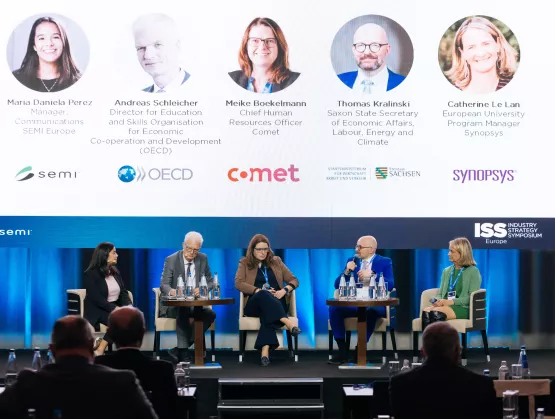
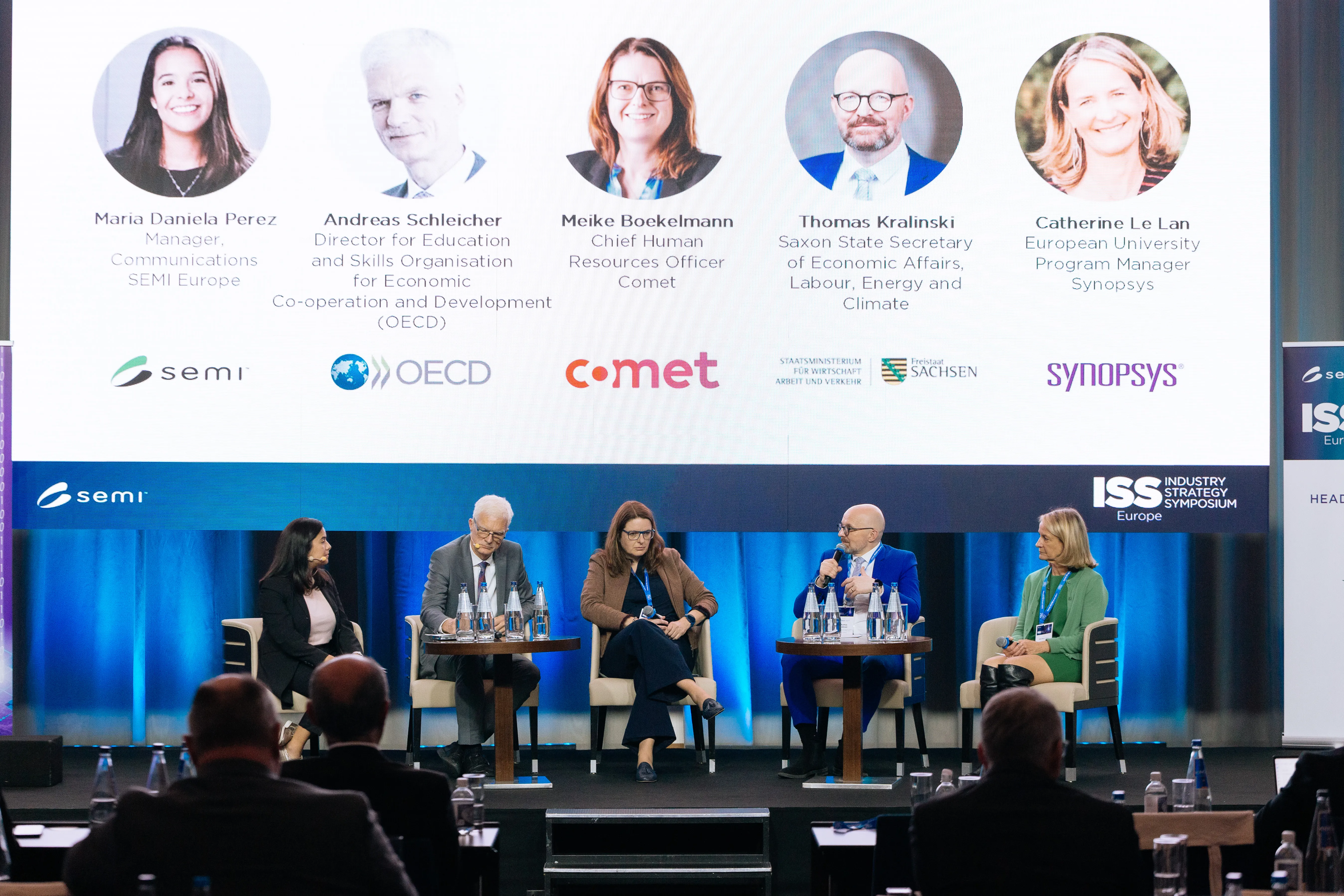
The semiconductor industry lies at the heart of Europe’s technological ambitions, powering breakthroughs in artificial intelligence, quantum computing, and advanced manufacturing. However, as the industry expands rapidly to meet surging global demand, the need for highly skilled workers is outpacing supply. According to the recently published ECSA Skills Strategy, Europe must train and hire tens of thousands of skilled professionals by 2030 to remain globally competitive. Without a robust and inclusive talent pipeline, the region’s independence in critical technologies might be at risk.At this year’s Industry Strategy Symposium Europe (ISS Europe) held in March, a panel discussion moderated by Maria Daniela Perez from SEMI Europe, brought together industry leaders and experts to explore solutions to this challenge. The discussion centered on how emerging technologies are reshaping the workforce, the role of education in preparing future professionals, and strategies for attracting and retaining diverse talent – all critical to ensuring sustainable workforce development in the semiconductor industry.Tackling Talent Acquisition and RetentionCatherine Le Lan, European University Program Manager from Synopsys, drew a direct connection between technological disruption and workforce challenges. “AI is driving unprecedented changes, and hardware is at the heart of the AI revolution,” said Le Lan. As the industry invests in new methodologies, leading-edge technologies, and innovative products, the demand for updated skillsets continues to outpace supply. This places a dual burden on companies – who must hire for both today’s and tomorrow’s skills – and on the education sector, which is expected to rapidly adapt.Meike Boekelmann, Chief of Human Resources at Comet, highlighted that the challenge is not just about attracting talent from within the semiconductor field – it is also about standing out in a crowded talent market. “We are not only competing within our industry for talent. We’re also competing against other industries: automotive, consumer electronics, and AI,” said Boekelmann. To succeed, companies must go beyond traditional incentives and offer meaningful, forward-looking career experiences. “Primarily what I see is that they’re really asking for creating an impact and also a sense of belonging… so they want to see what’s the outcome,” she explained. “There are more people leaving the labor market than entering the labor market,” added Thomas Kralinski from the Saxon State Secretary of Economic Affairs, Labour, Energy and Climate. “We need to think about immigration, family-work integration, and training.” His comments underscore the need for a holistic workforce strategy – one that not only fills immediate vacancies, but also strengthens the broader ecosystem through inclusive policies, targeted reskilling, and long-term demographic planning.Fostering Industry-Academia SynergyAs the industry evolves, so must its workforce. Andreas Schleicher, Director for Education and Skills at the OECD, made a stark observation. “There’s one thing worse than losing people – and that is to keep them and not upskill them.” He warned that the current pace of technological change demands far more than one-time training; it requires a culture of continuous learning. “Neither the industry nor the education sector has the capacity for upskilling and reskilling,” he noted, pointing out that while Europe performs well in early education, adult learning remains insufficient. “The incidence and intensity of upskilling and reskilling is so far out of what we will need.” Without scalable, lifelong learning systems, even experienced professionals risk being left behind.Building on this idea of future-readiness, Thomas Kralinski noted: “Do you know what kind of fab is going to be open in 10 years’ time or what startup is going to be founded in 10 years’ time? You probably don’t. But everybody who’s working there or will work there is born already – and is probably in school or at the university.” He underscored the need for steady investment in teachers, training systems, and educational infrastructure – not just to meet today’s demand but to ensure Europe’s long-term competitiveness.To truly inspire the next generation, Schleicher pointed to visibility as a vital factor. “You cannot be what you cannot see.” Without relatable role models or a clear understanding of how their interests connect to meaningful careers, young people – especially underrepresented students – often overlook STEM pathways. Schleicher described how even small actions, like industry professionals visiting schools to explain their work, can have a lasting impact. “You can bring someone from the semiconductors industry to speak to students and help them understand, for example, what’s in a mobile phone and that they can actually create tomorrow’s mobile phone.” That kind of engagement, he argued, helps “build dreams” and makes technology tangible, exciting, and inclusive.AI: An Enabler, Not a ThreatPanel moderator Maria Daniela Perez raised a critical question about the evolving role of AI in the workforce. Acknowledging the widespread concern that AI could lead to job displacement, she challenged the panel to consider a different perspective. How can AI be leveraged to broaden and accelerate the talent pipeline rather than replace it? In response, the panelists emphasized that AI is not a disruptor but an accelerator. Rather than eliminating jobs, AI-driven tools enhance productivity by automating repetitive tasks, freeing professionals to focus on innovation, problem-solving, and high-value work. Catherine Le Lan provided a compelling example, explaining how AI-powered electronic design automation (EDA) tools are enabling engineers to push the boundaries of technological advancement. She referred to a university study that compared two groups of students – one with access to AI tools and one without. “They found out that those AI tools helped to improve productivity and also helped to improve skills of the students,” she said. “The student who had used AI tools had better skills than the one who hadn’t used AI tools… because they had been able to focus on the high-level skills, and they got rid of the low-level skills.” Her remarks underscored how AI, when integrated into education, can accelerate both efficiency and learning outcomes.Collaboration: The Key to Sustainable Workforce DevelopmentAddressing the workforce challenge requires cross-sector collaboration among industry, academia, and policymakers. There is a shared responsibility to invest in long-term education strategies, develop structured training initiatives, and create an ecosystem where talent can thrive. This is precisely the mission of two SEMI Europe-led initiatives.The European Chips Skills Academy (ECSA) and the European Chips Diversity Alliance (ECDA) are playing a critical role in shaping Europe’s semiconductor workforce. ECSA is driving efforts to align education and training with industry needs, ensuring that both students and professionals are equipped with the technical expertise and practical experience required for the sector’s future. Meanwhile, ECDA focuses on building a more inclusive semiconductor workforce across the industry. By creating opportunities for underrepresented groups, ECDA is ensuring that the industry benefits from a broad talent pool.Securing Europe’s Semiconductor FutureIn her closing remarks, Maria Daniela Perez brought the discussion full circle, emphasizing that addressing the semiconductor talent gap requires collective ownership: “In the end, it ends up being all about collaboration,” said Perez. From engaging technology users to amplifying the industry’s visibility, to aligning with academia and policymakers, the path forward depends on shared action. By fostering this ecosystem-wide commitment – and investing in the people behind the progress – Europe can bridge the talent gap and shape a resilient, inclusive, and globally competitive semiconductor workforce.SEMI ContactKartikey Srivastava, Senior Specialist, CommunicationsEmail: [email protected]
Read More
The Rising Stars: 20 Under 30 blog series celebrates the brightest young leaders shaping the future of the semiconductor industry. These exceptional individuals have earned the SEMI Europe 20 Under 30 Award for making a remarkable impact across the supply chain—whether in engineering, sales, marketing, or R D. Nominations for the 2025 20 Under 30 Award are now open, providing the opportunity to recognize and honor the next wave of industry trailblazers.The series spotlights these rising stars for their career achievements, commitment to innovation, leadership skills, and dedication to driving both business success and community growth.Follow their inspiring journeys and discover how they are thriving and paving the way for future generations in the semiconductor world.Introducing Mariusz Grabowski: Lead Design Engineer at Cadence Design SystemsMariusz Grabowski, a 2023 20 Under 30 award recipient at the age of 24. He is now a Lead Design Engineer at Cadence Design Systems, Inc., where he’s been making strides in digital systems design for nearly three years. Prior to this role, he gained valuable experience as an FPGA Design and Verification Engineer at Aldec Inc. Grabowski holds a master’s degree with distinction in automation and robotics from AGH University of Science and Technology in Krakow, Poland. During his academic career, he was an active member of both the Avader and Integra Scientific Groups. He also achieved recognition at events like DASIP 2023 and in the International FPGA Hackathon, where he and his team earned 2nd and 3rd place. He is currently also pursuing a postgraduate degree in Project Management at SGH Warsaw School of Economics. SEMI: What inspired you to join the semiconductor industry? Grabowski: I have always been fascinated by the fundamental workings of advanced systems and that curiosity led me to pursue a career in the semiconductor industry. As a digital design engineer, it is exciting for me to contribute to the creation of such large and sophisticated architectures from basic building blocks. Now, I’m proud to be a part of Cadence Design Systems, where I can work on the cutting-edge designs with some of the most talented and hard-working engineers. Grabowski and his team at the awards ceremony at FPGA Hackathon 2023SEMI: How did your early experiences and education shape your career path?Grabowski: During my studies, I had the opportunity to work on hands-on projects with an FPGA platform, which led me to my first job as an FPGA design and verification engineer. That experience gave me a broader perspective on the industry’s scale and reinforced my passion for tackling challenges, learning and growing in this field.Grabowski presenting his paper at the DASIP 2023 ConferenceSEMI: Can you share a professional accomplishment you’re most proud of, and explain why it’s significant to you? Grabowski: For me, it is successfully balancing full-time studies with work. It was a challenging experience, but it provided invaluable opportunities to grow my skills and gain hands-on experience. During that time, I completed numerous projects, participated in scientific conferences and industry events like DASIP 2023, and even earned 2nd and 3rd place in the International FPGA Hackathon. These achievements reinforced my passion for the field and my ability to thrive under pressure. SEMI: As a young professional in the industry, what is your greatest challenge? Grabowski: One of the biggest challenges is navigating the complexity of large-scale projects, where seamless coordination between multiple teams across the globe is crucial. As someone still early in my career, gaining the experience to manage the cross-functional aspects of a project while ensuring my own contributions are technically sound has been both demanding and rewarding.Grabowski at the Discussion Panel on Industry Career Perspectives at DATE 2024 ConferenceSEMI: What advice would you give to younger generations aspiring to make an impact in this industry?Grabowski: The sheer amount of information and complexity in the industry can feel overwhelming. It is essential to embrace curiosity and continuous learning, but it is also crucial to recognize that you can’t do everything alone. My advice is to find your area of expertise and collaborate with others; teamwork is key to bringing impactful projects to life. Cadence’s Design Team in Warsaw, Poland Manager Jacek Rosiak—3rd from the leftSEMI: How do you envision future work environments? Grabowski: I envision future work environments as places where technology fosters creativity and collaboration, diversity is celebrated, and flexibility and work-life balance are prioritized. These environments will empower employees to perform at their best while feeling supported and valued. I am proud to be a part of Cadence Design Systems, where I feel that these values are strongly cultivated. SEMI: What impact has the 20 Under 30 Award had on your career? Grabowski: Receiving the 20 Under 30 Award was an incredible validation of the hard work I’ve put into my role. It gave me a confidence boost, affirming that I am on the right path and capable of making meaningful contributions to my company and the broader semiconductor industry. It also brought significant recognition, which opens up numerous opportunities.Following 20 Under 30 JourneysMariusz Grabowski’s journey in the semiconductor industry highlights the power of dedication, curiosity, and continuous learning. From his early experiences with FPGA platforms to his significant accomplishments in both academia and industry, Grabowski is a true example of how passion and hard work can drive meaningful contributions. As a young professional, his insights offer valuable inspiration for the next generation of engineers eager to make their mark in this ever-evolving field. With a bright future ahead, Grabowski is sure to continue influencing the world of technology, one innovative project at a time.The Rising Stars: 20 Under 30 blog series celebrates the exceptional talent and leadership driving the future of the semiconductor industry. Each of the young innovators honored is excelling in their respective fields while shaping the landscape of technology and business with their visionary approaches and dedication. Their stories exemplify the remarkable achievements and unwavering commitment that define the next generation of industry leaders. The series is intended to inspire and motivate future professionals to pursue their passions and embrace the opportunities within this dynamic industry. Stay tuned for more stories of rising stars who are paving the way for continued growth and innovation in the semiconductor world.Learn more about the SEMI Europe 20 Under 30 Award and the recipients honored at SEMICON Europa. SEMI ContactMaria Daniela Perez, Communications ManagerEmail: [email protected]
Read More
The Rising Stars: 20 Under 30 blog series celebrates the brightest young leaders shaping the future of the semiconductor industry. These exceptional individuals have earned the SEMI Europe 20 Under 30 Award for making a remarkable impact across the supply chain—whether in engineering, sales, marketing, or R D. The series spotlights these rising stars for their career achievements, commitment to innovation, leadership skills, and dedication to driving both business success and community growth.Follow their inspiring journeys and discover how they are thriving and paving the way for future generations in the semiconductor world.Introducing Raphael Hardegger: Product Manager Advanced Products at VATRaphael Hardegger is a Product Manager at VAT, where he leads the development of innovative atomic layer deposition (ALD) valve technology. Starting his career in 2009 as a design engineer apprentice at VAT, Raphael has since gained diverse experience, including entrepreneurial ventures and a role in MedTech. Today, he focuses on shaping product strategy, aligning solutions with customer needs, and driving impactful advancements in the semiconductor industry.SEMI: What inspired you to join the semiconductor industry? Hardegger: I joined the semiconductor industry, and VAT in particular, at the young age of 15. Back then, I started as a design engineer in VAT’s apprenticeship program. Growing up in the beautiful VAT region, my entry into the industry was somewhat by chance – but I’m incredibly glad it happened! After gaining foundational knowledge at VAT, I pursued studies in mechanical engineering, worked in various other roles and companies, and then completed a master’s in business innovation. About 3.5 years ago, the semiconductor industry pulled me back in, and I haven’t looked back since. What keeps me excited about VAT and the industry as a whole is its sheer complexity. Every day, we have the opportunity to innovate with small components that have a significant impact on a huge industry. It’s such a multifaceted field that I’m confident I’ll continue learning something new every day for the rest of my career.SEMI: How did your early experiences and education shape your career path?Hardegger: In Switzerland, the apprenticeship model uses a results-oriented work style from an early age. The lessons I learned during my four years as an apprentice at VAT continue to influence my daily work life. The mechanical foundation I built during that time remains a tremendous asset in my career. When combined with my studies in systems engineering and business innovation, this foundation has allowed me to make a meaningful impact both at VAT and within the broader industry.SEMI: Can you share a professional accomplishment you’re most proud of, and explain why it’s significant to you? Raphael Hardegger in the VAT office of San Jose, California, USA, holding the new product he worked on.Hardegger: When I rejoined VAT as a product manager, I was given the opportunity to manage a new product that wasn’t even on the market yet. This product was a key part of VAT’s strategy to outpace market growth by expanding into new product segments beyond our core offerings. I had the privilege of collaborating with some of VAT’s most talented engineers, who developed an incredible product. Together, we learned a great deal through our initial interactions with customers, refining the product to meet stringent requirements. This year, we successfully qualified the product for use in the industry’s most challenging semiconductor processes. It’s a testament to how dedication, customer-focused engineering and exceptional teamwork can make a significant impact. What makes me proud is not just working on innovative concepts, but creating products that truly excite our customers and contribute to meaningful growth for VAT.SEMI: As a young professional in the industry, what is your greatest challenge? Hardegger: I turned 30 this year, so I suspect I was one of the oldest 20 under 30 winners last year. One challenge I’ve faced — not only in this industry, but across others — is impatience. As a young professional with high aspirations, it’s easy to feel that things aren’t moving fast enough. We often expect early promotions, annual salary increases, and quick recognition for our efforts. What changed my perception on this was a conversation with a senior manager at VAT shortly after I joined. I asked him what steps I should take to move closer to my next career goal, such as earning a management position. His response was simple and direct: Focus on making an impact in your current role. Build a strong track record and demonstrate your skills. Everything else will follow. I took his advice, and I'm glad I did. No, I didn't get promoted immediately, but I learned the value of patience, doing my best every day, and finding satisfaction in the process.Career progression isn’t just about motivation and talent — it’s also about timing and aligning with the business needs. Being impatient or pushing for premature career moves can often backfire, leaving you in a worse position than before. By focusing on making a genuine impact and building a solid track record, you create a strong foundation for a fulfilling and sustainable career.SEMI: What advice would you give to younger generations aspiring to make an impact in this industry?Hardegger: You're in a great place — right where you need to be. Be curious and explore as much of the semiconductor industry as you can. During my training as a design engineer, I wasn't deeply involved in understanding the customer applications our valves were serving. My focus was primarily on developing vacuum valves based on product management requirements and manufacturing needs. Since I returned, I've learned the importance of understanding what our customers truly need and translating those needs into product requirements.This shift has not only helped me and the team create better products, but also made the work much more enjoyable! While I'd still like to deepen my understanding of customers' processes, it's already fascinating to learn more about their goals and see how our products can make a real difference. If I could go back to my apprenticeship or just starting this industry, my advice to myself — and to anyone starting out — would be to stay as curious as possible. Take every opportunity to learn what customers are trying to achieve with the products you help create. That curiosity will guide you to make a meaningful impact.SEMI: How do you envision future work environments? Hardegger: To me, having a clear customer focus in every aspect of a company's efforts is essential. At the end of the day, someone needs to want to buy our products for us to remain profitable and continue to grow. That’s why maintaining a customer-centric approach in all aspects of product development and management is critical. At the same time, the people who work in such companies need to be happy and fulfilled to create great products. I appreciate the recent trends we’re seeing to improve the corporate culture, such as embracing hybrid working models. These approaches provide a healthy balance between in-office collaboration and focused work from home, helping employees maintain productivity and well-being.SEMI: What impact has the 20 Under 30 Award had on your career? Hardegger: While I deeply appreciate the recognition that comes with such awards, I believe my career should ultimately be defined by the impact I make in my field. That said, I do hope the award inspires other young professionals to explore this exciting industry and build meaningful careers here! Following 20 Under 30 JourneysRaphael Hardegger’s journey in the semiconductor industry is a testament to the power of curiosity, dedication, and a customer-centric approach. From his early days as a design engineer apprentice to his current leadership in product innovation, Raphael continues to drive meaningful change at VAT Group. His story inspires young professionals to embrace continuous learning, focus on making a real impact, and contribute to the growth and success of the semiconductor industry.The Rising Stars: 20 Under 30 blog series celebrates the exceptional talent and leadership driving the future of the semiconductor industry. Each of the young innovators honored is excelling in their respective fields while shaping the landscape of technology and business with their visionary approaches and dedication. Their stories exemplify the remarkable achievements and unwavering commitment that define the next generation of industry leaders. The series is intended to inspire and motivate future professionals to pursue their passions and embrace the opportunities within this dynamic industry. Stay tuned for more stories of rising stars who are paving the way for continued growth and innovation in the semiconductor world.Learn more about the SEMI Europe 20 Under 30 Award and the recipients honored at SEMICON Europa. SEMI ContactMaria Daniela Perez, Communications ManagerEmail: [email protected]
Read More
As the demand for more powerful and efficient chips continues to grow, and the pace of semiconductor manufacturing in Arizona rapidly expands, so does the need for a highly skilled workforce capable of meeting these challenges. The SEMI Foundation’s SEMI Career and Apprenticeship Network (SCAN) Arizona Team is committed to building a robust workforce pipeline through strategic partnerships and initiatives that connect industry to education. These initiatives include fostering science, technology, engineering, and math (STEM) enthusiasm in K-12 (kindergarten through high school) classrooms to creating earn-and-learn opportunities through apprenticeships and collaborations with leading semiconductor companies. The Foundation’s Arizona team has coordinated key events and initiatives in the state that showcase a holistic approach to addressing workforce challenges, many of which could be expanded and replicated throughout the US and even globally.Arizona SciTech STEM and Innovation Summit: Fostering STEM Enthusiasm The Arizona SciTech STEM and Innovation Summit has long been a hub of innovation, offering students, educators, and the community an immersive experience in STEM. This year’s summit was no exception. Showcasing hands-on activities, workshops, and demonstrations, the event connected STEM industries with Arizona's next generation of talent.The SEMI Foundation Arizona team led activities and sessions demonstrating the Foundation’s work with educators and workforce experts to explore how semiconductor curricula can be integrated into classrooms. Through engaging workshops featuring SEMI Foundation High Tech U Micro:bit STEM kits and Baltu Technologies, and a panel discussion with educators talking about the importance of industry in the classroom, participants explored exciting careers and how to introduce industry opportunities to students. These interactions emphasized the real-world applications of classroom learning, showing the path to careers in high-tech industries.Teachers students participate in a hands-on Micro:bit STEM Kits workshop during AZ SciTech STEM and Innovation Summit held on October 22, 2024. Panelists discuss the future of the semiconductor industry incorporated into students’ education. From left to right: Dee Pinkston (Chicanos por la Causa), Raquel Diaz (Trevor G. Browne High school), Rachna Mathur (ASU prep, ASU, STEMology), Kenneth Mims (Science Prep Academy Neurodiversity Education Research Center). Apprenticeship 101: A Guide to Workforce ReadinessIn a landscape where technical skills are increasingly critical, the Apprenticeship 101 workshop provided a crucial introduction to the benefits of how earn-and-learn programs are transforming careers in semiconductors and beyond. Hosted by: Arizona Commerce AuthorityArizona@Work SEMI Foundation Federal/State Apprenticeship Developer Scott EllsworthSEMI Foundation SCAN Arizona team The City of Phoenix This event gave attendees an overview of apprenticeship opportunities in fields like semiconductors and advanced manufacturing.Participants learned how these programs build bridges between education and employment, offering both practical experience and a clear path to career advancement. A notable highlight was the emphasis on underrepresented groups, showcasing how apprenticeships can empower individuals to succeed in high-demand fields.Panelists highlighting pathways to careers in semiconductors with a focus on earn-and-learn opportunities. From left to right: Nick Irigoyen (SEMI Foundation), Michael Rosas (Arizona Commerce Authority), Scott Ellsworth (SEMI Foundation), Joan Bueno (Arizona Apprenticeship Office), James A. Montoya (ARIZONA@WORK), Stephanie Varela (City of Phoenix) Apprenticeship 101 Panelists. From Left to Right: Nick Irigoyen (SEMI Foundation), Scott Ellsworth (SEMI Foundation), Joan Bueno (Arizona Apprenticeship Office), Stephanie Varela (City of Phoenix), Perla DeBaggis (SEMI Foundation), James A. Montoya (ARIZONA@WORK) Intel Apprenticeship Program Support: A Step Toward Workforce Expansion Intel’s apprenticeship announcement signaled a transformative step for Arizona’s tech industry. With a focus on diversity and inclusion, Intel’s initiative aims to recruit participants from all backgrounds, ensuring a broad and equitable talent pool. Their current cohort of apprenticeships started with 9 women from the Fresh Start Foundation. The team worked with Arizona@Work representative Stephanie Varela to provide the apprentices with an overview session of the workforce innovation and opportunity act resources available to them. These kinds of resources provide alignment and improvement of employment, training, and education programs to promote individual growth. By investing in the workforce of tomorrow, Intel underscored its commitment to Arizona’s economic growth and technological leadership.Intel apprentices Gabriella Medina and Laura Jabalera are paving the way for women in the industry. Learn more about their inspiring journey here. TSMC Apprenticeship Announcement: Driving Innovation and InclusionSimilarly, TSMC’s apprenticeship program launched on November 19, 2024, bringing excitement and opportunity to the state. The program offers specialized training for individuals seeking careers in semiconductor manufacturing, a vital industry for Arizona’s economy.TSMC’s announcement emphasized collaboration with educational institutions, including community colleges and universities, to ensure apprentices receive both technical training and academic support. TSMC Arizona is investing more than $5 million in this program representing on-the-job training hours and education tuition support for its apprentice employees.The SEMI Foundation SCAN Arizona team joins TSMC apprentices on November 19, 2024 to celebrate the launch of TSMC's groundbreaking apprenticeship programs. Trevor G. Browne High School AET Assembly: Inspiring Young InnovatorsAt Trevor G. Browne High School, the Advanced Engineering and Technology (AET) Assembly served as a rallying point for students interested in high-tech careers. The SEMI Foundation Arizona Team joined their assembly to celebrate the potential of Arizona’s youth, sharing stories of innovation and success in the semiconductor sector.Students gained valuable insights into the industry’s evolving landscape, learning about the impact semiconductors have in cutting-edge technologies and career pathways in engineering and manufacturing. The assembly highlighted the importance of programs like SCAN-AZ and other local initiatives happening in 2025, which aim to bridge the gap between classroom learning and real-world opportunities.Micro:bit Competition: Sparking Innovation in Arizona's ClassroomsThe launch of SEMI Foundation - Arizona’s first Micro:bit Competition is bringing creativity and technology together in K-12 classrooms statewide! Designed to inspire innovation, this competition challenges students to use Micro:bit to develop projects that showcase their technical skills and imagination.From robotics to sustainability solutions, students are exploring real-world applications of STEM through hands-on projects. With categories like Innovation in Education and Creative Arts, the competition encourages participants to think outside the box. This initiative not only highlights the SEMI Foundation’s commitment to STEM education but also fosters the next generation of problem solvers and innovators. The Micro:bit Competition is more than just a contest—it’s a stepping stone for students to explore their potential in high-tech industries.Stay tuned as we celebrate the incredible projects and the bright young minds behind them!ASU Preparatory South Elementary, Grades 3-6 Teacher Michael Grant (Left) receiving his Micro:bit STEM kits for his participating classroom from Perla DeBaggis SEMI Foundation (Right)The SEMI Foundation’s efforts in Arizona exemplify the power of strategic partnerships and innovative programs to build a stronger, more diverse pipeline for the semiconductor workforce. By engaging educators, students, and industry leaders, we are creating pathways that connect education to employment, fostering a future-ready workforce. These initiatives serve as a blueprint for workforce development that can be adapted and scaled nationwide, empowering communities to thrive in the evolving high-tech economy. The SEMI Foundation is thrilled to continue this momentum and expand our impact even further in 2025! Co-Author Perla DeBaggis is the Senior Specialist for Career and Industry Awareness at the SEMI Foundation, focusing on bridging the gap between education and industry. Co-Author Nick Irigoyen is the Project Manager for Project Manager, Workforce Development Apprenticeships at the SEMI Foundation, focusing on initiatives aimed at strengthening the semiconductor talent pipeline in Arizona.
Read More
The Rising Stars: 20 Under 30 blog series celebrates the brightest young leaders shaping the future of the semiconductor industry. These exceptional individuals have earned the SEMI Europe 20 Under 30 Award for making a remarkable impact across the supply chain—whether in engineering, sales, marketing, or R D. The series spotlights these rising stars for their career achievements, commitment to innovation, leadership skills, and dedication to driving both business success and community growth.Follow their inspiring journeys, and discover how they are thriving and paving the way for future generations in the semiconductor world.Introducing Marieke Vermeulen: Product Quality Assurance Engineer at MelexisMarieke Vermeulen's journey into the semiconductor industry is a testament to curiosity, adaptability, and self-driven learning. With a background in classical philology, her entry into Melexis as a customer quality technician was unexpected, yet she quickly embraced the challenges of the industry. Through her commitment to growth and innovation, Marieke has risen to the role of Product Engineer, demonstrating leadership and a passion for continuous improvement. Her contributions, particularly in product ownership and driving business growth, highlight her as a dynamic force within Melexis, embodying both technical excellence and a collaborative spirit.SEMI: What inspired you to join the semiconductor industry? Vermeulen: My entry into the semiconductor industry was actually quite accidental. After completing my master’s degree in classical philology, I was still unsure about which direction I wanted my professional life to take. Then, an opportunity arose to join Melexis as a customer quality technician.I did not have anyone in my immediate circle with experience in the industry, so I entered the field without really knowing what to expect. I had only a vague idea of what a semiconductor company did. However, from those early days onwards, I have not looked back. It is my love of knowledge and the desire for a deeper understanding that continues to drive me in my role within Melexis’s quality department. During my literature studies, I was motivated by the idea that there is no absolute, uncontestable truth. Meaning will change with time and place. This perspective aligns closely with the mindset of the semiconductor industry. With new inventions and concepts constantly emerging, the industry is always evolving. We must challenge what we believe to be true yesterday and adapt to the discoveries and advancements for today.So, while there was no direct inspiration that led me to join, more of a stumble into the field, I have since developed a deep respect for how the industry operates. I In particular, I respect how people in the industry do not hesitate to question in order to keep pushing the boundaries of innovation.SEMI: How did your early experiences and education shape your career path?Vermeulen: There was no direct experience. During my school years, STEM was just beginning to earn its place in my educational framework, and we were only introduced to the basic principles. Fortunately, this has changed significantly since then. However, my background hasn’t held me back, in fact, quite the opposite.One main principle from my studies stands out: in language, nothing is set in stone. There is no single truth, no single solution and no single voice. At its heart, language is shaped by human interaction. My studies taught me to think critically and to understand that there is always more than one answer to a question. This approach directly influences the way we work in the product quality department. Our goal is to develop and produce products that meet a customer’s needs as closely as possible. But it is a continuous process and very rarely a straight line. We learn from our past experience to improve the next iteration, again and again. We regularly consult with our peers to gather different ideas, and we listen to the industry to understand where the needs are. Then, we translate those insights into an effective solution.SEMI: Can you share a professional accomplishment you’re most proud of, and explain why it’s significant to you?Vermeulen: Our products go through two main stages in their lifecycle: development and production. As a product engineer, I am responsible during the production stage. However, before we reach this point, there is a transition period where the development and production teams come together to prepare the product for the best possible launch. This period is often hectic, but it clearly demonstrates how much of a team effort our products represent. Every team member understands their role and works towards the collective goal. Being part of such a diverse team and seeing our products succeed is always a thrill for me. While the products are made with metals, silicon, and other elements, it is the human factor that truly brings them to life. The very first spark is always the idea to create. SEMI: As a young professional in the industry, what is your greatest challenge? Vermeulen: As a young woman in STEM, the most obvious answer is that I have to prove myself more than my male colleagues or more experienced peers. However, at Melexis, I have found strong support in overcoming this challenge. Our voices are heard, and we are an active and valued part of our teams. We can express our ideas freely, knowing they will be considered just as seriously as anyone else’s. I can only hope this trend continues throughout the industry.SEMI: What advice would you give to younger generations aspiring to make an impact in this industry?Vermeulen: To those who are unsure if STEM is truly for them, I would say: We need engineers, but we also need dreamers to bring the ideas to life. We need designers and coders who can make the device function, but we also need people who can communicate these concepts to the world. Moreover, we need educators who can inspire and teach the next generations. There is a place for many different minds within the industry, so I encourage you to step in this direction. I’m sure you will find a place.And for those inspired by the semiconductor world and are sure this is where they want to be: don’t be afraid to look beyond the industry. Listen to those around you and take their ideas to heart. Be the inventor for those who cannot bring ideas to life, and offer solutions to those who feel stuck.Cooperation has made our industry great, and it is essential for building a strong foundation moving forward. SEMI: How do you envision future work environments?Vermeulen: The past few years have demonstrated how advanced technology has made the world much smaller. With just a click of a button, a camera, and a microphone, we can connect to the world, ignoring the constrains of time, space and borders. This accessibility opens the door for many more people to enter the industry from all around the globe. A hybrid and flexible work environment enhances this even further, accommodating those who might face physical or logistical restrictions. We need to continue on this path. By embracing diversity, we allow new ideas to emerge at the intersection of different minds. Why exclude a brilliant mind simply because they are on the other side of the continent? Why overlook someone whose mother tongue differs from yours when we can find a common language?At Melexis, we already welcome many different cultures, and it is amazing to see how vibrant this makes our offices. New team members bring their own experiences and blend them with ours. Just as alloys often retain characteristics of their base metals, these newly melded ideas will enrich our collective innovation.SEMI: What impact has the 20 Under 30 Award had on your career? Vermeulen: The award has connected me with wonderful peers and highlighted how we all strive to improve the industry, each in our own way and from our unique areas of expertise. It also has provided me an opportunity to demonstrate that the industry is welcoming to a variety of experiences and is willing to invest in its people. The goal was to foster connections, and it has truly jumpstarted this for me. Following 20 Under 30 JourneysMarieke Vermeulen's story is an inspiring example of how passion for learning and a willingness to embrace new challenges can lead to remarkable success. From her unexpected entry into the semiconductor industry to her achievements as a Product Engineer at Melexis, she has consistently demonstrated leadership, innovation, and dedication. Her journey highlights the importance of curiosity and adaptability in driving both personal and professional growth, making her a role model for others in the industry.The Rising Stars: 20 Under 30 blog series celebrates the exceptional talent and leadership driving the future of the semiconductor industry. Each of the young innovators honored is excelling in their respective fields while shaping the landscape of technology and business with their visionary approaches and dedication. Their stories exemplify the remarkable achievements and unwavering commitment that define the next generation of industry leaders. The series is intended to inspire and motivate future professionals to pursue their passions and embrace the opportunities within this dynamic industry. Stay tuned for more stories of rising stars who are paving the way for continued growth and innovation in the semiconductor world.Learn more about the SEMI Europe 20 Under 30 Award and the recipients honored at SEMICON Europa. For more information contact Maria Daniela Perez at [email protected] Daniela Perez is Communications Manager at SEMI Europe.
Read More
The Rising Stars: 20 Under 30 blog series celebrates the brightest young leaders shaping the future of the semiconductor industry. These exceptional individuals have earned the SEMI Europe 20 Under 30 Award for making a remarkable impact across the supply chain—whether in engineering, sales, marketing, or R D. The series spotlights these rising stars for their career achievements, commitment to innovation, leadership skills, and dedication to driving both business success and community growth.Follow their inspiring journeys, and discover how they are thriving and paving the way for future generations in the semiconductor world.Introducing Kai Hahn: Project Manager R D at Comet, Industrial X-Ray Systems DivisionKai Hahn’s journey began when he joined the company as a bachelor’s thesis student. His early drive and exceptional contributions quickly set him apart, earning him a role as a cooperative student while simultaneously serving as a "Change Manager." In this capacity, Hahn led high-impact business excellence initiatives, overseeing cross-functional projects at the executive level. Now, as a Project Manager in R D, Hahn leads agile teams developing cutting-edge automated inspection solutions. His leadership, marked by a commitment to innovation, collaboration, and customer satisfaction, drives both personal and organizational growth, making him a standout in the semiconductor industry.SEMI: What inspired you to join the semiconductor industry? Hahn: I didn't actively choose the semiconductor industry; rather, I grew into it together with our brands Comet Yxlon Dragonfly. Beyond the pioneering spirit our X-Ray System division has, what excites me the most is our direct connection to semiconductors. From turning off your morning alarm to driving to work, staying connected with friends and family, or watching a sports game on TV — semiconductors are everywhere and shape our daily lives. Working in this industry is both exciting and challenging. Every day, I look forward to tackling new projects that push the boundaries of innovation. But what inspires me the most is the transformation that our division is undergoing. We are continuously adapting our processes and procedures to meet the growing demands of the market and our customers. Being part of this dynamic evolution is rewarding and exhilarating. SEMI: How did your early experiences and education shape your career path?Hahn: With my degree in business and engineering, I chose a program that covered a wide range of subjects. While I gained knowledge from a broad field, by the end of my bachelor's degree, I realized I lacked practical experience and a clear direction for my career.Joining Comet as an intern during my final year helped me anchor my career path. I decided to pursue my master's degree while working part-time for the company. This decision allowed me to gain relevant professional experience early on and apply the knowledge from my studies directly to real-world challenges. SEMI: Can you share a professional accomplishment you’re most proud of, and explain why it’s significant to you?Hahn: Combining the strengths of Comet Yxlon’s software and Dragonfly’s AI powerhouse — I was the dedicated project manager to support the global technological cooperation of our two software environments to accelerate the 3D IC go to market challenge. My goal was to facilitate methodological collaboration to develop new software inspection workflows for the semiconductor industry.Looking back, I am proud of what we accomplished: building a cohesive team from different cultures, working across time zones, adapting to various working styles, and successfully launching our first product.SEMI: As a young professional in the industry, what is your greatest challenge? Hahn: One of the biggest challenges is the rapid pace of industry change. For development teams, this means shorter development cycles and closer collaboration with international customers. For young professionals, it's essential to maintain a continuous learning cycle to stay current and develop the ability to work effectively across diverse cultures. This ensures we understand the different customer requirements and can implement them effectively.SEMI: What advice would you give to younger generations aspiring to make an impact in this industry?Hahn: Gaining practical experience alongside your studies as early as possible is crucial. Internships or working student positions offer valuable opportunities, and sometimes, it’s beneficial to proactively reach out to companies, even if no vacancies are advertised. For me, these experiences made my studies more engaging by linking theory to real-world applications and deepening my understanding of the subjects. Beyond acquiring practical skills and expanding your network, this approach helps clarify the career path you want to pursue after graduation.SEMI: How do you envision future work environments? Hahn: Working from home has increasingly become the standard in recent years. While offering many advantages, a significant challenge for companies is maintaining a sense of community. This is easier to achieve when employees are physically present, as in-person interactions tend to be more impactful. It raises the question of how companies can foster a strong sense of community and belonging in the long term without requiring workers to be physically present in the office.SEMI: What impact has the 20 Under 30 Award had on your career? Hahn: Overall, this recognition has been both a validation of my efforts and a source of inspiration to continue pushing the boundaries in my work. Beyond the recognition of my contributions and achievements, the award provided a platform to engage with like-minded young professionals beyond my usual network.Following 20 Under 30 JourneysKai Hahn’s journey from a bachelor’s student to a leading Project Manager at Comet, Industrial X-Ray Division is a testament to his dedication, innovation, and leadership in the semiconductor industry. His achievements in integrating teams, developing cutting-edge solutions, and driving organizational transformation highlight the significant impact young professionals can make. Hahn’s story is an inspiring example of how passion and perseverance can lead to remarkable accomplishments. As he continues to push boundaries and shape the future, SEMI looks forward to seeing the continued influence of his work in the semiconductor field.The Rising Stars: 20 Under 30 blog series celebrates the exceptional talent and leadership driving the future of the semiconductor industry. Each of the young innovators honored is not only excelling in their respective fields but also shaping the landscape of technology and business with their visionary approaches and dedication. Their stories exemplify the remarkable achievements and unwavering commitment that define the next generation of industry leaders. The series is intended to inspire and motivate future professionals to pursue their passions and embrace the opportunities within this dynamic industry. Stay tuned for more stories of rising stars who are paving the way for continued growth and innovation in the semiconductor world.Learn more about the SEMI Europe 20 Under 30 Award and the recipients honored at SEMICON Europa 2023. Nominations for the 20 Under 30 program at SEMICON Europa 2024 close on September 30.Maria Daniela Perez is Communications Manager at SEMI Europe.
Read More