Two overarching business issues face the industry today – how to responsibly create sustainability strategies and how to find and train strong workers. Both issues are challenging management teams to think creatively and change fundamental processes of their business.
SEMI members are looking to SEMI to provide industry-wide guidance and support to share best practices, build grassroots processes, and guidebooks that both large and small companies can use to improve their efforts.
Attend this webinar to get an update and insights, with a special tilt toward the materials industry, on how you can incorporate SEMI guidebooks for hiring qualified and diverse DEI and Veterans hiring, as well as other efforts toward strengthening your workforce. On the Sustainability topic, hear how the industry is coming together to help each other in Scope 1,2, and 3 measuring and reporting mechanisms, and more!
Overcoming Worker Shortages and Enhancing Sustainability
10:00 am - 11:00 am
Off
Add to Calendar Disabled
America/Los_Angeles
This webinar unveiled the details of the 5-year $5M per year ($25M total) Positioning, Navigation, and Timing Phase 2 (PNT2) funded R&D Program starting in 2022. The formal Request for Proposals (RFP) is expected on June 6, 2022.
The PNT2 program follows a successful Phase 1 program that saw 10 projects funded over 2 years starting in 2020 ($6M total funding).
Watch to learn how you can respond to the PNT2 RFP. Topics covered:
technical thrust area
cost share requirements
proposal instructions
team requirements
Q&A
About the Speaker
Dr. Paul Carey joined SEMI in April 2021 and is responsible for managing the MSIG PNT program, the MSIG webinars, and supporting the Manufacturing, Device and Reliability Workgroups and all MSIG related conferences and events. Before joining SEMI, he worked at X-Ray imaging backplane supplier and FOA member, dpiX, in various positions starting in 2003. He was the process, equipment, and yield manager in their Gen 2.5 Palo Alto glass Fab until 2012 when dpiX moved its production to a new Gen 4.5 Fab in Colorado Springs. He rejoined dpiX in 2014 and worked on the flexible substrate equipment selection team and later became their first business development manager in 2018 when dpiX announced its Foundry Business.
Earlier positions were held at Applied Materials where he helped develop a laser annealing system for semiconductor shallow junctions and silicides, and start-up company FlexICs, where he was a co-founder and VP of Engineering. FlexICs developed low temperature thin film transistor (TFT) fabrication technology relevant to flexible OLED displays now used in cellphones. Prior to founding FlexICs, he worked as a staff scientist and program leader at Lawrence Livermore National Laboratory where his group initially developed the low temperature polysilicon-on-plastic TFT technology.
Dr. Carey received a double major BS from UC Berkeley in Electrical Engineering and Computer Science (EECS) and Materials Science and Engineering (MSE). He received his MS in EECS from UC Berkeley and Ph.D. in MSE from Stanford University.
Watch this webinar to learn more about this opportunity to propose for R&D Funding to advance the state-of-the-art in positioning, navigation and timing (PNT) technology.
2022 Focused Solicitation Webinar for PNT2
Positioning, Navigation and Timing Phase 2 Project Funding and Proposal Instructions
8:00 am - 9:00 am
Off
Add to Calendar Disabled
America/Los_Angeles
FlexTech Master Class #12 Additive and Robotics
SEMI Members: $49
Use your corporate email address during log in to be recognized as a SEMI Member.
Non-Members: $99
Students: Free
Contact Gity Samadi ([email protected]) with a picture of your student ID to receive your discount code.
Current electromechanical design practice is predicated on the exercise of expert-level judgement through an interactive and iterative design and fabrication process that requires skilled humans at every step. This approach doesn't scale because it is labor intensive, and therefore biases robots toward longer-lasting, more general-purpose (and expensive) designs in order to justify the development and fabrication costs. Though appropriate in some cases, not all applications are well-served by this process. Many robot applications might be better-served by rapidly-built special-purpose or single-use machines, but automated design and fabrication tools will be critical to control costs, accelerate development, and be responsive to application needs.
The overall goal is to make electromechanical systems (robots) so easy to design and fabricate that we could enable people who are application experts (but not necessarily robot design or fabrication experts) to rapidly create robots for their specific needs. Although Roboticists claim that robots are for dull, dirty, and dangerous use-cases, the community predominantly uses them for the first case, because robots are currently expensive and slow to build, which makes them precious. If we change this situation by making robots practically disposable/expendable, we could potentially re-imagine many robot use-cases.
With this future in mind, new design tools to convert high-level requirements specified by non-experts into concrete electromechanical design plans, new materials that leverage multi-material additive manufacturing, and new multi-material 3D printing methods to automatically convert these designs into functional robots are being developed. During this course we will describe these various areas of current study as well as possible applications for 3D printed robotics.
About the Instructors
Dr. Robert MacCurdy is an assistant professor in Mechanical Engineering at the University of Colorado Boulder where he leads the Matter Assembly Computation Lab (MACLab). He is developing new algorithms, materials, and fabrication tools to automatically design and manufacture electromechanical systems, with a focus on robotics. Rob did his PhD work with Hod Lipson at Cornell University and his postdoctoral work at MIT with Daniela Rus. He holds a B.A. in Physics from Ithaca College, a B.S. in Electrical Engineering from Cornell University, and an M.S. and PhD in Mechanical Engineering from Cornell University.
Dr Gregory Whiting is an Associate Professor in the Department of Mechanical Engineering and a member of the Materials Science and Engineering Program at the University of Colorado Boulder (CU). At CU he leads the Boulder Experimental Electronics and Manufacturing (BEEM) Laboratory, which is focused on studying and developing materials, processes and devices for novel and additively manufactured electronic systems used in applications including distributed sensing (particularly for environmental monitoring) and robotics. Prior to joining CU in 2017, Greg was a member of the Rapid Evaluation Team at Google[X] and managed the Novel Electronics Area at the Palo Alto Research Center. He received a PhD from Cambridge University in 2007 and a BS from UC Berkeley in 2002.
Fabricating robots using additive design and manufacturing methods has the potential to transform when, where and how the advantages of robots are brought to bear.
Take this FlexTech Master Class to explore the potential applications and how to use new design tools, 3D printing methods and multi-material additive manufacturing to convert ideas into solid electromechanical robotic systems.
Led by Dr. Robert MacCurdy and Prof. Greg Whiting of the University of Colorado, Boulder, this course will provide you new ways to approach manufacturing, additive design and the role of robots.
A New Approach to Robotics: Designing for Additive Manufacturing
Flexible Hybrid and Printed Electronics Master Class
10:00 am - 12:00 pm
Off
Add to Calendar Disabled
America/Los_Angeles
Printed, flexible and hybrid electronics (PFHE) enable emerging applications in IoT, medical sensing, smart packaging and labels, structural monitoring, human wellness and performance, monitors, extreme environment, and display applications. At the same time, PFHE approaches can also provide faster product development, prototyping, and manufacturing cycles for single, custom items to large areas, low-cost mass manufacturing scales in additive, more sustainable pathways for electronics as they become even more ubiquitous in our world.
This class covers the basics of PFHE processing technologies, from dispensing and inkjet printing to roll to roll printing and coating, along with the materials and supplementary thermal processes that enable these processes.
Next-generation technologies are also explored for high-resolution PFHE and additive manufacturing that could provide new form factors and manufacturing approaches and exceed the performance of conventionally-processed electronics. These technologies also have impact on unmet heterogeneous integration possibilities in fields ranging from electronics to optics and quantum materials.
Example PFHE and printed energy materials topics:
Dispensing and 3D printing of electronic and energy materials
Aerosol printing
High resolution inkjet printing and coating
Screen Printing
Flexographic Printing
Gravure printing
Slot die coating
Convective, IR and photonic thermal processing
Microcontact printing and embossing
Submicron electrohydrodynamic printing
About the Instructor
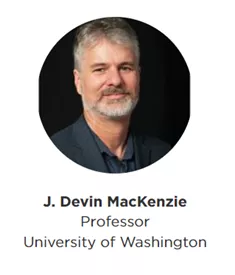
J. Devin MacKenzie is the Washington Research Foundation Professor of Clean Energy and an Associate Professor of Materials Science and Engineering and Mechanical Engineering at UW. Dr. MacKenzie is also the director of the Washington Clean Energy Testbeds, an open access laboratory with world-class printed electronics, flexible electronics and energy device fabrication and testing capabilities.
Dr. MacKenzie has 20 years of experience co-founding or leading startups in novel fabrication including as a co-founder and CEO of Imprint Energy commercializing printed flexible batteries, as CTO of Add-Vision, a printed flexible OLED display company that was acquired in 2011, and as a VP at Kovio, an MIT spin out, leading printed Si RF device integration. Devin also co-founded the world’s first printed electronics company, Plastic Logic Ltd. in the United Kingdom. Previously Dr. MacKenzie was a researcher at AT&T Bell Laboratories.
Prior to entering the start-up world, Devin was a postdoc in Physics at the University of Cambridge and earned PhD, MS, and BS degrees from the University of Florida and MIT. Dr. MacKenzie has over 220 patents and publications and has been cited over 10,000 times.
This is the 11th Flexible Electronics Master Class. This and previous classes are available On Demand. See the full list.
The field of printed, flexible and hybrid electronics (PFHE) and energy devices provides pathways to new products and form factors for ultralight, thin, flexible and large-area electronics, sensors, processing, I/O, photonics, and power. Indeed, flexible electronics is quietly transforming packages and enabling radical changes in electronics from the inside out.
In this Flexible Electronics Experts Class (recorded on June 22, 2022) you will learn the basics and the next generation improvements in processing technologies, from dispensing and inkjet printing to roll-to-roll printing and coating. The instructor also addressed the latest materials and updates on supplementary thermal processing needs.
This course is appropriate for newcomers to the field, as well as those looking to rapidly gain information on the latest materials and equipment advancements.
Dr. Chris Huang currently serves as Deputy Project Manager for MEMS & Photonics Engineering at ASE. In his current role, he is focused on MEMS and optical sensor packaging in automotive applications, as well as smart sensor and smart system technologies for emerging applications. Since joining ASE over four years ago, he has gained significant experience in the fields of sensor and actuator design, MEMS device and wafer manufacturing, and sensor packaging, including extensive work in the field of microfabrication of piezoresistive MEMS sensors and wafer bonding process.
Prior to ASE, he worked as an R&D Technologist at Asia Pacific Microsystems Inc., a pure-play MEMS foundry, where he managed the development of standard fabrication platforms for customizable sensors, such as MEMS optical actuators/piezoresistive pressure and force sensors. Dr. Huang has published over thirty-five technical SCI journal papers and international conference papers and holds eight worldwide patents on MEMS and sensor applications. Dr. Huang received his Ph.D. from National Tsing Hua University, Taiwan, where he also completed work as a post-doctoral researcher within the Department of Power Mechanical Engineering
The incredible power of MEMS technology and sensor applications has been elevated onto the world stage in recent times, given how they help enable technology and applications that are literally changing lives, from health to transportation, from robotics to AI, from edge to cloud, and from 5G to beyond.
During this SEMI MSIG webinar, ASE’s Dr. Chris Huang will elaborate and put a spotlight on the role that packaging technologies play and the innovation evolving to progress miniaturization and integration, both key attributes within the MEMS and Sensors arena.
He will present unique approaches required to overcome MEMS and Sensor packaging and test challenges and achieve highest possible performance when responding and interacting with any external or environmental stimuli.
Q&A will follow.
MSIG Webinar: MEMS & Sensors Packaging for Limitless Applications
Third in the Foundry, Dicing & Packaging Series
8:00 am - 9:00 am
Off
Add to Calendar Disabled
America/Los_Angeles
About us - Honeywell helps organizations solve the world's most complex challenges in automation, the future of aviation and energy transition. As a trusted partner, we provide actionable solutions and innovation through our Aerospace Technologies, Building Automation, Energy and Sustainability Solutions, and Industrial Automation business segments – powered by our Honeywell Forge software – that help make the world smarter, safer and more sustainable.
Honeywell 12001 Highway 55 Plymouth, MN55441 United States
Day 1 - Wednesday, April 30th, 2025: Golf Event & Welcome Reception
11:00 am
-
5:30 pm
FOA Golf Event - Rush Creek Golf Club
Address:
Rush Creek Golf Club
7801 County Road 101
Maple Grove, MN 55311
6:00 pm
-
9:00 pm
Welcome Reception - Rush Creek Golf Club
Address:
Rush Creek Golf Club
7801 County Road 101
Maple Grove, MN 55311
Day 2 - Thursday, May 1st, 2025: Membership Meetings
8:00 am
-
11:30 am
Device Maker Morning Meeting
Honeywell
11:30 am
-
1:00 pm
Lunch
All FOA members: Honeywell
1:00 pm
-
5:50 pm
General Meeting
All FOA members: Honeywell
General Session to include: (Welcome remarks, charitable contribution, guest speakers, case studies and an overview of the facility)
3:35 pm
-
5:05 pm
DM Fab Tour & SP Window Tour
Fab Tour will be a longer tour than the window tour
5:05 pm
-
5:50 pm
DM Feedback Discussion
6:15 pm
-
9:00 pm
Evening Social - WhirlyBall
Address:
WhirlyBall - Maple Grove
13644 80th Circle North
Maple Grove, MN 55369
The FOA Q2 Membership Meeting will occur at Honeywell in Plymouth, MN. Plan now to attend and experience this impressive facility.
Please plan to join us for golf and networking on Day 1 and a full day of meetings on Day 2. See below for the agenda.
Additional meeting details will be posted here as soon as they are confirmed. FOA is a member-only event. For questions on membership or anything FOA-related contact us at [email protected].
8:00 am - 10:00 pm
Off
Add to Calendar2025-04-30 08:00:002025-05-01 22:00:00FOA Q2 Fab MeetingThe FOA Q2 Membership Meeting will occur at Honeywell in Plymouth, MN. Plan now to attend and experience this impressive facility.Please plan to join us for golf and networking on Day 1 and a full day of meetings on Day 2. See below for the agenda.Additional meeting details will be posted here as soon as they are confirmed. FOA is a member-only event. For questions on membership or anything FOA-related contact us at [email protected] - Contact Karim Somani at [email protected]Honeywell 12001 Highway 55 Plymouth, MN 55441 United StatesSEMI.org[email protected]America/Los_Angelespublic
The evening begins at the Keysight office, Thursday, April 28, at 5:00pm with the ESD Alliance Annual Membership Meeting. You'll get an overview of the past year's activities and discover what's in store for 2022. The meeting flows directly into a Welcome Reception followed by the powerful CEO Outlook.
Enjoy a lively, nourishing networking reception that kicks off the CEO Outlook panel. Hear influential executives from Arm | Cadence | D2S | Keysight | Siemens share their insights on the current and future state of the design and semiconductor industries. Ed Sperling, Editor-in-Chief of Semiconductor Engineering, moderates a spirited, robust discussion, including an audience Q&A.
Registration | FREE for ESD Alliance and SEMI members | Non-member: $49 per person.
Keysight 5301 Stevens Creek Blvd. Building 5 Santa Clara, CA95051 United States
5:00 pm
-
5:30 pm
Bob Smith
Executive Director
ESD Alliance
ESD Alliance Annual Membership Meeting
Overview of ESD Alliance activities for 2021 and plans for 2022.
5:30 pm
-
6:30 pm
Networking
Enjoy light food and refreshments as you network with your peers.
6:30 pm
-
7:30 pm
Ed Sperling | Moderator
Editor in Chief
Semiconductor Engineering
Moderator & Panelists
Hear panelists from ARM | CADENCE | D2S | Keysight | Siemens EDA discuss the state of the electronic system design industry as well as their views of the outlook for the coming years.
ESD Alliance and co-sponsor Keysight welcome you to join us in-person for the Annual ESDA Membership Meeting & CEO Outlook at the Keysight office in Santa Clara, CA.
ESDA CEO Outlook & Membership Meeting
April 28, 2022
5:00 PM - 7:30 PM
5:00 pm - 7:30 pm
Off
Add to Calendar2022-04-28 17:00:002022-04-28 19:30:00ESDA CEO Outlook & Membership MeetingESD Alliance and co-sponsor Keysight welcome you to join us in-person for the Annual ESDA Membership Meeting & CEO Outlook at the Keysight office in Santa Clara, CA.Keysight 5301 Stevens Creek Blvd. Building 5 Santa Clara, CA 95051 United StatesSEMI.org[email protected]America/Los_Angelespublic
America/Los_Angeles
FOA Summit (Q1 Collaborative Forum)
Registration
This meeting is open for FOA Members Only.
If you are interested in becoming a member, please contact Karim Somani - [email protected].
Join your fellow members for the FOA Annual Collaborative Forum - live and in-person - for informative new case studies, networking, dinners, and exhibits.
8:00 am - 10:00 pm
Off
Add to Calendar2026-02-24 08:00:002026-02-26 22:00:00FOA Summit (Q1 Collaborative Forum)Join your fellow members for the FOA Annual Collaborative Forum - live and in-person - for informative new case studies, networking, dinners, and exhibits. This event is for FOA Members only. To learn more about becoming an FOA member, email [email protected]. Visit the FOA web pages.Austin Marriott South 4415 South IH-35 Austin, TX 78744 United StatesSEMI.org[email protected]America/Chicagopublic
America/Chicago



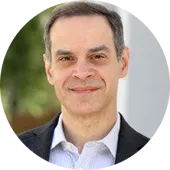
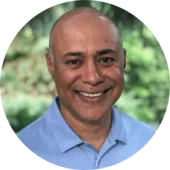

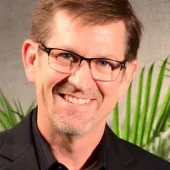

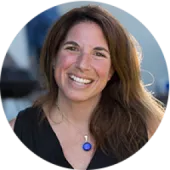




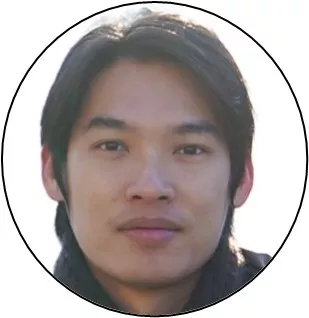 Dr. Chris Huang currently serves as Deputy Project Manager for MEMS & Photonics Engineering at ASE. In his current role, he is focused on MEMS and optical sensor packaging in automotive applications, as well as smart sensor and smart system technologies for emerging applications. Since joining ASE over four years ago, he has gained significant experience in the fields of sensor and actuator design, MEMS device and wafer manufacturing, and sensor packaging, including extensive work in the field of microfabrication of piezoresistive MEMS sensors and wafer bonding process.