

Free Registration
Explore Digital Exhibit Booths and Get Started!
As a testament to the strategic importance of our industry, the fabs continue to produce. Many parts of our industry supply chain became officially designated as essential businesses.
SEMICON West Exhibitors are taking the opportunity to position their organizations as lead solution providers as the industry transforms once again.
Discover how simple it is to exhibit in the digital world. Leverage a flexible virtual space to customize your exhibitor booth, offer on-demand content, and provide chat forums, for optimal prospect engagement. You'll get:
- Convenience—Manage From Anywhere
- Easy Lead Generation Solutions
- Broad Attendee Reach
- A Unique Way to Showcase Your Company
Visit our Exhibitor Directory to see who will exhibit at Virtual SEMICON West 2020.
Contact Shane Poblete
+1.202.847.5983
[email protected]
United States
Wednesday, June 24, 2020
1:00 pm
-
1:10 pm

Sandy Chapin, CEM
Director of Americas Operations, SEMI
Attendee Virtual Experience
Take a tour of the Virtual SEMICON West rooms to visualize how easy attendees will navigate to the Expo Hall.
1:10 pm
-
1:25 pm
Shane Poblete
Sr. Manager, Business Development, SEMI
Exhibitor’s Booth
Preview how the virtual booths with look and interact during show days and the post event period to mid-September.
1:25 pm
-
1:35 pm
Stephen Leach
Expo Operations, SEMI
Lead Generation
Review the lead generation opportunities that exist pre-show, at-show, and post-show.
1:35 pm
-
2:00 pm
Q&A
Virtual SEMICON West—Exhibitor Webinar
Join us online to get a sneak peek of exhibiting digitally and discover the value of becoming an exhibitor at Virtual SEMICON West 2020.

Event format
Registration
Registration Includes:
- Live access to four (4) webinars
- Post-webinar access to recordings and presentations
Member Price: $199
Non-Member Price: $399
Non-Member Price for Government, Military, and Academia: $249
(Contact Michelle Fabiano at [email protected] for discount code. Must have a valid .gov, .mil or .edu email address)
United States
Wednesday, August 26, 2020

10:05 am
-
10:30 am

Michael Kirby, PhD
Professor, Colorado State University
Some Geometric Tools for the Analysis of Time-series Data to Elucidate the Host Response to Infection
Recent developments in both biological data acquisition and analysis provide new opportunities for data driven modeling of the health state of an organism. In this talk we explore geometric ideas and manifold learning methods for analyzing such data sets. In one example we examine the evolution of temperature patterns generated by telemetry data collected from healthy and infected Collaborative Cross mice challenged with Salmonella typhimurium. We visualize the interruption in circadian patterns and characterize the severity of infection within three days after exposure. This work was conducted in collaboration with David Threadgill and Helena Andrews-Polymenis of Texas A&M University.
10:30 am
-
10:55 am

Kevin Zhao
Co-Founder & CTO, Harmonize Health
Predictive & Prescriptive Analytics for Digital Health
A key to making digital care delivery easier is to augment biometric monitoring with predictive & prescriptive analytics. Optimized algorithms can efficiently tie together fragmented data sources, such as wearables & medical records. More importantly, they lay the foundation for intuitive workflows that guide clinical staff through effective triage & medical interventions.
10:55 am
-
11:20 am

Mary Clare McCorry, PhD
Director of Technology and Process Development, ARMI | BioFabUSA
Bringing Sensors and Automation to Manufacturing of Replacement Tissue and Organs
The tissue engineered medical product (TEMP) industry has been held back historically by a lack of scalability, challenges with product consistency, and high final product costs. Over the last three decades, cutting edge science in the space has continued to advance while manufacturing tools and equipment specific to the needs of the field has lagged behind in development. To propel TEMP technologies into the commercial market, automation and sensor technologies need to be developed and implemented to make practical the scalable, consistent, cost-effective manufacturing of TEMPs. BioFabUSA is program of the Advanced Regenerative Manufacturing Institute (ARMI), an industry-led, member-driven, non-profit organization funded by the department of defense dedicated manufacturing of engineered tissues and tissue-related technologies. ARMI | BioFabUSA coordinates technology development projects that crosscut manufacturing areas in raw materials, automation, equipment, software, sensors and measurement tools, data management, preservation, processes, quality systems, and other pertinent elements of tissue engineered medical product manufacturing. With the combined effort of the ARMI membership, ARMI drives impactful advanced research and development activities that enable the development of a scalable, modular, automated and closed platform for the fabrication of TEMPs. This platform relies heavily on the integration of sensors and automation necessary to advance manufacturing technology development and demonstration, paving the way for compressed timelines for process design and development, as well as commercial, GMP-compliant manufacturing.
11:20 am
-
11:45 am

Andreas Caduff
Industry Advisory Board Member, ETH Zürich
Using Digital Biomarkers and Diagnostics Towards More Holistic Health Mapping
With an ongoing shift from managing disease towards the inclusion of maintaining health the world has seen the rise of increasingly sophisticated body monitoring and analytics. These tools are aiming to empower the individual to better navigate own health. They are also seeking to generate powerful insights towards the detection of subclinical symptoms or processes via existing and novel digital biomarkers. In that context a topic that is receiving increasing interest is the modulation of human physiology around an individual ‘baseline’ in everyday life and the dynamic around that. Today, there is more and more fully contextualised and truly long-term physiological data becoming available that allows deeper insights into the response of the human body to our behaviour, exposed environment or health events per se. This provides real life data in an unprecedented way. Insights emerging from that are fascinating, sometimes surprising and increasingly instructional.
This talk will provide an overview of where we have come from, what we are currently at and what’s unfolding in the convergence of different domains towards such more integrated and holistic health mapping and new opportunities in real word evidence driven clinical trials.
11:45 am
-
12:00 pm
Q&A
SMART MedTech Virtual Workshop #4
Automation, Augmentation, and AI
WORKSHOP SERIES OVERVIEW

Event format
Registration
Registration Includes:
- Live access to four (4) webinars
- Post-webinar access to recordings and presentations
Member Price: $199
Non-Member Price: $399
Non-Member Price for Government, Military, and Academia: $249
(Contact Michelle Fabiano at [email protected] for discount code. Must have a valid .gov, .mil or .edu email address)
United States
Wednesday, August 12, 2020
10:00 am
-
10:05 am
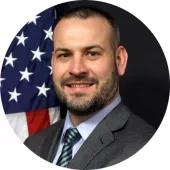
Matthew J. Dalton
Research Chemist, Program Manager, Air Force Research Laboratory, Materials and Manufacturing Directorate
Moderator
10:05 am
-
10:30 am
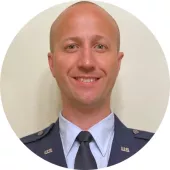
Lt Col Derek Sorensen
Medical Director of Initial In-Flight Care Division, Air Force Research Laboratory, United States Air Force School of Aerospace Medicine
Challenges and Needs in the En Route Care and Aeromedical Evacuation Mission
The United States has executed Aeromedical Evacuation (AE) for over 100 years. Originating with the first crude attempts at evacuating patients on biplanes in 1918. AE has evolved directly in line with the medical capabilities and advancements in aircraft. AE now provides the United States Air Force (USAF) with a global reach on various cargo and refueling aircraft. In the late 1980s, specialized Critical Care Air Transport Teams (CCATTs) developed to augment AE crews. CCATTs drastically changed medical care provided in our nation’s battlespaces. They allowed for more agile far forward casualty care and forged the En Route Care (ERC) systems. ERC is the backbone ensuring the survival of our wounded warriors and bringing them home to their families. The challenges abound when functioning in the ERC system to include the environment, the available resources, and personnel limitations. Exploring and targeting these challenge areas will continue to allow ERC to keep in step with our ever‐changing mission requirements and progress the impressive legacy of bringing heroes home.
10:30 am
-
10:55 am

Zheng Yan, PhD
Assistant Professor, Mechanical and Aerospace Engineering; Biomedical, Biological and Chemical Engineering, University of Missouri, Columbia
Exploring the Easy and Cost-Effective Fabrication of Multifunctional On-Skin Wearable Biomedical Devices
As compared to conventional, rigid, bulky physiological monitoring tools, emerging onskin wearable biomedical devices are ultrathin, lightweight, and small footprint and can find wide applications in point of care diagnostics because of their easy deployment outside the hospital settings. At present, on-skin wearables are usually fabricated by patterning conventional inorganic materials, novel organic materials, or emerging nanomaterials on continuous (i.e., non-porous) flexible supporting substrates. Consequently, the state-of-the-art on-skin wearables often suffer from expensive precursor materials, costly fabrication facilities, complex fabrication processes, and limited functionalities and disposability. By using widely accessible pencils and papers as the fabrication tools, we have developed a rich variety of cost-effective and disposable on-skin bioelectronic devices, ranging from biophysical sensors and sweat biochemical sensors to thermal stimulators, humidity energy harvesters, and transdermal drug delivery systems. The enabled devices can find wide applications in point of care diagnostics, particularly in low-resource environments owing to their low-cost resources, handy operation, time-saving fabrication, and abundant potential designs. Besides, by using judiciously engineered porous elastomer as supporting substrates, on-skin wearable devices with high breathability and self-cooling capability can be achieved.
10:55 am
-
11:20 am
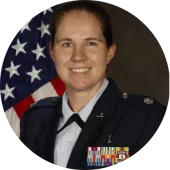
Lt Col Melinda Eaton
Virtual Health Program Manager & Deputy Program Manager for Pharmaceuticals, Devices, and Medical Support Systems, United States DoD Virtual Health Program Management Office
Defense Health Agency Virtual Health Program
An overview of the DHA virtual health program including driving factors, high level requirements, and pathway forward. The presentation will also provide an update on the DoD virtual health COVID-19 response and the value provided to patient care through virtual health.
11:20 am
-
11:45 am

Azar Alizadeh, PhD
Principal Scientist, GE Research
Manufacturing of Disposable Wearable Patient Monitoring Devices
Wireless wearable devices can continuously assess and communicate the condition of patients and are crucial components of the are crucial components of the move towards digital, mobile health monitoring. We envision that widespread adoption of disposable wireless devices has the potential to radically transform care-giving in clinical settings. Implementation of continuous patient monitoring could make practices such as spot-checking patient vital signs during hospitalization obsolete. Furthermore, earlier patient discharge may become possible through earlier and safer patient mobilization enabled by wireless monitoring. In this talk, we will discuss flexible hybrid electronic manufacturing opportunities and challenges to create low cost, high performance wireless sensor systems for patient monitoring. These single use devices will support 3-Lead ECG, reflective SpO2, respiration rate and core body temperature sensing on a continuous basis for 72 hours.
11:45 am
-
12:00 pm
Q&A
SMART MedTech Virtual Workshop #2
En Route (ERC) and Point of Care (POC) Diagnostics
WORKSHOP SERIES OVERVIEW
Event format
Registration
Registration Includes:
- Live access to four (4) webinars
- Post-webinar access to recordings and presentations
Member Price: $199
Non-Member Price: $399
Non-Member Price for Government, Military, and Academia: $249
(Contact Michelle Fabiano at [email protected] for discount code. Must have a valid .gov, .mil or .edu email address)
United States
Wednesday, August 5, 2020
10:00 am
-
10:05 am

Melissa Grupen-Shemansky, PhD
Executive Director FlexTech & NBMC; CTO, SEMI-NBMC
Moderator
10:05 am
-
10:30 am

Cristina Davis, PhD
Professor and Chair, Mechanical and Aerospace Engineering Associate Director, Clinical and Translational Sciences Center, UC Davis
Opportunities and Challenges in Exhaled Breath Analysis
There is an entire field of research dedicated to the chemical analysis of exhaled breath, and the enticing promise of non-invasive medical diagnostics and monitoring. Interestingly, we know that sampling plays a key role in the metabolite content in this complex sample, and biomarker detection and identification in breath may rest on appropriate sampling and analysis protocols. There is also some evidence on how breath chemicals change over time and in response to illness, diet, overall health and exposures. There are also studies that show exogenous drugs measured in breath as well. This talk with highlight our own basic research in this area.
10:30 am
-
10:55 am
Jennifer Martin & Sean Harshman (Co-Presenters)
Air Force Research Laboratory, Airman Systems Directorate
Air Force Biomarker Discovery, Wearable Devices, and the Future of Human Performance Monitoring
Jennifer's Biography | Sean's Biography
Historically, biomarker discovery efforts have focused on developing sensing strategies for disease diagnosis and prognosis. More recently, the Department of Defense has made a significant investment in wearable sensor and data analytics methods to predict physiologic and cognitive detriment with the goal of improving personnel readiness and augmenting human performance. During this presentation, a broad overview of not only biomarker discovery approaches within Air Force Research Laboratories will be provided, but also future trends and technology gaps limiting fielding of wearable devices, outlining the underpinning for potential external collaborations.
10:55 am
-
11:20 am

W. Kenneth Ward, MD
Founder & Board Chair, Pacific Diabetes Technologies
Measuring Metabolic Parameters in the Subcutaneous Interstitium
There are several compounds that interfere with accurate sensing of metabolic analytes in the subcutaneous space, including drugs and endogenous compounds. In addition, when a glucose sensor is exposed to a delivered insulin formulation, there are additional interference issues. Methods of overcoming these threats to accurate sensing will be discussed.
11:20 am
-
11:45 am
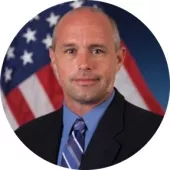
Eric Van Gieson, PhD
Program Manager, DARPA
DARPA’s ECHO Program: Disease Diagnosis Through Host-Response Pathway Understanding
11:45 am
-
12:00 pm
Q&A
SMART MedTech Virtual Workshop #1
From Bio-Markers to Bio-Chemical Sensors
& Physiological Relevancy
WORKSHOP SERIES OVERVIEW
Event format
United States
https://ieee.webex.com/mw3300/mywebex/default.do?nomenu=true&siteurl=ieee&servi…
Technical
Online, Eastern Daylight Time
United States
Registration

Open to All.
Not able to attend? Register anyway. We'll send you a link to the webinar archive so you can view it at your own convenience.





Join SEMI as we try to make sense of the post-Covid-19 global and industry landscape. Experts will share their insights into the current economic crises, geo-political uncertainties specifically US - China trade tensions, and new U.S. export control regulations.
United States
July 1, 2020
8:00 am
-
8:02 am
Heidi Hoffman
Sr. Director, Product Marketing, SEMI
Opening
8:02 am
-
8:10 am
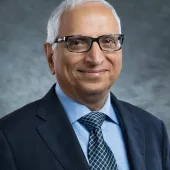
Ajit Manocha
President & CEO, SEMI
Welcome Remarks
8:10 am
-
8:30 am

Ambassador Nicholas Burns
Professor, Harvard Kennedy School
Making Sense of the COVID-19 and Economic Crises for the U.S. and the World
FEATURED SPEAKER
Biography
8:40 am
-
8:50 am

Peter Lichtenbaum
Partner, Covington & Burling
U.S. Export Control Regulations
8:50 am
-
9:10 am

MODERATOR
Joe Pasetti
VP Global Advocacy & Public Policy, SEMI
Roundtable/Q&A
9:10 am
Closing
A SEMI Hosted Webinar


Event format

Part 1: MEMS Sensors
Despite declining smartphone sales and a stagnating automotive market back in 2019, the MEMS industry is still strong.
- Voice personal assistants landed hard, their skills are increasing and leading to the era of the Internet of Voice.
- MEMS microphones are the driving force of this re-evolution being vigorously integrated in smartphones, smart speakers, earbuds, etc.
- Green mobility, safety and ADAS requirements will increase the demand of pressure and inertial MEMS in cars.
However, the aging MEMS market will need some face-lifting such as better software and algorithms leading to better sensor fusion and processing on the edge, in order to extract more juice from the sensors and lead to new use cases or better end-user experience.
Besides, the unforeseen COVID-19 crisis has paralyzed the whole world: from manufacturing sites being closed to logistics and supply chain problems, the effects are strongly felt. Each market has different dynamics, with automotive being the worst hit sector, while medical applications have the most positive outlook.
MEMS market dynamics, the impact of COVID-19 as well as future trends will be presented in the first session.
Part 2: Imaging Sensors
In 2019, CIS market reached $19.3B exceeding 4.6% of total semiconductor sales. This industry is actively driving developments in new pixel designs and 3D semiconductor technologies.
- Demand from mobile devices will keep thriving
- The overall attachment rate for CIS cameras per phone moves towards in average of 3.06 units per phone
- Growth rate for CIS attachment grew to 25% for 2019
- In the consumer space, photography’s decline has bottomed out, while smart home devices and home robotics are providing emerging use-cases.
End of 2019, the CMOS Image Sensors industry went into overheating with a combination of high demand and high prices due to capacity limitations. In automobile domain, CIS is a cornerstone technology in the development of machine sensing, artificial intelligence (AI) powered devices such as in advanced driver assistance system (ADAS) applications. It powers many of the on-going revolutions, in new technical products and new use cases.
The second presentation will give a snapshot of the current status of the CIS industry.
Belgium
5:00 pm
-
5:10 pm

Tim Brosnihan
Executive Director, MSIG, SEMI
Introduction
5:10 pm
-
5:30 pm
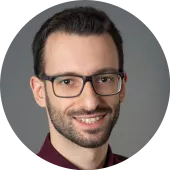
Dimitrios Damianos
Technology & Market Analyst, MEMS, Sensors, Photonics & Imaging, Yole Développement
Speaker Biography
Dimitrios Damianos, PhD joined Yole Développement (Yole) as a Technology and Market Analyst and is working within the Photonics, Sensing & Display division.
Dimitrios is daily working with his team to deliver valuable technology & market reports regarding the imaging industry including photonics & sensors.
After his research on theoretical and experimental quantum optics and laser light generation, Dimitrios pursued a Ph.D. in optical and electrical characterization of dielectric materials on silicon with applications in photovoltaics and image sensors, as well as SOI for microelectronics at Grenoble’s university (France).
5:30 pm
-
5:50 pm

Chenmeijing Liang
Technology & Market Analyst, Imaging, Yole Développement
Speaker Biography
Chenmeijing Liang works as a Technology & Market Analyst within the Photonics, Sensing & Display Division at Yole Développement (Yole).
As part of the Imaging team, Chenmeijing contributes analyses of CIS markets, related technologies and market strategies of the leading semiconductor companies, as well as the quarterly reports.
Prior to Yole, she was engaged in the development of R&D projects: Chenmeijing was a member of Group PSA R&D department where she worked on Vehicle 3D Imaging projects. In addition, she assisted with various technical and commercial projects.
5:50 pm
-
6:00 pm
Q&A and Conclusion
A SEMI Europe Hosted Webinar with Yole Développement

Event format
Results per page
Select