

Abstract
DARPA’s ECHO Program: Disease Diagnosis Through Host-Response Pathway Understanding
Disease diagnosis has traditionally focused on detection of the pathogen or components of diseased tissue, rather than defining the host-response elements that are tightly correlated with specific diseases. The DARPA Epigenetic Characterization and Observation (ECHO) program aims to analyze an individual’s epigenetic “fingerprint” to potentially reveal a detailed history of that individual’s exposure to infectious disease threats, or chemical/radiological agents or precursors. DARPA envisions that the same technology could provide rapid diagnostics for troops who may have been exposed to threat agents or who may be suffering from infections, providing a timely signal to apply effective medical countermeasures.
ECHO technology would work by quickly reading an individual’s epigenome — a part of human biology that helps our body respond to the constantly changing world around us — and identifying the epigenetic signatures indicative of WMD, precursor, or infectious disease exposure. Though a person’s underlying genetic code is stable, life events can leave discernible marks on the genome that modify how genes are expressed. The epigenome is the combination of all such natural modifications, and while epigenetic modifications can register within seconds to minutes, they can potentially imprint the genome for decades, leaving a unique, time-stamped biography of an individual’s exposures. The ECHO system would read someone’s epigenome from a biological sample such as a finger prick or nasal swab, and conduct analysis to reveal possible exposure events even when other physical evidence has been erased. ECHO technology would offer an enormous advantage over state-of-the-art forensic and diagnostic screening technologies as it will identify the type of exposure and when it occurred — all without the need for trace amounts of the threat in the sample. In the context of COVID-19, it is possible that the diagnostic targets identified in the ECHO program can lead to diagnosis that can occur several days before detectable shedding of virus with conventional PCR-based methods.
Program performers will develop new approaches to identifying and characterizing epigenetic signatures from WMD, precursor, or infectious disease exposure events, and create new bioinformatics tools to perform forensic analyses with high sensitivity, specificity, and temporal resolution. They will have to create a device capable of performing multiple molecular analyses and onboard bioinformatics in 30 minutes or less, compared to an average of two days using current laboratory processes. By the end of the program, DARPA’s plans to demonstrate ECHO capabilities in a man-portable device that could be used by an operator in austere settings with only minimal training.
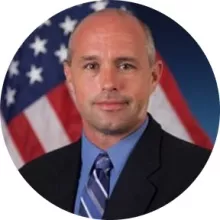
Biography
Dr. Eric Van Gieson joined DARPA as a Program Manager in August 2017 with the goal of using host-based methods to mitigate the impacts of emerging disease threats. He intends to explore epigenetic and real-time monitoring approaches that can dynamically guide healthcare decisions and therapy, and new methods of increasing patient survival in austere environments using intelligent systems partnered with local care providers.
Throughout his career, Dr. Van Gieson has worked with private and interagency government partners to build diagnostic and healthcare solutions. For example, he leveraged those partnerships to develop a novel patient transport system known as the Containerized BioContainment System, a platform that received an “R&D 100” award and is currently in use by the Departments of State and Health and Human Services. He also created a university-based drug development pipeline to accelerate development of therapeutic products for guarding against WMD and emerging disease threats. His work has led to technology that links home-use and point-of-care diagnostics with health surveillance capabilities, especially in resource-limited environments, with the goal of stopping epidemics before they emerge. Dr. Van Gieson has also led technology development and evaluation efforts in diagnostics for the Department of Defense, and has supported major diagnostics acquisition and science and technology programs.
Dr. Van Gieson received his Doctor of Philosophy degree in Biomedical Engineering and a Bachelor of Science degree in Chemical Engineering from the University of Virginia. He has published on topics ranging from genomic analysis to autonomous systems.
He served as the chief judge on the Nokia Sensing XChallenge and as a judge on the QualComm Tricorder XChallenge on behalf of the XPrize Foundation.