

SCC Governing Council Members
(Chair) Shawn Covell is a senior executive with twenty years of experience in the technology industry with leadership roles at Lam Research, Intel, and Qualcomm. She has worked at Lam Research to help the company commit to 100% renewable electricity by 2030 and Net Zero emissions by 2050. She led the creation of company-wide Net Zero working groups and a governance structure; and applied to and received approval from Science Based Target Initiative (SBTi) for their 2025/2030 net zero roadmap.
Shawn brings her experience in setting sustainability goals, building the systems and tools to achieve them, and forging collaborations with our suppliers, customers, regulators and other stakeholders. She looks forward to leading industry level collaborations that require the ability to find common ground, incorporate differing perspectives, and identify pathways to achieving common goals.
(Vice Chair) Fawn Bergen leads Intel Corporation’s Corporate Sustainability Group. In her role, Fawn leads implementation of Intel’s sustainability goals across their manufacturing operations and office facilities around the world, including Intel’s commitments to reach net zero GHG emissions by 2040, 100% renewable electricity by 2030, net positive water by 2030, and zero waste to landfill by 2030.
Fawn’s 25+ years of experience in the environmental field has spanned multiple industries and specialties including air quality engineering, environmental engineering, global strategy and environmental management roles. Prior to leading Intel’s sustainability group, she led the climate change, water stewardship, and corporate air programs globally.
Elena Kocherovsky leads Sustainability Strategy at Applied Materials. Her role focuses on driving implementation and stakeholder engagement to advance Applied's sustainability strategy, including the 2040 Net Zero Playbook. She leads Applied's Net Zero Leadership Council and reports progress on Applied's strategy and milestones to Applied's Executive Leadership Team and Board on a quarterly basis. She oversees sustainability initiatives across the business and is responsible for the delivery of Applied's annual Impact report and associated data. She brings 15 years of experience in sustainability, working with a wide range of companies across sectors to identify and manage the environmental impacts of their operations and supply chains.
Elena looks forward to bringing this breadth of experience to the SEMI SCC and collaborating with peers to drive meaningful progress towards our collective climate goals.
 John Golightly is Vice President, Sustainability|Climate|Global EHS at ASM. John joined ASM in 2012, and has been instrumental in driving its Sustainability programs and results. He has focused his entire career on advancing sustainability and safety, including work at Novellus Systems and in the chemical industry.
In 2021, John presented the idea of a semiconductor industry climate pact to the SEMI Sustainability Advisory Council. He led the working group that then formed the Semiconductor Climate Consortium (SCC), and currently serves as Chair. John is passionate about the importance and power of collaboration in solving sustainability challenges, bringing key stakeholders together, setting the right direction and targets, and finding a common path forward to results. John believes “we have not a moment to waste to protect tomorrow for the next generation, so collaboration is key to making climate progress faster.”
 Frank Bartels is an accomplished executive with 20 years of experience in the chemical industry. In 2021, he was appointed Director of Global Marketing and Product Management for Semiconductor Materials at BASF. In this role, he oversees the portfolio, commercial management, investment, and sustainability activities for BASF's semiconductor business. In line with BASF's corporate mission to "enable our customers' green transformation", Frank spearheaded the sustainability program for its semiconductor unit. He firmly believes that cooperation across the value chain can tackle and overcome the critical hurdles on the road to net zero. As a passionate scientist and speaker, Frank sees innovation and partnership as the levers to reduce carbon emissions, even in Scope 3 with all of its complexity.
"SEMI SCC is the ideal forum to calibrate expectations, agree on targets and standards, and create visibility on feasible options":, notes Frank. He looks forward to "taking industry collaboration to the next level - and jointly creating a lasting legacy for future generations."
Bruce Gall has been part of the semiconductor industry for nearly 20 years. Starting as a Thin Films process engineer at Intel's HVM fabs, to Capital Equipment development and sourcing, to the current role of silicon operations and strategy at Google, his diverse roles have helped to formalize unique perspectives across the entire Semiconductor value chain. He is excited to help bring these experiences and passion to supporting the sustainable growth across our industry.
Bruce believes, "'Action without thought is empty; Thought without action is blind.' We need to collaborate across our industry and chart a collective course to Net Zero. The SCC is an important industry platform that we can leverage to accomplish that goal."
 Ines Sousa is a Senior Sustainability Industry Advisor at Microsoft. Her work focuses on advancing industry-wide harmonization of environmental impact methodologies for cloud IT hardware and driving partnerships to accelerate decarbonization across the value chain.
With two decades of sustainability experience spanning corporate, consulting, and non-profit roles, Ines brings a unique combination of technical, management and advisory expertise across multiple industries. Previously, she led supply chain carbon foot printing, product life cycle assessment (LCA), supplier engagement and circularity initiatives at Google.
She is an enthusiast advocate for global positive impact on people and the planet, with a deep commitment to driving system-level innovation and navigating complexity with dynamic leadership and open collaboration.
Matt Morrison leads climate strategy at Qnity, where he is responsible for developing roadmaps and partnerships to advance decarbonization across our global industry value chains. Matt has over 15 years of experience in the chemical and materials industry, with sustainability leadership roles in business and corporate strategy, customer engagement and reporting. Matt brings expertise in understanding complex challenges, carbon data analysis and life cycle assessment (LCA), and building collaborations that deliver business and sustainability value.
Matt started his career as a research scientist with the U.S. Environmental Protection Agency and remains committed to using science and innovation to create a more sustainable future for our industry and the world.
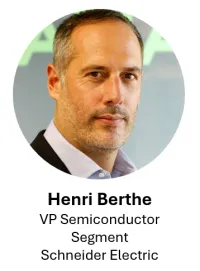
Henri Berthe, a seasoned professional with close to 20 years of experience at Schneider Electric, is at the helm of leading the global Semiconductor Segment. Henri has held various leadership positions within Schneider Electric, including, VP of Universal Enclosures, as VP of Business Development, Energy Automation division and as VP of Digital Energy in the MENA and African regions where he deployed the digital technologies and electrification solutions in the building segment.
With his expertise and vision, Henri is helping to shape the future of the semiconductor industry, paving the way for a more sustainable, digitized, and prosperous tomorrow. With an extensive background in managerial roles across different markets, including buildings and utilities, Henri brings a wealth of expertise to the SCC.
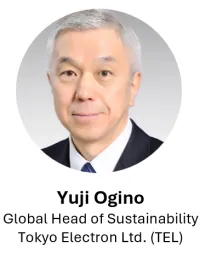
Yuji Ogino has over thirty-five years of experience in the semiconductor industry, has held a number of executive roles at TEL, and is currently Global Head of Sustainability. Yuji continues to contribute to the Semiconductor Climate Consortium (SCC) as a Governing Council member.
“Realizing the critical urgency of climate change, I strongly believe that the SCC will play an even more vital role in tackling the issues we face today and in the future. This will include developing opportunities for the industry to create value through our businesses in a collaborative and progressive manner.”
ROLES & RESPONSIBILITIES
The SCC is currently governed by the SCC Agreement. A Charter and Bylaws committee is in place to replace the SCC Agreement with new governing documents.