China
CAST EMG ESD Alliance FlexTech FOA ITL MSIG SCIS SE&A SiPAT Standards Workforce Development Off Add to Calendar 2021-10-15 00:00:00 2021-10-15 00:00:00 SEMI中国智能制造委员会2021年会议 China SEMI.org [email protected] America/Los_Angeles publicChina
- CAST EMG ESD Alliance FlexTech FOA ITL MSIG SCIS SE&A SiPAT Standards Workforce Development Off Add to Calendar 2021-10-27 00:00:00 2021-10-29 00:00:00 FLEX China 2021| 2021全国柔性印刷电子研讨会 China SEMI.org [email protected] America/Los_Angeles publicREGISTRATION
Complimentary for SEMI Members.
Use your corporate email address during login to be recognized as a SEMI Member.
$99 for Non-Members.
The past 12 months have been among the most challenging in many of our careers. The next 12 maybe even more so. The COVID-19 pandemic created worldwide supply and demand imbalances; this, combined with the decoupling of global supply chains, presents daunting challenges as we work to get the right products to the right places at the right time, and of course at the right price. In a time of economic growth and strong demand, the semiconductor industry is experiencing multiple disruptions: supply shortages, unpredictable delivery times, and increased raw material and shipping costs. For an industry that has perfected just-in-time practices to deliver constant cost reductions, this is uncharted territory. In this webinar, seasoned supply chain experts from semiconductor manufacturing and the materials supply chain will provide us with insights on the current landscape, what to expect in the next 12 months, and how they are positioning their organizations to survive and thrive in this dynamic environment.
United States
Session Introduction
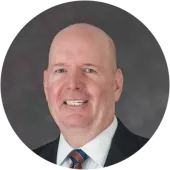
Biography: Phil Marzolf serves as Chief Commercialization Officer for Arieca, where he is responsible for transitioning Arieca’s technology from the laboratory to end market applications. He has over 30 years of experience commercializing new products in the semiconductor and computer technology markets. He was a founding member of nSerial, a SERDES startup that was acquired by Intel in 2001. Phil is an adjunct professor and entrepreneur in residence at Carnegie Mellon University and is an investor and Board member for several early-stage companies. He earned a BSEE from the University of Notre Dame, an MSEE from Santa Clara University, and an MBA from the Wharton School at the University of Pennsylvania.
Biography: Christine Kurek is currently the Sr. Director for the Customer Fulfillment Organization in the Electronics business of Merck KGaA, Darmstadt, Germany. In this Integrated Supply Chain role, Christine is responsible for Customer Service, and Logistics, as well as Process Enablement, functions, Master Data, and Analytics for the Electronics Division. Christine has over 25 years of experience in managing Materials Supply Chains that support the semiconductor industry. She earned a BS degree in Chemistry from Pennsylvania State University, a graduate certificate in Supply Chain Management from the Penn State Smeal College of Business; and, she has achieved certification as an APICS Certified Supply Chain Professional.
Biography: Julie Ply is the Director of Quality Materials at Brewer Science. Julie started her career in the semiconductor industry in 2014 as a Senior Quality Engineer with Brewer Science. Julie’s current responsibilities include oversight of BSI Strategic Supplier Development, Quality Engineering and Quality Control teams. Prior to that she spent 26 years of her career in automotive related manufacturing with an emphasis on process engineering and improvement. She has co-authored several papers for SAE (Society of Automotive Engineers) and TMS (The Minerals, Metals and Materials Society). She is a graduate of University of Missouri – Rolla (now Missouri University of Science and Technology) with a degree in Metallurgical Engineering.
Q&A with Audience Input
EMG Overview & Wrap up

Registration
Member Price: $0
Non-Member Price: $99
Can't attend? Register anyway and receive an archive of this webinar on-demand to watch at your own convenience.
Please send all questions, comments and feedback to: [email protected]
Device scaling has brought about a great increase in the diversity of materials used in semiconductor fabrication. While planar (horizontal) scaling continues to drive great improvements in device density and performance, it has been joined by vertical scaling, adding to the palette of options in the race to develop novel architectures, particularly around device memory.
2DNAND is giving way to 3DNAND, with 3DNAND structures reaching and exceeding 100 layers. This, in turn, creates new challenges for fab equipment, processes, and the materials used to form these novel structures. In this webinar, we will explore trends in material requirements for new generations of device architecture, with special focus on the evolution of 3DNAND devices and the impact of the 3rd dimension on these materials. Mark Thirsk, Managing Partner of Linx Consulting, will address trends impacting the overall materials industry and discuss the significance of 3DNAND to the materials market. He will be followed by Scotten Jones, Founder and President of IC Knowledge, who will review the evolution of 3DNAND devices and the impact of these devices on key materials.
United States
Structure and Evolution of Materials Landscape and Importance of 3DNAND
The continued strong growth of the semiconductor industry has led to increased demand for wafer fab materials. This talk will assess relevant trends impacting key materials segments, overall wafer fab materials landscape. It will also review key suppliers and importance of 3DNAND to the overall materials industry.
The Evolution of 3D NAND and the Impact on Materials
Over 90% of NAND bits shipped today are fabricated with a 3D NAND process. 3D NAND is evolving with structural and material changes that will have significant impact on the material types and usages. 3D NAND has two major approaches in production: Floating Gate, a gate-first process with an oxide/poly memory stack was introduced by Intel-Micron, and continues to be used by Intel with SK Hynix set to take over from Intel. And, Charge Trap, a gate-last process with an oxide/nitride stack is in use at Kioxia, Micron, SK Hynix, Samsung, and others. Charge trap uses tungsten as the replacement word line material after etching out the nitride in the memory stack, whereas Floating gate uses poly that is retained as the word-line from the original memory stack. In addition to these high-level distinctions, changes in the placement of the peripheral CMOS, slot fill, word line and channel materials and others will all impact the materials needs. In this talk I will present the 3D NAND family tree and explore the structural changes by company and time, and the impact on material types and usage.
Q&A + Audience Input
EMG Overview & Wrap up
Questions about the webinar? Contact [email protected]
Semiconductor Components, Instruments, and Subsystems (SCIS) is a SEMI technology community chartered to address process-critical components challenges to meet the demands of high-volume manufacturing (HVM) at advanced process nodes. SCIS brings together all stakeholders that are driving yield improvements through the very last frontier of component and hardware defect reduction.
About The Webinar
Defect prediction and defect source mitigation is critical to enabling high-volume manufacturing at all semiconductor fabs, but especially at advanced process nodes. This program will provide perspectives on:
- Importance of OEM part design, cleaning & refurbishment loops for advanced node high volume manufacturing and designing for zero defects
- The standards gap between cleanliness specs, measurement methods & successful predictive maintenance (PdM) in the Fab and how to enable AI based maintenance scheduling
- Applicability of cleaning techniques vs OEM part designs and mitigating human variability during parts cleaning
- The emerging considerations for parts designed to facilitate cleaning
Who Should Attend
- IDMs, fabs, foundries; fab managers, process engineers
- Semiconductor processing equipment OEMs
- Critical chamber component suppliers
- Semiconductor processing equipment parts clean vendors
- Parts clean metrology service providers
United States
Welcome Remarks & Moderation
Paul Trio, Senior Manager, Strategic Initiatives
SEMI
OEM Perspective on Parts Cleaning - Cleanliness and Hardware Connectivity
Patrick Martin, Business Development, New Markets and Alliances
Applied Materials
Parts Cleaning from Design to Scrap
David Laube, CTO,
Pentagon Technologies
Cleanliness Metrology
Victor Chia, International Expert; Director, Surface Contamination Technologies
Air Liquide / Balazs NanoAnalysis
Product Cleanliness – International Collaboration Initiatives
Max van den Berg, System Architect, Electronics and Assembly, Global Application Engineering
Festo
Q&A and Closing Remarks
This 2.5 hour webinar is offered OnDemand from the SEMI Library.
12:00 am - 12:00 am Off Add to Calendar Disabled
United States
- EMG FOA MSIGThe SEMI Fab Owners Alliance (FOA) Q4 Meeting will be held via a virtual platform to help the FOA community stay connected and continue the good dialogue on keeping our fabs productive with the innovative solutions that members continue to drive even during the pandemic.
The event will take advantage of a unique platform to ensure smooth 1:1 networking, live Q&A, and speaker presentations on the latest business, and technology trends affecting the electronics manufacturing industry.
Want to hear more about Fab Owners Alliance activities? Register for the interest list.
For more information contact Christie Baker at [email protected]
8:00 am - 11:00 am Off Add to Calendar 2020-12-01 08:00:00 2020-12-03 11:00:00 Fab Owners Alliance Q4 meeting The SEMI Fab Owners Alliance (FOA) Q4 Meeting will be held via a virtual platform to help the FOA community stay connected and continue the good dialogue on keeping our fabs productive with the innovative solutions that members continue to drive even during the pandemic. The event will take advantage of a unique platform to ensure smooth 1:1 networking, live Q&A, and speaker presentations on the latest business, and technology trends affecting the electronics manufacturing industry. Want to hear more about Fab Owners Alliance activities? Register for the interest list. For more information contact Christie Baker at [email protected] United States SEMI.org [email protected] America/Los_Angeles public America/Los_Angeles
As technology nodes advance, critical dimensions shrink, materials proliferate, and architectures become more complex. As a result, semiconductor manufacturing processes become increasingly sensitive to supply chain quality, both the chemicals themselves and how they are characterized. Quality standards have moved from parts-per-million and -billion levels to parts-per-trillion even -quadrillion being required to meet today’s process expectations. With hundreds of variables linking materials properties to device defects, how do we identify critical parameters and establish effective methods to measure and control them? This webinar explores this topic, examining the technology and methods being developed to bridge this gap.
United States
Welcome Remarks
Speaker Biography
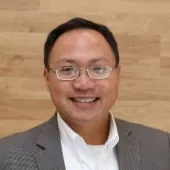
Yusheng (Alvin) Zhou is a Product Marketing Manager in Surfscan & ADE division of KLA. Prior to that, he held various roles in global product management and process engineering for CVD products at Applied Materials. Alvin has a Ph.D. in Materials Science and Engineering and M.S. in Electrical Engineering from Georgia Institute of Technology.
Speaker Biography
Dr. Tim Z Hossain
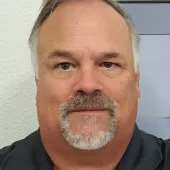
Tim Z. Hossain received a Ph.D. in Chemistry with specialization in nuclear analytical from University of Kentucky in 1982. He worked at Eastman Kodak (1982-1989), Texas Instruments (1989-1991), and was at Cornell University teaching at Nuclear Engineering program (1991-1995), department of Applied Physics. He joined AMD in 1995, and currently serves as Chief Scientist at Cerium Laboratories, an AMD Spin-off Company. Dr. Hossain has broad experience in analytical methodologies, particularly for semiconductor process technology. He discovered the cosmic ray neutron effect on memory chips with borated dielectric. He was selected by IAEA of United Nations for a nuclear technology mission to Saudi Arabia. He is the former secretary/treasurer of American Nuclear Society. Tim has published over 100 papers and holds more than 30 patents to his credit.
Dr. Jim Conner
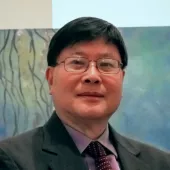
Jim Conner holds a PhD in Materials Science and Engineering from Cornell University and a BSc in Physics from the Massachusetts Institute of Technology. He conducted his doctoral work in thin film growth and characterization at Oak Ridge National Laboratory. He has worked at several semiconductor companies, including Motorola Semiconductor Products Sector, Freescale Semiconductor, Samsung, and Cerium Laboratories. Dr. Conner has specialized in high-resolution electron microscopy, including TEM/STEM and SEM imaging and associated analytical techniques including EDS and EFTEM. He has applied these methods to failure analysis of semiconductors and numerous other materials. He is an author or coauthor on over 40 publications in the field.
Q&A
Closing Remarks
Big data, data mining, data sharing, data transparency, the entire electronics industry is built on data. From device design to the fabs, equipment, and materials that turn design into finished products, the semiconductor industry creates and consumes vast quantities of data. Inside the fab and out, throughout the supply chain, the practice of data sharing through local or offline methods seems increasingly quaint and largely insufficient. The demand for detailed, on-demand, even real-time data is pushing further and further up the supply chain. This challenges suppliers to improve data acquisition and management systems as well as analyze and share data that was once thought to be the crown jewels of intellectual property. In this webinar, you will learn about:
- How the challenges for detailed, on-demand, even real-time data is being met in the fab and supply chain.
- The generation and use of data in fab equipment through the usage of intelligent controls
- Data requirements for advanced fab processing
- How these data requirements are being communicated and addressed up the supply chain.
United States
Introduction
Speaker Biography
Dr. Rathsack is Vice President and Deputy General Manager of Technology and Manufacturing in Tokyo Electron America. His team is responsible for developing advanced equipment and process technologies in lithography track, etch, film deposition and cleans. His team specializes in advanced computational engineering, software applications and data science to develop SMART tools. He has 18 years of semiconductor development experience at Tokyo Electron and Texas Instruments. He is also a Senior Member of Technical Staff (SMTS) who has authored/ co-authored 50 publications and has 30 granted patents. He received his BS in chemical engineering from the University of Illinois/UC and his MS/PhD at the University of Texas/Austin.
Speaker Biography
E. Steve Putna is a Senior Supply Chain Manager at Intel Corporation focused on direct materials and capital equipment. Previously, Steve served in various engineering and supply chain roles inclusive of high-volume manufacturing, development and research spanning multiple Intel technology nodes. Steve additionally served as an Emerging Materials Thrust Director for the Semiconductor Research Corporation. Prior to Intel, Steve earned a PhD from the University of Pennsylvania and a BS from the University of Texas at Austin both in Chemical Engineering.
Q&A
Wrap-up
A SEMI Electronic Materials Group (EMG) Hosted Webinar
Since 2016, the International Technology Roadmap for Devices and Systems (IRDS) has been working together with SEMI on a unifying pre-competitive roadmap to focus and drive innovation. The Heterogeneous Integration Roadmap (HIR) represents an opportunity to combine the efforts of SEMI, other industry groups, and leading-edge manufacturers to re-establish this driving force and outline goals to be met in the era of heterogeneous integration and the challenges that must be overcome in the process.
As a follow on to the Strategic Materials Conference, in this webinar we will explore the HIR itself and issues that arise as new materials and architectures meet to solve integration challenges. The webinar will cover the HIR from the perspective from a semiconductor materials supplier, followed by Jeff Gambino, Senior Process Integration Engineer at ON Semiconductor, who will outline their efforts in this space and the materials issues being addressed from the fab perspective.
If you have any questions about the webinar or having issues registering please email Ayo Kajopaiye - [email protected]
United States
Introduction
Speaker Biography
Dr. Bottoms received a B.S. degree in Physics from Huntington College in Montgomery, Alabama in 1965, and a Ph.D in Solid State from Tulane University in New Orleans in 1969 and is currently Chairman of Third Millennium Test Solutions. He has worked as a faculty member in the department of electrical engineering at Princeton University, manager of Research and Development at Varian Associates, founding President of the Semiconductor Equipment Group of Varian Associates and general Partner of Patricof & Co. Ventures. He has served as Chairman and CEO of many companies both public and private.
Dr. Bottoms has also served in a number of Government Advisory positions including Chairman of the Board on Assessment for NIST and a member of the Technical Advisory Committee on export controls for the US Commerce Department.
Dr. Bottoms has participated in the start up and growth of many companies through his venture capital activity and through his own work as an entrepreneur. These include companies in a wide range of industries.
Emeritus Member of the Board of Tulane University
Co-Chair of the Heterogeneous Integration Roadmap
Chairman of the SEMI’s Awards Committee
Chairman of the Packaging and Package Substrates Technical Working Group for INEMI
Member of the Board of MIT’s Microphotonic Center
Chairman of Fluence Analytics
Chairman of Third Millennium Test Solutions
Speaker Biography
Dr. Gambino received the B.S. degree in materials science from Cornell University, Ithaca, NY, in 1979, and the PhD degree in materials science from the Massachusetts Institute of Technology, Cambridge, MA, in 1984.
He joined IBM, Hopewell Junction, NY, in 1984, where he worked on silicide processes for Bipolar and CMOS devices. In 1992, he joined the DRAM development alliance at IBM's Advanced Semiconductor Technology Center, Hopewell Junction, NY. While there, he developed contact and interconnect processes for 0.25-, 0.175-, and 0.15-um DRAM products. In 1999, he joined IBM's manufacturing organization in Essex Junction, VT, where he worked on copper interconnects, CMOS image sensors, RF devices, and 3D integration.
He joined ON Semiconductor, Gresham, OR, in 2015. He is currently working on CMOS image sensors and high voltage semiconductors. He has published over 200 technical papers and holds over 500 patents.
Q&A
Wrap-up
A SEMI Electronic Materials Group (EMG) Hosted Webinar
10:00 am - 11:00 am Off Add to Calendar 2019-10-16 10:00:00 2019-10-16 11:00:00 EMG WEBINAR - Heterogeneous Integration Roadmap & Implications for the Materials Indsutry A SEMI Electronic Materials Group (EMG) Hosted Webinar United States SEMI.org [email protected] America/Los_Angeles public America/Los_Angeles
Despite earlier thoughts that semiconductor wet processing would be supplanted by dry, the quantity and variety of wet chemicals used in semiconductor manufacturing increases with each new technology generation. Chemical quality and purity requirements are also increasing in tandem with usage, creating new and novel challenges to manufacture, analyze, and use these chemicals. This webinar will provide insights on this issue from the perspective of both the fab and a supplier of chemistries and contamination control solutions. Dr. Thomas Phely-Bobin, Director, Global Applications Development at Entegris, will discuss the control of various impurities in liquids used in semiconductor manufacturing. Following Dr. Bobin will be Dr. Dhiman Bhattacharyya, Technical Staff at GLOBALFOUNDRIES speaking about "Impurities Impact on Performance and High Volume Manufacturing."
This topic will also be among those addressed in a Risk Reduction TechTALK to be held at SEMICON West in July, so be sure to attend both to hear experts addressing a wide range of issues vital to the future of advanced semiconductor manufacturing.
United States
Introduction
Speaker Biography
Dr. Thomas Phely-Bobin is currently the Director of Applications and Metrology for the Microcontamination Control Division at Entegris. Thomas joined Entegris in 2012. Previously, Thomas led the Materials Research group at QinetiQ North America from 2004 to 2012. From 2002-2004, Thomas was a post-doctoral fellow at Sandia National Laboratories, US Department of Energy (Albuquerque, NM). Thomas earned an M.S. and PhD in Polymer Science and Engineering at the Institute of Materials Science at the University of Connecticut in 2001. Thomas is the author of more than 30 papers in technical journals or conferences, and 2 issued patents.
Speaker Biography
Dr. Dhiman Bhattacharyya is currently a member of technical staff at GLOBALFOUNDRIES. He has been working on process engineering in wet cleans for more than six years and also actively involved in analysis and quality improvements in bulk chemicals associated to wet cleans. Dhiman has published 10 papers at various technical conferences including ASMC, SPCC, CMC and UCPSS while representing GLOBALFOUNDRIES since 2013. Previously, Dhiman carried out his research works at Massachusetts Institute of Technology after completion of his Ph.D. He is a Ph.D. in chemistry from the University of Texas at Arlington with focus on surface modification by chemically vapor deposited polymer thin films. He has bachelor and master degrees in Polymer Science & Technology from Calcutta University, India. He has more than 30 publications in top peer-reviewed journals and technical conferences and 8 US patent applications with 4 being issued prior to joining GLOBALFOUNDRIES.