downloadGroupGroupnoun_press release_995423_000000 copyGroupnoun_Feed_96767_000000Group 19noun_pictures_1817522_000000Member company iconResource item iconStore item iconGroup 19Group 19noun_Photo_2085192_000000 Copynoun_presentation_2096081_000000Group 19Group Copy 7noun_webinar_692730_000000Path
Skip to main content
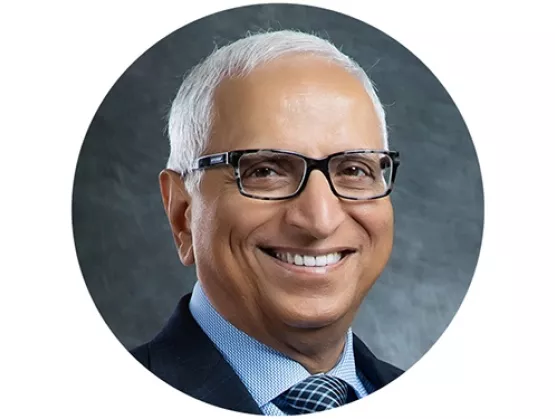
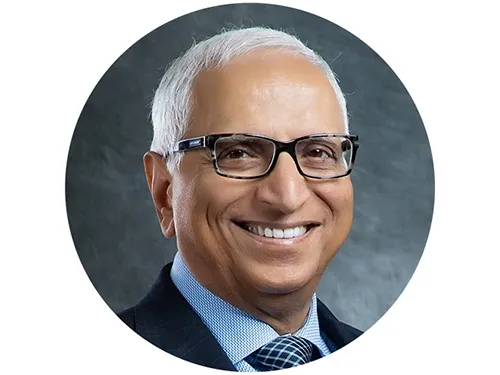
Adapted from the Computer History Museum’s “Celebrating the Birthplace of Silicon Valley” invitation. Work that sowed the seeds of the digital, hyper-connected world we know today all started in a squat, unremarkable building in Mountain View, California. Long before the structure’s foundation was laid, Santa Clara County flourished with orchards, not chips. Between the 1880s and 1940s, eight million fruit trees carpeted Silicon Valley. By 1939, San Jose, with a population of 57,651, was the largest canning and dried-fruit packing center in the world, with 18 canneries, 13 dried-fruit packing houses, and 12 fresh-fruit and vegetable shipping firms*.In 1956, silicon sprouted from new fertile ground.That’s when startup Shockley Semiconductor Laboratory, employing some of the most brilliant young minds in the business, produced Northern California’s first silicon transistor prototypes and formed the technological and cultural bedrock for today’s Silicon Valley.Fed up with William Shockley’s hard-nosed management style, eight Shockley employees – including Gordon Moore, Robert Noyce, Julius Blank, Victor Grinich, Jean Hoerni, Eugene Kleiner, Jay Last, and Sheldon Roberts – resigned in September 1957 and founded Fairchild Semiconductor Corporation. Fairchild was the seedling from which companies valued at over $2 trillion have grown and the source of the integrated circuit “computer chip” that has revolutionized our world.Now, more than 60 years later, the site of Shockley Labs, already an IEEE Historical Milestone, is being formally recognized by the IEEE and the City of Mountain View for its historical significance in a special dedication ceremony on August 15. Thanks to the efforts of many, especially developer Merlone Geier Partners, newly commissioned public sculptures – in the likeness of two early semiconductor devices and a mammoth silicon crystal monument that symbolize the work to come out of the lab – now permanently mark the site, along with various plaques that describe and commemorate the site’s history. The event’s featured speaker is Professor James F. Gibbons, former dean of engineering at Stanford University. Professor Gibbons’ first task at Stanford in 1957 was to work with Shockley and his team to transfer their knowledge of silicon fabrication to Stanford, which could in turn train future engineers for the coming boom in the semiconductor industry. He will share his personal experiences and memories of those early days. Join early semiconductor pioneers, the president of the IEEE, SEMI president and CEO Ajit Manocha and local officials on August 15 to commemorate this legendary Silicon Valley landmark. Guests are invited to enjoy a series of presentations and exhibits and view the stunning sculptures and plaques.The event is free to attend and open to the public. Space is limited so please sign up here to guarantee a seat.Location: 391 San Antonio Road, Palo Alto, California (Phase II of San Antonio Village). Parking is free.*National Park Service, Santa Clara County: California’s Historic Silicon ValleyAriana Raftopoulos is a marketing manager at SEMI.
Read More
The march to greater precision, efficiency and safety – the lifeblood of high-technology manufacturing facilities – has taken on a new urgency as emerging applications such artificial intelligence (AI), the Internet of Things (IoT) and Industry 4.0 give new meaning to smart factories. Facing fiercer competition and ever more sophisticated fabrication processes, semiconductor fabs are under intense pressure to keep pace with new technologies as they work to upgrade. Nowhere are the stakes higher than in Taiwan, where high-tech manufacturing contributes mightily to the region’s GDP growth. To help Taiwan fabs confront the challenges and opportunities of designing smarter factories, SEMI and its High-Tech Facility Committee hosted the High-Tech Facility Workshop in June. SEMICON Taiwan 2018 High-Tech Facility Pavilion exhibitors gathered to explore how they can build smarter factories by deploying smart surveillance and disaster prevention technologies along with smart communications systems that better use manufacturing data to drive new safety and product quality efficiencies.During the workshop, SEMI High-Tech Facility Committee representatives shared strides it has made upgrading overseas facilities and developing standards to help establish smart factories in Taiwan.SEMICON Taiwan – 5-7 September at Taipei’s Nangang Exhibition Center – is also an important event for advancing smart manufacturing in Taiwan. Nearly 30 leading global manufacturers will exhibit at the SEMICON Taiwan High-Tech Facility Pavilion. The venue covers operational aspects of semiconductor manufacturing vital to becoming smarter including energy savings, nano-contamination control, facility information modeling, precision instrumentation and control, fire protection, mechatronics, and automation control. The pavilion will also feature a series of theme events offering a comprehensive overview of topics including the latest practices for integrating smart facility capabilities from the perspective of an advanced fab designer.At the TechXPOT stage, High-Tech Facility Pavilion exhibitors will also demonstrate the latest technology breakthroughs and cutting-edge smart factor solutions.The September 6th High-Tech Facility International Forum at SEMICON Taiwan will again gather factory experts and thought leaders from industry and academia to examine “Effective Ways to Make a Facility Smart.“ Experts from industry heavyweights in the fields of wafer foundry, LCD, memory and semiconductor packaging including TSMC, UMC, Innolux, ASE, Micron Taiwan, Winbond and VIS will offer insights into key areas of high-tech facilities including facility electricity, machinery, water management, vaporization and automation systems. On the same day as the forum, the High-Tech Facility Get-Together and High-Tech Facility VIP Dinner will bring together industry elites, academic professionals, and government officials to explore partnership opportunities. SEMI Taiwan and the High-Tech Facility Committee share HTF market trends information, technology updates and standards with SEMI members and exhibitors. Founded in 2013, the High-Tech Facility Committee now has 85 corporate members. Dedicated to accelerating industry collaboration through the integration of Taiwan industrial, government and academic resources, the committee each year holds several group meetings focusing on topics including energy savings, earthquake and fire protection, nano-contamination control, and precision instrumentation and control to advance critical technologies and facilitate standardization. The committee also aims to help the industry become more competitive faster by promoting technology standards that boost productivity and reduce production costs.Please visit www.semi.org and www.semicontaiwan.org for more information about SEMI’s high-tech facility initiatives.Iris Tsou is a marketing specialist at SEMI Taiwan.
Read More
Ahead of his presentation on the future of wearables at the European MEMS Sensors Summit 2018, 19-21 September in Grenoble, France, SEMI spoke with Dr. Peter Weigand, vice president, Business Strategy and Portfolio Management, Bosch Sensortec GmbH. Dr. Weigand gave a glimpse into insights he’ll share at the event.1. Wearables such as smartwatches, fitness trackers or hearables are becoming ubiquitous – but what are the must-haves for wearables for daily use by wearers?We see that users nowadays want to track their activities such as steps walked, calories burnt and floor levels “climbed” on a daily and holistic basis. “Quantifying yourself” is becoming an overall trend in our society with health, fitness and well-being continuously gaining in importance. This is only possible if information about activities is delivered comprehensively in an accurate manner. Therefore, at Bosch Sensortec we provide MEMS sensors that measure the user’s activity very precisely. For example, the smart sensor hubs BHI260 and BHA260 provide sophisticated in-sensor algorithms (e.g. activity recognition) with very low latency and guaranteed performance due to the real-time nature of the embedded software. From the system manufacturer’s perspective, “quantifying yourself” on a 24/7 basis means that the device has to be “always-on.”However, these always-on functions usually consume a lot of battery power, which poses challenges to the manufacturers and system designers, as the battery capacity is usually small due to the size of the wearable. This shows two other must-haves for the users nowadays. First, the compact size of the device. While smartphones have become larger, users of wearables benefit from the devices’ small size and their low weight, offering the possibility to wear them directly on the body. Therefore, we design the footprint and height of our MEMS sensors as small as possible to ensure the compact size and the ease of integration into new, stylish types of wearables. For example, the BMP388, measuring only 2 x 2 x 0.75 mm³, qualifies as the world’s smallest barometric pressure sensor. The second requirement in this regard is long battery life. Users do not want to charge their wearable device every other day, as this would also impede the always-on activity tracking aspect. At Bosch Sensortec, we hence provide MEMS sensors that run at ultra-low power to ensure always-on endurance and a long battery life. The BMA400 is an ultra-low power acceleration sensor that draws ten times less current than existing accelerometers.2. Are there any other user requirements for wearables?Yes, we see for example that just tracking the number of steps or the calories burnt is not enough anymore. Users require multi-functional devices that also provide information that can be used to monitor sleeping behaviour, navigate in cities, or prepare your smart home for your arrival. We are equipping our sensors with more features and developing new types of sensors that add new functionalities to wearable devices. For example, we have developed a smart watch Projection Module that can project information on the back of the user’s hand for an additional, enlarged display. While smart watches are rising in popularity, demand for basic wristbands is waning. Users are paying more attention to device design. Like clothing, the look and feel of the device should support the user’s individual style.At the same time, with more fashion brands are entering the wearables market we are providing sensors that are easy to integrate into new types of wearables such as hybrid watches. Our products feature a small form factor to ensure flexible, simple design-in. For example, the new BMA400 acceleration sensor easy to design into various applications. Finally, to conform to the user, the wearable must adapt to the user’s individual habits and motions such as learning different gestures, requiring the devices to be not only smart but increasingly intelligent with artificial intelligence (AI). We are providing sensors, such as the BHI260, with embedded, local intelligence with advanced algorithms that enable devices to learn. We are developing intelligent software solutions that use deep learning, enabling device to adapt to the user’s individual behaviour.3. What current techniques are design engineers using to reduce power consumption of wearables?Several techniques are being developed to reduce power consumption. The goal largely is to reduce the power draw of components that are always-on, such as the screen in a smartwatch. In activity trackers, the motion sensor is always on to sense, track, classify and store motion data. Reducing the power needed to operate these features will cut total system power consumption as well. A good example is our BMA400 accelerometer that has a current consumption of less than 1 µA in full operation.At the same time, it independently processes sensor data. For example, the device converts the three-axis motion sensor data stream into step counting events. This allows the main (host) microcontroller to remain in the stand-by mode required for activity tracking and to be activated by the accelerometer to deliver full power only, say, every 100 steps. The sensor, rather than the microcontroller, manages the overall duty cycling of the microcontroller to reduce system power and increase overall efficiency.4. What alternatives are engineers exploring to reduce power consumption? What is the role of intelligence directly within sensors for local processing capabilities in wearables?We have seen how the BMA400 can reduce power by integrating the motion classification functions. We can take this concept further by integrating a microcontroller that’s specifically tailored for low-power sensor data processing, such as the “fuser core” that Bosch Sensortec uses within its smart sensor hubs such as BHI260 or BHA260. The built-in sensor data fusion and machine learning hardware accelerators make it uniquely suited to reduce overall system power. The concept of edge computing has been around for many years, but only in this and the previous sensor generation with built-in local intelligence are we reducing the full power profile of the wearable device. Our sensor architecture design allows us to process the power locally in the MEMS sensor without waking up the main application processor.5. What technologies are you developing to lengthen battery life without compromising performance? We are continuously improving the MEMS and ASIC designs of our sensor portfolio to drive ever higher power efficiency. The BMA400 draws 10 times less current than existing accelerometers while delivering solid high performance (e.g. low-noise data). 6. Wearable device feature and performance requirements are continuously rising. Will batteries need to be larger to support these requirements? Since the beginning of the portable consumer electronics, improving batter life and reducing chip power consumption have been parallel efforts, a trend we expect to continue. However, we expect a greater focus on the overall system power reduction with sensors managing the power, turning on and off microcontrollers, radios (including GPS) and displays in wearable devices.7. What do you expect from European MEMS Sensors Summit 2018 and why do you recommend attending in Grenoble?The European MEMS Sensors Summit is a very important platform for us. It is an opportunity to meet partners, customers, industry leaders, to exchange ideas and to get new insights and thus to ultimately refine our solutions for our global customer base. Our ultimate goal is to improve people’s individual lifestyle and well-being.Serena Birschetto is a marketing communications manager in SEMI Europe.
Read More
Intento Design is working with STMicroelectronics to bring ID-XploreTM EDA software, which is aimed at solving the critical analog design challenges, to FD-SOI process nodes. “ID-Xplore is a disruptive EDA software that accelerates analog design and migration processes by at least one order of magnitude. It reduces the cost and latency inherent to analog design. Currently, there is no similar EDA tool on the market covering the analog design challenges like ID-Xplore,” noted Dr. Ramy Iskander, CEO of Intento Design (see the press release here). ST's FD-SOI design expertise roots, of course, are as deep as they get. “ST’s decision to work with us confirms the relevance of our solution. We are very excited to work jointly with ST teams to take the most benefit out of FD-SOI technology leveraging ST’s pioneering leadership in this area,” continued Dr. Iskander. “We’ve already seen the benefits of ID-Xplore in accelerating the design phase of different analog circuits, thanks to the software’s fast and accurate exploration capabilities in advanced FD-SOI processes,” said Thierry Bion, ST's Hardware Design Director, Aerospace Defense Legacy Division. “By facilitating IP reuse and sharing of design insights between engineers, ID-Xplore™ is helping our teams significantly accelerate new product introductions.” ID-Xplore uses the OpenAccess database standard and is fully integrated within the Cadence design environment. The designer’s implicit and explicit knowledge is expressed as technology-independent constraints, bringing the designers back to their core expertise and creativity. If you want to learn more, the folks over at semiwiki.com have made a number of posts on Intento Design recently. They're really helpful in understanding what the company does, how and why: CEO Interview: Ramy Iskander of Intento Design Edit (by Daniel Nenni) – good backgrounder on the company and product. The Intention View: Disruptive Innovation for Analog Design Edit (by Daniel Nenni) – an excellent interview with Dr. Caitlin Brandon about how the tool works and how it aligns with and supports the way analog designers work. A New Kind of Analog EDA Company Edit (by Daniel Payne) – Daniel Payne started his career as a circuit designer at Intel, and is now a well-known consultant/expert in the EDA world. Here he explores how ID-Xplore actually works and its “cool new automation features”.
Read More
Two months after opposing $34 billion in U.S. trade tariffs on behalf of the U.S. semiconductor manufacturing industry, Jonathan Davis, global vice president of industry advocacy at SEMI, this week spoke out against an additional $16 billion in duties on Chinese goods. Testifying before the same U.S. interagency panel mulling the tariffs, Davis called for the removal of 29 tariff lines covering items critical to semiconductor manufacturing including machines and spare parts used to make, wafers, flat panel displays and masks.In his testimony to the panel, Davis stressed that while SEMI supports stronger protections against the theft of valuable intellectual property (IP), tariffs do little to address U.S. concerns over IP loss. Over the past month, SEMI has also submitted written comments and opposed the tariffs in public testimony. The panel includes representatives from the U.S. Trade Representative (USTR), Departments of Treasury, Commerce, State and Defense, and the Council of Economic Advisers.Also testifying, Joe Pon, corporate vice president at Applied Materials, explained that the proposed tariffs will harm small and midsized companies and other U.S. business interests. Describing the tariffs as a tax on exports of high-value U.S. goods, Pon said the duties give non-U.S. firms an unfair competitive advantage.In a parallel push to Davis’s testimony, SEMI, with more than 10 representatives from six member companies, met with 16 congressional offices this week to underscore the damage the tariffs would wreak on the U.S. semiconductor industry. The fallout would include higher operating costs, fewer exports and slower innovation. The tariffs would also curb industry growth and put thousands of high-paying, high-skill jobs at risk. SEMI pressed congressional leaders to reject the tariffs and support a push for congress to re-assert itself on trade policy.Tariffs to Cost U.S. SEMI Members More than $500 MillionSEMI estimates that the second list of proposed tariffs, covering about $16 billion in Chinese goods, will cost its 400 U.S. members more than $500 million annually in additional duties.The tariffs on $34 billion in Chinese goods, which took effect July 6, impact products such as test and inspection equipment as well as spare parts that enter the U.S. from China. That round of tariffs will cost SEMI member companies and estimated tens of millions of dollars annually. SEMI Public Policy Team Asks Members to Review Tariff ListLooking ahead, SEMI encourages members to review the newly released $200 billion tariff list, determine any impact to their businesses and share their findings with SEMI’s public policy team.The U.S. Trade Representative (USTR) has published the exclusion process for products subject to the China 301 tariffs. If your company’s products are subject to tariffs, you can request an exclusion.In evaluating product exclusion requests, the USTR will consider whether a product is available from a source outside of China, whether the additional duties would cause severe economic harm to the requestor or other U.S. interests, and whether the product is strategically important or related to Chinese industrial programs (such as “Made in China 2025”).The deadline for submitting product exclusion requests to USTR is October 9, 2018. Approved exclusions will be effective for one year upon approval and retroactive to July 6, 2018.More information including the process for submitting the product exclusion request can be found here.Any SEMI members with questions should contact Jay Chittooran, Public Policy Manager at SEMI, at [email protected].
Read More
Specialty foundry TowerJazz is ramping a 65nm version of its RF-SOI process on 300mm wafers at Fab 7 in Uozu, Japan. To support the ramp, the company has signed a contract with long-term partner, Soitec, guaranteeing a supply of tens of thousands of 300mm SOI silicon wafers, securing wafer prices for the next years and ensuring supply to its customers, despite a tight SOI wafer market. [caption id="attachment_12108" align="alignright" width="300"] The 300mm 65nm RF-SOI process will be offered at the Uozu, Japan fab, which is operated by the TowerJazz Panasonic Semiconductor Company (TPSCo). (Photo courtesy: TowerJazz)[/caption] Five of TJ's seven fabs do RF-SOI. LNA (low-noise amplifers) are a big market driver, and with RF-SOI they can integrate the LNA with the switch, CEO Russell Ellwanter said in his lead keynote at the SOI Consortium’s 5th International RF-SOI Workshop in Shanghai (spring, 2018). BTW, that was in fact a very inspirational talk about Value Creation, and the importance of treating your suppliers with respect. He credited his company’s close relationship with RF-SOI wafer-supplier Soitec for TJ’s claim to the world’s best linearity. “We are delighted to see the strong adoption of 300mm RF SOI through this large capacity and supply agreement with TowerJazz to augment our already significant 200mm RF-SOI partnership,” said Soitec CEO Paul Boudre. “TowerJazz was the first foundry to ramp our RFeSI products to high volume production in 200mm and continues as one of the industry leaders in innovation in this exciting RF market with advanced and differentiated offerings.” According to the TJ press release (you can read it here), with its best in class metrics the TowerJazz 65nm RF-SOI process enables the combination of low insertion loss and high power handling RF switches with options for high-performance low-noise amplifiers as well as digital integration. The process can reduce losses in an RF switch improving battery life and boosting data rates in handsets and IoT terminals. It's a high-growth market, to be sure. Market researchers Mobile Experts predict that the mobile RF front-end market will reach $22 billion in 2022 from an estimated $16 billion in 2018. TowerJazz says its breakthrough RF SOI technology continues to support this high-growth market and is well-poised to take advantage of next-generation 5G standards, which will boost data rates and provide further content growth opportunities in the coming years. Customers are already getting into position. For example, Maxscend (WuXi, China), a provider of RF components and IoT integrated circuits, is ramping in this new technology. “We chose TowerJazz for its advanced technology capabilities and its ability to deliver in high volume while continuously innovating with a strong roadmap. We specifically selected its 300mm 65nm RF SOI platform for our next-generation product line due to its superior performance, enabling low insertion loss and high power handling,” said Maxscend CEO Zhihan Xu. As longtime ASN readers will know, we've been covering the evolutions of TJ's RF-SOI platforms since the beginning of the decade. It's worth noting, too, that beyond RF, TowerJazz also offers foundry customers other SOI-based processes, such as the new 0.18μm BCD SOI, a 200V SOI technology platform (announced in 2017, press release here) for motor drivers, industrial tools, electric vehicles and more. The previous generation 0.18μm SOI for automotive power management also offers exceptional area savings and is well-suited for high temperature operation. Back in 2014, here at ASN we did a great interview with TJ SVP Dr. Marco Racanelli about when and why they use SOI – and while processes have advanced, the basic drivers are still there, so it's a still a good read. And finally, designers will want to know that the TJ Multi-Project Wafer (MPW) Shuttle Program offers the 65nm RF-SOI process, as well as other SOI-based processes. See the website for scheduling and details.
Read More
Tracking toward even stronger growth than forecast last year, 200mm fabs worldwide are gearing up to add more than 600,000 wafers per month from 2017 through 2022, an 11 percent growth rate that will lead to a new high of 6 million wafers per month by the end of 2022, according to the SEMI Industry Research and Statistics group in its fourth update of the Global 200mm Fab Outlook report. See chart below. All told, 56 older and newer facilities will add capacity, with the MEMS, power, logic and foundry segments contributing the most. To help meet rising demand, new fabs are under construction. Only six facilities plan to reduce capacity. The global 200mm fab count will increase from the 2017 level of the 194 fabs covered in the report to 203 by 2022. See chart. During the five-year forecast period, China, at 44 percent, is expected to account for the greatest growth, followed by Southeast Asia (19 percent), Taiwan (10 percent) and the Americas (8 percent). However, with strong demand for new 200mm fab equipment, the used 200mm fab equipment market has pretty much dried up. What’s more, the availability of key tools and spare parts has become a primary concern for many device makers. These headwinds notwithstanding, many companies remain bullish with plans to add more capacity. The forecast growth of 600,000 wafers per month may ultimately be a conservative estimate. SEMI’s Global 200mm Fab Outlook report lists more than 300 facilities and lines managed by more than 150 companies, providing details on product type, investment, technology and capacity plans by companies and fabs. The fourth update of the Global 200mm Fab Outlook report covers data and predictions from 2011 through the end of 2022, including milestones, detailed investments by quarter, product types, technology nodes and capacities down to fab and project level. Click here for the Global 200mm Fab Outlook Sample Report. Learn more about other SEMI fab databases at www.semi.org/en/MarketInfo/FabDatabase. Christian G. Dieseldorff is director of Industry Research and Statistics, SEMI, Milpitas, California.
Read More
The Japan semiconductor manufacturing supply chain is a global semiconductor industry workhorse, producing about one third of world’s chip equipment and more than half of its semiconductor materials. In contributing the vast majority of these products, SEMI Japan member companies hold the high distinction of enabling continuous development of the worldwide semiconductor industry. Aptly, then, technology powerhouses IBM, Nissan Motors and Toshiba offered insights into the latest trends and innovations in computing and smart cars at the late-May SEMI Japan Members Days in Tokyo with 133 technologists from member companies in attendance. As the audience discovered, chip innovation never sleeps and, as futuristic as it can be, invariably gives rise to possibilities beyond the human imagination. That was the message of kickoff presentation “Computing Reimagined – AI/Quantum/IoT” – by Dr. Shintaro Yamamichi, Senior Manager, Science Technology at IBM Research-Tokyo. Dr. Yamamichi cited three examples of how semiconductors uncover new technology frontiers. Computational materials discovery, a novel methodology, is the application of theory and computation to unearthing new materials and the key to enabling an ongoing stream of semiconductor innovation. In particular, using cognitive technology to mine huge volumes of literature reveal new insights into materials that uncover even more functionality such as greater conductivity and heat resistance. With new materials the oxygen of ever more advanced semiconductor chip manufacturing, the semiconductor industry will surely benefit from this methodology. The opportunity to accelerate quantum computing innovation is now. Launched in May 2016, the IBM Quantum Experience gives students, researchers and general science enthusiasts hands-on access to IBM’s experimental cloud-enabled quantum computing platform. The online platform features a forum for discussing quantum computing topics, tutorials on how to program IBM Q devices, and other educational material about quantum computing. Dr. Yamamichi encouraged the audience to join the program. The world’s tiniest computer, unveiled by IBM at the company’s Think 2018 conference in Las Vegas, packs several hundred thousand transistors and, IBM claims, the equivalent power of a 1990s x86 chip into a package smaller than a grain of salt. The computer’s small form factor (less than 1mm x 1mm) and low manufacturing cost means it can be embedded in product price tags and packages as an anti-fraud device using blockchain technology. Vehicles need to be both electric and intelligent as countries become more populous and traffic density increases. More drivers extend average drive time, boost greenhouse emissions, devour precious energy resources and lead to more traffic congestion and accidents. Dr. Haruyoshi Kumura, fellow at Nissan Motor, highlighted these issues in stressing the importance of a new era of intelligent mobility. To mitigate these problems, Nissan is focusing on the electrification and intelligence of its vehicles: Nissan’s electric vehicle, Leaf, reduces accidents with electric intelligence systems such as e-Pedal, which uses an accelerator pedal only for both acceleration and deceleration, and ProPILOT Park, a feature that automatically parks the car by using multiple cameras and ultrasonic sonars to detect pedestrians and other objects around the vehicle. With more than 90 percent of traffic accidents caused by driver error, Nissan plans to introduce autonomous driving on multi-lane highways by the end of 2018 and on city streets by 2020. By 2022, the company plans to roll out full autonomous driving to reduce traffic accidents caused by inattentive drivers. For full autonomous driving to materialize, sensor fusion technology must incorporate a combination of technologies – radar systems, light detection and ranging (LiDAR) systems and cameras – to identify the shapes and locations of nearby moving objects and measure their speed. Sensed information is then processed by a 3D graphic analyzer to make electric throttle, braking and steering decisions. The outlook for automotive industry includes car sharing and more electrification – both insights from Yoshiki Hayakashi, general manager, automotive solution strategic planning division at Toshiba Electronic Devices Storage, who offered his perspectives on trends in Japan’s automotive industry and beyond. To meet the requirements of the COP21 Paris agreement, the global automotive industry is shifting to electrification. Toshiba estimates 60 percent of new cars will be electric vehicles by 2040 to meet the International Energy Agency’s global EV outlook. In Japan, autonomous driving or advanced driver assistance systems (ADAS) will be offered in certain areas by 2020, the year of the Tokyo Olympic games. Growth of these advanced driving systems hinges on infrastructure development. Supporting data centers, intelligent transport systems, vehicle-to-everything connections, and smart city are all necessary components. Car ownership will begin to cede ground to car sharing with technology elites such as Tesla, Apple and Google leading the way. To expand the car-sharing industry, new alliances will take shape between new and old-guard automotive companies and electronics manufacturing services (EMS) providers. Autonomous driving requires precise 3D renderings of actual roadways using sensors for route mapping. While sensor fusion must be deployed for these capabilities, LiDAR offers better sensing range and space resolution precision than ultrasonic sonars, radars, and cameras. The next SEMI Japan members day is scheduled for October 30 in Tokyo. SEMI holds similar events in most regions where SEMI and its members operate. For the members events in your region, contact the SEMI office nearest you. Yoichiro Ando is a marketing director in SEMI Japan.
Read More
GlobalFoundries has announced that the company’s 22nm FD-SOI (22FDX®) technology has delivered more than two billion dollars of client design win revenue. With more than 50 client designs, 22FDX is being used in power-optimized chips across a broad range of high-growth applications such as automotive, 5G connectivity and IoT. Their clients chose it for the significant reductions in power and die size relative to a traditional bulk CMOS process, says the company. 22FDX offers the industry’s lowest operating voltage, delivering up to 500MHz frequencies at only 0.4 volts. The technology also delivers efficient single-chip integration of RF, transceiver, baseband, processor, and power management components, “...providing an unparalleled combination of high performance RF and mmWave functionality with low-power, high density logic for devices that require long-lasting battery life, increased processing capability, and connectivity.” 22FDX is in early production, with yields and performance matching client expectations. A recent VLSI Research survey indicated that FD-SOI technology is seen as a complementary technology to FinFET. It's gaining traction in application spaces such as IoT, where power consumption is important and the product life is relatively short. “We’re only just beginning,” said GF CEO Tom Caulfied. “We have found a way to separate ourselves from the pack by emphasizing our differentiated FD-SOI roadmap and client-focused offerings that are poised to enable connected intelligence. We will continue to build on our momentum and look for ways to expand our reach to address the evolving needs of the industry.” Here's a sampling of customer quotes from the press release (read more here): “At Synaptics, as we expand upon our industry-leading mobile and PC businesses to include delivering new and innovative products that address the booming IoT market, we require the best available technologies to enable us to deliver top-notch solutions including voice and multimedia processing capabilities for our customers,” said the company's CEO, Rick Bergman. “GF’s 22FDX technology delivers a potent mix of low static and dynamic power along with excellent performance to give us a great platform for our world-class products.” “As our customers increasingly demand more from their mobile experiences, our partnership with GF on its 22FDX technology is critical to differentiate ourselves in the competitive market and deliver powerful and efficient mobile SoCs,” said Rockchip CEO Min Li. “Our goal has always been to provide more secure, connected experiences for drivers. Combining our leadership in radar technology with GF's 22FDX automotive-qualified process, we are able to deliver a cost-effective, high performance, low power solution that opens new opportunities for car manufacturers to provide better experiences for drivers around the world," said Kobi Marenko, CEO of Arbe Robotics. “The automotive industry realizes that assisted driving solutions require more camera information besides Radar and Lidar, integrating information from multiple cameras. The resulting DreamChip multi-core vision processor platform, based on the 22FDX process is providing European auto makers and Tier 1 automotive component suppliers with a platform from which they can create custom derivatives with a massively reduced time to market," said Dream Chip Technologies CEO Jens Benndorf. “With 22FDX, the value proposition for us is the potential power and area savings, two key metrics for our highly optimized LTE NB-IoT and CAT-M chipsets. In addition, leveraging the growing ecosystems of IP available in the 22FDX process helps to accelerate time to market,” said Peter Wong, CEO at Riot Micro, which designs purpose-built silicon for wireless IoT applications. (Read more about that here.) GF adds that it is preparing to deliver 12FDX™ technology, which will provide a full node scaling benefit and improved power efficiency for a new generation of applications, from edge-node artificial intelligence and AR/VR to 5G networking and ADAS.
Read More
Storage and memory chipmaker and SEMI China member Tsinghua Unigroup is gearing up to meet burgeoning product demand with huge investments in its manufacturing plants. But the high-tech enterprise under Tsinghua University is eyeing a much bigger prize – growth of the region’s semiconductor industry and the realization of its ambition to become a more prominent force on the global stage.Inspired by the national strategy, the Tsinghua Unigroup’s big spends include USD 24 billion in Wuhan (Yangtze Memory Technologies Co., Ltd.,) USD 30 billion in Chengdu, USD 30 billion in Nanjing and USD 100 billion in Chongqing, said Liu Hongyu, senior vice president of Tsinghua Unigroup, speaking at the SEMI China Equipment and Materials Committee meeting last month.Advanced packaging is another rich vein of opportunity the region is tapping for expansion, said Liu Hongjun, vice president of China Wafer Level CSP Co., Ltd., another SEMI China member attending the event, hosted by NAURA in Beijing. Hongjun sees strong growth for Fan-in, Fan-out, FCBGA, 2.5D and 3DIC, with Fan-out out front. Liang Sheng, administrative commission director at BDA, a business advisory firm supporting high-technology manufacturing in the E-Town economic development zone, pointed to 5G chips and smart, networked electric automobiles as drivers of the next growth phase of Beijing’s integrated circuit (IC) industry.Global tailwinds are lifting China’s semiconductor industry and the region’s hopes, with SEMI and major industry analysts raising their semiconductor industry growth projects for 2018 to between 9 percent and 16 percent. According to SEMI’s latest market report, global semiconductor industry manufacturing equipment revenue reached USD 17 billion in the first quarter of 2018, logging all-time highs after jumping 12 percent from the previous quarter and 30 percent year-over-year. Korea was the top-performing region at USD 6.26 billion, followed by China at USD 2.64 billion.Tighter integration with the rest of the global semiconductor industry is critical to the growth of China’s chip sector, and SEMI China is squarely focused on this assimilation, said SEMI China president Lung Chu. The spearhead of this effort is the SEMI Innovation Investment Platform (SIIP) China, established by SEMI China last year to help grow China’s pool of skilled workers, promote advanced technology, generate industry capital, and expand China’s semiconductor industry while developing stronger connections with chip sectors in other regions. To strengthen ties with other regions, SIIP China will stage a number of innovation and investment forums this year including Chinese Night at SEMICON West (July 10-12) and a SIIP China Forum in Silicon Valley (July 15). In August, representatives from the Korea chip industry will visit counterparts in China (August), and a China delegation will travel to Japan for meetings (October). SIIP China is also strengthening the region’s links with Germany and Israel as SEMI serves as a crucial bridge between China’s semiconductor sector and the global industry.At the invitation of Shanghai authorities and the Ministry of Commerce of the People’s Republic of China, SEMI China in November will join the China International Export Import Exposition in Shanghai, an event that will underscore China’s commitment to the openness and cooperation of its semiconductor industry with the international chip community. As part of the exposition, SEMI will work with the Ministry of Commerce and domestic chip manufacturers to begin development of a special integrated circuit (IC) zone. SEMI China members are welcome to participate.With workforce development no less vital to the future of China’s semiconductor industry, the Equipment Materials Committee offered potential solutions to the industry’s talent gap. Measures included targeting university students and engineers with industry lectures and courses in key cities, campus recruiting, talent training that members said they are willing to help SEMI coordinate and stage and, much like the push to better integrate China with the global semiconductor industry, mobilizing member resources around a campaign to polish the image of the industry to make it more attractive to students and young workers. Members of the SEMI China Equipment Material Committee gathered at NAURA in Beijing in June for a warm and lively discussion about global semiconductor industry cooperation and growing China’s semiconductor sector.Cherry Sun is a marketing manager at SEMI China.
Read More