

June 29, 2026
Building the Future Together: Integrating Sustainability in the Semiconductor Ecosystem
Time
1:00 pm - 2:30 pm CEST
Location
This joint webinar by GENESIS and the European Chips Skills Academy (ECSA) explores how sustainability and workforce development can shape the semiconductor industry's future. The session will highlight the role of PFAS in semiconductor manufacturing, the challenges, and how the GENESIS project is working with industry partners to identify safer and more sustainable alternatives. Participants will also gain insight into how ECSA is helping equip the next generation of semiconductor professionals with the skills needed for a more sustainable ecosystem.
Agenda

Introduction to ECSA
Biography
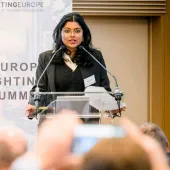
Since joining SEMI Europe in 2023, Victoria manages projects that support workforce development, including the development of educational materials, awareness raising, and programs to improve DEI in the semiconductor sector. Currently, she oversees the European Chips Skills Academy (ECSA) and European Chips Diversity Alliance projects and is involved in several European projects related to skills development and education in microelectronics. Through these projects, Victoria contributes to the creation of targeted programs to attract and upskill talent for the most critical job shortages, assess employment trends and identify barriers to entry for underrepresented groups. Prior to entering the semiconductor industry, Victoria worked as a policy adviser for regulation on financial services and energy markets. She received a master’s degree in political science from Boston University in 2018.
Introduction to GENESIS
Iranda Chaki is a Brussels-based young professional working closely with European institutions at the core of EU policymaking. With experience across public affairs, stakeholder management, event management and international collaboration, gained through roles in public organisations, NGO’s and industry association environments. She enjoys building bridges between sectors to shape forward-thinking, sustainable outcomes. Currently working in the semiconductor sector with a particular focus on EHS & Sustainability.

What are PFAS and Why are they currently needed in semiconductors?
Julia Osten is responsible for Scientific Management at Fraunhofer IPMS and serves as Work Package Lead 4 in the EU-funded project GENESIS. She has a background in physics with a focus on magnetism, completing her PhD at Helmholtz-Zentrum Dresden-Rossendorf (HZDR), where she later worked as a postdoctoral researcher. She also worked at Fraunhofer IVI and completed an additional certification in Fraunhofer Research Management.
During her presentation, Julia Osten will discuss the functional roles of PFAS in semiconductor manufacturing, explaining why their unique chemical and physical properties are difficult to replicate with alternative substances. She will provide an overview of the main semiconductor process areas and materials where PFAS are typically required, highlighting their importance in ensuring performance, reliability, and manufacturing precision. The presentation will also address the key challenges associated with replacing PFAS, including technical limitations, material compatibility, and the potential impact on semiconductor manufacturing processes and supply chains.
Why We are Looking for Alternatives and why substitution is important?
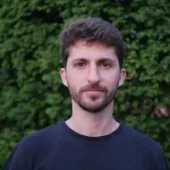
Pedro has been a project lead at imec for the past two years. He works on environmental and sustainability topics, including environmental sensing technologies and PFAS in the semiconductor industry. He has a background in chemistry and environmental engineering.
How GENESIS is Working Towards Solutions?
Julia Osten is responsible for Scientific Management at Fraunhofer IPMS and serves as Work Package Lead 4 in the EU-funded project GENESIS. She has a background in physics with a focus on magnetism, completing her PhD at Helmholtz-Zentrum Dresden-Rossendorf (HZDR), where she later worked as a postdoctoral researcher. She also worked at Fraunhofer IVI and completed an additional certification in Fraunhofer Research Management.
Q&A and Closing Remarks
Your chance to ask anything! Engage directly with the speaker and get answers to your questions.
Find out more about EU Projects
European Chips Skills Academy
The European Chips Skills Academy is a consortium of 18 partners from 12 countries aimed at aimed at addressing the growing skills and talent shortages in Europe’s microelectronics sector. Funded under the Erasmus+ Program, the Academy focuses on developing and delivering a range of training programs in fields like semiconductor technology, cybersecurity, and green skills. ECSA also focuses on building networks through the strategic creation of partnerships between stakeholders in the industry. Through skills quantification, the academy will measure and evaluate the development of skills in the sector.
GENESIS
GENESIS is an EU program supported by CHIPS JU and its associated members states. In addition, GENESIS Swiss partners are supported by the Swiss state secretariat (SERI). The project launched on 1 May 2025 and will run for 36 months. Its mission is to reduce the environmental footprint of semiconductor manufacturing while enabling innovation across materials, monitoring, and reuse.
European Chips Diversity Alliance
The European Chips Diversity Alliance is a collaborative initiative aimed at promoting diversity, equity, and inclusion (DEI) within the European semiconductor industry. The alliance brings together various stakeholders, including industry leaders, academic institutions, and government organizations, to address the missing talent and DEI challenges prevalent in the sector. By providing trainings, tools, and engagement programs, the alliance seeks to bring together industry and the world of education, enhance innovation, and to improve workplace diversity and inclusion.
Learn more
SEMI Europe is an active participant in EU-funded projects, given its global member base and its position as the voice of the microelectronics industry.
Learn more about ongoing projects in which SEMI Europe takes part.