downloadGroupGroupnoun_press release_995423_000000 copyGroupnoun_Feed_96767_000000Group 19noun_pictures_1817522_000000Member company iconResource item iconStore item iconGroup 19Group 19noun_Photo_2085192_000000 Copynoun_presentation_2096081_000000Group 19Group Copy 7noun_webinar_692730_000000Path
Skip to main content
Childcare has long been left out of workforce development conversations, despite the vast number of working parents who depend on it to be present and productive at work. In December’s blog, we described how critical childcare is to the semiconductor industry, discussed the dismal state of childcare in the US, and shared how SEMI Foundation and Policy Equity Group are providing support to semiconductor companies through Chips Childcare. In this blog, we’ll delve into our process for helping SEMI members and share what we have learned from work we’ve engaged in with your industry peers. Learn more and hear directly from Policy Equity Group and SEMI members Calumet Technologies and TSMC AZ at our free upcoming webinar, “Chips Childcare: Strategies and Solutions to Help Companies Meet Workforce Needs” on April 8, 2025 at 10 am PT/1 pm ET. Register here. Childcare Planning ProcessFigure 1. Graphic Display of Childcare Plan ProcessOur work with companies is defined by a four-step process, seen in Figure 1, that includes: 1) conducting an employee survey (demand) and analyzing local childcare markets (supply), 2) identifying publicly funded childcare options, 3) examining employer options, and 4) weaving all this information together into a tailored childcare plan.While this overall approach continues to guide our work, the last few months have taught us that companies are at different places in their childcare journey. Some already have extensive data on employee childcare needs and preferences but want a better understanding of the extent to which childcare capacity meets their employees’ needs. Some are engaged in initial conversations with individual providers and/or school systems or are providing stipends to employees but are interested in thought partnership with childcare experts to understand additional options. Others are starting from scratch. No matter where a company is in their childcare planning, Chips Childcare adds value as we employ our deep expertise in childcare systems to navigate the complexities of childcare and to fit the pieces together for a plan tailored to an individual company. To give you an idea of what this looks like in practice, we are spotlighting the employee childcare survey and market analysis. Employee SurveySuccessful childcare plans are responsive to and reflect the needs and preferences of employees. Our ready-to-implement employee child care survey helps companies avoid creating a plan that does not support employee needs. This survey can be customized to a company, and we take on the data collection and analysis responsibilities to reduce time and cost to a company. Not surprisingly, in implementing these surveys, we have found childcare is unaffordable and lacking in availability in general. However, this process has also uncovered variation and nuances within employee needs and preferences. For example, employees at one company reported that their current childcare arrangements were not their ideal, though the ideal differed by age of the children (see Figure 2 for infant and toddler care). Those with infants and toddlers preferred family childcare or center-based care, while parents of 4-year-olds preferred school-based programming, and parents of school-age children often preferred parental care before-and after-school. We also discovered that several families were likely eligible for publicly funded childcare subsidies or state pre-K but were not accessing these options. Using this data, we were better able to forecast the types of providers to look for during the child-care capacity analysis and highlight areas for HR to engage in awareness building with employees. In our experience, survey findings confirm anecdotal evidence and provide a more nuanced understanding of challenges and opportunities.Figure 2. Example of Difference between Current and Ideal Care Arrangements of Employees with Infants and Toddlers. CC stands for childcare.Market Capacity AnalysisThe childcare capacity analysis illuminates the current supply of providers on key indicators such as cost of care (e.g., tuition), days and hours of operation, quality, and ages served (e.g., infant and toddler, preschooler, school-age). What we learn from the analysis is useful in identifying latent capacity to leverage now and to identify gaps in types of care important to employees for further exploration. It can also help in understanding the cost of care for families to better ensure any company-provided child care stipends are meaningfully reducing the cost burdens employees face. Figure 3. Example of Capacity Mapping Using Zip Codes. The red and white circle indicates the plant site. The blue circles represent providers.We recently engaged in a childcare capacity analysis for areas: 1) near the fab site, 2) zip codes where the majority employees live, and 3) where apprentice instruction will take place. By exploring different scenarios, we were able to provide the company with information that could be tailored to different employee preferences (e.g., close to the fab or closer to their residence) and to think through options to support employees in accessing available care. Figure 3 shows a high-level example of mapping available care against a fabrication site.The childcare market analysis can also be used to engage in conversation with local and state early childhood policymakers around gaps in supply and to understand what roles companies can play in supporting current and planned initiatives to address them.Lessons LearnedThese activities yielded important early lessons. While childcare vexes employers across the US, the pain points companies experience differ by the size of the company, geography (e.g., urban/rural), whether the company is in an area of new development or older building supply, and implications of local and state policies, to name a few. This underscores why individual company planning is so important to ensure alignment with the community context. We have also gained data to provide further evidence on key issues in child care. For example, while we knew 2nd and 3rd shift workers faced challenges in finding licensed evening or overnight care, the analyses we’ve done provide hard data on how this type of care is non-existent in most areas where employees live and where companies are located. Ultimately, the work underscores the incredible complexity of childcare. Childcare planning does not have to be daunting. Through Chips Childcare, SEMI Foundation and Policy Equity Group are here to help. Learn more from your peers who have engaged in this work by signing up for our webinar on April 8, 2025 at 10 am PT / 1pm ET, or contact Jeff Capizzano at Policy Equity Group at [email protected] or Michelle Williams at SEMI Foundation at [email protected]. Melissa Dahlin is Senior Director at Policy Equity Group, an early childhood consultancy whose work provides individualized support to meet clients’ needs and help turn their values into actions and impact. With our partners, we create stronger early childhood systems that collectively improve developmental, educational, health, and nutritional outcomes for children across the country.
Read More
The Rising Stars: 20 Under 30 blog series celebrates the brightest young leaders shaping the future of the semiconductor industry. These exceptional individuals have earned the SEMI Europe 20 Under 30 Award for making a remarkable impact across the supply chain—whether in engineering, sales, marketing, or R D. Nominations for the 2025 20 Under 30 Award are now open, providing the opportunity to recognize and honor the next wave of industry trailblazers.The series spotlights these rising stars for their career achievements, commitment to innovation, leadership skills, and dedication to driving both business success and community growth.Follow their inspiring journeys and discover how they are thriving and paving the way for future generations in the semiconductor world.Introducing Mariusz Grabowski: Lead Design Engineer at Cadence Design SystemsMariusz Grabowski, a 2023 20 Under 30 award recipient at the age of 24. He is now a Lead Design Engineer at Cadence Design Systems, Inc., where he’s been making strides in digital systems design for nearly three years. Prior to this role, he gained valuable experience as an FPGA Design and Verification Engineer at Aldec Inc. Grabowski holds a master’s degree with distinction in automation and robotics from AGH University of Science and Technology in Krakow, Poland. During his academic career, he was an active member of both the Avader and Integra Scientific Groups. He also achieved recognition at events like DASIP 2023 and in the International FPGA Hackathon, where he and his team earned 2nd and 3rd place. He is currently also pursuing a postgraduate degree in Project Management at SGH Warsaw School of Economics. SEMI: What inspired you to join the semiconductor industry? Grabowski: I have always been fascinated by the fundamental workings of advanced systems and that curiosity led me to pursue a career in the semiconductor industry. As a digital design engineer, it is exciting for me to contribute to the creation of such large and sophisticated architectures from basic building blocks. Now, I’m proud to be a part of Cadence Design Systems, where I can work on the cutting-edge designs with some of the most talented and hard-working engineers. Grabowski and his team at the awards ceremony at FPGA Hackathon 2023SEMI: How did your early experiences and education shape your career path?Grabowski: During my studies, I had the opportunity to work on hands-on projects with an FPGA platform, which led me to my first job as an FPGA design and verification engineer. That experience gave me a broader perspective on the industry’s scale and reinforced my passion for tackling challenges, learning and growing in this field.Grabowski presenting his paper at the DASIP 2023 ConferenceSEMI: Can you share a professional accomplishment you’re most proud of, and explain why it’s significant to you? Grabowski: For me, it is successfully balancing full-time studies with work. It was a challenging experience, but it provided invaluable opportunities to grow my skills and gain hands-on experience. During that time, I completed numerous projects, participated in scientific conferences and industry events like DASIP 2023, and even earned 2nd and 3rd place in the International FPGA Hackathon. These achievements reinforced my passion for the field and my ability to thrive under pressure. SEMI: As a young professional in the industry, what is your greatest challenge? Grabowski: One of the biggest challenges is navigating the complexity of large-scale projects, where seamless coordination between multiple teams across the globe is crucial. As someone still early in my career, gaining the experience to manage the cross-functional aspects of a project while ensuring my own contributions are technically sound has been both demanding and rewarding.Grabowski at the Discussion Panel on Industry Career Perspectives at DATE 2024 ConferenceSEMI: What advice would you give to younger generations aspiring to make an impact in this industry?Grabowski: The sheer amount of information and complexity in the industry can feel overwhelming. It is essential to embrace curiosity and continuous learning, but it is also crucial to recognize that you can’t do everything alone. My advice is to find your area of expertise and collaborate with others; teamwork is key to bringing impactful projects to life. Cadence’s Design Team in Warsaw, Poland Manager Jacek Rosiak—3rd from the leftSEMI: How do you envision future work environments? Grabowski: I envision future work environments as places where technology fosters creativity and collaboration, diversity is celebrated, and flexibility and work-life balance are prioritized. These environments will empower employees to perform at their best while feeling supported and valued. I am proud to be a part of Cadence Design Systems, where I feel that these values are strongly cultivated. SEMI: What impact has the 20 Under 30 Award had on your career? Grabowski: Receiving the 20 Under 30 Award was an incredible validation of the hard work I’ve put into my role. It gave me a confidence boost, affirming that I am on the right path and capable of making meaningful contributions to my company and the broader semiconductor industry. It also brought significant recognition, which opens up numerous opportunities.Following 20 Under 30 JourneysMariusz Grabowski’s journey in the semiconductor industry highlights the power of dedication, curiosity, and continuous learning. From his early experiences with FPGA platforms to his significant accomplishments in both academia and industry, Grabowski is a true example of how passion and hard work can drive meaningful contributions. As a young professional, his insights offer valuable inspiration for the next generation of engineers eager to make their mark in this ever-evolving field. With a bright future ahead, Grabowski is sure to continue influencing the world of technology, one innovative project at a time.The Rising Stars: 20 Under 30 blog series celebrates the exceptional talent and leadership driving the future of the semiconductor industry. Each of the young innovators honored is excelling in their respective fields while shaping the landscape of technology and business with their visionary approaches and dedication. Their stories exemplify the remarkable achievements and unwavering commitment that define the next generation of industry leaders. The series is intended to inspire and motivate future professionals to pursue their passions and embrace the opportunities within this dynamic industry. Stay tuned for more stories of rising stars who are paving the way for continued growth and innovation in the semiconductor world.Learn more about the SEMI Europe 20 Under 30 Award and the recipients honored at SEMICON Europa. SEMI ContactMaria Daniela Perez, Communications ManagerEmail: [email protected]
Read More
The inaugural SEMIEXPO Heartland scheduled for April 1-2, 2025 in Indianapolis, Indiana, with a focus on Smart Mobility and Smart Manufacturing, provides an opportunity for industry collaboration and growth. These key markets will help drive the semiconductor in achieving a common goal – reaching $1 trillion in revenue by 2030. A critical component in achieving that goal is a sustainable talent pipeline.For the SEMI Foundation, this new expo and conference means partnering with industry and academic stakeholders to cultivate a more inclusive workforce, where everyone is welcome and can establish a rewarding career while helping the semiconductor industry fulfill its potential. Analysts estimate that by 2030 the chip industry will need 1 million more skilled workers to meet exploding demand for semiconductors.Similar to Semiconductor Day programming, the Workforce Development (WFD) Pavilion will connect SEMI members, including human resource professionals and talent recruiters from across the microelectronics industry, with current job seekers and those aspiring to work in the industry.Students, recent graduates, military veterans and professionals returning to work after an absence will discover how microelectronics enable a smart future that is radically changing everyday life—from autonomous vehicles to powering the latest smartphones to the impact of AI on manufacturing. The Workforce Development Pavilion is made possible through the generous support of sponsors ASML, Comet Technologies USA and VAT. SEMIEXPO Heartland partners include Applied Research Institute, Indiana for the Bold, Purdue University and Visit Indy.Pathways to SuccessMike Glavin, SEMI Foundation Program Director of Workforce Development will kick off the two-day programming with an overview of the many national and global initiatives SEMI offers to support member companies in their efforts to attract, develop and retain a skilled workforce. Our resources and initiatives expand the talent pool, attract workers with different experiences and perspectives, and help employers train and grow innovative teams.His presentation will be followed by a series of ‘Day in the Life” presentations by KLA, Pivotal Systems, EMD Electronics and Micron Technology. Career opportunities in the semiconductor ecosystem are vast due to the depth and breadth of the industry and professionals from varied backgrounds will highlight what they do at their companies and why this industry offers so many excellent career opportunities.A presentation from EMD Electronics will discuss how rotational programs can help companies identify, nurture and retain top talent. Following the presentations on day one, students can meet with industry professionals and human resources experts at the Flash Mentoring/Ask an Expert session to learn more about career opportunities and discover what it’s like to work in the semiconductor industry. Companies participating in the session will include ASML, Brewer Science, Brooks Automation, Comet USA, EMD Electronics, KLA, Micron, Pivotal Systems, WGNSTAR. Enthusiastic students attend SEMI Foundation workforce development programming in April 2023.Expanding Career OpportunitiesIn addition to ‘Day in the Life’ presentations by industry professionals from ASML, Brewer Science, Brooks Automation and Synopsys, expo visitors on day two also will hear about Resume Building and Interviewing Skills from a Talent Engagement Lead at ASML. The SEMI VetWorks: Advancing Veteran Careers in Semiconductor Technology presentation showcases how talent professionals can connect with veterans and military communities to grow their workforce. Talent professionals will learn about two exciting Purdue University programs: The Summer Training, Awareness, and Readiness for Semiconductors (STARS) is a workforce development program launched by the university to attract and train students for careers in the microelectrons industry. SCALE is a program engaging K-12 schools and teachers in Microelectronics Workforce Development. Both sessions will be presented by Purdue University faculty members and provide industry professionals with an opportunity to expand the talent pipeline. The day’s programming concludes with a resume review. During this interactive session, students and job seekers can have their resume reviewed by professionals from ASML, Brewer Science, Brooks Automation, Comet USA, EMD Electronics, KLA, Micron, Pivotal Systems, Synopsys, and WGNSTAR. Connect and LearnPresentations throughout the two days are meant to engage students and jobs seekers on exciting careers in semiconductors. To register for expo and conference and learn more about all the sessions scheduled in the Workforce Development Pavilion, visit SEMIEXPO Heartland. Margaret Kindling is Senior Program Manager at the SEMI Foundation. She promotes inclusive workplaces via initiatives like Women in Semiconductors, Semiconductor PRIDE and develops workforce development programming at SEMICON West and SEMIEXPO Heartland.
Read More
While many individuals in leadership positions are seen as role models, only a select few have the ability to create a lasting impact on both individuals and organizations. Role models play a pivotal role in the growth of individuals, teams, and entire companies. Whether intentionally or not, role models possess the power to shape the possibilities others envision for themselves, and exceptional role models harness this power to empower and inspire.The Role Models article series shines a light on remarkable individuals who serve as inspirational leaders for their achievements, leadership, and positive influence. In each installment, we delve into the life and accomplishments of these exceptional role models, exploring their journeys, values, and the impact they've made on their organizations, communities, and across industries. Join us in celebrating these outstanding individuals and discover the valuable lessons they offer for aspiring leaders and changemakers.Role Model - Stephan HaferlIn an industry driven by innovation and high-tech advancements, Stephan Haferl stands out as a transformative leader at the helm of Comet, a globally recognized Swiss technology leader specializing in x-ray and radio frequency solutions for the semiconductor industry. As CEO, Stephan Haferl has successfully guided the company through a period of transformation, focusing on innovation, operational excellence, and customer satisfaction. With extensive experience in business management and a Ph.D. in mechanical and process engineering from the Swiss Federal Institute of Technology (ETH), Haferl has led Comet’s transformation while also contributing to the broader industry as a member of the Board of Directors at Belimed AG and the SEMI Europe Advisory Board.In this interview, Haferl shares his personal journey and leadership philosophy, offering invaluable insights into the mindset of a successful business leader and the values that drive his work. His dedication to mentorship, diversity, and cross-functional learning serves as a beacon for future generations of leaders.SEMI: Please tell us about your background and professional experience.Haferl: My father passed away from cancer when I was a young child, and though I have only faint memories of him, he left behind a remarkable legacy. He had a great library filled with books on physics, math, and engineering, as well as stories and photographs showcasing his passion for tinkering and DIY projects. In many ways, this collection became a foundation for my intellectual development. Reading his books, going through his notes from university, and exploring his projects allowed me to feel spiritually connected with him. Fortunately, his passion for the technical world was something I inherited. I became a dedicated engineer and tinkerer, and that mindset has helped me embrace every challenge I encounter. While this is a large part of “what I am”, I believe that “who I am” is even more important. That was shaped largely by my maternal grandmother. She lost her husband, my grandfather, during the war when my mother was just a baby. Despite this hardship, she remained single throughout her life, focusing on raising my mother and running my late grandfather’s little shop in post-war rural Norway. She was tougher than nails, stoic, industrious, but above all, she was humble and kind. My grandmother has been, and will always be, my role model, in both my personal and professional life. “It is my conviction and advice to aspiring leaders: If you want to be successful in business, go on a cross-functional learning journey.”– Stephan HaferlSEMI: What was your journey to becoming the CEO of Comet?Haferl: Driven by curiosity and a desire to understand as many aspects of business as possible, my journey has been one of evolution. I started in engineering and moved through various areas, including operations, R D, product management, sales, and business development. Overtime, I transitioned from being an individual contributor to a team leader, and eventually to management roles with higher levels of responsibility. There were moments when I stepped away from activities that were comfortable and familiar, like R D, in order to have new experiences and learn something new, even when it went against advice or my own judgement. I intentionally chose to become a seasoned generalist with a few areas of specialty, rather than a functional specialist. Although it may sound a bit idealistic, I never had a specific plan to end up in my current role.That said, if I could offer advice to aspiring leaders, it would be this: To succeed in business, embark on a cross-functional learning journey. Nothing prepares you more for a leadership role than hands-on experience across as many areas of business as possible.Ribbon Cutting Ceremony of the new facility in San Jose.SEMI: What has been your greatest challenge as CEO?Haferl: My greatest challenge as CEO has been and will always be, creating a healthy balance between the things I’m passionate about: the responsibilities of my job, the people around me, my family, and ultimately, myself. While a crisis or challenge in business can be overcome with the support of your entire organization and external systems, managing your time, maintaining well-being, and ensuring you’re fully present is entirely your own responsibility. The larger the role, the more demanding this balance becomes.SEMI: What has been your greatest learning as CEO?Haferl: There isn’t one single greatest learning. Instead, being a CEO offers you the opportunity to experience many truisms firsthand, such as:As a CEO, you are often alone in the spotlight and must learn to be comfortable absorbing the pressure that comes with it, entirely on your own.Your title means little unless you strive to earn it every day. If you’re a good leader, you don’t need to create followers – they will emerge naturally.A team of excellent individual contributors can be outperformed by a cohesive group – a true team of average players who stick together and go the extra miles for one another. I’ve seen this dynamic play out many times during my younger years in team sports. SEMI: What makes a great leader?Haferl: With so much literature on leadership, one might believe that there is an easy answer to this question. However, the sheer volume of attention leadership receives highlights that there isn’t a single definitive answer. I believe a great leader creates clarity and drives closure while also inspiring and motivating the team to achieve their goals while being approachable and ethical. Leadership effectiveness often depends on the team being managed, as there are various archetypal leadership styles.I’ve always aimed to build teams made up of individuals who are loyal, ambitious, disciplined, smart, honest, and kind. Within such teams, I find that a highly participative leadership style is most effective. Chinese New Year Dinner in China.SEMI: Has mentorship played a significant role in your professional success?Haferl: Mentorship has played, and continues to play, a pivotal role in my career. I have gained invaluable insights from highly experienced people who took me under their wings and showed me the ropes. Even now, as a CEO and often feeling peerless within the company, having someone to confide in and seek advice from, or get a second opinion when I am uncertain is absolutely essential.Additionally, I find it deeply rewarding to mentor two or three individuals at any given time. It is a way me to give back while continuing to learn through the process. Staying connected with younger staff is equally important – they are a valuable source of fresh insights and candid feedback.SEMI: How are you setting an example for your generation and demonstrating what you'd like to see from your generation's leaders?Haferl: Let me reframe the question by sharing the characteristics I prioritize when hiring people. As mentioned earlier, I value loyalty, ambition, discipline, intelligence, honesty, and kindness. I strive to embody these qualities in my own leadership and seek out individuals who share the same values. By consistently upholding these principles and surrounding myself with like-minded people, I aim to set a positive example and influence those around me. Townhall in Japan.SEMI: How have you helped to empower the next generation of leaders and in particular women?Haferl: I’m actively involved as mentor to a select group of high-potential employees within the company, many of whom I’ve supported for years. Even those I’ve coached who have since moved on to outside the company remain in touch, and I continue to offer guidance when needed. Interestingly, the women I have mentored have made the greatest impact, both within and beyond the company, which has been incredibly rewarding to witness. SEMI: What advice do you have for the next generation of industry leaders?Haferl: It is wise to develop a strong foundation of functional expertise in one area before expanding your knowledge. However, as a leader, you cannot rely solely on being a subject matter expert. Leadership requires understanding people, grasping the big picture, and knowing when to focus on the finer details in certain areas. To make decisive decisions, create clarity, and drive closure, you need a broad understanding of the work you’re leading. Q A with the team in South Korea.SEMI: What are the best ways to attract students and especially women to consider careers in the semiconductor industry?Haferl: Inspire them with purpose, ignite their passion, and cultivate their curiosity. Provide safe and meaningful access to the industry through internships and opportunities to work on small projects. There are many ways to pave the road for the next generation, and the semiconductor industry has the resources to make it happen. There are no excuses!SEMI: What role should diversity, equity, inclusion, and belonging play in an organization's strategy?Haferl: This is incredibly important, and I always explain to my team using this analogy: If you want to win the Champions League in football, you can’t just hire the best goalies. You need a corresponding specialist for each role to build a winning team. If you fail to treat those specialists equitably, you will lose their passion and, ultimately, their unique strength. Finally, even if you hire the best players, you’ll lose against a cohesive team of mediocre players if you don’t foster a sense of inclusion and belonging – where everyone is united as “all for one, one for all.”Groundbreaking Ceremony of Comet’s new facility in Malaysia.Through his journey and leadership philosophy, Stephan Haferl demonstrates that being a great leader is not about titles or expertise alone, but about fostering clarity and purpose, building strong teams, and nurturing those around you. His emphasis on mentorship, the importance of a diverse and inclusive environment, and the value of broadening one's knowledge to encompass all aspects of business highlights his commitment to developing well-rounded leaders. For Haferl, leadership is a dynamic balance – between personal and professional commitments, passion and discipline, and individual contributions and team success. By continuously learning, mentoring, and staying connected to the next generation of talent, he sets an inspiring example for current and future leaders in the semiconductor industry and beyond.SEMI ContactCassandra Melvin, Senior Director of Business Development and OperationsEmail: [email protected]
Read More
The world is abuzz with the new opportunities being created by artificial intelligence (AI), enabled by availability of unprecedented amounts of data. AI runs on the semiconductor engine, and in turn, creates a rising demand for semiconductor chips. The semiconductor industry is predicted to reach $1 trillion in revenue by 2030 by McKinsey Co., in large part due to the market demand for AI and data. There are, however, formidable challenges to overcome for this virtuous cycle to continue. The SEMI Smart Data-AI Initiative, together with the SEMI Future of Computing Think Tank, is working to help the industry address these challenges. This article paints the big picture and lays the groundwork for an in-person workshop on March 19, 2025, in Silicon Valley, where pre-competitive and collaborative solutions will be explored.“To unlock the full potential of AI, innovation is required across the technology stack – from the models and software to datacenter architecture, chip design and how those chips are made. Advancements in foundational semiconductor technologies will have a dramatic impact on system-level energy and cost reduction in the AI datacenter.” – Gary Dickerson, President and CEO of Applied MaterialsThe Performance ChallengeInvestment in AI system infrastructure is rising at a dizzying pace, with hundreds of billions of dollars being committed by individual companies as well as public-private partnerships around the world. AI models built on larger data sets generally deliver better results, so model sizes are growing exponentially each year, with leading-edge models requiring billions and even trillions of parameters. This is especially true with the rapid growth of the Large Language Models (LLMs) used for Generative AI. Can the foundational semiconductor technology keep up? Even if semiconductor chips were following the famous Moore’s Law, performance would only double every 2 years. The real pace of performance improvement is even slower, as leading-edge technologies are reaching physical limits of materials – with the tiniest patterned dimensions on chips now approaching the fundamental atomic separation distance. While semiconductor designers and process technologists continue to innovate with new materials, devices, 3-dimensional stacking and so forth, there remains a formidable challenge for silicon chips and hardware systems to keep up with the growth rate of AI models and data sets. The Energy ChallengeProcessing ever-larger data sets and AI models also requires increasing energy. A recent report by the US Department of Energy indicates that data center energy consumption tripled over the past decade and may triple again in just 5 years! Other analyses show that a single data center powered by 20,000 GPUs can consume almost 40,000 KW, which is enough to power 31,000 homes in the US! Consequently, it is challenging for data centers to meet their power needs through public utilities, and several hyper scalers are investing in nuclear power. This acceleration in AI energy demand is further exacerbated because silicon technology evolution no longer follows power scaling with “Dennard’s Law,” which states that power density remains constant as technology scales to tinier dimensions. In fact, energy consumption of silicon devices has been increasing with technology scaling for the last decade. These combined factors give rise to the second formidable challenge – energy consumption is rising unsustainably for AI systems.Exploring SolutionsAddressing these challenges requires innovation from algorithms and architecture to foundational silicon technologies. The following are illustrative examples (not comprehensive) spanning the entire AI system stack.At the software and algorithm level, innovators are finding ways to reduce model size and to use hardware more efficiently. For example, IBM’s Granite models are smaller in size, with less than a billion parameters. Similarly, Google's Gemma platform offers small language models (SLMs). The recent market disruption from the publication of the DeepSeek reasoning model suggests that relatively smaller domain-specific reasoning models may offer significant efficiencies. At the architectural level, multiple paths are being explored. Special-purpose (or domain-specific) processing elements can deliver improved performance at equal or lower power for specific tasks. Examples include Cerebras’ wafer-scale designs with optimized AI accelerators and Mueon’s system-scale integration solutions. Another innovation path focuses on bringing computing closer to the memory elements, where the data resides. This addresses the major bottleneck between processors and memory in the traditional Von Neumann architecture, which has been the mainstay of the industry since inception. In-memory or near-memory computing, such as memory-focused architectures from Micron or processor-in-memory (PIM) solutions from SK hynix, offer higher performance with lower energy consumption for certain workloads. In parallel, leading CPU and GPU makers like AMD, Intel, and NVIDIA continue to innovate with power-efficient solutions. And “Edge Intelligence” innovations – for example, internet-of-things (IoT) solutions from Arm and Qualcomm – help reduce the processing and power load on data centers by executing more operations on edge devices.Critical enabling technologies also contribute significantly. Advanced packaging, for example ASE’s heterogeneous integration solutions, enable efficient, high-performance computing by integrating multiple diverse components optimally. Another emerging development is the advent of “chiplets,” which split the chip into smaller parts, and enable special-purpose accelerator building blocks to be assembled with more general processor, memory, and interconnect elements. A well-developed chiplet ecosystem could provide silicon designers with more degrees of freedom to design optimized systems. Looking beyond electronics, the integration of photonics can enable low-power, high-bandwidth connectivity – for example, LightMatter’s silicon photonics interconnects and Ciena’s data center interconnects.Materials and devices form the foundation of the technology stack. Example technology innovations include Stanford University-led N3XT, a 3D solution that integrates multiple novel devices and materials including resistive and spin-torque transfer RAMs, carbon nanotubes and 2D materials. Similarly, a University of California-led effort synthesizes low-dimensional nanostructures, sensors, detectors and photonics in an integrated solution. Finally, advanced and innovative processes and equipment are being developed – for example, by Applied Materials and Lam Research – to fabricate these novel materials and devices.All these individual innovations are amazing and necessary, but are they sufficient? What if we could collaborate across the entire system and co-optimize hardware and software innovations synergistically? Could the integrated whole be greater than the sum of parts? What efficiencies could we unleash? And what business opportunities would this unlock?The SEMI Future of Computing workshop on March 19, 2025, seeks to answer these questions by uniting AI innovation leaders from industry, academia and start-ups, including most of the companies and universities mentioned in this article. We will begin building pre-competitive collaboration that breaks through silos and explores system-level solutions – with the ultimate objective of radically improving the energy-efficiency of computing for AI.Pushkar Apte is the Strategic Technology Advisor and leads the Smart Data-AI Initiative at SEMI.Jim Sexton is a Fellow at IBM.Melissa Grupen-Shemansky is CTO and VP of Technology Communities at SEMI.
Read More
As the semiconductor industry continues to evolve, successful workforce development initiatives are becoming increasingly essential. In Malaysia, around 60,000 new engineers are needed to support the country’s plans for industry growth. However, despite the rising need for new engineering talent, student interest for STEM in Malaysia is declining. Women in particular, are even less likely to consider careers in engineering fields than their male counterparts, and this holds true worldwide. One reason is due to gender biases that form around STEM in early childhood. The Journal of Applied Developmental Psychology found that boys are more likely to consider themselves “good” at STEM, and this stereotype is later reinforced by male dominance within STEM classes. To mitigate the talent shortage, and to encourage more young women to consider STEM careers, STMicroelectronics created its "STEM your way" initiative. This program supports STEM education throughout Malaysia, as well as all other countries that STMicroelectronics operates in. Through STEM your way, STMicroelectronics shares its passion for science and electronics with today’s primary and high school students. Over the last three years, STEM your way has reached nearly 70,000 students globally. To address the STEM gender disparity in Malaysia, SEMI Southeast Asia (SEA) has been proudly collaborating with STMicroelectronics since 2023 on its ST Maur GEMS program, as part of STEM your way. The girls in engineering, mathematics, and science (GEMS) program is foundational for developing future engineering talent and sparking STEM interest among female students. One of SEMI SEA’s first GEMS program initiatives was a “train-the-trainers” session, where SEMI SEA representatives shared creative approaches for teaching STEM-focused course material. This involved the use of Circuit Scribe and Micro:bit Smart Science IoT kits to make lessons tactile, engaging, and memorable. These interactive teaching aids form the basis of a “STEM kit,” and as of today, SEMI SEA and STMicroelectronics have sponsored roughly 200 kits. These efforts culminated in December 2024 during the GEMS IoT Challenge at Universiti Technikal Malaysia Melaka, where 68 students from 17 primary schools showcased their innovative projects. Students demonstrated their technical knowledge and creativity by coupling Micro:bit IoT kits with AI cameras, Wi-Fi modules, servomotors, and more, with the intention of solving day-to-day problems. Posters of students’ solutions at the IoT ChallengeWith the collaborative success of the ST Maur GEMS program, SEMI SEA is excited to help scale the challenge to include additional countries. To partner with SEMI SEA to bring STEM education opportunities to Southeast Asia, please contact Cecelia Fong at [email protected]. SEMI Southeast Asia ContactCecelia Fong, Technology Programs ManagerEmail: [email protected]
Read More
The semiconductor industry is important for a myriad of reasons. We are all familiar with how these tiny chips full of electricity and nanotechnology fuel innovation and global connectivity, impact our economy, and play a vital role in national security. We also acknowledge that, just as it took decades to achieve such technological success, it also required many innovators from different backgrounds who contributed an array of perspectives and specialized knowledge. The advancement of this industry is essential to our economic growth and national security, and its historical development is significant. In honor of Black History Month, we appreciate and celebrate the impact of Black innovators in STEM who helped lay the foundation for semiconductor technologies.Engineer and video game developer Jerry Lawson in his office, circa 1980. (Strong Museum of Play)Back in 1958, Fairchild Semiconductor in San Jose and Texas Instruments in Dallas both developed the integrated circuit (IC), setting the stage for future tech innovations. Fast forward to the early '70s when Gerald “Jerry” Lawson, an engineer at Fairchild, took that foundation and changed the gaming world forever. Lawson led the team that created the Fairchild Channel F, the first console to use ROM cartridges—making it possible to swap out games instead of being stuck with the ones built into the system. Before that, he even built a coin-operated game called Destruction Derby using Fairchild’s F8 microprocessor. Thanks to Lawson’s work, we went from basic arcade games to the expansive gaming experiences we have today. So, the next time you fire up your PlayStation or Xbox, give a nod to Jerry Lawson, the father of the game cartridge and a true pioneer in the industry.Dr. Shirley Ann Jackson as an employee at Bell Labs. (wowstem.org aip.org)Bell Labs made history in 1947 with the invention of the transistor, a game-changer for electronics. Years later, Dr. Shirley Ann Jackson, the first African American woman to earn a Ph.D. from MIT, carried that legacy forward with her groundbreaking research at Bell Labs. Her work on electronic switching and signal processing helped make modern telecommunications faster and more reliable. Thanks to her theoretical contributions and advancements in strained-layer semiconductors, the way data travels over long distances was completely transformed. So, the next time you’re streaming a video or making a call, you’ve got pioneers like Dr. Jackson to thank for the tech that keeps us all connected.Many more historical figures from the Black community have made significant contributions to STEM. Here’s just a small sample of those pioneers and their achievements:Dr. Mark Dean via @IBM on TwitterDr. Mark E. Dean co-developed the first gigahertz microprocessor, capable of performing a billion calculations per second, and holds three of the original nine patents for the IBM PC. Dr. Frank S. Green Jr. made key contributions including advancements in thin-film transistors, integrated circuits, and semiconductor materials, shaping modern microelectronics and solid-state devices while at Bell Labs. Dr. Patricia Bath (prnewswire.com)Patricia Bath developed laser technology for cataract treatment powered by diode (semiconductor) lasers. Dr. James E. West was a co-inventor of the foil-type electret technology that influenced MEMS microphones, which use semiconductor microfabrication techniques to create highly sensitive, miniaturized audio sensors. Left, a portion of the patent plan designed by Marie Van Brittan Brown and her husband Albert, right. (Marie Van Brittan Brown and Albert L. Brown, courtesy U.S. Patent and Trademark Office; New York Times / Redux)Marie Van Brittan Brown invented the closed-circuit television (CCTV) security system, a precursor to modern surveillance technology, demonstrating how semiconductors transformed security systems and paved the way for the advanced digital surveillance systems we use today. Valerie L. Thomas was a physicist, inventor and NASA analyst who patented illusion transmitter technology that projected the appearance of a 3D image. This virtual reality-like technology is still used by NASA today.For many young people, a lack of role models in STEM can discourage them from considering these fields. When students don’t see individuals who share their backgrounds or experiences represented in these industries, STEM careers can feel out of reach or unwelcoming. Seeing people who have similar stories helps break down those barriers and shows students that these paths are open to them.There’s a deep sense of pride and fulfillment in supporting workforce development and opening doors for the next generation. By bringing attention to the often-overlooked contributions of Black inventors, scientists, and engineers—especially in the semiconductor industry—we hope to inspire a wider range of young people to explore these opportunities. Sharing these stories not only honors those who have shaped the industry but also encourages students to imagine themselves as future leaders in the field.As the semiconductor industry continues to evolve, it’s essential to build a strong talent pipeline that is welcoming to all. Even from non-technical roles, we play a vital part in shaping that future by raising awareness, sparking curiosity, and helping young people discover the vast possibilities within this exciting industry.Jeana Harper-Kirkland is the SCAN Michigan Program Navigator at the SEMI Foundation, focusing on K-16 educator resource management, Educational Research and Dissemination, and supporting Workforce Development training programs.Richard Walker is the Senior Program Manager of Industry Awareness at the SEMI FoundationReferences Biography.com Editors, “Mark Dean” https://www.biography.com/inventors/mark-dean Britannica “integrated circuit” https://www.britannica.com/technology/integrated-circuit Britannica “Shirley Ann Jackson American scientist and educator” https://www.britannica.com/biography/Shirley-Ann-JacksonCherry, Ronnia “7 Black Innovators Who Shaped the Tech Industry“ https://www.newegg.com/insider/7-black-innovators-who-shaped-the-tech-industry/ Harvard (The Center for Hellenic Studies) “Africa: Greek and Roman Perspectives from Homer to Apuleius” https://chs.harvard.edu/chapter/introduction-7/#:~:text=This%20book%20considers%20the%20contact%20between%20Greco-Roman%20civilization,understand%20Africa%20appeal%20to%20the%20realm%20of%20myth. Hilgers, Laura (Smithsonian Magazine) “Marie Van Brittan Brown” https://www.smithsonianmag.com/innovation/history-home-security-alarm-180977002/ March 2021How Stuff Works, “Did the ancient Greeks get their ideas from the Africans?” https://history.howstuffworks.com/history-vs-myth/greek-philosophers-african-tribes.htmJohns Hopkins Whiting School of Engineering “Dr. James E. West”https://engineering.jhu.edu/faculty/james-west/Nokia Blog “The transistor: 75 years since the famed Nokia Bell Labs invention changed the world” https://www.nokia.com/blog/the-transistor-75-years-since-the-famed-nokia-bell-labs-invention-changed-the-world/Purdue University College of Engineering, “Frank S. Greene Jr” https://engineering.purdue.edu/Engr/People/Awards/Institutional/DEA/DEA_2002/greene Rocchio, Laura E.P. “Valerie L. Thomas”https://mynasadata.larc.nasa.gov/stem-career-connections/meet-dr-valerie-l-thomas-landsat-image-processing-specialist UCLA Health, "Patricia Bath” https://www.uclahealth.org/news/release/in-memoriam-dr-patricia-bath-76-physician-and-inventor-who-helped-restore-or-improve-vision-for-millionsYarlagadda, Tara "Jerry Lawson Forever Changed the Video Game Industry" 1 January 1970. HowStuffWorks.com. https://science.howstuffworks.com/innovation/big-thinkers/jerry-lawson.htm
Read More
The European semiconductor ecosystem continues to evolve, driven by the ambitions outlined in the EU Chips Act. With goals to strengthen Europe’s technological leadership and double its semiconductor manufacturing market share to 20% by 2030, collaboration across the value chain is imperative. Heterogeneous Integration for Connectivity and Sustainability (HiCONNECTS), a Horizon Europe-funded project, exemplifies this collaborative spirit. The initiative aims to develop next-generation electronic components and systems using advanced heterogeneous integration core technology solutions.The HiCONNECTS consortium, comprising 65 partners with diverse expertise, is addressing key societal and industrial challenges. These efforts focus on advancing core technology solutions for energy-efficient, high-performance wireless and wired cloud and edge computing, as well as automotive radar systems.“Collaborating with 65 partners is no small feat—it’s akin to orchestrating a complex IT network,” says Ilan Englard, Coordinator of the HiCONNECTS project. “We streamline progress by creating local networks of partners, all interconnected through a central management framework of tasks, work packages, and coordination. Such large consortia form intricate systems where complexity fosters innovation, often leading to surprising and transformative outcomes.” As the three-year project progresses, HiCONNECTS is working to establish pilot lines focused on key areas:RF Electronic Heterogeneous IntegrationPhotonic Components for Heterogeneous IntegrationAdvanced Packaging for Heterogeneous IntegrationThese pilot lines, led by organizations such as the Ferdinand Braun Institute and imec, will develop systems and modules through advanced equipment development, manufacturing optimization, and integration of electronic and photonic components. Validation of equipment in integrated process flows will further enhance the heterogeneous integration landscape.Now in its third year, HiCONNECTS continues to welcome new members. This inclusiveness underscores the project’s flexibility and its commitment to incorporating fresh perspectives as new trends and challenges emerge. At the 12-month consortium meeting in Catania last February, Arbonaut was unanimously inducted to contribute to the forest fire use case, further expanding the project’s scope.“The upcoming months are critical, as we move closer to delivering modules, systems, and demonstrators,” says Englard. “Our goal is to heterogeneously integrate the next generation of RF, electronic, and photonic components into networking, telecom, and radar systems, with support from module and equipment makers.”HiCONNECTS members at the 12-month consortium meeting in Catania, February 2024As this ambitious work progresses, sharing project results and achievements remains a top priority for the consortium to ensure meaningful social, political, and economic impact. By drawing attention to the results of the project, the consortium enhances the visibility, comprehension, and implementation of these advancements. Recently, four partners—Excillum, TNO, SANLAB, and Centria University of Applied Sciences—participated in a webinar titled “Heterogeneous Integration for Future High Speed Communication,” organized by SEMI Europe. The webinar is now available on demand for viewers worldwide.The significance of HiCONNECTS was further highlighted at SEMICON Europa 2024, where seven consortium members presented progress on topics ranging from advanced packaging to photonic integration. At the TechARENA, representatives from SEMI Europe, Excillum, Centria, Arbonaut, AT S, imec, and Applied Materials showcased the project’s contributions to the semiconductor ecosystem. “I was thrilled to present at the TECHArena and engage with the HiConnects partners,” said Julius Hållstedt, Head of segment - Semi Electronics, Excillum. “I especially appreciated the high attendance at my talk, which validated the strong interest in X-ray solutions for semiconductor applications. The insightful discussions at the SEMICON Europa exhibition and advanced packaging conference was a rewarding bonus.”HiCONNECTS Speakers at SEMICON Europa 2024By disseminating research and breakthroughs across various channels, such as publications, webinars, and conferences, HiCONNECTS is promoting knowledge sharing and fostering collaboration across the semiconductor ecosystem. This openness accelerates the adoption of new technologies, ensuring that European industry players remain at the forefront of critical advancements. Furthermore, sharing these results strengthens Europe’s position as a hub for cutting-edge research and development, driving both economic growth and technological leadership on the global stage.SEMI Europe is proud to be a consortium member of HiCONNECTS under the Chips Joint Undertaking (Chips JU), which is funded by the EU Horizon Europe program and supported by numerous countries, including Austria, Italy, Germany, and Sweden.About HiCONNECTS:HiCONNECTS (Heterogeneous Integration for Connectivity and Sustainability) is a three-year project bringing together 65 partners to develop sustainable, energy-efficient cloud and edge computing platforms. The project focuses on high-performance computing, storage infrastructure, network interfaces, and real-time analysis of IoT sensors and big data.Kartikey Srivastava is Senior Specialist – Communications at SEMI Europe.
Read More
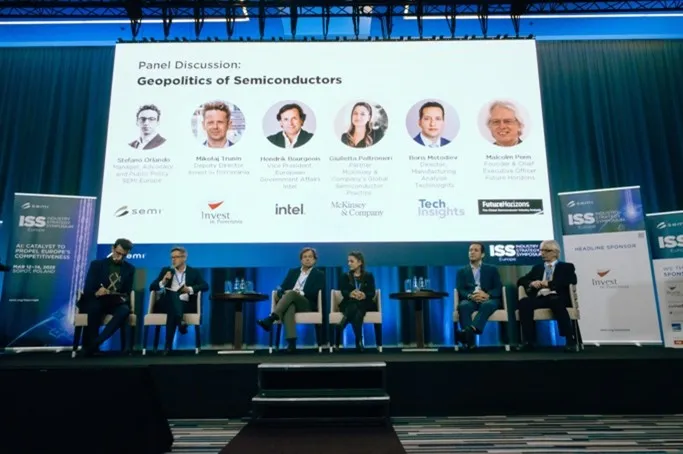
SEMI kicked off 2025 by hosting its annual Industry Strategy Symposium (ISS) gathering industry executives, government leaders, and research institutions to share insights on current and near-term business and market dynamics. Over the course of two and a half days, this key forum also provided valuable networking opportunities to foster collaboration.The event theme, Ready. Set. Ramp! aligns with the industry's goal of reaching $1T by 2030. While there is uncertainty due to global trade tensions, supply chain challenges, and talent shortages, AI-driven opportunities are proving to be a major growth driver. Another key highlight was the advanced packaging panel that reinforced the value of hybrid bonding and 3D device architectures playing a critical role in supporting AI and next-generation chips. The overarching sentiment from the event was that it's an exciting time to be in semiconductors, with unprecedented transformation and opportunities ahead. Collaboration across the industry is essential to overcoming technical challenges and accelerating innovation.SEMI leaders had the opportunity to speak with Francoise von Trapp of 3D InCites at the conclusion of ISS. Listen to the podcast to hear highlights from Joe Stockunas, President of SEMI Americas, along with market updates from SEMI’s Market Intelligence team members, with Inna Skvortsova covering semiconductor equipment and Christian Dieseldorff speaking on fab expansions. Looking aheadSEMI has many conferences and exhibitions scheduled throughout the year with opportunities for insights and networking. For the SEMI Americas region, don't miss the inaugural SEMIExpo Heartland on April 1-2 in Indianapolis, Indiana. SEMI is excited to host this event in the burgeoning Midwest U.S. region that is already seeing increased activity and opportunity for semiconductors, especially in areas around automotive electronics, smart manufacturing, machine learning, AI and workforce development. The expo is poised to spur collaboration among industry, government, and academia.A key change to note for Americas events this year is that SEMICON West is taking place in Phoenix, Arizona on Oct. 7-9. With over $100B in investments in motion, the greater Phoenix area is a growing manufacturing hub in the Southwest. There is already a lot of buzz and excitement with a sold-out venue and over 400 speakers lined up for the 3-day event. SEMICON West will return to San Francisco in October 2026 and will alternate between these two locations every other year through 2030.ResourcesPress Release: Eighteen New Semiconductor Fabs to Start Construction in 2025, SEMI ReportsPress Release: Global Total Semiconductor Equipment Sales Forecast to Reach a Record of $139 Billion in 2026, SEMI ReportsSEMI Market Intelligence ReportsSEMI ISS 2025: Ready, Set, Ramp! by Dean Freeman, 3D InCitesSEMI ContactSherrie Gutierrez, Marketing Communications ManagerEmail: [email protected]
Read More
As artificial intelligence (AI) continues to revolutionize industries, the technology behind AI chips is advancing at an unprecedented pace. Meeting the demands of faster processing, greater efficiency, and increased complexity requires cutting-edge solutions in semiconductor manufacturing. SEMI spoke with Kai Beckmann, Member of the Executive Board at Merck KGaA, Darmstadt, Germany and CEO of the Electronics business sector, who shared insights into Merck KGaA, Darmstadt, Germany's latest strategic move that underscores the company’s commitment to innovation in semiconductor and optics technologies. With the acquisition of Unity-SC, a leading provider of advanced measurement and inspection technology, this marks a significant milestone in the evolution of AI chip manufacturing and beyond by bridging expertise in electronics and optics to drive innovation.Strengthening AI Chip Manufacturing with Unity-SC On October 31, 2024, Merck KGaA, Darmstadt, Germany’s Electronics business acquired Unity-SC, a global leader in metrology tools for semiconductors. According to Beckmann, this acquisition not only enhances Merck KGaA, Darmstadt, Germany’s portfolio in advanced measurement and quality inspection but also bolsters its position in the development of AI chips. These chips, essential for driving AI, rely on cutting-edge manufacturing processes like advanced packaging and heterogeneous integration.“Unity-SC brings precision to the table,” Beckmann explained. “Its technology is vital for managing the complex production sequences involved in creating high-density, three-dimensional chip structures. Without this precision, the production of AI chips at the necessary scale and quality would be nearly impossible.”The expertise of Unity-SC is pivotal for ensuring reliability in semiconductor manufacturing, reducing waste, and optimizing performance. With Merck KGaA, Darmstadt, Germany’s established relationships with major chip manufacturers, the integration of Unity-SC's technology is set to create synergies that will benefit the entire industry.A New Era for Merck KGaA, Darmstadt, Germany: Electronics Meets OpticsThe acquisition of Unity-SC aligns with Merck KGaA, Darmstadt, Germany’s broader strategy of combining expertise in semiconductors and optics, a vision that includes rebranding its display business as Optronics. This move represents a transformation from a traditional display specialist to a pioneer in optical technologies that complement electronic advancements. “Integrating optics with electronics opens up vast opportunities,” Beckmann shared. He highlighted key areas of focus like silicon photonics, which is revolutionizing data transmission, and augmented reality, where lightweight, powerful headsets represent the next frontier.Merck KGaA, Darmstadt, Germany’s foray into these domains underscores the importance of merging light management and materials expertise. For instance, the precision metrology brought by Unity-SC dovetails with Merck KGaA, Darmstadt, Germany’s work in materials science, forming a foundation for advancements in next-generation technologies such as quantum computing and neuromorphic systems. Driving Innovation in AIAdvanced packaging and heterogeneous integration are at the core of today’s AI revolution. These technologies make it possible to stack chips in 3D configurations, reducing energy consumption and increasing processing power. “Unity-SC plays a crucial role in this process,” Beckmann noted, emphasizing that the precise measurement of intricate structures ensures the reliability and efficiency of these complex systems.By mastering these technologies, Merck KGaA, Darmstadt, Germany is positioning itself as a leader in both materials and metrology for semiconductor manufacturing. “Integrating metrology and inspection into our portfolio is a leap forward in aligning our expertise with the needs of the AI-driven semiconductor industry,” Beckmann said. Looking AheadMerck KGaA, Darmstadt, Germany’s combination of semiconductor and optics expertise is not just about advancing technology but about creating a stronger, more resilient organization capable of tackling future challenges. The integration of Unity-SC is a step toward achieving this vision, fostering innovation at the intersection of light and materials.“Working in the semiconductor industry has always been exciting,” Beckmann shared. “But now, with AI reshaping the landscape, the opportunities for innovation and growth are unparalleled. Together with Unity-SC, we’re not just keeping pace—we’re leading the charge.”Merck KGaA, Darmstadt, Germany’s strategic evolution signals a promising future for AI, semiconductors, and the broader field of optoelectronics, where the interplay of light and materials continues to unlock new horizons.Kai Beckmann is a Member of the Executive Board of Merck KGaA, Darmstadt, Germany and CEO of the Electronics business sector. Joining Merck KGaA, Darmstadt, Germany in 1989, he has held roles in IT, consulting, and international management, including as Merck KGaA, Darmstadt, Germany’s first CIO. Since 2017, he has led the Electronics sector (operating under the name EMD Electronics in the US and Canada), driving innovation in semiconductors and optics. Beckmann also oversees the Darmstadt site and co-determination in Germany. He holds a computer science degree from TU Darmstadt and a doctorate in economics earned in 1998.SEMI ContactMaria Daniela Perez, Communications ManagerEmail: [email protected]
Read More