downloadGroupGroupnoun_press release_995423_000000 copyGroupnoun_Feed_96767_000000Group 19noun_pictures_1817522_000000Member company iconResource item iconStore item iconGroup 19Group 19noun_Photo_2085192_000000 Copynoun_presentation_2096081_000000Group 19Group Copy 7noun_webinar_692730_000000Path
Skip to main content
Default Banner Image

Technology and Trends

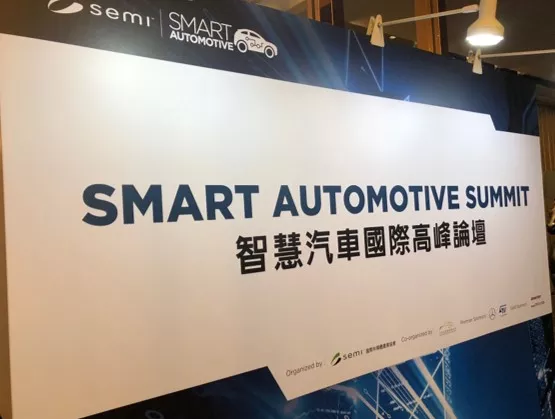
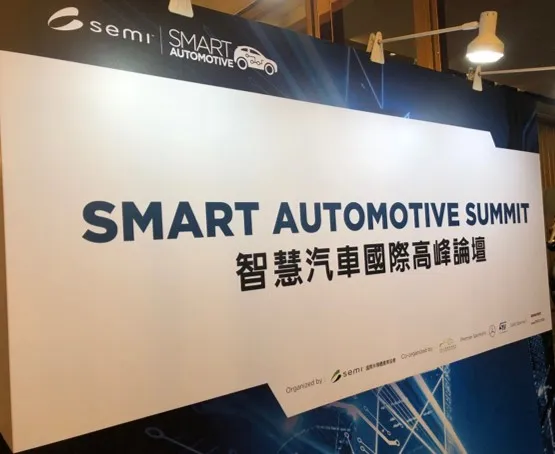
Are you ready for a shared economy where your transportation needs are no longer met by an automaker, but rather a “mobility service provider”? While smart transportation news has mostly focused on the likes of electrification (Tesla) and autonomy (Waymo), the real changes in transportation may be more fundamental than self-driving electric cars. According to presenters at this week’s Smart Automotive Summit at SEMICON Taiwan, new technologies won’t just make cars smarter: they will transform the way we see and use transportation in myriad ways.Constance Chen, public relations general manager for forum sponsor Mercedes Benz, opened with a brief overview of parent Daimler’s evolving approach to transportation, dubbed CASE, which stands for Connected, Autonomous, Shared and Services, and Electric.“The fundamental value of vehicles is changing,” Chen said, and car ownership is one of the biggest changes. Ride-sharing services like Uber and Lyft, and shared car services like ZipCar and DriveNow, are already addressing the transportation needs of a growing urban population that eschews car ownership. Traffic congestion, parking challenges, and a desire to improve air quality are key drivers (no pun intended) moving people away from car ownership to embrace shared transportation solutions.Indeed, societal considerations are as challenging as some technological hurdles facing autonomous vehicle development. Robert Brown, Taiwan operations manager for Magma Electronics, listed his top five challenges for autonomous transportation: Perception (vision, sensors) Assessment (ability of systems to analyze data) Control (need for faster-than-human response) Communication (vehicle-to-vehicle, vehicle-to-everything) Expectations—specifically people’s expectations of the value autonomous transportation should deliver As people change the way they view transportation and begin to understand what is possible when they can relinquish control of their vehicle, they’re transportation needs and expectations are likely to change. The challenges are, of course, also an opportunity to deliver a wide range of services, including information, entertainment, and retail, which opens the door for traditional carmakers to position themselves more as service providers like Mercedes Benz.For those who have grown up with traditional car ownership and the perceived freedom that owning allows one to go anywhere at anytime, the idea of giving up their car—one that they drive themselves—might seem beyond the pale. But as ride-sharing services are already showing, a growing portion of our population seems more than ready to embrace a shared and autonomous future.The SEMICON Taiwan Smart Automotive Summit is part of SEMI’s Smart Transportation initiative focusing on automotive electronics, a top priority for SEMI and its 2,000+ members. SEMI’s industry standards, technology communities, roadmap efforts, EH S/regulatory activities and other global platforms and communities bring together the automotive and semiconductor supply chains to collaborate, increase cross-industry efficiencies and shorten the time to better business results.Michael Droeger is director of marketing at SEMI.
Read More
2017 was a good year for the MEMS and sensors business, and that upward trend should continue. We forecast extended strong growth for the sensors and actuators market, reaching more than $100 billion in 2023 for a total of 185 billion units. Optical sensors, especially CMOS image sensors, will have the lion’s share with almost 40 percent of market value. MEMS will also play an important role in that growth: During 2018–2023, the MEMS market will experience 17.5 percent growth in value and 26.7 percent growth in units, with the consumer market accounting for more than 50 percent(1) share overall. Evolution of SensorsSensors were first developed and used for physical sensing: shock, pressure, then acceleration and rotation. Greater investment in R D spurred MEMS’ expansion from physical sensing to light management (e.g., micromirrors) and then to uncooled infrared sensing (e.g., microbolometers). From sensing light to sensing sound, MEMS microphones formed the next wave of MEMS development. MEMS and sensors are entering a new and exciting phase of evolution as they transcend human perception, progressing toward ultrasonic, infrared and hyperspectral sensing.Sensors can help us to compensate when our physical or emotional sensing is limited in some way. Higher-performance MEMS microphones are already helping the hearing-impaired. Researchers at Arizona State University are among those developing cochlear implants — featuring piezoelectric MEMS sensors — which may one day restore hearing to those with significant hearing loss. The visually impaired may take heart in knowing that researchers at Stanford University are collaborating on silicon retinal implants. Pixium Vision began clinical trials in humans in 2017 with its silicon retinal implants.It’s not science fiction to think that we will use future generations of sensors for emotion/empathy sensing. Augmenting our reality, such sensing could have many uses, perhaps even aiding the ability of people on the autism spectrum to more easily interpret the emotions of others.Through my years in the MEMS industry, I have identified three distinct eras in MEMS’ evolution: The “detection era” in the very first years, when we used simple sensors to detect a shock. The “measuring era” when sensors could not only sense and detect but also measure (e.g., a rotation). The “global-perception awareness era” when we increasingly use sensors to map the environment. We conduct 3D imaging with Lidar for autonomous vehicles. We monitor air quality using environmental sensors. We recognize gestures using accelerometers and/or ultrasonics. We implement biometry with fingerprint and facial recognition sensors. This is possible thanks to sensor fusion of multiple parameters, together with artificial intelligence. Numerous technological breakthroughs are responsible for this steady stream of advancements: new sensor design, new processes and materials, new integration approaches, new packaging, sensor fusion, and new detection principles.Global Awareness SensingThe era of global awareness sensing is upon us. We can either view global awareness as an extension of human sensing capabilities (e.g., adding infrared imaging to visible) or as beyond-human sensing capabilities (e.g., machines with superior environmental perception, such as Lidar in a robotic vehicle). Think about Professor X in Marvel’s universe, and you can imagine how human perception could evolve in the future! Some companies envisioned global awareness from the start. Movea (now part of TDK InvenSense), for example, began their development with inertial MEMS. Others implemented global awareness by combining optical sensors such as Lidar and night-vision sensors for robotic cars. A third contingent grouped environmental sensors (gas, particle, pressure, temperature) to check air quality. The newest entrant in this group, the particle sensor, could play an especially important role in air-quality sensing, particularly in wearable devices.Driven by increasing societal concern over mounting evidence of global air-quality deterioration, air pollution has become a major topic in our society. Studies show that there is no safe level of particulates. Instead, for every increase in concentration of PM10 or PM2.5 inhalable particles in the air, the lung cancer rate is rising proportionately. Combining a particle sensor with a mapping application in a wearable could allow us to identify the locations of the most polluted urban zones.The Need for Artificial Intelligence To realize global awareness, we also need artificial intelligence (AI), but first, we have challenges to solve. Activity tracking, for example, requires accurate live classification of AI data. Relegating all AI processing to a main processor, however, would consume significant CPU resources, reducing available processing power. Likewise, storing all AI data on the device would push up storage costs. To marry AI with MEMS, we must do the following: Decouple feature processing from the execution of the classification engine to a more powerful external processor. Reduce storage and processing demands by deploying only the features required for accurate activity recognition. Install low-power MEMS sensors that can incorporate data from multiple sensors (sensor fusion) and enable pre-processing for always-on execution. Retrain the model with system-supported data that can accurately identify the user’s activities. There are two ways to add AI and software in mobile and automotive applications. The first is a centralized approach, where sensor data is processed in the auxiliary power unit (APU) that contains the software. The second is a decentralized approach, where the sensor chip is localized in the same package, close to the software and the AI (in the DSP for a CMOS image sensor, for example). Whatever the approach, MEMS and sensors manufacturers need to understand AI, although they are unlikely to gain much value at the sensor-chip level.Heading to an Augmented WorldWe have achieved massive progress in sensor development over the years and are now reaching the point when sensors can mimic or augment most of our perception: vision, hearing, touch, smell and even emotion/empathy as well as some aesthetic senses. We should realize that humans are not the only ones to benefit from these developments. Enhanced perception will also allow robots to help us in our daily lives (through smart transportation, better medical care, contextually aware environments and more). We need to couple smart sensors’ development with AI to further enhance our experiences with the people, places and things in our lives.About the authorWith almost 20 years’ experience in MEMS, sensors and photonics applications, markets, and technology analyses, Dr. Eric Mounier provides in-depth industry insight into current and future trends. As a Principal Analyst, Technology Markets, MEMS Photonics, in the Photonics, Sensing Display Division, he contributes daily to the development of MEMS and photonics activities at Yole Développement (Yole). He is involved with a large collection of market and technology reports, as well as multiple custom consulting projects: business strategy, identification of investment or acquisition targets, due diligence (buy/sell side), market and technology analyses, cost modeling, and technology scouting, etc.Previously, Mounier held R D and marketing positions at CEA Leti (France). He has spoken in numerous international conferences and has authored or co-authored more than 100 papers. Mounier has a Semiconductor Engineering Degree and a PhD in Optoelectronics from the National Polytechnic Institute of Grenoble (France).Mounier is a featured speaker at SEMI-MSIG European MEMS Sensors Summit, September 20, 2018 in Grenoble, France. (1) Source: Status of the MEMS Industry report, Yole Développement, 2018
Read More
At a Glance “Software is eating the world ... and AI is eating software.” Amir Husain, author of The Sentient Machine, at SEMICON West 2018 We’re living in a digital world where semiconductors have been taken for granted. But, Artificial Intelligence (AI) is changing everything – and bringing semiconductors back into the deserved spotlight. AI’s potential market of hundreds of zettabytes and trillions of dollars relies on new semiconductor architectures and compute platforms. Making these AI semiconductor engines will require a wildly innovative range of new materials, equipment, and design methodologies. Moore’s Law carried us the past 50-plus years and as we’re now stepping into the dawn of AI’s potential, we can see that the coming Cognitive Era will drive its own exponential growth curve. This is great for the world – virtually every industry will be transformed, and people’s lives will get better – and it’s fantastic for our industry. This truly is the very best time to be working in our industry. I’m excited to be at SEMI in this inflection period and at the center of the collaborative platforms that bring the electronics manufacturing supply chain together to Connect, Collaborate, and Innovate to realize the new Cognitive Era. I invite you to partner with SEMI in building the foundation for the Cognitive Era to increase the growth and prosperity of our industry. The World Wakes Up Our lives have become digital. An Amazon Echo wakes us up and answers questions about the weather and traffic. Google Maps tells us the best way to get to a meeting. Yelp finds the best nearby restaurant. A Tweet now even informs us of the latest change in government policy. It’s a digital world that we live in – and the world already takes it for granted. We in the industry know that the digital world only works because of the semiconductors we make and because of our integrated electronics manufacturing supply chain. We make the materials and equipment that, in turn, make the chips that become the beating hearts of the digital economy. But, semiconductors have been largely invisible – hidden away under and inside a smart speaker, locked deep within a phone, buried in data centers and out of view. Meanwhile, the internet companies like Google, Amazon, Alibaba, Tencent, and Facebook stole the meaning of “Tech” and were given most of the credit for our digital world. But, finally, things are changing – it’s all coming back to semiconductors! AI Changing Everything Over $400B in semiconductors were sold in 2017 – those unseen chips like hearts beating away in Apple computers, in mobile phones for online shopping and social media, and in televisions showing Netflix. Now internet companies Alphabet, Alibaba, Amazon, Facebook, Microsoft and others are rushing to develop their own chips. Silicon is back in the Silicon Valley! Hardware is, once again, the place to be. Why? We are now entering the epoch of Artificial Intelligence (AI) – and semiconductors, and new compute architectures, are the key to AI. At this moment, hardware, not software, is the AI enabler to make leaps in performance and to usher in new architectures to become brain-like with neural networks. Beyond major AI chip investments like Google’s (Alphabet) $300M+ program to develop its Tensor Processing Unit (TPU) chip, there’s been a surge in new chip startups and VC funding. Last year, VCs (with corporate investors) invested more than $1.5B in new AI chip startups – doubling the rate from the prior year. After years of consolidation, there is, as some have described, a “Cambrian Explosion” of semiconductor startups with names like Cerebras, Graphcore, Wave Computing, Horizon Robotics, Cambricon Technologies, and DeePhi from the US, Europe, and China. Cambricon (China) has already become the first AI chip “Unicorn” (startup valued $1B+) with a valuation of more than $2.5B after their recent Round B financing. It’s a new silicon world and a new race, as Cade Metz (The New York Times, 1/14/2018) said, “… everyone is starting from the same place: the beginning of a new market.” Winning at AI is very big business. John Kelly, SVP Cognitive Solutions and Research at IBM, in his SEMICON West keynote earlier this month, said, we’re in the era of Artificial Intelligence with more than a $2T opportunity for AI decision making support on top of the $1.5T IT business in 2025. McKinsey estimates deep learning could account for between $3.5T and $5.8T in annual value. As John Kelly presented, AI will transform entire industries – not just our personal devices and lives. The $2T AI decision making support opportunity in 2025 is projected to transform the major economy industries as follows: Source IBM Market Development Insights Analysis; Oxford economics, CapitalIQ, McKinsey Global Institute Moore’s Law describes the exponential increase in the number of transistors per area that has driven growth, and has been the engine for digital innovation, through first the computer era and then the mobility era and now into the dawn of the data era. While the Dennard scaling approach to Moore’s Law may be slowing, the data-centric era continues to drive demand and the industry continues to find new ways to pack more transistors into less volume. Chip sales are forecast to pass $0.5T in 2019 and I predict they will surpass $1T before 2030. It turns out the Smart is not enough – we must reach “Beyond Smart.” Beyond Smart – The Cognitive Era As we move further into the data-centric age, we see it is more than Big Data and AI, it is, instead, the dawn of a wholly new cognitive era. SEMICON West’s 2018 theme was “Beyond Smart” because we are standing at the inflection from sensors triggering actions (smart) to systems that learn and make decisions (cognitive). Devices are moving “beyond smart” to being “cognitive or aware.” Gary Dickerson (CEO of Applied Materials) at SEMICON West said, “… we are in the beginning of the first inning of a major inflection.” Even in the early dawn of the cognitive era, the volume of data is simply astonishing. In the last 24 months, we create more than 90% of all historic digital data. By 2025 we expect AI to generate 160 zettabytes – with 80% of that unstructured data. Moore’s Law is an exponential, but as John Kelly points out, AI’s deep learning is driving its own exponential with performance/watt increasing 2.5X each year. Source: IBM AI was the focus of SEMICON West’s Day 1 keynotes – and a common theme through much of the events programming. There was a common language in the keynotes by John Kelly, Gary Dickerson, and William Dally (Chief Scientist and SVP of Research NVIDIA), and others. We heard how AI is based on data, algorithms, and compute. I was inspired by these talks and for the potential for AI and the cognitive era. Looking ahead, I believe data + algorithms + compute + machine learning = knowledge and cognition. My vision is that this AI knowledge and cognition will be the catalyst to create new modes of systems transformations that will usher in the next Industrial Revolution. As the 4th Industrial Revolution becomes a reality, I look forward to working with others in SEMI Think Tanks to imagine the 5th Industrial Revolution – and its opportunities for our industry. I believe that it will make our lives better, healthier, more prosperous, and more fulfilled. A sentiment shared by many speakers at SEMICON West was – this is the most exciting time to be in the semiconductor manufacturing industry. Many wished they were just now starting in the industry as this is the most interesting inflection and transformation ever. There is a flood of new architectures, new materials, new equipment, new processes – and a new system-based design approach to enable the Cognitive Era. We, in hardware manufacturing, are in the driver’s seat for this incredible ride. SEMI is working to help its members speed their time to better business results – and to take full advantage of the Cognitive Era and AI opportunity. At SEMICON West 2018, SEMI provided a broad and deep slate of program education and spotlighted AI expertise across the electronics manufacturing supply. In case you missed it, SEMI also provided: Seven keynotes and dozens of expert panelists Semiconductor venture funding program – problems and solutions for the ecosystem SEMI Smart Workforce Pavilion with over 600 students registered to learn about the industry Smart Pavilions including Smart Manufacturing and Smart Automotive SEMI highlighted the five key vertical application platforms where our industry needs to collaborate across the full supply chain and streamline the supply chain for efficiency. The five are: IoT, Smart Transportation, Smart Manufacturing, Smart MedTech, and Smart Data. These verticals drive huge business potential and are just one of the reasons that SEMICON West has become the gathering place of the extended electronics manufacturing supply chain. With SEMI, together we can realize the potential of the coming Cognitive Era. SEMI members can advance the industry with SEMI collective action in Workforce Development, Advocacy (public policy and regulatory), Standards to synchronize the industry, and in the many SEMI technology communities and special interest groups – to increase the global industry’s rate of growth and overall level of prosperity. For more information, please visit www.semi.org; to become a member, please visit http://www.semi.org/en/become-member-join-semi. Ajit Manocha is President and CEO of SEMI
Read More
pSemi (formerly Peregrine, now a Murata company) has staked its claim for having the world's first monolithic SOI Wi-Fi front-end module (FEM)—the PE561221. This 2.4 GHz Wi-Fi FEM is the first to integrate a low-noise amplifier (LNA), a power amplifier (PA) and two RF switches (SP4T, SP3T) on a single SOI CMOS die. pSemi says it's ideal for Wi-Fi home gateways, routers and set-top boxes (read the full press release here). Driving this is the new WiFi standard, IEEE 802.11ax, which launches next year. While it's largely meant to tackle issues with WiFi in crowded places, it's also going to be welcome in high-demand home situations. (There's a good piece on the NetworkWorld site on what 802.11ax will do compared to the current 802.11ac – you can read it here). [caption id="attachment_12252" align="alignright" width="300"] The PE561221 uses a smart bias circuit to deliver a high linearity signal and excellent long-packet EVM performance. (Courtesy: pSemi)[/caption] With new standards come new challenges. pSemi explains their PE561221 uses a smart bias circuit to deliver a high linearity signal and excellent long-packet error vector magnitude (EVM) performance. “Traditional process technologies struggle to keep up with both performance and integration requirements, and only SOI can offer the ideal combination of integration and high performance,” says Colin Hunt, vice president of worldwide sales at pSemi. The monolithic die uses a compact 16-pin, 2 x 2 mm LGA package ideal for either stand-alone use or in 4 x 4 MIMO and 8 x 8 MIMO modules. It is based on pSemi’s UltraCMOS® technology platform—a patented, advanced form of SOI that offers superior performance compared to other mixed-signal processes. UltraCMOS technology also enables intelligent integration, notes pSemi—the unique design ability to integrate RF, digital and analog components on a single die. Volume-production parts and samples of the PE561221 are now available from pSemi. And this is just the beginning: while the PE561221 is the first product in the pSemi Wi-Fi FEM portfolio, the product roadmap includes 5 GHz Wi-Fi FEM solutions. The folks at pSemi have been doing RF-SOI for 30 years now, and recently shipped their 4 billionth chip. For the last five years, they've partnered with GlobalFoundries.
Read More
FD-SOI was a very important topic during the recent Mount Qingcheng China IC Ecosystem Forum. To situate things, Mount Qingcheng, with its lush hills and waterways, is located just outside of Chengdu. That of course is where GlobalFoundries is building its new fab, which will be the first in China to run FD-SOI. Chengdu is also a key city in China's automotive electronics landscape. [caption id="attachment_12236" align="alignright" width="300"] (Image Courtesy: VeriSilicon)[/caption] The theme of the forum was Building a Smart Automotive Electronics Industry Chain. Over 260 decision-makers from government, academia and industry attended – and the SOI Consortium had a significant presence. The event was chaired by Wayne Dai, CEO/Founder of consortium member VeriSilicon, and tireless champion of the the FD-SOI ecosystem in China and worldwide. Morning keynotes were given by: Carlos Mazure, Soitec CTO and SOI Consortium Executive Co-Director; Mark Granger, GF's VP of Automotive Product Line Management; and Tony King-Smith, Executive Advisor at AImotive, a GF 22FDX customer. BTW, transcripts of all the talks are available through Gasgoo, China's largest automotive B2B marketplace. You can click here to access them. (They're in Chinese – but you can open them in the language of your choice using the major translation websites.) Chengdu Officials Affirm Support for FD-SOI Fan Yi, Deputy Mayor of Chengdu, spoke extensively of FD-SOI in his keynote on the importance of rapidly developing smart cars. He heralded the “spectacular” new GlobalFoundries fab there. Following a meeting with the company's top brass the day before, he affirmed GF's confidence in their investment. There is a solid roadmap for FD-SOI, he noted, and efforts are underway to accelerate the move into production and expand education and training. He cited the benefits of FD-SOI for the entire supply chain, from design through package and test, raising the level of the entire IC industry to new heights. The government, he said, attaches great importance to this enterprise. Their thinking regarding intelligent transport in China is integrated with the overall approach to smart cities. SOI Consortium Leads Industry Keynotes [caption id="attachment_12232" align="alignleft" width="300"] Wayne Dai, VeriSilicon Founder and CEO (Photo courtesy VeriSilicon)[/caption] In his opening remarks, Wayne Dai emphasized the need for China to seize the advantage in the next round of development opportunities in the automotive electronics industry. This year's Qingcheng forum, he noted, brought together key representatives from across the supply chain, from of the highest to the deepest reaches of the smart car electronics industry, and across markets, technologies, solutions, industrial ecosystem, standards and regulations. In his talk on how FD-SOI is boosting the accelerated development of automotive electronics, Carlos Mazure presented the SOI Industry Consortium. He noted that the Consortium promotes mutual understanding and development across the ecosystem. SOI is already present throughout automotive applications, he noted. There are currently about 100mm2 of SOI per car, in such diverse areas power systems, transmissions, entertainment, in-vehicle networking and more. SOI will experience especially high growth in electrification, information/entertainment, networking, 5G, AI/edge computing and ADAS. He then went on to give some history and an extensive overview of the major trends and highlights we've seen over recent years. He finished by giving examples of convergence across the supply chain with IC manufacturers working with automakers to lower power, increase processor performance and advance 5G. [caption id="attachment_12233" align="alignright" width="665"] Carlos Mazure, Soitec CTO and SOI Consortium Executive Co-Director; Tony King-Smith, Executive Advisor at AImotive and Mark Granger, GF's VP of Automotive Product Line Management (Photo courtesy VeriSilicon)[/caption] GF's Mark Granger addressed the rapid development of automotive electronics. In certain areas, he said, he sees growth rates of over 20%. They are working on building the Chengdu ecosystem, especially for design, and in cooperation with the rest of the supply chain. Furthermore, he reminded the audience, when you talk about cars, travel implies that you also talk about IoT as well as things like infotainment and integrated radar ICs. In addition to cost and power efficiencies, the AEC-Q100 standard for IC reliability in automotive applications is also pushing designers to turn to FD-SOI. In the GF meeting with Chengdu government officials (referenced above in deputy mayor Fan Yi's talk), he too confirmed their support of FD-SOI as a key technology for China. GF is currently cooperating with about 75 automotive partners, he said, and the company is looking to increase cooperation with partners in the Chengdu region. Tony King-Smith talked about the 22FDX test chip AImotive is doing with Verisilicon and GF. In case you missed it, in June 2017 AImotive announced its AI-optimized hardware IP was available to global chip manufacturers for license. AiWare is built from the ground up for running neural networks, and the company says it is up to 20 times more power efficient than other leading AI acceleration hardware solutions on the market. In the same announcement, they revealed that VeriSilicon would be the first to integrate aiWare into a chip design,and that aiWare-based test chips would be fabricated on GF's 22FDX. The chip is expected to debut this year. While the afternoon agenda was not specific to FD-SOI, it did focus on the "smart cockpit" and "intelligent driving", with talks by nine leading players in China's automotive IC and investment communities. ~ ~ ~Note: Many thanks to the folks at VeriSilicon, who wrote up this event for their WeChat feed, and shared photos with us here at ASN.
Read More
IntroductionStarting July 4, 2022, PFOA (Perfluorooctanoic acid) levels in semiconductor manufacturing and related equipment (SMRE), including replacement parts, entering the European Union (EU) will be restricted to 25 ppb per component (or any part thereof). Semiconductor equipment components (and the parts thereof) of particular concern include fluid tubing and fittings, pipe/seal tape, wire and cable insulation, filters, valves, tanks, panels, reaction vessels and o-rings; if they are made from fluoropolymers or fluoroelastomers.When PFOA is used as an aid to the manufacture fluoropolymers such as PTFE, PFA, PVDF or fluoroelastomers such as FKM and FFKM (collectively referred to as fluoromaterials), an unintended PFOA residue can be trapped within the fluoromaterial. Buyers of components used in SMRE are usually unaware of the processing method used for any fluoromaterials they may contain, and, as a consequence, the potential for PFOA residue. This lack of information about potential PFOA residues could result in regulatory enforcement actions and restricted market access, particularly in the EU.The impact of restrictions on fluoromaterials used in SMRE has been introduced in previous SEMI articles ‘Fluorinated Compound Restrictions May Trigger Costly Equipment Changes’ and ‘Fluorinated Substance Restrictions Triggers Costly Equipment Changes.’PFOA and its related compounds, such as the ammonium salt APFO (collectively called PFOA in this article), are recognized internationally as hazardous chemicals and are now targeted for regulatory restriction in the U.S., Taiwan, Canada and the EU. The UN Stockholm Convention on Persistent Organic Pollutants (POPs) is also considering listing PFOA, which could lead to additional international restrictions.The SEMI EHS Division PFOA Compliance Working Group has been working to understand: The likelihood of PFOA residue entering the supply chain of new components The residual level of PFOA in fluoromaterials produced prior to the phase out of PFOA by some manufacturers The impact of PFOA residue on the secondary equipment market This SEMI resource page, ‘Elimination of PFOA from the Equipment Supply Chain,’ and the supporting FAQ contain the Working Group’s key findings and conclusions.PFOA in the Fluoromaterial Supply ChainSignatories to the U.S. EPA Stewardship Program, which include FluoroCouncil members, eliminated PFOA from their manufacturing processes by 2013. However, other fluoromaterial manufactures – particularly in China, Russia and India – might still use PFOA and pose a significant risk to the worldwide supply chain.China, the world’s largest fluoromaterial producer, accounts for 53 percent of global production of PTFE and 38 percent of worldwide production of PVDF, FEP and FKM. An estimated 75 percent to 85 percent of fluoromaterials are manufactured using PFOA in China. Fully 25 percent of these fluoromaterials are exported, primarily to the U.S, Japan, EU and India. What’s more, finished goods made from or containing fluoromaterials that might be used as components in SMRE are exported from China.Documentation that traces fluoromaterials through the supply chain back to the original fluoromaterial manufacturer is key to meeting the PFOA regulatory requirements. This traceability can be straightforward in cases when an SMRE manufacturer directly specifies the use of a fluoromaterial in a custom-fabricated fluoromaterial component. However, for off-the-shelf components (e.g., cable ties, wiring insulation, tubing) or the components assembled from these components (e.g., controllers), the complexity and dynamics of the supply chain makes traceability back to the original fluoromaterial producer almost impossible.Residual PFOA Levels If, or how much, PFOA/APFO residue is contained in a fluoromaterial depends on the manufacturing process. Details of the manufacturing processes are proprietary and vary widely. Post manufacturing thermal treatments, such as sintering, extrusion, and molding, can result in the rapid thermal decomposition of APFO above 250C, but PFOA is significantly more stable. The temperature and time of thermal treatments is also proprietary and varies depending on the type of fluoromaterial and what is being made.This variability makes it impossible to estimate the likely level of trapped PFOA or APFO in a finished component or a part thereof. It is unwise to use data on the level of residue made known for one case to extrapolate the level of residue across the fluoromaterial industry. However, an industry-wide range on the order of 1ppm-10ppm (nearly 1000 times the EU limit) is suspected. Testing for the presence of PFOA/APFO at 25ppb in components is also problematic as there is no standard test method, and results among the custom methods developed in each test lab may vary.Given this uncertainty in test methods, a system of supplier declarations warrants consideration.Impact on Secondary (Used) EquipmentThe EU REACH restrictions apply to SMRE and replacement parts placed on the market at any time (not just initial placement – known as “first placing on the market”). For fluoromaterial components manufactured prior to 2013, there is a higher likelihood of residual PFOA/APFO levels exceeding the 25ppb limit of EU REACH. In principle all the SMRE components containing fluoromaterials should be investigated, and those containing PFOA above 25ppb must be replaced before the SMRE can be legally placed again on the EU market. Companies (e.g., semiconductor manufacturers) in the EU who wish to sell used equipment within the EU will be required to demonstrate the used equipment is in compliance. Selling older used equipment would likely be unprofitable after necessary investigations and component replacements are completed.Next StepsWhile the EU semiconductor manufacturing industry heavily depends on the secondary (used) equipment market, EU regulators may be unaware of the PFOA restriction’s damaging impact to this market. The EHS Division PFOA Working Group, in conjunction with SEMI Europe, is now considering how to bring this concern to the attention of regulators and to collaborate and lobby for effective changes including possible modifications to the EU Persistent Organic Pollutants (POPs) regulation.
Read More
Ahead of his presentation on the future of wearables at the European MEMS Sensors Summit 2018, 19-21 September in Grenoble, France, SEMI spoke with Dr. Peter Weigand, vice president, Business Strategy and Portfolio Management, Bosch Sensortec GmbH. Dr. Weigand gave a glimpse into insights he’ll share at the event.1. Wearables such as smartwatches, fitness trackers or hearables are becoming ubiquitous – but what are the must-haves for wearables for daily use by wearers?We see that users nowadays want to track their activities such as steps walked, calories burnt and floor levels “climbed” on a daily and holistic basis. “Quantifying yourself” is becoming an overall trend in our society with health, fitness and well-being continuously gaining in importance. This is only possible if information about activities is delivered comprehensively in an accurate manner. Therefore, at Bosch Sensortec we provide MEMS sensors that measure the user’s activity very precisely. For example, the smart sensor hubs BHI260 and BHA260 provide sophisticated in-sensor algorithms (e.g. activity recognition) with very low latency and guaranteed performance due to the real-time nature of the embedded software. From the system manufacturer’s perspective, “quantifying yourself” on a 24/7 basis means that the device has to be “always-on.”However, these always-on functions usually consume a lot of battery power, which poses challenges to the manufacturers and system designers, as the battery capacity is usually small due to the size of the wearable. This shows two other must-haves for the users nowadays. First, the compact size of the device. While smartphones have become larger, users of wearables benefit from the devices’ small size and their low weight, offering the possibility to wear them directly on the body. Therefore, we design the footprint and height of our MEMS sensors as small as possible to ensure the compact size and the ease of integration into new, stylish types of wearables. For example, the BMP388, measuring only 2 x 2 x 0.75 mm³, qualifies as the world’s smallest barometric pressure sensor. The second requirement in this regard is long battery life. Users do not want to charge their wearable device every other day, as this would also impede the always-on activity tracking aspect. At Bosch Sensortec, we hence provide MEMS sensors that run at ultra-low power to ensure always-on endurance and a long battery life. The BMA400 is an ultra-low power acceleration sensor that draws ten times less current than existing accelerometers.2. Are there any other user requirements for wearables?Yes, we see for example that just tracking the number of steps or the calories burnt is not enough anymore. Users require multi-functional devices that also provide information that can be used to monitor sleeping behaviour, navigate in cities, or prepare your smart home for your arrival. We are equipping our sensors with more features and developing new types of sensors that add new functionalities to wearable devices. For example, we have developed a smart watch Projection Module that can project information on the back of the user’s hand for an additional, enlarged display. While smart watches are rising in popularity, demand for basic wristbands is waning. Users are paying more attention to device design. Like clothing, the look and feel of the device should support the user’s individual style.At the same time, with more fashion brands are entering the wearables market we are providing sensors that are easy to integrate into new types of wearables such as hybrid watches. Our products feature a small form factor to ensure flexible, simple design-in. For example, the new BMA400 acceleration sensor easy to design into various applications. Finally, to conform to the user, the wearable must adapt to the user’s individual habits and motions such as learning different gestures, requiring the devices to be not only smart but increasingly intelligent with artificial intelligence (AI). We are providing sensors, such as the BHI260, with embedded, local intelligence with advanced algorithms that enable devices to learn. We are developing intelligent software solutions that use deep learning, enabling device to adapt to the user’s individual behaviour.3. What current techniques are design engineers using to reduce power consumption of wearables?Several techniques are being developed to reduce power consumption. The goal largely is to reduce the power draw of components that are always-on, such as the screen in a smartwatch. In activity trackers, the motion sensor is always on to sense, track, classify and store motion data. Reducing the power needed to operate these features will cut total system power consumption as well. A good example is our BMA400 accelerometer that has a current consumption of less than 1 µA in full operation.At the same time, it independently processes sensor data. For example, the device converts the three-axis motion sensor data stream into step counting events. This allows the main (host) microcontroller to remain in the stand-by mode required for activity tracking and to be activated by the accelerometer to deliver full power only, say, every 100 steps. The sensor, rather than the microcontroller, manages the overall duty cycling of the microcontroller to reduce system power and increase overall efficiency.4. What alternatives are engineers exploring to reduce power consumption? What is the role of intelligence directly within sensors for local processing capabilities in wearables?We have seen how the BMA400 can reduce power by integrating the motion classification functions. We can take this concept further by integrating a microcontroller that’s specifically tailored for low-power sensor data processing, such as the “fuser core” that Bosch Sensortec uses within its smart sensor hubs such as BHI260 or BHA260. The built-in sensor data fusion and machine learning hardware accelerators make it uniquely suited to reduce overall system power. The concept of edge computing has been around for many years, but only in this and the previous sensor generation with built-in local intelligence are we reducing the full power profile of the wearable device. Our sensor architecture design allows us to process the power locally in the MEMS sensor without waking up the main application processor.5. What technologies are you developing to lengthen battery life without compromising performance? We are continuously improving the MEMS and ASIC designs of our sensor portfolio to drive ever higher power efficiency. The BMA400 draws 10 times less current than existing accelerometers while delivering solid high performance (e.g. low-noise data). 6. Wearable device feature and performance requirements are continuously rising. Will batteries need to be larger to support these requirements? Since the beginning of the portable consumer electronics, improving batter life and reducing chip power consumption have been parallel efforts, a trend we expect to continue. However, we expect a greater focus on the overall system power reduction with sensors managing the power, turning on and off microcontrollers, radios (including GPS) and displays in wearable devices.7. What do you expect from European MEMS Sensors Summit 2018 and why do you recommend attending in Grenoble?The European MEMS Sensors Summit is a very important platform for us. It is an opportunity to meet partners, customers, industry leaders, to exchange ideas and to get new insights and thus to ultimately refine our solutions for our global customer base. Our ultimate goal is to improve people’s individual lifestyle and well-being.Serena Birschetto is a marketing communications manager in SEMI Europe.
Read More