downloadGroupGroupnoun_press release_995423_000000 copyGroupnoun_Feed_96767_000000Group 19noun_pictures_1817522_000000Member company iconResource item iconStore item iconGroup 19Group 19noun_Photo_2085192_000000 Copynoun_presentation_2096081_000000Group 19Group Copy 7noun_webinar_692730_000000Path
Skip to main content
Default Banner Image

Technology and Trends

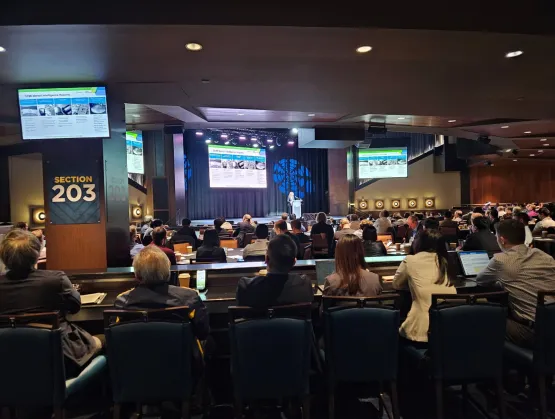
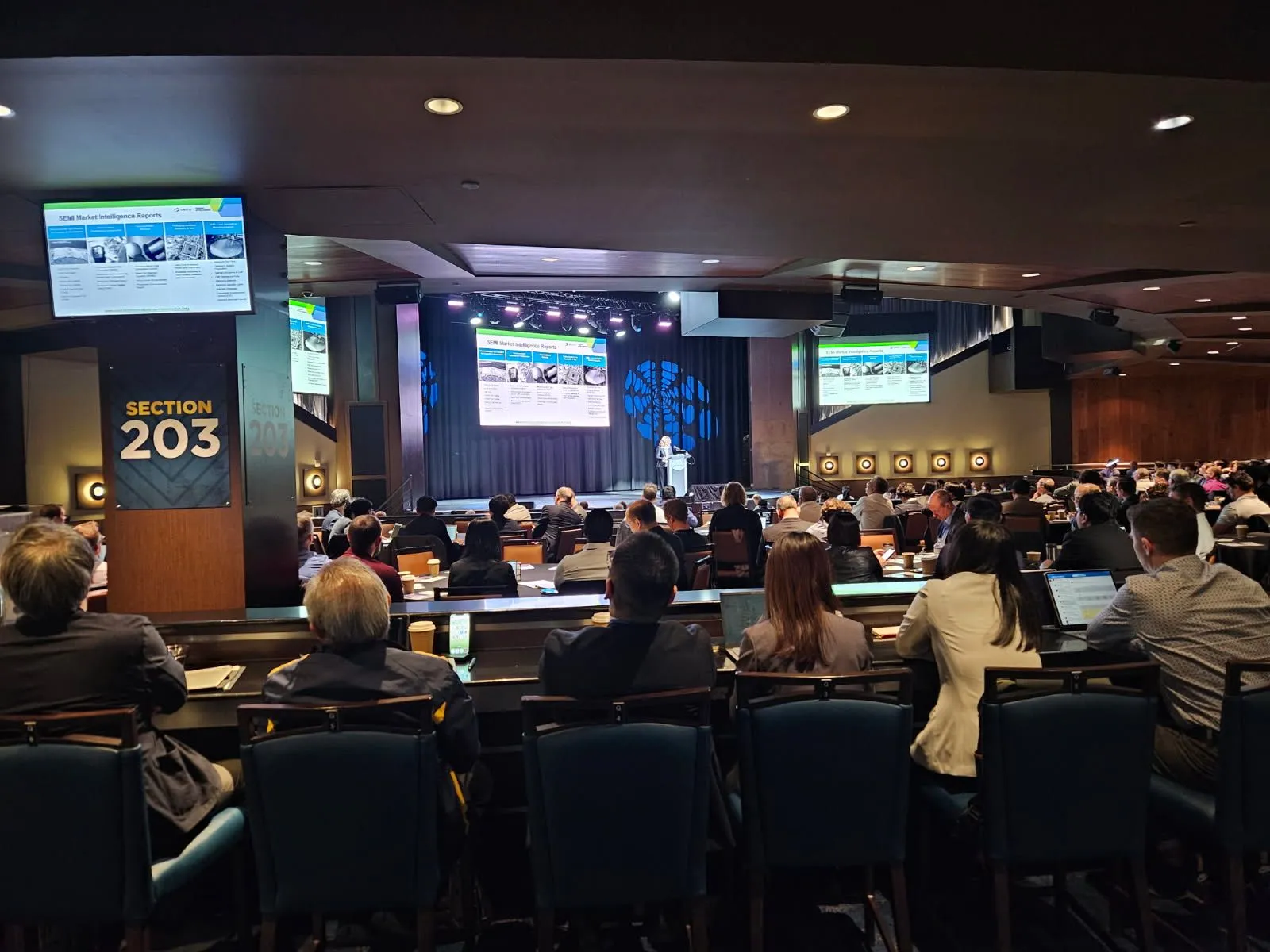
With edge AI emerging as a clear driver of smart manufacturing, SEMI hosted a two-day workshop detailing the future of this technology. The workshop, Smarter Sensors, Smarter Fabs: AI at the Edge in Semiconductor Manufacturing, was held in-person from March 18-19 in Milpitas, California. It convened industry professionals to explore how AI-driven sensors and edge intelligence are fostering scalable and resilient solutions for the next generation of semiconductor manufacturing. The workshop took place across four sessions, with each highlighting a unique edge-AI implementation area – including process control, yield enhancement, tool coordination, and predictive maintenance – and featured keynotes from leaders at Lam Research and KUKA. Didn’t get a chance to attend in person? View this workshop on demand. Session 1 - Smart Sensors and Edge Intelligence for Advanced Process Control​The semiconductor industry has always been defined by precision. However, as device architectures shrink to angstrom-scale dimensions, and as wafers become thinner and more fragile, traditional process control tools are reaching their limits. Sampled, low-frequency, univariate monitoring systems were built for an era where deviations were visible, failures were catchable later, and a handful of sensors per tool were enough to keep yield in check. Session 1 explored the latest sensor technologies, discussing how data collection at the point of production, with AI embedded directly into the tool, is becoming paramount for success. Advanced in-situ sensors were brought up as an example of this in practice. Although these sensors are generating richer signals than in the past, reaching lower latency requires AI models deployed at the edge.In addition, AI is extending into the physical world through robots that can handle various tasks autonomously. These robots are enabled by digital twins that provide simulation environments for training and validation before they ever see the fab floor. The common thread across Session 1 was the growing need for data and knowledge integration in fabs. Smart sensors must be built into AI systems, and those systems must be scalable across tools without sacrificing speed or reliability. Finally, the insights they generate must flow back into maintenance optimization and equipment health monitoring to promote a continuous cycle of learning. Session 2 - Yield Enhancement Through Edge-Driven Defect Detection and Classification​ Session 2 focused on how edge AI models, process sensors, and image data can identify yield-impacting defects earlier in the manufacturing process. As semiconductor devices lean into 3D architectures, the complexity and volume of data have outpaced the capabilities of traditional monitoring tools. Today's fabs are required to evaluate terabytes of inspection images per hour, as well as tool sensor traces that require analysis across dozens of parameters simultaneously. Each speaker approached this challenge from a different angle, yet the solutions fit together into a coherent architecture. One introduced Gaussian Process Regression, a model for assessing both predictions and uncertainties, as a statistically rigorous, data-efficient method for learning "golden trajectory" baselines for tool sensor signals. This generates actionable scores and maintenance guidance beyond standard anomaly alerts. Another speaker demonstrated the ability of deep learning models to triage multi-gigabit-per-second image streams in milliseconds. AI-based defect classification was shown to compress root cause analysis timelines from days to hours, with demonstrated gains of a 0.3% die yield recovery and 0.5–1% yield exposure prevention. Predictive metrology for RF filter frequency also assessed device performance using upstream process data, with less than 0.02% error.Lastly, a software-defined automation framework built on open standards and vendor-neutral architecture demonstrated effective workload consolidation onto a single edge platform. It was shown to be scalable across fabs without replacing legacy infrastructure.These presentations stressed the importance of measurement and action in real-time at the tool level. Gathering information as early as possible, using AI to triage and classify, and feeding insights back into process control and maintenance workflows, allows for a continuous cycle of improvement.Session 3 - Autonomous Work in Process Movement: Robots, Sensors, and Edge AI Coordination​The "lights out" factory is shifting from an aspiration to a concrete, engineering roadmap. To fully realize this, each presentation in Session 3 highlighted the importance of supplementing human-dependent workflows with AI systems that can act in real-time. This shift will require a mix of deep reinforcement learning and AI-based perception approaches. Currently, deep reinforcement learning is training agents to discover new routing strategies that optimize yield, equipment effectiveness, cycle time, and queue-time compliance – including joint front and back-end-of-line coordination for advanced packaging. AI-based perception is also on its way to replacing manual, pre-shipment inspection checklists, demonstrating inspection time reduction by as much as 78%. To enable these improvements, presenters suggested private 5G as the foundational connectivity infrastructure. Currently, private 5G is helping eliminate dead zones and bandwidth issues that are preventing real-time machine data and connected robotics from reaching their full potential.Based on these presentations, the prevailing formula is to integrate intelligence at every level. This includes precise in-situ sensing to eliminate manual setup and measurement, edge AI models that act on data immediately, platforms that coordinate across tools without humans, and lastly, a reliable connectivity infrastructure.Session 4 - Predictive Maintenance at the Edge: From Vibration to VisionSemiconductor fabs have long operated in a state of crisis management. Fab managers spend between 40% and 70% of their time firefighting unexpected equipment failures, rather than executing planned maintenance strategies. Unplanned downtime in semiconductor manufacturing can cost up to $1 million per hour, yet the maintenance industry has been slow to move beyond reactive repairs. Fab managers need faster ways to determine issues and act on that knowledge before wafers are lost. Session 4 outlined a framework for how this transformation will happen. At the foundation, smarter sensors (vibration, acoustic, thermal, spectral, and vision) are generating the high-fidelity, multi-modal data streams that make predictive models possible. In addition, "ultra edge" AI accelerators are enabling machine learning inference to happen directly inside MEMS sensors and on-device hardware without cloud dependency. Fabs require low-latency, data-sovereign, real-time decisions that the cloud is unable to support, and the path forward requires an integrated chain of sensing, edge inference, health scoring, and maintenance scheduling. This session also made the case that irrelevant correlations and confounding variables make purely statistical AI unreliable for root cause analysis, and that causal AI models are required to give fabs actionable information. It concluded that cybersecurity concerns, soaring cloud infrastructure costs (datacenter GPU prices reaching $25,000–$50,000 each in 2025–2026), and latency requirements have made distributed, machine-local intelligence the only viable path to achieving autonomous fabs. SummaryThis workshop highlighted how edge AI, smart sensors, and advanced connectivity are transforming semiconductor manufacturing by enabling real-time process control, faster defect detection, and more autonomous operations. Across sessions, experts emphasized that integrating AI directly at the source of data is essential for improving yield, reducing downtime, and building scalable, resilient “smart fabs.”Learn more by registering for this workshop on demand, or view the recap videos on LinkedIn. Day 1 recap Day 2 recap The SEMI Manufacturing Coalitions include Smart Manufacturing, Fab Owners Alliance (FOA), MEMS and Sensors Industry Group (MSIG), Advanced Packaging Heterogeneous Integration (APHI) and Semiconductor Components, Instruments, and Subsystems (SCIS).Anshu Bahadur leads the Smart Manufacturing Initiative, Karim Somani leads the Fab Owners Alliance (FOA), and Paul Carey leads the MEMS and Sensors Industry Group (MSIG), all of which are part of the Technology Coalitions at SEMI.
Read More
The SEMI Smart Manufacturing Initiative is a global effort focused on leveraging the most advanced technology to enhance productivity of electronics manufacturing facilities. Among the key technology advances this group seeks to promote is the value of implementing Industry 4.0/5.0 technology to deliver increased return-on-investment (ROI). A recent white paper published by the initiative focused on the productivity improvements that can be achieved by the formation of digital twins in semiconductor plants [1]; however, sustainability was not the focus, providing an opportunity for future pre-competitive work.To address this, the SEMI Smart Manufacturing Initiative formed the Accelerating Sustainability with Smart Manufacturing task force in 2023 to benchmark industry best practices that enable manufacturing facilities to meet their sustainability goals faster. The roadmap would complement the SEMI Sustainability Initiative by following a bottom-up approach to identifying the industry’s best practices. The task force primarily focused on fab device production, which is widely seen as the largest driver of the microelectronics industry’s Scope 1–2 emissions, water use and hazardous waste consumption, versus other branches of the supply chain.This task force developed a comprehensive solutions-based Scope 1 (process-based, direct) and Scope 2 (energy-based, indirect) emissions roadmap, incorporating the Connecting, Sensing and Predicting pillars developed by the Smart Manufacturing Initiative [2], and applied them at cleanroom, subfab and facilities levels for brownfield device-making facilities. While these phases are meant to be cumulative for maximum impact on targeted sustainability metrics, the SEMI task force understands that not every fab that applies the roadmap as a tool for sustainability purposes will advance use cases all the way to the Predicting phase. Moreover, special use cases are defined for greenfield fabs in a separate section of the roadmap, covering new infrastructure and more disruptive changes to existing operations to guide streamlined deployment. These key features are the foundation used to develop the first half of the roadmap for addressing Scope 1 and 2 emissions, leveraging Industry 4.0/5.0 technology, and published as a collaborative SEMI white paper [2]. The second half of the roadmap presented at SEMICON West 2025 [3] is covered in this latest white paper [4] and follows the same methodology though focused on reducing water consumption and hazardous waste in device-making fabs. Altogether, both SEMI white papers comprise the first comprehensive semiconductor industry roadmap covering carbon emissions, water and hazardous waste, while emphasizing the benefits of smart technology. The roadmap numerically rates each innovative use case in terms of relative impact on reducing a fab baseline void of smart elements and based on technology readiness level (TRL) with respect to future production capability. This functional roadmap will be available soon to the industry as a customizable model, denoted as the SEMI Smart Sustainability Model (SSM), wherein users can estimate sustainability gains by applying some or all listed use cases based on the nature of the facility’s sustainability profile and goals (i.e. relative proportion of water consumption sources at all levels of their operation, by adjusting weighted impact factors in the model). A base case assessment of proportional resource consumption representing an industry average 300mm fab, based on published data and task force estimates, is provided for fabs without detailed tracking to constitute the SEMI Smart Sustainability Roadmap.Many sustainability organizations across the semiconductor industry are focused on problem-based assessments which often highlight water scarcity or total industry carbon footprint growth and this can lead to IDMs, foundries, OSATs and others in the supply chain tackling sustainability from an isolated, project-based perspective. Moreover, a top-down approach to sustainability in fabs does not scale as well as a bottom-up approach to counteract the issue of increasing device process complexity and the larger associated process flow, requiring a higher amount of carbon emissions, water and hazardous waste, which needs to be addressed. For instance, a purchase power agreement for renewable energy is determined based on a finite amount of expected fab energy usage. However, energy-efficiency aided by AI across all levels of the fab is much more scalable, as a fab expands or additional process steps are added per product. Therefore, a data-driven approach, tracking emissions, water, and waste and linking technologies to future targets, is most effective, making this roadmap unique in scope and approach. A unified fab-wide data platform leveraging digital twins can further improve outcomes by linking water and waste metrics with downstream KPIs like recycling rates.The roadmap’s best practices can apply to any device-making fab, as it relies on Industry 4.0/5.0 technologies rather than compromising process flows as in alternative fab sustainability models. ROI benefits identified include cost-savings on process materials, utilities, regulatory, and labor plus higher yield and shorter cycle time after implementation. In summary, the use cases within the customizable model are quantified based on normalized impact to the current baseline level so that device-makers can benchmark themselves and prioritize investment in the most effective technologies to meet their sustainability goals.For future updates on the SEMI Smart Manufacturing Initiative, including the upcoming SSM product release, please visit the Initiative's website. To learn more about the roadmap, download prior white papers: White Paper 1: Accelerating Sustainability with SEMI Smart Manufacturing White Paper 2: Accelerating Sustainability with SEMI Smart Manufacturing: AI Roadmap for Device Makers Part II References:[1] M. da Silva and K. Somani, "Digital Twins in Semiconductor Manufacturing," SEMI, Milpitas, CA, 2024.[2] B. Coppa, A. Srivastava and M. da Silva, "Accelerating Sustainability with Smart Manufacturing: Roadmap for Device Makers," SEMI white paper (Available here) - November 2024.[3] B. Coppa, A. Srivastava, “SEMI Smart Sustainability Roadmap Part II: AI Blueprint for Device Makers,” at SEMICON West, October 2025.[4] B. Coppa A. Srivastava, “Accelerating Sustainability with Smart Manufacturing: AI Roadmap for Device Makers Part II” SEMI white paper (Available here) – May 2026 Brian J. Coppa, Ph.D., is Product Engineering Lead at ULVAC. Amit Srivastava is Staff Program Manager – Smart Manufacturing AI at Micron. Mark da Silva, Ph.D., is Senior Director, Manufacturing Coalitions at SEMI. Anshu Bahadur is Senior Program Manager, Technology Coalitions at SEMI.
Read More
For years, cybersecurity in manufacturing was often treated as a mere compliance issue. Suppliers filled out questionnaires. A scan report was produced before shipment. A checklist was reviewed during qualification. A document proved that the equipment was "secure enough" at a given point in time. This model is no longer sufficient. As equipment becomes more software-driven, connected, and remotely maintained, cybersecurity responsibility is moving closer to the product itself and therefore closer to the OEM. Fabs still define their security expectations, but OEMs are increasingly expected to provide evidence that their equipment can remain secure throughout its lifecycle.Semiconductor manufacturing is entering a new phase of cybersecurity. The question is no longer simply, "Was this equipment compliant when it was delivered?" A stronger question is emerging: "Can this equipment continuously demonstrate that it is operating securely and reliably?" This shift matters because semiconductor equipment is no longer isolated machinery. It is software-intensive, networked, remotely maintained, data-producing, and deeply integrated into fab operations. Equipment controllers, factory interfaces, service laptops, recipes, logs, remote access tools, operating systems, middleware, and data acquisition services now comprise a significant digital presence surrounding the physical process. The risk is not theoretical. Industrial automation and control systems are now considered cybersecurity assets throughout their lifecycle rather than merely engineering systems. In the global semiconductor manufacturing industry, this shift is evident through the following SEMI standards:SEMI E169 provides guidance for equipment information system security. SEMI E187 defines cybersecurity requirements for fab equipment.SEMI E191 addresses cybersecurity status reporting for computing devices connected to the factory network.These semiconductor-specific standards align with the broader industrial cybersecurity trend. The ISA/IEC 62443 series addresses cybersecurity throughout the industrial automation lifecycle, including product development, integration, operation, maintenance, and supplier responsibility. The National Institute of Standards and Technology (NIST) has moved in the same direction with Cybersecurity Framework 2.0 by adding "govern" as a core function and making cybersecurity the responsibility of leadership, risk management, and the supply chain rather than just a technical activity.In Europe, this shift is also becoming regulatory. Under the Cyber Resilience Act, starting September 11, 2026, manufacturers will be required to actively report vulnerabilities and severe incidents affecting products with digital elements. They must provide an early warning within 24 hours and a full notification within 72 hours. This will encourage many industrial suppliers to strengthen their vulnerability management.A fab does not only need to know that an equipment was shipped with a supported operating system. It also needs to know if the system remains aligned with the approved configuration after installation, maintenance, remote support, patches, upgrades, troubleshooting, and years of production use.A fab needs more than a document saying that network security was considered. It needs practical evidence showing which ports are open, which services are active, which accounts exist, which software is running, and whether local protection mechanisms are still enabled. A fab does not only need supplier declarations. It needs operational proof.This is where the semiconductor industry faces a specific challenge. A fab cannot simply copy standard IT cybersecurity practices and apply them directly to production tools. The cost of disruption is too high. A patch that is harmless in an office system may affect equipment behavior, timing, qualification, or process stability. A security scan that is acceptable in IT may be intrusive in a production environment. Generic endpoint controls can create unacceptable side effects if they interfere with motion, recipes, automation, or equipment availability.Therefore, semiconductor cybersecurity must balance three constraints simultaneously:Protect the equipment and the factory network.Preserve deterministic production behavior.Generate evidence that can be trusted by fabs, suppliers, auditors, and increasingly, regulators.For this reason, the future of cybersecurity in semiconductor manufacturing will likely be built around five practical pillars.1. Secure by design, but validated in operationSecurity measures must be implemented from the outset of equipment architecture. The product baseline should include supported operating systems, hardened configurations, secure communication channels, access control, logging, and vulnerability handling. Figure 1: Equipment controllers expose trusted security context However, design is only the starting point. The equipment must also support validation after delivery. Fabs need a way to confirm that the deployed configuration still matches the secure baseline. This is especially important after field service, software updates, recipe changes, local troubleshooting, or remote maintenance. The industry is shifting from "trust me, it was secure at release" to "here is the evidence that it is still secure today."2. Cybersecurity evidence must become structured dataAll too often, cybersecurity evidence remains trapped in PDFs, spreadsheets, emails, and manual audit reports. This approach is not scalable. A modern factory needs structured, machine-readable cybersecurity information. This data does not need to be collected at the same frequency as process data, it should rather be collected at the right frequency for assurance, such as daily, weekly, after a restart or maintenance, or before a production release.This creates a strong opportunity for equipment manufacturers. The equipment controller can serve as a source of trusted security context. It can provide controlled, well-defined information about the current state of the equipment's software and configuration. This does not replace cybersecurity tools. Rather, it complements them with equipment-native context.This is important because the equipment itself knows things that external tools may not: which services are expected, which processes are part of the controller, which ports are required for automation, which accounts are intended for servicing, and which configuration belongs to the validated release.3. Communication security must move closer to the protocol layerMany industrial environments have relied on network segmentation, virtual private networks (VPNs), and perimeter controls. While these controls remain useful, they are insufficient for a Zero Trust approach.The next step is establishing stronger identities and trust between communicating systems. When equipment and factory systems exchange messages, they must know with whom they are communicating, and the communication channel must protect the confidentiality and integrity of the messages.This direction already exists in part of the semiconductor communication landscape. In EDA, also known as Interface A, SEMI E132 defines equipment client authentication and authorization, requiring clients to authenticate before further communication and enabling authorization controls for access to equipment functions and data.The same trust expectation is now emerging more visibly for SECS/GEM communication. A SEMI task force is working to secure HSMS communication, which is central to SECS/GEM-based host-equipment integration. The objective is to improve trust at the communication layer while preserving the proven behavior and interoperability that made HSMS successful in fabs.For semiconductor manufacturing, this must be done carefully. The industry cannot disrupt decades of host-equipment interoperability. The practical approach is to secure communication while maintaining existing automation behavior. This is a good example of the semiconductor cybersecurity challenge: modernizing the trust model without destabilizing the production model.4. Cybersecurity must be lifecycle-managedA semiconductor tool can remain in operation for many years. During that time, operating systems age, third-party components evolve, vulnerabilities are discovered, remote support practices change, and fab expectations become stricter. This means cybersecurity cannot be treated as a delivery milestone. It must be managed as a lifecycle capability, from design and release to installation, maintenance, upgrades, and end-of-support planning.For semiconductor OEMs, this creates a very practical challenge. They need clearer answers to questions that fabs will increasingly ask:Practical questionWhy it mattersWhat is the support status of each software component?To understand exposure to known vulnerabilities and end-of-support riskHow are vulnerabilities evaluated?To separate theoretical exposure from real equipment riskHow are patches qualified without creating regression risk?To protect cybersecurity without compromising process stability or tool availabilityHow is the customer informed?To support faster risk decisions and stronger supplier trustWhat is the fallback if a patch cannot be deployed?To define compensating measures and avoid unmanaged riskHow is the secure baseline restored after maintenance?To prevent configuration drift after service actionsHow is evidence retained?To support audits, incident response, and lifecycle traceability The answer is not simply more documentation. The answer is better evidence: structured, repeatable, and linked to the real equipment state. For semiconductor OEMs, the practical task is to convert cybersecurity requirements into evidence that fabs can verify during integration, operation, maintenance, and upgrades.Evidence categoryWhat the fab needs to knowWhy it mattersOS and software baselineSupported OS, installed components, patch statusReduces exposure to known vulnerabilitiesNetwork exposureOpen ports, active services, remote connectionsHelps detect unexpected attack surfacesAccess controlLocal accounts, roles, privilege modelLimits persistence and unauthorized accessEndpoint protectionFirewall, anti-malware, hardening statusConfirms local defenses remain activeLogs and monitoringSecurity events, configuration changes, authentication eventsSupports investigation and traceabilityMaintenance historyUpdates, remote sessions, service actionsShows what changed and whenVulnerability handlingKnown vulnerabilities, mitigation status, patch planSupports lifecycle accountability This lifecycle view is important because every change can modify the equipment security posture. A patch, a remote support session, a local service action, a new account, an opened port, or a firmware update can all move the tool away from its validated baseline. Figure 2: Cybersecurity becomes a lifecycle process This is also where upcoming regulations will change the supplier conversation. Vulnerability handling, reporting, and product security documentation will become part of business trust, not only technical trust. For semiconductor OEMs, the direction is clear: cybersecurity evidence must become part of the product lifecycle, not a separate compliance package prepared only when the customer asks for it.5. Compliance must be risk-based, not tool-prescriptiveOne of the important lessons from industrial cybersecurity is that standards and customer requirements are most effective when they specify the necessary capabilities and evidence rather than forcing every supplier to use the same tools or implementation methods. In the semiconductor industry, the SEMI Standardized Semiconductor Cyber Assessment (SSCA) is a useful example of this direction. It provides a semiconductor-specific assessment framework designed to evaluate cyber readiness and risk across the supply chain, from device manufacturers to OEMs and beyond. It also uses maturity-based questions to help assess the security posture of an organization, which supports a more risk-based view of cybersecurity capability rather than a simple pass/fail interpretation.This risk-based and maturity-based approach is also important at the equipment level. Semiconductor tools are not uniform products with identical architectures. A metrology tool, a sorter, an inspection system, an etcher, and an AMHS component may have different risk profiles, software stacks, connectivity models, and operational constraints. Even within one piece of equipment, cybersecurity responsibility is distributed across multiple layers: the main equipment controller, load ports, robots, sensors, embedded PCs, software libraries, remote access components, and third-party subsystems. The right question is not: "Did every OEM use the same scanner, report format, or internal process?" A better question is, "Can each OEM demonstrate that the equipment meets the required cybersecurity outcome, that the evidence is repeatable, and that the lifecycle process is controlled?"This question must also be addressed recursively across the supplier chain. A fab will ask the OEM for evidence. The OEM, in turn, must obtain and manage evidence from its subsystem suppliers. Those suppliers may need evidence from their own module, software, firmware, and component suppliers. In practice, cybersecurity assurance becomes a chain of trust that runs from the fab down to the lowest relevant technical layer. Figure 3: Cybersecurity assurance becomes a chain of trust The strategic direction is clear for semiconductor OEMs. Cybersecurity should be part of the equipment's value proposition. A secure equipment controller will execute more than just automation logic. It will also support secure communication, controlled access, structured logs, lifecycle traceability, vulnerability management, configuration evidence, and visibility into the security state.This is not just about reducing cyber risk. It is also about reducing integration friction with advanced fabs. It is about conducting audits more quickly. It is about limiting late-stage surprises. It is about giving customers confidence that they can operate, maintain, and upgrade the equipment without compromising factory security.The semiconductor industry is entering a phase in which cybersecurity will be judged less by static declarations and more by operational proof. That is a healthier model. Static compliance tells a fab what was once true. Operational proof shows what is true now. For semiconductor manufacturing, this distinction will become more crucial.About Dr. Fahad GolraAs Director of Product Innovation for Agileo Automation, Dr. Fahad Golra drives next-generation solutions in connectivity, data modeling, and communication architectures. Since joining the company in 2019, he has been a key force behind Agileo’s push toward Industry 4.0, championing interoperability, digital twins, and edge-to-cloud systems. With 15 years of experience spanning academia, research, and industry, Fahad brings deep technical insight and thought leadership to the semiconductor industry. An active contributor to SEMI, the Semiconductor Manufacturing Cybersecurity Consortium (SMCC) and the OPC Foundation, he is a frequent speaker at industry events and a published author advancing the dialogue around smart manufacturing and automation.
Read More
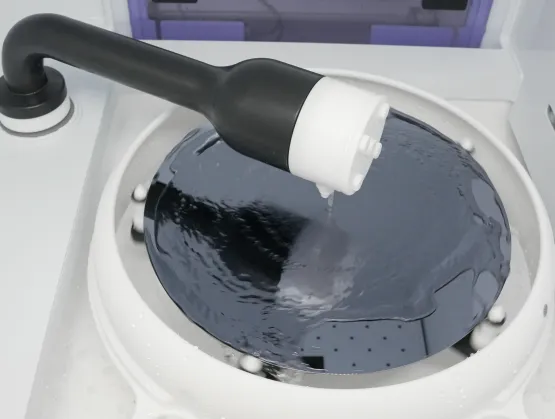
As artificial intelligence (AI) workloads surge and hyperscale data centers expand, the semiconductor industry is confronting fundamental limits in electrical interconnects. Co-packaged optics (CPO) is emerging as a pivotal architectural shift, bringing optical connectivity closer to compute to deliver the bandwidth, latency, and energy efficiency required for next-generation systems. However, while the strategic value of integrated photonics is widely recognized, the transition from research to scalable manufacturing remains one of the industry’s most pressing challenges.At the heart of this transition are a range of process considerations that, while familiar, are fundamentally different for photonics than for traditional semiconductor manufacturing. In many cases, the underlying requirements mirror those of CMOS manufacturing—cleanliness, uniformity, and defect control—though often at a different scale and level of maturity. However, the introduction of heterogeneous materials, new device structures, and optical performance sensitivities adds layers of complexity that must be addressed to achieve consistent, high-yield production.The expanding role of wet processingWet processing plays a critical role in several key stages of photonic device fabrication, including cleaning, etching, and drying. These steps directly impact surface quality, defectivity, and, ultimately, optical performance.Critical considerations include:Etch uniformity, essential for maintaining consistent optical pathways and minimizing signal loss;Particle control, as even small contaminants can scatter light and degrade performance; and Drying processes, where residues, watermarking, or contact-related defects can impact yield and reliability.Drying, in particular, has emerged as a significant challenge. Techniques such as nitrogen blow-off or chemical vapor drying are being refined to address issues like residual marks or contamination. In some cases, additional process enhancements—such as sonic energy—are being explored to further improve particle removal and surface integrity.Increasingly, tighter control of process chemistries and concentrations is required to minimize residues and improve particle performance. As these requirements tighten, the industry is recognizing that wet processing is not just a supporting step, but a critical determinant of device performance.At the same time, photonics manufacturing introduces variability that is less common in high-volume CMOS environments. Differences in wafer size, material composition, and process flows demand a higher degree of flexibility. In many cases, both batch-style wet benches and single-wafer processing approaches are used, depending on the application. Equipment and processes must often be adapted—through changes in wafer handling, fluid delivery, or process parameters—to accommodate these variations. In some cases, hybrid approaches that combine immersion and spin-based processing are being adopted to support a broader range of process steps within a single workflow.Scaling for yield and manufacturabilityThroughput, while important, is not yet the primary constraint. The industry’s immediate focus is on achieving stable, repeatable processes that support high yield and consistent performance. Over time, as designs mature and volumes increase, throughput expectations will increase significantly, with industry targets moving toward several hundred wafers per hour.Another important consideration is how photonics capabilities are integrated into existing fabrication environments. Contrary to some expectations, this integration does not always require wholesale changes to fab infrastructure. In practice, integration challenges are often less significant than anticipated and are typically addressed through targeted engineering adjustments rather than fundamental infrastructure changes. This approach minimizes disruption while enabling manufacturers to extend their capabilities into new application domains.Yield remains a central concern throughout this transition. As with any emerging technology, variability in early-stage manufacturing can create cost and reliability challenges. Reprocessing is particularly undesirable in photonics, where complex material systems and tight performance requirements make defects difficult and expensive to correct. Achieving high yield, therefore, depends on precise control across all process steps, from chemical concentration management to particle mitigation and surface preparation.At the same time, the cost of ownership must be carefully managed. While photonics manufacturing may not yet demand the extreme throughput of advanced logic production, it must still be economically viable at scale. This creates a dual imperative: to optimize processes for yield and performance while maintaining the flexibility needed to adapt to evolving designs and standards.Sustainability and the path to adoptionSustainability is also becoming an increasingly important dimension of photonics manufacturing. Although optoelectronic technologies can deliver system-level energy efficiency benefits, their fabrication still relies on water, chemicals, and energy-intensive processes. As a result, the industry is beginning to apply lessons learned from CMOS manufacturing to improve environmental performance. This includes exploring alternative chemistries, particularly as regulatory pressures drive the reduction or elimination of substances such as per- and polyfluoroalkyl substances (PFAS), and aligning with established environmental, health, and safety frameworks.More broadly, the evolution of co-packaged optics highlights a familiar pattern in semiconductor innovation: the need to bridge the gap between laboratory breakthroughs and high-volume manufacturing. Standards are still maturing, design approaches continue to evolve, and early implementations may give way to new architectures. In this environment, flexibility and adaptability are critical—not only in device design, but across the manufacturing ecosystem.Demand signals, however, are unmistakable. AI-driven data center growth is accelerating the need for more efficient interconnect technologies, and photonics is widely expected to play a central role in meeting this demand. As more fabs invest in photonics capabilities, the focus will increasingly shift from feasibility to scalability—from demonstrating what is possible to delivering it reliably and cost-effectively.Wet processing, though often viewed as a supporting function, is deeply embedded in this transition. Its influence on cleanliness, uniformity, and defect control makes it a key enabler of photonic device performance and manufacturability. As the industry continues to refine processes and align standards, advances in wet processing will help define how quickly and effectively co-packaged optics moves into the mainstream.For SEMI members navigating this shift, the implications are clear. Success in photonics manufacturing will depend not only on innovation at the device level, but on the ability to translate that innovation into robust, scalable processes. In that effort, the fundamentals—precision, control, and adaptability—remain as important as ever.Dr. Ismail Kashkoush is Chief Technology Officer for JST, based in Meridian, Idaho. With more than 30 years of expertise in the semiconductor industry, he leads JST’s engineering, technology, and product lines teams to develop the next generation of sustainable surface preparation products and processes. Dr. Kashkoush earned his Ph.D. in engineering science from Clarkson University. Prior to joining JST, he served as CTO at Akrion Technologies Inc. He has a large patent portfolio and continues to contribute technical publications and seminars on wafer surface preparation technology for the IC, MEMS, flat panel display, and photovoltaics sectors.
Read More
Artificial intelligence (AI) is scaling at a pace that is reshaping semiconductor roadmaps, data center design, and long-term infrastructure strategy. AI promises many economic and social benefits; but the growth comes with an escalating demand for power, and energy has emerged as a major challenge.SEMI, as the global semiconductor and electronics association connecting over 4,000 companies, continues to unite the entire ecosystem to “bend the curve” – to maximize AI performance while minimizing power consumption. In a series of successful, sold-out workshops that the SEMI Smart Data-AI Initiative held on this topic, a resonant theme has emerged: sustaining AI progress requires energy-efficient computing with holistic co-design and co-optimization across materials, devices, systems, data transmission, data centers, emerging architectures and software. While this dialog is an important starting point, the ultimate goal is to drive concrete action through collaborative innovation.The AI Energy ChallengeAI training compute for frontier models is growing at an estimated 4–5x per year, driving unprecedented demand for hardware capability and infrastructure capacity. That trajectory has resulted in a global “data center gold rush” and is testing energy availability limits. As model sizes scale exponentially, so too does the energy required to train and deploy them; and power consumption has become a significant limiter to performance gains. Further, this increases heat dissipation, and requires innovations like direct liquid cooling.Modern AI and high-performance computing systems now operate at levels comparable to small cities, with tens of megawatts per installation and a trajectory toward gigawatt-scale data center campuses. Grid capacity—both in the U.S. and globally—may be challenged to keep pace with projected demand. Thus, AI infrastructure is no longer just a technical challenge, but it is an energy, systems, and policy challenge.System-Technology Co-OptimizationContinuous advances in chip and inference efficiency have delivered orders-of-magnitude improvements over many decades. These gains must now be expanded by holistic co-optimization of the entire compute system from silicon technologies to data center to the grid.For example, processors can be made more efficient by customizing them for specific workloads. However, only part of total data center power is consumed by the processor itself. A significant portion is used by data movement, power conversion and cooling. The energy required to move data increases dramatically with distance. Moving bits across packages, boards, and networks can consume far more energy than the compute operations themselves. This makes locality a critical design principle. The opportunity—and necessity—therefore lies in cross-layer optimization: efficient compute, efficient communication, and intelligent power management across the entire system. Not surprisingly, advanced packaging and integration are becoming central to performance. These technologies can enable architectures that tightly couple compute, memory, and I/O—using 2.5D and 3D integration techniques—reducing energy per bit and increasing bandwidth. Photonic interconnects and low-power materials can further lower the cost of processing and moving data.The bottom line is that incremental chip-level gains alone will not be sufficient and energy optimization cannot be siloed—system-technology co-optimization is needed.Hardware-Software Co-optimizationKeeping data as localized as possible depends as much on software algorithms as it does on hardware architectures. The challenge is that the development cycles are mismatched: new software models can be developed in months, while designing and fabricating new hardware can take years. While this cycle mismatch is fundamental, closer coordination between hardware and software developers can significantly improve efficiency. For example, offloading selected functions in the algorithm, including distributed DPUs, and reducing the level of data precision can reduce energy use. Partitioning workloads logically across the hardware/software stack between cloud services and compute-on-edge can also reduce energy appreciably. Further, risk mitigation techniques—for example, building in strategic redundancy—can make future designs more resilient to shifts in software algorithms and models.Diverse Computing ModalitiesWhile AI dominates current infrastructure investment, the future of computing will likely include multiple, diverse computational modalities such as quantum, neuromorphic, photonic and analog computing.Different computational paradigms will be applied where they are most effective. For example, quantum computing is likely to complement—not replace—classical systems; especially for specific classes of problems where it offers exponential advantages. However, progress in quantum computing is tightly coupled to advances in semiconductor infrastructure. Error correction, orchestration, and hybrid algorithms all depend on high-performance classical systems operating with low latency alongside quantum processors. While there is no single silver bullet, system-level design can ensure that multiple computing modalities work together within unified workflows spanning edge, cloud, and exascale environments.Why It Matters What to WatchEnergy will now be a key constraint for AI performance and infrastructure expansion.The evolution of gigawatt-scale AI campuses and their interaction with public energy grids will accelerate – or slow down – AI growth.Data movement, memory bandwidth, interconnect efficiency, advanced packaging and heterogeneous integration will be strategic levers. Enhanced system-technology co-optimization and integration of advanced technologies like 3D ICs and photonics will be critical.Co-optimization across hardware, software, and systems will be required.Future architectures will blend classical and emerging compute modalities like quantum, photonic and neuromorphic.In conclusion, AI has become a defining global force with much promise, but its trajectory will be shaped by technology, energy and infrastructure economics working together. This is a formidable challenge because it requires many diverse players with divergent priorities to collaborate effectively.We invite you to join the SEMI Smart Data-AI initiative to collaboratively address this challenge and help realize AI’s full potential sustainably. Our next workshop in this series will be on September 9 in Silicon Valley – please join us for this exciting event.SourcesSEMI Smart Data-AI Initiative – Future of ComputingEnergy-Efficient Computing for AI and Beyond, SEMICON West, October 2025Sustainable AI Systems, SEMI HQ, March 2026About the AuthorsDr. Pushkar P. Apte is the Strategic Technology Advisor for SEMI Global Lead for the Smart Data-AI Initiative Dr. Melissa Grupen-Shemansky is Senior VP and CTO of SEMI
Read More
The SEMI Standards team hit the ground running in 2026, starting this year with an important milestone to our Flexible Hybrid Electronics (FHE) standardization efforts. As FHE technology continues to evolve into a scalable and manufacturable class of systems, we’re excited to share the upcoming release of SEMI 7242, Guide for Reliability of Flexible Hybrid Electronics. This is the first time a comprehensive framework for reliability assurance in FHE systems has been created, closing a critical gap within the industry landscape. Published as SEMI FH5, the standard is now available online via the SEMI Store or through a SEMIViews license.We’d also like to highlight a pending revision for SEMI E142, Specification for Substrate Mapping. While SEMI E142 is currently designed to work with other SEMI data exchange Standards, SEMI Draft Document 7381 proposes a subordinate standard to define maps to and from non-E142 wafer coordinate systems. Meanwhile, the Information Control Japan Technical Committee (TC) announced its new Maintenance Robot Communication (MRC) Task Force for standardizing communications for robotic maintenance systems to improve production efficiency and workloads in fabs. This quarter also included key developments from both SEMICON Korea and SEMICON China. At SEMICON Korea, members of the Semiconductor Manufacturing Cybersecurity Consortium (SMCC) discussed a unified, standards-based approach for strengthening cybersecurity amidst evolving digital threats. A month later, SEMICON China served as the backdrop for the EHS TC Chapter Formation Group Meeting, where attendees discussed critical safety, material usage, and energy efficiency standards. The North America (NA) Winter Meetings, held virtually in February 2026, also brought several TCs together to revise standards for MEMS, advanced packaging, EH S, Facilities, Gases Liquid Chemicals, factory automation, and more. For more than 50 years, the SEMI Standards International Program has worked to advance manufacturing processes, lower costs, and support key industry growth markets. To get involved in future developments, become a member of the SEMI Standards Program. Membership is free.With so much underway in Q1, we look forward to an incredible year ahead. Q1 2026 Highlights A New Standard for Flexible Hybrid Electronics As the first consensus-driven framework for reliability assurance in FHE systems, SEMI 7242, Guide for Reliability of Flexible Hybrid Electronics, was created to ease roadblocks for transitioning and commercializing FHEs. It aims to speed design cycles, improve comparability of test results, reduce the risk of integrating FHE into operations, and instill confidence for scaling FHEs from prototypes to high-volume production. Document 7242 was drafted by the FHE Reliability and Testing Task Force, with added participation from industry, academia, and government laboratories.The elevation of Document 7242 to a formal SEMI Standard reflects the field’s progression to a stage where consistent approaches to reliability are both feasible and necessary. As FHE adoption grows across medical, industrial, consumer, and defense applications, Document 7242 will support systems that offer dependable performance and sustained durability over time. Document 7242 also joins the recently published SEMI FH6 Standard on FHE Terminology.Revisions to SEMI E142SEMI E142, Specification for Substrate Mapping, defines data items required for reporting, storing, and transmitting map data for substrates. It was developed to work alongside other SEMI Standards to exchange data through a SECS/GEM interface. Identifying failure points requires a two-dimensional XY coordinate map generated for substrates. However, because some steps in the semiconductor manufacturing process may use their own XY coordinate systems, a revision is currently needed to define an infrastructure for mapping a non-E142 wafer XY coordinate system to and from the E142 Standard XY coordinate system.The Advanced Backend Factory Integration (ABFI) Task Force will ballot this potential subordinate standard from August 19 to September 18. It will be adjudicated during SEMICON West from October 13-15, 2026 in San Francisco, California.Introducing the Maintenance Robot Communication Task Force As the industry moves toward smart manufacturing, integrating robot-based maintenance solutions is becoming increasingly important for enhancing production efficiency, reducing workload, and ensuring consistent work quality in automated environments. The Maintenance Robot Communication TF was formed to address the critical need to standardize operational communications for robotic maintenance systems. A dedicated community page is now available on the Connect@SEMI platform for members to exchange ideas. This activity joins the recently established Mobile Maintenance Robot Safety Task Force which aims to develop new safety guidelines that are deemed necessary to fill the gaps between existing industry standards including SEMI Safety Guidelines with regard to safe operation of mobile maintenance robots.Standards Activities from Europe Spring MeetingThe Compound Semiconductor Materials Europe TC Chapter held its annual virtual Spring Meeting on April 14, 2026. The meeting drew robust participation from China, Japan, Europe, North America, and other regions. The TC Chapter successfully adjudicated document 7111, Revision of SEMI M81-0418, Guide for Defects Found in Monocrystalline Silicon Carbide Substrates. The major update provides significant guidance on defects in silicon carbide substrates. This document has been forwarded to SEMI Publications for final processing. The Europe TC Chapter will reconvene November 10–13, 2026, during SEMICON Europa in Munich, Germany.Underscoring the Need for Cybersecurity Standards at SEMICON Korea SEMICON Korea featured more than 200 speakers who shared insights and presented solutions that are shaping the modern AI era. From February 11-13 in Seoul, the conference also served as a meeting point for the next generation of SEMI Standards. Most notably, leaders from the Semiconductor Manufacturing Cybersecurity Consortium (SMCC) highlighted the strategies and operational frameworks needed to modernize cybersecurity protocols. SEMICON Korea Highlights:Applied Materials’ Suk Won Kang discussed SMCC Working Group (WG) 9 – a new group for addressing cybersecurity challenges unique to South Korea’s semiconductor ecosystem. WG9 was formed to better understand Korean cybersecurity risks, align with global standards, and operationalize compliance with existing SEMI frameworks. Alan Weber from PDF Solutions presented on cybersecurity as it relates to industry standards. He offered an overview of today’s technical challenges, highlighting how independently developed and secure data exchange frameworks can complement existing standard interface capabilities. SEMICON China: EHS TC Chapter Formation Group Meeting Following SEMICON Korea, SEMICON China convened thousands of attendees from March 25-27 to discuss the most important technology trends driving innovation. Alongside the event, the EHS TC Chapter Formation Group Meeting took place on March 25 to review global EH S standards overview, SEMI Regulations for forming China TC Chapter, and issues including Safety Management System, Product Safety System, and Semiconductor RobotsProgress from SEMI Standards 2026 North America Winter Meetings The Standards team hosted its SEMI Standards NA Winter Meetings virtually from February 9-12. With a packed agenda, the meetings convened several TCs, including MEMS/NEMS, Facilities Gases, Liquid Chemicals, Information Controls, and more. Over a dozen new documents were submitted for approval.The NA 3D Packaging Integration Inspection Metrology TF proposed a new standard in Document 7331, Guide for Peel Testing of RDLs and Other Traces Used Within Advanced Packages and Structures. This document was approved by the 3DP I NA TC Chapter during the NA Winter Meetings in February and recently passed procedural review by the ISC Audit Review Subcommittee. Current peel testing test methods are designed for and limited to 10 mm and wider traces, which are mainly used for PCBs.iNEMI has been investigating potential re-distribution layers (RDLs) adhesion measurement methods for RDL trace widths 20 microns and smaller to determine the actual adhesion properties associated with these smaller structures. The adhesion properties of the smaller structures are important for HDI, WLP and PLP designs, and modeling. This standard provides guidance for peel testing of small trace structures used in WLPs, PLPs, and other advanced packages based on knowledge gained during the iNEMI RDL Adhesion project. Available soon at the SEMI store, this Standard can be used to determine the adhesion properties of the structure (trace bond to substrate).Other key developments from the NA Winter Meetings include:Document 7370 – Reapproval of SEMI MS13-0221, Guide for Use of Test Patterns for Characterizing a Deep Reactive Ion Etching (DRIE) Process, introduced by the MEMS/NEMS TC. Document 7436 - Reapproval of SEMI E180-1220, Test Method for Measuring Surface Metal Contamination Through ICP-MS of Critical Chamber Components Used in Semiconductor Wafer Processing, introduced by the Metrics TC. Document 7428 - Revision to add a new subordinate Standard, Specification for Secure High-Speed SECS Message Service, to SEMI E37-0222 Specification for High-Speed SECS Message Services (HSMS) Generic Services. This was introduced by the Information Control TC. Document 7371A – Revision of SEMI S1-0824, Safety Guideline for Equipment Safety Labels. The revision was intended to add numerous safety symbols including finger pinch, entrapment, shear hazard, inhalation hazard and many others.Document R67346C - Revision to SEMI E95-1101, Specification for Human Interface for Semiconductor Manufacturing Equipment. This was introduced by the Information Control TC.New and Revised Standards Released in Q1January 2026February 2026 March 2026 Get InvolvedSEMI Standards development activities take place throughout the year in all major manufacturing regions. To participate, join the SEMI International Standards Program.SEMI Standards are available through individual download purchases or online via SEMIViews. Watch this video to learn more about how SEMIViews offers a cost-effective and streamlined way to access 1,110+ SEMI Standards. Sign up for a 30-day SEMIViews trial.For more information, please visit the Standards website and events page. For any questions regarding SEMI Standards activities, please contact your local SEMI Standards staff.Paul Trio is Director of Standards at SEMI.
Read More
Today’s post is the last of four Q A-style feature posts based on presentations during SEMICON West 2025’s “The Convergence of Semiconductor Manufacturing and Design” organized by the ESD Alliance (ESDA).Bob Smith interviewed Joe Kwan, Director of Product Management from Siemens EDA, about his presentation, “3D Design Brings Multi-physics Requirements While Manufacturing Yield Improvements Require Digital Twin Modeling and Ingesting Design Data.” They covered a range of topics from partner collaboration and integrated design flows to digital twins, AI and more.Smith: How does Siemens EDA define collaboration between design and manufacturing? What does that look like?Kwan: Manufacturers and designers have been cooperating for a long time. The most familiar example is the design rule check (DRC) rule deck provided by the foundry to the design team. It enforces designers to adhere to the layout rules that must be followed for a design to be manufacturable. What’s different now are new problems arising from the latest advances in technologies. Close collaboration is needed between the design team and foundry to identify and share data necessary for a successful final product. Foundries are challenged to encapsulate information that provides design teams with critical information for success without divulging proprietary data.Smith: Can you elaborate with a few examples of what technologies you are referring to that are driving these new collaborations?Kwan: Sure. A great example is the industry’s move from monolithic single chip solutions to chiplet-based solutions that require 2.5D, 3DICs, heterogeneous integration and the like. These approaches require multi-physics simulations to verify physical phenomena in ways that were not necessary when previously focusing on just a single chip design. Thermal, electrical and stress are not independent variables anymore.Design teams need to understand how these effects come in to play with functionality, performance and other design specifications. Most important, they need to be aware of factors that could cause the chip or system to fail. To do this, close collaboration between all parties involved (design team, foundry and packaging) is required so designers know what to look for in their analyses and what to avoid. It adds a whole new layer of complexity necessary for getting to the finish line.Smith: I imagine some scenarios that fit into what you are talking about. For example, if the design includes stacked die, the team will need to be concerned about heat distribution and potential hot spots in the stack. Kwan: That is a good example. Heating problems cannot be overlooked. How does the heat escape from the stack? What is the thermal profile across the stack from the die on the top all the way through to the bottom of the stack. Is there a sufficient pathway for heat to get out? We can do rough estimates early on to see if putting this die on top of this other one, is it going to work? Or be reliable? Back of the envelope calculations might show that the dies need to be positioned differently or even designed differently. Smith: What can be done to improve design success?Kwan: This is where collaboration comes in. The product owner should establish a cross-domain team of experts from chip design, package engineering and process engineering. The product spec and design decision trade-offs must be evaluated against impact to all domains.EDA also plays a critical role. EDA is the link between designers, packaging and manufacturing. We hear and capture concerns from designers and package engineers. We prototype solutions, collaborating with packaging and IC manufacturers to encapsulate requirements for successful production.Smith: At SEMICON West, we also talked about how design data can help foundries during the manufacturing flow.Kwan: Yes, going back to our discussion at SEMICON West, I spoke about that important topic, which is embodying design data into the manufacturing platform in the context of a digital twin for virtual metrology.In an ideal world, we would measure everything. If we could do that, we would have all the data needed to make perfect manufacturing decisions. But it would be extremely expensive. What we can do instead is apply AI virtual metrology. We collect the usual sparse metrology and then combine design data to train a predictive engine. The result is the ability to accurately predict where metrology was not collected.With traditional process-of-record, foundries run a qualification wafer every 10 or so wafers. That’s very expensive. With virtual metrology, we can predict when drift becomes significant enough to blow up a wafer and you can intervene to restore individual nominal tool performance.Smith: Engineers are writing their own agents to automate parts of the design flow such as analyzing the outputs of simulations.Kwan: We see a lot of interest in AI and Agentic AI. There is a lot of potential to improve engineering productivity. But as we race to develop Agentic AI flows, we must also approach this in a rigorous manner that cross-checks to ensure accurate and robust results.About Joe Kwan Joe Kwan is the Product Director for Calibre AI/ML Fab Solutions at Siemens EDA. He has more than 30 years of experience in the EDA semiconductor industry. He previously worked at VLSI Technology Inc, COMPASS Design Automation, Silicon Access Networks and Virtual Silicon. Kwan received a Master of Science degree in Electrical Engineering from Stanford University and a Bachelor of Science degree in Computer Science from the University of California, Berkeley. Robert (Bob) Smith is an independent consultant who has been involved directly in multiple roles in the EDA industry over the past 38 years. His career experience spans analog engineering, marketing, sales, business and strategy development and others including numerous c-suite roles. He holds a Master of Science degree in Electrical Engineering from Stanford University.
Read More
Lu Dai, Vice President of Technical Standards at Qualcomm, presented “Converging Chip Design and Manufacturing in the Era of High Integration” at SEMICON West in October 2025, offering an insightful look at how design and manufacturing are collaborating effectively.I had an opportunity to talk at length with Dai and asked him to define collaboration. His thoughtful answers, perspective on industry trends and what it will take for a seamless automated flow between design and manufacturing made for a great discussion.In addition to his role at Qualcomm, Dai, who lives in San Diego, is Chairman of Accellera Systems Initiative, Chairman of RISC-V International and Director of Silicon Integration Initiative (Si2).Smith: Qualcomm is a fabless company. How do you define what collaboration is between design and manufacturing? Dai: When we talk about design and manufacturing collaboration, we need to consider how a design is optimized for a certain manufacturing process. For example, will an advanced manufacturing capability help designers simplify designs or allow them to bypass traditional actions?I compare it to the way software was optimized to hardware because of hardware limitations. We had to make sure the C code was compact and that the variable types we specified wouldn’t waste memory. We also had to write the code in a certain sequence to speed up the execution of the code. As hardware capability grows, we can write dirty code and it isn’t as critical. We understand the manufacturing process capability. That allows us to be more flexible about where to focus the chip design effort based on needs for power, performance, area, and schedule. We want to make sure we know the chip size and how big the silicon space is for certain features. For example, low power is often a key feature of today's designs. As manufacturing process nodes improve, power goes down and area shrinks. We can therefore focus more on optimizing performance.This is the kind of collaboration we use with foundries. Libraries need to be optimized for the design and tweaked for yield. This collaboration is critical for foundries pushing leading-edge nodes in the design house—they have to work closely with the design team.Smith: And how about collaboration with packaging suppliers? Dai: I'm not a packaging expert. Traditionally, packaging is one of the important steps and even more so because of the push toward the use of chiplets. Packaging becomes really important when dealing with multi-chiplet types of design. Traditionally, IP vendors sell a license to use the register transfer level (RTL) code, which is subject to IP theft. With a chiplet approach, they sell a netlist, which often becomes a hard coded chip as a bundled service instead of a single IP. The subsystem sales approach makes more money, creating another opportunity or a new landscape. SoC companies may get into the IP business and conversely, IP companies are getting into the SoC business by selling the bundled subsystem. Smith: The margins are getting blurred. It sounds like there is collaboration and it’s between designers, but also the foundries, process and the packaging.Dai: And partially between EDA tools because both the design side and the manufacturing side are speaking two different languages. EDA is somewhere in between, helping the translation.Smith: What are the trends and challenges that make it hard or even prevent a fully integrated flow?Dai: The extremely high costs of doing the implementation for an advanced node, especially for the first tape out. If we are the first to use the newest node, we know there is a tremendous benefit in the long run. But we are also the pioneers that have to work out the tough challenges. Few companies have the technical capability and deep financial resources to be the pioneers for a new process node. We’re starting to see high-flying semiconductor companies use leading-edge nodes. On the design side, they are challenged and trying to run faster by adopting a newer node. Cost is probably the biggest challenge for this collaboration. If their margins get challenged or they need to be a little bit more careful, they adapt by becoming fast followers.Another challenge comes from more specialized designs. There has been a long period where general-purpose chips are used for many different applications. But, we are now seeing designers increasingly focus on more specialized chips with custom designs.Custom IP and ASICs are becoming trendy. Designers are trying to figure out how to make a general baseline and then differentiate on certain IP and the best possible manufacturing process for the application. Doing a custom chip on an advanced node is quite expensive. We may be challenged if we don’t have sufficient data to clean up a process because every chip and process combination is unique. Lessons learned from this chip may or may not apply to everyone, while a general-purpose design tends to be a good baseline for lessons learned.Smith: How do you envision an integrated automated flow between design and manufacturing? Dai: In today's environment, we would like an RTL design to be fully portable to any kind of manufacturing process or foundry. Based on our architectural and business, we could then pick and choose the fab and the process. How do we port a design into a new process? That's difficult because we need to consider special constraints required by the new process that didn’t apply to the previous process. There's also the reverse case for porting a new design into an old process.Let’s say we have a chip designed for a 3-nanometer process and we want to port it back to a 28-nanometer process. Why would we want to do this? Imagine a COVID type of situation—a supply chain constraint and/or a geopolitical flare up with no access to the advanced fab, but an older local fab is still available. In this case, we need the chip for the feature it provides. Perhaps a car needs that chip and it was designed to be produced in a three-nanometer process but is suddenly unavailable. A 28-nanometer chip that runs at half of the speed might do the job for a few years. Unfortunately, this is somewhat wishful thinking because of the challenge of the flow. We didn’t think about it but we have to do it now and need to consider whether we have sufficient time to work out the challenges.Smith: How do you make that decision for making chiplets? Dai: Porting to another process is not a small job. It's labor intensive going from a same design in one process to another process.The project lead presents a process porting non-recurring engineering (NRE) cost budget to management. The questions span resources and time needed that boil down to how much money will need to be invested to achieve the porting. It should be simple. It’s not. It’s a lot of work.For many companies, the strategy is to offload the porting to a low-cost geographical team with a cheaper NRE that matches management expectations for the costs of process porting. History often shows that the company is not reducing that much time and manpower by offloading the porting. Smith: What about the EDA tool side? Is there typically a team from the EDA vendor? Dai: For advanced nodes, we involve the EDA and in-house EDA experts when certain parts of our design don't work out as expected.Back-end tools need experts involved in the debugging. And if we don't have an in-house expert, we need our EDA vendors to send engineers to work on the project.Smith: I have a generic question about AI. We talked about reporting. Where would it fit in collaboration?Dai: Sooner or later, we're going to be asked for a proper supply chain tracking or hardware bill of materials (BOM). Conceptually easy, but difficult in practice because it goes from logic design to physical design all the way to manufacturing. How do we carry that type of information through each step with EDA tool providers and manufacturing equipment providers? Their credentials need to be registered and they can’t alter any of the existing flow credentials.Supply chain tracking can ensure that if there's any kind of natural disaster or geopolitical issues, the hardware BOM is properly categorized, and the chip can be made. Security is another reason for supply chain tracking. Collaboration between design and manufacturing is important because once a netlist is sent to the foundry, our job is to make sure it is done correctly. We wait for our silicon to come back. Then we do testing. But during manufacturing, the chip comes back and it doesn't work. How do we know if somebody tampered with it? Supply chain tracking could help.Smith: How can you know that someone didn’t tamper with a chip design after it was handed off to manufacturing? This could cause big issues for end markets such as medical, automotive, defense and aerospace applications.Dai: The solution is EDA heavy because EDA tooling can help on the traceability at every step. It’s all automated through some kind of tool. If we need to have a proper format, we need to have proper encryption. And we know when we use this tool to run it, we check to show we are using the real tool not a hacked version that doesn't have the security credentials.Smith: Will this drive supply chain tracking or drive new standards?Dai: I hope so. Once upon a time, there was an initiative by the Department of Defense to track the supply chain. It was a mandate and no one liked it. It’s much better for the industry to proactively come up with a standard for a global economy.A mandate tends to come from one government. It may be a good mandate if we do business only within one country or within a small region. What if we have to do business with another government that may not like our mandate? Say a certain part of our design stage is done in a different country and we need this level of detail. Who's doing the work and what's the tool version? Per local government rule they may not be willing to give the information to us. This might be sufficient. We don't know the details of the risk, but we know there is a risk. We could simply add to our tracking that a portion of design is done in a foreign country with foreign EDA. It's important to have an industry standard and an international standard so that we can procure our tools and the services around the world instead of being limited.Smith: How can we encourage companies and people to want to cooperate and sign on to a project like this?Dai: With lessons learned, we can go deeper. Maybe the first level is a meeting in the U.S. About Lu DaiLu Dai is Vice President of Technical Standards at Qualcomm Technologies, Inc., spearheading semiconductor standards efforts and relationships with industry organizations. Lu was previously Senior Director of Engineering and led Qualcomm’s SoC design verification team and front-end methodologies and initiatives. He was also the Design Verification Lead responsible for multiple generations of premium tier platforms at Qualcomm, including the Snapdragon 8 series and products that power the Mars Perseverance rover and Ingenuity helicopter. Prior to Qualcomm, Lu was the Design Verification Lead for Cisco’s Gigabit Switching Business Unit where he worked on multiple generations of Cat4k ASICs. Lu is the current Chair of Accellera, Chairman of the RISC-V International Board of Directors and serves on the Board of Directors at Si2. Lu holds a Master of Science degree in Electrical Engineering from Cornell, and a Bachelor of Science in Electrical Engineering and Computer Science from UC Berkeley.Robert (Bob) Smith is an independent consultant who has been involved directly in multiple roles in the EDA industry over the past 38 years. His career experience spans analog engineering, marketing, sales, business and strategy development and others including numerous c-suite roles. He holds a Master of Science degree in Electrical Engineering from Stanford University.
Read More
The artificial intelligence revolution has a dirty little secret: for all its "brain" power, AI and autonomy are hopeless without the hardware that connects them to the physical world. Today’s semiconductor-related blockbuster tech topics like autonomous humanoid robots, Edge AI, self-driving cars, and lights-out fabs all depend on a variety of sensing modalities and enabling technologies (from MEMS to photonic and others). The 2026 MEMS Sensors Executive Congress (MSEC) gathered industry leaders to discuss how sensors continue to evolve from simple sensing components to the essential “eyes and ears” of a global, AI-driven transformation.The Sensor Industry is ShiftingMarcellino Gemelli of Bosch Sensortec took a retrospective approach during the Leadership Roundtable starting with the statement “to understand where we are going, we have to look at where we’ve been.” While logic and memory chips scaled rapidly, sensors faced a different reality:Commoditization: Rapid price erosion in high-volume markets like mobile.The "One Process, One Product" Curse: Unlike standard CMOS, every new MEMS device historically required a unique manufacturing flow which results in high development costs.Hard to fill MEMS Fabs: Geometries are shrinking resulting in more devices per waferPackaging: A challenge because it directly impacts device performanceSensor Fusion: Integrating sensor components with ASICs and MCUs to create smart sensorsAccording to Maximize Market Research, the global sensor market is predicted to have an 8.7% CAGR from 2024 through 2030. There is a fundamental realization about sensors: the next stage of autonomous manufacturing and intelligent systems cannot exist without high-fidelity, real-time sensor data from the edge. This was a common theme throughout MSEC. Data presented at MSEC by Pierre-Marie Visse of Yole Group shows the global MEMS market is projected to grow more slowly with a 3.7% CAGR over the same time frame, with higher growth predicted for automotive, industrial, and medical applications.The Leadership Roundtable, featuring executives from Bosch, Infineon, STMicroelectronics, and Rogue Valley Microdevices, highlighted the strategic roadmaps that will define the next decade, echoed by others during other technical presentations:The Edge of Perception: AI is pushing sensing technologies to process data within the sensor itself and not in the cloud, reducing latency and power consumption while improving privacy.Autonomous Manufacturing: Leaders like John Behnke (INFICON) and Edvard Kälvesten (Silex) mapped out the path toward “Autonomous Fabs,” where sensors allow tools to communicate and self-optimize with minimal human intervention.Emerging Modalities: Beyond traditional motion and pressure sensing, MSEC spotlighted the rise of Quantum sensors for resilient navigation and Photonics combined with MEMS for ultra-precise inertial sensing.From “Parts” to “Interfaces”A recurring theme throughout the congress was the death of the "sensor as a part" mentality. In his keynote, Kurt Busch (Syntiant) argued that sensors plus AI models are becoming the default interface layer for products.“The next-generation interface is not a screen. It is the physical world, captured by sensors, interpreted by models, and delivered through natural interactions,” said Busch.This shift is visible in the rapid adoption of Edge AI integration, the development of humanoid robots, autonomous drones and vehicles, and AI enabled smart glasses—rewriting what the human machine interface looks like.Conclusion: Sensorizing the FutureWe are no longer just building devices; we are building an “industrial AI operating system” that connects the digital and physical world. This all starts with sensors. By 2030, the most valuable AI won't just be the one with the biggest brain, it will be the one with the best senses.If you are a leader in the field of MEMS Sensors, let your voice move the industry needle by becoming a SEMI and MEMS Sensors Industry Group (MSIG) member company and getting involved with MSIG. MSIG will be hosting the MEMS Sensors Technical Congress (MSTC) on September 16-17 at SEMI HQ in Milpitas, CA. Engineers and technical executives will dive deep into new technology and processes that advance the sensor industry. To learn more or to be a part of the fascinating world of MEMS Sensors visit the SEMI MSIG website.Paul Carey is Director, MSIG at SEMI. Rafael Tudela is Senior Technical Marketing Manager at SEMI.
Read More
The rapid growth of AI has created a surge in the global energy consumption at a rate never seen before. Today, data centers account for approximately 415 terawatt-hours (TWh) of electricity globally. To put this into perspective, the annual energy consumption of the United Kingdom in 2023 measured at 309 TWh. The International Energy Agency (IEA) projects data centers’ energy consumption will more than double to nearly 945 TWh by 2030 [1]. A single generative AI query can consume up to ten times the power of a traditional search [1]. Meanwhile, data center energy usage in the U.S. is projected to leap from 4.4% to as much as 12% of the national grid by 2028 [2]. This creates a stark reality for the semiconductor industry. Traditional monolithic scaling has hit its physical and economic limits, leaving advanced packaging and heterogeneous integration to define the industry’s trajectory [3].To meet these escalating compute demands, the industry is rapidly shifting toward multi-die architectures, chiplets, and 3D stacking to decrease the amount of energy needed for advanced computing. This transition is fueling explosive growth in the advanced packaging market, which the Yole Group projects will reach $79.4 billion by 2030 [4]. However, stacking chiplets to bypass Moore’s Law exposes massive systemic bottlenecks. Engineers are now fighting interconnect parasitics, navigating complex power delivery architectures, and battling extreme thermal density.In a 3D-stacked architecture, pulling heat away from vertically integrated dies is one of the most pressing engineering challenges of our time. As compute density rises, issues like die warpage and localized thermal hotspots threaten both reliability and yield. The shift toward sustainable AI systems for energy-efficient computing requires breakthroughs in everything from hybrid bonding process flows to advanced thermal interface material (TIM) strategies and liquid cooling integration [6].These are not challenges that any single company can solve in isolation. Whether you are a foundry, OSAT, material supplier, or equipment provider, overcoming these bottlenecks requires pre-competitive, industry-wide collaboration. Foundational capabilities must be built collectively before competitive differentiation occurs.This is the core mission of the SEMI Advanced Packaging and Heterogeneous Integration (APHI) Technology Coalition. By collaborating on common standards, shared research frameworks, cross-vendor interoperability models, and collective technology roadmap congruency, APHI is actively dismantling the barriers to next-generation computing.The APHI community is already tackling these issues head-on. Monthly chapter meetings identify and address these and other issues facing heterogeneous integration. The most recent chapter meetings showcased in depth review of these challenges. Jonathan Abdilla from BESI detailed the technical challenges and collaborative research required for global hybrid bonding process flows. Similarly, Dr. Jie Geng from Indium Corporation led a deep dive into crucial TIM strategies for AI and HPC, exploring hybrid stacking evaluation methods and liquid cooling options to combat GPU die warpage.The future of advanced manufacturing will be defined by how effectively we manage power and heat in heterogeneous systems. We invite you to join this critical conversation at the upcoming SEMIEXPO Heartland (April 29-30 in Detroit, MI) Day 2 will feature dedicated sessions on Thermal Management Power Delivery in Advanced Packaging: From TIMs to Warpage Control, as well as strategies for securing the advanced packaging supply chain.To help shape the standards and shared roadmaps that will power the AI revolution, explore our initiatives and get involved with SEMI Advanced Packaging and Heterogeneous Integration (APHI) Technology Coalition.Rafael Tudela is Senior Technical Marketing Manager at SEMI References[1] International Energy Agency (IEA). (2024). Energy and AI Report. [2] U.S. Department of Energy (DOE) Lawrence Berkeley National Laboratory (LBNL). (2024). Report on U.S. Data Center Electricity Demand and Grid Impact.[3] Semiconductor Packaging News. Advanced Packaging and Heterogeneous Integration. Retrieved from: https://www.semiconductorpackagingnews.com/articles/92402.html [4] Yole Group. (2025). Status of the Advanced Packaging Industry 2025.
Read More