

The artificial intelligence revolution has a dirty little secret: for all its "brain" power, AI and autonomy are hopeless without the hardware that connects them to the physical world. Today’s semiconductor-related blockbuster tech topics like autonomous humanoid robots, Edge AI, self-driving cars, and lights-out fabs all depend on a variety of sensing modalities and enabling technologies (from MEMS to photonic and others).
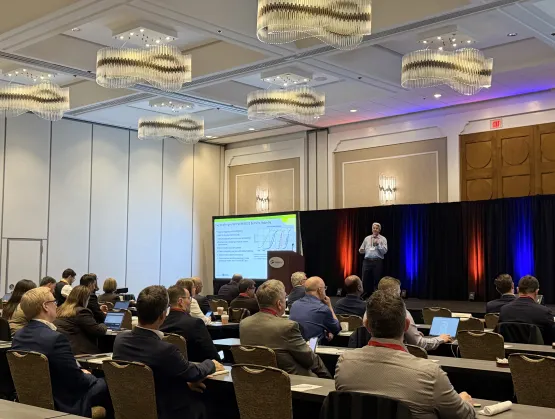
The 2026 MEMS & Sensors Executive Congress (MSEC) gathered industry leaders to discuss how sensors continue to evolve from simple sensing components to the essential “eyes and ears” of a global, AI-driven transformation.
The Sensor Industry is Shifting
Marcellino Gemelli of Bosch Sensortec took a retrospective approach during the Leadership Roundtable starting with the statement “to understand where we are going, we have to look at where we’ve been.” While logic and memory chips scaled rapidly, sensors faced a different reality:
- Commoditization: Rapid price erosion in high-volume markets like mobile.
- The "One Process, One Product" Curse: Unlike standard CMOS, every new MEMS device historically required a unique manufacturing flow which results in high development costs.
- Hard to fill MEMS Fabs: Geometries are shrinking resulting in more devices per wafer
- Packaging: A challenge because it directly impacts device performance
- Sensor Fusion: Integrating sensor components with ASICs and MCUs to create smart sensors
According to Maximize Market Research, the global sensor market is predicted to have an 8.7% CAGR from 2024 through 2030. There is a fundamental realization about sensors: the next stage of autonomous manufacturing and intelligent systems cannot exist without high-fidelity, real-time sensor data from the edge. This was a common theme throughout MSEC. Data presented at MSEC by Pierre-Marie Visse of Yole Group shows the global MEMS market is projected to grow more slowly with a 3.7% CAGR over the same time frame, with higher growth predicted for automotive, industrial, and medical applications.
The Leadership Roundtable, featuring executives from Bosch, Infineon, STMicroelectronics, and Rogue Valley Microdevices, highlighted the strategic roadmaps that will define the next decade, echoed by others during other technical presentations:
- The Edge of Perception: AI is pushing sensing technologies to process data within the sensor itself and not in the cloud, reducing latency and power consumption while improving privacy.
- Autonomous Manufacturing: Leaders like John Behnke (INFICON) and Edvard Kälvesten (Silex) mapped out the path toward “Autonomous Fabs,” where sensors allow tools to communicate and self-optimize with minimal human intervention.
- Emerging Modalities: Beyond traditional motion and pressure sensing, MSEC spotlighted the rise of Quantum sensors for resilient navigation and Photonics combined with MEMS for ultra-precise inertial sensing.
From “Parts” to “Interfaces”
A recurring theme throughout the congress was the death of the "sensor as a part" mentality. In his keynote, Kurt Busch (Syntiant) argued that sensors plus AI models are becoming the default interface layer for products.
“The next-generation interface is not a screen. It is the physical world, captured by sensors, interpreted by models, and delivered through natural interactions,” said Busch.
This shift is visible in the rapid adoption of Edge AI integration, the development of humanoid robots, autonomous drones and vehicles, and AI enabled smart glasses—rewriting what the human machine interface looks like.
Conclusion: Sensorizing the Future
We are no longer just building devices; we are building an “industrial AI operating system” that connects the digital and physical world. This all starts with sensors. By 2030, the most valuable AI won't just be the one with the biggest brain, it will be the one with the best senses.
If you are a leader in the field of MEMS & Sensors, let your voice move the industry needle by becoming a SEMI and MEMS & Sensors Industry Group (MSIG) member company and getting involved with MSIG.
MSIG will be hosting the MEMS & Sensors Technical Congress (MSTC) on September 16-17 at SEMI HQ in Milpitas, CA. Engineers and technical executives will dive deep into new technology and processes that advance the sensor industry.
To learn more or to be a part of the fascinating world of MEMS & Sensors visit the SEMI MSIG website.
Paul Carey is Director, MSIG at SEMI. Rafael Tudela is Senior Technical Marketing Manager at SEMI.


