


For years, cybersecurity in manufacturing was often treated as a mere compliance issue. Suppliers filled out questionnaires. A scan report was produced before shipment. A checklist was reviewed during qualification. A document proved that the equipment was "secure enough" at a given point in time. This model is no longer sufficient. As equipment becomes more software-driven, connected, and remotely maintained, cybersecurity responsibility is moving closer to the product itself and therefore closer to the OEM. Fabs still define their security expectations, but OEMs are increasingly expected to provide evidence that their equipment can remain secure throughout its lifecycle.
Semiconductor manufacturing is entering a new phase of cybersecurity. The question is no longer simply, "Was this equipment compliant when it was delivered?" A stronger question is emerging: "Can this equipment continuously demonstrate that it is operating securely and reliably?"
This shift matters because semiconductor equipment is no longer isolated machinery. It is software-intensive, networked, remotely maintained, data-producing, and deeply integrated into fab operations. Equipment controllers, factory interfaces, service laptops, recipes, logs, remote access tools, operating systems, middleware, and data acquisition services now comprise a significant digital presence surrounding the physical process. The risk is not theoretical. Industrial automation and control systems are now considered cybersecurity assets throughout their lifecycle rather than merely engineering systems. In the global semiconductor manufacturing industry, this shift is evident through the following SEMI standards:
- SEMI E169 provides guidance for equipment information system security.
- SEMI E187 defines cybersecurity requirements for fab equipment.
- SEMI E191 addresses cybersecurity status reporting for computing devices connected to the factory network.
These semiconductor-specific standards align with the broader industrial cybersecurity trend. The ISA/IEC 62443 series addresses cybersecurity throughout the industrial automation lifecycle, including product development, integration, operation, maintenance, and supplier responsibility. The National Institute of Standards and Technology (NIST) has moved in the same direction with Cybersecurity Framework 2.0 by adding "govern" as a core function and making cybersecurity the responsibility of leadership, risk management, and the supply chain rather than just a technical activity.
In Europe, this shift is also becoming regulatory. Under the Cyber Resilience Act, starting September 11, 2026, manufacturers will be required to actively report vulnerabilities and severe incidents affecting products with digital elements. They must provide an early warning within 24 hours and a full notification within 72 hours. This will encourage many industrial suppliers to strengthen their vulnerability management.
A fab does not only need to know that an equipment was shipped with a supported operating system. It also needs to know if the system remains aligned with the approved configuration after installation, maintenance, remote support, patches, upgrades, troubleshooting, and years of production use.
A fab needs more than a document saying that network security was considered. It needs practical evidence showing which ports are open, which services are active, which accounts exist, which software is running, and whether local protection mechanisms are still enabled. A fab does not only need supplier declarations. It needs operational proof.
This is where the semiconductor industry faces a specific challenge. A fab cannot simply copy standard IT cybersecurity practices and apply them directly to production tools. The cost of disruption is too high. A patch that is harmless in an office system may affect equipment behavior, timing, qualification, or process stability. A security scan that is acceptable in IT may be intrusive in a production environment. Generic endpoint controls can create unacceptable side effects if they interfere with motion, recipes, automation, or equipment availability.
Therefore, semiconductor cybersecurity must balance three constraints simultaneously:
- Protect the equipment and the factory network.
- Preserve deterministic production behavior.
- Generate evidence that can be trusted by fabs, suppliers, auditors, and increasingly, regulators.
For this reason, the future of cybersecurity in semiconductor manufacturing will likely be built around five practical pillars.
1. Secure by design, but validated in operation
Security measures must be implemented from the outset of equipment architecture. The product baseline should include supported operating systems, hardened configurations, secure communication channels, access control, logging, and vulnerability handling.
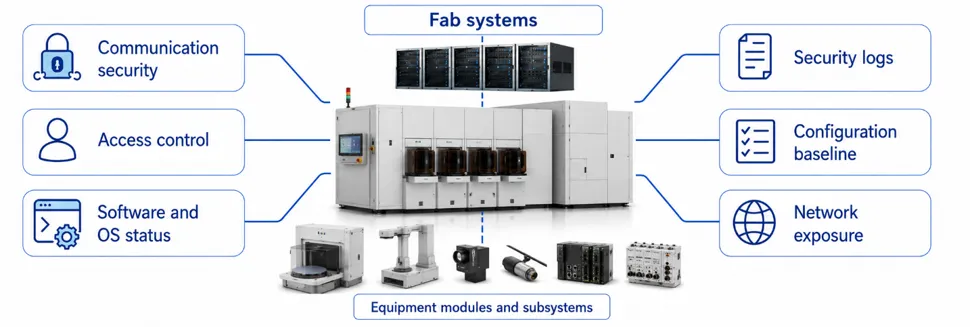
Figure 1: Equipment controllers expose trusted security context
However, design is only the starting point. The equipment must also support validation after delivery. Fabs need a way to confirm that the deployed configuration still matches the secure baseline. This is especially important after field service, software updates, recipe changes, local troubleshooting, or remote maintenance. The industry is shifting from "trust me, it was secure at release" to "here is the evidence that it is still secure today."
2. Cybersecurity evidence must become structured data
All too often, cybersecurity evidence remains trapped in PDFs, spreadsheets, emails, and manual audit reports. This approach is not scalable. A modern factory needs structured, machine-readable cybersecurity information. This data does not need to be collected at the same frequency as process data, it should rather be collected at the right frequency for assurance, such as daily, weekly, after a restart or maintenance, or before a production release.
This creates a strong opportunity for equipment manufacturers. The equipment controller can serve as a source of trusted security context. It can provide controlled, well-defined information about the current state of the equipment's software and configuration. This does not replace cybersecurity tools. Rather, it complements them with equipment-native context.
This is important because the equipment itself knows things that external tools may not: which services are expected, which processes are part of the controller, which ports are required for automation, which accounts are intended for servicing, and which configuration belongs to the validated release.
3. Communication security must move closer to the protocol layer
Many industrial environments have relied on network segmentation, virtual private networks (VPNs), and perimeter controls. While these controls remain useful, they are insufficient for a Zero Trust approach.
The next step is establishing stronger identities and trust between communicating systems. When equipment and factory systems exchange messages, they must know with whom they are communicating, and the communication channel must protect the confidentiality and integrity of the messages.
This direction already exists in part of the semiconductor communication landscape. In EDA, also known as Interface A, SEMI E132 defines equipment client authentication and authorization, requiring clients to authenticate before further communication and enabling authorization controls for access to equipment functions and data.
The same trust expectation is now emerging more visibly for SECS/GEM communication. A SEMI task force is working to secure HSMS communication, which is central to SECS/GEM-based host-equipment integration. The objective is to improve trust at the communication layer while preserving the proven behavior and interoperability that made HSMS successful in fabs.
For semiconductor manufacturing, this must be done carefully. The industry cannot disrupt decades of host-equipment interoperability. The practical approach is to secure communication while maintaining existing automation behavior. This is a good example of the semiconductor cybersecurity challenge: modernizing the trust model without destabilizing the production model.
4. Cybersecurity must be lifecycle-managed
A semiconductor tool can remain in operation for many years. During that time, operating systems age, third-party components evolve, vulnerabilities are discovered, remote support practices change, and fab expectations become stricter. This means cybersecurity cannot be treated as a delivery milestone. It must be managed as a lifecycle capability, from design and release to installation, maintenance, upgrades, and end-of-support planning.
For semiconductor OEMs, this creates a very practical challenge. They need clearer answers to questions that fabs will increasingly ask:
| Practical question | Why it matters |
| What is the support status of each software component? | To understand exposure to known vulnerabilities and end-of-support risk |
| How are vulnerabilities evaluated? | To separate theoretical exposure from real equipment risk |
| How are patches qualified without creating regression risk? | To protect cybersecurity without compromising process stability or tool availability |
| How is the customer informed? | To support faster risk decisions and stronger supplier trust |
| What is the fallback if a patch cannot be deployed? | To define compensating measures and avoid unmanaged risk |
| How is the secure baseline restored after maintenance? | To prevent configuration drift after service actions |
| How is evidence retained? | To support audits, incident response, and lifecycle traceability |
The answer is not simply more documentation. The answer is better evidence: structured, repeatable, and linked to the real equipment state. For semiconductor OEMs, the practical task is to convert cybersecurity requirements into evidence that fabs can verify during integration, operation, maintenance, and upgrades.
| Evidence category | What the fab needs to know | Why it matters |
| OS and software baseline | Supported OS, installed components, patch status | Reduces exposure to known vulnerabilities |
| Network exposure | Open ports, active services, remote connections | Helps detect unexpected attack surfaces |
| Access control | Local accounts, roles, privilege model | Limits persistence and unauthorized access |
| Endpoint protection | Firewall, anti-malware, hardening status | Confirms local defenses remain active |
| Logs and monitoring | Security events, configuration changes, authentication events | Supports investigation and traceability |
| Maintenance history | Updates, remote sessions, service actions | Shows what changed and when |
| Vulnerability handling | Known vulnerabilities, mitigation status, patch plan | Supports lifecycle accountability |
This lifecycle view is important because every change can modify the equipment security posture. A patch, a remote support session, a local service action, a new account, an opened port, or a firmware update can all move the tool away from its validated baseline.

Figure 2: Cybersecurity becomes a lifecycle process
This is also where upcoming regulations will change the supplier conversation. Vulnerability handling, reporting, and product security documentation will become part of business trust, not only technical trust. For semiconductor OEMs, the direction is clear: cybersecurity evidence must become part of the product lifecycle, not a separate compliance package prepared only when the customer asks for it.
5. Compliance must be risk-based, not tool-prescriptive
One of the important lessons from industrial cybersecurity is that standards and customer requirements are most effective when they specify the necessary capabilities and evidence rather than forcing every supplier to use the same tools or implementation methods. In the semiconductor industry, the SEMI Standardized Semiconductor Cyber Assessment (SSCA) is a useful example of this direction. It provides a semiconductor-specific assessment framework designed to evaluate cyber readiness and risk across the supply chain, from device manufacturers to OEMs and beyond. It also uses maturity-based questions to help assess the security posture of an organization, which supports a more risk-based view of cybersecurity capability rather than a simple pass/fail interpretation.
This risk-based and maturity-based approach is also important at the equipment level. Semiconductor tools are not uniform products with identical architectures. A metrology tool, a sorter, an inspection system, an etcher, and an AMHS component may have different risk profiles, software stacks, connectivity models, and operational constraints. Even within one piece of equipment, cybersecurity responsibility is distributed across multiple layers: the main equipment controller, load ports, robots, sensors, embedded PCs, software libraries, remote access components, and third-party subsystems.
The right question is not: "Did every OEM use the same scanner, report format, or internal process?" A better question is, "Can each OEM demonstrate that the equipment meets the required cybersecurity outcome, that the evidence is repeatable, and that the lifecycle process is controlled?"
This question must also be addressed recursively across the supplier chain. A fab will ask the OEM for evidence. The OEM, in turn, must obtain and manage evidence from its subsystem suppliers. Those suppliers may need evidence from their own module, software, firmware, and component suppliers. In practice, cybersecurity assurance becomes a chain of trust that runs from the fab down to the lowest relevant technical layer.
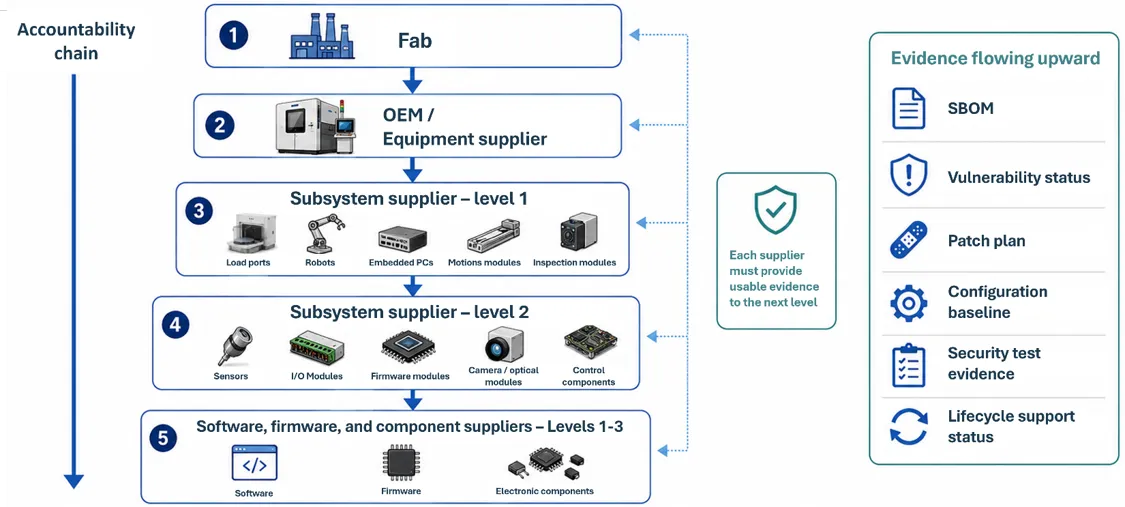
Figure 3: Cybersecurity assurance becomes a chain of trust
The strategic direction is clear for semiconductor OEMs. Cybersecurity should be part of the equipment's value proposition. A secure equipment controller will execute more than just automation logic. It will also support secure communication, controlled access, structured logs, lifecycle traceability, vulnerability management, configuration evidence, and visibility into the security state.
This is not just about reducing cyber risk. It is also about reducing integration friction with advanced fabs. It is about conducting audits more quickly. It is about limiting late-stage surprises. It is about giving customers confidence that they can operate, maintain, and upgrade the equipment without compromising factory security.
The semiconductor industry is entering a phase in which cybersecurity will be judged less by static declarations and more by operational proof. That is a healthier model. Static compliance tells a fab what was once true. Operational proof shows what is true now. For semiconductor manufacturing, this distinction will become more crucial.
About Dr. Fahad Golra
 As Director of Product Innovation for Agileo Automation, Dr. Fahad Golra drives next-generation solutions in connectivity, data modeling, and communication architectures. Since joining the company in 2019, he has been a key force behind Agileo’s push toward Industry 4.0, championing interoperability, digital twins, and edge-to-cloud systems. With 15 years of experience spanning academia, research, and industry, Fahad brings deep technical insight and thought leadership to the semiconductor industry. An active contributor to SEMI, the Semiconductor Manufacturing Cybersecurity Consortium (SMCC) and the OPC Foundation, he is a frequent speaker at industry events and a published author advancing the dialogue around smart manufacturing and automation.


