downloadGroupGroupnoun_press release_995423_000000 copyGroupnoun_Feed_96767_000000Group 19noun_pictures_1817522_000000Member company iconResource item iconStore item iconGroup 19Group 19noun_Photo_2085192_000000 Copynoun_presentation_2096081_000000Group 19Group Copy 7noun_webinar_692730_000000Path
Skip to main content
Default Banner Image

SEMI News

For public policy lovers, civic-minded, engaged U.S. citizens, and people around the world interested in the U.S. President’s positions and priorities, the annual State of the Union address (SOTU) is “must-see TV.” This year, the anticipation and expectations were different than with past presidents. President Trump is the first U.S. president who has used social media to the extreme that he has. President Trump’s prolific Twitter feed has had an interesting impact on the SOTU. U.S. citizens and people from around the world already know President Trump’s positions on issues, his policy priorities and what gets him excited. There is an ongoing, direct line to the President’s thoughts throughout each and every day. In the past we looked to the SOTU for insights into what the sitting president is really thinking and his future policy priorities. Now, there isn’t much we don’t already know.One looming question this year was whether President Trump would reach out in a conciliatory manner to help bridge the political divide and lay the groundwork to enable some public policy wins and avoid another government shutdown. While there were moments of conciliation, the President made it clear he would not move on areas that are most contentious with the other side of the aisle. For example, the President unequivocally reiterated his intent to build the wall. While the message plays well to his base, it is, in effect, a frontal assault and challenge to Democrats. It’s hard to image that his staunch stance will help move the two parties to work together on substantive policy issues. It may also mean that the wall issue will occupy lawmakers time for the foreseeable future, sidelining debate on other important issues.The best hope is that a bipartisan bill finds its way to the President’s desk that he can sign and use to “declare victory.” However, many political observers believe the likelihood of the President declaring a national security emergency is rising as a maneuver to ensure funding for the wall and avoid a shutdown. While such a declaration would most likely face a court challenge, the President could claim that his decision was a move of last resort and leverage the moment to position Democrats as obstructionists to his base. The scenario does not bode well for the bipartisan support necessary to address other issues.What does this mean for our industry? Were there any points raised in the SOTU that would signal a change in what we are facing regarding trade, tariffs, export controls and immigration? Were any new issues or ideas raised that could help lift the global economy? In short, no. On one hand, the President cited his good relationship with the president of China, but on the other doubled down on his attacks on China, seeming to stand firm to bolster his position at the table as the U.S. and China trade talks continue.What do these dynamics mean for SEMI Global Advocacy? In 2018 we were heavily engaged in efforts to prevent regulations that would inhibit our members' ability to develop and deploy technologies and maintain global market access. We advanced our global advocacy model, leveraging our regional presence around the world. Many of the potential issues we faced emanated from the U.S., including those focused on controlling technology development, limiting trade and enhancing export controls. We also intensified our efforts to address industry talent pipeline issues.In 2019, our public policy focus will be to continue to push back on tariffs, engage members to inform the rule-making process for export controls and to attempt to influence the immigration debate as it pertains to access to talent. In addition, while the U.S. R D tax credit was made permanent through the tax cut in 2017, some of the provisions may have unintended consequences and will need to be modified. How the law is enacted will affect how businesses can deduct qualified research and development and other expenses from their taxable income, so we anticipate activity on the tax front as well.It will also be a big year for SEMI on the workforce development front. SEMI will continue to grow its existing High Tech U (HTU), university and mentor programs. In addition, SEMI will be positioning itself as the global leader in addressing issues related to the talent pipeline by approaching the problem with a full-spectrum, holistic approach that is intended to better address more immediate needs in attracting, training and retaining qualified talent. We’ll also focus on improving the industry image and exciting students at a younger age by providing experiential learning activities throughout a defined educational pathway. Stay tuned on this front as the full program unfolds.In general, we will continue to build our relationships and stature as a leading voice for our members and the end-to-end semiconductor supply chain in the areas of talent, trade, tax and technology (SEMI’s “4 Ts”) and to ensure free and fair trade, access to markets, supply chain growth, IP protections and enhanced efforts to improve cybersecurity. Mike Russo is VP of Global Industry Advocacy at SEMI.
Read More
SEMI’s Environment, Health Safety (EHS) Advocacy program has been helping the semiconductor manufacturing supply chain collectively address common challenges for over 20 years. Now, as national and regional governments worldwide increasingly weigh legislation that could impact the industry, SEMI continues to ensure that microelectronics industry understands the potential impact and provides an effective platform for taking collective member-led action.Olivier Corvez recently joined SEMI to focus exclusively on shaping SEMI’s EHS Advocacy program to meet escalating demands on the industry. He recently sat down with SEMI’s communications team to discuss SEMI's evolving EHS Advocacy program. SEMI Communications: As senior manager of EHS Advocacy, based at SEMI’s Milpitas, California, headquarters, what do you see as the major issues impacting EHS Advocacy for electronics manufacturing worldwide?Corvez: EHS is a vast topic that cuts across many different types of issues such as regulatory compliance obligations, management systems performances, as well as sustainability related public disclosures. SEMI’s global members are engaged on all these fronts, while creating advanced materials, sophisticated tools and managing a complicated and extensive supply chain.On the regulatory side, there has been exponential growth in the number of EHS laws considered and adopted by legislatures worldwide. Often these new regulations generate shockwaves across the globe as member companies are required to adapt to new requirements that spread across the entire manufacturing supply chain.Many new regulations are originating from Europe and demand much of my attention. We are paying especially close attention to the Stockholm Convention on eliminating persistent organic pollutants. A chemical called PFOA has been a subject of much effort at SEMI for years now and we are heartened by the reception of our position by the European Commission.SEMI Communications: What do you find most interesting about operating the EHS Advocacy program at SEMI?Corvez: The first word that comes to mind is “variety.” This role involves a blend of strategy, regulatory interpretation skills, project management, communication and even accounting. There is always something new to learn and positions and strategies to develop.SEMI, as a member-driven, collaborative platform, needs a high level of knowledge sharing and communications. I am working to establish a workspace where members can share previously-created analyses and minimize “recreating the wheel.” We have ambitious plans to deploy additional tools and a redesigned website that will improve our knowledge-sharing capabilities and best serve our members.We also plan to renew collaboration with other industry associations such as SIA and SESHA. Partnering with other associations means our voice is stronger, our messaging is reinforced, and our efforts are coordinated. Last but not least, I believe that maintaining a sense of geographical proximity for SEMI’s worldwide efforts is important. SEMI’s local advocacy efforts are facilitated by SEMI regional staff and I look forward to collaborating with them as they maintain ongoing dialogue with our local members and their local, state and national governments. SEMI Communications: What is the most challenging part of your role?Corvez: The most challenging aspect will be to reinvigorate participation in all of our EHS activities and find ways to create a state of fruitful collaboration among members worldwide. Secondly, establishing a new EHS governance structure is a significant challenge, but it is incredibly important to have a strong leadership group and decision-making mechanism that will efficiently help define our vision and priorities.Our new direction will require members to lead our activities at all levels. We believe there is a strong ROI for companies to dedicate resources to address the issues or topics we need to pursue to keep them and their products, accepted, profitable and the industry to grow. While SEMI provides the platform for collaboration, we must supplement our efforts with members providing the manpower to ensure our activities are a success.SEMI Communications: Tell us about your background. Corvez: I bring 20 years of diverse experience as a consultant, auditor and corporate EHS program management across most economic sectors on a global scale. Recently, I managed an EHS team distributed across 10 countries, dedicated to providing EHS compliance support to Cisco facilities worldwide.In addition to compliance experience, I have worked on implementing EHS Management systems at ABB or Total while in France (primarily) in the late 1990s. While at KPMG in Paris I was involved in over 400 due diligence projects for transactions services for electronics, chemicals, auto industry, aeronautics, etc. On the sustainability reporting side, I was lucky to be involved with large corporations and spent five years verifying EHS and social performances disclosed in sustainability annual reports. I received my formal training and received a Masters of Science in Environmental Sciences from Universite de Rouen, France, and my Bachelors of Science in Environmental Geology from Northeastern University in Boston. I also trained as an ISO 14001 auditor at DNV Sweden.All of these experiences have led me to this current position at SEMI, where I look forward to making effective and meaningful impact.Have questions or suggestions for Olivier? He can be reached at [email protected] or at +1.408.943.6957. To learn more about the EHS advocacy program at SEMI, please click here.Heidi Hoffman is senior director of Technology Communities Marketing at SEMI.
Read More
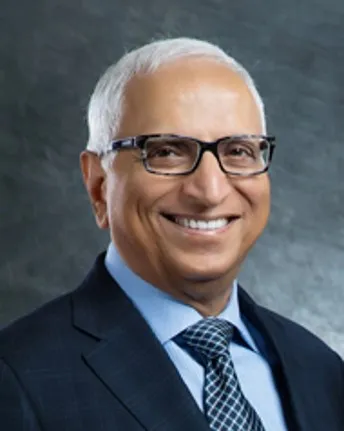
Last year the industry posted another remarkable double-digit revenue growth year. IC shipments eclipsed one trillion units for the first time and continued to enable an ever-expanding array of silicon intensive-applications.2018 was also a pivotal year of transformation at SEMI. Setting our sights firmly on building more value for SEMI members, we doubled down on priorities I established this time last year. We advocated intensively on global trade policies, industry talent needs, and critical environment, health and safety (EHS) concerns. To underpin our efforts around talent, we took the bold step to reinvigorate the industry’s identity with a dynamic image campaign. Above all, we targeted critical industry-wide issues to help us realize the ambition of becoming a trillion-dollar industry in the next decade. Workforce DevelopmentRedefining our approach to talent development in 2018 was and remains a top priority. A diverse, highly skilled workforce is crucial to the industry’s ability to innovate. Last year we ramped up a number of SEMI High Tech U (HTU) programs to inspire young people and attract them to careers in high-tech manufacturing. To date, more than 130,000 students have been touched by HTU – through student or teacher programs.Over the past year, we designed a new university outreach program and established partnerships with 100 institutions. We established Workforce Pavilions at SEMICON events in Southeast Asia, the U.S., Taiwan, Europe and Japan for students to explore career opportunities and meet with recruiters. We thrilled at seeing sponsors hire young talent at SEMI events. This year, all SEMICONs worldwide will feature Workforce Pavilions.SEMI also formalized its commitment to Diversity and Inclusion (D I) with the establishment of a D I council to shape new programs including the recently launched Spotlight on SEMI Women. To localize and fully optimize our D I programs, we established regional workforce councils in every region we serve. We unveiled the SEMI Mentoring Program to support students and young professionals on this journey by facilitating one-on-one mentoring relationships with industry professionals. Hundreds of mentees have enrolled. But we still need more mentors. I urge you to join the program. During the year, SEMI also expanded its workforce staff and developed a comprehensive workforce strategy with programs that engage students as early as elementary school and inspires them through high school and college. The program provides pathways to professional careers, building a pipeline to fill the short-term and long-term talent needs of the industry. Industry Image CampaignAs we developed the comprehensive workforce development program, we knew we had to refresh the industry’s image and appeal to the next generation through contemporary media and communications channels. So we recently launched a bold, innovative campaign to raise industry awareness and attract students and recent graduates to careers in semiconductor manufacturing.Our You’re Welcome campaign is a novel, creative approach that blends entertainment, media and storytelling to excite students about the industry. The campaign went viral immediately and within weeks had more than 5.5 million social media impressions and 2.3 million video views.Trade Policy AdvocacyRising trade tensions between the U.S. and China catapulted global trade policy to the forefront of industry concerns in 2018. Since the tariffs have taken force, semiconductor companies have faced higher costs, greater uncertainty, and difficulty selling products abroad. The tariffs have forced many SEMI member companies to pause or rethink their investment strategies.SEMI quickly engaged U.S. policymakers and provided resources for SEMI members. We formed a member trade task force, staged trade compliance seminars in China, and convened meetings with over 110 U.S. congressional, agency and administration officials, and provided testimony on the importance of the free trade to the industry.SEMI continues to educate policymakers about the critical importance of free and fair trade, open markets, and respect and enforcement of IP for all players in the global electronics manufacturing supply chain. As part of this initiative, we distributed “10 Principles for the Global Semiconductor Supply Chain in Modern Trade Agreements” and encouraged their adoption in various trade negotiations. These principles outline the primary considerations for balanced trade rules that benefit SEMI members around the world, strengthen innovation and perpetuate the societal benefits of affordable microelectronics.Environment, Health and SafetyEnvironmental regulations are proliferating globally even as advanced semiconductor manufacturing technology relies increasingly on a host of new materials. With dozens of new fabs and fab line upgrades, our industry must align on best practices, sensibly respond to materials restrictions, and renew efforts toward sustainable manufacturing.That’s why the revitalization of SEMI EHS efforts became another priority in 2018. Two months ago, we hosted the inaugural EHS Summit at SEMI Headquarters. Fully, 70 EHS professionals and company executives met to form the basis for the future SEMI EHS program.The Year AheadDespite a softening in the market, compounded by Apple’s first-ever announcement of a revenue decline in 16 years, a geopolitical whirlwind on trade and an extended shutdown of much of the U.S. government, the future is bright.At SEMI’s annual Industry Strategy Symposium (ISS 2019) in Half Moon Bay, Calif. in early January, the sense of optimism was palpable. In her keynote address, Dr. Ann Kelleher, Sr. VP and General Manager, Technology and Manufacturing Group, at Intel, observed that data is powering the fourth industry revolution and the expansion of compute. With customers expecting continual improvements in applications, Kelleher highlighted the tremendous opportunity for the chip industry to meet these expectations.At ISS 2019, we announced a Memorandum of Understand between SEMI and imec. The MOU will enable us to accelerate our members’ engagement in SEMI’s Smart vertical market platforms, in particular Smart MedTech and Smart Transportation. Our partnership with imec will also allow us to boost SEMI Standards activities in non-CMOS technologies, deepen technology roadmap efforts and augment our SEMI Think Tank initiative in thought leadership at a global level.Over the course of this coming year, will we begin our global rollout of key building blocks of our comprehensive workforce development program to engage schoolchildren as young as 10 and learners all the way to veterans who return to the workforce. We are now able, with the invaluable help of our Workforce Development Council and the passionate engagement of many SEMI member companies, to offer a solution to the talent crisis in our industry.We will continue to be the leading voice for our members and the end-to-end semiconductor supply chain across Talent, Trade, Tax and Technology as we work to ensure free, fair trade that protects IP while preserving vital access to markets to grow the supply chain. Vertical Market PlatformsOur vertical market platforms are an important part of this growth. For example, in Smart MedTech, SEMI looks forward to working with the Nano-Bio Materials Consortium to advance human monitoring technology for telemedicine and digital health after winning $7 million to fund the renewed program. In Smart Transportation, we will leverage the Global Automotive Advisory Council (GAAC) we formed last year to represent the full automotive supply chain and the Smart Transportation and Smart Automotive forums featured at all our SEMICON events to enable the industry to identify and seize opportunities in autonomous driving. At ISS 2019, Sujeet Chand of Rockwell Automation noted that “digitization will grow faster in the next 10 years than it did in the past 50,” a trend calling for semiconductor fab architectures that transform data into business value. We will continue to bring the industry together at our Smart Manufacturing venues to help uncover ways to deploy deep learning, edge computing and other Smart technologies to deliver this value and meet the challenges of automation as artificial intelligence’s (AI) sprawling influence reshapes industries including manufacturing.I am filled with optimism and thrilled about the opportunities I see on the horizon for our members as we build on our 2018 accomplishments to enable your prosperity in 2019 and beyond. My heartfelt thanks to all of you for your participation in our programs and events.I look forward to another successful year as we connect, collaborate and innovate together!Ajit Manocha is president and CEO of SEMI.
Read More
We are living in a digital world where semiconductors are taken for granted, AI is bringing semiconductors back into the deserved spotlight, and now we are witnessing the dawn of the Cognitive Era enabled by semiconductors,” SEMI president and CEO Ajit Manocha said to an audience of more than 500 during his presentation – Rebirth of the Semiconductor Industry – at the First Global IC Entrepreneur Conference.Speaking at the Shanghai event in mid-December, Manocha recalled how, when he first entered the semiconductor industry in the 1980s, semiconductors revenue topped out at about $10 billion. Now, with sales having swelled to a staggering $450 billion, the industry is on a much faster growth track. Revenue could reach $500 billion by the end of 2020 and trillions of dollars by 2030. Over the past two decades, chips have given rise to social media and e-commerce powerhouses such as Google, Facebook, and Alibaba. All rely on heavily on chips, the engines of data centers across all industries. Wave after wave of technology innovation have been powered by semiconductors – from mainframe computers in the 1970s, personal computers in the 1980s, the Internet in the 1990s, and mobile and social networking in the early 20th century, to the current shining stars of technology such as IoT, big data, new memory, virtual reality, autonomous driving and artificial intelligence, Manocha said. New applications across areas such as smart manufacturing and digital healthcare are stoking the latest round of semiconductor growth.The rise of AI, like all the technologies before it, has renewed the semiconductor industry once again with its promise to drive growth of all industries worldwide, Manocha said. Five years ago, IoT was but a gleam in a technologist’s eye, more hype than reality with doubt about its viability running deep. Today, with about 60 percent of people in the world connected to the Internet, the enormous promise and potential of IoT is flowering. Industry growth will explode as the melding of AI and IoT birth countless applications and innovations in SMART transportation (0 emissions; 0 fatalities; 0 congestion), smart sensors (agriculture, infrastructure, healthcare) and SMART “Everything” (people, devices, homes, cities, industries, and the list goes on). Indeed, AI is now widely recognized as a chief growth driver of the semiconductor industry well into the future, with semiconductor technology at the core of AI innovation, he said. Semiconductors are thrusting the fifth industrial revolution into the fast lane. China’s much-anticipated rise as an industry powerhouse over the next few years will only accelerate industry growth, turning current disruptions into future opportunities as SEMI China continues to cultivate connection, collaboration and innovation in China’s fast-growing semiconductor sector.Cherry Sun is a marketing manager at SEMI China.
Read More
Five young dancers bathed in a striking rainbow of colors with their silhouettes cast in the background dazzled SEMICON Japan 2018 attendees at the opening ceremony in mid-December. Gone were the standard opening keynotes and ribbon cutting, replaced by live performance and media art set against a dramatic black backdrop. There was no mistaking the wide-eyed looks of wonder in the audience.In its sheer vibrance, the opening ceremony thrilled with an excitement that seemed to embody the extraordinary growth expectations for the global semiconductor supply chain over the next five years, with the industry poised to double sales from $2 trillion to a staggering $4 trillion – a phenomena SEMI president and CEO Ajit Manocha has called The Rebirth of the Semiconductor Industry. Driving this unprecedented growth will be SMART applications that are transforming industries and applications worldwide, powered by artificial intelligence (AI) and Internet of Things (IoT) technologies.The dramatic scene at SEMICON Japan 2018 was staged by Rhizomatiks, a media arts company that produced the Rio Olympic Games closing ceremony and is famous for its pop music spectacles. The company’s CTO, Motoi Ishibashi, the event’s first keynote speaker, described his team’s development of drones and vehicles guided by motion and precision-control technologies. It was some of these SMART vehicles that maneuvered the opening ceremony performers from the dance company Elevenplay onstage. Only Rhizomatiks, Ishibashi said, has this capability. In its mission to enrich people’s lives through new media arts, Rhizomatiks uses the latest virtual and mixed-reality technologies to orchestrate not only dance performances but music videos, commercials, fashion shows and festivals.Toru Nishikawa, the second keynote speaker and CEO at Preferred Networks, a leading Japan-based developer of deep learning software programs, surprised the SEMICON Japan audience with his discussion of his company’s work to develop a specialized chip for deep learning processing, joining technology giants Apple, Google, Alibaba and Microsoft in chip design. As more IT and software companies develop specialized, differentiated chips, the devices are quickly becoming the heartbeat of SMART technologies. The company’s approach has taken hold. Only four years old, Preferred Networks is enjoying rapid growth by working with global powerhouses including Toyota, NTT, Panasonic, Fanuc, NVIDIA, Intel and Microsoft. Ishibashi’s and Nishikawa’s fresh visions and the media arts extravaganza reflected the success of SEMICON Japan, held again at Tokyo Big Sight: The event’s 1,881 booths – filled by 727 exhibitors from 14 regions – was the highest count in six years. With Japan home to companies that supply about 40 percent of semiconductor equipment and materials worldwide, top suppliers historically have occupied the largest spaces on the SEMICON Japan show floor.According to IDC, personal computers and smartphones, long the largest revenue sources for the semiconductor industry, will remain top revenue drivers in the coming years. But revenue from new SMART technologies for applications such as automotive and factory automation is growing, a trend expected to continue with a 2018-2022 CAGR of 9.5 percent for automotive and 5.2 percent for manufacturing, compared to 1.1 percent for PCs and 2.9 percent for smartphones.SEMICON Japan’s new SMART Applications zone highlighted these and other new market opportunities for semiconductor growth with product and technology exhibits from companies including Bosch, IBM, Microsoft, NEC, Preferred Networks, Sony, SAS, Siemens, Tesla and Toyota. But the zone wasn’t all work and no play. The ROBOT SQUARE and SPORTS x IOT robot exhibits took visitors back to their school days, with robot anime – from Astro Boy to Gundam and Evangelion – that they could ride and control! As the World Gets Smarter, So Must SEMICON and the IndustryWe all agree the world is getting smarter at a fast pace. New cars are easier to drive – some models are almost fully autonomous on highways and streets. Your SMART speaker has gone well beyond an audio playback device and is more like a home AI platform. Almost all storefronts are equipped with video cameras. Your workplace, whether an office or a factory, is driven by automation. The reliance of these environments and devices on semiconductors is driving exponential chip and changing the world. Businesses need to adapt and so do SEMICON events. We’re doing just that as SEMICON Japan 2018 demonstrated – from an opening ceremony enabled by technology innovation to new faces of the industry to the SMART Application zone. As the SEMICON Japan presidents’ reception concluded the first day of the show, a robot from the ROBOT SQUARE suddenly appeared in the reception hall in front of about 250 executives from the global industry. Everyone at the reception was impressed and stepped forward to the stage, reflecting the overall excitement about SEMICON Japan, which for many years showcased only chip manufacturing equipment and materials. This year, to keep pace with the changing world, it was much more than that.SEMICON Japan 2019 will again take place in December at Tokyo Big Sight. However, organizers of the Tokyo Olympics will be using the East Exhibit Hall usually occupied by SEMICON Japan to prepare for the games. As a result, SEMICON Japan will be held in the West and South Halls instead. Look for more changes to the event. I hope to see you next year!Jim Hamajima is president of SEMI Japan.
Read More
Spotlight on SEMI Women is excited to recognize Q4 2018 honoree Ellie Yieh from Applied Materials!Spotlight on SEMI Women recognizes and celebrates accomplished women working in the global microelectronics industry. Nominees include women who are beacons of knowledge, leaders of organizations and initiatives, hidden heroes and innovators in our industry. They are volunteers, protectors, intellectual disruptors and activists. SEMI’s Diversity Inclusion Board works with our member companies to shine a spotlight on these amazing women. Learn how you can nominate a woman for Spotlight on SEMI Women.Ellie Yieh has been a trailblazer at Applied Materials since she began her career with Applied in 1989 as a process engineer in the Chemical Vapor Deposition group. Ellie’s contributions have made a lasting impact on the business and she continues her path of innovation as corporate vice president for Advanced Product Technology Development. Ellie is responsible for the company’s state-of-the-art Maydan Technology Center and works closely with customers and business units to drive advanced product development and technology roadmaps. In addition, Ellie leads R D for developing new memory and logic innovations that will drive future business opportunities for Applied. In 2018 she was named an Applied Materials Fellow, the company’s highest honor for outstanding technical achievement. She is also a board member of Applied Ventures, LLC, the company’s venture capital arm.During her 30 years at Applied, she has led the development of several successful products and enabled her teams to deliver growth in profitability and market share, while building strong customer relationships and developing innovative technologies. Of note is Ellie’s leadership in developing industry-leading Gapfill technologies to address the increasingly important shallow trench isolation and inter-layer dielectric applications for denser pitches. Further, Ellie spearheaded the adoption of Applied’s low-k Producer® Black Diamond® system, helping to develop and introduce a robust, low-k film that could withstand both the newly adopted copper back end-of-line and packaging integration challenges.st honor for outstanding technical achievement. She is also a board member of Applied Ventures, LLC, the company’s venture capital arm.Ellie’s journey in technology began when she immigrated to the U.S. from Taiwan at the age of 15 with her family. She quickly stood out due to her stellar academic performance in math and science. Her academic excellence landed her at UC Berkeley’s College of Chemistry. Ellie’s adaptability as an Asian female became crucial as she navigated a field dominated by male engineers. She received a B.S. in chemical engineering from UC Berkeley and now holds more than 100 semiconductor engineering patents. In 2016 she was inducted into the Women in Technology International (WITI) Hall of Fame for outstanding contributions to the scientific and technological communities. She was also named one of the 2015 “Top 50 Most Powerful Women in Technology” by the National Diversity Council.Ellie has also been spending time championing for woman engineers. She is a member of the advisory boards for UC Berkeley’s College of Chemistry and the Silicon Valley Women in Engineering group at San Jose State University.Ellie finds working in the semiconductor industry rewarding because “the technical challenges come like clockwork so we are always on our toes working on the next problem and the next solution. I enjoy each of the challenges to put the puzzle together. It’s a team sport; we are all dependent on each other to win and when we look at a problem I am just another engineer on the team trying to solve the problem. But I am also responsible for setting higher level direction for priorities, objectives and vision. It has been very fun for me and I love what I do.”Cristina Sandoval is manager of Workforce Development at SEMI.
Read More
From measurement equipment and components to medical devices, SEMI will showcase SMART technologies at its Smart Starts Here Pavilion, booth 40761, in the Smart Home section at CES, the world’s largest consumer electronics event. Do you want to discuss new technology directions and the latest developments in sensors, displays and electronics manufacturing? Hear about the new SEMI program that promotes “cool” careers in semiconductor manufacturing? Get the outlook for the manufacturing supply chain in 2019 and beyond?Stop by our booth or connect with any of our co-exhibitors in the Smart Starts Here Pavilion at booth 40731 in the Sands Expo Hall A. Co-exhibitors include:Advantest – A world-class technology company, Advantest is a premier manufacturer of measuring instruments used in the design and production of electronic instruments and systems. The company also focuses on research and development (R D) for emerging markets that benefit from advancements in nanotech and terahertz technologies and has introduced multi-vision metrology scanning electron microscopes essential to photomask manufacturing, as well as a groundbreaking 3D imaging and analysis tool.Altergy – Alertgy’s Glucose Monitor is a biosensor-based wristband device that provides non-invasive, real-time blood glucose monitoring for diabetics. The device gives both patients and healthcare professionals on-demand access to blood glucose levels via a smartphone application. C2MI – C2MI is the largest microelectronic innovation centre in Canada. Offering state-of-the-art equipment dedicated mainly to advanced packaging and microelectromechanical systems (MEMS), the centre hosts more than 250 R D scientists. Collaboration and synergy among our partners promote rapid commercialization of advanced prototypes.CHASM – CHASM Advanced Materials is a leading developer and manufacturer of printed electronics materials and battery materials based on proprietary carbon nanotube and ink/coating technologies.Kent Displays – Kent Displays is a global leader in unique eWriter display technology, with expertise in research, development, roll-to-roll manufacturing, and consumer packaged goods design and assembly using the eWriter technology. Kent displays also commercializes and sells the eWriter technology under its brand Boogie Board in a number of global retail markets. mCube – mCube makes the smallest motion sensors in the world. As a technology leader, mCube aspires to be the enabler for the Internet of Moving Things by putting a MEMS motion sensor on anything that moves. With over 500M units shipped, mCube continues to provide the world’s most advanced inertial sensors.Mitsui Chemical – Mitsui Chemical provides chemicals and gases for solutions in energy, agri-system, medical, IoT, and related fields. Mitsui specializes in advanced materials for automotive, ophthalmic lenses, dental, nonwovens, agrochemicals, and packaging. N5 Sensors – N5 Sensors manufactures chip-scale gas sensors that provides reliable gas detection in small-footprint packages. N5’s patented gas sensor technology represents a new era in low-power, microscale gas and chemical sensing that aims to replace conventional gas sensors. N5 is currently offering sensors and modules for integration. Its platform technology enables development of sensors for different gases ranging from toxics such as chlorine, nitrogen dioxide, to explosives such as hydrogen and methane, to environmental gases such as carbon dioxide.OMRON – OMRON Corporation is a global leader in the field of automation based on its core technology of "Sensing Control + Think." OMRON's business fields cover a broad spectrum, ranging from industrial automation and electronic components to automotive electronic components, social infrastructure systems, healthcare, and environmental solutions. Established in 1933, OMRON has over 36,000 employees worldwide providing products and services in 117 countries. In the field of industrial automation, OMRON supports manufacturing innovation by providing advanced automation technologies and products, as well as through extensive customer support, to help create a better society. PlayNitride – PlayNitride’s PixeLEDTM display can be used in addition to traditional displays. Focused on GaN-based MicroLEDs, PlayNitride, a fabless company, offers an innovative mass transfer process and SMAR.TechTM pixel repair technology. PlayNitride also provides a broad range of products and services including research and development in the field of compound semiconductors.Si-Ware - Si-Ware Systems' NeoSpectra specializes in the design and manufacturing of Microelectromechanical Systems (MEMS) powered miniature Fourier Transform InfraRed (FT-IR) spectrometers, or spectral sensors. Its sensors are affordable, robust, and easily adapted for a diverse range of industries.TEL - A leading global provider of semiconductor and flat panel display (FPD) production equipment, Tokyo Electron Limited (TEL) develops, manufactures and sales a wide range of products. All of TEL's semiconductor and FPD production equipment product lines maintain high market shares in their respective global segments. TEL provides outstanding products and services to customers through a global network of approximately 75 locations in 16 countries in the U.S., Europe, and Asia.ULVAC - ULVAC is a leading supplier of production equipment for the semiconductor, FPD and solar cell industries. Semiconductor products include MEMS release equipment, the ENTRON metallization system with PVD/CVD/ALD capability, etching systems for various applications including solutions for LED, power device and non-volatile memory. The systems and components are designed with innovative production technology for cost-effective device fabrication.Uneo - UneoTM offers high-quality sensor manufacturing services and product module design and consultation support to shorten product design cycles.Heidi Hoffman is senior director of Technology Communities Marketing at SEMI.
Read More
The SEMI International Standards program is operated in all major electronics manufacturing regions including the Americas, Europe, Japan, Korea, Taiwan and China to increase the manufacturing efficiency and interoperability. More than 5,000 volunteers representing over 2,000 companies work in 20 global technical committees and over 200 task forces to find solutions to common technology challenges.At SEMICON Japan 2019 – December 12-14 at Tokyo Big Sight, Tokyo – SEMI recognized two industry veterans active in the Japan chapter for their longtime contributions to the SEMI International Standards program. The award ceremony took place on December 13 with 56 Standards committee members and SEMI executives including Ajit Manocha, president and CEO of SEMI, and Jim Hamajima, president of SEMI Japan, in attendance. Hiromichi Enami of Hitachi High-Technologies Corporation and Isao Suzuki of MKS Japan Receive SEMI Japan Honor Award. Left to right: Jim Hamajima (SEMI), Ajit Manocha (SEMI), Hiromichi Enami (Hitachi High-Technologies), Isao Suzuki, James Amano (SEMI) and Mike Ciesinski (SEMI) Contributing to SEMI Standards for more than 20 years, Mr. Hiromichi Enami of Hitachi High-Technologies Corporation has been dedicated to committee management by acting as co-chair of the Gases Technical Committee and the Facilities Technical Committee. In addition, as chairman of the division, he has strived for harmonization with other committees and regions. (The current SEMI International Standards program has no division structure).Mr. Isao Suzuki, formerly of MKS Japan, is also a long-time contributor to the SEMI standards activities, having demonstrated his commitment to the management of the Gases Technical Committee and as a co-chair of the Facilities Technical Committee. He has also made significant efforts towards cooperation with Information Control Committee activities related to sensor bus activities.The SEMI Japan Honor Award is given to members who has contributed to the SEMI International Standards program as a member of Japan Regional Standards Committee or as a Global Technical Committee Japan Chapter co-chair for more than four years.By Junko Collins, director of Standards and EHS, SEMI Japan
Read More
Environment, Health and Safety (EHS) has steadily evolved to become a key element within SEMI’s Advocacy and Standards activities. On November 29th, 2018, nearly 60 members representing equipment, materials and device manufacturers gathered at SEMI’s Milpitas headquarters for our first EHS Summit. The main agenda for the day was related to discussing the new “EHS 2.0” strategy – and priorities – to better align with the current landscape facing members in various parts of the world. “SEMI will not compromise our commitment to EHS,” said SEMI president and CEO Ajit Manocha in is kickoff speech at the Summit, calling on members to rise to the challenge. “We also understand the importance of EHS for our industry. SEMI EHS staff is here to facilitate a program that achieves the highest priorities of our members – but we need you, our members, to be clear on your priorities.” SEMI’s EHS program has had many successes globally, including a strong suite of safety standards, since it launched in the 1980’s. Since then, exponential growth of EHS regulatory requirements worldwide has intensified pressure on members to become more transparent on environmental and social issues. The pressure to disclose on EHS performances has become more visible and challenging for members to manage across the entire supply chain. During facilitated breakout sessions, members were invited to share their views on various industry issues. Some of the most pressing raised related to changes in the REACH European Regulations, or implications from the Stockholm Convention that will affect what products or hazardous chemicals can be used. Some of the topics identified throughout the day included: Circular economy/green/sustainability Global RoHS and REACH regulations Used equipment machine safety Current and future prohibited substances tracking such as Perfluorooctanoic acid (PFOA) After the summit’s success, SEMI is now planning three EHS summits in 2019 and other events to further address the various issues facing members. To receive invitations and stay abreast of SEMI’s EHS activities, please join our EHS interest list by clicking here. Olivier Corvez is senior manager of Environment, Health, Safety and Sustainability at SEMI.
Read More