downloadGroupGroupnoun_press release_995423_000000 copyGroupnoun_Feed_96767_000000Group 19noun_pictures_1817522_000000Member company iconResource item iconStore item iconGroup 19Group 19noun_Photo_2085192_000000 Copynoun_presentation_2096081_000000Group 19Group Copy 7noun_webinar_692730_000000Path
Skip to main content
Default Banner Image

Mike Russo

With IP the lifeblood of today’s globally integrated microelectronics supply chain, protecting confidential information is vital to electronics companies around the world. Additionally, the industry’s central role in ensuring the national security and economic competitiveness of every country ups the ante. Yet the supply chain is fraught with security risks. Malicious actors never rest in their work to infiltrate factory systems or human resources databases with the intent to steal IP, disrupt production or embed malicious software that can open the door to future attacks. Cyberattacks in the financial and retail sectors typically draw much more public attention than IT security breaches in the semiconductor industry. While large microelectronics companies are not immune to these threats, they tend to deploy some of the world’s strongest security systems and implement robust security policies and protocols to help mitigate risks. Many of their small and mid-sized counterparts with modest IT budgets and limited expertise, on the other hand, struggle to maintain a similar level of cyberhealth – a critical gap in the microelectronics industry, one of the most strategically important in the world. SEMI is out to help change that by collaborating with cybersecurity experts to help members strengthen their cybersecurity defenses. SEMI plans to increase cybersecurity awareness within the microelectronics workforce and offer cybersecurity assessments to member companies through a third-party provider as part of its SEMI Works® program. Working with experts, SEMI will add cybersecurity-related competencies to the SEMI Works® Skills Portal database to help ensure educational and training programs address these skills. As part of SEMI’s recently launched Curated Content Initiative, member companies will have access to workforce training courses on how to raise awareness of cybersecurity risks and mitigate them. Strengthening IP protections across smart technologies and industries driving the next wave of microelectronics industry growth such as artificial intelligence (AI), 5G, medtech and mobility starts in chip design and extends through fabrication to packaging and ultimately end-use applications. Helping to establish a baseline understanding and awareness of cybersecurity risks and how to mitigate them throughout the supply chain is critical. Bolstering cyber protections at small and mid-sized member companies is a key step in that direction. Commercial success, national security and the security of the ubiquitous IT infrastructures at the center of how we work and live depend on it. Mike Russo is vice president of Industry Advancement and Government Programs at SEMI.
Read More
The turn of the New Year means new opportunities for the microelectronic industry as SEMI continues to focus on a top priority for companies across the microelectronics design and manufacturing supply chain and SEMI members – supporting the development of the talent pipeline. Regardless of a member company’s role within microelectronics, ensuring a continued, robust flow of qualified talent for what is a cross-cutting, foundational industry sector is of high strategic importance. Skilled workers are essential to advances in areas such as artificial intelligence (AI), smart manufacturing, medtech, transportation and communications. In order to satisfy the world’s insatiable appetite for technology, we need a qualified workforce that can design and manufacture cutting-edge microelectronic devices. Launched in 2019 by SEMI’s Government Programs Office, SEMI Works™ is a holistic approach to developing and maintaining the talent pipeline. 2020 focused on building the all-important infrastructure, engaging member companies to identify required skills and developing a Unified Competency Model to catalog these workforce requirements. SEMI Works™ accomplished several firsts for the microelectronics industry: First dynamic, data informed workforce training standard adopted and published by the U.S. Department of Labor Employment Training Administration (USDOL-ETA) First SEMI Certified college program for technicians First Industry Approved Apprenticeship Program for Technicians, adopted and endorsed by the U.S. Department of Labor Member inputs anchor the SEMI Works™ portal, which enables connections among talent, employers and training/education providers. The portal’s initial phase of development is on track for completion in the first quarter of this year, marking the point when it will begin to be populated with specific job information, individual (talent) profiles and applicable training courses. Once SEMI Works™ is fully operational, it will be optimized to further support talent development and acquisition, providing a comprehensive platform for learning management, e-learning and career advancement. Throughout 2021 SEMI will be engaging members, training providers and job seekers to ensure the portal’s capabilities and user interface meets their needs. We’ll also move forward with several other SEMI Work’s programs including the Curated Content Initiative, which will enable SEMI members to identify non-proprietary courses, a SEMI member job board and an interactive career map to help job seekers plan their future in the industry. The microelectronics industry will only fulfill its tremendous promise for innovation and growth with the right talent. SEMI looks forward to working with members in 2021 to expand SEMI Works™ and help lay the groundwork for the next wave of technology advances. Mike Russo is vice president of Industry Advancement and Government Programs at SEMI.
Read More
When we entered 2019, our priorities in SEMI Global Advocacy were crystal clear: Continue to advance our public policy priorities under the 4 T’s – Trade, Tax, Talent and Technology – and move toward a global reach. We raised SEMI’s profile on the world stage in representing arguably the most strategic industry sector today as we trained our sights on a number of issues across all four pillars, not the least of which was trade. Along the way, we educated key policymakers about the impact of their decisions on the global semiconductor supply chain, member companies and regional economies.While no one organization can resolve current global trade issues, SEMI did exert its influence effectively on behalf of its members. For example, when Japan’s Ministry of Economy, Trade and Industry (METI) announced its decision to tighten export controls with South Korea in July, SEMI immediately engaged METI and Korea’s Ministry of Trade, Industry and Economy (MOTIE) to make clear to METI the potential repercussions of its decision. In parallel, we worked to prevent a retaliatory escalation by MOTIE. Indeed, significant trade challenges remain as tariffs and export controls continue to take their toll on our industry’s globally integrated supply chain. We have much work ahead to ensure our members’ voices continue to be heard. Our well over 100 meetings with government officials this year is only the start of sustained outreach and engagement to better serve our members’ public policy interests. To that end, and based on member input, in 2019 SEMI Global Advocacy made it a priority to restructure to improve communications among our regions around the globe and strengthen member engagement. Each regional office responsible for government affairs is now staffed with a global advocacy liaison. In addition, we have increased staffing in the SEMI Europe office to better address the ever-changing regulatory environment and develop the European Union’s talent pipeline.In SEMI’s advocacy headquarters in Washington, DC, we have filled a new position – Vice President of Industry Advancement and Government Programs – to place greater focus on identifying opportunities to advance programs aligned with member, industry and government interests. We have also filled two additional positions in DC – a Vice President of Global Public Policy and Advocacy and a new Manager of Public Policy and Advocacy – dedicated to public policy work. Both are steeped in experience in trade, export controls and tax policy. In addition, our new Executive Director of the SEMI Foundation boasts expertise in developing and scaling workforce development programs.The end of 2019 culminates the first phase of strategic personnel and program adjustments we envisioned over a year ago and the beginning of more muscular, adaptive advocacy engagement communications. Today, we are in a much stronger position to support you, our members, and meet the public policy priorities established by the SEMI Board of Directors and Board of Industry Leaders. We’re immensely thankful for your continued engagement and look forward to working to advance your interests in 2020 – SEMI’s 50th anniversary!Mike Russo is Vice President of Industry Advancement and Government Programs at SEMI.
Read More
Global and regional forces shaping the $2 trillion electronics industry have intensified more in the past few years than at any other time I can recall. The uncertainty bred by trade wars, corporate tax changes, new environmental regulations, immigration issues and STEM talent shortages is vexing the global microelectronics supply chain as companies shift investments and operational strategies to adjust to the unrelenting change and new realities with heightened urgency.In our industry, an increasingly dynamic world requires a more determined and strategic approach to advocacy. To meet the industry’s rapidly evolving needs, SEMI is transforming its global advocacy initiatives and programs. In the past 18 months, we have honed the focus of SEMI Global Advocacy to better serve member interests and needs, respond more quickly to fast-moving geopolitical developments, and deliver more value to help spur growth across the end-to-end electronics supply chain.Most importantly, SEMI Global Advocacy is now much more forward-looking and proactive. We have expanded our focus from primarily U.S. and independent regional issues to global affairs, allowing us to better leverage the power of our worldwide platforms. Organizationally, SEMI continues to add specialized staff advocates and calibrate its operational and member-driven engagement models to increase their involvement. There will be more to come, and with your continued support, we’ll be in a stronger position to meet your needs. Thank you!Strengthening the industry’s voiceThe rapid shift to a more proactive advocacy approach across all our initiatives was triggered by one disruptive action a little more than a year ago – the buildup and onset of the trade war between the United States and China. From the outset, SEMI formed strong member coalitions to intensify our lobbying efforts, met frequently with policymakers, submitted written comments to government panels, and issued public communications, all aimed at amplifying our collective voice. SEMI has taken a principled approach to advocacy, publicly stating its positions based on its trade pillars of free and fair trade/open markets, supply chain growth, respect for IP and national security.That approach was on full display as Japan tightened controls on exports to the Republic of Korea, sending shockwaves through the microelectronics industry. To minimize the industry impact, we leveraged our global reach and the counsel of our International Board of Directors to engage with both governments early on and ensure that Japan took into account our members’ interests in developing and implementing the new rules. In general, SEMI opposes the use of tariffs and limiting market access as levers to correct trade imbalances and other structural issues. Instead, we support dialogue and negotiations that lead to multilateral agreements aligned with our members’ interests and global trade principles.This year in the U.S. alone, SEMI advocates have met with more than 70 policymakers in Washington, D.C., including members of Congress and representatives from the White House, federal agencies and the Trade Representative’s office. We have also spoken with representatives from European and Asian government delegations. Since the trade war erupted, we have met with more than 220 policymakers worldwide, giving SEMI a seat at the table – a louder voice for our members – as we are increasingly seen as the voice of the end-to-end electronics manufacturing and design supply chain. SEMI Global Advocacy has also broadened its focus beyond public policy to address other areas of strategic importance to the industry such as the talent shortage.Expanding Advocacy’s global influenceSEMI’s public policy efforts now reach well beyond Washington, D.C. to all seven major manufacturing centers worldwide where we have regional offices, with SEMI advocacy staff in every location. This has created a network multiplier effect that allows us to rally our collective strength around common member interests. It’s no coincidence that our member-driven advocacy initiatives and programs have improved in parallel with expanded global participation by our member companies on our various policy and advocacy committees.Our Trade Advisory Committee, for example, has grown from 16 to 60 active members in the past year alone. This year, we have also formed working groups with SEMI members around the world to address talent pipeline challenges. The upshot is that we are now much more focused in attacking regional issues. Thank you once again.Despite changes in the strategic approach of SEMI Global Advocacy, we remain squarely focused on critical issues affecting industry growth and our members’ interests. In a nutshell, we call these the four T's: Tax – We strive to encourage rates that are fair to all companies, leveling the playing field globally Technology – We seek government investment in technology and innovation (R D) Trade – We advocate for open markets, free and fair trade as we promote our 10 Principles for the Global Semiconductor Supply Chain in Modern Trade Agreements worldwide Talent – We support education investments and immigration policies that provide opportunities and build the talent pipeline In addition, SEMI has long been a leading voice in promoting Environment, Health and Safety regulations that enable industry growth and demonstrate environmental stewardship – and we continue to make investments at this critical juncture as new technologies are driving changes in the regulatory landscape.Maintaining laser focus on member priorities amid shifting geopoliticsThe only way for SEMI Global Advocacy to navigate the cauldron of geopolitical disruption is to remain laser-focused on our members’ top priorities including trade, tax, technology and talent. And we will stick to what SEMI has done best for almost 50 years – facilitate public-private collaborations and more investment on behalf of our members.In workforce development, SEMI is taking bold steps to develop a robust talent pipeline, as much a growth and innovation driver for SEMI members and the industry as any technology. Announced earlier this year, SEMI Works™, our landmark talent development initiative, is already gaining steam with U.S. government investment and our rapid progress in laying its foundation with a database of standardized competencies for technical jobs as well as a certification and credentialing process for curriculum, education and training programs.The future for SEMI members and the industry is brimming with possibility. The strides SEMI Global Advocacy has made over the past year have only been possible through your support and involvement. As we broaden our scope beyond policy, we recognize that more progress needs to be made. We look forward to your continued participation as, together, we help our industry fulfill its great potential.Mike Russo is Vice President of Global Industry Advocacy at SEMI.
Read More
Back in February of this year, we launched SEMI Works™, a landmark SEMI program designed to grow and sustain the electronics industry talent pipeline from the ground up. But it was much more than a program launch. The introduction was a resounding statement of our passionate commitment to workforce development and its incontrovertible importance to the future of the microelectronics industry. No one’s passion for workforce development burns brighter than SEMI CEO Ajit Manocha’s. In April, he reiterated SEMI’s focus to make good on this commitment and laid out the broad outlines of SEMI Works. From the outset, our sights have been firmly fixed on execution. The National Science Foundation (NSF), a United States government agency that supports fundamental research and education in science and engineering, recently lent its support to SEMI Works with a $6 million investment to develop a scalable, sustainable apparatus to meet current and future talent requirements of the end-to-end electronics manufacturing industry. And more financial backing – this time from abroad – could well be in the offing. We are pressing ahead to develop the infrastructure to connect talent, industry and education providers at scale. We are expanding proven programs for exciting and engaging students in experiential learning opportunities at a young age. And we are paving the way to offer career and educational pathways through high school, college and adult and veteran training. Regional partners are essential to scaling these programs, and to date we have identified three regions for pilots to develop the infrastructure and business model that will be heartbeat of SEMI Works.Moore’s Law is losing steam, raising hard questions about the semiconductor industry’s ability to maintain its swift pace of innovation. The clarion call for chipmakers is to design ever smaller electronic circuits with higher processing power for devices with shrinking form factors. More computing muscle is crucial to advances in smart manufacturing, medtech, quantum computing, artificial intelligence (AI), 5G and the IoT – all technologies that generate and consume staggering amounts of data.Yet no obstacle to industry growth stands as tall as the brick wall of the talent shortage. A highly skilled workforce is essential to invention. As an industry, we’ll only be equal to the world’s greatest challenges by recruiting, training and retaining the best and brightest.At this critical juncture in what is the world’s most strategic industry, the public and private sectors must work collaboratively to leverage their collective strength to produce the talent required to power technology development today and well into the future.In 2020 SEMI will mark 50 years of facilitating collaborations to mint new technologies and markets. We are uniquely positioned, with our members, to lead what history may one day record as our most important effort to date, a push that could impact the world for decades to come. The industry needs a lasting solution to expand and sustain its talent pipeline. SEMI is taking decisive action with SEMI Works. Mike Russo is vice president of Global Industry Advocacy at SEMI.

Read More
Like all other SEMICON expositions, SEMICON West last month gathered thousands of people to make business connections and learn about the industry and its opportunities. But the events are also great venues for SEMI’s Global Industry Advocacy team to meet with industry leaders from around the world as well as regional SEMI presidents to discuss policy issues we face in each region and best practices for how to address them. The time was also ripe for us to meet with various advisory groups and advocacy committees to examine current issues.Top on our list at SEMICON West was a discussion with SEMI’s International Board of Directors about the then newly announced actions by Japan’s Ministry of Economy, Trade and Industry (METI) to tighten export controls in trade with Korea. SEMI depends heavily on and is grateful for insights from its International Board, Board of Industry Leaders and various Regional Advisory Boards. They are crucial to our ability to develop and execute industry advocacy strategies that take into account regional idiosyncrasies, geopolitical sensitivities and global supply chain complexities. SEMI is unique in its ability to bring a global perspective to engaging governments around the world in real time. In the case of the trade dispute between Japan and South Korea, we engaged SEMI members in Japan and Korea as we developed our strategy.On the SEMI America’s front, the North American Advisory Board and its Public Policy Committee met at SEMICON West for a spirited discussion on how to best manage our lobbying activities and how regional and U.S. companies should be involved. The committee’s perspectives and guidance will be invaluable as we chart a path forward in these challenging times in global trade.Our Global Industry Advocacy team also continues to build out SEMI Works, SEMI’s comprehensive initiative to develop a talent pipeline and overcome the industry’s longstanding shortage of skilled workers. SEMI Works focuses on stimulating greater interest in STEM careers, aligning STEM course curriculum and industry needs, and connecting students with relevant courses and careers. We are in the process of launching three regional pilot programs that will enable us to develop the SEMI Works business model that we’ll use to scale the program and ensure the initiative is robust and sustainable. At SEMICON West the Global Advocacy team convened regional stakeholders involved in these pilots to share information on opportunities and challenges and to discuss various implementation strategies.At SEMICON West we also facilitated meetings with U.S. government representatives aimed at improving cybersecurity in manufacturing and developing a commercial security model that will strengthen security throughout the supply chain in areas vital to industry growth such as traceability.After nearly 50 years, SEMI still excels in enabling the industry collaborations key to growth and innovation. Collaboration is also a driving force within SEMI Global Industry Advocacy as we continue to work with SEMI members, our various boards and governments around the world to advance the interests of the semiconductor industry.Mike Russo is vice president of Global Industry Advocacy at SEMI.
Read More
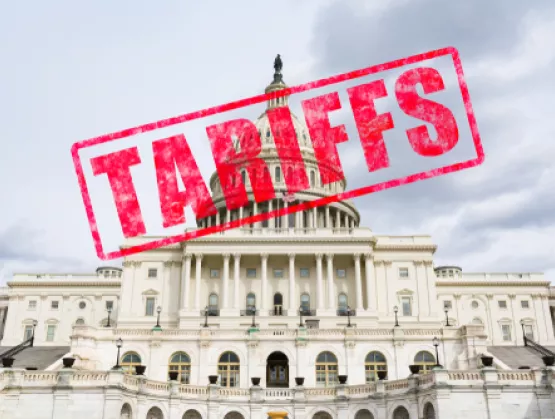
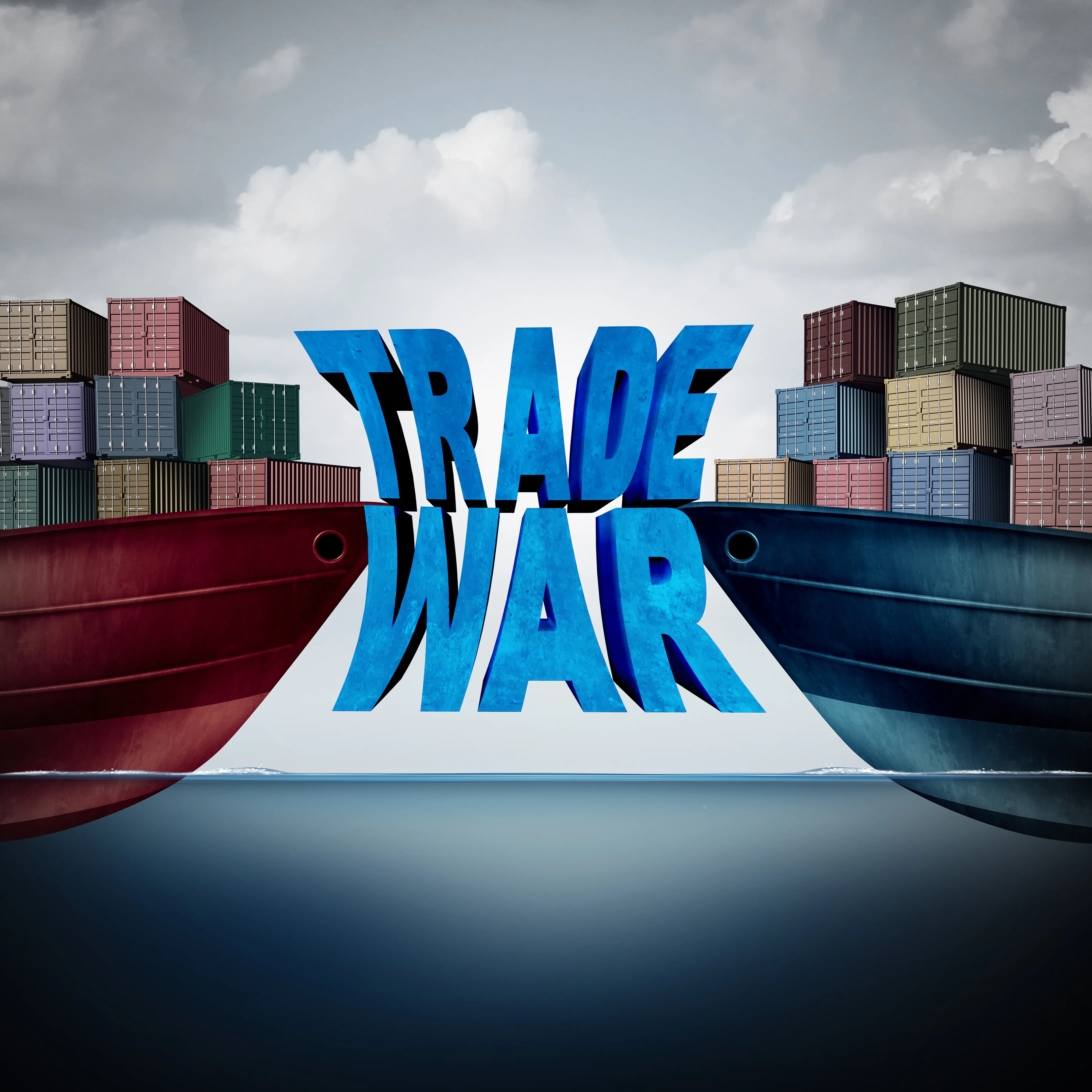
The U.S. on September 1 will levy a 10 percent tariff on $300 billion (List 4) worth of Chinese goods that until now were exempt from duties, President Trump said today. The trade action makes good on the U.S. president’s commitment to impose the new round tariffs in response to China’s failure to deliver on promises to buy more U.S. farm goods and to stop the flow of the painkiller fentanyl into the U.S. The 25 percent tariffs already in effect on $250 billion in goods will remain in place.The new list includes items used in the electronics industry but also encompasses retail products spanning the U.S. economy including clothing, toys and cell phones, exacting a more direct hit to U.S. consumers. A meeting between China and U.S. trade officials in Shanghai this week apparently did little to ease trade tensions. Both sides plan to meet again in September, though expectations for meaningful progress toward resolving their trade differences then are low.The U.S. believes China backtracked from commitments to changing its practices related to forced technology transfer and intellectual property theft. China denies making the pledges and insists on the removal of all tariffs as part of a settlement.The U.S. actions risk backlash from China including non-tariff barriers to trade such as licensing delays, more stringent business-related inspections, and an accelerated rollout of its unreliable entities list, China’s response to the U.S. decision to blacklist telecommunications giant Huawei. The list includes foreign companies, other organizations and individuals that China sees as national security threats or risks to China’s economy.SEMI will continue to urge both nations to reach an agreement consistent with its 10 Principles for the Global Semiconductor Supply Chain in Modern Trade Agreements. The principles encourage free and fair trade, open markets, and respect of IP among all players in the global electronics manufacturing supply chain.SEMI member companies impacted by the new U.S. tariffs or facing any new non-tariff barriers in China should contact Jay Chittooran, public policy manager in SEMI’s Global Advocacy Office, at [email protected] Russo is vice president of Global Industry Advocacy at SEMI.
Read More
On July 1st, Japan’s Ministry of Economy, Trade and Industry (METI) announced updated licensing policies and procedures on the export and transfer of controlled items and their relevant technologies to the Republic of Korea (ROK). METI’s stated purpose for the actions were “in order to ensure appropriate implementation of export control.”In particular, METI will tighten controls on certain items and their relevant technologies as follows: Remove the ROK from its “white list” of trusted partners, limiting the ROK’s preferential treatment for exports Mandate individual licenses for exports of certain chemicals including fluorinated polyimide, photoresist, and hydrogen fluoride – all used in semiconductor and electronics manufacturing – and technology transferred with exports of manufacturing equipment to the ROK. Bulk licenses for the chemicals will no longer be available. METI has indicated that its actions were not intended as punitive, but rather as necessary to ensure proper management of the export control system and the effective tracking of chemicals, materials and technologies that could be used to develop weapons of mass destruction (WMDs). Nevertheless, the trade actions are cause for concern as they could have a negative impact on our members operating in Korea and Japan and the global supply chain in general.After the METI announcement, SEMI immediately consulted its International Board of Directors and assembled a global advocacy response team comprised of SEMI member companies and SEMI regional presidents in both Japan and Korea to assess risks to SEMI members operating in both regions and to the industry’s global supply chain. Additionally, SEMI conveyed its concerns to Japan and ROK trade officials, stressing that the semiconductor industry will bear the brunt of the new measures if the trade dispute escalates.SEMI president and CEO Ajit Manocha said: “We informed both governments of potential impacts of an escalation to SEMI members, their economies and the global supply chain and are encouraging them to resolve their differences. SEMI’s focus is to ensure the global microelectronics supply chain remains strong and intact.”SEMI member companies have stated that METI and the Japan government have provided assurances that trade with the ROK will not be encumbered and that semiconductor companies will see minimal impact regarding export license approvals. To this end, SEMI will continue to engage our members in Korea and Japan, monitor the dispute as it continues to unfold, and facilitate regular meetings between industry and the involved governments to ensure that industry impacts are identified and risks are mitigated. In the event the dispute escalates, SEMI is prepared to take action in accordance with its Global Trade Principles.SEMI released its Global Trade Principles last year to provide guidance to governments around the world in developing policies that benefit both regional economies and the industry. These trade principles are based on SEMI’s four trade pillars of free and fair trade, open markets, supply chain growth, and respect for IP and national security.Member companies negatively impacted by any changes in Japan’s regulatory policies or with any questions should contact their regional SEMI office or Jay Chittooran, Public Policy Manager, SEMI Global Advocacy, at [email protected] Russo is Vice President of Global Industry Advocacy at SEMI.
Read More
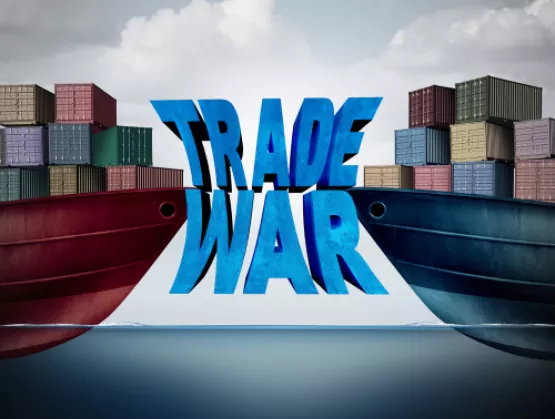
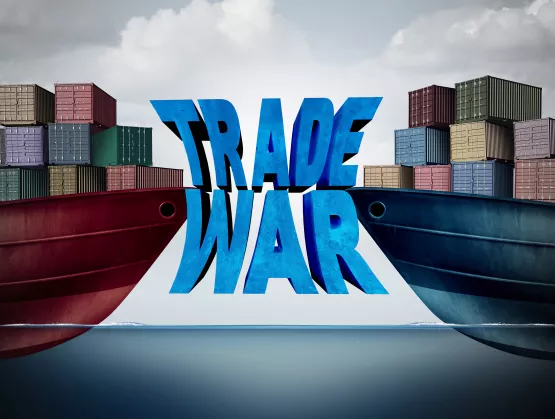
Tensions between the United States and China have reached fever pitch. Ongoing trade negotiations between the U.S. and China broke down earlier this month over reported backpedaling by China on key concessions in a proposed Trump administration deal. Over the past year, the U.S. has raised tariffs on more than $250 billion worth of Chinese goods to 25 percent, and last week the administration proposed tariff hikes on an additional $300 billion in imports – moves that have drawn retaliatory tariffs from China, many squarely hitting the semiconductor industry. Based on SEMI member feedback, the tariff increases will cost the semiconductor industry more than $750 million annually.At the same time, the Trump Administration is taking other steps to ratchet up pressure on China. Last week, seven months after placing Fujian Jinhua on the Entity List, which effectively blocks the sale of and export of goods to China, the U.S. Department of Commerce added Huawei (and nearly 70 affiliates) to the list. While the U.S. is taking this action for security reasons, it is also seen as a move to create leverage at the trade table. The U.S. is also intensifying efforts to reform the export control regime, focusing first on enhancing controls on emerging technologies and then on foundational technologies. The rising pressure has prompted China to contemplate and launch a counteroffensive that goes well beyond tariffs and export controls. The reprisals include China’s promotion of heightened Chinese nationalism by domestic consumers, a tactical slowdown of administrative processes required to conduct business in China, and the imposition of direct or indirect limits to market access. China is also using U.S. actions to justify larger state investments in its domestic industry and is ramping up efforts to give other regions greater access to its markets as it works to strengthen those relations ahead of next month’s G-20 summit in Osaka, Japan. The U.S. is also maneuvering to bolster its negotiating hand through its own agreements with Japan and the European Union.Unintended consequences of Trump administration actionsThe Trump administration’s moves to rectify the trade imbalance with China are also well-intentioned in seeking to protect the IP of U.S. technology companies and ensure continued U.S. leadership in technology development and innovation. However, its tactics can encourage long-term, perverse shifts in the globally integrated electronics manufacturing supply chain that risk upending market-driven investments in the semiconductor industry and weakening natural market forces that nourish competition among companies based on service, quality and product offerings.It is critical for SEMI, in working with government officials, to shed light on the potentially deep, unintended damage its trade actions can wreak on global supply chains and markets. We will continue to promote global standards governing trade, IP and market access through our Global Trade Principles and focus on sustaining a global order that assures the electronics manufacturing supply chain remains cohesive and vibrant.SEMI continues efforts to influence trade policyWe continue to meet with government policymakers around the world to educate them on near- and long-term impacts and risks of their evolving trade practices, conducting approximately 220 meetings with government officials globally in the past year. We also facilitate individual and group member meetings to give SEMI members direct contact to key government decision-makers. For example, on May 22nd during the SEMI Spring Washington Forum, or “fly-in,” more than 30 semiconductor industry executives from across the supply chain met with administration officials and Congressional offices to discuss issues including trade, export controls and immigration reform and impacts on their businesses. The executives represented a cross-section of small, medium, large and global companies based in the U.S. or providing support for U.S. organizations. Their aim: influence policy development. SEMI is in a unique position as a representative of the end-to-end, global electronics manufacturing supply chain and is a valuable “one-stop-shop” that represents members on policy while providing opportunities to collaborate in one of our Technology Communities. SEMI members can also leverage our strategic partnerships, our market research or leadership in industry standards. With this breadth and depth of member engagement and industry expertise, SEMI leads in providing industry insights to governments at this critical time. There is no doubt that the current situation is complicated and it is impossible to predict when or how the trade issues will be settled. As the U.S. and China work to settle the trade dispute, SEMI will continue to lead efforts to ensure that the voices of SEMI members and the electronics industry supply chain are heard.Mike Russo is vice president of Global Industry Advocacy at SEMI.
Read More