downloadGroupGroupnoun_press release_995423_000000 copyGroupnoun_Feed_96767_000000Group 19noun_pictures_1817522_000000Member company iconResource item iconStore item iconGroup 19Group 19noun_Photo_2085192_000000 Copynoun_presentation_2096081_000000Group 19Group Copy 7noun_webinar_692730_000000Path
Skip to main content
Default Banner Image

semiconductors

Meeting Attended by More than 100 Tech Company RepresentativesOver the past decade, China has become a central market for the semiconductor industry. China is now home to more than 30 percent of semiconductor end users worldwide. All semiconductor companies, regardless of size, operate in China. The rise of China’s semiconductor market has been enabled by global commerce and a vast network of supply chains that span the globe.With China now a prominent player in the industry, it has become critically important for semiconductor companies to effectively engage with China. In order to help our member companies better understand the challenges and opportunities and navigate what can be a complex landscape, SEMI hosts annual trade compliance conferences in China for trade professionals. This year, SEMI, with CompTIA and U.S. Information Technology Office (USITO), hosted two global trade seminars in China, one in Shanghai on October 30th and the other in Beijing on November 1st.Over 120 representatives from more than two dozen technology companies attended the 2018 trade compliance seminars. Over the course of the two sessions, speakers from government, business, and law firms highlighted the most pressing trade issues in China. Speakers included thought leaders, trade practitioners and senior Chinese government officials.Sessions included a deep dive on China’s draft customs reform law, a panel discussion on U.S. export controls, and a briefing on how best to engage with China Customs and how China’s products are classified. Another well-received session focused on the status of China’s export control law, which has been in the drafting process for years.However, the overarching question for many attendees was U.S.-China economic relations, which are undergoing a sea change, with the U.S. having imposed or threatened tariffs on all imports from China – totaling more than $500 billion in goods – over the past six months. As a speaker noted during a session on the U.S.-China tensions and the surrounding broader geopolitical impacts, the environment is becoming increasingly complex and volatile. In fact, on the morning of the first session, Fujian Jinhua Integrated Circuit was added to the U.S. Commerce Department’s entity list, which effectively restricts exports to the company.As a result of the trade actions, ranging from tariffs to enhanced export controls, U.S. semiconductor companies are beginning to increase prices, reduce research and development (R D) budgets, restructure supply chains and take other mitigation actions that will ultimately slow innovation. Certain export controls and other regulations that prohibit U.S.-companies from conducting business with targeted companies will put the U.S. at a competitive disadvantage.In fact and as we speak, some companies with China-based operations have cancelled orders from U.S. companies and shifted to suppliers that are not subject to U.S. actions to reduce the associated risks of supply interruption and cost increases. Ultimately, U.S. trade policy could backfire, threatening jobs, curbing growth, cutting U.S. R D investments and compromising the competitiveness of U.S. firms.SEMI will begin planning next year’s Global Trade Seminar in the coming months. If you would like to be involved in the planning, or would simply like more information about the seminar, please contact Jay Chittooran, Public Policy Manager at SEMI, at [email protected].
Read More
With (most of) the election results in from the U.S. midterms, the expected Democratic takeover of the House and the Republican’s maintaining control of the Senate is now a reality. The day of the election, DC insiders expected that the House would go to the Democrats by a margin of +/- 20, with the Republicans gaining 2-3 seats in the Senate. Not a bad prediction, which is a far cry from what the same insiders called in advance of the 2016 Presidential election.What does that mean for our members and the tech sector in general? Will there be an ease of trade tensions or less of a chance of tighter export controls? Some believe that with the midterm elections over, President Trump will have some room to take a less aggressive stance against China, setting up a “win” that he can carry into 2020. With the recent more aggressive stance by North Korea against the U.S. regarding its nuclear program, China may well have some leverage at the trade table … and the U.S. may want to make a deal that provides a path for a “win” on both fronts. Indeed, there are the makings of a potential win-win leading into the G20 meeting in Argentina when President Xi Jinping and President Trump are scheduled to meet on Dec. 1.One can see a scenario where there is a meeting of the minds and some degree of lessening tariffs; that does not mean that the effort to enhance export controls will go away. The need for tighter restrictions on export controls is driven to a great degree by the U.S. Department of Defense (DoD) and is a follow on from the previous FIRRMA legislation and attempts to curb the loss of U.S. technology critical to global competitiveness and national security. This issue will not go away anytime soon, and cases like the recent one involving Jinhua only add fuel to the fire. In addition, given how these cases can be leveraged at the negotiating table, they will continue to surface.SEMI’s approach has been to educate governments, lawmakers and administration officials on the strategic importance of the globally connected and highly complex semiconductor supply chain, and how some of the approaches will not achieve the attended goals. This approach helps to ensure that when and if it comes time to make decisions based on merit, the principals are informed. It also helps SEMI and its members develop and maintain important relationships and positions SEMI as an industry leader and spokesperson, making it a more effective advocate. As an example, on Nov 8th SEMI released its Global Trade Principles with the intention of providing a framework to all governments to guide various trade talks. It also helps to inform member companies and others from the broader tech sector of our industry position(s) so we are able to speak with one voice. These principles are aligned with our fundamental advocacy pillars of promoting free trade and market access, respect for IP, cybersecurity and national security.Will the fact that power is now split between the two chambers of Congress help or hurt? Will the House focus on investigations limit the ability to move productive legislation? Besides taking time, it may well put them at increasingly worse odds with the Senate and the President (if that is possible), creating deadlock. Some argue that if nothing moves, no harm can be done. Some also say that it may drive the President to take independent and more aggressive actions in order to demonstrate (his) effectiveness to his base. There is another view: that with the Democrats, the President may be able to lead in the advancement of legislation that will show he can get things done when others couldn’t in areas that benefit the greater good…some of which may impact our industry…such as investments in education and infrastructure development. This would be a way that he could pull in some of the votes from the middle that he has lost in his first two years in office. They say “politics makes for strange bedfellows”; one never knows what might happen in this case.Regardless of what happens, some things will not change: the global nature of our business and the needs of our members to have access to markets…and to be able to safely and efficiently leverage their technologies in the way they see fit in order to grow their business. SEMI will continue to advance the interests in what is an extremely challenging and dynamic global policy environment today. As ruling parties and representatives change around the globe, we will continue to build new relationships and educate lawmakers so they are able to make informed decisions that benefit our members. Mike Russo is VP of Public Policy and Talent Advocacy at SEMI.
Read More
Kyushu, the third largest island in Japan, is home to the semiconductor production bases of integrated device manufacturers (IDMs) with world-class cutting-edge technology. SONY, Toshiba, Hitachi, Mitsubishi, Fujitsu and Nissan are among the sector’s shining stars, though a host of other IDMs tied to the supply chains of other major enterprises have also set root in Kyushu. Collectively, the companies earned Kyushu the name Silicon Island of Japan.Kyushu’s flourishing IDM industry sprouted from favorable tax and other government policies that reduced semiconductor production costs to levels lower than elsewhere in Japan. Once the IC producers had established bases, equipment and materials companies naturally followed, leading to the influx of many parts manufacturers. Together, they came to Kyushu, one after another, to make the island a magnet for manufacturing. And so it was to Kyushu that a SEMI China delegation travelled for a meeting at TEL’s factory in Kumamoto to learn more about the secrets to the rapid growth of the island’s semiconductor industry and promote cooperation between Chinese and Japanese enterprises. Underscoring the rise of the Silicon Island of Japan, China will soon become TEL’s largest market, said Masami Akimoto, Chairman of Tokyo Electron Kyushu Limited, speaking at the event. Masami Akimoto hopes for support from SEMI China.The island of 12 million people contributes to the growth of the global semiconductor industry, expected to reach USD 500 billion in size in 2019 as China’s semiconductor sector, fueled in part by government-backed investment funds, continues its rapid expansion. Despite the gains, China still lags other regions in advanced manufacturing, said Lung Chu, president of SEMI China, which is doing its part to draw more advanced manufacturing to the region through its SIIP platform. The initiative encourages pan-regional cooperation with China’s semiconductor industry to promote free trade, open markets, technology innovation and IP protection – all to help China better integrate with the global semiconductor industry. SEMI China President Lung Chu(L) issues visit memorial to Masami Akimoto(R), Chairman of Tokyo Electron Kyushu Limited. Chicken shall be led by the HenUnlike other regions with comprehensive semiconductor industries, Kyushu’s is primarily focused on production and assembly, with more than 200 manufacturers of semiconductor equipment and parts.SEMI China Delegation at Tokyo Electron Kyushu LimitedTEL built its first factory in Kumamoto, a city covered by volcanic ash in the center of Kyushu, 34 years ago. Today, TEL every month produces 80 to 90 sets of equipment, each consisting of, on average, over 400 thousand parts that must be certified and authorized by TEL before delivery to its module manufacturers and assembly into complete machines. Having blossomed over the past few decades, the island’s supply chain now supplies TEL with all its equipment parts. SEMI China Delegation at Fajita WorksTEL supplier Fajita Works, a high-precision plate metal manufacturer founded in 1945, is emblematic of other companies in the Kyushu supply chain. It keeps a low public profile as it serves several longtime customers and earns ardent loyalty from its workers, an ethos reflected in the change next January of its slog from “Only One” to “Great company, Great life.”Quality is the life of the enterpriseLong before the rise of its legendary automobile and consumer electronics companies, Japan was known for inferior, counterfeited products, labeled “Made In USA” and shipped to the United States by more than 100 factories. The net effect was to shrink and commoditize American markets. The tide in Japan’s product quality and stained reputation began to turn in the 1980s, when Japan’s semiconductor industry began to produce memory with an error rate 27 times lower than its U.S. competitors, giving Japan an upper hand in quality that it would never relinquish. SEMI China Delegation at HORIBAKyushu-based flowmeter supplier HORIBA, among the many Japanese companies famous for their product quality, ships 38 percent of its products into the automotive market and 27 percent into the semiconductor sector. Cleanliness is as vital a part of the company’s culture as quality. Each depends on the other, with fine detail held to the highest importance. On its visit to HORIBA, the SEMI China delegation, passing by an office area before entering the factory, sighed at the sight of the spotless, neatly kept furniture and workspace: They had never seen an office so sparkling clean. HORIBA’s success is rooted in immaculate offices, factories and the company’s motto “Enjoy innovation and pay close attention to product quality.”After Kumamoto sustained heavy damage during a 2016 earthquake, HORIBA workers returned rocks scattered by temblor to their original position, knowing that order is critical to lean, efficient manufacturing and that, indeed, “the devil is in the details.” SEMI China Delegation in Kumamoto City Full confidence in the exploration of Chinese marketConsumer electronics stalwarts Sony and Panasonic feature semiconductor factories in Kagoshima, the southernmost city in Kyushu and Japan, though rumor had it two years ago that Panasonic planned to pull out. The Panasonic plant, which provides batteries for Tesla, remains. The Sony facility produces image sensors for the iPhone.Semiconductor equipment maker ULVAC, SEMI China’s most important strategic partner, is also based in Kagoshima. During the delegation’s visit to the company, Lung Chu noted that while China is the world’s largest semiconductor market, the region meets just 13 percent of domestic chip demand. Stressing that ULVAC can play a crucial role in helping China become a bigger player, he expressed admiration for ULVAC’s professionalism along with hope that it will maintain its rapid growth and leverage SEMI resources to catalyze rapid development of Internet of Things (IoT), artificial intelligence (AI), and 5G technologies in China and rise into the top 10 of global equipment manufacturers. SEMI China President Lung Chu (L) issues visit memorial to ULVAC Kyushu President and CEO Kenji Yamaguchi ULVAC Kyushu president and CEO Kenji Yamaguchi made clear the company’s interest in Lung Chu’s insights into Chinese semiconductor industry while underscoring its core competency of producing semiconductors for flat panel displays. The Kyushu Factory of ULVAC is full of vitality and market competitiveness. SEMI China Delegation at ULVAC EBARA, a precision machinery company located in Kumamoto, has manufactured chemical-mechanical planarization (CMP) equipment for over 20 years and delivered nearly 2,400 mechanical polishing machines worldwide. While the company expects to ship 50 sets per year to China starting next year, it has the capacity to deliver 20 sets per month, enough to meet demand of Chinese semiconductor makers. SEMI China Delegation at EBARAThe most telling takeaway from the SEMI China delegation’s visit to the Kyushu: Japan ranks number one worldwide in research and development (R D) investment as a proportion of GDP and is also at the top in the percentage of R D funds controlled by private enterprises. The outsize investment strategy has enabled Japan to maintain its hold as one of the world’s top technology innovators.Like Sakurajima, the famed Kyushu volcano, the SEMI China delegation will continue to harness its forces to build relationships with the island’s semiconductor supply chain as it works to develop win-win pan-regional relationships and foster the growth of China’s semiconductor industry. Best view of Sakurai volcano Gang Yao is a marketing director at SEMI China.
Read More
IC design has emerged as the largest semiconductor sector in China, with 2017 revenues of $31.9 billion generated by about 1,380 companies. At the same time, China’s fabless segment has risen to third in global rankings with about one-tenth of worldwide sales.Most of China’s fabless segment produces the logic chips that are key to defense, telecommunications, finance and other industries important to the region’s national security interests and its independence from U.S. and other international suppliers. Investment in fabless logic continues to be the top priority in China’s Phase 2 investment. In mobile, China made meaningful progress through HiSilicon and Spreadtrum, both fabless design houses.In 2017, HiSilicon and UNISOC (formerly Spreadtrum), China’s two largest domestic IC design companies, were ranked in the global top 10 of fabless companies, though most Chinese IC design companies are small, with revenues under $1 million. Working with domestic smartphone makers, both companies have carved out a strong presence in logic and, in particular, the communications and application processors that power data centers and Internet of Things (IoT).Despite their rapid rise, China’s AI accelerators and cryptocurrency ASIC suppliers have yet to appear in China’s top 10. However, we expect their aggressive roadmaps and early adoption of leading-edge process technologies to propel them into the top 10 in the near future. As illustrated in the figure below, an examination of the competitiveness of China’s semiconductor segments reveals that the close proximity of China’s fabless companies to the region’s electronic systems makers plays to their advantage, though access to IP and leading-edge process technologies is a barrier to their growth in the near term. A key barrier to China’s foundries is their limited ability to develop leading-edge process technologies and strategic relationships with top international fabless companies. Most leading international fabless companies rely on customer-owned tooling (COT) and design tools for design. As the approach takes time to develop, it will not support China’s aggressive goal and timeline to independently meet domestic IC demand. Instead, China has been disciplined in executing its strategy to acquire valuable IP and leading-edge technologies by aggressively partnering with international fabless design leaders and pursuing deals with market leaders and laggards. The initial entry point for Chinese fabless companies was the low-margin consumer applications dominated by Chinese suppliers, giving them considerable control over demand. In addition, Chinese companies have aggressively hired top talent from abroad and grown the skills of its engineering workforce to sustain innovation. China will likely free itself from its reliance on non-Chinese developed manufacturing process technology and EDA design tools.China’s semiconductor design growth, concentrated in the Pearl River Delta (see figure below), is fueled by national and local investment programs. SEMI August 2018 The Pearl River Delta, which includes Xiamen, Quanzhou and Shenzhen, is establishing itself as China’s IC design, system and application hub. Domestic and international companies are eligible for investment provided they are established or investing in one of the four regionshat are home to various sectors of the electronics and semiconductor supply chain. Access to large investment funds, coupled with China’s infrastructure build-out, is a strong supporting force to drive the growth of top-tier domestic fabless companies. For its part, the Phase 2 of China’s National Investment Fund targets investments of RMB 150 - 200 billion ($23 billion - $30 billion) in IC design. The growing domestic consumer base and infrastructure investment will drive opportunities for China’s fabless companies over the next decade.To learn more about the latest development on China IC Industry, and get a sample of the China IC Ecosystem Report, visit http://www.semi.org/en/china-ic-ecosystem-report.China IC Ecosystem Report covers the rise of China’s IC industry, national and local government policies, public and private funding, and their implications for China's IC supply chain. The report also compares key domestic companies and their international peers segment by segment.Eugenia Liu is a senior product marketing manager at SEMI. Shanshan Du is chief analyst and program director at SEMI China.
Read More
SEMI-MEMS Sensors Industry Group (MSIG) welcomed a global group of industry executives to its 14th annual MEMS Sensors Executive Congress (MSEC), October 29-30, 2018 in Napa, Calif. MEMS and sensors represent a robust sector of the electronic industry. Analyst firm Yole Développement expects the global market for MEMS and sensors to double in the next five years, reaching $100B by 2023, spurred by growth of autonomous mobility products such as Internet of Things (IoT) devices, autonomous cars, fitness and healthcare wearables, and agricultural sensors.“From drones that navigate any terrain in all lighting conditions, robo-taxis that ‘smell’ cigarette smoke, and sensors that monitor animal welfare and food safety, MSEC speakers shared inventive use cases representing new opportunities for MEMS and sensors suppliers,” said Carmelo Sansone, director, MEMS Sensors Industry Group. “Our keynote speakers spurred attendees to collaborate for the greater good. MITRE Corp. cybersecurity expert Cynthia Wright exhorted attendees to proactively address cybersecurity. DARPA Microsystems Technology Office (MTO) program manager Ron Polcawich invited participation in a rapid innovation and production concept that could dramatically speed design cycles for new MEMS. They exemplify the cross-pollination among commercial industry, government and academia that will continue to advance MEMS and sensors.”Getting serious about cybersecurityMITRE cybersecurity expert Cynthia Wright opened MSEC 2018 with a keynote on cybersecurity, alerting attendees to a topic that few in the industry have explored in-depth — but to which they need to pay attention.“Billions of connected mobile devices democratize knowledge, diversity and boost economies, and accelerate innovation by connecting humans to one another and to our environments,” said Wright. “At the same time, they easily create huge networks that carry operationally and personally sensitive data.”Because MEMS and sensors are deeply embedded into this vast array of connected devices, industry needs to get involved now or risk potentially grave consequences, claimed Wright. “From the destruction of critical infrastructure, cyberattacks on life-critical medical devices such as insulin pumps and heart monitors, and intrusions on autonomous vehicle safety systems, MEMS and sensors suppliers have a responsibility to help improve cybersecurity of connected devices,” she added.Allaying the potential fears of a roomful of suppliers envisioning complete redesigns of their products, Wright said that not every device requires the same level of security, and suppliers can make a difference with even “minor tweaks.” Wright suggested encryption at the edge and process authentication. She also gave MSEC attendees a list of design precepts: Build it in. Don’t bolt it on — Design your device with security in mind instead of retrofitting it after-the-fact to realize the most elegant design. Beware of shadow IT — You can’t protect what you don’t know about. Consider physical asset security; software/sensor-guided decision-making; personal or operational data collection; and key process control. Realize your points of vulnerability — because MEMS and sensors are susceptible to spoofing. Learn from cyberattacks of the past — even if they have not been tied directly to MEMS/sensors. Understand IoT software — Realizing that IoT software acts on what the hardware tells it, pay attention to altered sensor data that can lead to altered system performance. When asked about the role of US government regulation on the security of connected devices, Wright acknowledged that Europe has more restrictive cybersecurity guidelines than the US.“At the same time, it does not make sense to have two different approaches to cybersecurity of devices. US suppliers who implement more security measures can sell to both markets and to other parts of the world.”If she could leave MSEC attendees with a closing thought, it might be that companies “don’t need to put a firewall on a toaster.”“Not every chip has to be secure-foundry secure, but it would be nice if even 10% could hit that mark,” added Wright.Rapid Innovation through CollaborationIC designers typically enjoy three to four design cycles in a calendar year, leading to swift advancement of electronics over subsequent years.Designers in the MEMS community, however, generally have access to one design cycle or less per year, and typical time-to-market is four years for a new product. That slow fabrication pace has hindered deployment of innovative MEMS designs — and it’s something that MSEC closing keynote speaker, Ron Polcawich, program manager, DARPA MTO, would like to change.Polcawich’s vision of government collaboration with industry and academia spawned the investigational Rapid Innovation through Production MEMS (RIPM) Workshop, which Polcawich and his team held in May 2018. During his keynote, Polcawich shared lessons learned from the workshop while inviting MSEC attendees to get involved.Before RIPM can become a program, Polcawich knows it will require definition. What would a program concept look like? What is the best way to articulate the potential benefits to the MEMS community, and what additional inputs would be needed?“This is a daunting challenge from a program planning perspective,” said Polcawich. “In developing RIPM, we realized that we needed representatives from the entire MEMS ecosystem – integrated device manufacturers, or IDMs, equipment suppliers, foundries, and materials’ providers — to literally come to the table to tackle a common goal. Given the potential for the MEMS industry at large to benefit from rapid innovation and production, we hoped that competitors would realize that leveraging established MEMS processes could deliver significant benefits over the historically entrenched approach: one product, one process.”Polcawich believes that MEMS suppliers might relinquish the one product, one process paradigm if they knew that their IP were secure.“While technical challenges to realizing RIPM abound, we knew that we could tap the MEMS industry’s vast knowledge base to address them,” he said. “IP protection is an equally complex issue, and one that may bear a range of approaches. One model could ensure that each IDM owns their IP while the foundry owns the process technology, which it licenses to other companies through process development kits. In addition to speeding innovation, it also provides new revenue sources for the industry.”Polcawich sees RIPM as a win-win for both commercial industry and for the DoD. Speeding design-to-deployment of new MEMS devices could open new and larger markets to MEMS suppliers. It could also support greater product-line diversification and new revenue streams for foundries and other ecosystem members. The DoD could tap new MEMS devices for strategically important applications like tactical radios, unmanned aircraft systems such as drones, and image autofocus for cameras. Polcawich encouraged SEMI-MSIG members to get involved by emailing his group: [email protected] Hall of Fame MembersThree new industry leaders joined the SEMI-MSIG Hall of Fame, first established in 2011 as a means of honoring those who have made a substantial contribution to SEMI-MSIG. Selected by members of the Governing Council, 2018 Hall of Fame inductees include: Michelle Bourke, strategic marketing director, Customer Support Business Group, Lam Research Eric Pabo, business development manager, MEMS, EV Group Yoshio Sekiguchi, senior strategic advisor, TDK InvenSense Technology Showcase WinnerMSEC recognizes the latest advancements in applications enabled by MEMS and sensors — including those demonstrated by entrepreneurs competing in the Technology Showcase. Selected by a committee of industry experts, five finalists did their best to impress attendees with their technical approach and go-to-market strategies. The 2018 Technology Showcase winner, Alertgy, presented a biosensor-based wristband device that provides non-invasive, real-time blood glucose monitoring for people with type 2 diabetes, which affects more than 20 million Americans and hundreds of millions more worldwide. MSEC 2018 Sponsors MSEC 2019 Location and DatesMSEC 2019 will take place October 22-24, 2019, at the Coronado Island Marriott Resort Spa in Coronado, Calif., just minutes from downtown San Diego.For more information on MSEC 2019 and other SEMI-MSIG events and programs, please follow @MEMSgroup on Twitter, visit MSIG at SEMI and subscribe to SEMI’s weekly newsletter, SEMI Global Update.Maria Vetrano is a public relations consultant at SEMI.
Read More
Marcellino Gemelli, director of global business development at Bosch Sensortec, will present at the upcoming MEMS Sensors Executive Congress on October 29-30, 2018 in Napa, Calif. SEMI’s Maria Vetrano caught up with Gemelli to give MSEC attendees a preview of Gemelli’s feature presentation.Sensor fusion — the integration of different types of sensors through software algorithms to increase overall system performance and/or reduce power consumption— has come a long way since its inception. In those early days, sensor fusion generally involved MEMS inertial sensors only. The advent of new sensor varieties, including environmental sensors, is making new use cases a reality. Gemelli will explore the ways in which the next generation of sensor fusion is improving autonomous mobility devices. SEMI: Why are environmental sensors important to autonomous mobility devices?Gemelli: When most of us think of autonomous systems, we think that they are driven by motion sensors and proximity sensors (e.g., radar, Lidar). When vertical location comes into play, however, in applications such as drones or asset tracking, pressure sensors become an integral part of flight control, navigation and positioning in GPS-challenged areas.While not commonly considered an electronically enabled sense, the ability to “smell” the environment opens new opportunities. The quality of a user’s experience with personal cleaning robots and robo-taxis are good examples of where we might want to enable scent detection.SEMI: I’ve never thought much about using sensors to detect smell. How would a robo-taxi or a cleaning robot benefit from scent detection?Gemelli: Fully autonomous cars will inevitably give rise to robo-taxis. In fact, last month Volvo announced its fully electric robo-taxi, and in March 2018 Waymo announced that Jaguar Land Rover’s SUV would join Fiat Chrysler’s Chrysler Pacifica minivans in its planned fleet of robo-taxis, so we may see robo-taxis in the U.S. within the next five years.With robo-taxis fast-approaching, we need technologies that provide the same level of oversight that a taxi driver once fulfilled. Gas sensors would function like an electronic nose (e-nose) in a robo-taxi to inform the taxi’s owner of prohibited passenger behavior, such as eating, drinking or smoking in the vehicle, which could potentially damage the vehicle’s interior. Camera sensors could record the act as proof of the offense.Cleaning robots would be more sophisticated than they are today. In addition to leveraging image and range-finding sensors to more accurately map the rooms in your house, they could also detect scents from spilled red wine, pet urine or other foreign materials. When the cleaning robot, such as a vacuum, detects the foreign substance, it would navigate around the substance instead of going through it and spreading it all over the carpet.In addition to robo-taxis and cleaning robots, I will also discuss asset tracking and drones.SEMI: What role does sensor fusion play in autonomous mobility devices?Gemelli: Combining sensor fusion with artificial intelligence (AI) will generate new use cases and therefore new markets for sensor suppliers.There is another major benefit as well. With so many connected devices in our lives — including those with cameras, location awareness and always-listening capabilities — we are seeing growing concern about user privacy. Sensor fusion and AI can help to alleviate this concern: By supporting more local processing, they allow for greater control of data, safeguarding personal privacy.SEMI: Who is responsible for the AI part of the sensor-fusion equation?Gemelli: AI is a new frontier for MEMS and sensors suppliers. It benefits us and our customers to embrace AI algorithms through in-house development and/or partnerships.SEMI: What would you like MEMS Sensors Executive Congress attendees to take away from your presentation?Gemelli: I plan to issue a call to action to increase research in hybrid sensor-fusion software architectures, including AI, as suppliers’ collaboration will benefit the industry at large.Marcellino Gemelli is currently based in Palo Alto (CA) responsible for business development of Bosch Sensortec's MEMS product portfolio. He received the ‘Laurea’ degree in Electronic Engineering at the University of Pavia, Italy while in the Italian Army and an MBA from MIP, the Milano (Italy) Polytechnic business school. He previously held various engineering and product management positions at STMicroelectronics from 1995 to 2011 in the fields of MEMS, electronic design automation and data storage. He was contract professor for the Microelectronics course at the Milano (Italy) Polytechnic from 2000 to 2002.Marcellino Gemelli will present Environmental Sensors Systems Enabling Autonomous Mobility on Tuesday, October 30 at MEMS Sensors Executive Congress in Napa Valley, Calif.Register today to learn more about the connection between sensor fusion, AI and next-generation autonomous mobility devices.Maria Vetrano is a public relations consultant at SEMI.

Read More
SEMI spoke with Antoine Amade, Regional Senior Director EMEA at Entegris, about the challenges set by the car industry, and the concept of “zero defect” and the need for a collaborative approach ahead of his presentation at the Strategic Materials Conference at SEMICON Europa 2018, 13-16, November 2018, in Munich, Germany. To register for the event, click here.SEMI: The automotive industry is setting new challenges. This is very exciting source of growth for the global supply chain, but what are in your opinion the automotive requirements of the future?Amade: By 2030, 50% of the car cost will be electronics related. With the autonomous cars, there will be no tolerance for any type of chip defects because it will have a direct impact on human safety. With that in mind, higher reliability, increased efficiency and control across the supply chain will be the main requirements of the automotive industry.SEMI: Is the New Collaborative Approach the solution to overcome the challenges related to the automotive requirements of the future such as defects and contamination? What can you tell us about this approach?Amade: The automotive industry presents a great challenge to all of us, reaching the ppb level in terms of defectivity. In other words, this zero defects objective requires a collective awareness and understanding: Within an aging and more complex manufacturing environment, we all need to challenge the status quo and go for a new collaborative approach.SEMI: What does Entegris propose?Amade: We trust that contamination control has a major role to play to reach the zero defects. We are now in the 3rd generation of contamination control. After the focus on the cleanroom environment and equipment, materials are now at the center of the attention. With Entegris offering the broadest portfolio in terms of advanced chemicals, filtration and purification, and materials handling, we’re uniquely positioned to address precision, purity, integrity, and safety challenges.SEMI: How could this support fab managers in their daily challenges and mid-term future objectives?Amade: The new collaborative approach is a journey. It is a consultative process to provide a fresh set of eyes and expertise on the key areas of concerns in the fabs. It is a multidisciplinary approach with zero defectivity as the main goal. It is focused on base line improvement, better process control, more uniformity and prevention of excursions.SEMI: What do you expect from SEMICON Europa Strategic Materials Conference?Amade: It's the perfect platform to deliver our message in front of the whole ecosystem. It obviously concerns the fabs, but also material suppliers, and even carmakers. We expect this new view of collaboration will create an engagement from all parties. It is not a coincidence that this is called New Collaborative Approach. Antoine Amade joined Entegris in 1995 as an application engineer in its semiconductor business. In his current role as EMEA Sr. Regional Director, Mr. Amade manages a sales, customer service and marketing team responsible for growing the semiconductor business in Europe and Middle East.Mr. Amade held leadership positions at Entegris including gas microcontamination market management, strategical account management and regional sales management. He has a degree in Chemical Engineering from ENS Chimie Lille and is a member of Semi Electronic Materials Group for Europe. Serena Brischetto is a marketing and communications manager at SEMI Europe.
Read More
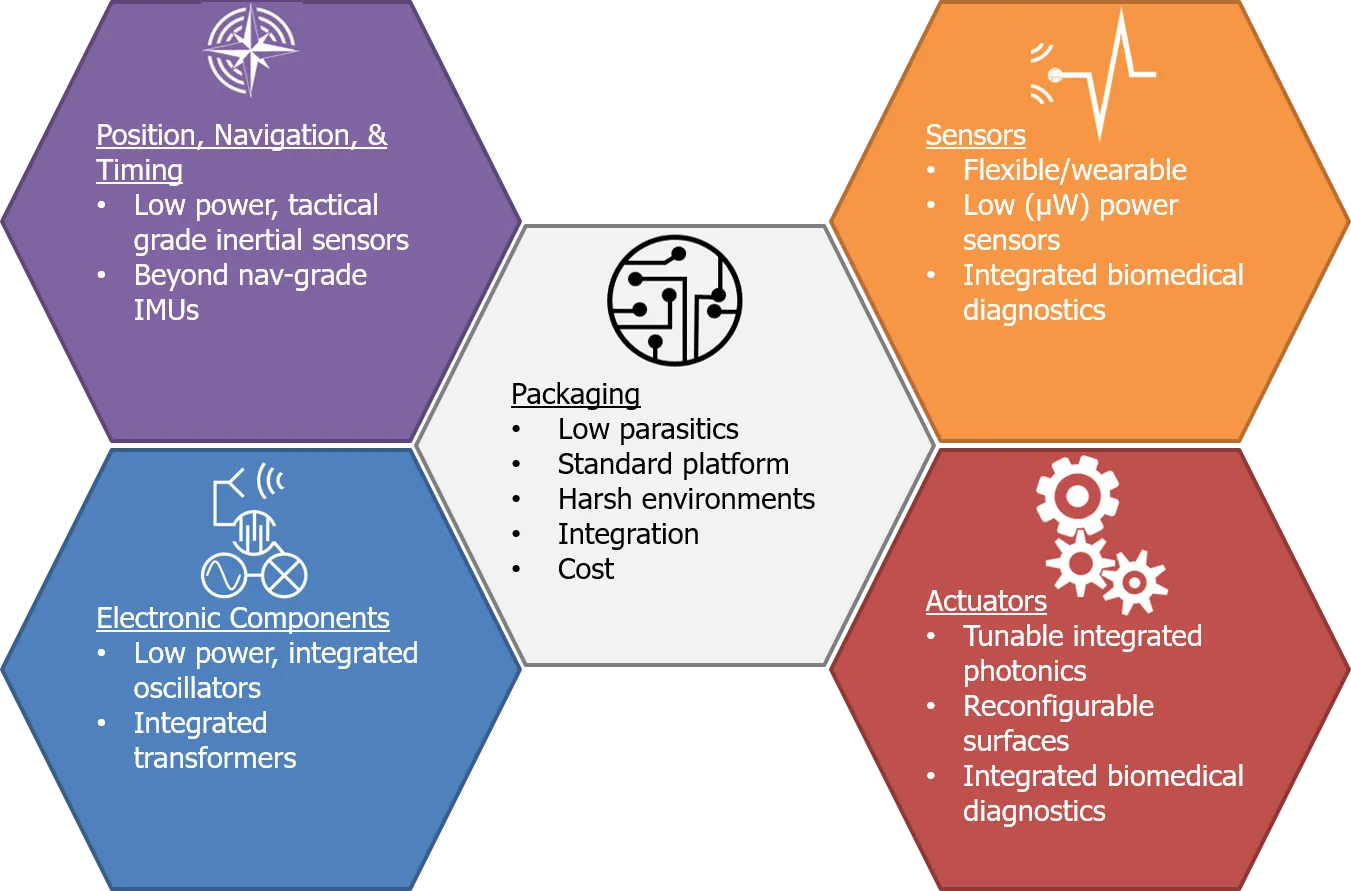
DARPA’s Vision of Cross-CollaborationRon Polcawich, program manager, DARPA Microsystems Technology Office, will give the closing keynote at MEMS Sensors Executive Congress on October 29-30, 2018 in Napa, Calif. SEMI’s Nishita Rao spoke with Polcawich about the MEMS workshop on rapid innovation that he held earlier this year and his interest in continuing that conversation with a broad audience of MEMS and sensors suppliers attending MEMS Sensors Executive Congress. SEMI: What is your vision for the Rapid Innovation through Production MEMS (RIPM) concept and why does the MEMS and sensors industry need it?Polcawich: The goal behind our RIPM concept is to advance the state of MEMS device technology by creating enhanced access to mature process flows for utilization by military, academic and commercial MEMS designers.Compare MEMS to IC development and you will see much more rapid innovation in ICs. In many cases, IC designers can get through four design cycles in a calendar year because the process technologies are so mature.In contrast, it can take three to four years to develop the process flow for a MEMS device. I believe that we can do better. With so much process-flow development in MEMS having taken place over the past 15 years, we now have plenty of commercial designs out there. How do we capitalize on these existing production process flows so we can rapidly innovate to avoid those painfully long production cycles?With this question in mind, we launched a campaign to solicit feedback from small, medium and large foundries, integrated device manufacturers (IDMs), systems designers and integrators, and academic stakeholders. Our effort culminated in a May workshop where we were able to bring many of the same groups to the table. During one intensive day, we discussed challenges to the RIPM concept and what we would need to make it work.SEMI: What were some of your areas of focus?Polcawich: We covered a range of topics, from improving access to sophisticated packaging technology, such as advanced interposer technologies, to IP entanglement and the role of process design kits (PDKs).SEMI: In an industry historically defined by competition over collaboration, how do you hope to convince MEMS supply-chain members to work together?Polcawich: We see benefits from the proposed RIPM concept across the board. Foundries would benefit from outputting higher volumes of devices as well as charging for more sophisticated PDKs and process flows — which would comprise a new source of revenue for them.From our discussions at the workshop and throughout the summer, we understand that certain technology sectors are going to be more willing to engage with the community than others. Notional examples that we highlighted at the workshop include the possibility of manufacturing high-performance inertial sensors, oscillators and pressure sensors within the same process flow. The challenge to the community is having the MEMS designers work within a locked-down process flow and not requesting different material layers, gaps and critical feature dimensions for each device type, which is very common within our industry. We asked everyone the question, “If there were broader access to production process flows, would faster technology transition and innovation cycles enable a more rapid time-to-market for a wider range of products?”SEMI: What would you like MEMS Sensors Executive Congress attendees to take away from your presentation?Polcawich: We welcome additional feedback on the RIPM concept to help shape any potential program ideas. Furthermore, we would like assistance in identifying tipping-point technologies on each sector’s/foundry’s/IDM’s technology roadmap. We could use that information to determine mutual investment opportunities that could shift the roadmap timelines to the left, enabling more rapid production and commercialization timelines. Dr. Ronald Polcawich joined DARPA as a Program Manager in the Microsystems Technology Office (MTO) in August 2017. His research interests include advanced materials processing, micromechanics for small-scale robotics, device designs, and miniaturized position, navigation, and timing (PNT) systems. Read more.Polcawich will present Rapid Innovation with Production MEMS Workshop Outbrief on Tuesday, October 30 at MEMS Sensors Executive Congress in Napa Valley, Calif.Register today to connect with Ron and learn about DARPA’s rapid innovation in MEMS concept.Nishita Rao is a marketing manager at SEMI.
Read More
Nicolas Sauvage, senior director of Ecosystem at TDK InvenSense, will present at the fast-approaching MEMS Sensors Executive Congress on October 29-30, 2018 in Napa, Calif. SEMI’s Nishita Rao spoke with Sauvage to offer MSEC attendees advance insights on Sauvage’s feature presentation.SEMI: What is “autonomy value” and why is it important?Sauvage: How do you increase the perceived value of an electronic device? If it’s an autonomous car, its value is closely tied to the autonomy level — i.e., the independence — that it offers people. Higher autonomy value for a self-driving car, for example, means that even a blind person could use it. It’s been almost two years since Waymo demonstrated this, and here’s the video that shows it.Countless other sensor-based electronic products have their own “autonomy value.” Imagine the need to get medicine to people during a humanitarian health crisis. Drones could be your best option because they can deliver to inaccessible or remote locations. Unlike older drones, which require active piloting by a person, a drone with higher autonomy value could deliver medicine to Doctors Without Borders without ongoing human intervention.This drone could navigate objects, such as trees and birds, and would have excellent location-awareness. It could fly through any landscape in bright sunlight or during the night. To increase the drone’s autonomy value, you would need better sensors, including those sensors that can enable sensing in sunny conditions or in pitch-black night, as well as better machine learning.SEMI: In this example, what types of sensors would the drone manufacturer need?Sauvage: The manufacturer would need a “surrounding-sensing” solution that includes ultrasonic and pressure sensors as well as image sensors. Start with high-quality image sensors combined with ultrasonic range-finding sensors — high-accuracy devices that function in all lighting conditions and can detect objects of any color. Add motion sensors and a pressure sensor, which would capture the height of the drone to make known the drone’s location in space. The drone would need this combination of sensors, plus smart sensor fusion, because GPS alone cannot avoid obstacles: its signal can be sporadic in certain parts of the world or in certain terrain, making it unreliable.A key attribute of all these sensors would be low power consumption since the drone would run on battery.SEMI: To what extent might autonomy value cause manufacturers to consider multi-vendor solutions?Sauvage: I would like to see it inspire the MEMS and sensors ecosystem to work together, to arrive at multi-vendor solutions that will benefit humanity through greater autonomy value. Whether we’re looking at autonomous cars, drones, robotics or other applications, there are cases where we need to prioritize safety and security over industry competition. SEMI: Where are we today in terms of achieving true autonomy value – and where are we going?Sauvage: The sky is the limit, literally. Machine learning and surrounding-sensing solutions applied to cars, drones and robots will increase autonomy value to the point where we can justifiably call it artificial intelligence.SEMI: What would you like MEMS Sensors Executive Congress attendees to take away from your presentation?Sauvage: I hope that attendees will recognize the value of ecosystem solutions in increasing autonomy value. Together we can expand the variety of sensor types that address novel use-cases and jobs-to-be-done. Instead of waiting for customers to ask for ecosystem-level solutions, we need to articulate a complete MEMS and sensors supply-chain ecosystem if we want the Internet of Things (IoT) and Industrial IoT (IIoT) to grow more quickly. As senior director of Ecosystem, Nicholas Sauvage is responsible for all strategic relationships, including Google and Qualcomm, and other HW/SW/System companies. He is also responsible for strategic and market-driven goal-setting of our SensorStudio developer program, and driving select partnerships with SoC sensor hub platforms. Prior to joining InvenSense, Nicolas was part of NXP Software management team, responsible for worldwide sales, as well as for P L and product management of their OEM Business Line. Nicolas is an alumnus of Institut supérieur d’électronique et du numérique, London Business School and INSEAD. Register today to connect with Nicolas Sauvage at the event. You can also connect with him on LinkedIn.Nishita Rao is a marketing manager at SEMI.
Read More
You’re super busy. We know - it’s hard to take time away from work. So an industry conference must offer compelling value to justify your time. Whether you are brand new to MEMS Sensors Executive Congress (MSEC) or a veteran of the event, you’re sure to find a unique convergence of networking, learning, and fun in a single venue. This year’s theme is “Sensor Systems Enabling Autonomous Mobility” and we’re gearing up to make this event bigger and better than ever.Taking place on October 28-30, 2018 in Napa, Calif., this event is the most relevant, timely and authentic event of the year. Don’t just take our word for it. Look at what last year’s attendees said about MSEC.Here are the top three reasons we think MSEC is a must-see.Elevate Your NetworkWhere else but MSEC can you spend 2 days with industry executives from a broad spectrum of industries including automotive, communications, consumer goods, environmental, industrial, Internet of Things and biomedical. At this event, you’ll get many opportunities to mix and mingle with influential leaders who drive their company’s technology roadmaps and industry growth. Who knows, at a breakout session, you may find yourself sitting next to your future employer/employee, business lead for a new project or mentor.Stay Sharp with Powerful ContentThere's a wide range of sessions on the agenda with insightful topics such as the analysis of megatrends, production work flows and privacy challenges in the MEMS sensors business. You will get an inside view into what’s possible in this industry, so you can shape innovative solutions and drive early adoption. This is your chance to examine the enabling role of MEMS and sensors in diverse intelligent applications and gain actionable insights to advance your business.Encounter Emerging ApplicationsDiscovering unique applications for your business is necessary to thrive as technology changes at an unprecedented pace to drive rapid development of new products and applications. Our Technology Showcase session will feature 5 finalists who will be displaying a compelling and diverse set of demos. You’ll get the chance to interact with the newest MEMS/sensors-enabled applications and cast your vote for the winner. You will witness firsthand the edge of innovation in your field that will remind you why you love doing what you do.Jump ahead of the pack and register today!Nishita Rao is a marketing manager at SEMI.
Read More