downloadGroupGroupnoun_press release_995423_000000 copyGroupnoun_Feed_96767_000000Group 19noun_pictures_1817522_000000Member company iconResource item iconStore item iconGroup 19Group 19noun_Photo_2085192_000000 Copynoun_presentation_2096081_000000Group 19Group Copy 7noun_webinar_692730_000000Path
Skip to main content
Default Banner Image

semiconductors

Once an unpopular career destination for university graduates in Korea, the semiconductor industry has been a plum target since the rise of Samsung Electronics and SK Hynix as global leaders and key growth engines for the Korean economy. The industry’s outsize role in innovation of cutting-edge technologies and applications such as artificial intelligence (AI), Internet of Things (IoT), 5G and autonomous driving has added to the appeal.The draw of a career in chip manufacturing is even stronger when new graduates from Korean universities consider the semiconductor industry’s rapid growth of 22.2% in 2017 and 15.5% in 2018, according to VLSI Research. Yet, even before earning their degrees, many students are unclear about steps they need to take to prepare for a career in the industry and the type of work available to them.These questions and concerns were on the top of the minds of 250 students who gathered at COEX in Seoul in mid-November for SEMI Campus Outreach, a half day of career insights from global chip companies including Lam Research, Applied Materials, Tokyo Electron, and KLA along with leading semiconductor companies in Korea such as SEMES, EO technics, JUSUNG ENGINEERING, DONGJIN SEMICHEM, PSK and Wonik IPS. Keynote - Inhak Harry Suh, CEO, Lam Research Korea 250 students gathered at Campus Outreach Campus Outreach keynote speaker Inhak Harry Suh, CEO of Lam Research Korea, stressed that talented new graduates hold the key to leading the semiconductor industry into the Industry 4.0 era and the next phase of growth. He urged the students to look for a company that treats its employees with respect and fairness and to enjoy their work. Joining the executives in inspiring the students, field and service engineers highlighted the semiconductor industry’s strong growth potential, described their job responsibilities and the skills students need to develop to thrive, and offered guidance on subjects to study in school to best prepare students for jobs in the industry. On the recruiting side, human resources representatives at the event provided overviews of their companies and skills they’re looking for as they court talent. Campus Outreach sponsors At SEMICON Korea 2020 – Feb. 5-7 at COEX in Seoul – SEMI will continue to cultivate industry talent at the Workforce Development Pavilion. To help the industry solve its critical talent shortage, the pavilion will offer university students interviews with industry experts and tutorials on semiconductor production as the students explore career paths and are mentored by engineers during the Meet the Experts program. And with a diverse workforce recognized as a competitive advantage, the Women-in-Technology session will gather leaders to discuss how the industry can improve diversity.Jaegwan Shim is a marketing specialist at SEMI Korea.
Read More
The microelectronics industry is entering the era of Cloud Engineering Simulation to slash the costs and risks of new technology development and speed time-to-market in spaces like semiconductors, MEMS sensors, RF front ends, biomedical and driverless cars. In the run-up to SEMICON Europa, 12-15 November, 2019, in Munich, Germany, SEMI spoke with Ian Campbell, CEO of OnScale, about the new paradigm of Cloud Engineering Simulation. Campbell shared his views ahead of the SMART Design Forum, 14 November, 2019, 14:30 to 17:00, in Hall B1, TechARENA 1 at SEMICON Europa. Registration is open. Join the forum to meet experts from OnScale and other key industry influencers. Attendance is free of charge for all SEMICON Europa visitors.SEMI: How did your adventure with OnScale start?Campbell: I’m an engineer. When I was still in high school, I took a night class at Nashville Tech to learn AutoCAD R14, and I’ve been designing and engineering things ever since. I was introduced to Desktop Simulation in my bachelors of mechanical engineering program and used many types of simulation tools for massive design studies at the Aerospace Systems Design Lab at Georgia Tech. I’m a simulation junkie.I started my first Silicon Valley high-tech company, NextInput, in 2012 with Dr. Ryan Diestelhorst (now VP of Strategy at OnScale), to commercialize new ForceTouch and 3D Touch technologies based on our patented MEMS force sensors. At NextInput, we bought hundreds of thousands of dollars of engineering software, but were always frustrated by slow, inaccurate engineering simulation results. We dreamed about running massive simulations on Cloud Supercomputers and creating true Digital Prototypes that could replace costly, time-consuming, and risky physical prototypes.When I got the chance to join the team that became OnScale in 2017, I jumped at the opportunity. At OnScale, we took engineering simulation solvers that had been developed for the U.S. military to run on U.S. Department of Defense and DARPA supercomputers and built a cloud supercomputer platform on Amazon Web Services to run the solvers. The net-net is the world’s first on-demand, infinitely scalable Cloud Engineering Simulation platform. Now, we routinely run massive multi-billion degree of freedom simulations for Fortune 100 companies, including many from the semiconductor and MEMS industries. Since our business model is to charge per core-hour for simulations, the incredible capability we built is cost-effective and available to small startups as well. SEMI: How is the semiconductor design ecosystem evolving? How is Cloud Engineering Simulation applied to semiconductor and design industries?Campbell: The entire industry is experiencing a massive acceleration in product launch cycles and increased competition. New markets like IoT and 5G are reducing semi/MEMS product cycles from years to months. That, in turn, puts enormous pressure on semiconductor and MEMS designers. Missing a key product introduction like a flagship smartphone launch can literally make or break a company.A reliance on traditional engineering methods – schematic capture and layout of a chip, taping out (physically prototyping the chip), performing engineering validation on an e-bench, qualifying the chip (or not qualifying it and going back to the drawing board), and finally launching mass production – is no longer sustainable from a competitive perspective.Instead, market-leading firms are turning to Cloud Engineering Simulation and Digital Prototypes to explore massive design spaces, find optimum designs that beat the competition in every KPI (size, power, performance), and digitally qualify designs before ever cutting silicon, ensuring that designs are robust over their intended operating environments and performance envelopes. Large thermal analysis of a chip on a circuit board executed quickly on the OnScale Cloud Simulation Platform SEMI: Can you give us an example? Campbell: A great example is thermal analysis. Thermal effects have always had huge impacts on MEMS device performance and, more recently, they are beginning to impact performance of next-gen semiconductors, especially GaN power electronics for electric vehicles (EVs).Conducting a full system-level thermal analysis of something like an EV power management system – a power IC in a package, on a board, in an enclosure, under various loading conditions – has been a challenge from a simulation complexity perspective (degrees of freedom) and from a parametric sweep perspective (running hundreds or thousands of simulations to optimize chip placement, routing, etc.). To run these sets of simulations using legacy desktop simulation would take weeks, perhaps even a month or more. To run these massive simulations in parallel on cloud supercomputers using OnScale takes days or even hours.Our customers routinely run very large simulation studies on OnScale Cloud for thermal simulations, RF filter simulations, MEMS simulations, packaging simulations (what we call Digital Qualification), and many more use cases.SEMI: What’s one of your strategic objectives for 2020? Campbell: For 2020, we’re doubling down on MEMS and semi simulation capabilities. We will be launching additional solver capabilities like EM that will be critical in our strategic markets like 5G. We will also be launching a Cloud API so that engineers can integrate OnScale directly into their existing engineering workflows (e.g. MATLAB or EDA/CAD tools) with just a few Python commands.SEMI: Can you share one prediction for the future of semiconductor design solutions? share?Campbell: I think we will continue to see MEMS and semi designers push the envelope and bring smaller, more performant, more cost-effective solutions to market. I’d like to see more highly cost-effective flexible semi/MEMS designs come to market to enable next-gen IoT and IIoT applications. I’d also like to see more biomedical applications – biomems, microfluidics, and labs on a chip for all sorts of life-enhancing applications.SEMI: What are your expectations regarding the SMART Design Forum at SEMICON Europa 2019 in Munich? Campbell: I’m looking forward to getting back to my roots in MEMS/semi design and chatting with other designers about the future of engineering and the future of semi! Ian Campbell is a twice venture-backed Silicon Valley CEO and expert in MEMS sensors, semiconductor technology, and engineering software. Most recently, Ian co-founded OnScale, a Cloud Engineering Simulation startup backed by Intel Capital and Google’s Gradient Ventures. OnScale is revolutionizing engineering by combining world-class multiphysics solvers with Cloud supercomputers, machine learning, and artificial intelligence. Prior to co-founding OnScale, Campbell served as founder and CEO of NextInput, where he led the startup through multiple rounds of funding – totaling $12 million and an additional $4 million in research contracts with government and industry partners – and built a world-class team of engineers and scientists who developed 3D Touch and ForceTouch technologies for smartphones, wearables, industrial, and automotive interface applications. He also secured the first major smartphone OEM design wins in Asia. Campbell earned his B.S. in mechanical engineering from Middle Tennessee State University, and his MSAE in aerospace engineering and MBA from Georgia Institute of Technology.Serena Brischetto is senior manager, marketing and communications, at SEMI Europe.
Read More
Artificial intelligence and machine learning are reshaping electronic system design as consumer-facing companies like Facebook and Google design their own hardware. Electronic system design is enabling rapid changes and new innovation in automotive. Designing microchips for the commercialization of outer space faces stiff challenges.These are just a few topics that companies driving technology innovation in electronic system design will discuss at SEMICON Europa, 12-15 November 2019 in Munich, Germany. In the run-up to the event, SEMI spoke with Bob Smith, executive director of the Electronic System Design (ESD) Alliance, a SEMI Strategic Association Partner, about how the integration of the ESD Alliance with SEMI’s global platforms is extending design expertise in the worldwide electronics industry. Smith shared his views ahead of the SMART Design Forum, 14 November 2019, 14:30 to 17:00, at SEMICON Europa. Registration is open. Join the forum to meet experts from ESD Alliance and other key industry influencers. Attendance is free of charge for all SEMICON Europa visitors (Hall B1, TechARENA 1).SEMI: In August of last year, SEMI announced the ESD (Electronic System Design) Alliance joined SEMI as a Strategic Association Partner. How does this partnership benefit the design and semiconductor industries?Smith: As indicated back then by Ajit Manocha, president and CEO of SEMI, “Design is the very foundation of semiconductor innovation and manufacturing.” The integration of the ESD Alliance with SEMI’s event and global platforms enables the design community to expand its expertise to the worldwide electronics industry. The integration helps streamline collaboration and connection of SEMI members with the electronic system design, IP and fabless communities.ESD Alliance members are now able to more efficiently engage with the electronics manufacturing supply chain on technical and business issues and gain access to comprehensive global resources and platforms. Those resources include SEMI’s technology communities and activities in areas such as advocacy, international standards and environment, health and safety (EH S), industry statistics, trade and regulatory initiatives.SEMI: And what were the main opportunities for the ESD Alliance to present the scope of the brand-new collaboration? How did the ESD Alliance enlarge the scope of the semiconductor and design industries?Smith: Although the ESD Alliance has international member companies, the reach and focus of our activities was limited to North America. SEMI’s global platform allows us to spread our design initiatives worldwide. In 2019 we introduced design at SEMICON events in China, Taiwan, the U.S. and now Europe with our participation in SEMICON Europa’s SMART Design Forum. By introducing design into these global events, we are advancing SEMI’s expanded mission to represent the entire global electronic design and manufacturing chain and tighten the connection between the semiconductor and design industries.Industrywide events like SEMICON Europa and its SMART Design Forum bring the entire electronic product supply chain closer together by focusing on commercial achievements in design and presenting forward-looking, system-centric views. The Smart Design Forum is a great opportunity for attendees to deepen their understanding of the links across design and manufacturing and throughout the supply chain during sessions and informal discussions at networking and social events. These exchanges help foster the collaborations essential to addressing technical challenges and ushering exciting new electronic products from concept to consumer.SEMI: How is the semiconductor design ecosystem evolving? What disciplines are becoming integrated with those that have historically governed the scene? Can you tell us more about the concept of system-centric view?Smith: In the early days of electronic design automation (EDA), design was largely separated from manufacturing. On the design side, the goal was to design and tape-out chips. After tape-out, the chip was handed off to the manufacturing group and the design team went on to a new project. We refer to this era as chip-centric.Now, given the complexity of both chips and electronic systems, design and manufacturing can no longer be separated. Instead, they must collaborate from the beginning of a project on all aspects of system design. This system-centric view enables the delivery of smarter, faster, more powerful, and more affordable electronic products. This is a big responsibility and meeting it demands tight cooperation and collaboration across multiple disciplines including semiconductor design, packaging, software development, materials and manufacturing, system integration and testing.SEMI: What’s one of your strategic objectives for 2020? Smith: In 2020 we plan to launch our Connecting the Divide initiative to bring the design and manufacturing communities closer together to help both better understand the role of the other, the value each provides and the unique challenges each community faces. The goal is to increase the rate of collaboration between design and manufacturing in answering both industries’ need for a system-centric approach to new electronic product/system design.SEMI: Do we have good reason to be optimistic about opportunities on the horizon? What’s one prediction for the future of semiconductor design solutions you’d like to share?Smith: We seem to be surrounded by almost limitless opportunities. In terms of design, my prediction is that we will see higher levels of system design abstraction that will allow systems to be rapidly configured and verified in a way that we cannot do today. In essence, we will be able to build virtual systems rapidly to reduce the risk and cost of developing new electronic products.SEMI: What are your expectations regarding the SMART Design Forum at SEMICON Europa 2019 in Munich? Smith: We are excited to be bringing the design conversation into SEMICON Europa at the SMART Design Forum. Europe has been recognized as a leading region in embracing and driving system design. Our objective is to move deeper into system-centric design through the exchange of information and ideas at the SMART Design Forum.Robert (Bob) Smith is Executive Director of the Electronic System Design (ESD) Alliance, a SEMI Strategic Association Partner. The ESD Alliance is an international trade association of companies providing goods and services throughout the semiconductor design ecosystem. Bob began his career as an analog design engineer at Hewlett-Packard working on disk drive technology. Since then, he has spent more than 30 years in various roles in executive management, marketing, and business development primarily working with startup and other early stage companies in Electronic Design Automation (EDA) and semiconductor IP. These companies include IKOS Systems, Synopsys, LogicVision, Magma Design Automation and Uniquify. He was a member of the IPO teams that took Synopsys public in 1992 and Magma public in 2001. Bob received his BSEE from U.C. Davis and his MSEE from Stanford University. Serena Brischetto is a marketing and communications manager at SEMI Europe.
Read More
The ESG MarketElectronic Gases represents the largest percentage of the spend on chemicals and materials by semiconductor producers. Taken altogether, the spend on Electronic Gases was almost $6 billion worldwide in 2018. Recent critical shortages of key gases have impacted the industry tremendously and, in some cases, has also limited output. The Electronic Specialty Gas (ESG) market, while a small segment of the global gas market, is one of the most complex and least understood market segments of the electronic chemicals and materials landscape. Linx Consulting estimates that the ESG market totaled nearly $3.4 billion in 2018, up from roughly $3.1 billion in 2017 with a growth rate of 10 percent last year. Growth was driven by rising demand and the increasing use of higher-value products in applications such as etch and specialized deposition. ESGs are used in the manufacture of electronic devices that are subsequently assembled in systems and in a variety of processes such as film deposition, film etching, substrate doping and chamber cleaning. The devices – semiconductors, LEDs, and displays – are processed on larger substrates, and then separated before assembly.Key differentiators for ESGs are not only the technical complexity of the gases and mixtures supplied, but the purity and consistency demands placed on the gas supply. Product purity and consistency, often at the limits of analytical capability, must go hand in hand with rigorous application of statistical process control in manufacturing and absolute delivery reliability. ESGs include fluorocarbons, hydrocarbons, deposition precursors, dopants, corrosives (halides/hydrates) and rare gas mixtures.The key end-use markets for ESGs include semiconductor wafer fabrication, flat panel display (FPD) manufacture, compound semiconductors / LEDs production and Photovoltaics cell manufacture, as illustrated below in Figure 1. Figure 1 - ESG Market by End-Use Applications Source: Linx Consulting The semiconductor industry is the largest user of ESGs and has the most diverse ESG requirements in terms of products, package sizes and purity requirements. The semiconductor industry uses all the different specialty gases produced. Purities are typically 4N and above and the packages can range from small cylinders to tonner/Y packages to tube trailers. The ESG market is global, with key demand centers in China, Europe, Japan, Korea, Southeast Asia, Taiwan and the United States. The Flat Panel Display (FPD) community is the second largest user group for ESGs. However, the breadth of ESG products used in FPD fabs is much more limited than in the semiconductor industry. Key product applications include silicon sources, dopants, oxidation and nitridation sources, chamber cleans, and etchants. ESG use has grown with the development of the FPD industry across both TFT-LCD segment and AMOLED segment, with many large end users in Korea, China, Taiwan, and Japan. Korea and China boast large ESG supply infrastructures geared towards serving the FPD industry. Early on, these countries targeted the development of the FPD industry and the associated value chain, so there has been large-scale development of required ESG products such as NF3 and silicon precursors. When we review the markets in aggregate, coupled with the geographic intensity of the electronics industry in Asia, it is unsurprising that a vast majority of the ESG market would be in Asia, as illustrated in Figure 2, below.Figure 2 - ESG Market by Key RegionSource: Linx Consulting Key ApplicationsThe applications for ESGs can be readily tied to major thin film fab processes that are commonly used in the microelectronics industry. The processes include dielectric and metal etch, dielectric deposition, metal deposition such as titanium or tungsten, deposition of non-silicon materials such as hard masks etc., dopants for thermal diffusion methods and ion implantation, reactor chamber cleaning; as well as some other specialty applications. This is illustrated in Figure 3 below. Figure 3 - Applications for ESGsSource: Linx Consulting Clearly there is a close tie-in for ESGs into thin film deposition (CVD and chamber cleaning) and etch processing. In the future, the industry will increase its use of ESGs with novel deposition and etch processes. New applications may include lower temperature deposition, high deposition rate processes, flowable CVD films for high aspect ratio structures, and high selectivity deep etching with greater uniformity. All these processes improve device performance and will rely on ESGs and rare gases as enablers. Outlook for ESGsOverall, we believe that the ESG market will grow at a compound rate of about 6 percent over the next five years. Currently the largest six suppliers – Versum Materials, SK Materials, MTG/TNS, Air Liquide, Linde/Praxair, and KDK – control about half of the overall market, with about 50 suppliers accounting for the other half of the market. We anticipate that as the industry continues to grow, we will continue to see changes in the supplier base with both continuing consolidation and new regional suppliers emerging as unique technologies and value-added capabilities enter the market.For More InformationThis article is based on insights and analysis from Linx Consulting’s Electronic Specialty Gas report. The annual report is considered the leading industry source for comprehensive information about demand for specialty gases used in the electronics industry. We track more than 60 different ESG products used across the global semiconductor, flat panel display, solar and compound semiconductor industries.For more information, please contact [email protected], or Mike Corbett at +1 973 698 2331, Mark Thirsk at +617 273 8837, or Andy Tuan + 886 952 111222, or visit Linx Consulting.Interested in engaging with the electronic materials supply chain? The Electronic Materials Group (EMG) is a SEMI technology community representing SEMI member companies that provide substrates, polymers, metals, organic and inorganic materials, chemicals, and gases developed for electronics manufacturing. Linx Consulting has been a longtime member and supporter of the SEMI Electronic Materials Group.Mike Corbett is managing partner and Andy Tuan is managing director, Asia, at Linx Consulting.
Read More
The semiconductor industry is in the final throes of its most recent cyclical downturn, but clear demand drivers on the horizon, such as 5G and autonomous driving, have created a decidedly upbeat mood at SEMI’s Strategic Materials Conference, held this week in San Jose, California. Increased connectivity in daily lives will not only dramatically boost semiconductor volumes, but the physical challenges of improving chip performance have positioned materials as the key enabling technology of the fourth industrial revolution – creating opportunities for suppliers to capture significant value. Most speakers were quick to underscore the importance of materials innovation. According to Dave Anderson, president of SEMI Americas, “We are entering the era of the material scientist,” and the role of materials in semiconductor manufacturing “has never been more important.” Carlos Diaz, senior director, corporate research at foundry major TSMC, said that the future “belongs to new materials and processes,” while Bertrand Loy, president and CEO, Entegris, told attendees the world is on the brink of the fourth industrial revolution, where technology will be fusing “physical, digital, and biological worlds and transforming our collective lives.” Len Jelinek, senior director/semiconductor manufacturing, IHS Markit, noted that 2019 has been a challenging year for semiconductor revenue – expectations are for a 12.5% decline YOY – but said he is not forecasting “doom and gloom” because of positive consumer demand trends beyond 2019. These include the rollout of 5G networks, internet of things (IoT), artificial intelligence (AI), and autonomous vehicles. Jelinek emphasized the foundational impact of 5G in particular. “Don’t think of 5G’s impact only in terms of handsets. It’s an enabling technology that will have broad-based impact” and will be key to creating a sustainable recovery in semiconductor demand in the second half of 2020. The current semiconductor downturn – the industry’s 10th – was initiated by an imbalance in memory supply and demand, and the lack of resolution of trade issues between China and the US is threatening to amplify volatility. Smartphones, the number-one application for semiconductors, are currently challenged by extended replacement cycles, and total handset shipments are set for its second year of decline. “We, as consumers, are waiting for revolutionary features such as 5G speeds, biometrics, foldable handsets and AI capabilities,” Jelinek says. Recent iterations have been merely evolutionary, and premium handset costs have escalated, he adds. Automotive electronics, which account for about 10% of global semiconductor demand, will eke out slight growth in 2019, Jelinek says. “Long-term semi component revenue growth within the Auto segment will focus on increasing content within cars supporting advanced safety features.” During his session, Duncan Meldrum, chief economist and founder of Hilltop Economics, addressed recent threats of a recession. “Underlying economic fundamentals are strong, but we are at that point in the business cycle where it doesn’t take much to knock the economy into recession,” he says. “I am telling people to have a contingency plan in place.” Nevertheless, Meldrum laid out reasons for optimism. Most economies have plenty of jobs, and consumers have been confident despite negative headlines. “For the average person, a tariff trade war gets to be noise. If they don’t see immediate impact, they tend to eventually discount all the headline noise. The same goes for Washington politics or Brexit.” There are no serious signs of inflation pressures in the US or other major economies, he adds. Beyond the cycleLonger-term, explosive growth in connected devices will create a runway for semiconductor volume growth. According to SEMI, over 30 billion devices are currently connected and another 200 million are added daily. By 2020, the number of connected devices will reach 1 trillion. “The growth profile for industry will be very strong and a multiplicity of drivers will bring more stability to this industry,” Loy adds. “But before this future becomes a reality we have a lot of work to do.” Current chips need to be faster and cheaper. “Physical scaling is not going to get us there, we’ve hit those limits,” Loy adds. “We have to look at new architectures and materials.” Loy called on the materials sector to need to “up our game” and spend more on R D. “Customers want us to make our products in very tight process window and ship to control. They want extreme purity for everything. It’s a long list of to-dos and it’s going to cost us a lot,” he adds. Among the needed innovations are photoresist hard masks to hand high aspect ratio, new etch chemistries for better rates and higher selectivity, and new cleaning chemistries for high aspect ratio geometry with high selectivity.Loy also identified contamination control as a key challenge for material suppliers. “When you think about purity and contaminants, you need to think about size, concentration levels, and classes. To optimize yields and lower wafer defectivity, our customers expect materials to be very pure and exhibit low variability.” The payoff for customers is large; a 1% yield improvement can mean $150 million in annual net profit for a leading-edge logic fab, Loy says. For a 3D NAND fab, that figure can be around $110 million per year. But these requirements are getting exponentially tighter. From 28 to 7 nm, the metal impurity concentration limit became 1,000 times lower, Loy notes. Contamination control is even more vital when the potential impacts of latent defects – which are difficult to detect in a fab and during electrical testing – are considered, particularly in emerging applications like autonomous driving, Loy says. “The cost of yield loss is expensive, but failure in a critical optical sensor of a car could be significantly greater, in terms of recalls or even human loss of life.” To meet tightening purity requirements, Loy recommends throwing out traditional thinking about contamination control. “In the past, we could get away with simple filtrations,” he says. “That’s no longer going to work. We need to collectively, up and down the supply chain, migrate to better filtration and purification and also rethink chemical delivery systems and packaging solutions to preserve the integrity of our products.”Metrology will also be key, but analytical capability is lagging. “We all like to believe that we cannot control what we cannot see, but that is exactly what we have to do.” The need for innovation is also being felt at the wafer level. Kevin Light, director, Applications Technology Americas at Siltronic Corp., said that as semiconductor markets become more diversified, silicon suppliers must recognize the distinct challenges each segment faces. Better wafer properties are required for next-generation chips, he adds. “Excessive wafer geometry can cause errors during lithography, especially when printing even smaller linewidths,” he says. The end result can be defocus and placement errors. When dealing with “More than Moore” architectures, wafer requirements are driven by other factors than defects. “More than Moore applications do not benefit from scaling, but instead drive capabilities of separate silicon parameters,” Light says. “In some cases you need high doping, in others the doping needs to be precise.” Czochralski crystal growth is suitable for high dopant levels, but the concentrations vary at the top and bottom of the ingot. Float Zone crystals avoid oxygen incorporation and provide consistent doping. These variations make Czochralski process suitable for PowerMOS, and Float Zone appropriate for IGBT. Compound semiconductor layers, such as GaN-on-Si, offer potential advantages owing to higher switching speeds and critical breakdown fields, he adds. “Silicon wafer requirements are diversifying as the devices themselves find increasing use outside of traditional logic,” Light adds. “Moore’s law is alive and next-gen computing will continue to push the limits of flatness and cleanliness. Meanwhile, demands of energy efficiency, electrification, IoT, and 5G drive wafer requirements other than scaling, including extremely high doped or ultra-low oxygen growing techniques, high lifetimes, and substrates engineered for compounds semiconductors.” Driverless futureAutonomous driving was a frequent discussion topic at SMC. Although IHS Markit does not see it really rolling out until past 2025, the disruption to the auto industry’s status quo is very much being felt now. Dragos Maciuca, executive technical director, Palo Alto Research and Innovation Center at Ford Motor Company, says cars of the future will be autonomous, connected, electrified, and shared. “The biggest transformation will be the shift from mechanical hardware to software,” he says. “Currently [a car] is a mechanical thing that has some electronics. Going forward, it will be a software-driven system that happens to control some mechanical elements.” The transition is already way under way, so much so that autonomous technology developed for the automotive industry is already being spun off into other sectors, such as mining and agriculture, and the auto industry’s competitive landscape is already seeing changes. OEMs and carmakers are entering the market from the traditional auto industry side, while companies such as Google are participating from the software side. “Others, like Uber and Lyft, are coming in from the business plan point of view to eliminate drivers and improve margins,” Maciuca adds. Autonomous driving will require numerous innovations, many of which will require new electronic materials and production processes. “We need weight savings, space savings, and advanced architecture,” Maciuca says. “We also need customization to print circuits as the vehicle comes down the line.” The tech community is proving up to the task. For LIDAR, there were just two technologies available a few years ago, he adds. The impact on chipmakers is also already being felt. “The automotive industry used to buy older chips,” Maciuca says. “Now we are moving to a stage where we need the very first chips at the most advanced node. And we are using them for safety-critical operations. If an AI chip that is supposed to detect a human fails, the consequences can be very severe.”Rebecca Coons is a senior editor at Chemical Week. Republished with permission from Chemical Week.The SEMI Electronic Materials Group (SEMI EMG) is the backbone of the Strategic Materials Conference. EMG is a technology community representing SEMI member companies that provide substrates, polymers, metals, organic and inorganic materials, chemicals, and gases that are developed or in use for the manufacturing of electronics. The group is open to SEMI Members involved in materials manufacture, distribution, and services throughout the microelectronics industry. For more details, please visit the website.
Read More
In 2000, the average car sported 30 to 50 semiconductors. By 2025, the number of chips and sensors in an automobile will soar to an eye-popping 70,000 as it comes uber-connected and immeasurably smarter, powered by machine learning, artificial intelligence (AI), Internet of Things (IoT), visual sensing, high-precision mapping and other advanced capabilities.Today, the proliferation of semiconductors in cars is remaking the automotive industry as four major forces – electrification, connectivity, autonomous driving and diverse mobility – take hold, according to the consultancy firm McKinsey in its report Automotive Revolution – Perspective towards 2030 report. The chip industry saw auto-related sales jump from US$7 billion in 1995 to US$30 billion in 2015, a trajectory that has steepened over the past two years as major chip suppliers have rolled out products for precision mapping, navigation, in-car entertainment, and communications. With semiconductors fast becoming a major aspect of automotive design, traditional automakers are quickly moving to build strong partnerships with the semiconductor sector.Audi, a leading German car brand, took a big step to just that when it became the first automotive OEM to join SEMI as a member in June 2019 and strengthen the automaker’s ties to the semiconductor industry. With a massive market potential to tap, are Taiwan's auto electronics firms well-positioned to work even more closely with first-tier car brands like Audi?At the Smart Transportation Forum on September 18 at SEMICON Taiwan, Andre Blum, project manager at AUDI AG, will join Ian Chan, CTO of Cyntec, to offer insights into how automakers can team up with Taiwanese auto electronics companies. TechOrange, a Taiwanese tech news online media, spoke Blum ahead of the event about Audi's smart car efforts and the carmaker’s work to integrate new technologies into its automotive designs as it forms new partnerships with the semiconductor industry.Blum joined Audi in 2004 and since 2016 has led manifold projects within the group driving Audi’s work with semiconductor companies (Progressive Semiconductor Program). He has seen the automotive industry rapidly accelerate the integration of high technology in vehicles, an area where Audi excels. “The industry is changing how it works and new partners are joining the ecosystems," Blum said.Audi Wants to be the Next Apple in the Car SectorAudi's business developments in recent years echo Apple's early push to integrate the Internet and a panoply of applications into mobile phones. The difference now is Audi is working to integrate a wide range of smart applications into its automobiles for – ala Apple – the best user experience.For example, Audi has recently launched cars designed with Traffic Jam Pilot, Parking Pilot, and Garage Pilot three smart driver-assisting systems. With Traffic Jam Pilot, drivers no longer need to be on standby when stuck in the traffic. Instead, they can kill time with an infotainment system. While out shopping or making other stops, Parking Pilot helps drivers find a parking spot and park automatically. Garage Pilot provides a more comfortable parking-at-home experience – the driver waits maneuvers the car into the garage using handheld remote control. Audi stepped up its efforts in 2019 and revealed its latest concept car at the Shanghai Auto Show. Dubbed Audi AI:ME, the vehicle is equipped with a dizzying array of high tech: level-four self-driving technology, technology that allows the driver to control features with eye movements, LED units in headlights and taillights that change brightness accordingly at night and in bad weather, and VR goggles for onboard infotainment. Innovation and Tech Both Key to the New Driving ExperienceAutomotive technology is rapidly advancing in areas such as electric vehicles, autonomous driving and smart auto electronics. Cars of the future must have more computing power and connectivity to deliver a great user experience that includes high battery efficiency to extend the duration between recharges, in-car entertainment, and intelligent voice assistants – all capabilities made possible by semiconductors.Unburdened by the tasks of driving, passengers will enjoy a more intimate relationship with their vehicles. "The in-car entertainment system will allow passengers to have a teleconference or enjoy a movie in a theater-like setting,” Blum said. Switch on the self-driving system and you can drive through the night from Munich to Hamburg, covering a distance of 800 kilometers in the comfort of a home-like environment. The trip is even possible on one charge, meeting high energy-saving standards.These capabilities are technologically feasible now, but government regulations and policies still need to catch up. In the meantime, Blum says that Audi is focusing on creating a top-notch experience for car users today."The minute you step into a car, all the features, including the seat, radio channels, and the entertainment system will have already been adjusted to your liking and seamlessly connected to your mobile or other hand-held devices," he said.What does the Future Hold for Taiwan in the Next Blue Ocean Market?Semiconductors are the heart of these features, and Blum believes Taiwan is uniquely positioned to drive advances in automotive chips. Taiwan is home to semiconductor powerhouses TSMC and ASE as well as auto electronics companies, and its sophisticated mobile phone supply chain has endowed it with deep experience in integrating semiconductors with electronic modules – advantages that give Taiwan a head start in the automotive semiconductor market.Audi, too, is in a strong position to thrive in the new age of automotive electronics as it looks to its membership with SEMI to collaborate with companies across the microelectronics supply chain.“With rapid advances in automotive electronics technology, semiconductors now play a critical role in innovation and product differentiation,” said Dr. Klaus Buettner, executive vice president of Development Electrics/Electronics, CarIT, Audi.“To fulfill the promise of sustainable, connected-to-everything, highly automated mobility up to autonomous driving, we need to also align automotive requirements across the entire semiconductor value chain,” he said. “With its global platform, SEMI is the right association to bring together supply chain stakeholders for the close collaboration critical to driving technology innovation.”Emmy Yi is a marketing specialist at SEMI Taiwan.
Read More
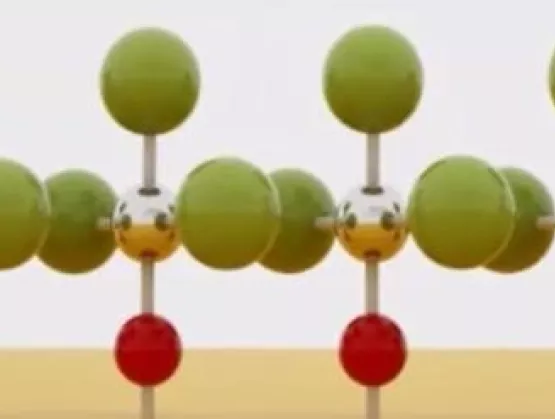
SEMI spoke with Dr. Mikko Söderlund, sales director for Beneq’s semiconductor business, about trends in Atomic Layer Deposition (ALD) applications. Söderlund shared his views ahead of his presentation at SEMI MEMS Imaging Sensors Summit, 25-27 September, 2019, at the WTC in Grenoble, France. Join us at the event to meet Beneq and other key industry influencers. Registration is open.SEMI: The Backside Illuminated (BSI) CMOS Image Sensors (CIS) market continues to experience steady growth. Which applications are currently driving market growth?Söderlund: BSI CMOS Image Sensor market continues to be driven by mobile, security, automotive and Internet of Things (IoT) applications – so there seems to be plenty of opportunities for BSI CIS market to grow further.SEMI: What is critical for advanced thin-film deposition methods to extract best electrical performance?Söderlund: It is critical to control the material properties of the deposited layer (such as charge density, resistivity or barrier property) and of course, film uniformity and conformality. Furthermore, controlling material interfaces is also important, especially for sensitive III-V materials. {% video_player "embed_player" overrideable=False, type='scriptV4', hide_playlist=True, viral_sharing=False, embed_button=False, width='350', height='197', player_id='12721134435', style='margin: 0px auto; display: block; float: right; margin-left: auto; margin-right: auto; width: 350px;' %} Coatings and material features based on existing standard techniques can be very expensive, or not feasible at all. What does Atomic Layer Deposition (ALD), as a thin film coating method, offer in particular?Söderlund: ALD offers dense, highly conformal and pinhole-free best-in-class functional layers for dielectrics, passivation, encapsulation and much more. As a gentle and precise layer-by-layer method, ALD is extremely well-suited for deposition of such performance critical layers over large surface areas such as a cassette of wafers.SEMI: Please describe the Atomic Layer Deposition (ALD) coating process. Söderlund: ALD is based on a self-limiting surface reaction controlled thin film deposition. During coating, two or more chemical vapors or gaseous precursors react sequentially on the substrate surface, producing a solid thin film (see schematic below). Most ALD coating systems use a flow-through traveling wave setup, where an inert carrier gas flows through the system and precursors are injected as very short pulses into this carrier flow. The carrier gas flow takes the precursor pulses as sequential waves through the reaction chamber, followed by a pumping line, filtering systems and, eventually, a vacuum pump.SEMI: What are the two leading edge ALD applications?Söderlund: Today’s leading-edge ALD applications are in logic (high-k/metal gate, multiple patterning) and memory (DRAM capacitor, 3D NAND). Within the More-than-Moore (MtM) markets, CIS and MEMS (actuators and sensors, RF) have been early adopters of ALD, and we also see ALD being introduced in GaN Power and RF, as well as photonics.SEMI: Give us one prediction about the opportunities offered by advanced imaging applications.Söderlund: The large diversity of imaging applications will continue to drive growth and innovation. For example, machine vision is expected to transform the imaging landscape. We see this as a big opportunity for advanced thin-film deposition methods such as ALD, provided that the tools are versatile enough to address the diverse manufacturing requirements.SEMI: What are your expectations for SEMI MEMS Imaging Sensors Summit and why do you invite your peers to attend? Söderlund: The summit brings together all key RF stakeholders in the MEMS and imaging sensors industry, and we are looking forward to a great event. It’s a special event for us as we are officially launching a new ALD cluster tool product specifically engineered for the MtM applications – so this brings great excitement that we want to share with the attendees.Dr. Mikko Söderlund is Sales Director for Beneq’s semiconductor business. He has more than 20 years of experience in product development, product management, technical sales and business development across the photonics, OLED, and semiconductor industries. Mikko received his Ph.D. in Micro- and Nanotechnology from the Helsinki University of Technology. Serena Brischetto is a marketing and communications manager at SEMI Europe.
Read More
Automotive original equipment manufacturers (OEMs) and their direct suppliers of parts and systems share a vision: Next-generation vehicles will be more electric, autonomous and connected. At a market size of more than $1 trillion, automotive is steadily becoming a high-tech market as cars morph into advanced technology platforms with partially or fully autonomous features. Call them semiconductors on wheels. Big players such as Google and many carmakers are investing heavily in chip advances to help drive increases in silicon content in automobiles.At SEMICON Europa, Pierrick Boulay, Solid State Lighting and Lighting Systems analyst at Yole Développement, will provide a market update on autonomous automobile trends including the state of sensors, radars, cameras and LiDARs as the industry works to increase the level of autonomy and electrification.Autonomous vehicle design can only thrive with the development of an industry standard for chip and device traceability across the supply chain. The importance of chip traceability to the automotive industry is reflected in its central role in driving a chip traceability standard.According to Heidi Hoffman, senior director of technology communities marketing at SEMI, “chip traceability is one of the next big things for the technology industry. The benefits are enormous, and the upsides – including yield enhancements, counterfeiting safeguards, and support for new applications – are plentiful. But the implementation challenges of chip traceability are also big and will require considerable effort to overcome. The biggest hurdle of all? We need to transcend industry fears by demonstrating that we can secure IP when it is shared across the hardware supply chain.” The Importance of Standards, Data Collection and Collaboration Across the Supply ChainThe automotive industry has long embraced tracing the sources of defects. Now, as the automotive and semiconductor supply chains increasingly overlap, traceability has taken on greater importance in the semiconductor industry. SEMI committees, task forces and events such as the Smart Transportation Forum at SEMICON Europa are ideal platforms for collaborating to develop new standards and best practices for the automotive industry.Earlier this year, German luxury automobile maker Audi AG became the first automotive original equipment manufacturer (OEM) to join SEMI as member, strengthening alignment across automotive supply-chain segments. At SEMICON Europa, the SMART Transportation Forum and Pavilion, staged by the SEMI Global Automotive Advisory Council (GAAC) and bolstered by the Electronic System Design Alliance, a SEMI Strategic Association Partner, will gather key stakeholders across the automotive value chain, from design and semiconductor equipment to materials and carmakers, to explore innovation opportunities in automotive electronics. SEMI Global Automotive Advisory Council (GAAC) “If the industry wants to reach the goal of zero defects, a new collaborative approach is necessary,” observed Antoine Amade, senior regional director EMEA at Entegris. At SEMICON Europa, Amade will present new ways to collaborate in reducing chip defectivity and meet other challenges in the automotive industry.More than half of semiconductor failures on the automotive assembly line today (so-called 0km failures) are traced to semiconductor fab defectivity. “The increasing semiconductor content in automobiles – driven by growth in ADAS, electrification and autonomy – has put a growing focus on the quality and reliability of these devices and their implications for consumer safety and satisfaction,” said Oreste Donzella, senior vice president and CMO at KLA.The smart manufacturing (Industry 4.0) revolution is already spurring higher performance and great efficiencies throughout the supply chain and will also be crucial to driving innovation in automotive. Smart manufacturing makes possible significant improvements in factory key performance indicators (KPI) for cycle time, on-time delivery, overall equipment effectiveness, cost and product quality.“These KPI gains are key to meeting quality levels the automotive industry must reach to support the deployment of autonomous driving vehicles,” said John R. Behnke, general manager of Final Phase Systems at INFICON. In his talk at SEMICON Europa, Behnke will provide an overview of existing, in-progress, and future smart manufacturing solutions for the semiconductor industry and their impact on the automotive supply chain. The SMART Transportation Forum, 13 November, 2019 (9:30-15:30 at ICM Munich, room 14c) at SEMICON Europa is the premier platform for key stakeholders to connect, collaborate and innovate across the automotive value chain. Automotive and semiconductor industry experts will offer insights into trends in design, semiconductor equipment and materials, and automotive innovation and the roadmap to 2030. The SMART Transportation Forum will also showcase innovations in imaging, sensing, artificial intelligence (AI), smart manufacturing and L5 mobility.Other SEMICON Europa highlights: Advanced Packaging Conference: Packaging and Test Challenges Towards High Reliability (12-13 November 2019) 23rd Fab Management Forum: Game Changers for Semiconductor Operations(11-12 November 2019) Strategic Materials Conference: Strategic Materials Enabling Industry Roadmaps(12-13 November 2019) SEMICON Europa registration is open for visitors and exhibitors. For more details, please visit the SEMICON Europa website and connect with SEMI Europe on Twitter or LinkedIn @SEMIEurope (use #SEMICONEuropa).Learn more about the SEMI chip traceability standard – SEMI T23 - Specification for Single Device Traceability for the Supply Chain – and SEMI Technology Communities.Serena Brischetto is a marketing and communications manager at SEMI Europe.
Read More