downloadGroupGroupnoun_press release_995423_000000 copyGroupnoun_Feed_96767_000000Group 19noun_pictures_1817522_000000Member company iconResource item iconStore item iconGroup 19Group 19noun_Photo_2085192_000000 Copynoun_presentation_2096081_000000Group 19Group Copy 7noun_webinar_692730_000000Path
Skip to main content
Default Banner Image

semiconductor manufacturing

The march of innovation in semiconductor microfabrication technology over the past 60 years has produced electronic devices and information systems that have transformed industries and lives around the world. And while advances in chip technology continue to make it possible to collect, transmit, store and process more data for a rapidly growing universe of applications, the pace of innovation is now facing strong headwinds. Powered by chip innovation, data centers have become massive centers of information processing but, on the downside, enormous consumers of electricity. Today, the power-hungry hubs account for five percent of the world's electricity usage, a proportion that is growing every year, raising important questions about sustainability. Compounding the challenge, the pace of Moore's Law, for decades the engine of electronic device and information system innovation, has slowed. While the research and development of state-of-the-art semiconductor fine processing technology remains robust, developing the advanced manufacturing technology for mass-producing more sophisticated electronics devices is becoming harder, as is ensuring business profitability."It has become difficult for semiconductor technology to continue to evolve as it has in the past," said Akira Minamikawa, Research Director of Technology Research at IHS Markit, who moderated the Semiconductor Executive Forum – View by Top Two in the Era of Digitalization on opening day of SEMICON Japan 2019 at Tokyo Big Sight. Held at the SuperTHEATER, the forum featured Terushi Shimizu, representative director and president at Sony Semiconductor Solutions, and Atsuyoshi Koike, president at Western Digital Japan, two industry powerhouses that could figure heavily in the future of digital technology. SuperTHEATER, the main stage at SEMICON Japan 2019 Image sensors evolve to become eyes of AIImage sensors are becoming eyes of artificial intelligence (AI) and intelligent systems that monitor people and events worldwide, collecting data that one day could help puzzle out growing social challenges such as energy conservation and traffic congestion. With 51 percent market share on the strength of its industry-leading technology, Sony Semiconductor Solutions dominates the image sensor market. Despite last year’s global semiconductor industry slump, the company’s “business continues to enjoy strong growth and we are very busy,” said Shimizu, who attributed the company’s robust performance to the rising importance of the social role of image sensors and the expanding number of applications they support.The success of the company’s image sensors can also be traced to its division of the image sensor market into two application categories: "Imaging" focuses on capturing beautiful image data, while "sensing" aims to collect data that accurately describes the state of a subject and its surroundings."In 2019, sales of imaging products for smartphones grew rapidly,” Shimizu said in his market overview. “This is due to the average annual 15 percent growth rate of multi-camera smartphones, with some phones today featuring seven cameras, and an average annual growth rate of 20 percent in sensor size to produce higher image quality."But Shimizu cautioned that Sony Semiconductor Solutions doesn’t expect the smartphone sensor market to maintain that fast growth rate."The imaging market is expected to grow until 2022, but after that, the sensing market will drive market growth,” he said, adding that the company’s “capital investment plan is based on this scenario."AI will be key in catalyzing growth of the sensor market as integrations of AI processing engines and sensing images grow in sophistication to capture images undetectable by the human eye, Shimizu said. AI will extract insight from captured image data. For its part, Sony will apply its layer stacking technology to sensing products."By stacking an AI processing engine, we want a significant portion of the recognition processing done within the sensor chip," Shimizu said.One sensor the company already offers collects in-depth information for indirect time-of-flight (ITOF) 3D ranging for new user interfaces relying on autonomous or gesture control for robotics. The sensor “was first used in smartphones in 2018 and saw widespread adoption in 2019," Shimizu said.Sony Semiconductor Solutions plans to focus on developing new sensors for integration with their ultrasonic cousins. Aided by optical deflection technology, the sensors will be used for product quality inspections during manufacturing.With the company’s growing strengths in sensor technology, it hopes “to increase sales of sensors from a few percent of the company’s total sales in 2018 to 30 percent in 2025,” Shimizu said, pointing to its goal "to capture 60 percent share of the image sensor market by 2025."Data as one way to spread happinessAt the heart of consumer devices such as smartphones and computers and also cloud servers, NAND flash has made it possible to process vast troves of data anytime, anywhere. In recent years, the technology has enjoyed stronger adoption for use as the storage medium of choice for edge computing, stationed between end devices and the cloud to help streamline data utilization. But the technology isn’t merely about making smarter use of bits and bytes."We would like to promote the technology development that can support the use of data to bring happiness to people around the world," Koike of Western Digital Japan said. The company calls data that contributes to individual happiness and helps solve social issues "data for good" and, like the Sony Semiconductor Solutions bifurcated classification of the image sensor market, categorizes information into “big data” and “fast data.”For example, big data can leverage AI to drive dramatic improvements in the interpretation of test data and, ultimately, the diagnostic accuracy of mammography for breast cancer screening, aiding in early detection to help save lives, Koike said. Fast data can be harnessed to analyze data collected from a manufacturing equipment line in real time to improve production efficiency. The company’s plant in Yokkaichi, Mie Prefecture, which the company operates in cooperation with Japanese memory manufacturer Kioxia, already uses fast data to bolster production.More NAND flash innovation and greater supply capacity are critical to developing "data for good," Koike said. "It is difficult to expand clean rooms at the same pace as data usage grows. In order to continue to advance technology and enhance supply capacity, we need to adopt new ideas for building production lines. We need a smaller equipment footprint, shorter cycle time and higher throughput."Semiconductor market shows signs of recoveryIn their discussion of the short-term outlook for the semiconductor market, Shimizu and Koike pointed to the importance of strengthening the talent pool of Japan’s semiconductor industry as global competition heats up with China’s pursuit of semiconductor independence and the industry pulls out of the 2019 slowdown fueled by weak memory prices. While Sony’s business has been buoyed by strong image sensor demand for smartphones, the devices “did very well, but other applications didn't," Shimizu said. Even the image sensor market stagnated.Despite the 2019 slump, market conditions and capital investments by semiconductor manufacturers have been on the upswing."In the second half of 2019, the Chinese market showed signs of recovery triggered by 5G,” Shimizu said. “In 2020, this movement is going to be in full swing around the world and we will be busier than last year."Koike agreed: "The semiconductor market for data centers will recover with 5G. The hard disk shortage is already an indication of a recovery, a turnaround that will undoubtedly extend to solid state drives (SSDs). In addition, advances in autonomous driving technology will ensure continued growth of the automotive semiconductor industry.”Japan should embrace international competition, not fear China's pursuit of chip independenceIt's no secret that China is investing heavily in its semiconductor development capabilities to move up the microprocessor value chain. Minamikawa posed the question: How should Japanese chip companies navigate the shifting regional balance of power? "It is natural for China to strive to establish domestic procurement of semiconductors that are fundamental technologies for various industries,” Koike said, “I think the efforts of Chinese companies are outstanding in that they are not pursuing short-term results, such as improving yields in the near future, but are making efforts with an eye to achieving results in 10 years. Japan has a variety of options including working with China to create joint ventures and competing head-on. Regardless of which choice we make, however, it is imperative for the survival of domestic companies that Japan maintains its technological competitiveness to remain ahead of China."Shimizu said that Sony’s “Chinese customers are quick to take action and study extremely hard. We often have opportunities to share our roadmap with them and explore innovation opportunities together. Before, they were passive and relied on us for insights into new technologies, but now they are more assertive and I sense that they will start to drive innovation.”Koike added that "although Japanese companies often talk about business globalization, neither Chinese nor American companies say much about it. While global expansion is a major requirement for business, I think Japanese companies need to focus more on the Japanese market overall, not just when they think about the growing competitiveness of Chinese companies." L-R: Akira Minamikawa, Research Director of Technology Research at IHS Markit; Atsuyoshi Koike, president at Western Digital Japan; Terushi Shimizu, representative director and president at Sony Semiconductor Solutions Talent key to bolstering competitiveness of Japan’s semiconductor industryMinamikawa of IHS Markit didn’t mince words in describing the talent shortage in the Japanese semiconductor industry as “grave,” saying that “the workforce challenge is not endemic to the electronics industry as evidence grows that the number of people obtaining doctorates in Japan is falling and the educational level of the Japanese population as a whole is in decline.”Three years ago, Shimizu interviewed professors on Kyushu island for insights into Japan’s talent shortfall. He came away feeling that “Japanese semiconductor companies were not sufficiently communicating the industry's talent and innovation needs to professors. To help professors and students better grasp the appeal and potential of the industry, we have started to send frontline engineers to universities to educate students and instructors about their work and careers. Expecting corporate HR departments to alone solve the talent shortage won’t work.”"In Japan, if you advance to a doctoral course, you will have a hard time getting a job, which is a strange situation,” Koike said. “Companies and universities need to work together more closely to better understand how to attract and hire doctoral graduates."Minamikawa said companies must have strong leaders with clear missions to attract the right talent, but Koike pointed to the drawbacks: "The image of a company with a strong leader seems to be cool, but it also has a downside because engineers stop thinking for themselves and wait for instructions from the top. I believe it is important for company leaders to have ongoing discussions at all organizational levels and lead the way in times of confusion."Shimizu agreed, citing his own company as an example."Thankfully, our company is very busy right now,” he said. “However, some employees are starting to request more time to think about how to improve the quality of their work. To maintain and strengthen our competitiveness and continue business growth, I believe it is important to cultivate an environment that encourages each employee to take more time to think for themselves."Motoaki Ito is the CEO of Enlight, Inc. and a reporter for SEMI. Mayumi Amagai is a marketing manager at SEMI Japan.
Read More
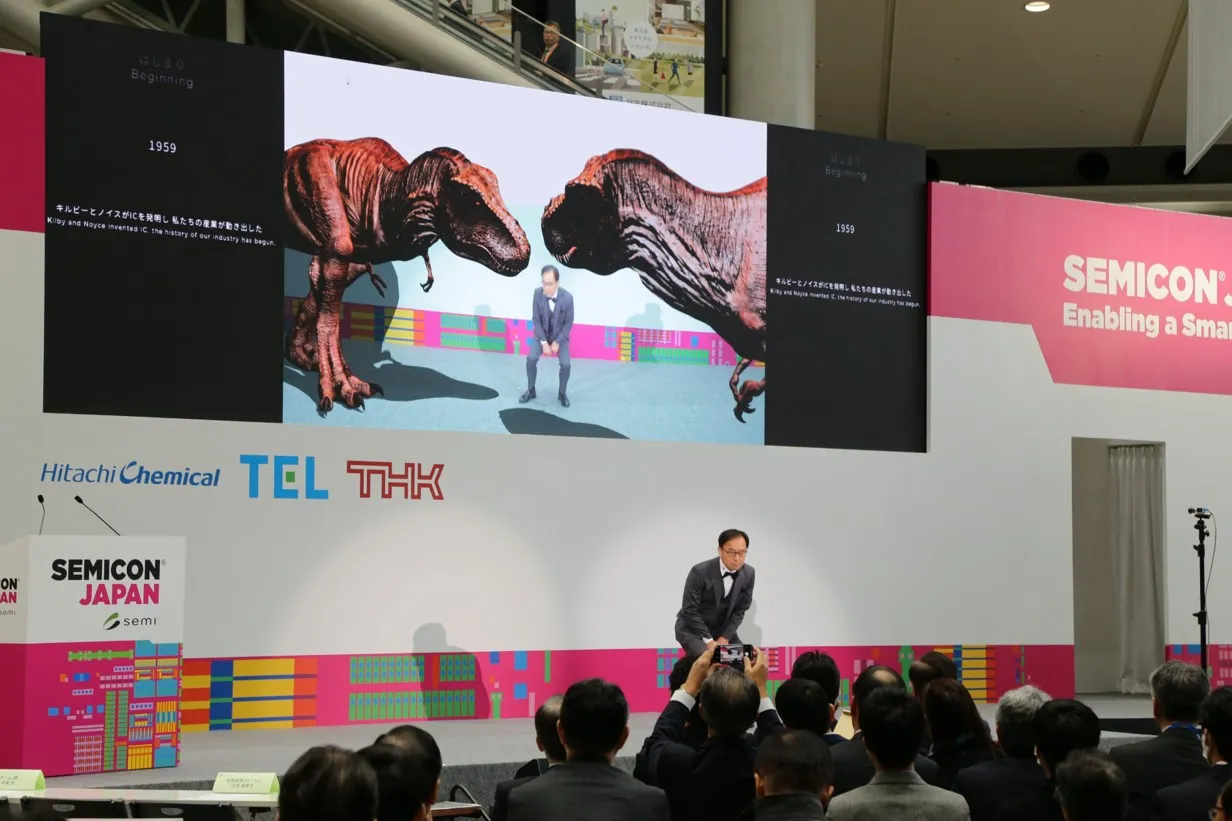
Augmented reality (AR) tyrannosauruses towered on-screen as I interacted with the creatures in a mix of prehistoric and cutting edge. Or, rather, my AR double was doing the playacting. Minutes later, virtual doppelgangers of a small lineup of chip industry executives cut the ceremonial ribbon. Seemingly sweeping away the winter chill, the opening of SEMICON Japan 2019 dazzled with smart technology and the promise of lives, cities and workplaces transformed, with uber-intelligent applications in full display at Tokyo Big Sight. But what resources does the industry need to harness to drive the next era of innovation? The semiconductor industry’s unwavering passion and young talent are key, said Hiroshi Imano, Chairperson of the SEMICON Japan Initiatives Committee, in his opening keynote. And hardly any region of the world is in a better position to help realize that future than Japan, Imano said. The region supplies one third of the equipment and more than half of all materials to the global semiconductor manufacturing industry.Talent was also top of mind for SEMICON Japan 2019 keynote speaker Makiko Eda, Japan's Chief Representative Officer at the World Economic Forum (WEF). Serving as a platform for public-private partnerships, the organization's mandate is to tackle global issues such as climate change and geopolitical strife in making world more resilient to risk and, by extension, more sustainable.Spanning ecology, economy, technology, society, geopolitics and industry, that mission includes reskilling and upskilling a billion people over the next decade, a high priority for WEF, which hosts a conference every January in Davos, Switzerland. The theme of this month's conference – Stakeholders for a Cohesive and Sustainable World – reflects the vital importance of building the international partnerships and global consensus necessary to achieving WEF's goals.One key to that sustainability will be technology and Arm, a global chip design company, will play a key role, with the company’s chips touching over 70 percent of the world’s population, Arm president Yuzuru Utsumi said in his keynote. Today, Arm is driving toward an ambitious goal: Ship 100 billion chips from 2017 to 2021 – the same number produced over the previous quarter century – by powering advances in mobile computing, server and networking infrastructures, and automotive applications.Arm’s innovation ecosystem of more than 1,000 partners will deliver these chips as they continue to work together to develop differentiated technology. Arm plans to increase investments not only in its primary processor business to accelerate market share gains but in the company’s new IoT business to create new revenue streams. The goal: Deliver long-term sustainable growth, Utsumi said. SEMICON Japan 2019 showcases SMART manufacturing and transportation Billed as a showcase of smart technologies, SEMICON Japan 2019 delivered with an array of eye-grabbing exhibitions in the popular SMART Applications Zone. In the SMART Transportation area, the automatic operation pavilion featured a car equipped with open-source software for autonomous driving. The exhibitor, Tier IV, aims to help lead the early commercialization of self-driving vehicles through the adoption of its software, Autoware, which makes it easier to develop self-driving vehicle prototypes using low-power platforms.Sony Semiconductor Solutions demonstrated a vision sensing processor designed to guide autonomous drones. Using two cameras, the processor measured the changing distance between visitors moving about the exhibit and stationary objects in real time, indicating proximity in hues of red (nearby) and blue (at a distance). Many visitors were wowed, describing the multichromatic display as futuristic.Others rode a simple wooden swing hanging by two ropes, but from dizzying heights thanks to Solidray’s Duo-Sight, a virtual reality (VR) system that projects 3D images stretching from wall to floor for immersive experiences. One visitor thrilled at how riding the swing, suspended only a few feet from the floor, felt like soaring on a flying trapeze. Target applications for the technology include virtual rides at amusement parks and presenting interior design options to homeowners.In the SMART Manufacturing area, one highlight was the demonstration by the National Institute of Advanced Industrial Science and Technology (AIST) of a remote-controlled Minimal Fab System designed for low-volume, high-mix chip production with little staffing. Designed to increase production efficiency, the system allows a circuit designer to manufacture a semiconductor by singlehandedly operating equipment up and down the production line. Controlling nearly 50 pieces of equipment, the Minimal Fab System on display manufactured chips that were verified for functional operation and exhibited afterwards.On the SMART Applications stage, exhibitors DENSO and Toyota Motor Corporation announced a new joint venture to conduct research and advanced development of the next-generation in-vehicle semiconductors critical to electric and autonomous vehicle innovation. The venture, operating as MIRISE Technologies, will combine Toyota’s mobility expertise with DENSO’s in-vehicle component prowess. The goal is to build a rapid, competitive development system by 2030, said Yoshifumi Kato, executive director of the DENSO Research and Development Center, and president and representative director of the venture. On track to begin work this year, MIRISE will span three fields of technology development: power electronics, sensing and SoC (System-on-a-Chip). The name MIRISE combines word the Japanese word "mirai" (future) with "rise."Business Continuity PlanningNatural disasters and other emergencies are an ongoing threat to uninterrupted business operations across the semiconductor manufacturing supply chain and particularly in earthquake-prone Japan. To better prepare for business disruptions and restore normal operations as soon as possible after disaster strikes, more companies are teaming on Business Continuity Planning (BCP).THK's Seismic Isolation Experience Car demonstrated one technology designed to help – a seismic isolation device. The car shakes like an earthquake to give people inside a taste of how a building heaves and sways during a quake with and without the device deployed. Visitors were struck by how much the isolator dampens tremors to prevent or minimize damage. In the BCP seminar, representatives from Sony Semiconductor Manufacturing, THK, DISCO and Team Engineering Consulting shared lessons learned from actual disasters and discussed the critical importance of daily disaster drills. Yukihide Keigo, Executive Engineer in charge of Products and Development at Sony Semiconductor Manufacturing, recounted how the company’s Kumamoto Prefecture plant struggled for 96 days to restore full operations after the facility sustained heavy damage in the 2016 earthquake. Keigo said the plant lacked the structural reinforcements necessary to withstand the impact and fell prey to poor planning and accountability. The Kumamoto plant has since implemented measures – structural and procedural improvements – that more accurately account for seismic risks to ensure full recovery within 56 days. The plant’s new procedures include emergency drills for staff including night-shift workers.Innovation abounds at six SuperTHEATER forumsSEMICON Japan 2019 was held in the West and South Halls of Tokyo Big Sight as organizers of the Tokyo Olympics occupied the East Hall, the exhibition's usual home at the venue, to prepare for the 2020 games. For the first time, the main stage, SuperTHEATER, was set up in the cavernous arena near the main entrance. The SuperTHEATER featured six forums over three days. Semiconductor Executive Forum – View by Top Two in the Era of Digitalization with thought leaders from IHS Markit and Sony Semiconductor Solutions SMART Connectivity Forum – Infinite World Brought by 5G Innovation with experts from Softbank and Nokia Solutions Networks SMART Transportation Forum I – Front-line of Automated Driving featuring speakers from Intel and DENSO SMART Transportation Forum II – Revolution of Sky Transportation, supported by the U.S. Commercial Service in Japan, with presenters from Ministry of Economy, Trade and Industry (METI), Subaru and Bell Helicopter Manufacturing Innovation Summit – Issues and Innovation: What will Drive Growth to 2030 featuring thought leaders from VLSI Research, Applied Materials, KLA, Nikon and Tokyo Electron Mirai Vision Forum – Future Relation of Technology and Body 2.0 with speakers from Leave a Nest, Ory Lab and Autonomous Control Systems Laboratory The Mirai Vision Forum highlighted advanced technologies that could lead to societal improvements. One presenter, Kentaro Yoshifuji, CEO at Ory Lab, recalled how, as a child, he once stayed home from school while recovering from an illness. His imagination in full flight, the youngster imagined having a clone that could attend school and be with his classmates. The experience eventually inspired him to develop OriHime, a robot that gives socially isolated people a way to communicate with friends or colleagues remotely. Originally developed for physically impaired people, OriHime today is used to help the able-bodied. The robot is situated with the companion and the user operates OriHime remotely. A camera and monitor in OriHime’s face provide the visual and audio connection and the user controls the device with a smartphone or tablet or, for those who are paralyzed, through eye movement. One potential application: With OriHime stationed at a business office, working mothers could use OriHime to telecommute to better balance their careers with their parenting responsibilities at home. The robot would be a mother’s go-between, enabling her to communicate directly with colleagues.The next generation of innovators also took the stage as five teams presented innovative business ideas in friendly competition. The top prize in The TECH CAMP Hackathon went to the group that hatched an ingenious plan to develop a jacket that trains users to move their bodies in preprogrammed ways. For example, legendary Japanese professional baseball player Shigeo Nagashima could wear the gear while batting to program the device, then give the jacket to someone who’s never swung a baseball bat. The jacket would help the user replicate Nagashima’s swing. Now comes the real work of any innovator – executing on the vision.And then came two soccer-playing artificial intelligence (AI) robots that squared off and ... Scored! The demonstration by the Toyota National College of Technology started as a research project by Toyota National College students in 2002. The young innovators designed and developed all the robotic hardware and software from scratch. Looking ahead to SEMICON Japan 2020!SEMICON Japan 2019 not only gathered leading Japanese semiconductor materials and manufacturing equipment providers to demonstrate their latest innovations. The premiere regional event also provided insights on key trends critical to the entire electronics manufacturing supply chain. This year’s event drew more than 51,000 visitors and 695 exhibitors from 15 regions filling more than 1,700 booths.SEMICON Japan 2020 returns to East Hall at Tokyo Big Sight in December 2020. I look forward to seeing you there!Jim Hamajima is president of SEMI Japan.
Read More
We live in the New Industrial Age. Manufacturing is undergoing a profound transformation, driven not only by technological (e.g. Artificial Intelligence, robotics, IoT) but also societal, market and regulatory developments that have fundamental implications for the workforce competency requirements. How can education and training systems keep pace with this unprecedented change? How does a future-proof curriculum look like?This topic has been extensively addressed by the Curriculum Guidelines for Key Enabling Technologies (KETs) and Advanced Manufacturing Technologies (AMT) initiative (2017-2019) of the Executive Agency for SMEs (EASME) and DG GROW of the European Commission. Carried out by PwC, the initiative focuses on the promising ways of organising learning experiences of individuals and groups in the New Industrial Age. The initiative produced the Curriculum Guidelines 4.0 that aim to equip all key stakeholder groups with the knowledge base needed to transform the existing curricula.The guidelines were developed based on the extensive state-of-play analysis and active stakeholder contribution by means of expert workshops, pan-European online surveys, in-depth interviews and individual expert consultations. All key stakeholder groups were involved in the preparation of the guidelines, including the representatives of education and training providers, industry, policymakers and supporting structures (e.g. industry associations, cluster organisations and trade unions), as well as learners themselves. SEMI was among the key contributors. The guidelines were presented to the public at the EU Conference on Skills for Industry: Curriculum Guidelines 4.0 in Brussels on 26 November, 2019.The guidelines aim to be applicable for both designing fundamentally new educational offers and/or advancing the existing curricula, depending on the level of required change. They address non-tertiary vocational education and training, higher education and on-the-job training for the manufacturing-related domains.The guidelines follow a holistic approach covering a broad spectrum of dimensions relevant to curriculum design and implementation, namely: Strategy: defining core values, commitments, opportunities, resources and capabilities of an educational/training institution Collaboration: promoting practices that move beyond the typical institutional collaboration patterns and engaging individuals and communities Content: defining the nature of educational content, including specific principles related to the actual content of the curricula Learning environment: creating specific environment during the program, e.g. stimulating multidisciplinary orientation, design thinking, team spirit, collective problem-solving, risk-taking behaviour, experimental approaches Delivery mechanisms: establishing means by which learners experience and access education/training; paying special attention to technology-enabled learning Assessment: identifying most appropriate forms of assessment, including advantages and disadvantages Recognition: exploring appropriate formal and informal ways of recognition Quality: identifying the determinants of education training quality: what makes learners’ and employers’ perception different? Based on the results of the pan-European survey, the four key elements that require the most substantial change are Strategy, Collaboration, Learning Environment and Content.The guidelines will be tested in practice in the context of METIS (Microelectronics Training, Industry and Skills), a project recently launched by SEMI and 19 partners from 14 countries. Aligned with the Curriculum Guidelines 4.0, METIS will establish a Microelectronics Observatory and Skills Council consisting of representatives from industry, academia, NGOs, think tanks and government. The consortium will develop a New Skills Strategy for the microelectronics industry in Europe with a focus on raising occupational profiles and skills critical to the future of the sector.METIS will enable a new industry-driven curriculum with 43 modules integrating online education and work-based learning in microelectronics design and manufacturing. Training will focus on chip design, system design, basic of manufacturing and key competencies. METIS is a Sector Skills Alliance co-funded by the Erasmus+ Program, receiving 4 million EUR funding from the EU.Preparing students for lifelong learning, offering Big Picture education, creating effective learning ecosystems, applying problem-based and student-centric approaches, shifting from human-robot interactions towards human-machine collaboration – these are just some examples of the curriculum guidelines principles highlighted in the guidelines.The guidelines aim to offer key highlights, indicate a variety of possibilities and identify sources for more detailed information and inspiration. The guidelines by no means aim to serve as a standardised detailed recipe for organising education and training processes, as there is no one best way to approach it. The diversity of learners’ needs and contexts per definition implies a need for multitude of approaches, which could also be combined in their own unique/customised education and training solutions.The Curriculum Guidelines 4.0 will be publicly released in January 2020, and will be available on the EU Publications. More information about this and related initiatives can be found at https://skills4industry.eu/. Dr. Kristina Dervojeda leads the PwC Innovation Research Centre in the Netherlands.
Read More
Sandia National Laboratories just finished updating equipment in its microelectronics fab, marking the completion of the first phase of a 3-year fab upgrade program. The transition from 6-inch to 8-inch wafer sizes will align the Department of Energy national lab with industry standards to ensure easier access to tools, spare parts and raw materials.Sandia is a prestigious member of the SEMI Fab Owners Alliance (SEMI FOA), an international group of semiconductor and MEMS fab managers and industry suppliers that meet regularly to solve common non-competitive manufacturing issues and improve their business results. SEMI spoke with Michael Holmes, senior manager of microfabrication at Sandia, about its approach to revitalizing the fab while developing new production processes and technologies.SEMI: What were the main challenges in moving into production with 8-inch wafers?Holmes: The goal of the conversion is to reestablish our 6-inch production processes on 8-inch wafers including our radiation hardened 350nm CMOS and MEMS technologies. This requires tuning hundreds of interrelated parameters to get the same end result as before but with different equipment and at a larger scale. In addition, during the conversion we are developing a new 180nm radiation hardened CMOS production process and re-establishing research work on 8” in our silicon photonics and ion trap technologies. Modifications to the facility have also been required including raising the ceiling to install the new implanter and relocating our gowning area to facilitate installation of new CMP tools. In addition to converting our Silicon fabrication facility, we are also converting select equipment in our compound semiconductor facility. We are one large team working toward these goals.SEMI: Were there any roadblocks in sustaining production of the 6-inch wafers while planning and implementing processes for the upgrade to 8-inch?Holmes: Six years of planning ensured the conversion would not affect production of components needed for national defense. This planning window was required to ensure production commitments were completed in advance of conversion start in August of 2018 and return to production for commitments starting in July 2021. This period provides time to complete the hardware conversion and steps review and requalify the production line to ensure products made using the new equipment are identical to ones produced by the old equipment. The hardware conversion phase completed on schedule and the fabrication of prototype and research components on 8-inch started in November of 2018.SEMI: Can you shed some light on the development of gold antennas that promise to improve the thermal infrared radiation capabilities in systems?Holmes: Sandia developed a new infrared detector design that breaks away from relying on thick layers of detector material and instead uses a subwavelength nanoantenna – a patterned array of gold square or cross shapes – to concentrate light on a thinner layer of material. This design uses just a fraction of a micron of detector material, whereas traditional thermal infrared detectors have a thickness of 5 to 10 microns. The nanoantenna-enhanced design increases the amount of an infrared radiation a detector can see while also reducing image distortion caused by background noise. It also allows for the invention of new detector concepts.SEMI: Sandia is known for producing high-reliability components. Several SEMI FOA members have customers in the automotive domain, where reliability is critical. Do you have any advice for them on their path to high-reliability, zero-defect systems?Holmes: High-reliability microdevices at Sandia’s MESA facility are paramount. A structured quality program is rigorously realized in each facet of the production process. Our processes and design rules are constructed around reliability, and we extensively leverage in-line metrology and electrical test to validate devices throughout production. SEMI: Are there any examples of how the FOA peer-to-peer dialogue and knowledge sharing helped in your upgrade from 6-inch to 8-inch?Holmes: Sandia is new to the FOA. Our initial interactions have been very valuable, and members have shared insights into metrics and process improvements that will benefit MESA moving forward. Relative to the 6-inch to 8-inch conversion, as part of our planning process, we did engage other foundries within the FOA to solicit feedback and lessons learned.The mission of the Fab Owners Alliance is to provide value to the fab management and operations community through collaborative platforms for device makers and solution providers.Nishita Rao is marketing manager for technology communities at SEMI.
Read More
For many technologies, standards unshackle them from patents and enable their mass production – an idea close to the heart of Wendy Chen, associate vice president of the R D Center at King Yuan Electronics Corp. and vice chair of the SEMI Taiwan Test Committee. More importantly, standards are crucial to a product’s commercial success: Producing it in high volume reduces its price and helps drive widespread adoption.With standards part and parcel to the economies of manufacturing , SEMI has sought consensus over the years among key players in materials, equipment, and other manufacturing segments on the importance of standardization in a push to cut costs.Chen first set herself to work on SEMI standards development in 2010, when 74 percent of 3D IC patents were owned by IBM. At the time, SEMI saw the huge potential in 3D IC and believed the lack of technology standards might hamper the future of the semiconductor industry.Motivated by that conviction, SEMI established the 3DS-IC Standard Committee in the U.S. in July 2010 and the SEMI Taiwan 3DS-IC Standard Committee the following year, and before long the committees were working together to form standards targeting mass production at low cost. The Taiwan committee was co-chaired by Wendy Chen, Dr. Yi-shao Lai (Advanced Semiconductor Engineering), and Dr. Zhi-kun Gu (Industrial Technology Research Institute). The trio spearheaded 3DS-IC standard development efforts in Taiwan.In setting the 3DS-IC standards, SEMI put the needs of the manufacturing sector first, Chen says, to ensure their implementation throughout the supply chain. SEMI saw Taiwan’s development of 3D IC standards, coupled with its manufacturing prowess, as key to securing the region’s place in the global 3D IC market.Wide Range of Industries Prosper With SEMI StandardsOf course the influence of SEMI Standards extends well beyond 3D IC to include protocols for hardware and software communication, traceability, compound semiconductors, facilities, MEMS (micro-electromechanical systems), metrics, silicon wafers, carriers and automation systems. The standards are used in a broad range of manufacturing segments including panel display, photovoltaic, PCB and high brightness LED.As recently as last February, SEMI Taiwan formed a PCBECI (PCB equipment communication interface) equipment networking pilot team to build a solid foundation for smart PCB manufacturing in the region. The team combined the SECS (SEMI equipment communication standard) and GEM (generic equipment model) interfaces to create the PCBECI protocol.Security Standards Vital in Smart ManufacturingWith smart manufacturing’s aim to drive new efficiencies comes growing security concerns in the global microelectronics industry. Improving communication within a manufacturing facility, and between that facility and trusted suppliers or partners, is central to the success of smart manufacturing. To improve communications, the conduits for the flow of information must first be secure. SEMI Taiwan is answering this critical need by creating a task force to promote information security standards – an effort that will give Taiwan a powerful voice in the development of global standards.For Taiwan, SEMI Standards is the backbone of a thriving semiconductor manufacturing industry. As many as 25 SEMI Standards are cited in a purchase order for a piece of semiconductor processing equipment, and standards helped propel Taiwan’s rise as global semiconductor manufacturing power. The region has produced a staggering 2.2 billion wafers and 1.8 trillion IC devices.Taiwan on Track to Become World’s Largest Equipment MarketTaiwan’s semiconductor industry continues to gather strength. According to the SEMI 2019 Mid-Year Total Equipment Forecast, Taiwan will dethrone Korea as the largest equipment market and lead the world with 21.1 percent growth this year.Since Wendy Chen started her work on standards in 2010, SEMI has published about 200 protocols. As part of the SEMI Taiwan Test Committee, she joined the celebration for another milestone – the publication of the 1,000th SEMI International Standard in July. The corks of the champagne bottles popped nearly a half century after SEMI began developing standards to accelerate innovation and help power what today is the $2 trillion global electronics industry.And with Taiwan’s rise to the top of equipment market, it has good reason to cheer too. Emmy Yi is a marketing specialist at SEMI Taiwan.
Read More
This article is the fifth and final in a series highlighting the vital importance of SEMI Standards to commemorate the publication of the 1000th SEMI Standard in July 2019. Find the entire series here.As we define industry standards for managing data in the fab and beyond, we are creating a virtuous circle. More data create better processes. Better processes generate more good data, and more good data lead to better processes. It becomes a cycle of continuous improvement, and we are only just beginning to realize its potential. To dive deeper we interviewed Alan Weber, vice president, New Product Innovations at Cimetrix, and an active member of SEMI Standards Information and Control Committee (IC C).“Industry standards are critical in allowing us to collect information across the fab and use it in increasingly sophisticated control algorithms for the equipment,” said Weber. “The last few years have been about analysis applications that leverage big data in the fab. What started at the lot level is now applied at the wafer level, and for a process like lithography, it’s down to the shot or die level. We’re now collecting enough data variables at individual process and recipe steps to model for predictive maintenance and virtual metrology.”The migration from using data as rearview mirror for identifying and addressing fab issues to using data to head off issues preemptively represents a paradigm shift with immense advantages. This is the starting point for realizing a virtuous data circle.The benefits of a virtuous data circle are simple and compelling: higher yields, faster time to market, more revenue and greater profitability. Our optimism, however, is tempered by major obstacles to this promising future.Multilingual ManufacturingWeber points out that the electronics industry is becoming a multilingual standards world with more than 1,000 fab equipment vendors and several layers of protocols that present the challenge of seamlessly handling multiple protocols. His IC C Committee is out to tackle this challenge.“While SEMI Standards efforts first began in the front end, our standards program now encompasses the back end with test and packaging as well as other device areas including MEMS, sensors and displays,” said James Amano, senior director, International Standards and EHS, SEMI. “We’re going to see data connectivity from the front end to the back end to the final assembly of multi-chip products and that needs standards,” Weber explained. “We’ll need more connected equipment throughout the global, multi-site manufacturing process if we are to support the full traceability requirements of the most demanding markets such as automotive.”The industry will benefit from greater collaboration. Weber predicts that companies will team to create integrated supply chains within broader industry supply chains.Getting the Right People at the Right Time“As we lead the development cycle of a standard from concept to realization, one of the most important jobs of our standards task forces and committees is to coordinate competing companies and build an industry consensus,” Amano said. “This is the case for data in particular, where we rely on industry professionals like Weber and his colleagues, who are working to bring people together to collaborate on developing standards for connectivity and data sharing. It is that critical human element that allows SEMI to sustain our commitment to introducing standards that move the industry forward.”Will Companies Share Data If It Is Secure? Weber contends that when it comes to securing and sharing the data, the biggest challenge is to change the industry’s information-sharing culture.“Finance and defense are already finding ways to deal with data security,” said Weber. “While we will always have problems that require technology fixes, like dealing with new types of computer viruses, I am confident that we will be able to create standards that enable the free, secure flow of information. The key to making progress and better leveraging data is to get companies to see the potential of sharing data while investing in the standards.”SEMI recently launched a project to optimize data sharing across two critical process steps – lithography and plasma etch – to accelerate the adoption of data-driven AI methodologies. The results will help to establish data transfer and management standards crucial to the trusted exchange of trade secrets, IP and other sensitive information. Tools and materials from several SEMI members will be used for the project at Cornell University’s NanoScale Science Technology Facility (CNF). SEMI members are invited to join the project review team. Contact Pushkar Apte at SEMI ([email protected]) for more information on the initiative.Advantages Are Too Great to IgnoreTraditional cultural obstacles aside, the advantages of creating virtuous data circles are simply too great to ignore. Now that it’s accepted wisdom for fabs, factories and supply chains to continuously leverage interconnected data to get smarter, the time has come to extend those advantages throughout the full manufacturing process. Without these data circles, we’ll slow the development of new technologies and applications.We can only speculate where the lines of sharing data are drawn and will be redrawn in the future. But, without doubt, technology innovations such as AI will spawn new information business models that vertically and horizontally integrate companies in ways previously unimaginable. Data standards will underpin this structural transformation.Use your voice to affect standardization in and around the microelectronics industry. Learn about SEMI International Standards – and become part of the solution. Heidi Hoffman is senior director of technology communities marketing at SEMI. Hoffman and her team shine a spotlight on the work of the more than 20 technology communities under the SEMI electronics manufacturing supply chain collaboration platform. Actively engaging community members in marketing programs that showcase their unique value, Hoffman’s team helps companies to grow and prosper through the power of connection, collaboration and innovation.
Read More
This article is the fourth in a series highlighting the vital importance of SEMI Standards to commemorate the publication of the 1000th SEMI Standard in July 2019. Find the entire series here.Computer prices have plunged over the years even as desktop and laptop PC performance has skyrocketed thanks to the semiconductor industry, giving users much more bang for their buck. The chip industry stands in a stark contrast to healthcare and education with their exponentially rising costs.What distinguishes the semiconductor industry from healthcare and education in the capacity to deliver so much for so much less over time? After all, even in other parts of the technology sector that are heavily regulated, such as cable television, we have not witnessed the same price decreases as in microelectronics.Some pundits claim that the difference among sectors is tied to their degree of regulation. Does greater regulation somehow degrade product value? The reality is far more nuanced. But one thing is clear: Smart self-regulation (i.e. standards) in the semiconductor industry has contributed mightily to its success.The recipe for success has been simple. Standards have been rocket fuel for competition, which in turn has sparked innovation, driving down device prices while boosting performance. Computer prices fell dramatically between 1997-2015 while the cost of cable TV and internet services rose. Myth of unregulated competitionA semiconductor fab might actually be the most regulated place on earth. Fabs hew to a much higher standard of air quality and cleanliness than even uber-sterile hospital operating rooms. Manufacturing processes are voluntarily regulated not to millimeters, but to nanometers. While some standards are proprietary with limited reach, others span the supply chain. Regulation has worked so well in this sector that the semiconductor industry isn’t moving toward less standardization. It’s moving toward more. Secret is smart standards The gap between regulation and self-regulation is more like a chasm. We typically view regulation as a series of top-down directives that more often focus on the interests of the producer than the consumer. Healthcare regulation, for example, may improve quality of care, but it’s often insurers, big pharma and hospitals that benefit most from regulation, rather than consumers.The semiconductor industry, on the other hand, uses self-regulation to improve business operations and make better products for consumers. Falling prices and rising performance are natural byproducts.Semiconductor industry self-regulation is an ecosystem-wide effort, where input isn’t just top-down, but also bottom-up or even side-to-side. The first SEMI Standard, which specified wafer sizes, exemplifies this approach.The SEMI Standards Committee formed in 1973 to address silicon wafer dimensional specifications. At the time, wafer specifications proliferated. Numbering more than 2,000, the various specifications led to major inefficiencies just when the industry was just getting underway. Wafer suppliers banded together under SEMI to solve this problem and rapidly developed consensus specifications for 2- and 3-inch wafers. By the mid-1970s, over 80% of wafers conformed to these new standards.Standardized wafer sizes freed equipment companies to focus on innovations that reduced cost and increased performance. It also allowed manufacturers to focus on product differentiation without having to worry about device fabrication process and cost. Since that first SEMI Standard made possible the modern semiconductor equipment industry, original equipment manufacturers (OEMs) have competed to deliver amazing innovations. For example, lithography systems routinely use light to design chips with feature sizes smaller than the wavelength of light.SEMI’s 1000th standard on energetic materials demonstrates how smart standards are also pragmatic. This standard is not about banning materials or assigning blame when things go awry. It is about creating practical guidelines that companies will follow, enabling them to realize greater innovation. Guidelines that reduce accidents and risks will spur more, not less, energetic materials’ exploration. Industry suppliers will be the big winners.The 1st to the 1000th SEMI standard all represent examples of cooperation making more sense than competition.Standards for the real worldCreating a business-friendly standard that still gets the job done is a process. As SEMI Standards Task Force and Committee members, materials, equipment and manufacturing companies take part in defining best practice guidelines that support safe and practical use of materials and equipment. Task force and committee members assign particular responsibilities and associated costs to the most logical segments of the supply chain. They also develop information-sharing practices around competitive process recipes and purity standards.Andy McIntyre, CIH, a member of the energetic materials task force and an executive vice president and managing principal at BSI EHS Services and Solutions, summarized what makes SEMI standards smart.“SEMI standards are pragmatic,” said McIntyre. “They take into account the need for implementation in a real-world business environment. They embrace an engineering approach to problem-solving to create practical solutions, and they define specifications and performance goals in ways that allow engineers — in collaboration with EHS professionals — to identify practical solutions for reducing risk in R D, pilot line and manufacturing operations.“SEMI standards employ a holistic process that considers all the important points of view throughout the supply chain, from materials selection, installation, use, recycling and/or disposal,” said McIntyre. “The breadth of SEMI EHS Guidelines, for example, is also very comprehensive as the SEMI EHS Committee and task forces work to ensure that standards keep pace with dynamic technology developments. Energetic materials is a prime example where the industry recognized the need for a new safety guideline to document safe usage of pyrophoric, water-reactive and unstable reactive materials, which have become increasingly important in semiconductor and advanced materials R D and manufacturing.”This is the real secret to the success of the semiconductor industry. Smart self-regulation allows industry players to cooperate in the development and implementation of standards that are pragmatic, comprehensive and dynamic. Participants in SEMI Standards have a voice in the semiconductor industry because they are the voice of the semiconductor industry.While innovation in semiconductors may not always keep pace with Moore’s Law, we can depend on one truth: As long as collaboration and cooperation are the rule and not the exception, we will continue to advance technology in amazing and unprecedented ways. You, me and all other consumers will continue to reap the rewards of innovation. Use your voice to affect standardization in and around the semiconductor industry. Learn about SEMI Standards – and become part of the solution.Heidi Hoffman is senior director of technology communities marketing at SEMI. Hoffman and her team shine a spotlight on the work of the more than 20 technology communities under the SEMI electronics manufacturing supply chain collaboration platform. Actively engaging community members in marketing programs that showcase their unique value, Hoffman’s team helps companies to grow and prosper through the power of connection, collaboration and innovation.
Read More
Like all other SEMICON expositions, SEMICON West last month gathered thousands of people to make business connections and learn about the industry and its opportunities. But the events are also great venues for SEMI’s Global Industry Advocacy team to meet with industry leaders from around the world as well as regional SEMI presidents to discuss policy issues we face in each region and best practices for how to address them. The time was also ripe for us to meet with various advisory groups and advocacy committees to examine current issues.Top on our list at SEMICON West was a discussion with SEMI’s International Board of Directors about the then newly announced actions by Japan’s Ministry of Economy, Trade and Industry (METI) to tighten export controls in trade with Korea. SEMI depends heavily on and is grateful for insights from its International Board, Board of Industry Leaders and various Regional Advisory Boards. They are crucial to our ability to develop and execute industry advocacy strategies that take into account regional idiosyncrasies, geopolitical sensitivities and global supply chain complexities. SEMI is unique in its ability to bring a global perspective to engaging governments around the world in real time. In the case of the trade dispute between Japan and South Korea, we engaged SEMI members in Japan and Korea as we developed our strategy.On the SEMI America’s front, the North American Advisory Board and its Public Policy Committee met at SEMICON West for a spirited discussion on how to best manage our lobbying activities and how regional and U.S. companies should be involved. The committee’s perspectives and guidance will be invaluable as we chart a path forward in these challenging times in global trade.Our Global Industry Advocacy team also continues to build out SEMI Works, SEMI’s comprehensive initiative to develop a talent pipeline and overcome the industry’s longstanding shortage of skilled workers. SEMI Works focuses on stimulating greater interest in STEM careers, aligning STEM course curriculum and industry needs, and connecting students with relevant courses and careers. We are in the process of launching three regional pilot programs that will enable us to develop the SEMI Works business model that we’ll use to scale the program and ensure the initiative is robust and sustainable. At SEMICON West the Global Advocacy team convened regional stakeholders involved in these pilots to share information on opportunities and challenges and to discuss various implementation strategies.At SEMICON West we also facilitated meetings with U.S. government representatives aimed at improving cybersecurity in manufacturing and developing a commercial security model that will strengthen security throughout the supply chain in areas vital to industry growth such as traceability.After nearly 50 years, SEMI still excels in enabling the industry collaborations key to growth and innovation. Collaboration is also a driving force within SEMI Global Industry Advocacy as we continue to work with SEMI members, our various boards and governments around the world to advance the interests of the semiconductor industry.Mike Russo is vice president of Global Industry Advocacy at SEMI.
Read More
This article is the third in a series highlighting the vital importance of SEMI Standards to commemorate the publication of the 1000th SEMI Standard in July 2019. Find the entire series here.SEMI Standards are the bedrock of the modern microelectronics industry. Without standards for wafer dimensions – which SEMI Standards first defined through a collaborative process involving semiconductor manufacturers and wafer suppliers in 1972 – the semiconductor equipment industry as we know it would not exist today. The late Robert Noyce of Intel noted in this 1992 video “being good at producing semiconductors will mean we have better, more consistent, better controlled equipment than we have in the past. Standards are going to play a vital role in that. Standards saves money and time for everyone.” Noyce also called standards a bellwether to surges of innovation in critical process technology. This is still true today as, for example, important standards-setting activity is afoot in panel-level packaging, electron microscopy and energetic materials. Will a surge of innovation follow?Panel-level packaging: a chicken-egg scenarioFrom advanced materials to more efficient production tools, one hallmark of the microelectronics industry is our fearless exploration of new technologies that will spawn change across the industry by improving performance and reducing cost. Advanced packaging techniques, such as panel-level packaging (PLP) – which moves semiconductor packaging to a larger-panel format – is one of those critical catalysts. Citing PLP’s potential to shrink costs by improving efficiency and economies of scale, research firm Yole Développement predicts a remarkable 63% CAGR for PLP from 2017-2023.[i]It’s no stretch to say that we are close to realizing a burst of innovation in packaging. With a just-published SEMI Standard (SEMI 3D20) specifying panel sizes, equipment companies will find it economically viable to invest more in developing the much-needed production tools that enable PLP. “It is really important to create standards so we come together and work much more efficiently. Creating those fundamentals allows you to be more productive in the long term,” said Christina Chu, ASM Semiconductors, and co-leader of the Panel Level Packaging Task Force, and one of five industry leaders recognized for their outstanding accomplishments in developing SEMI Standards for the electronics and related industries at the recent 1000 SEMI Standards reception during SEMICON West 2019. “This effort came up from the trenches,” said Richard Allen, NIST Quantum Measurement Division, and a co-leader of both SEMI’s 3D Packaging and Integration Committee and its Panel Level Packaging Task Force. “Equipment vendors told us that they wanted to serve the market, but they couldn’t do so without some standards. To respond to their request, our committee surveyed the market and discovered at least 15 different panel sizes in development.”“As no vendor is going to make over a dozen unique tools for the same process, we worked with the manufacturers and tool companies to write a specification that standardizes on two of the most widely accepted sizes,” Allen said. “For the first time, the industry will have a real market for panel-level packaging tools, and that will spur commercialization of new technologies that never would have seen the light of the day without standardization.”Allen pointed out that evolution of standards in microelectronics reflects the dynamism of the microelectronics industry itself. “Given the rate of technology advancement in microelectronics, SEMI Standards committee and task force members know that a newly-published standard is often just a starting point, and change will likely follow,” he said. “The Panel Level Packaging Task Force, for example, is currently determining how to best support this packaging technology, whether through possible enhancements to 3D20 or by creating new PLP standards.”Process automation is key for TEMTransmission electron microscopy (TEM) is another area where industry cooperation will fuel progress.“People throw around the phrase ‘exponential growth,’” said James Amano, senior director, International Standards at SEMI. “It’s usually a gross exaggeration, but not when it comes to TEM data. That’s because demand for more TEM data, which uniquely enables innovations around smaller feature sizes, has exploded. At the same time, TEM data is a bottleneck in the fab. Operators literally use tweezers to carry around electron microscope samples by hand, and that is untenable.” TEM sampling standards are currently being formulated under the SEMI Standards development process. “Applying a model that we have employed successfully time and time again through SEMI Standards, we are gearing up for process automation in TEM,” Amano said. “We’ll start by establishing a grid carrier standard for electron microscopy. Through ongoing standards efforts, we may realize a fully automated TEM process within just a few years. That achievement will enable exponential growth in shrinking design geometries.”Energetic materials gain safety standardAlong with wafer-level packaging and design shrinks, the push for safety in materials’ usage is a hotbed of innovation. This is especially true with energetic materials, the potentially hazardous process chemicals used increasingly in semiconductor manufacturing to spur advances in materials purity, integrity and quality.“When you’re working with energetic materials, if you don’t get it right, you may face serious yield and cost issues, and most important of all, safety risks,” said Paul Trio, senior manager of strategic initiatives at SEMI. “This isn’t a theoretical concern. Real problems occurring in fabs have made an energetic-materials standard a high priority for the industry.”“After years of collaborating with companies across the supply chain to address this significant challenge, we recently published our 1000th SEMI Standard around safe usage of energetic materials,” Trio said. “Now manufacturers can turn to a new standard – which will evolve dynamically in response to industry changes – as they employ energetic materials in their quest to achieve higher yields while controlling costs and managing safety risks.” Whether it’s packaging, design shrinks, materials or other key innovations, standards are essential to progress in microelectronics. From equipment and materials suppliers that provide the most advanced, efficient and safest tools, materials, and processes to device manufacturers that get products to market, all stakeholders in the microelectronics ecosystem benefit from SEMI Standards. Are you curious about the areas of process technology where innovations are likely to occur? Would you like to get involved in standards efforts that could have an impact on your business? Take a look at the activity of SEMI Standards Committees and Task Forces. Because that’s where innovation, pragmatism and a commitment to harness industry resources come together.Use your voice to affect standardization in and around the microelectronics industry. Learn about SEMI Standards – and become part of the solution. Heidi Hoffman is senior director of technology communities marketing at SEMI. Hoffman and her team shine a spotlight on the work of the more than 20 technology communities under the SEMI electronics manufacturing supply chain collaboration platform. Actively engaging community members in marketing programs that showcase their unique value, Hoffman’s team helps companies to grow and prosper through the power of connection, collaboration and innovation. [i] Status of Panel Level Packaging report, Yole Développement, 2018
Read More