downloadGroupGroupnoun_press release_995423_000000 copyGroupnoun_Feed_96767_000000Group 19noun_pictures_1817522_000000Member company iconResource item iconStore item iconGroup 19Group 19noun_Photo_2085192_000000 Copynoun_presentation_2096081_000000Group 19Group Copy 7noun_webinar_692730_000000Path
Skip to main content
Default Banner Image

semiconductor manufacturing

SEMI spoke with Andreas C. Zimmer, Executive Search and Selection Consultant at ZIAN Co industrial consulting and recruitment, about strategies for attracting and retaining talent and promoting careers in semiconductor industry. Zimmer shared his views ahead of his presentation at the SEMI Fab Management Forum, 17 February, as part of the SEMI Technology Unites Global Summit, 15-19 February 2021, an online event. Join us to meet experts from ZIAN Co. and other key industry influencers. Registration is open. SEMI: What makes the semiconductor industry such a great career destination? Zimmer: The semiconductor industry is an interesting world for anyone involved in or just fascinated by high-end technology. But if we think about our mobile phones, personal computers or cars, we should all ask ourselves what technology is behind these devices we use in our daily life. The classical Newtonian physics does not reveal the source of the pixels in our mobile phones or why a navigation system knows where I currently am and how I’m supposed to drive to avoid the traffic jam ahead. The semiconductor industry truly is the technological pacesetter. The technologies and applications developed by SEMI and its members are the multipliers directly impacting our daily life. Moore's law not only affects the development of chips themselves, but also how we use the applications and devices they enable. Think about the size-performance ratio of modern smartphones compared to the first- and second-generation devices in the 1970s and 1980s, or compare today's BMW with one from the 1960s. The problem is that the industry is too hermetic. We perceive a lack of willingness to go out and tell in a generally understandable way what this industry is all about! Everyone knows Apple, Samsung, Nokia, but who, besides the specialists, knows NXP, Infineon, TSMC or LFoundry? Many companies are largely unknown to the general public! So why should a graduate from a technical university choose a company such as Applied Materials, TEL or ASML? During their studies students will inevitably have come in touch with IC or MEMS companies, but do they also know what is behind them? Do they really know the value chain that leads to the end product? SEMI: What can the chip industry do to better attract talent? Zimmer: Our industry is extremely attractive for anyone who is interested in technology and would like to push things ahead, but unfortunately access to this industry is almost reserved to the initiated who, in whatever way, came in touch with the industry at some point. Let me get this straight: This is not a conscious, willful attitude. It is just the result of our industry’s hermetic attitude. In my opinion, there is no overarching, uniform strategy in marketing, communications or advertising to promote the potential of the semiconductor industry to a wider audience. That’s why SEMI and the cooperation of its members in attracting talent is essential. SEMI: What concrete actions do you suggest for attracting and retaining talent? Zimmer: In German there is the saying “Do good and talk about it!” – and this is exactly what should be implemented. It is not enough to place an ad when necessary, to promote something here and there, perhaps to sponsor a chair or to provide a device free of charge. These are certainly all reasonable actions, but rather random and not long-term or strategic. Furthermore, these actions will reach only a relatively small group of people. The industry should organize structured recruitment activities under a long-term plan, over 10 years or even extending to the next generation. This shouldn't be a rigid corset, but rather a guideline closely informed by the chip industry’s technology roadmap and companies across the supply chain. If it is the task of an organization’s board and the management to define the strategic direction and to set specific goals, it should be the task of technical management to ensure that these goals can and will be achieved. However, this will only succeed if human resources is involved from the very beginning and can plan appropriate personnel resources accordingly. Employees retire, quit and change employers. New materials, technologies, applications and processes are being developed and require new, specific knowledge. Market requirements change. All of these components need to be recognized and considered in early planning. SEMI: What is your experience as a consultant? Zimmer: As consultants, we experience how organizations literally fall out of the clouds when the situation within the organization itself drastically changes, because a strategically important colleague is retiring or suddenly leaving the team for whatever reason. Then, quite surprisingly, the question “Where and how quickly can we find the suitable replacement?” arises. Instead, that departure should be considered as a possible development up front in overall talent planning – a plan B to keep in the drawer. Developing and implementing a long-term HR development roadmap, aligned with the technology roadmap, enables a company to anticipate when specific resources are needed, identify the right people and get them onboard without gaps. It is also important to keep your team informed and involved in all decisions and process changes, and to make sure they get the respect and appreciation they deserve. Employer-employee cooperation over the long term only works when the relationship is a win-win for both parties. If an organization sees the relationship as one-sided to its exclusive benefit, sooner or later the worker will be terminated or quit at the expense of the organization. Truly live the statement “Our people are our best and most valuable resources!” SEMI: When should organizations start attracting young talent? Zimmer: The sooner, the better! Communications aimed at attracting future employees should be designed to reach people of all ages and levels of education. For many years, the tobacco industry targeted young people by demographic, considering their age, education and cultural mindset to ensure they perceived cigarettes as cool. The result? Many people became addicted, mostly for life, just because some clever communications expert touched the right spot! Our industry will not attract teenagers like tobacco corporations did, but the strategy is basically the same: arouse the curiosity of your target group and speak their language. A possible scenario: A company starts and establishes a relationship with neighboring technical, middle and high schools by providing equipment, documentation, and employees who serve as teachers or coaches, and organizing guided tours, seminars and workshops in coordination with the school management. The cooperation continues with the university, where the respective chairs are supported and financed. With a little creativity there are endless possibilities! In our day-to-day business, we observe that large, well-known companies such as Bosch and Daimler are practically sitting on the lap of students in key universities and institutes, yet are unable to identify talent very early and bind them to their company. SEMI: How can organizations capitalize on shifting retirement patterns to help narrow their talent gap? Zimmer: The answer to this arises from considerations related to personnel planning in connection with a company’s technology roadmap. If the roadmap is linked to HR plans, you automatically have an overview of the time-critical moments when personnel gaps might arise. Then you can easily close these gaps, for example by arranging the onboarding of a successor for a specific position long before the job holder leaves. Considering notice periods and approval processes, a period of at least two years should be planned in order to be prepared for personnel changes. Of course, much of this varies depending on the importance of the position to the organization and the size of the talent pool. For example, it will probably be easier and faster to hire and train a sales engineer than the successor for a development manager, when you know there are maybe only 10 people worldwide who are, professionally speaking, at his level. And this is equally true for internal promotions: Always keep an eye on your own people and try to discover their greatest talent! Senior people tend to look outside the organization rather than just around the corner. Maybe the right talent is sitting next to you. Stay tuned and talk to your people to implement a strategic knowledge transfer as part of your organizational culture. Another aspect that is often overlooked is the deputy function: We often find functions in organizations that literally have a unique selling proposition. But there is no deputy, no one who can step in case of an emergency, because no other colleague possesses the knowledge and information to take over if necessary. Usually this is not a problem during a vacation or illness, but what do you do if a key job holder suddenly cannot work from one day to the other? SEMI: What is the role played by artificial intelligence? Zimmer: AI is both a risk and an opportunity. A new technology can always mean danger if it is used incorrectly, and I am not talking about job losses! This has always proven to be a mistake in the past. On the contrary, new technologies create new jobs! New technology accelerates communication, creates new platforms for interaction, shortens decision-making processes, and turns the world into a small village. In your interview with David Meyer CEO of Lynceus, he hits the nail on the head: The great advantage of AI in our industry is likely to be the management, handling, analysis and drawing of conclusions from an incredible amount of information at an unbelievable speed. Without AI, information cannot be controlled to this extent, not to mention accurately evaluated in real time. The mastery of these processes and the learning curve that results from them – for example for the determination of quality levels – should set completely new manufacturing standards. SEMI: How can technology unite us? What do you expect from your participation at SEMI Technology Unites Global Summit? SONAR GmbH has been in this industry as a personnel and business consultant firm for 25 years now. We have experienced many pig cycles since 1995 and accompanied our customers through all the ups and downs, only to have learned one thing in the end: The semiconductor industry is unfortunately still too fixated on technology and overlooks the fact that this technology is made by people for people. The EU's latest Pact for Skills, which was presented at end of November 2020 by Commissioners Schmidt and Breton, foresees 2 billion € investment to generate 250,000 new jobs in the electronics industry throughout Europe! In 2013, we aimed to sensitize semi industry executives, managers and CEOs to the importance of human resources to the well-being and success of organizations. It’s vitally important to invest in day-to-day relationships with your employees to foster their careers and address their needs. The SEMI Fab Management Forum will feature leading game changers of semiconductor operations to highlight best practices for achieving sustainable operations beyond 2020 and exploring the latest solutions for smarter tools and smarter processes. Andreas C. Zimmer is executive search and selection consultant at ZIAN Co industrial consulting and recruitment, specializing in recruiting talent for high-end technologies in areas such as LED, PV, semiconductors, electronics, and test and measurement. A personnel and industrial consultant with more than 20 years of experience, Andreas is active throughout Europe, the United States and Asia. For more insights about workforce and skills strategies, please see SEMI Workforce Development activities and the European METIS project. Serena Brischetto is senior manager of Marketing and Communications at SEMI Europe.
Read More
Materials science – a field that includes elements of applied physics, chemistry, and mulit-disciplinary engineering applied to magnetics, metallurgy, ceramics, polymers and silicon – serves as the foundation for technologies that have driven much of the tech sector’s economic growth for the past 50 years. As our devices grow smaller, faster and smarter – while also requiring higher performance and greater energy efficiency – we’re reaching the limits of what can be accomplished with these fundamentals. The technology sector needs renewed research and investment in new materials to help address the challenges we face in a rapidly changing world. Leading TDK Ventures, the investment arm of TDK Corporation, I’m happy to report that a number of young companies have stepped up to the challenge of innovating materials science for the 21st century. In the past 18 months, we invested in multiple startups dedicated to reimagining the basic building blocks of materials science and identifying new ways to push technology forward – in fact, three of them have successfully gone public or been acquired over the last year. This demonstrates not just a renewed interest in materials science research but also highlights the momentum for healthy returns on materials science investments. Or, as I like to say, it’s the return of materials science returns. Materials science at the atom level For high-tech investors, materials science went out of favor the past 10 or 15 years, because investment in software development companies began to deliver very healthy returns in relatively short time frames – often in as little as two or three years. Product development in materials science traditionally requires much more capital and takes a lot longer to generate returns than software startups. Today’s hardware innovators are making it clear that we’ve only begun to scratch the surface of what’s possible in the materials sciences. Unlike 20 years ago, we can develop products like graphene, which consists of a single layer of carbon atoms that is about 200 times stronger than steel and an excellent conductor of both heat and electricity. Nanometer-scale materials like this enable the design of ultra-low power, high-performance components that can integrate multiple functionalities onto very small devices and create opportunities that were impossible only a few years ago. With advances like this, the future of materials science is regaining its luster. Investors welcome materials science startups Three materials science startups with successful exits: GenCell, which went public in 2020, develops fuel cell solutions that offer clean backup power for a variety of commercial, industrial and healthcare operations and can be used for off-grid power and rural electrification in a wide range of temperature and humidity conditions. GenCell’s revolutionary process creates hydrogen-on-demand from anhydrous ammonia (NH3) at 10 times the efficiency of other solutions, without any outside electrical power.GenCell fuel cells enable hydrogen and oxygen to react in an emissions-free chemical process that produces electricity and heat, with pure water as the only by-product. Origin, acquired by Stratasys in 2020, creates 3D printer platforms that offer an additive manufacturing approach to mass manufacturing, with the freedom of open materials. Using Origin 3D printers, customers can print products of their own design from a range of materials, or from their own proprietary materials. Origin maintains strategic partnerships with the largest materials science companies in the world and print products for leading companies in the dental, medical, and industrial sectors. SLD Laser, acquired by KYOCERA in 2020, produced the world's first high-luminance, fully integrated white laser light emitter. The emitter is based on a gallium nitride solid-state laser projected through a high-performance phosphor element that converts the blue laser to broad-spectrum, incoherent white light that eliminates eye safety risks. The resulting light source emits 100x more luminance, projects 10 times the distance than an LED, and is being incorporated into a range of specialty, display and automotive lighting applications. Materials matter Many of the fundamental technological innovations of the last century, including advances in semiconductors, biotechnology, and server technology, were based on breakthroughs in materials science. At TDK Ventures, we believe the only way to advance further is to return to materials research to identify new ways to expand the horizons of science and technology. For some established companies, this may require a pivot from traditional ways of getting things done and embracing fresh ways of thinking. It means thinking more like a startup and welcoming the challenges of change and new opportunities. We also believe that these innovations should not just push the boundaries of existing disciplines but contribute to preserving our environment and improving the lives of people. This is one of the founding principles of TDK Ventures: Our investments must contribute to digital and energy transformation and help lead to a more sustainable world. Our goal is to help every startup we invest in achieve their full potential for positive world impact. For instance, GenCell fuel cells bring emissions-free electrical power to rural communities far from traditional electrical grids, helping raise living standards without reliance on polluting diesel generators. Laser lights from SLD Laser are more power-efficient than traditional LED lamps, as lights last over 10,000 hours longer than equivalent HID (high-density discharge) lamps. Origin 3D printer platforms enable safe, localized manufacturing, and are geared toward minimizing energy waste in the supply chain. We’re just scratching the surface of what’s possible with materials science. At TDK Ventures, we’re dedicated to delivering meaningful financial results while exploring the potential of new and transformative technologies to bring positive change to our society and environment. Nicolas Sauvage is managing director at TDK Ventures, the corporate venture capital (CVC) arm of Japan-headquartered electronics manufacturer TDK Corporation. TDK Ventures is a technology-focused venture fund, investing globally in early-stage startups that leverage fundamental materials science to bolster innovations in Digital Transformation (DX), Energy Environmental Transformation (EX), unlocking an attractive and sustainable future for the world.
Read More
SEMI spoke with Eyal Shekel, senior vice president of Service Strategy and Excellence at Tokyo Electron Limited, about the impact of artificial intelligence (AI) on smart manufacturing and how other fab solutions for smarter process tools are advancing semiconductor manufacturing.Eyal shared his views ahead of his presentation at the SEMI Fab Management Forum, 17 February, as part of the SEMI Technology Unites Global Summit, 15-19 February 2021, an online event. Join us to meet experts from Tokyo Electron and other key industry influencers. Registration is open. SEMI: AI technology is considered a key enabler for smart manufacturing. What are the latest trends? Shekel: The advent of advanced nodes and extreme complex 3D semiconductor geometry has lengthened time to market and increased costs in areas ranging from equipment development and large-scale metrology usage to monitoring yield inhibitors.AI is becoming a critical tool in the area of material informatics to determine suitable materials and processing techniques in order to meet the needs of future devices. Together with new materials and processes, the development and implementation of virtual metrology will enable accurate and almost absolute real-time monitoring of our customers’ device wafers at each stage of the manufacturing process.SEMI: What are the benefits of data analysis in the process from R D and Ramp-Up to High-Volume Manufacturing? Shekel: The new research field of materials informatics enabled by AI provides tools to guide the highly efficient discovery and optimization of production processes. For example, TEL has developed methodologies for co-optimizing processes and materials for etch rates.To monitor and manage the yield of semiconductor fabrication processes, direct metrology measurements are important. However, it is difficult to monitor all production wafers due to the time and cost involved. With deep learning AI, it is now becoming possible to predict every wafer’s metrology measurements based on production equipment data and previously processed wafer metrology variables. This enables total quality management and run-to-run control, while simultaneously reducing production costs and cycle time.SEMI: Can you tell us more about TEL Service Advantage?Shekel: TEL Service Advantage is a TEL global support organization that allows customers to select a service plan that fits their needs. Through TEL Service Advantage, we can quickly respond to customer requests and technical advancements. TEL Service Advantage provides various plans to maximize equipment maintenance efficiency for customers and productivity from equipment manufactured by TEL. TEL Service Advantage plans can be combined to meet customer needs and achieve maximum results.A key enabling element of TEL Service Advantage is TELeMetrics™. TEL analyzes equipment data from various sensors using a remote connection and, based on that analysis, provides solutions to customer-specific problems around equipment throughput and predictive maintenance.SEMI: How is AI helping during the pandemic? Can you share a success story? Shekel: The pandemic forced severe travel restrictions worldwide, making it very difficult or even impossible in many cases to visit our customers, as it is still the case today. Standard communication devices like smartphones and email helped at the beginning when TEL intensified the remote support by our Total Support Centre (TSC).TEL continued to develop its Service Advantage program quickly, and started using additional advanced tools and methodologies such as the following: Deployed AR (Augmented Reality) to remotely assist our customer and TEL engineers Secured remote connections into TEL tools to investigate parameters and logs, or to change set-up Used remote training courses that connects trainers via video conferencing systems and training tools in the factories to skill up engineers located in a different parts of the world Used AR glasses for tool start-up and troubleshooting Expanded TEL database global technology with multi-tool on languages search capabilities A key project at a customer site in Europe offers an excellent success story. Using all the approaches above, we collaborated with the local team to put a tool into production with no major delays. This was highly appreciated by the customer and very important for us.SEMI: What do you predict for the future? Shekel: Global technology infrastructure continues to develop and expand rapidly. Elements like 5G networks, IoT and advanced sensing capabilities will lead to what we call General AI, which will be based on neuro-like infrastructure. The auto learning will spread across domains and rely on internal logic and reasoning to automate many tasks that are manual today. In our industry in particular, General AI will enable workers to focus more on data analytics and future advanced R D rather than ongoing operations.SEMI: How can technology unite us? What do you expect from your participation at SEMI Technology Unites Global Summit?Shekel: Technology united us in the last 150 years. The connectivity started with telegraph and telephone and was used to exchange information over wider distances. Nowadays, video conference capabilities, AR and improving communications technology makes it much easier to unite people who are geographically dispersed. This becomes obvious and valuable especially during this pandemic period. As a fact, we are able to continue to perform all our key activities – our tool support, training and customer relationships – even if we cannot be present in person.The SEMI Technology Unites Global Summit is a great chance to stay connected to people and customers that I would normally meet at the SEMICON exhibitions.It also offers the opportunity to network with many more people who I would not be able to meet otherwise. Moreover, I can watch speeches and presentations at any time! Normally I would miss some programs since exhibitions and events took place at the same time.Eyal Shekel, senior vice president of Service Strategy and Excellence at Tokyo Electron Europe Limited, is a 27-year semiconductor industry veteran. Upon his graduation as a Mechanical Engineer from the Technion (Israel leading technical institute), he joined Applied Materials. In 1997 he moved on to Tokyo Electron (TEL) in Europe, served as the Regional Service Manager of Israel and, soon after, was appointed the company’s General Manager. Since 2005 Eyal has been part of TEL Europe senior management. He oversaw the Service and Support Operations for TEL Europe as a senior vice president until 2019. In his current role, he co-leads TEL’s Global Service Committee in Japan.The SEMI SMART Manufacturing Initiative is a global effort to promote awareness of and interest in smart manufacturing with a focus on delivering industry-recognized best-in-class programs and services to enable members to maximize product quality and productivity while reducing costs. Activities are focused on building out core capabilities to enable smart manufacturing across the microelectronics supply chain. MADEin4 is a consortium of 47 partners from 10 countries connecting the full range of supply chain – from semiconductor equipment manufacturers and system-integrating metrology companies to RTOS and key applications such as the automotive industry. The MADEin4 Project develops next generation metrology tools, machine learning methods and applications in support of Industry 4.0 high-volume manufacturing in the semiconductor manufacturing industry. Serena Brischetto is senior manager of Marketing and Communications at SEMI Europe.

Read More
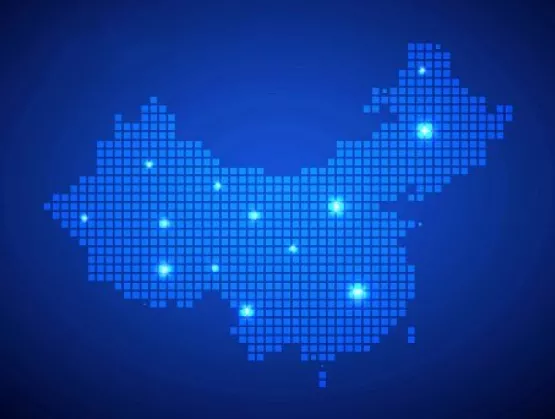
Back in 2012, China ranked fifth among seven regions worldwide in IC wafer capacity but surged past the Americas and Japan in 2018 and 2019 to claim the number three position (figure 1). That’s a big deal given that ICs account for the largest share of wafer capacity excluding discrete, opto, MEMS and sensors.China’s IC wafer capacity growth accelerated to tune of 14% in 2019 and 21% in 2020 and is expected to grow at least 17% this year, as we report in the latest update of the World Fab Forecast, published December 3rd by SEMI. Of all regions, Taiwan boasts the second strongest growth rate over the same period at 3% to 4%.Figure 1: Total IC installed wafer capacity for top five regions The report shows that from 2019 through the end of 2021 China will have increased wafer capacity for memory by 95%, foundry by 47% and analog by 29%. Foundry will represent the largest portion of those gains, reaching 2 million wpm (200mm equivalents). Memory will follow at about 1.5 million wpm and then analog at over 120,000 wpm.But Chinese companies aren’t pulling off this feat singlehandedly. Many international companies are contributing to the wafer capacity increases in China (figure 2). Figure 2: IC wafer capacity in China by company origin The share of capacity contributed by Chinese-owned companies and international companies has changed little since 2012, though Chinese-owned companies saw a slight dip in their slice of the pie from 60% to 57%From 2019 through 2021, Chinese-owned companies will add almost 60% capacity for foundries, the most of all sectors. Companies including SMIC, Hua Hong Semiconductor, Nexchip, XMC and Hua Li Microelectronics are driving the increases.During the same period, Chinese-owned companies will ramp up memory capacity from basically zero to 300,000 wpm. Companies such as Yangtze Memory Technology and ChangXin Memory Technologies (CXMT), also known as Innotron, are powering the quick rise with aggressive ramps of 3D NAND and DRAM capacity.Among international-owned companies, TSMC and UMC are driving the largest share of foundry growth, while Samsung, SK Hynix and Intel are powering gains in memory capacity.More information is available in the World Fab Forecast report. The report currently collects information for fab equipment and construction investment, capacities, technologies and product types for over 280 fabs and lines in China alone, including 40 facilities that either began operation in 2020 or will from 2021 through 2024.Christian G. Dieseldorff is senior principal analyst in the Industry Research and Analysis group at SEMI in Milpitas, California.
Read More
Back in March 2020, at the onset of the spread of COVID-19 in the U.S., SEMI quickly formed an Environment, Health and Safety (EHS) COVID-19 working group made up of EHS professionals who suddenly saw a critical need to share their experiences, validate untested policies, and collaborate on establishing best practices in response to an extraordinary public health crisis. The group, which today numbers 20 member companies, meets regularly to discuss an array of topics that have grown beyond their pressing need to react to a crisis earlier to a longer, more measured view of risk management as coronavirus cases continue to climb worldwide. While themes vary from one meeting to another, the recurring agenda remains the same to address the following topics: Phase approach – How to bring staff back on site Social distancing – How to manage people traffic flow on site Contact tracing – Track exposure to ensure workplace safety Space allocation – Changes to offices, cubicles and conference rooms HVAC systems – Optimizing workplace air flow and improving filtration systems Clean rooms – PPE and distancing protocols Training – Communications approaches to expanding awareness in order to reduce risk of spreading the virus Travel policies – Domestic and international travel guidelines Vaccines – Policies for vaccinating and monitoring personnel Site inspections – Preparing for an eventual increase in inspections from OSHA representatives In April, the SEMI EHS team issued a survey to assess the pandemic preparedness of member companies. Designed by the COVID-19 working group, the survey found that, despite having a pandemic plan in place, many member companies faced a shortage of PPE and sanitization equipment, their most significant challenge at the time. Members also pointed to operational challenges posed by the pandemic and raised questions about how to establish sound policies appropriate for their operations and geographic locations. Today, the SEMI EHS COVID-19 working group is well-established collaborative forum on public guidelines that members see as unclear as they continue to chart their own pandemic policies. With the first tranche of vaccines recently starting to ship in the U.S., the group has turned its attention to vaccine distribution and how companies will encourage employees to be vaccinated. For more information about the SEMI EHS COVID-19 working group or to join the group, please contact the SEMI EHS team at [email protected]. Olivier Corvez is senior manager of Environment, Health, Safety and Sustainability at SEMI.
Read More
Nexperia became a standalone company about four years ago after our divestiture from NXP Semiconductors. Last year we started our journey towards smart manufacturing at our back-end factories in Asia by developing a roadmap to help steer us in the right direction.Our first step to creating a convincing and workable smart manufacturing roadmap was to define the very meaning of smart manufacturing to Nexperia. Since the definition of smart manufacturing varies widely, we started by looking at two different and distinct technology adaptations: Physical automation Data-driven manufacturing, or using analytics at the core to develop and adopt machine learning and artificial intelligence (AI) models It is important to find the right balance of investments between physical automation and data-driven manufacturing to steer clear of deployment inefficiencies since only connected solutions deliver full value. Our approach involved the following high-level steps. Meeting with internal management teams for their inputs and examining factory needs and maturity Meeting with other semiconductor factory operators, subcontractors and partners to review their smart manufacturing approaches and challenges Evaluating our needs and status against the Singapore Smart Industry Readiness Index model Physical AutomationEvaluating the maturity of available solutions and adaptions by the industry and our own shop floor helped simplify the thought process quite well. Logistic automation is not new. Very mature solutions, even for custom layouts and preferences, are readily available. Shop floor automation is far more difficult than logistic automation since variability is simply too high. Traditional shop floor investments were always driven from quality or OEE perspectives and not necessarily very well connected. Our approach is outside-in – deploy logistic automation first and then move to the shop floor.Data-Driven ManufacturingHow smart manufacturing becomes depends on the extent to which a factory is data-driven. Enabling data-driven manufacturing requires foundational investments to improve traceability, connectivity and real-time operations. We believe real-time awareness can drive machine-level and closed-loop process control critical for predictive, cognitive control of the shop floor.Real-Time Awareness and Traceability is at the CoreDeveloping real-time awareness requires wide-ranging manufacturing protocols. The following focus areas have helped us simplify the challenge: Connectivity Core systems for areas including MES, quality and SAP Analytics and AI Digital shop floor featuring one operator interface with real-time control systems Readiness of engineers, technicians and managers Each of these pillars has different level of complexity due to legacy equipment and systems, legacy processes and inexperience of engineers with automation. This makes deployment of data-driven operations a complex challenge. We looked at different project approaches for each of the focus areas: Core Systems – Build additional technology enablers and roll them out with prioritization planning. Analytics – Focus mainly on OEE and yield with automated root cause analysis and predictive approaches. Real-Time Control – Merge the initiative with factory-level programs to improve productivity and quality. With a strong smart manufacturing roadmap, the next challenge is to secure long-term buy-in on the plan and required investments from executive management. Visiting and otherwise connecting with peer sites that have already deployed smart manufacturing infrastructure is vital in this effort. Thanks to SEMI members, we were allowed to visit their factories with our management team for go-and-see tours since seeing is believing in the smart manufacturing journey. Our executives also met with subcontractors and vendors to better understand the value of this transformational undertaking.A long-term outlook is necessary to successfully develop a smart manufacturing roadmap, and executive commitment goes a long way to ensuring its success. We are excited about our smart manufacturing journey and believe it is a game changer for our factories.Adarsha MARPALLI is director of Factory Automation at Nexperia B.V.
Read More
Semiconductors play an essential role in modern society by enabling ground-breaking technological advances. The manufacture of high-volume and advanced semiconductors requires the use of fluorinated chemicals known as PFAS. Representing the voice of SEMI members, I explained the important role of these substances and their “essential use” in the semiconductor manufacturing supply chain at a Chemical Watch conference for industry and European Union decision-makers on 3rd of December 2020.In order to achieve the European Green Deal’s zero pollution ambition for a toxic-free environment, the European Commission announced in its recently published Chemicals Strategy for Sustainability its intention to restrict the use of the most harmful chemicals, except in cases where they are deemed essential for society. Per- and polyfluoroalkyl substances – known as PFAS – are the first group of chemicals facing regulatory scrutiny on this basis. This begs the question: What chemicals should be characterized as essential for society and what uses will they encompass? The key and enabling role of semiconductors in modern lifeSemiconductors are essential and ubiquitous in our lives. They are integral to enabling modern society to function – driving advancements in mobile communication technologies for the smartphones and computers that help us work more efficiently and connect us with our loved ones. These benefits have never been more evident than in 2020 with billions of people finding themselves working and studying remotely and safely from home.At the same time, technologies relying on semiconductors have been vital in the effort to combat COVID-19 – in ventilators, medical imaging devices and digital healthcare solutions. In addition, semiconductors will also enable the next leap in society to Industry 4.0 and as essential building blocks in connected and electric vehicles, artificial intelligence (AI) and quantum computing.The Commissioner for Internal Market, Thierry Breton, has highlighted the strategic importance of semiconductors in achieving European digital sovereignty (for instance, in his speech at Hannover Messe Digital Days), and the EU’s New Industrial Strategy[1] also points to the importance of semiconductors and microelectronic systems. What must also be appreciated are the cost and complexity of producing these valuable technologies. Setting up a cutting-edge fabrication plant with the hundreds of pieces of semiconductor manufacturing equipment typically required can cost around €15 billion.[2] A single semiconductor manufacturing tool typically consists of millions of articles, and a typical fab may house several hundred pieces of equipment. Furthermore, according to SEMI estimates, the fabrication of semiconductor wafers requires approximately 500 highly specialized process chemicals. In many cases, these processes, equipment and facilities rely on the unique properties offered by PFAS.“SEMI has worked diligently to highlight the strategic importance of semiconductors in achieving European digital sovereignty, and we are pleased that the critical role of microelectronics has been fully recognized by the EU and Member States. Fluorinated chemicals are essential for semiconductor manufacturing. "These specific chemicals are necessary due to their unique properties, and no alternatives are currently available that can adequately provide the functional properties required in semiconductor manufacturing. The essential use concept, therefore, must enable technological innovation, must apply across the entire supply chain, and must enable EU’s critical infrastructure and strategic objectives.” What are PFAS, and why and where are they used in semiconductor manufacturing?PFAS are a broad and highly diverse group of substances with unique properties and characteristics. The Organisation for Economic Co-operation and Development (OECD) has compiled a list of approximately 4,700 substances,[3] a handful of which are used in the semiconductor manufacturing industry. These very specific chemicals are necessary due to their unique and unparalleled properties that enable them to be used in the demanding conditions of semiconductor manufacturing.Semiconductor chemicalsAt the very core of semiconductor manufacturing is the photolithography process, where microscopic geometric patterns are transferred onto a film or substrate. Photolithography specialty formulations containing fluorinated compounds are used in various steps of this process to ensure quality and reduce the probability of defects. PFAS must be used due to their low surface tension and compatibility with other chemicals. PFAS are typically no longer present in the finished product. However, there are applications where PFAS are present in the final semiconductor device, particularly in imaging semiconductors used in cameras, displays and some medical devices, amongst others. Semiconductor manufacturing equipmentPFAS are also essential to semiconductor manufacturing equipment and factory infrastructure. The exceptional combination of their heat and chemical resistance and their chemical inertness allows fluoropolymers to be used both in equipment components (tubing, gaskets, containers, filters, etc.) and lubrication (such as various oils and greases). These same properties are also needed to ensure the functioning of the surrounding infrastructure. Finally, some fluorinated gases, which are already regulated by specific legislation,[4] are used as refrigerants and to clean the facilities.These are a handful of examples of how PFAS are used in semiconductor manufacturing. Today, there is no other way to undertake these processes or to build semiconductor manufacturing equipment without PFAS. No alternatives are currently available that can adequately provide the functional properties required. Even if alternative chemicals and technologies were discovered today, due to the extremely complex qualification process throughout the value chain, it would take another 15 years to deploy them in high-volume manufacturing. Therefore, continued access to PFAS is a prerequisite for high-volume and advanced semiconductors. Lack of continued access to PFAS could lead to an inability to produce and supply the EU with semiconductor manufacturing technology.How should we think about essential uses?Regulators have started to think about what uses of PFAS are essential and in which cases their use should be allowed. In developing this concept, there are a few aspects to keep in mind.Essential use must enable, not hinder, technological innovationFirst and foremost, the essential uses concept should enable continued technological innovation instead of acting as a hindrance. Semiconductors and manufacturing technology are constantly evolving and becoming more diverse to help meet increasing societal demands. What we see as innovative today may be commonplace in the future, while future innovations may be unimaginable today. We must therefore be careful not to accidentally limit our future potential for innovation.Essential use must apply across the entire supply chainSecondly, classifying a use as essential should apply throughout the entire supply chain. We must, for example, avoid defining semiconductors as essential while classifying the semiconductor manufacturing equipment and chemicals used to produce semiconductors as not essential. In the semiconductor manufacturing supply chain, where one manufacturer can have up to 16,000 suppliers, this risk is evident.[5]Essential use must enable critical infrastructures and the EU’s strategic objectivesFinally, we should keep Europe’s societal priorities in mind. The EU needs to be able to maintain and protect its critical infrastructures. Similarly, we should not lose sight of the EU’s strategic objectives of a green and digital Europe.Semiconductors, in conjunction with their corresponding manufacturing equipment and chemicals, are essential technologies in everyday life and the backbone of the EU’s strategic value chains. Manufacturing semiconductors is a very expensive and complex process that would not be possible without the unique properties of PFAS, making them essential to achieving the EU’s strategic objectives today – whether the European Green Deal or digital autonomy – and in the future. Therefore, we must ensure that essential uses will enable the continued use of PFAS in semiconductor manufacturing.The SEMI presentation delivered at the Chemical Watch event can be accessed here.Emir Demircan is director of Public Policy and Advocacy at SEMI Europe.[1] “The EU will also support the development of key enabling technologies that are strategically important for Europe’s industrial future. These include robotics, microelectronics, high-performance computing and data cloud infrastructure, blockchain, quantum technologies, photonics [etc.]”[2] Emerging technologies in electronic components and systems (ECS) Opportunities Ahead – A study by DECISION, 2018 for the European Commission[3] Available here[4] Regulation (EU) No 517/2014, “F-Gas Regulation”[5] SIA Nathan Associates, 2016, https://www.semiconductors.org/wp-content/uploads/2018/06/SIA-Beyond-Borders-Report-FINAL-June-7.pdf
Read More
Sales of critical subsystems for use in semiconductor manufacturing equipment will exceed $12.2 billion in 2020, a 6% increase over the previous record of $11.5 billion reached in 2018. What makes this such a remarkable feat is they achieved this despite unprecedented disruptions to the supply chain.The key to critical subsystems suppliers’ success was a swift and efficient response to the initial local shutdowns due to COVID-19 in February and March. Within four to six weeks, most vendors had secured their supply of raw materials and put the required measures in place to ensure the safety of their workforce and reduce the risk of being shut down themselves. Most were reporting a return to high volume manufacturing by May. There were no significant holdups reported, which means everyone stepped up their response to enable the semiconductor equipment industry to deliver double-digit growth. It also helped that before the pandemic, most suppliers expected 2020 to 2023 to be healthy growth years and already had plans to add capacity this year. Those plans are being accelerated, and delivery is no longer an issue for most vendors in the near term. This is just as well as OEMs are advising their suppliers to cope with a 20% surge in orders in any given quarter in 2021.While the overall growth rate for critical subsystems in 2020 is on track to beat 19%, some suppliers had to deal with extraordinary growth. Suppliers of vacuum valves, chillers, and optical fiber thermometry are likely to grow above 35%, while suppliers of process power subsystems are looking at increasing around 30%. The extra demand can be explained partly by the very low inventories of these products held by customers at the beginning of the year, which needed replenishing. However, the main reason for the above-average growth is that these segments have been outgrowing the overall critical subsystems industry for several years due to semiconductor manufacturing becoming more vacuum intense.Critical Subsystems for Semiconductor Applications in Billions of DollarsNext year is shaping up to be another record for critical subsystems with growth rates in the high single digits predicted. The next cyclical downturn is forecast to be 2024, but these are unprecedented times, and the risk of a downturn in 2022 cannot be excluded. Whatever the future holds, the critical subsystems supply chain has proved they can raise their game when the chips are down… or up.For more information about critical subsystems and VLSI Research, please visit our website.John West is managing director at VLSI Research Europe.
Read More
If you think the world is flooded with a mind-boggling volume of digital content, then you might be just a amazed to learn about the sheer wealth of information and business opportunities that will be uncovered at this year’s SEMICON Japan as the event goes full digital.To start, more than 160 companies will exhibit their semiconductor manufacturing gear and services on the virtual show floor of Japan’s premier event for the semiconductor manufacturing and design supply chain. Add to that over 80 presentations and panels that feature global industry executives, visionaries and experts offering insights into the latest microelectronics developments, trends and technologies, and it’s easy to see how SEMICON Japan 2020 Virtual is designed to help attendees grow their businesses and the industry drive the next wave of innovations that promise to address some of the world’s greatest challenges across healthcare, the environment, transportation and other industries.Best of all, it will all be available at your convenience from your office or home 24 hours a day, making it safe and easy for you and others from all over the world to attend. Following is what’s in store at SEMICON Japan 2020 Virtual to help lead you into the future.Leading Japanese Securities Analysts to Weigh in What’s Ahead for the Chip Equipment Sector in 2021 For the first time, SEMICON Japan will feature Bulls Bears as Japan’s’ five top securities analysts focus on the 2021 outlook for the global semiconductor equipment sector. The December 17th event will include discussions on the COVID-19 pandemic’s impact on the semiconductor industry, the continuing geopolitical tensions that are forcing the industry to reconfigure its supply chains, the fast-growing China market and cutting-edge applications that are powering industry growth. The perspectives from Japan’s investment community are sure to be compelling as the region supplies one-third of the global semiconductor industry’s chip manufacturing equipment.Moderated by Akira Minamikawa of OMDIA, the panel will include these experts:Three Visionaries to Explore the Digital TransformationPowered by semiconductors, the fourth industrial revolution is driving digitalization globally, remaking societies to bring more efficiencies and conveniences to our work and home lives and help more people prosper. But the flip side of those tremendous benefits is the risk that wealth will be concentrated in the hands of people in positions of power, companies and nations. Democratizing economic development remains a serious challenge worldwide.Addressing this pressing issue, the Opening Panel on December 11 will feature prominent visionaries from political, academic and industrial communities including the following:Sony’s Leading-Edge Electric Car and Nissan’s Driver Assistance System to Highlight Automotive InnovationsCars are becoming more like smartphones on wheels, rapidly filling with more and more semiconductor chips every year with electrification and electronic driver-assisted systems to key drivers of this growth. At the SMART Mobility 1 session on December 14, two pioneering companies – Sony and Nissan Motor – will focus on both areas of semiconductor innovation.Sony’s Vision-S concept car, exhibited at CES 2020, astonished many in the electronics ecosystem and the automotive industry. What is Sony’s vision behind the vehicle? Izumi Kawanishi, Senior Vice President, AI Robotics Business at Sony will share the latest on the initiative.Nissan, maker of the pioneering LEAF electric vehicle, is the first Japanese carmaker to equip a car – its new Skyline – with the ProPILOT 2.0 driver assistance system for hands-off highway driving. Nissan Executive Vice President Asako Hoshino will provide an update on the company’s driver assistance system strategy and plans.Quantum Computing Meets Chip Manufacturing for the First Time at SEMICON Japan In contrast with current computer systems that use bits (binary 0 or 1 state) for computing, quantum computers leverage quantum superposition (0 and 1 states exist at once) to quickly solve highly complex problems that might take traditional supercomputers hundreds or even thousands of years to tease out. American physicist Richard Feynman promoted quantum computer as early as 1982, but it wasn’t until nearly two decades later and long after his death that quantum bit circuits emerged for use in superconductive materials.With quantum circuits and devices requiring state-of-art semiconductor processing technology, The Era of Quantum session on December 15 at SEMICON Japan 2020 Virtual will discuss necessary advances in chip manufacturing technology to enable the next generation quantum computing. The session will be the first time SEMICON Japan connects the semiconductor manufacturing and quantum computing communities.The program will feature the following experts:Strategies for Sustainable Semiconductor Industry GrowthSemiconductors are giving rise to a hyper-connected world that is fueling demand for staggering volumes of chips, pressuring the electronics industry to uncover new ways to increase manufacturing efficiency while reducing power consumption in a bid to help combat climate change. The Grand Finale Panel composed of executives from Japan’s semiconductor supply chain and a supervising ministry will gather for the Grand Finale Panel on December 18 to discuss ways the industry can achieve sustainable growth through innovation with a focus on energy savings and an new process technologies such as extreme ultraviolet lithography (EUV), which promises to enable electronics devices that are more power powerful, cheaper and more energy-efficient.Panelists include the following:Register TodayThe SEMICON Japan 2020 Virtual All-In Pass provides online access to all 80 presentations and panels, which will be available on-demand for replay until January 15, 2021. What’s more, all eight keynote programs will feature English subtitles. For complete information of the exposition, programs and registration, visit the SEMICON Japan website.I look forward to seeing you virtually at the event!Jim Hamajima is president of SEMI Japan.
Read More
The semiconductor industry must do far more to educate the electronics supply chain on the subtle differences among various fluoropolymers, 30 SEMI member companies learned in an October 13 webinar organized by SEMI to help maintain a unified voice on the critical importance of per- and polyfluoroalkyl substances (PFAS) in semiconductor manufacturing. At the same time, producers and customers of the substances used in chipmaking should work more closely together to steer clear of adopting policies that could limit the availability of safe fluoropolymers and the semiconductor industry’s ability to use them in the future.The insights were offered by representatives from the Performance Fluoropolymer Partnership – a group within the Washington, D.C.-based American Chemistry Council – on per- and poly-fluorinated substances including fluoropolymers. The Council is an industry trade association representing American chemical companies. Following are other key takeaways from the webinar. Fluorinated polymers and non-polymers are commonly found in components used in semiconductor manufacturing such as fittings, valves, tubes, O-rings, wafer carriers, filtration media, high purity air filters, greases and lubricants. The substances are ideal for use in corrosive chemicals, high temperatures and other harsh environments and are found in a variety of electro-technical components such as potentiometers, wiring, printed circuit boards and Lithium-ion batteries. Fluoropolymers are a diverse family of plastics also widespread in modern life, with applications ranging from food packaging and non-stick coatings on kitchen pans to rechargeable batteries for electric vehicles. The term PFAS (per- and poly-fluoroalkyl substances) covers more than 4,700 chemicals with diverse physical, chemical, environmental and biological properties and impacts. There are also significant differences among their chemical compositions. A careful appraisal of their risks and impacts should take into account any potentially hazardous properties, toxicity levels, their prevalence in the industry, and whether substitutes are readily available. Growing pressure from regulators worldwide threatens future access to fluorinated chemicals, increasing the importance of raising awareness on how to distinguish groups of chemicals and encouraging a measured approach towards eliminating only chemicals carrying the greatest risk. Fluoropolymer producers and opponents of the chemicals must look past their divergent interests to work together to voice common concerns to regulators. Various SEMI working groups respond to public consultations when opportunities to present the semiconductor industry’s position arise. Individual group members communicate both among each other regarding new regulatory developments and also with external constituents through SEMI about the importance of chemicals to chip manufacturing. As with other sectors, the semiconductor industry continuously seeks to “green” its manufacturing processes. SEMI believes the commitment of the supply chain to these efforts is crucial to protecting the industry’s interests and driving innovation.Olivier Corvez is senior manager of Environment, Health, Safety and Sustainability at SEMI.
Read More