downloadGroupGroupnoun_press release_995423_000000 copyGroupnoun_Feed_96767_000000Group 19noun_pictures_1817522_000000Member company iconResource item iconStore item iconGroup 19Group 19noun_Photo_2085192_000000 Copynoun_presentation_2096081_000000Group 19Group Copy 7noun_webinar_692730_000000Path
Skip to main content
Default Banner Image

semiconductor manufacturing

The costs of production are typically based on labor and materials and define manufacturing expenses. But is this approach accurate enough? What about the cost of poor quality and lack of efficiency in production? How is the pandemic impacting semiconductor manufacturing and what can we expect from the future?SEMI recently spoke with Dr. Eyal Kaufman, founder and CEO of QualityLine, a Kiryat Gat, Israel-based provider of smart manufacturing analytics solution, about manufacturing controls and how to select the best data source to improve product quality and yield. Kaufmann provided a snapshot of current best practices used by the company to improve manufacturing efficiencies and product quality while reducing costs. He also discussed the COVID-19 pandemic’s impact on semiconductor smart manufacturing and how artificial intelligence (AI) can help keep factory workers safe.For additional insights on smart manufacturing, join the virtual SEMI Global Smart Manufacturing Conference, October 20 - 22, 2020. Registration is open.SEMI: Real manufacturing costs are calculated based on different aspects such as failures in production, repairs, products returned, scrap of components or late deliveries. Lack of quality and efficiency in manufacturing can undermine a business. How are you helping businesses overcome these challenges?Kaufman: To increase profit margins, it is essential to identify inefficiencies and what improvements to prioritize. Once manufacturing quality and efficiency deficiencies have been measured, the next step is to continuously collect manufacturing data in order to run the final cost analysis and use the analytics to improve the manufacturing process.Smart manufacturing makes it possible to detect anomalies in automated factories, improve production performance and increase profitability. Today, automated data are collected from every machine and piece of test equipment in the factory. Still, manufacturing data collection in many industries remains manual and expensive because of the time and human resources involved. A real-time analytics system can automatically collect all data sources and select the relevant data for analysis, which today is the most accurate and effective way of measuring and resolving quality and efficiency deficiencies.Data-driven decisions made by smart manufacturing reduce costs and improve manufacturing strategies, enabling factory operators to increase product quality, drive higher production capacity and enhance product design for manufacturability. Analytics solutions monitor shop floor operations accessing vendors and subcontractors’ products criterion to run root cause analysis. All those data will reduce the return rate of faulty products and accelerate return on investment. This is why we definitely need smart manufacturing technologies!SEMI: Data accumulated during the manufacturing process includes vital information about failures, anomalies and machine usability. What data are necessary to create the best analytics solution?Kaufman: Many companies today run data mapping and automatic creation of data capture. They often wonder if they need to use testing data, sensors data or product design data, or whether they should collect feedback from their customers and vendors. The best way to create an effective manufacturing analytics system is to use data sources such as: Feedback from customers (returned units, customers complaints, etc..) Testing data from automated test equipment and manual test activities Feedback from technicians repairing faulty units Analysis of testing processes done by vendors Sensors data Data from our ERP/MES systems Artificial intelligence enables any type and size of data structure, even accumulated data, to be automatically integrated and interpreted. AI-based analytics can also establish correlations between each manufacturing stage to help factory operators quickly conduct deep diagnostic and root cause analysis for problem solving and prevention – all while leaving intact a factory’s existing process, machinery and data output. Machine learning evaluates how a factory runs its database and puts all the information generated into an analytics solution that provides the know-how to continuously improve factory efficiency.SEMI: How do you select the best data source to improve manufacturing quality and yield? Kaufman: The accuracy and integrity of data accumulated in our manufacturing process is key to controlling and improving yield and quality while reducing manufacturing costs. Smart manufacturing is a technology-driven approach that uses digital and remote connected machinery to monitor the production process. The goal is to identify anomalies in manufacturing processes and leverage analytics to improve process yield and product quality.To select the relevant data, we collect each type and source of data that can improve the efficiency of a real manufacturing cell: Test data from Automated Testing Equipment Test data from Manual Testing Processes Analyses of repairing processes (failed units during the manufacturing process and units that were returned from customers) Once the data structure is collected, the next step is to turn it into actionable information in the manufacturing process. QualityLine smart manufacturing solutions provide a complete one-stop solution to interpret any manufacturing data structure. Our advanced manufacturing analytics solution detects quality and yield anomalies to reveal production line inefficiencies and opportunities to improve manufacturing quality and efficiency.SEMI: How would you describe your approach?Kaufman: Industry 4.0 in manufacturing claims to be the fourth generation of the industrial revolution. Advanced technologies like manufacturing intelligence and machine learning can efficiently achieve zero defects on manufacturing lines. Digital factories leverage technologies and methodologies including: Big data Self-optimization Self-configuration Self-diagnosis Cognitive and machine learning Smart manufacturing technologies enhance the manufacturing process by continuously collecting and analyzing data in real-time to achieve and maintain high quality performance. The goal is to achieve a significant increase in efficiency and yield while reducing waste and inefficiency.Until now, there has been no viable way to integrate all saved manufacturing data into a unified database. QualityLine advanced manufacturing analytics make it possible for any factory to become digital without installing new hardware, which can be expensive and require not only the extensive integration of existing data but investments in training. Our user-friendly solution integrates manufacturing data for industries with zero automation by first collecting and analyzing data from any type of manual test procedure and then integrated it into manufacturing analytics to improve efficiency.SEMI: Why are Pass/Fail criteria insufficient for controlling manufacturing yield and quality?Kaufman: Managing a mass manufacturing process is always a challenge because hundreds of tasks must be successfully completed before products can ship to customers. At QualityLine, we establish a test process for each stage of the production flow, from the incoming raw material to the final stage prior to the delivery of finished goods to the client. To prevent unexpected downtime incidents, waste and defective products, we collect and interpret every type of relevant data and turn it into meaningful information, setting up the following capabilities: Collection and interpretation of test and process data of each single unit and from each process and plant Automatic detection of quality and yield problems Accurate and quick root cause analysis process Automatic alerts to abnormal issues Prediction process potential and level of failures Measurement of key performance indicators Many manufacturers base their test criteria of each parameter on one key indicator – Pass or Fail. If the test result shows a Pass, then the unit is ready to move on to the next manufacturing stage. If the test result shows Fail, then the unit is sent to a technician for further analysis.A simple Pass or Fail criteria for product quality is far from sufficient since it provides little or no information about edge cases, where one or more of the technical parameters of the unit under test is only within its allowed tolerance. Edge cases may lead to unit failure during operation such as in extreme environments (cold, heat, humidity, electrical overload, impact, etc.). In fact, when running a mass manufacturing line, it is impossible to continuously digest all the detailed information collected from testing stations. Data is analyzed in detail only when a critical quality problem emerges and further analysis is required to understand the root cause.Information overload and the disregard of important parameters makes it hard to control the process and improve quality and yield. New technologies make fast and scalable data integration possible so data can be collected in real time to detect quality issues early, identify complex process disruptions to avoid delivery delays and ensure the best possible product for customers. Only by accurately analyzing data as actionable information can factory operators control the manufacturing quality process.SEMI: How has COVID-19 impacted the smart manufacturing market? How has your technology helped factories remain online?Kaufman: Smart manufacturing is playing a significant role by helping manufacturers overcome COVID-19 challenges such as workforce reductions, social distancing, drops in sales for some specific products and extreme pressure to cut operational costs.Manufacturing leaders turned to us for a solution to the challenges of maintaining efficient factory operations with a limited workforce and reduced number of operating hours. Filling factory orders with fewer people on the floor is a struggle. Digital factory technologies enable remote monitoring of operations to increase efficiency and capacity. We are helping our clients improve efficiency while reducing costs. Our remote monitoring technology can provide the operational visibility to floor managers and engineering teams who cannot go physically to the factories due to safety restrictions. With our advanced manufacturing analytics, they have full end-to-end visibility and can remotely diagnose and solve production line issues. During this critical time, we are proud to be improving remote monitoring solutions to help the industry withstand the pandemic. Some of our clients would have closed their factories otherwise. We’ve been working to integrate manufacturing data in factories that were previously unautomated to drive high automation levels. Integrating processes with existing factory data, regardless of customer’s protocols or automation level, is our great technology advantage.SEMI: How will manufacturing and its supply chains look after COVID-19?Kaufman: Smart manufacturing is currently a necessity. We collect and analyze data not only to improve quality but to reduce client returns of faulty products by 50% and reduce waste by 22%, both critical points. Manufacturing challenges will continue to accelerate advancements in technology and improve efficiency, safety and productivity as more factory operators incorporate real-time data analytics and artificial intelligence (AI). SEMI: Will suppliers continue to explore new avenues for smart manufacturing technologies and what are their growth opportunities?Kaufman: Yes, definitely. The sector has already changed, with COVID-19 bringing both opportunities and challenges. Industry leaders are facing new pressure, with sudden materials shortages, drops in demand and worker unavailability. The growth opportunities for manufacturing are likely to be digital, as already evident in the immediate response to the crisis. Industry 4.0 solutions will be crucial to increase end-to-end supply-chain transparency, automation and data integration. QualityLine manufacturing analytics have improved key manufacturing performance metrics. For example, based on customer feedback, we’ve increased production yield by 30%, saving some of our customers millions of dollars. Improvements like this can help suppliers withstand pandemics.Dr. Eyal Kaufman, Founder and CEO at QualityLine, has senior management experience and over 25 years of expertise in business development, marketing, finance, operations, engineering and quality management at leading industrial companies. Prior to QualityLine, he served as VP of Mobileye, Cardo Systems, and Medisim Ltd., as well as CEO of OnTheGo Systems. Eyal holds a Ph.D. from California Intercontinental University, an MBA from City University of New York and a BSc. from the Technion in Israel.The SEMI SMART Manufacturing Initiative is a global effort to promote awareness and interest about smart manufacturing with focus on delivering industry-recognized best-in-class programs and services to enable members to maximize product quality, productivity and cost improvements through smart manufacturing. Activities are focused on building out core capabilities to enable smart manufacturing across the microelectronics supply chain.MADEin4 is a consortium of 47 partners from 10 countries connecting the full range of supply chain: from semiconductor equipment manufacturers and system-integrating metrology companies to RTOS and key applications such as the automotive industry. The MADEin4 Project develops next generation metrology tools, machine learning methods and applications in support of Industry 4.0 high volume manufacturing in the semiconductor manufacturing industry.Serena Brischetto is a senior manager of marketing and communications at SEMI Europe.
Read More
Teck Khiong, WOI, senior manager of Factory Integration at Infineon Technologies Asia Pacific Pte Ltd, recently shared with me how the Infineon backend plant in Singapore has benefited from its journey to qualify for the lighthouse certification.WOI is driving Infinion smart manufacturing projects with a strong focus in the area of connect and control using IoT (Internet of Things) and analytics technologies. Ng: How did the Infineon backend plant in Singapore distinguish itself to qualify for lighthouse certification? WOI: The Infineon Singapore backend manufacturing plant is proud to be a Lighthouse Certified Smart Manufacturing site as part of the World Economic Forum’s (WEF) Fourth Industrial Revolution platform. Our Industry 4.0 (I4.0) implementation reduces labor costs by 30% and improves capital efficiency by 15%. We drove this successful digital transformation continuously investing in our people development and digital backbone.Of the many initiatives under our I4.0 Smart Factory platform, five were selected for WEF Lighthouse submission and certification. Digital foundation with integrated connectivity and workflow execution We implemented an Internet of Things (IoT) framework to connect machines to manufacturing system more than two years ago. The digitization of our Work-in-Progress (WIP) management systems provides full traceability and gives us better control of the four Ms (Man-Machine-Method-Material). Material handling and process automation We progressively deployed automated solutions starting six years ago using autonomous transport, robotic material management systems and automation of packing processes. This eliminated non-value touches in areas of WIP storage and retrieval. Advanced algorithms enabled WIP scheduling and dispatching As our product mix and volume grew in complexity, our advanced algorithms has enabled us to increase our machine uptime, thus reducing idle and set-up time. Manufacturing control tower Our control tower provides a real-time pulse of the entire manufacturing process, from machine efficiency to quality. The tower also improves data integrity and collaborative information sharing while issuing early-warning alerts that enable exception management and timely decisions. Running a global virtual factory Our Global Production Network deployments allows us to connect and manage a growing contract-manufacturing network in real time, with the same transparency, traceability and control as if the manufacturers are our internal sites.About Teck Khiong, WOITeck Khiong, WOI graduated from Loughborough University in the UK with a Master of Science degree in Computer Integrated Manufacturing (CIM). For more than 20 years he has delivered manufacturing IT solutions to global backend (assembly and test) semiconductor manufacturing, ranging from equipment, factory, process control, material handling automation and manufacturing execution systems (MES).
Read More
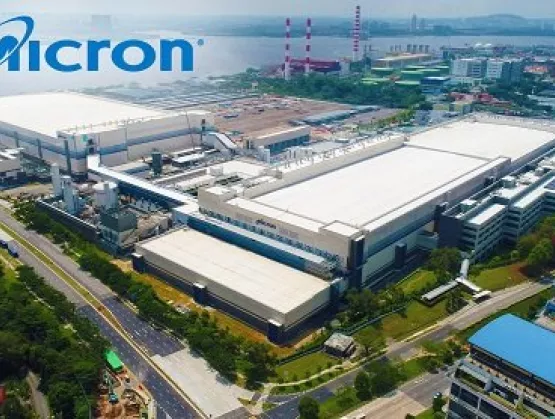
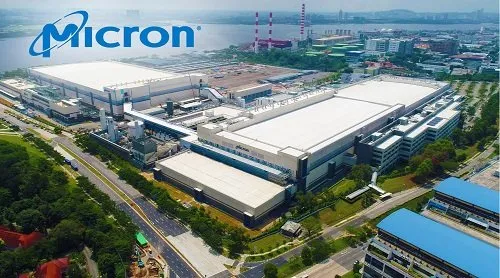
Making Strides TogetherKnowledge is power – especially when it is shared. This principle formed the foundation for Micron’s Go and See virtual visit of its Singapore manufacturing plant on 26 August 2020 as 27 companies including GLOBALFOUNDRIES, ST Microelectronics, Infineon, TEL, ViTrox , IBM, HP and UTAC joined the first-of-a-kind virtual factory visit. The chip industry powerhouses gathered to see how Micron’s Lighthouse frontend wafer fabrication facility leverages Fourth Industrial Revolution technologies to drive new production and cost efficiencies.They saw clear markers of a transformed organisation and spoke with working-level staff, managers and front-line employees. Company representatives also met virtually with Micron management teams from organisations that led its digital transformation – from pilot programs to integration at scale – to realise significant financial and operational benefits. The mix of technologies they deployed to make it all happen included artificial intelligence (AI), big data analytics and the Industrial Internet-of-Things (IIoT).Micron’s Singapore-based fab facility earned Lighthouse certification earlier this year from the World Economic Forum’s Global Lighthouse Network. The Go and See tour was co-sponsored by SEMI Southeast Asia and McKinsey Company.Transformation is CrucialBy embracing Lighthouse principles, semiconductor sectors and companies can accelerate their digital transformation to boost operational and financial efficiency while helping increase productivity across the electronics supply chain. It will take time for Southeast Asia semiconductor manufacturers to transform to digital operations, though we’re seeing growing interest in Industry 4.0 practices as they begin to understand that the deployment of new technologies and applications will help them better understand real-world benefits of smart manufacturing use cases and solutions. SEMI believes shining the spotlight on companies like Micron can illuminate the way forward for other companies to help drive the industry’s digital transformation. We look forward to seeing companies build on this momentum as they start to leverage leading-edge technologies to improve efficiencies and promote sustainability.Bee Bee Ng is president of SEMI Southeast Asia.
Read More
To attract and cultivate new talent across the microelectronics industry, virtual SEMICON West 2020 offered wide-ranging career insights for engineering students seeking that vital first job and young employees embarking on their careers. They learned about overcoming challenges at work and gained a competitive edge by connecting with industry leaders for insider knowledge. These are just some examples of how the SEMI Foundation and the SEMI Workforce Development and Diversity, Equity and Inclusion (DEI) initiatives serve as a springboard to careers in the industry and help close its talent gap.Following are experiences of aspiring engineers at SEMICON West and career lessons presented to help them shape the future of our semiconductor industry.Jump-Starting Careers at SEMICON West 2020More than 600 students from over 50 colleges and universities across the Unites States joined SEMICON West 2020 to jump-start their careers in the semiconductor industry. With free access to SEMI’s first virtual expo, they connected with recruiters and companies in the exhibit hall, and sponged up insights from speakers about digital internships, job opportunities, and key trends shaping the digital future.“It was almost overwhelming,” said Jason Wong, 20, a junior at San Jose State University working toward an advanced degree in mechanical engineering. “It was kind of like an engineering student’s dream for contacts and knowledge all on one platform.”Wong visited about 15 booths in the online exhibit hall to speak with company representatives about his field of interest – microelectromechanical systems (MEMS).“MEMS is a pretty niche area, so it was really surprising how many companies were there in this category alone,” Wong said.Through the expo’s chat tool, Wong made some solid contacts and has followed up with several engineers via email, LinkedIn and Zoom meetings, cultivating what he believes will be “some long-lasting and valuable connections.”“I’m not really looking for a job at the moment, but I hope to get an internship at some point,” Wong said. “With the current (COVID-19) outbreak, a lot of events with opportunities to interact are no longer available, so this was an enlightening and useful experience for me I plan to attend again.”On the other side of the country in Virginia, Devayani Pawar, 23, found it easy to network at SEMICON West. She especially appreciated the free pass for students and practical sessions in the Smart Workforce Pavilion tailored to help early-career job seekers find opportunities, build contacts, and polish resumes.She was drawn to the Smart Manufacturing Pavilion because of her skills and interests in toolmaking and wafers.“I understand manufacturing and it’s a hot field right now,” said Pawar, who recently earned her master’s degree in data science from George Mason University. “It’s interesting to me how such tiny components can do so much powerful work.”“A lot of people my age aren’t very aware of the microchip industry – they’re mostly focused on information technology and companies like Google, Amazon, or Facebook,” Pawar said.After landing an internship at Micron Technology analyzing wafers and working in clean rooms, she was wowed by the potential of nanotechnology. Pawar learned about the strong demand for data scientists in semiconductor manufacturing. After making connections at SEMICON West and absorbing information, she now has a better handle on career opportunities.“The recruiters and other contacts I made have been so responsive, and now I have a better understanding of use cases and what companies are seeking,” she said.A Day in the Life of an EngineerRight after college in 2017, Erika Gabrielle Hansen joined Applied Materials as an engineer. She told management she wanted to travel, learn about the “big picture” behind the company’s products, and work with customers.In her presentation A Day in the Life of an Engineer at the SEMICON West Smart Workforce Pavilion, she recalled a whirlwind of unforeseen opportunities, soul-searching challenges, and the rewards of personal, professional, and community growth. She also candidly shared lessons learned about pride, collaboration, and resilience.Her journey began when she had the opportunity to share her aspirations for her at career at Applied and landed a dual role as a process engineer and customer account technologist.In her job as a process engineer, Hansen puts her materials engineering degree from Cal Poly, San Luis Obispo to good use analyzing data, solving technical problems, developing new processes to meet customer requirements, and working with cutting-edge technologies. At one moment she might be in a clean-room laboratory wearing a bunny suit doing hands-on work with tools. In another, she could be videoconferencing with hardware, software, and systems engineers worldwide, or preparing a report for upper management.“I was very nervous at first as a process engineer,” Hansen said. “I was the only person in my group who didn’t have a Ph.D. and tried to compensate for that by doing things on my own and not asking for help.”After making a few mistakes, she began to turn to her team for their expertise and sharing the results of her work – both good and bad – with them.“Having humility to ask for help and not let pride get in the way was a huge learning point for me,” she said.As a customer account technologist, she has made a dozen trips to customer sites in four countries to implement new processes or resolve technical issues. By seeing tools in action, she now has what she calls a “whole picture” perspective on their effectiveness, while enjoying the camaraderie of colleagues and sampling local cuisines, sites, and scenes around the world.At one point, she was assigned to lead an international team to resolve an issue with a major customer – her greatest challenge yet and her first time in such a role. She struggled to overcome language barriers and eventually told her boss she might not be the best person to lead the project. He promised to provide more support, and her team went on to resolve the customer’s problem.“I picked myself up, reached out to people with international experience, and changed my communication style,” Hansen said. “I learned it’s okay to be uncomfortable, to flex my leadership style, and be resilient, which is a learned skill.”Building a Better Network: Crucial ConnectionsAndrew Carnegie, one of history’s richest industrialists and most generous philanthropists, said 85 percent of a person’s success is based on “interpersonal relationships” and “abilities to be a human being.” Professional skills account for just 15 percent of success.While advancing to her current role as Chief Marketing Officer for FormFactor, Amy Leong found this advice critical to her career trajectory. Just like the challenge of raising a strong family, building a successful career “takes a village… you can’t do it alone,” she said in her Smart Workforce Pavilion presentation Building a Better Network: Crucial Connections.Outperforming expectations might be essential early in one’s career to get promotions, raises, and the attention, but that mindset goes only so far.“As seniority levels increase, people already know you’re a phenomenal performer and expect nothing less,” Leong said. “So, the higher you go the more vital it is to spend almost a disproportionate amount of effort on building relationships.”Building your network isn’t about the quantity of one’s business cards or LinkedIn connections; it’s about building quality relationships with mutual benefits over the long run.“We need to be smart about return on investment when building our professional network,” she said. “You help me, and I help you. It’s win-win horse trading.”And the most important factor in career success? For Leong, a strong family foundation has mattered most.“Family comes first,” said Leong, who has twin teenagers. “Take care of the ones you love. Check in with your family whenever you can. Family relationships are bound by blood. Thanks to my retired parents and a helpful husband, we tough it through.”She reemphasized the importance of mutually beneficial relationships, noting “A rising tide will lift all boats.”Fostering Talent for the Industry’s FutureDeveloping young talent and future leaders in microelectronics stands as a persistent and growing need – and a critical challenge to realizing expected growth. Emerging technologies such as artificial intelligence, quantum computing, and augmented/virtual reality are expected to impact a huge range of markets, leading to projections that the semiconductor industry will double in size in the next 10 to 15 years.The opportunities for growth and technologies that promise to improve the quality of human life worldwide are breathtaking. The industry’s talent pool will need to scale accordingly, magnifying the importance of expanding industry-wide programs such as the Workforce Development and DEI initiatives that the SEMI Foundation are building. Learn more about how you and your company can get involved with these initiatives on the SEMI Foundation website.Shari Liss is executive director of the SEMI Foundation. She oversees SEMI Workforce Development programs from K-12 through re-skilling for veterans.
Read More
Japan’s semiconductor industry has weathered the COVID-19 pandemic to post robust growth. Far from a temporary setback, COVID-19 will lead to enduring change in how we work and live. And just as automation has been a bulwark against the devastating business impacts of the virus outbreak, increasing digitization will lead to new efficiencies in our industry.These were some of the key takeaways from three SEMI Japan Members Day webinars in June and July that offered the latest updates on COVID-19 impacts to the semiconductor industry and restart strategies for SEMI members. More than 2,000 SEMI members across Japan’s islands attended the webinars featuring the following five speakers: Hideki Kanewaka, Marketing Director, Consulting Lead, Japan, Accenture Japan Ltd. Takayuki Komori, Manager, Marketing Engineering Dept, SUMCO Corporation Taketoshi Hamaguchi, Director, Manufacturing Industry, Microsoft Corporation Akira Minamikawa, Senior Consulting Director, OMDIA (Informa Intelligence LCC) Yuichi Koshiba, Managing Director Partner, Boston Consulting Group COVID-19 Impact on Japan Semiconductor Industry is ModestThe consensus view of the five speakers from various quarters of the industry – consultant, IT service provider, materials supplier, market analyst – was that the Japan semiconductor industry withstood the heavy blows COVID-19 dealt to other industries thanks to strong demand for chips. Shelter-in-place policies and lockdowns spawned by COVID-19 has accelerated the digital transformation rippling around the world as electronics sales have soared to support everything from remote work and education to healthcare and home entertainment including gaming.The rapid growth of cloud usage for video streaming, gaming and remote work is taxing communications network capacity and placing more bandwidth demands on servers, said Akira Minamikawa of OMDIA. According to a recent report by Nokia, communications network traffic has skyrocketed 300 percent for online meetings and 400 percent for gaming, bringing the networks closer to their capacity limits. Minamikawa sees server shipments increasing at 8 percent CAGR through 2024. For the broader chip market, he expects demand for notebooks, solid state and hard disk drives, and gaming to remain strong in 2020. He also predicts rapid 5G penetration for smartphones will boost semiconductor chip industry growth.Still, not all semiconductor segments are expanding, said Yuichi Koshiba of Boston Consulting Group. Chip shipments for end products in markets such as automotive, industrial equipment and aircrafts are on the decline. Slowing demand for chips that power automotive applications in particular could pare sales for some chip companies and distributors since the segment accounts for a high proportion of their overall revenue.State of the Semiconductor IndustryFrom SUMCO’s vantagepoint as a major silicon wafer supplier, the company’s Takayuki Komori sees a number of changes unfolding in the semiconductor industry: Smartphones are driving growing demand for process technology (smaller nodes) and 300mm wafers. Komori estimates the typical high-end smartphone sports 1,700 square millimeters of silicon. 300mm wafers account for 80 percent of that total while more than 50 percent of the devices use leading edge multi-patterning technologies. Smartphones will need more RF chips to support 5G’s high-speed communications and added frequency ranges. Substrates for RF switches and tuners have been shifting from gallium arsenide (GaAs) and other compound semiconductors to silicon. 5G smartphone penetration will accelerate as the cost of integrating CPUs and modem functions into a single chip sees a swift decline. While the sensitivity and resolution of CMOS image sensors have evolved to incorporate innovative backside illumination and stacking technologies, future advances will focus more on products for machine vision applications capable of sensing invisible light bands. Rising adoption of electric vehicles and robotics applications will drive growing demand for power semiconductors that control their motors such as IGBTs and MOSFETs as the production capacity for the devices expands and shifts to 300mm wafer lines. For memory fabs, Minamikawa said utilization remains high as a result of a spending slowdown by major chip manufacturers and will stay elevated even once additional capacity ramps to support robust demand. Foundry fab utilization also remains high despite the pandemic-driven cancellation of smartphone chip orders in March. Minamikawa also sees the utilization rate of micro rising with the surge in demand for notebooks, PCs and servers in the second half of 2020.Transition to New NormalAs people around the world start to settle into new ways of living and working, there’s a growing acceptance that the transformation will be long-lasting. And no area of people’s lives is changing more than their work. Boosted by government subsidies, many small and midsize companies in Japan have started to implement work-from-home policies, an area where major electronics and IT businesses had already instituted reforms, said Hideki Kanewaka of Accenture. A few examples: Nippon Telegraph and Telephone Corporation (NTT) announced that half of its employees will continue to work from home in the future. A five-year plan Toshiba launched in 2019 to allow all employees to work from home will likely accelerate. Hitachi plans to allow all employees to work from home starting in April 2021. dwango, a major internet-based entertainment company in Japan, announced it will allow in principle any employees to work remotely. In the critical area of remote sales, Kanewaka pointed to the importance of going beyond online business meetings, paperless transactions and virtual events to devise new ways to attract customers and close deals. Creating online communities and providing rich digital content are also important measures to consider, he said.Manufacturing's Digital TransformationTravel restrictions by most countries to curb the COVID-19 outbreak have also raised barriers to chip companies sending engineers overseas sites to service state-of-art equipment and provide other technical support. Microsoft’s remote assist system deployed by ASML is one tool semiconductor makers can use to overcome this challenge, said Taketoshi Hamaguchi of Microsoft.The system connects a remote equipment service expert with an onsite worker through the internet, allowing the technical expert to provide support through a goggle display with a camera worn by the worker. Guided by the expert, the worker can perform complex services. A Natural User Interface (NUI) helps give the factory worker a clear understanding of the often highly technical instructions.Using artificial intelligence (AI) to increase automation will also help reduce the reliance of semiconductor factories on onsite workers. For example, AI deep learning can be deployed to calibrate equipment autonomously and reduce downtime after scheduled maintenances, Hamaguchi said.Corporate Restart Strategies Beyond factory considerations tied to COVID-19, semiconductor companies will need to adapt their business strategies to new ways of operating. For example, global supply chains will shift to domestic sources and increase redundancy to ensure a steady supply, a change leading to higher overall costs, Koshiba said. Trade routes among regions will also be redrawn as the trade rift between the United States and China and other geopolitical tensions intensify. The total value of those routes is expected to recover by 2023.Koshiba advised companies to evaluate the supply chain trade-offs between stability and cost and factor in potential risks to improve their short-term resilience and drive mid- to long-term supply chain restructuring.After past recessions, 14 percent of companies restored sales growth, Koshiba said. He recommended investing aggressively in growth and seizing M A opportunities during the downturn. Chip companies must also adapt to supply chain changes faster than competitors.Become a SEMI MemberWebinars like the recent SEMI Japan Members Day series have become increasingly important in the mix of programs and services SEMI offers members to help them connect, collaborate and innovate in the microelectronics community. To become a SEMI member, please visit the SEMI website or contact your nearest SEMI office.Jim Hamajima is president of SEMI Japan.
Read More
SEMI Korea is back on track. New confirmed COVID-19 cases in Korea now average about 50 per day – with more than half from abroad – after peaking in early March, setting the stage for the Seoul office’s first on-site program since the global coronavirus outbreak began.For four days in late July, SEMI Korea held the Semiconductor Process Technology Tutorial (SPT Tutorial) at COEX, home to SEMICON Korea. Nearly 180 university students and chip engineers gathered for two semiconductor manufacturing courses (beginner and intermediate) taught by professors from schools including Hongik and Sungkyunkwan Universities and senior engineers from major semiconductor makers. The beginner’s course covered the end-to-end chipmaking process and the intermediate class examined key phases of semiconductor manufacturing including silicon wafer preparation, cleaning and CMP, lithography, etch, metrology and inspection, implantation and diffusion, deposition and packaging.Social distancing, now part of daily life in Korea, and other protective measures implemented by SEMI Korea to ensure the safety and well-being of the attendees and lecturers made the event possible. SEMI Korea followed best COVID-19 practices including the following.Step 1. Site check of COVID-19 prevention systemCOEX is amply equipped with sanitizers and thermal imaging cameras, with medical staff available in case of an emergency. COEX also constantly monitors air quality at the entire facility while keeping it well-ventilated. Step 2. Screening of registrants Online medical questionnaire review: After attendees completed a SEMI Korea medical questionnaire and submitted it prior to registration, SEMI Korea checked the health status of each attendee and whether they had recently traveled overseas to a high-risk COVID-19 region. Registrant identification: Upon each registrant’s arrival at COEX, SEMI Korea confirmed that the identification of each attendees matched the registrant who completed the questionnaire. Temperature measurement and sanitizer use: SEMI Korea required all attendees to apply hand sanitizer before entering the classroom and measured the body temperature of each. Anyone running a temperature would have been denied entry. Mask Wearing: All attendees were required to wear mask socially distance during check-in and the lectures. Attendees line up for registration while social distancing. Step 3. Badge Distribution and Classroom Entry: Once attendees had passed through all the safety protocols, they were given badges and admitted to the lecture room. Each classroom table was equipped with acrylic desktop social distancing shields to contain the respiratory aerosols of the students. In addition, only one-way passage was allowed through entrances and exits to minimize contact among participants. Acrylic desktop shields helped with social distancing. "Thanks to SEMI's thorough COVID-19 prevention plan for COVID-19, both the speakers and attendees participated in the tutorial confident that the environment was safe,” said speaker Professor Taesung Kim of Sungkyunkwan University. “I look forward to seeing SEMI continue to take these precautions to help the semiconductor industry remain connected and grow.”SEMI Korea moves forward with nine on-site events in 2020Webinars will continue to serve as important forums for SEMI Korea to help members connect, collaborate and innovate while preventing the spread of COVID-19. But to help the industry grow and prosper, SEMI Korea’s on-site events – which have always and will continue to make safety the top priority – will remain robust.In 2020, SEMI Korea will host nine on-site events including the MEMS Sensor Forum and SMC Korea. We appreciate the industry’s support and cooperation as the world continues to battle COVID-19 and look forward to connecting with members in webinars and at on-site events again soon!Jaegwan Shim is a marketing specialist at SEMI Korea.
Read More
The COVID-19 pandemic has inflicted major impacts on manufacturing operations worldwide including in the semiconductor industry. The virus has left millions of people confined to their homes, resulting in a massive shift to virtual work and online engagement. In Singapore, where AEM is headquartered, our management team took proactive measures to protect our workers by implementing best practices ahead of the Singapore Circuit Breakers.AEM is globally deemed an essential service, requiring us to maintain operations and minimize impact to our customers. Business continuity plans that include work-from-home and safe-distancing guidelines are in place. As of the time of this writing, we are very fortunate that all of our employees are safe and that we’ve seen only minimal impacts to our customer commitments. AEM has confined this impact by spreading operational risks across our facilities in Asia, Europe, the U.S. and divisions in Singapore, Malaysia, China, North America, Central America, Finland, France and Vietnam. All told, these facilities employ more than 550 people (Figure 1).Figure 1 – AEM Global Presence As a global leader, AEM offers application-specific intelligent system-level test and handling solutions for semiconductor and electronics companies that serve the advanced computing, 5G communications and artificial intelligence (AI) markets.Leveraging our decade of experience, the latest AMPS solutions provide asynchronous, modular, massively parallel and smart system-level testing to meet the new test challenges of complex ICs. The modularity and scalability of these systems enables customers to scale their existing engineering device validation solutions into high-volume, massively parallel production solutions that increase faults coverage, reduces time to market, and decreases cost of test and ownership (Figure 2).Figure 2 – AMPS System-Level Test Solution In meeting 5G infrastructure test needs, AEM developed a field-deployable fiber optics tester. Called WideOptix SR4, the system was initially developed in collaboration with a world leader to support the 5G fiber infrastructure deployment in China and has now been adopted for some Ethernet standards testing. With our WideOptix SR4 development, we cultivated Silicon Photonics (SiPh) testing expertise that complements our AMPS system-level test capability. As part of our business continuation and risk diversifications plan, we had also set up factories in Penang (5,200m2) and Suzhou (3,600m2). Penang’s rising influence in the Southeast Asia semiconductor industry has prompted AMM (AEM Malaysia) to expand its scope to include value-added services with a Center of SSD Excellence and Center of Photonic Excellence.ASZ (AEM Suzhou) will continue to focus on the domestic market in China for further expansion and penetration with products ranging from cost-sensitive testers to state-of-the-art test measurement instruments. In Europe, AEM is focused on wafer-level test and cost-effective ATE test solutions. Finland-based AFORE specializes in MEMS and application-specific wafer testing with the ability to add physical stimulus. The company's state-of-the-art instruments enable the testing of devices such as diced IMU’s (Inertia and Motion Units) in continuous rotation on a wafer mounting ring. Our process increased test throughput by 3X compared to the traditional pick-and-place methods (Figure 3).Figure 3 – Wafer-Level Test Throughput Advantage A specialist in application-specific wafer handling, AFORE developed its latest design to support quantum computing in collaboration with its partner BLUE FORS. The company’s probing equipment features a handling solution with temperature tolerances to 2K (-270’C) to support cryogenic testing (Figure 4).Figure 4 – Cryogenic Quantum Computing Probing Solution AFORE also gained critical insights into creating total darkness, enabling us to further explore opportunities for dark matter testing. AFORE is currently in talks with a member of the LUX Photonics Consortium funded by the National Research Foundation (Singapore) to provide a dark body testing environment and handling for its IR detectors.In Europe, our acquisition of Mu-TEST in France helps diversify our product and service offerings while spreading our business continuity risks. Mu-TEST enjoys collective test-development experience of more than 320 man-years thanks to various ATE suppliers including Schlumberger and Credence. To help combat rising costs of traditional ATE, Mu-TEST developed cost-effective solutions using FPGA-based instruments supported by a full suite of test development, debug and production test software with links to EDA and standard interfaces. This provides Mu-TEST an agile platform that can be easily re-configured for different customer needs.This Mu-Test acquisition expands AEM’s system-level testing capability to include Functional Test, allowing BIST, SCAN, JTAG to test structural failures and perform other application-level test that interface directly with the DUT using the EVM (Electronics Validation) boards to increase fault coverage within the same test environment. Mu-TEST has also enabled AEM to form the recent partnership with UTAC to develop a cost-effective CIS test solution that addresses UTAC’s test needs and complements its CIS advanced packaging solutions. Our U.S. headquarters based in Chandler, Arizona has expanded its capabilities to provide application engineering.In summary, AEM has been expanding its global footprint while managing risk and has been fortunate to be positioned to manage the recent COVID-19 excursions. While each geographical location specializes in core technologies, all sites have access to one another’s manufacturing facilities in times of need and a pool of IP available to address new opportunities. We believe this risk diversification positions us well to serve the needs and interests of our customers worldwide.Lo Wee Tick is Director, Business Development, and Stuart Pearce is Senior Director, Field Marketing, at AEM Holdings Ltd.
Read More
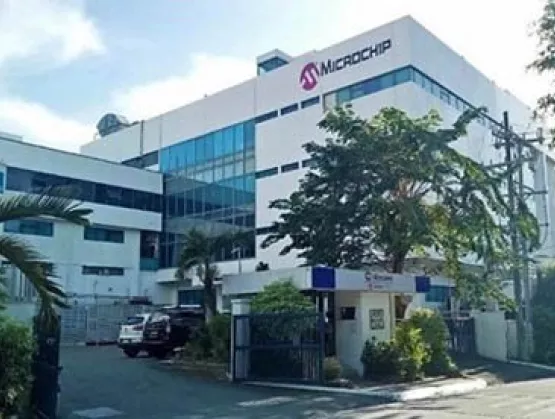
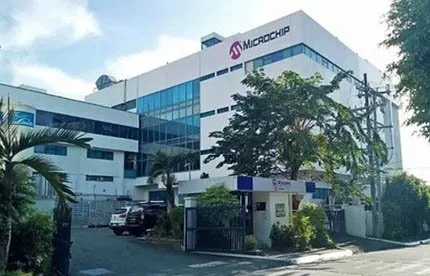
As the COVID-19 quarantine-related restrictions for commerce and transportation are lifted in the Philippines, companies are dusting off desks, cleaning coffee mugs, warming up equipment and gradually bringing back staff to resume full operations. Of primary interest to manufacturing companies like Microchip Technology Philippines are the restrictions on the allowable workforce, the movement of personnel, transportation, and health and safety protocols affecting factory staffing, materials availability, and the ability to ship products. In the Philippines, these restrictions started to scale back in mid-May and are staged to continue in a series of continuing reductions every two weeks through the end of June. As business operations recover, challenges remain in managing the workforce, negotiating the supply chain and understanding the expenses required to operate under the “new norm” while Business Continuity Plans continue to be reviewed and revised.Here are some of the more important business-related elements of the quarantine levels enacted by the Philippines:Enhanced Community Quarantine (ECQ): In effect from March 17 through May 15, 2020, this was the initial lockdown with the strictest requirements, most notably requiring the general population to stay at home, imposing curfews, prohibiting all public gatherings including schools, halting public transportation and banning air travel while allowing cargo flights, skeletal workforces (~15%) for essential businesses (BPOs, IT and exporters, for example) and travel using some private vehicles with varying types of passes required to clear checkpoints.Modified Enhanced Community Quarantine (MECQ): In effect from May 16 through May 31, 2020, this was the first stage to ease control to allow up to 50% of employees to return to work at essential businesses. The easing also allowed gatherings of up to five people while maintaining most other restrictions.General Community Quarantine (GCQ): In effect from June 1 through June 15, 2020, essential businesses are allowed to resume full operations within health and safety protocols in place for physical distancing, disinfection and the wearing of Personal Protection equipment (PPE). Air travel is allowed to resume while public transportation remains restricted until June 21, 2020. Company shuttles are allowed for point-to-point services.Modified General Community Quarantine (MGCQ): Planned for June 16 through June 30, 2020, this is the transition phase to the “new normal,” which will continue easing the restrictions for contact-related businesses such as barbershops, salons, restaurants and the like. Movement and public transportation will remain restricted until June 22, at which point the last obstacle for businesses to fully resume operations will fall.While some larger companies during the most restrictive ECQ were able to house staff on site or nearby in skeletal crews, some smaller companies were unable to do so and may never recover from the loss in revenue or from the loss of employees. The majority of companies in the technoparks shut down under the ECQ and were rendered powerless to return workers to factories. For factories allowed to house employees on site, a huge effort was required to provide emergency transportation, accommodations, food and drinking water, toiletries, Wi-Fi, and even entertainment for the sequestered staff – all while maintaining health and safety protocols for physical distancing and disinfection. For example, Microchip Technology Philippines was able to build temporary sleeping cubicles and showers; to buy tents, foam mattresses, bedding and personal hygiene kits; to provide canteen and laundry services; and to allow Wi-Fi access for employees to stay connected to family and friends.Microchip Technology’s 11 Guiding Values help to define our corporate culture and guide our decision-making. One key Guiding Value on display as we’ve transitioned through the levels of quarantine due to the COVID-19 pandemic has been that Employees Are Our Greatest Strength. Exercising this Guiding Value has supported the expenses necessary to provide the safest, most comfortable living accommodations in the factory conference rooms, hallways, basement, and even in office cubicles.While many larger companies in the Philippines provide company shuttles at pre-established pick-up points, limited public transportation strands many workers at home with no way to reach to their assigned shuttle. To address this challenge, solutions including van brigades that can navigate narrow village streets to pick up workers should be considered though at an additional, unplanned expense. The physical distancing rules effectively halves the number of riders, which in turn requires a doubling of the shuttle buses, most of which are under lease. If shuttle bus leasing companies cannot provide more buses, employees who can work from home should continue to do so or drive to shuttle stops if they have personal vehicles. Leasing these additional shuttle buses was in no company’s budget as we began 2020.Additional measures under the new norm will be expensive – perhaps prohibitively so – for smaller companies that cannot afford to double the number of company transports due to physical spacing rules requiring them to halve workplace capacity, whose workplace environments cannot support physical distancing, and whose treasuries cannot afford to buy rapid test kits for employees and their families. If these smaller companies produce items critical to the supply chain, larger companies will feel the sting – and cease producing specific products during the qualification of an alternate supplier. Until the Bureau of Customs and staffing of third-party logistic providers is back to normal, and until ports are running at full force, materials and exports will continue to be delayed, potentially limiting the number of employees needed to return to work to run production.It has been very expensive for companies to survive through these levels of quarantine while keeping factories and employees in a state of readiness to return to work. Additional expenses will be borne for compliance to the new norm. As many businesses recover under the new norm, they’ll undoubtedly take a closer look at their business continuity planning, if any such plans exist, and if not, they should be created without hesitation.The problem with a typical business continuity plan is it tends to focus on one or a few concurrent major events – say, flooding or a power failure due to a typhoon – but it’s doubtful any plan took into account a global pandemic that affected so many factors simultaneously including workforces, supply chains, transportation, logistics and food supplies. As we return to work, we’ll have to adjust to the new workplace and embed the lessons learned during the COVID-19 pandemic into our business continuity plans. And, hopefully, we’ll never have to exercise those measures again.Greg Fisher is Managing Director at Microchip Technology Philippines.
Read More