downloadGroupGroupnoun_press release_995423_000000 copyGroupnoun_Feed_96767_000000Group 19noun_pictures_1817522_000000Member company iconResource item iconStore item iconGroup 19Group 19noun_Photo_2085192_000000 Copynoun_presentation_2096081_000000Group 19Group Copy 7noun_webinar_692730_000000Path
Skip to main content
Default Banner Image

Business and Markets

Manufacturing is a cornerstone of U.S. national security and economic prosperity, supporting jobs, growth, and global competitiveness. Within this ecosystem, the U.S. semiconductor industry holds a uniquely critical role, powering the advanced technologies that form the backbone of the modern world. Realizing the full potential of American manufacturing, however, depends on a policy environment that encourages investment and innovation. The pro-growth, competitive, and predictable tax policies in President Trump’s Working Families Tax Cuts (WFTC) are therefore essential to sustaining global leadership of the U.S. semiconductor industry. SEMI welcomes the Administration’s signing of the “One Big Beautiful Bill” and delivering a pro-investment tax framework that accelerates domestic investment and strengthens the American semiconductor industry’s global competitiveness. Demand for semiconductors is rapidly increasing, driven by critical applications such as artificial intelligence and quantum technologies that are integral to American innovation and national security. Meeting this demand requires billions in capital investment across the comprehensive supply chain, making tax policy a key factor in investment decisions. Policies such as the WFTC’s permanent extension and doubling of immediate expensing for qualifying equipment and software provide a significant advantage for companies building, maintaining, and supporting American chip-making. Likewise, by making 100% bonus depreciation permanent, the WFTC allows businesses to expense qualified equipment and property in the first year, significantly improving return on investment for capital-intensive semiconductor projects.Importantly, the American semiconductor supply chain includes not only large manufacturers but also droves of small and medium-sized businesses. President Trump’s WFTC permanently extends the Section 199A deduction, leveling the playing field for these businesses that would otherwise face higher hurdles to growth. That long-term tax certainty allows for businesses to confidently invest in and expand their facilities, hire new employees, and grow production—directly supporting American families. Together these pro-growth tax cuts help drive American semiconductor innovation, growth, and competitiveness. SEMI applauds the Administration’s competitive WFTC policies that support the full semiconductor supply chain. The WFTC allow companies to commit the capital necessary for multi-year semiconductor manufacturing investments with confidence and drive continued U.S. semiconductor and technological leadership. SEMI supports the Administration’s efforts to make the United States the premier destination to do business and looks forward to continued collaboration on U.S. economic and national security policy priorities. Visit SEMI Global Advocacy to learn more about public policy efforts and developments as well as how your company or organization can get involved.Royal Kastens is Vice President, Global Public Policy Advocacy at SEMI.
Read More
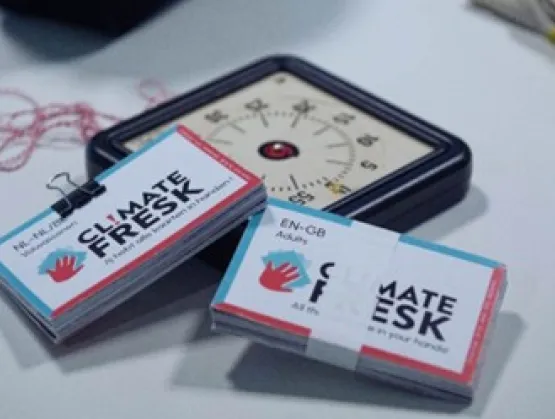
How imec turned a climate literacy workshop into a blueprint for sustainability engagement across the semiconductor industry. The StoryWouter de Groot had spent 9 years at imec in Business Development, a role that kept him airborne across Europe and beyond. Wouter was good at his job, and the travel was part of it. But on a flight somewhere over the Atlantic, his calculus changed.Wouter couldn’t ignore the carbon footprint of his own professional life. He realized, “I couldn’t reduce my travel significantly […] but I could raise awareness.” A seed was planted.In France, Wouter discovered the “Climate Fresk” (La Fresque du Climat), a collaborative, card-based workshop built on science from the Intergovernmental Panel on Climate Change (IPCC). He got trained as a facilitator and returned to imec’s Leuven headquarters with a quiet mission. The first session, held with a small group of HR colleagues in late 2023, was intended as a test. Yet even for that test, what happened surprised everyone in the room:"I was blown away by the depth of the discussions. It wasn't just about facts. It was about how people felt, and what they wanted to do next." —Wim Fyen, Director of Sustainability, imec .custom-quote-block { border-left: 4px solid #d9d9d9; padding-left: 26px; margin: 24px 0; } .custom-quote-block blockquote { margin: 0; padding: 0; border: none; } .custom-quote-block p { margin: 0; font-size: 18px; line-height: 1.6; font-style: italic; color: #000; } This is the story of those people, the initial hesitations they faced, and the tipping points that firmly established imec’s Climate Fresk movement. The People: 6 Unique Entry PointsBy the time imec presented at the SEMI Climate Equity and Social Impact (CESI) workgroup in June 2025, more than 400 employees had participated. What made it work wasn’t a mandate or a budget line. It was 6 people who found their way to the Climate Fresk from completely different starting points. Without any coordinated plan, they built something unlike anything imec had ever seen. From the 6:Wouter de Groot acted before there was infrastructure in place. Certified with sponsorship from imec, he ran the first session himself and passed it on to anyone willing.Ann-Sophie Vanwinsen, a Procurement Specialist, got certified as a Climate Fresk facilitator outside imec, well before the program was ever offered internally. Vanwinsen has facilitated more sessions than anyone else at the company. She confessed, “I’ve shamelessly taken over using my job for sustainability purposes.”Matthias Nauwelaers from imec.academy felt very emotional during his first session. A graph showing the climate burden falling on future generations hit him somewhere data alone never had. He too signed up as a facilitator and now weaves the Fresk into employee onboarding and e-learning sessions on sustainability.Wouter Machiels, Head of Procurement, came in skeptical. Sustainability, in his experience, had mostly been a compliance checkbox. While Wouter wanted to do more, he felt he lacked the specific tools to act on instincts he already had. The Fresk gave Wouter a framework he hadn’t found elsewhere: “it explained a number of mechanisms I had in the back of my head but couldn’t vocalize.” He left a facilitator himself and has since built a team mapping imec’s entire Scope 3 emissions.Lizzie Boakes, one of imec’s Life Cycle Assessment researchers and a ‘SEMI Europe 20 Under 30’ honoree, described what shifted for her: “I’m usually trying to hit numerical targets that don’t seem very real or human. The Fresk takes the scientific aspects out and highlights the social components. It puts people in a position where they have to be expressive with individuals they’re not necessarily close with.” Boakes became a facilitator, too.Filip Merckx, CFO, felt anger, then urgency, then a sense of responsibility he couldn’t shake. He introduced the Fresk to his entire management team on an offsite and became co-chair of a newly established sustainability board.“Easy in hindsight to say everything was planned, but it wasn’t,” said Wim Fyen, imec’s Director of Sustainability, who served as the connective tissue throughout. “We just went with the flow.”The Hesitation: Bridging Bottom Up and Top Down Senior management valued sustainability, but a 4-hour workshop was a significant ask in a calendar already full. The early response was practical rather than resistant: how do we justify the time? It’s a familiar dynamic. Research on bottom-up sustainability initiatives notes that organizations relying primarily on top-down approaches can miss innovative insights that emerge from employees at all organizational levels (Erzurumlu et al., 2025). Imec found a way around it.Fyen looked for the most efficient way to get it rolled out in imec. He first got the Climate Fresk listed in imec’s learning management system (LMS), a small move that gave it organizational legitimacy without requiring anyone to mandate it. Once the training appeared in the company’s catalog, Fyen leveraged that legitimacy to persuade managers to participate. The budget problem landed differently. Getting the first cohort of facilitators trained required money nobody had earmarked. Machiels solved it by encouraging like-minded suppliers to make sustainable initiative contributions. As a result, the first group got financed without a single line item in the sustainability budget.Both moves mattered. The same research argues that meaningful change requires not only employee initiative but also adequate executive support and corporate financial resources to sustain it (Erzurumlu et al., 2025). The LMS listing supplied the institutional legitimacy. The supplier co-investment supplied the resources. Together they pulled the Fresk from ‘one person’s project’ into something the organization could carry."You train 1 person as facilitator for less than 1,000 euros, and then they can run unlimited sessions inside the company at just a few euros per participant for license fees. Compared to external coaches, it's 30 times more cost-efficient." —Wim FyenThat economics produced a virtuous cycle. Low cost per session lowered the bar for departments to host one. Each session generated interest, which recruited more facilitators, which enabled more sessions. Similar grassroots-to-organizational arcs have played out elsewhere in the industry, where employee-led sustainability initiatives at ASML gained traction once they were paired with executive sponsorship (https://www.semi.org/en/blogs/one-tree-per-employee-how-a-grassroots-initiative-in-asml-san-diego-is-assembling-restorative-future-with-real-results). At imec, the initial constraint of having no dedicated training budget became a feature: it forced a model lean enough to scale. Participants in imec Climate Fresk Workshop for ManagersThe Tipping Points: When Organic Became StructuralWhat came next for imec was a mass Fresk; 50 managers, 14 internal facilitators, 1 afternoon. During the workshop, each participant wrote a personal commitment on seed paper, and those seeds were planted on the imec campus. "The flowers represented their ideas blooming," Fyen said. For a scientific culture, having something tangible to point to mattered. Not long after this, in late 2024, the team of Climate Fresk facilitators received the Sustainable.minds award at imec's annual corporate personnel event, recognized for sparking vital conversations about sustainability and inspiring action for the planet. For a community of facilitators that had grown almost entirely through word of mouth, this formal recognition validated what they had already built and gave their work significant internal visibility.In 2025, entire departments were booking on-demand sessions. About 25% of all participants expressed interest in becoming facilitators themselves. But why? According to a group of French environmental psychologists, emotional engagement is one of the primary pathways through which collaborative climate workshops produce real attitudinal change and pro-environmental intent (Hognon et al., 2026). And the good feeling that follows, which some researchers call the "warm glow," creates a self-reinforcing cycle toward deeper engagement (Schneider et al., 2021)."Convinced that without the information of the Climate Fresk, and without my team having lived through it themselves, we would not be where we are today in value chain mapping and the visibility we have on our Scope 3." —Wouter Machiels, Head of Procurement, imecScaling beyond the borders to impact the entire value chain Fueled by the recognition given by the Sustainable.minds awards, the team began offering Climate Fresk sessions to imec’s partners at the biannual Partner Technical Week (PTW) international conference and the workshop started crossing imec’s borders for the first time. This brought it to the attention of SEMI members. At a CESI workgroup meeting in 2025, participants from Tokyo Electron, Axcelis, Advantest, Applied Materials and Veeco among others listened to imec’s story and asked how to bring it to all of SEMI’s membership. Wojtek Osowiecki at Lam Research, founder of the Lam Employee Sustainability Community, was one of the first outside participants at an imec Fresk. He put it simply: “It’s not just about awareness. It’s about empowerment. The Fresk gives people a voice and a framework for action.” By the Fall of 2025, the first Fresk had been held at SEMICON West, and conversations with SEMI member companies were underway. What had been an internal experiment was now something other organizations wanted to learn from.A Movement of Belonging with Concrete Outcomes Founded in 1984 as the 'chip lab of the world,' imec has always been committed to sustainable development for generations to come by teaming up with the entire microchip value chainIts biggest leverage takes place through its Sustainable Semiconductor Technologies and Systems (SSTS) program in which imec works closely with partners from across the industry to assess and reduce the environmental impact of chip manufacturing, including foundries, integrated device manufacturers, equipment suppliers, and materials companies.This program runs along two connected tracks: assessment, whereby the environmental footprint of current and next-generation integrated circuit technologies are quantified and improvement where the insights of the first track are used to develop and validate practical solutions (e.g. to reduce process-related emissions, including work on low-impact gases, per- and polyfluoroalkyl substances (PFAS) alternatives, and novel manufacturing processes).The success with the Climate Fresk workshop has also begun to feed the broader SSTS program. Tools like the Environmental Score, originally developed for chip manufacturing assessment, are now being integrated into other design processes across the organization. The Fresk is now one of the vehicles imec uses to train and inspire the people who will carry that integration into their day-to-day work; the workshop builds the awareness, and SSTS gives that awareness somewhere to go.And there are several noteworthy concrete outcomes across imec:An ESG board now exists at the executive level, where leaders set corporate sustainability goals and assign the resources to pursue them. That board did not exist prior to the Climate Fresk. It was an indirect consequence of the awareness created within the finance team after Merckx introduced the workshop to his management. Decisions about sustainability that had previously lived in scattered conversations now have an institutional home.Onboarding has changed too. Nauwelaers, from imec.academy, has woven the Fresk into how new employees encounter imec. Sustainability is no longer a topic that gets introduced after someone is hired and oriented; it is part of the introduction itself. New colleagues meet the company’s climate posture in their first weeks rather than their first year.And in procurement, Machiels has built a sustainable procurement team of 3 FTEs and a PhD student, supported by a supplier co-investment model. The team operates against a multi-year sustainability plan and has produced the most detailed picture of imec’s Scope 3 emissions the company has ever had. The procurement function, often the last to be touched by sustainability work, became one of the first at imec to be reshaped by it.Fyen is honest about the distance still to travel. At 600+ participants in a company of 6,500 (roughly half non-payroll), imec has reached roughly 20% of its own workforce. That means in principle there are still thousands to reach. But Climate Fresk facilitators are now embedded in every corner of the organization, people who came to a workshop for their own reasons and left with a mission they didn’t expect. And more importantly, social science learns us that once a critical ‘tipping point’ is reached, adoption can grow very rapidly (Centola et. al., 2018). Machiels observed that the Fresk quietly became one of the few things that gave colleagues from completely different parts of imec a genuine sense of belonging to something. Climate Fresk has allowed them to understand the science, hear the human stories, and start connecting the dots. In a world of hybrid schedules and activity-based offices, for the people inside imec who went through the workshop together, that shared experience has become something else too.From a quiet decision on a plane, imec built a movement that now extends well beyond its own walls. Those seeds are available to any company where even one person is willing to start.This case study was written by Nat Mengist and Marley Hauser. It was produced by SEMI in partnership with imec as part of the SEMI Climate Equity and Social Impact (CESI) workgroup, led by staff member Justin Harris ([email protected]). For more information, visit semi.org/sustainability or connect through the SEMI CESI workgroup. SEMI SUSTAINABILITY CASE STUDY ADDENDUMA Blueprint for Building Your Own Climate Fresk MovementWhat imec built was not a program. It was a set of conditions. The following 5 steps are drawn from their experience; a starting backbone that your organization can adapt, with imec and the CESI workgroup as a resource to build it out further.1. Find the person who won't wait for permission.Every successful rollout in imec's story starts with someone who acts independently of pre-existing infrastructure. That person is probably already in your organization. Find them, fund their facilitator training, and let them shine. Research conducted on Wojtek Osowiecki’s Lam Employee Sustainability Community shows that this kind of bottom-up entrepreneurial ownership produces the most durable organizational commitment (Erzurumlu et al., 2025).2. Give it a home in the official infrastructure.Getting the Climate Fresk listed in imec's learning management system moved it from "one person's project" to "an official training." That's a small change with a large impact. Connect your internal champion with key departments like HR or Learning Development. Sustainability initiatives that live only inside the sustainability team have a ceiling. The ones that spread into other departments like HR, Procurement, and Operations don't.3. Protect the emotional architecture of the workshop.The instinct is to shorten the workshop to fit busy schedules. Imec did the opposite, extending to 4 hours and adding a plenary on personal and corporate carbon footprints. The "Embrace Your Emotions" phase isn't optional. It's the mechanism through which information becomes motivation. This is the worrying and urgency feeling Filip Merckx described. Some research found this “negative affect” to be the single strongest predictor of willingness to engage in climate action (Brosch, 2021). Cut that phase and you save an hour, but you’ll also miss the point.4. Build for the skeptical majority, not the converted few.The Climate Fresk also works well with technical audiences because it's built on IPCC science and run by a neutral peer rather than an external consultant. When a colleague walks you through the system map, the psychological distance that usually makes climate change feel abstract suddenly collapses. By developing teams of internal facilitators across departments, levels, and geographies, you will begin to witness the “gradual accumulation” of passionate sustainability culture (Russi et al., 2024).5. Extend your horizon beyond 12 months.The procurement team Wouter Machiels built — 4 FTEs, a PhD student, a supplier co-investment model — didn't exist when the Fresk was first introduced. "Facts are the foundation, but stories are the vehicle," Wouter claimed. "You can broadcast facts all you want. If you're not having an impact on the people listening to you, then you're casting salt." Don't expect ROI within one budget cycle. The outcomes that matter most take years to show up. But they do show up. Research FoundationThe behavioral science behind the Climate Fresk is not incidental to its design: it is the design. The following sources informed both the blueprint above and the case study narrative.Brosch, T. (2021). Affect and emotions as drivers of climate change perception and action: A review. Current Opinion in Behavioral Sciences, Human Response to Climate Change: From Neurons to Collective Action, 42, 15–21. https://doi.org/10.1016/j.cobeha.2021.02.001Centola, D., Becker, J., Brackbill, D., Baronchelli, A., (2018). Experimental evidence for tipping points in social convention. Science 360,1116-1119.https://www.science.org/doi/abs/10.1126/science.aas8827 Erzurumlu, S. S., Osowiecki, W. T., Seidel, V. P. (2025). How an Environmental Sustainability Community Fostered Employee-Driven Innovation at Lam Research. Research-Technology Management, 68(4), 21–29. https://doi.org/10.1080/08956308.2025.2497220Hognon, L., Caille, P., Bernard, P., Chevance, G., Teran-Escobar, C. (2025). Assessing the impact of The Climate Fresk workshop on climate-related attitudes and behavioral intentions in the workplace: Study protocol for a randomized controlled trial (2qvgd_v1). PsyArXiv. https://doi.org/10.31234/osf.io/2qvgd_v1Hognon, L., Teran-Escobar, C., Bernard, P., Chevance, G., Caille, P. (2026). A call for robust evaluations of the impacts of serious games for climate change mitigation: The Climate Fresk as a global case study. Journal of Environmental Psychology, 110, 102942. https://doi.org/10.1016/j.jenvp.2026.102942Mosquera, J., Jylhä, K. M. (2022). How to Feel About Climate Change? An Analysis of the Normativity of Climate Emotions. International Journal of Philosophical Studies, 30(3), 357–380. https://doi.org/10.1080/09672559.2022.2125150Russi, L., Renouard, C., Wallenhorst, N. (2024). Beyond Rupture, Interstice and Reform: Searching for Nuance in the Portrayal of Engagement for Social and Ecological Transition. Journal of Business Ethics, 193(3), 471–479. https://doi.org/10.1007/s10551-023-05568-wSchneider, C. R., Zaval, L., Markowitz, E. M. (2021). Positive emotions and climate change. Current Opinion in Behavioral Sciences, Human Response to Climate Change: From Neurons to Collective Action, 42, 114–120. https://doi.org/10.1016/j.cobeha.2021.04.009
Read More
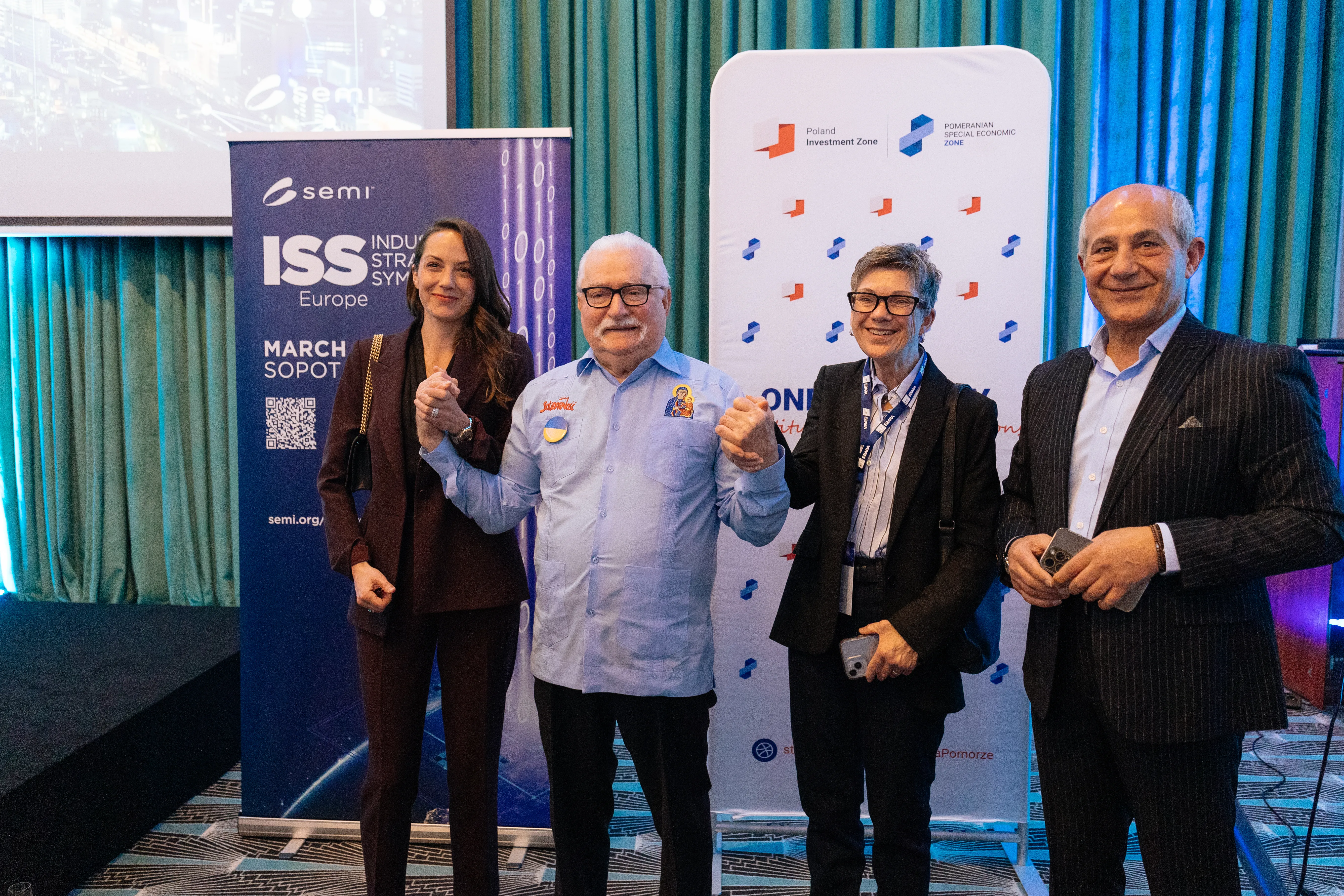
As competition within the semiconductor industry continues to intensify, the need for Europe to strengthen its current position within the global supply chain and develop new partnerships are more important than ever. How can Europe forge a unified semiconductor strategy amidst geopolitical tensions, fast‑moving technological change, and ongoing supply‑chain challenges? These dynamics set the stage for the 2026 Industry Strategy Symposium (ISS) Europe taking place in March in Sopot, Poland for the second consecutive year, bringing together leaders from across the semiconductor ecosystem to assess a rapidly shifting global landscape and define Europe’s path toward greater competitiveness and resilience.The symposium opened with a welcome speech featuring Lech Wałęsa, Nobel Peace Prize Laureate and former leader of the Solidarnosc movement which led Poland’ s resistance to its authoritarian Communist regime in the 1980s. Wałęsa shared a strong message on the importance of collaboration: “Old geopolitical structures and the bipolar world order have reached their limits, and as we transition toward a new global order, it is essential to rebuilding a system better suited to today’s realities”. In this uncertain moment, the Nobel Peace Prize called for peaceful dialogue and collective action to shape a new, more suitable world order rather than relying on conflict.Lech Wałęsa, Nobel Peace Prize LaureateAmidst geopolitical tensions, accelerating technological change, and intensifying global competition, a clear message emerged: semiconductors are now foundational to European economic security and technological leadership. As Laith Altimime, President of SEMI Europe, emphasized, “Semiconductors are the infrastructure of the modern world, and only through close collaboration can we master the challenges ahead and strengthen Europe’s technological leadership.”Laith Altimime, President, SEMI EuropeEurope plays a vital role in this industry, with global revenues expected to reach $2 trillion by 2035. As Altimime noted, “Europe has strong foundations, leading in manufacturing equipment and innovation. We must maintain this leadership while reducing dependencies.”A central theme throughout the symposium was how Europe can build on its leadership positions while strengthening its role across the value chain. As Leonard Hobbs, Director of Government Affairs at Intel Ireland, said, “No region controls the entire supply chain. Europe has to figure out how to differentiate itself within the various parts of the supply chain.” Marc Hijink, author of the book Focus – The ASML Way highlighted Europe’s deep supplier ecosystem, and explained that “more than 80% of the value in the products that ASML makes comes from suppliers who are mostly based in Europe.” Marc Hijink, Author of Focus – The ASML WayAt the same time, significant investments are reshaping Europe’s manufacturing footprint. Joerg Recklies, Executive Vice President Frontend at Infineon, drew the audience’s attention to Infineon’s upcoming Smart Power fab opening in summer 2026 “six months ahead of schedule.” Recklies added, “The new ESMC facility in Dresden is expected to produce 40,000 300mm wafers per month, and will provide the first FinFET capability in Europe.” Joerg Recklies, Executive Vice President Frontend, Infineon TechnologiesLooking at opportunities in advanced semiconductors, Cesc Guim, CEO of Open Chip, said, “25 years ago, the only way to learn how to do advanced chip design was in one of the large US companies. That’s no longer the case. Europe now has the capabilities, supported by RISC-V and a full supply chain backed by the wealth of hardware and software engineering talent in regions such as Pomerania.” Left to Right: Mikołaj Trunin, Deputy Director, Invest in Pomerania and Cesc Guim, CEO, Open ChipTo reinforce the sense of opportunity in a changing world, futurist Christian Kromme gave a whirlwind tour through the revolutions to come in technology and society. He described how each wave of technological change, from the internet to AI to autonomous machines, is arriving faster than the one before. “The internet wave commoditized media and knowledge. In the AI wave, we will see the same value compression, but this time squeezing out human skills such as problem-solving and system design,” said Kromme.Kromme urged delegates to “shift from hard skills to heart skills: imagination, empathy, curiosity and integrity, this is where the value of humans lies, because machines cannot do these things.”Christian Kromme, FuturistTrade tensions and international conflictGeopolitics and supply chain dynamics were central to the discussions. Martin Zech, Senior Director at FTI Consulting, described how the US’s approach to the semiconductor industry had shifted from incentives to restrictions. Zech warned that “a new section 301 investigation into the European semiconductor industry could lead to new tariffs.” Johan Rauer, Partner at McKinsey, added that the threat extends beyond tariffs. “Regions will apply a range of measures, including export controls and IP protection.”Martin Zech, Senior Director, FTI ConsultingJohan Rauer, Partner, McKinsey CompanyChristopher Frieling, Director of Advocacy and Public Policy at SEMI Europe, outlined the EU’s response, including its evolving economic security framework and the concept of “trusted chips,” reflecting a preference for products with strong European involvement.Christopher Frieling, Director of Advocacy and Public Policy, SEMI EuropeThe question of technological leadership was addressed by Carlos Pardo, CEO of KD, who stated, “If Europe wants a relevant position in semiconductors, it needs to invest more.” He added that even in automotive semiconductors, European players hold relatively limited shares. Carlos Pardo, CEO, KDProviding another perspective, Dr. Rafał Bugyi, CEO of TRUMPF Huettinger said, “We don’t need to cover the entire supply chain, but we must be indispensable.” Dr. Rafał Bugyi, CEO, TRUMPF Hüttinger GmbH Co. KGSpeakers also addressed how Europe could adapt to the new reality of supply chain dependency. Benoit Chassagne, End-to-End Supply Chain Manager at Edwards, presented a model of a systems response which his company has implemented to mitigate its exposure to supply chain volatility, while David Forrest, Director of Sustainability and Criticality at Vital Materials, emphasized the role of waste materials recovery, saying that “circularity is an industrial mechanism for supply chain resilience, not an environmental add-on.”Benoit Chassagne, End-to-End Supply Chain Manager, EdwardsDavid Forrest, Director of Sustainability and Criticality, Vital MaterialsCarl van Vugt Luning, Chief Commercial Officer at Resilicon, highlighted the need for greater resilience in polysilicon supply, noting Europe lacks dual sourcing. “Polysilicon is often seen as a commodity, but it is critical. Sovereign chips require a resilient polysilicon supply chain,” said van Vugt Luning.Carl van Vugt Luning, Chief Commercial Officer, ResiliconTurning innovation into commercial revenueIn the session ‘From lab to fab’, speakers examined how Europe can improve its track record in converting innovation into commercial success, for example, by companies such as NVIDIA and Qualcomm.An important part of the EU’s strategy was the creation of technology pilot lines. Jari Kinaret, Executive Director of the Chips Joint Undertaking (Chips JU), told the symposium that the pilot lines are an example of successful collaboration between the state and the private sector. Kinaret said, “The total cost of the NanoIC pilot line (for advanced semiconductor fabrication) is €2.5 billion, but this includes €1 billion of funding from ASML.”Jari Kinaret, Executive Director, Chips Joint Undertaking (Chips JU)The role and value of the pilot lines was the subject of a panel discussion at the symposium. Panelist Anne Van den Bosch, Vice President of Public R D Policies and Programs at imec, said the pilot lines “give the European semiconductor ecosystem faster access to advanced process technology.” Patrick Bressler, Director of Fraunhofer Mikroelektronik, agreed. “Pilot lines are a lab-to-industry scheme to give access to prototype manufacturing for SMEs, start-ups and fabless companies which would not otherwise be able to afford advanced manufacturing,” he said.Moderating the discussion, Laith Altimime asked, “How do we ensure that the products which emerge from innovations developed thanks to the pilot lines get manufactured in Europe? Are boutique fabs the answer?” Kevin Williams, Deputy Director of the PIXEurope pilot line, responded: “There are certainly opportunities in building new types of chips and new types of fabs. We have the know-how in the pilot lines, and the equipment for them is made in Europe.” Bruno Paing, Vice President Europe at CEA-Léti, added, “We need to aim for indispensability, replicating what we have with ASML in the EUV field. For instance, the world needs better memories and better interconnects. There are many opportunities in AI. It is not just about the GPU.”Left to Right: Moderator, Laith Altimime, President, SEMI Europe; Panelists: Anne Van den Bosch, Vice President of Public R D Policies and Programs, imec; Bruno Paing, Vice President Europe, CEA-Léti; Patrick Bressler, Director, Fraunhofer Mikroelektronik; Kevin Williams, Deputy Director, PIXEurope.The symposium also highlighted examples of European innovation from two startups developing new technologies. Antonio Mesquida Küsters, Strategic Advisor to Euclyd, presented a processor system combining 16,384 cores with ultra-high bandwidth memory using advanced 2.5D and 3D packaging, offering an alternative to GPUs for AI inference. As he said, “We want to break the hyperscaler/cloud model of AI to build sovereign AI capability for Europe by 2030.”Antonio Mesquida Küsters, Strategic Advisor, EuclydJekaterina Viktorova, Founder and CEO of Syenta, introduced additive manufacturing technology enabling denser interconnects for advanced AI systems, noting, “Our roadmap is set to produce a 20x increase in bandwidth over the next 10 years.”Jekaterina Viktorova, Founder and CEO, SyentaNew strategies for competitiveness in semiconductor manufacturingIf these types of innovative products are to be manufactured in Europe, the region’s fab operations will need to combat the growing competition from China and elsewhere. Giovanni Notarnicola, Partner at Porsche Consulting, said, “Our position in Europe is under attack. The next threat is not from a new product, but from how chips are designed and produced.”Giovanni Notarnicola, Partner, Porsche ConsultingThomas Altenmüller, Vice President of Manufacturing Analytics at Infineon, highlighted the role of automation: “We get more automation in the transition from 8” to 12” wafers, which gives us an advantage in Europe because of our higher labor cost compared to China. But to compete, we still need more AI smart workflows to increase the automation.” Carina Lainer, Principal at Roland Berger, added, “Today we optimize operations with tools built for a human-centric process, which has reached its limit. We can instead use digitalization and AI to fundamentally change the way that semiconductor innovation takes place.”Thomas Altenmüller, Vice President of Manufacturing Analytics, InfineonLeft to Right: Carina Lainer, Principal, and Thomas Kirschstein, Partner, Roland BergerOded Tal, CEO of MAX Group, cautioned that the barrier to increased implementation of automation was not technical but social. “Humans can be very flexible, but leadership is crucial. “You have to give training and clear instructions. It’s about structure, making people’s roles and responsibilities crystal-clear,” he said.Oded Tal, CEO, MAX GroupThe symposium closed with a panel discussion about the implementation of AI and automation in the fab. Moderator Cassandra Melvin, Senior Director of Business Development and Operations at SEMI Europe, pointed out that “intelligence is moving beyond the tool to the control room, a development which is powered by AI.” The panelists were quick to acknowledge the radical impact that AI is having on fab operations. Dirk Drescher, Plant Manager at Bosch Semiconductor, said, “We built the Bosch fab in Dresden around a standardized data architecture, which is what enables us to implement AI. That is a contrast to a 20 year old fab, which can only see a patchwork of different data systems.”Thomas Richter, Senior Vice President and Managing Director at Infineon, added, “digitalization is about much more than just AI. We have had great success in getting rid of boring, routine tasks through digitalization. This makes a huge difference, and helps our fabs to stay competitive.”The panel also debated the potential impact of humanoid robots on the scale and impact of automation. Richter said, “In our fabs, I can see rooms in which it has never been possible to automate before, but humanoid robots give me hope that we can automate more in future.”Matthias Bonkass, Vice President of Advanced Manufacturing Engineering at GlobalFoundries, agreed. “By 2035, we will see collaboration between humans and humanoids. This wave is coming!” Going even further, Dirk Drescher looked forward to an era of total automation. He said, “We will see a lights-out fab by 2035. This is definitely a tailwind for the European semiconductor industry, making it faster, reducing cost, and giving us more opportunity to build semiconductors in Europe.”Thomas Morgenstern, Executive Vice President of Manufacturing at STMicroelectronics, concluded, “We must not let culture be a barrier to AI. Technical strategies to implement AI are all very well, but you need people to buy in. Morgenstern added, “The name of the game is productivity. The most advanced fabs have to be dark, with remote operating centers somewhere in the world, running clusters of fabs. I am extremely confident that by 2035, if not before, the first dark fab will be in operation.”Left to Right: Moderator, Cassandra Melvin, Senior Director of Business Development and Operations, SEMI Europe; Panelists, Dirk Drescher, Plant Manager, Bosch Semiconductor; Matthias Bonkass, Vice President of Advanced Manufacturing Engineering, GlobalFoundries; Thomas Morgenstern, Executive Vice President of Manufacturing, STMicroelectronics; Thomas Richter, Senior Vice President and Managing Director, Infineon.During the event, SEMI Europe announced recipients of the SEMI European Award and Special Service Award for 2025. Dr Peter O’Brien, Head of Research in Photonics Packaging and Systems Integration at Tyndall National Institute, was honored with the SEMI European Award and, Eric Beyne, Senior Fellow at imec, with the Special Service Award. Peter O’Brien, Head of Research in Photonics Packaging and Systems Integration, Tyndall National InstituteAnne Van den Bosch, Vice President Public R D Policies and Programs, imec receiving the award on behalf of Eric Beyne, Senior Fellow, imecOn behalf of SEMI, the SEMI Europe team and ISS Europe committee, we would like to thank all speakers, sponsors, and attendees for making the event a great success. ISS Europe 2027 will take place in Dresden, Germany from March 8-10.Serena Brischetto is Director, Marketing and Digital Engagement at SEMI Europe.
Read More
A Future Shaped by SemiconductorsLast year at SEMICON Japan, volunteers from the SEMI Japan Sustainability Committee surveyed 101 conference attendees to gather their thoughts on the future powered by semiconductors based on its 2040 Future Visions, Shaped by Semiconductors graphic. The graphic imagines a world where AI and robots aid in everyday life. (click image to enlarge) The participants were distributed across several industry sectors: Suppliers (Materials and Components)Materials ManufacturingSemiconductor Manufacturing (IDM and Foundry)Equipment ManufacturingElectronics Product ManufacturingResearch and AcademiaTheir roles were as follows: Sales and PlanningR DManufacturing and ProductionEnvironment and SustainabilityStudents Participants Felt Positively About the Future of SemiconductorsMany respondents highlighted the potential for semiconductors to improve everyday life. When asked about how they felt about the future after viewing the graphic, they reported feeling very positive (73%) or somewhat positive (27%).However, some participants highlighted potential concerns. Some believed the vision outlined in the Future Visions graphic was scaled down compared to futuristic predictions they heard as childrenOthers noted a growing gap between those who benefit from technological innovation and those who don’tSome participants shared concern over the risks of excessive automation, referencing the movie WALL-E as an example Participants also offered open-ended responses, noting that: The future appeared optimistic and clear Many anticipated improvements in daily life and comfort Semiconductors were viewed as fundamental for future prosperity Some imagined a society with similar gadgets to Doraemon, a popular Japanese anime, and believed it could become a realityThe Relationship Between Semiconductors and Society The link between semiconductors and society in 2040 was evident. Over 90% of respondents reported they could “clearly” or “somewhat” picture how semiconductors will improve life by 2040, as depicted in the Future Visions graphic. Most respondents also agreed that semiconductor technology will continue to play a foundational role in society.Awareness of Environmental Impact and Industry InitiativesThe Committee also asked semiconductor industry professionals about the environment. It found that 94% of respondents were either “very aware” or “aware” of the effects that semiconductor manufacturing can have on the planet. While participants acknowledged potential environmental risks, most believed their company’s products and services contributed to problem solving. 78% reported that balancing semiconductor performance and environmental impact is already a common and standard practice across the industry value chain. In addition, they noted rising customer expectations for more environmentally-friendly processes. Summary of Survey Findings Overall, respondents maintained a positive view of semiconductor technology because of its value to society. At the same time, they demonstrated a realistic awareness of environmental impacts and societal challenges. For industry professionals, balancing innovation with environmental concerns is already routine. Learn more about SEMI’s sustainability efforts: Visit the SEMI Japan Sustainability Project website Discover the SEMI Sustainability Initiative: JP page / EN pageView the 2026 SEMI Japan Sustainability Committee member listFor questions, please reach out to [email protected]  Reiko Eda is Sustainability Manager at SEMI Japan.
Read More
The global semiconductor industry is entering a new phase of growth to keep pace with the increasing demand for artificial intelligence (AI), high-performance computing (HPC), and system-level integration. At the same time, rapid technological advancement is intensifying the need for highly skilled talent. Industry projections indicate that by 2030, the global semiconductor sector will face a shortage of more than one million professionals, making talent a critical variable shaping competitiveness and supply chain resilience.In this context, governments and industry organizations worldwide are accelerating efforts to develop talent pipelines and strengthen cross-border collaboration. For a highly globalized industry like semiconductors, the movement of talent and exchange of knowledge are no longer confined to individual markets, but are essential to the development of a resilient and interconnected global ecosystem. Increasingly, competition is extending beyond technological breakthroughs to the ability to build and sustain a global talent pipeline.Supported by a cross-border collaboration framework, SEMI and the UK Electronics Skills Foundation (UKESF) have jointly organized a program to cultivate the next generation of semiconductor talent. Through structured exchange mechanisms and close collaboration with industry, academia and public sector partners, the program connects global talent with real-world industry environments and contributes to building a more sustainable foundation for long-term workforce development.From Lab to Fab: Understanding the Path from Research to ManufacturingA core objective of the project is to bridge the gap between academic research and industrial application. Through a 14-day immersive experience combining industry engagement and hybrid learning formats, participants engage directly with experts and gain a system-level understanding of how the semiconductor industry operates—from research and development to high-volume manufacturing.The program covers key segments of the semiconductor value chain, including advanced research, wafer fabrication, IC design, packaging and testing, and system applications. This integrated learning experience enables participants to move beyond isolated technical knowledge and develop a broader understanding of how innovation is translated into scalable industrial capabilities.As one participant shared: “Experiencing the award-winning R D solutions at ITRI and the massive scale of wafer manufacturing at UMC firsthand was unforgettable. It was incredibly inspiring to see how advanced research is translated into global manufacturing capabilities—from lab to fab.”Participant feedback highlights a clear shift in understanding. Through hands-on learning and industry engagement, participants moved beyond isolated technical knowledge to develop a more comprehensive, system-level perspective of the semiconductor industry—supporting more effective collaboration across the global ecosystem.A Practice-Oriented Approach: Redefining Semiconductor Talent DevelopmentAs technology evolves and industry demands shift, traditional discipline-based education models are no longer sufficient to fully meet the needs of semiconductor manufacturing and R D environments. Increasingly, the industry is seeking talent with cross-disciplinary capabilities and hands-on experience.The project adopts a “learning by doing” approach, combining laboratory sessions, expert-led workshops, and company visits to provide participants with practical exposure to semiconductor devices, materials, process technologies, and system design. Participants also gain exposure to real-world applications such as chip security, design verification, and advanced process technologies.From an industry perspective, this approach aligns more closely with evolving workforce needs. Compared with conventional academic training, individuals with cross-disciplinary experience and international exposure are better equipped to understand the interplay between R D and manufacturing, and to integrate more effectively into real-world operational environments.UK participants, dressed in cleanroom suits, gained firsthand exposure to Taiwan’s semiconductor manufacturing environment—observing wafer fabrication equipment up close and engaging in hands-on learning to experience the journey from lab to fab.From Talent Development to Ecosystem ConnectivityAt a time when the semiconductor industry is entering its next phase of growth, talent plays a central role not only in driving innovation, but also in enabling global collaboration. As supply chains become increasingly interconnected, building mechanisms for cross-border talent mobility and cooperation is critical to strengthening both resilience and innovation capacity.At the program’s closing event, “UK–Taiwan Semiconductor Industry and Talent Exchange,” Terry Tsao, Global Chief Marketing Officer and President of Taiwan, SEMI, noted:“By 2030, the semiconductor industry is expected to require more than one million additional skilled professionals. Through international collaboration and industry–academia engagement, SEMI aims to enable more global talent to engage with Taiwan, gain a deeper understanding of its semiconductor ecosystem, and build long-term connections with the industry.”The project reflects a broader objective: not only to develop talent, but to build a sustainable, globally connected workforce network. By fostering a shared understanding and collaboration across borders, such initiatives help align capabilities and drive innovation across the global semiconductor ecosystem.Terry Tsao, Global Chief Marketing Officer and President of Taiwan, SEMI, emphasized the importance of nurturing globally connected semiconductor talent to help drive the industry’s future growth.Advancing Global Collaboration to Meet Long-Term Industry NeedsAs the industry continues to evolve, no single organization or region can address workforce challenges alone. Cross-border collaboration and structured talent development frameworks will be essential infrastructure for the future of the semiconductor industry.Looking ahead, SEMI will continue to expand international partnerships, connecting global industry, academia, and government stakeholders to deepen and scale talent development efforts—supporting the next generation of semiconductor professionals with both global perspective and practical expertise.For more information or partnership opportunities, please contact:Ily TsaiTel: +886-3-560-1777 [email protected] Ily Tsai is Project Manager, Workforce Development at SEMI Taiwan.
Read More
The number of regulatory proposals, including restrictions on substances such as per- and polyfluoroalkyl substances (PFAS), that could hinder the semiconductor industry’s ability to continue manufacturing is increasing. The SEMI Environmental, Health Safety (EHS) Working Groups, composed of industry technologists from across the global supply chain, meet on a regular basis to share intelligence and develop strategies to earn exemptions and/or extensions from regulators to enable the industry to continue manufacturing the chips critical to our modern way of life.In addition to an EHS session each year at SEMICON West, SEMI also hosts a full-day EHS Summit annually. This year’s event will be held on Thursday, May 26 at SEMI Headquarters in Silicon Valley. Experts from AGC, Beveridge Diamond, Intel, Tokyo Electron, SEMI Public Policy Advocacy staff from Brussels and Washington DC, as well as other key industry leaders will address the EHS regulatory challenges facing semiconductor manufacturing in 2026 and beyond. Presentations will allow for questions, discussions, and planning for taking collective action to strengthen semiconductor manufacturing.  Tentative topics include:US regulatory landscape under second Trump Administration and global impactUS State-level legislationEurope: PFAS restriction, REACH restriction, packaging and packaging waste regulation, GENESIS Consortium, and more.PFAS recyclingStockholm ConventionEmerging regulations in AsiaSupply chain transparencyUS EPA Technology Transition Rule (HFC Phasedown)US EPA TSCA New Substances Risk EvaluationPlasticizers and flame retardantsMark your calendar to attend, network, and strategically prepare your company. Register today. EHS Summit LocationSEMI 673 South Milpitas Ave. Milpitas, CA 95035James Amano is Senior Director, EHS at SEMI
Read More
Ever wondered if the industry could reduce the environmental impact of its manufacturing? And maybe even provide a positive return-on-investment (ROI) without modifications to environmental permits? Or realize the alchemist’s dream of turning waste into revenue in the semiconductor supply chain?SEMI has launched a new report “The Evolving Paths for Waste in Semiconductor Manufacturing” focused on the concept of re-use and resale versus onsite treatment or offsite disposal of manufacturing wastes within the semiconductor manufacturing value chain. This compendium of best-known methods (BKMs) should be used as a roadmap for companies to reduce costs and make a positive impact on global sustainability efforts.Historically, semiconductor manufacturing has followed a linear “take–make–dispose” model. More recently, semiconductor manufacturing and advanced packaging facilities (fabs) are trying harder to improve their waste management strategies to minimize costly (and undesirable) waste treatment services such as landfill or hazardous waste incinerators. Many barriers prevent fabs from further transitioning from a linear to a circular mindset.The semiconductor industry generates on average ~1.88 tons of waste per million dollars of revenue or 6.8 million metric tons of total waste per year, based on data gathered from over 140 companies in the semiconductor value chain and aggregated in the SEMI Dashboard. Identifying Addressing the BarriersTo identify and address the barriers, SEMI has developed the first of its kind guide to support the adoption of circular design principles and resource recovery practices across the semiconductor manufacturing value chain. The primary recommendation is to accelerate adoption of proven circular solutions by improving visibility of peer practices, aligning regulatory strategies, and strengthening ROI assessments to support informed decision-making.The report consolidates publicly available BKMs for recovering and recycling spent chemicals, wastewater treatment by-products, tool packaging, and other manufacturing wastes generated by integrated device manufacturers (IDMs), foundries, outsourced semiconductor assembly and test (OSAT) facilities, equipment manufacturers, and material suppliers. The report’s recommendations are completely accessible with advice on how to respond when management raises objections on common topics – helping to change the mindset from ‘waste’ and seeing it as a product.ConcernsResponsesThere are regulatory barriers.There are options to addressing those barriers.No one else is doing it.There are companies taking action and making a difference.It is a waste of time and money.There is an opportunity to turn the funds spent on disposal into revenue sources.There is no room in the facilities areas for a new tank.Switching from tanks to totes is a viable strategy. The review draws on corporate sustainability reports, waste treatment technology publications, and industry data compiled by SEMI, complemented by professional experience in chemical waste management in the EU and USA. The report identifies existing technological, regulatory, and economic enablers for material recovery, as well as barriers in legacy facility design. The report provides circular design and resource recovery practices across the semiconductor value chain. It is a single, accessible information source on current best-known recovery and recycling practices. This report enables you to become the alchemist, streamline discovery, accelerate adoption, and turn waste into revenue streams. How to PurchaseThe report is an ‘alchemists dream’ and provides guidance on turning waste into revenue in the semiconductor supply chain.Get your copy today! Purchase “Evolving Paths for Waste in Semiconductor Manufacturing: A Guide to Turning Waste into Revenue” at the SEMI Store.Taimur Burki is Sustainability Consultant at SEMI.
Read More
The House Semiconductor Caucus event held on March 17, 2026 at the Rayburn House Office Building in Washington, D.C. brought together industry leaders for an in-depth panel discussion around the upstream vulnerabilities in the U.S. semiconductor supply chain and policy actions Congress should consider. If policymakers do not hear from all segments of the supply chain, critical issues go unaddressed and the policies that result are less effective than they could be. Events like this reflect SEMI’s mission to bring the full breadth of the supply chain into policy conversations. Key topics addressed during this panel were supply chain and critical material challenges, tax and domestic incentives, and export controls and trade policy. The briefing featured executives from leading materials companies—Entegris, Materion, Avient, and CoorsTek—and was moderated by SEMI. They shared firsthand insights into bottlenecks and risks within the global supply chain, emphasizing how disruptions in sourcing and processing critical materials can threaten the entire semiconductor manufacturing process. The event also addressed the need for targeted policy actions to strengthen U.S. competitiveness, such as extending and expanding the Sec. 48D tax credit, targeting R D in specific areas, and workforce development. The event underscored the strategic significance of a robust and resilient semiconductor supply chain as a cornerstone of national and economic security, particularly in light of ongoing global supply chain uncertainties. The panel encouraged policymakers to increase consultation with industry stakeholders and consider specific, actionable steps to close existing gaps and support the entire ecosystem. The Q A session allowed congressional staff to engage directly with experts, further deepening their understanding of the complex challenges facing the semiconductor industry today. SEMI is the preferred trusted partner to the government and the event concluded with a networking lunch to reinforce the collaborative spirit between industry and government that is necessary to build a stronger, more secure future.Thank you to Representative Zoe Lofgren for providing a keynote address, Representative Michael McCaul for collaborating with SEMI to host this panel event, and to our speakers for raising these important issues and sharing timely insights. Visit SEMI Global Advocacy to learn more about public policy efforts and developments as well as how your company or organization can get involved.Scarlett Bickerton, Manager, Federal State Affairs at SEMI.
Read More
As the semiconductor industry continues to advance, effective quality management is increasingly essential. The SEMI Quality Benchmarking Consortium (QBC) brings together leading companies to exchange best practices, benchmark performance, and promote collective improvement across the global semiconductor landscape. The last QBC meeting was hosted by Bill Lechten of Micron at their headquarters in Boise, Idaho. Representatives from GlobalFoundries, Infineon Technologies, STMicroelectronics, NXP Semiconductors, and Texas Instruments came together for two days of in-depth discussions and knowledge sharing.The session began with an overview of Micron’s global business and manufacturing footprint. The company reported record revenue of $37 billion in 2025 and currently hold more than 60,000 patents. Micron is investing approximately $150 billion in U.S.-based DRAM manufacturing, which is expected to generate around 90,000 direct and indirect jobs. The QBC operates on a “give-to-get” philosophy where members must actively contribute survey responses and participate in open discussions to access shared benchmarking data. This meeting focused on three topics: risk management, customer return, and product change notification. Participants presented their approaches, shared lessons learned, and engaged in roundtable discussions to identify best-known methods and address common challenges. Customer Returns and Failure AnalysisThe group reviewed processes for handling customer returns and failure analysis. Discussions covered escalation protocols, data-driven versus physical failure analysis, sampling strategies, and customer acceptance challenges. Members shared approaches to closure criteria, complaint prioritization, and using FA and complaint data for trend analysis and continuous improvement. Local support models and the balance between cost, proximity, and specialized lab capabilities were also key topics.Product Change Notifications The consortium explored industry-wide PCN practices, focusing on notification volume, approval processes, and customer expectations. Companies highlighted distinctions between PCN (requiring approval) and CIN (informational) and the challenges of handling multiple changes per notification. Participants shared strategies for managing customer approvals, sample delivery, and internal tracking, including phased notifications and customized communication. Standardization efforts were discussed, such as adopting the JDEC XML schema, while balancing operational efficiency with contractual obligations and customer requirements.Risk ManagementMembers discussed structured approaches to quality and qualification risk, including product grade classification and risk assessment methodologies like FMEA and QRA. Emphasis was placed on assessing end-user system complexity, mission profiles, and application-specific requirements, especially for automotive and AI workloads. Organizations shared practices for transparent customer communication, balancing speed and risk, managing residual risk, and integrating qualification with change management. AI and data analytics were highlighted as emerging tools to support predictive risk assessment and continuous improvement.AI and Digitalization in Quality ManagementArtificial intelligence is becoming a growing focus for semiconductor quality teams. Companies shared early-stage AI initiatives. Based on survey results and discussion, consortium members agreed to establish a working group to explore AI uses cases in risk assessment for change management and new product introduction. Looking AheadWith growing complexity in semiconductor technologies, industry collaboration is vital. Through open discussions and benchmarking, the SEMI Quality Benchmark Consortium enables companies to share knowledge, identify best practices, and address common challenges. The consortium will continue its work at the upcoming meeting to be hosted by Texas Instruments in Dallas, Texas. (From Right to Left) – Karim Somani (SEMI), Sarah Shen (SEMI), Mark da Silva (SEMI), Ivo Clerici (GlobalFoundries), Wesley Hirsch (TI), Roberto Lissoni (STMicroelecetronics), Lou Cerra (NXP), Jens Luepke (Infineon), Bill Lechten (Micron), Fern Yoon (Texas Instruments)Sarah Shen is Senior Coordinator, MEMS Sensors Industry Group at SEMI.
Read More
As the global semiconductor industry enters a decisive new phase shaped by artificial intelligence, SEMICON Korea 2026 convened the ecosystem from February 11–13 in Seoul, bringing together the companies, technologies, and talent required to sustain momentum on both sides of the AI equation: using AI to transform semiconductor operations, and advancing semiconductor innovation to enable the next generation of AI systems.At the SEMICON Korea press conference, Hyun Cha, President, SEMI Korea stated that with nearly 550 exhibiting companies and over 2,400 booths, the event underscored how progress now depends on a virtuous cycle of collaboration across the entire value chain—from materials and equipment to design, manufacturing, packaging, and systems integration.Opening Perspectives: Collaboration as the Catalyst In the opening ceremony, Ajit Manocha, President and CEO of SEMI, framed the opportunity and challenge ahead: AI is accelerating the industry’s trajectory toward a trillion-dollar market, but sustaining that growth will require deeper collaboration across an increasingly complex ecosystem.That message was reinforced by YH Lee, Chairman of Wonik, who emphasized the need for alignment across the value chain, “looking side to side, not only forward,” as scaling semiconductor technologies grows more difficult. From a policy perspective, Shinhak Moon, Vice Minister of Korea’s Ministry of Trade, Industry Resources (MOTIR), highlighted the importance of the full ecosystem, including parts, materials, and equipment, while cautioning that resilience will be critical amid economic cycles. Together, these perspectives set the stage for a keynote program focused on how AI and semiconductors are now co-evolving.Opening Keynote: Samsung Electronics on Architecting the Future of AI SystemsThe keynote program opened with Jaihyuk Song, Corporate President and CTO of Samsung Electronics, who examined what comes next for AI systems as compute and memory demands rise exponentially. He described a widening gap between compute performance and memory bandwidth, positioning advanced packaging and architectural innovation as central to closing that gap.Song outlined Samsung’s focus on next-generation memory technologies, including high-bandwidth memory and compute-in-memory approaches, as well as the transition beyond traditional Moore’s Law scaling toward planar, vertical, and stacked architectures. His message was clear: sustaining AI performance gains will depend on tight integration across design, process technology, packaging, and system architecture, reinforcing the need for ecosystem-wide coordination. ASE: From Chip Integration to System OptimizationTien Wu, CEO of ASE, expanded the discussion from devices to systems, arguing that advanced packaging has become a primary driver of system-level performance and efficiency. As AI workloads push power, thermal, and bandwidth limits, Wu described a shift from single-chip packages toward heterogeneous integration, 2.5D and 3D architectures, and co-packaged optics.Wu emphasized that productivity, yield, and throughput will increasingly determine competitiveness as packages grow larger and more complex. His perspective reinforced a central theme of SEMICON Korea 2026: AI-driven demand is forcing tighter coupling between design, manufacturing, and packaging, making collaboration not optional, but essential.Cadence: AI-Enabled Design Across the Value ChainBoyd Phelps, Senior Vice President and General Manager of Silicon Solutions at Cadence Design Systems, highlighted how AI is already reshaping semiconductor design and development. As process scaling slows and cost per transistor rises, Phelps described disaggregation and chiplets as a new abstraction layer that enables continued innovation through customization and configurability.He also pointed to the growing role of AI-driven design automation, noting that a significant portion of recent designs leveraged AI-enabled tools. Cadence’s end-to-end portfolio—from IP and tools to packaging and test—illustrated how AI is becoming both a design accelerant and a necessary response to rising system complexity, reinforcing the industry’s virtuous cycle.Lam Research: Velocity Through AI and AutomationThe theme of operational transformation took center stage with Tim Archer, President and CEO of Lam Research, who introduced “velocity” as the defining imperative of the AI era. As AI-driven demand accelerates product cycles and increases complexity, Archer argued that speed must be matched with direction—enabled by AI, automation, and digital twins.Archer detailed Lam’s progress toward autonomous fabs, equipment intelligence, and collaborative virtual development environments that reduce variability and accelerate process development. These capabilities, he explained, allow the industry to respond faster while preserving quality and resilience—another example of AI improving semiconductor operations even as semiconductor innovation enables AI growth.SK hynix: AI as a Tool for Memory InnovationLooking further into the future, Sunghoon Lee, Senior Vice President and Head of R D Process at SK hynix, addressed the mounting difficulty of sustaining memory technology cadence. As stacking, bonding, and material challenges intensify, Lee described a shift toward AI-based R D models that dramatically accelerate material discovery and optimization.By integrating AI into material exploration and process development, SK hynix is shortening development cycles and enabling new memory architectures. Lee emphasized that realizing the full potential of AI-driven R D will require greater data sharing and collaboration across partners—reinforcing the ecosystem-wide virtuous cycle.NVIDIA: From Chips to AI InfrastructureThe final keynote, delivered by Soyoung Jeong, Head of Korea Business at NVIDIA, framed the transformation of NVIDIA from a GPU company into an AI infrastructure provider. He described how accelerated computing and AI factories are reshaping chip design, manufacturing, packaging, and system integration.From AI-assisted design and simulation to system-level optimization and physical AI, NVIDIA’s approach illustrated how semiconductors and AI are now inseparable, each advancing through the other. Partnerships across memory, equipment, and software ecosystems were highlighted as critical to sustaining this momentum.A Program Aligned Around the Same ThemeBeyond the keynotes, SEMICON Korea 2026 reinforced these messages through technology symposia, AI and smart manufacturing forums, cybersecurity discussions, and workforce development initiatives—all focused on enabling AI-powered innovation across the semiconductor lifecycle.Additional Program Highlights: Extending the Virtuous Cycle Across the EcosystemBeyond the keynote stage, SEMICON Korea 2026 reinforced the same virtuous cycle of AI and semiconductor innovation through a wide range of technical, business, and workforce programs designed to engage every layer of the value chain.AI Summit: Translating Strategy into Industrial ImpactThe AI Summit, co‑hosted by SEMI and KAIST, served as a focal point for aligning academic research, device manufacturers, and equipment leaders around AI-powered industrial innovation. Featuring faculty from KAIST alongside representatives from Samsung Electronics, SK hynix, and global equipment companies, the summit explored technology strategies and future roadmaps aimed at accelerating AI adoption across semiconductor manufacturing and design.The discussions reinforced a central theme of SEMICON Korea 2026: AI is no longer an isolated software layer, but a system-level capability that must be embedded across processes, tools, and infrastructure to unlock its full value.Smart Manufacturing Forum: Advancing the Autonomous FabThe Smart Manufacturing Forum highlighted how AI, digital twins, and real-time data are transforming semiconductor fabs toward more autonomous, resilient operations. Speakers shared trends and success cases demonstrating how advanced analytics and AI-driven decision-making are improving yield, productivity, and operational agility.This forum echoed themes raised by equipment and manufacturing leaders in the keynote program, underscoring how AI-driven manufacturing excellence is becoming a prerequisite for meeting the speed, scale, and quality demands of next-generation AI chips.Startup Summit: Fueling Innovation from the Ground UpThe Startup Summit showcased emerging semiconductor and display startups focused on applying AI to improve chip performance, energy efficiency, and manufacturing processes. By connecting startups with industry leaders and venture capital firms—including Applied Ventures, Intel Capital, Samsung Ventures, and SK hynix—the summit emphasized the importance of nurturing innovation across the ecosystem.These early-stage technologies represent the next wave of ideas feeding into the virtuous cycle, where AI-enabled innovation at the startup level can scale rapidly through collaboration with established players.Cybersecurity Forum: Securing the AI-Driven Semiconductor FutureAs AI becomes deeply embedded in semiconductor operations and data flows, the Cybersecurity Forum addressed the growing need for digital trust across the ecosystem. Global experts examined cybersecurity challenges related to compliance, fab security, and AI data governance, highlighting the importance of collaboration to protect sensitive data and intellectual property.The forum reinforced that secure, trusted infrastructure is a foundational requirement for the AI-driven transformation discussed throughout SEMICON Korea 2026.Conclusion: Advancing TogetherSEMICON Korea 2026 made clear that the next phase of industry growth will not be driven by isolated breakthroughs, but by a virtuous cycle of alignment across the full semiconductor value chain. By integrating AI into design, manufacturing, and operations—and by advancing semiconductor technologies that power AI—the industry is building a foundation for sustained innovation. As the event demonstrated, progress will be fastest when the ecosystem moves forward together.Samer Bahou is Director, Corporate Communications at SEMI. Jaegwan Shim is Senior Specialist, Marketing at SEMI Korea.
Read More