


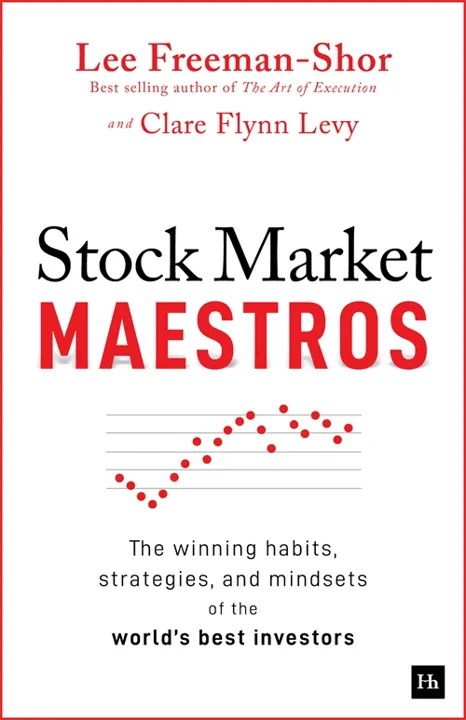
John Barr, Portfolio Manager of the top-ranked Needham Aggressive Growth Fund, is known for his disciplined, long-horizon investment style — a style distinctive enough to earn him a profile in Stock Market Maestros, a book featuring 12 of the world's best investors.
Julie Rogers, Executive Director of the ESD Alliance, sat down with Barr to explore his strategies, habits, and investing mindset. For readers in the EDA and semiconductor community, his perspective will feel familiar: Barr spent 14 years in EDA before moving to Wall Street, and he credits that experience as foundational to everything he does today.
"The EDA industry of the '80s and '90s was an amazing place to learn about technology and business," he says. "Those lessons carry forward."
Rogers: How do you stay on top of a changing investment landscape?
Barr: I've been managing this Fund for 17 years. I call my investment process "Hidden to Quality Compounders."
 A “Hidden Compounder” meets four criteria. First, the company has an established business but is investing in something new beyond the typical Wall Street horizon of 12 to 18 months. That requires understanding both the current business and where it's going. Second, the company has the potential to grow five to ten times its current size. Because I invest for the long term — my Fund averages a ten-year holding period — I believe that kind of upside is the only way to reliably beat the market.
Third is great management. To me, that usually means founders, family members, or long-tenured executives. I came to that view through my EDA experience. These are people who think long-term and don't veer off course technologically. Finally, I look for availability at a margin-of-safety price — one that reflects the value of the new business or is supported by the balance sheet. Then, I hold while the company transitions and the new business begins to contribute meaningfully.
Where do I invest? Broadly defined infrastructure. That starts with technology and manufacturing infrastructure — the tools and products used by engineers — which means semiconductors and data centers, general manufacturing, and traditional infrastructure: concrete, the grid, water, and energy.
Defense is another area. Since Russia's invasion of Ukraine, I've thought more seriously about deterrence and the role technology plays in it—autonomous systems, drones, maritime operations, and cybersecurity. Labor is part of this too. The U.S. has a serious shortage of skilled trade workers, and there are publicly-traded skilled-labor trade schools training people to become HVAC technicians, electricians, electrical linemen, welders, auto and aviation technicians. The architecture, engineering, and construction firms that employ those graduates are worth watching.
That's my universe: tech and industrials, broadly defined. Finding opportunities means reading conference call transcripts and federal filings, piecing together signals the market hasn't yet recognized. None of it would be possible without my years in EDA.
Rogers: It sounds like most of these are small cap stocks.
Barr: It's a small cap fund. When I own a small cap stock for ten-plus years and it succeeds, it doesn't stay small. Some of them, anyway.
Rogers: Do you hold on at that point, or do they exit the portfolio?
Barr: Generally, we hold on. If a position crosses 7.5% of the portfolio, we may trim. If something is off track, we may sell. Once a company crosses the $10–15 billion market cap range — the upper end of small caps — we may opportunistically purchase shares, but generally, we let the position appreciate.
Rogers: How do you research a portfolio company’s competition?
Barr: The same way: read the transcripts and the filings, and talk to competitors and customers. It's reading, writing, and talking to people — constantly. Everywhere I go, I'm trying to observe what's happening and find connections that may not be obvious.
Rogers: As more companies pass the baton to the next generation, how do you build trust in new leadership? Do you develop that second-tier relationship that you had with the founder?
Barr: Ideally, I've gotten to know them before the transition. Formally, that happens when companies make their next-tier leaders available to investors. Informally, it happens at trade shows and industry events. The best practice approach is for companies to introduce the heir apparent to the investing community well before any leadership change. That gives everyone time to build a relationship.
Rogers: How long does the “Hidden Compounder” stage typically last?
Barr: When I invest, these companies are small — market caps of $200 million to $2 billion, often with a single product or business line. They're already investing in the next thing; that's what I'm really investing in. The new business might start contributing within a year or two of my investment, but the company has probably been working on it for two to five years before it crossed my radar.
In my experience, about half of my “Hidden Compounders” successfully transition to the next stage. Of those, about half become what I call “Quality Compounders,” which are companies that have clearly hit their stride, like Cadence and Synopsys did years ago.
Of that final group, a handful become the big successes — stocks that appreciate between five and 100 times. I have one at roughly 230x since time of first purchase. The full arc, from “Hidden” to “Quality,” can take a decade. Synopsys and Cadence are great examples. Unfortunately, I did not invest in either, despite my background. It's a long-term proposition, and it happens to a minority of companies. But that's exactly where I want to be invested — at the beginning of that journey.
Rogers: What's your geographic focus?
Barr: The Fund predominantly invests in U.S.-listed companies. But like everything in electronics, it's a global business. Asia matters a great deal. Europe, less so, but you have to know what's happening on all sides.
Rogers: Do you have some all-time favorites?
Barr: PDF Solutions is at the top of the list. Co-founders John Kibarian and Kimon Michaels have led the company since the beginning and they think in decades, not quarters. I first bought PDF Solutions in 2010 at $4 a share. The Fund is up over 15x on those initial shares.
The company has gone through three distinct transitions in that time. We added to our position between 2015 and 2018 as it navigated the loss of Samsung as a major customer and began investing in the Exensio data analytics platform, and its Design-for-Inspection™ contactless E-beam tool. By 2020, those investments started generating returns. In my framework, I still place PDF Solutions in the late “Hidden/early Transition” stage — there's more to come.
What makes John and Kimon stand out, beyond their engineering leadership, is their approach to compensation. Since their IPO in 2001, they have never taken a stock option grant — preferring, as their proxy states, to leave those shares for employees and contractors. Their base salaries are a fraction of what comparable small cap CEOs earn. They own substantial stock and rarely sell it. I believe they are building PDF for their customers, their team, their public investors and themselves, in that order. No one else does this. It's extraordinary. I use PDF Solutions as an example of best practice in management compensation and stock ownership.
Rogers: What other advice would you have for readers of our blog and individual investors?
Barr: Start with Peter Lynch's One Up On Wall Street: How To Use What You Already Know To Make Money In The Market. His core message is to invest in what you know — and your readers know a lot. That's a real edge.
Second, be patient. Some people make money through trading and with options, but lasting wealth comes from holding. Have a clear reason for buying and then give it time. Some investments won't work. Some companies will fail. Some will peak and decline. But a few will more than make up for the inevitable mistakes.
Third, learn basic financial statement analysis. It doesn't need to be complicated — just enough to navigate an income statement, balance sheet, and cash flow statement. For people in the EDA industry, that's genuinely straightforward. You can teach yourself in about ten hours.
And fourth: past performance is not indicative of future results. Things can go wrong. Be careful. Diversify — though if investing isn't your full-time job, you don't need to follow 20 companies. Studies suggest owning around ten, across different industries, captures most of the benefit of diversification.
I must add a disclaimer from a compliance perspective that not everything works out and be careful. Consult a financial advisor or expert.
About John Barr
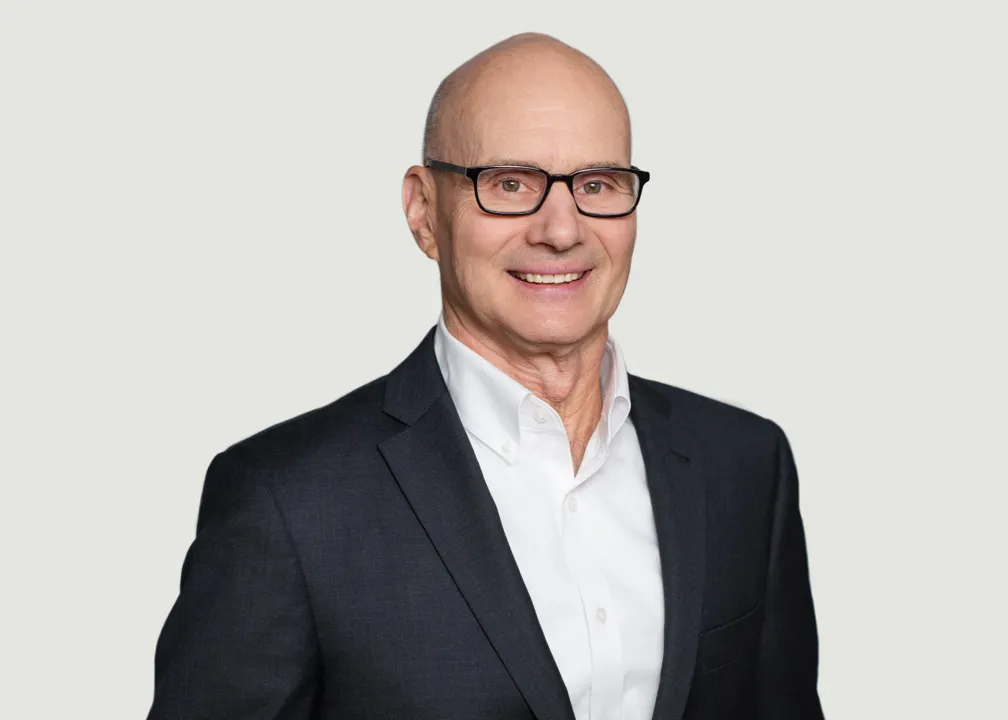 Since 2010, John Barr has served as Co-Portfolio Manager of the Needham Growth Fund and Portfolio Manager of the Needham Aggressive Growth Fund. He began his Wall Street career in 1995 at Needham & Company as a sell-side analyst covering technical software companies. He was named an Institutional Investor All-Star and led a top-ranked software team recognized by Reuters.
From 2000 to 2002, Barr was a senior analyst at Robertson Stephens covering semiconductor technology. In 2002, he joined Buckingham Capital Management as a portfolio manager and analyst for a long/short domestic equity hedge fund. From 2009 to 2017, he served on the board of directors of Coventor, Inc., prior to its acquisition by Lam Research. He joined Needham Asset Management in 2009.
Before his Wall Street career, Barr spent 14 years in the EDA industry in marketing, sales, and corporate development. In 2020, he co-founded the Wall Street Development Accelerator Internship Program, which introduces students to career opportunities in financial services.
Julie Rogers is Executive Director of the ESD Alliance, a SEMI Technology Coalition.


