downloadGroupGroupnoun_press release_995423_000000 copyGroupnoun_Feed_96767_000000Group 19noun_pictures_1817522_000000Member company iconResource item iconStore item iconGroup 19Group 19noun_Photo_2085192_000000 Copynoun_presentation_2096081_000000Group 19Group Copy 7noun_webinar_692730_000000Path
주요 콘텐츠로 건너뛰기
Default Banner Image

EMS

REGISTRATION

Registration
  • 사전등록 마감일: 2023년 5월 12일(금) 오후 3시

등록비용

  • 사전등록 (5월 12일까지)
    • SEMI 회원사: 28만원
    • 비회원사: 33만원
  • 현장등록
    • SEMI 회원사: 33만원
    • 비회원사: 38만원

※ 한 회사에서 5인 이상 등록할 경우 단체등록가가 적용됩니다. 단체등록은 이메일([email protected])로 문의 바랍니다.

Registration
대한민국 사전등록 바로가기 SMC-Korea-2023-Banner_2023.03.14_square.jpg 비즈니스 기술

OVERVIEW

  • 날짜: 2023년 5월 17일(수)
  • 시간: 09:00 - 17:30
  • 장소: 수원컨벤션센터 컨벤션 2홀


SPONSORS

SMC-Korea-2023-Sponsor_DW.jpg SMC-Korea-2023-Sponsor_DP.jpg SMC-Korea-2023-Sponsor_WM.jpg SMC-Korea-2023-Sponsor_MC.jpg
SMC-Korea-2023-Sponsor_LC.jpgSMC-Korea-2023-Sponsor_KT.jpgSMC-Korea-2023-Sponsor_ET.jpgSMC-Korea-2023-Sponsor_JSR.jpg
SMC-Korea-2023-Sponsor_AC.jpg SMC-Korea-2023-Sponsor_DS_0.jpg SMC-Korea-2023-Sponsor_SM_1.jpgSMC-Korea-2023-Sponsor_CO_1.jpg

line_2.jpg


line_6.jpg

NOTICE

  • 아젠다는 연사 사정에 의하여 임의로 변경될 수 있습니다.
  • 행사 종료 후 참석자들에게 연사 동의를 얻은 자료에 한하여 발표자료를 공유드릴 예정입니다.


CONTACT

대한민국
경기도 수원시
수원컨벤션센터 컨벤션 2홀

9:00 am - 9:05 am

Welcome

Keynote

9:05 am - 9:35 am
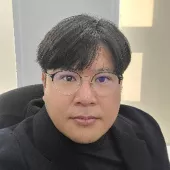
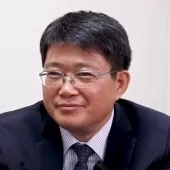
1_Namsung Kim_Applied Materials_Abstract_Biography_SMC Korea 2023.jpg
Namsung Kim
Senior Director
Applied Materials

GAA(Gate-All-Around) technology to enable continuous CMOS transistor scaling for energy efficient computing solution

Namsung Kim is a Senior Director in the Integrated Module Solutions (IMS) Group at Applied Materials. He is currently responsible for managing customer engagement programs, driving business growth, and leading cross-functional teams (various Business Units) to deliver the integrated materials/modules-base product solutions across leading-edge CMOS Logic and Memory technologies. Prior to this role, he has successfully led & accomplished the definition of CMOS Logic technology roadmap, its inflections of future technology nodes and delivered multiple product development paths by validating innovative pathway solutions.

He joined Applied Materials, Inc., USA in 2015, bringing over 20 years of semiconductor device/process integration experiences (various engineering/management positions) from both CMOS Logic (GlobalFoundries/IBM alliance in USA and SSMC in Singapore) and Memory (SK-Hynix, previously LG Semi., in Korea) industries. He earned a MS in electrical and computer engineering from the National University of Singapore. He has authored and co-authored more than 50 technical publications and holds over 40 patents in the field of advanced logic (FinFETs and GAA devices) and memory technologies.
※ Abstract

9:35 am - 10:05 am
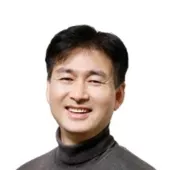
Jeongdong Choe5.PNG
Jeongdong Choe
Senior Technical Fellow
TechInsights

Market & Technology Trends for Memory Devices including Materials

Dr. Jeongdong Choe is a Senior Technical Fellow at TechInsights. He has over 30 years of experience in the semiconductor industry, R&D, and reverse engineering on DRAM, NAND/NOR FLASH, SRAM/Logic, and Emerging Memory. He worked for SK Hynix and Samsung Electronics for over 20 years. He joined TechInsights and has been focusing on technology analysis of semiconductor processes, materials, devices, and architecture. He has written many articles on memory technology including roadmaps, technology trends, and detailed comparisons.

※ Abstract

10:05 am - 10:35 am
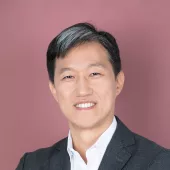
Profile.jpg
Inji Yeom
Associate Partner
Mckinsey & Company

Global Supply Chain

10:35 am - 10:50 am

Break

Session 1: Advanced Materials for Enabling Next-Generation Devices

10:50 am - 11:15 am
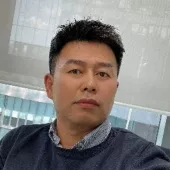
4_JMG_Air Liquide_Abstract_Biography SMC Korea 2023.jpg
Jean-Marc Girard
CTO and Sr. VP
Air Liquide

Precursors for Memory

Jean-Marc Girard Ph.D. is CTO and Sr. VP of Manufacturing Technologies at Air Liquide Advanced Materials (ALAM), and an Air Liquid Group Fellow. He has 25 years of experience of R&D and product development management in the field of semiconductor materials and process technology in Europe, Japan and the US, and is one of the founders and was the global director of ALOHA™ from 2005 to 2010 (Air Liquide’s original CVD/ALD materials product line).
Within ALAM, Jean-Marc globally manages the Research and Development for deposition & advanced dry etching materials, oversees strategic engagements and collaborations with leading customers and equipment companies, and supervises the Intellectual Property generation and portfolio management. Since 2021, Jean-Marc’s role has expanded to leading packaging and manufacturing technology developments efforts.
11:15 am - 11:40 am
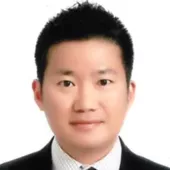
5_Byunghee Kim_Lam Research_Abstract_SMC Korea 2023.jpg
Andy Kim
Sr. Director
Lam Research

Materials Trends in Semiconductor Manufacturing

“Byunghee Kim” has been Sr. Technologist in Lam Research since 2017.

Prior to joining Lam Research, “Kim” was director position for Samsung Electronics. During his 23 years at Samsung Electronics, “Kim” spent time doing module development, including gate, contact and BEOL.

“Kim” received a bachelor’s degree in chemistry from Yonsei Univ., Seoul, Korea and a master’s degree in MSE from Seoul Nat’l Univ., Seoul, Korea.
※ Abstract

11:40 am - 12:05 pm
6_Jeongsik Kim_Dongjin Semichem_Abstract_Biography_SMC Korea 2023.jpg
Jeongsik Kim
Genaral Manager
Dongjin Semichem

CAR Type EUV Resist Performance Improvement

Jeongsik Kim, received a MS degree in Organic Synthetic Chemistry from Sogang University(Korean) in 2006 and then joined Dongjin Semichem. He had developed the patterning process materials such as bottom antireflective coating(BARC), spin on hardmask(SOH), photoresist materials in Semiconductor Materials Business Division since 2006. In 2013, he had joined the advanced lithography program of IMEC(Belgium) as Dongjin Semichem assignee and researched the ArF immersion patterning and defectivity for two years. Currently, he is in charge of developing EUV photoresist at Dongjin Semichem.

※ Abstract

12:05 pm - 1:30 pm

Lunch

Session 2: GWP

1:30 pm - 1:55 pm
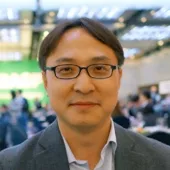
7_Sung Ho Kim_Merck_Abstract_Biography_SMC Korea 2023.png
Sung-Ho Kim
Head of Global Marketing
Merck KGaA, Darmstadt, Germany

Material Innovation for low-GWP Gas Development

Sung Ho Kim is the Head of Specialty Gases Marketing, Clean & Etch platform, Merck KGaA, Darmstadt, Germany where he drives the execution of product marketing strategy to meet with industry’s dry etch and chamber clean gas technical and commercial needs, and leads product life cycle management and NPI (New product introduction) initiatives to help customers to advance its dry etch and chamber clean process performance. He is a proven business leader with more than 20 years of experience in the semiconductor materials industry, with a wide range of leadership experience in product marketing, product management, and technical/engineering expertise. He is based in Pangyo, Korea. Sung-Ho received a bachelor's degree in Chemical Engineering from Seoul National University.
※ Abstract

1:55 pm - 2:20 pm
8_WonSeob Cho_BASF_Biography_SMC Korea 2023.jpg
WonSeob Cho
Head of BASF Electronic Materials R&D Center in Suwon
BASF

Aiming CO2 neutrality – Sustainable Solutions for IC Applications

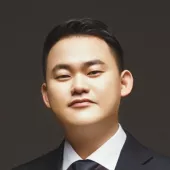
Won-Seob Cho, Ph.D. presently serves as the Head of the BASF Electronics Materials R&D Center in Suwon, Korea. In this esteemed position, he is responsible for leading research teams dedicated to the development of advanced wet chemical solutions, such as advanced cleaning and electroplating methods. He boasts over 20 years of research and development experience, particularly in the formulation and electrochemical screening of solutions.

Prior to joining BASF a decade ago, He served as a Principal Researcher at Samsung SDI and Samsung Fine Chemicals, where he specialized in developing planarization and electroplating solutions. Notably, his research interests have recently expanded to encompass the Advanced Package field.

Won-Seob Cho holds a distinguished Ph.D. in Chemistry from the University of Texas at Austin and has also served as a postdoctoral fellow in Supramolecular Chemistry at the University of California at Los Angeles, further solidifying his scientific expertise.
※ Abstract

2:20 pm - 2:45 pm
9_Sang Uk Nam_KIET_Abstract_Biography_SMC Korea 2023_nam sanguk.jpg
Sang Uk Nam
Associate Research Fellow
KIET

Carbon Neutral Strategy of Korean Government and Role of Material Companies

Dr. Nam, Sang Uk is conducting various studies on the ICT (semiconductor, display) industry based on economics at the KIET (Korea Institute of Industrial Research), a national research institute.

Since joining the KIET in 2018, he has participated in various studies on ICT industry policies such as Japanese export regulations, development strategy of material, parts and equipment, global value chain, and digital transformation.

In the field of carbon neutrality, he participated in major reports such as the semiconductor and display industry's carbon neutral promotion strategy and policy tasks, and the impact of RE100 on Korea's major export industries.

※ Abstract

Session 3: Market Trends

2:45 pm - 3:10 pm
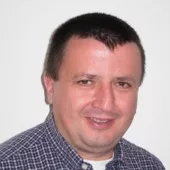
S4-1_Mark Thirsk.jpg
Mark Thirsk
Managing Partner
Linx Consulting

Materials still matter. Trends in materials demand and supply.

Mark Thirsk is Managing Partner of Linx Consulting, a leading management and strategic consulting company for electronic materials.

Mark Thirsk has experience spanning many materials and processes in wafer fabrication, combined with economic and business forecasting, strategic planning, technical marketing and M&A experience. Mark has worked in materials and equipment development, marketing, applications support, and production, as well as having expertise in business incubation, strategic development, and M&A. Mark is well placed to bring clarity and insight to market analysis from both a technical and commercial perspective. Additionally, Mark has been active in SEMI since 1999, volunteering in industry advocacy, education, and recruiting.

Mark has worked in the UK, Germany, Belgium, and the USA. Mark holds an Honours B.Sc. in Metallurgy and Materials Science from Birmingham University and an MBA

※ Abstract

3:10 pm - 3:35 pm
S6_TechSearch_E. Jan Vardaman(CFP)_picture.jpg
E. Jan Vardaman
President & Founder
TechSearch International

Advanced Packaging Technology & Market Trends

E. Jan Vardaman is president and founder of TechSearch International, Inc., which has provided market research and technology trend analysis in semiconductor packaging since 1987. She is the author of numerous publications on emerging trends in semiconductor packaging and assembly. She is a senior member of IEEE EPS and is an IEEE EPS Distinguished Lecturer. She received the IMAPS GBC Partnership award in 2012, the Daniel C. Hughes, Jr. Memorial Award in 2018, the Sidney J. Stein International Award in 2019, and she is an IMAPS Fellow. She is a member of MEPTEC, SMTA, and SEMI. Before founding TechSearch International, she served on the corporate staff of Microelectronics and Computer Technology Corporation (MCC), the electronics industry’s first pre-competitive research consortium.

3:35 pm - 3:50 pm

Break

Session 4: Collaboration

3:50 pm - 4:20 pm
blank
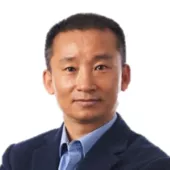
Sungsu Kim
Project Leader
SK hynix

Advanced Packaging Material for Semiconductor
4:20 pm - 4:50 pm
13_Sam-Jong Choi_Samsung Electronics_Abstract_Biography_SMC Korea 2023.png
Samjong Choi
Corporate VP / Group Leader
Samsung Electronics

Re-visioning Material Technology for Sustainable Resource Utilization and Supply Chain

Sam-Jong Choi, Ph.D. has been working as a material expert at Samsung Electronics Semiconductor for over 30 years. He joined the company in 1991 and has been responsible as a material engineer and expert for Memory Manufacturing Technology Center in Samsung Electronics by now. He obtained a Ph.D in Electronic, Computer, and Telecommunication Engineering from Hanyang University in 2020.
In 2019, he was promoted to Group Leader for Memory Material Technology Group, where he oversaw the development of new materials and quality management for Samsung Electronics. In 2020, Samjong Choi was appointed as an Corporate VP at Samsung Electronics, where he continues to play a key role in the field of semiconductor material.
As an experienced engineer and leader, he brings a wealth of knowledge and expertise to his current role, making Samsung Electronics stay at the forefront of technological innovation in the global semiconductor material industry.

※ Abstract

4:50 pm - 5:30 pm

Networking Reception

EMS

Semiconductor Materials for Sustainable Future

반도체 산업에서는 첨단 기술의 지속적인 발전만큼이나 안정적이고 효율적인 글로벌 공급망이 중요합니다. 무역갈등, 지구온난화지수(GWP)와 같은 변수 뿐만 아니라 공급망 재편 문제도 부각되고 있어 현재 반도체 생태계의 신속한 대응이 필수적인 상황입니다. 이에 SMC Korea는 반도체 업계가 함께 목소리를 내야 할 사안을 논의할 수 있는 기회를 제공하고자 합니다.
SMC Korea 2023은 글로벌 선도 기업의 참여를 통해 최신 기술과 시장에 대한 정보를 공유하는 동시에, 소재 측면에서의 GWP를 점검하는 등 다양한 관점의 발표를 준비하였습니다. 본 행사 참석을 통해 글로벌 전문가들의 인사이트를 얻어 가시기 바랍니다.


Off Add to Calendar 2023-05-17 00:00:00 2023-05-17 00:00:00 SMC Korea 2023 Semiconductor Materials for Sustainable Future 반도체 산업에서는 첨단 기술의 지속적인 발전만큼이나 안정적이고 효율적인 글로벌 공급망이 중요합니다. 무역갈등, 지구온난화지수(GWP)와 같은 변수 뿐만 아니라 공급망 재편 문제도 부각되고 있어 현재 반도체 생태계의 신속한 대응이 필수적인 상황입니다. 이에 SMC Korea는 반도체 업계가 함께 목소리를 내야 할 사안을 논의할 수 있는 기회를 제공하고자 합니다. SMC Korea 2023은 글로벌 선도 기업의 참여를 통해 최신 기술과 시장에 대한 정보를 공유하는 동시에, 소재 측면에서의 GWP를 점검하는 등 다양한 관점의 발표를 준비하였습니다. 본 행사 참석을 통해 글로벌 전문가들의 인사이트를 얻어 가시기 바랍니다. 대한민국 경기도 수원시 수원컨벤션센터 컨벤션 2홀 SEMI.org [email protected] Asia/Seoul public Asia/Seoul

Event format
Promote in calendar
Off

Registration

Registration

※ 사전등록 마감일: 2026년 5월 7일(목) 오전 10시 


Registration Fee  

  • Early Bird
    • SEMI Member: KRW 308,000
    • Non-Member: KRW 363,000
  • On site
    • SEMI Member : KRW 385,000
    • Non-Member: KRW 385,000
  • Group
    • SEMI Member : KRW 275,000
    • Non-Member: KRW 330,000
      ※ 5인 이상 등록 시 단체등록비가 적용됩니다.

※ 단체등록은 SEMI Korea 프로그램팀([email protected])으로 문의 바랍니다.

Registration
대한민국 SMC Korea 2026 비즈니스 기술

OVERVIEW

  • 일시: 2026년 5월 12일(화) 8:30-16:30  
  • 장소: 수원컨벤션센터 3층 컨벤션홀 2  
  • 언어: 한국어/영어 (동시통역 제공)  


NOTICE

  • 아젠다는 연사 사정에 의하여 임의로 변경될 수 있습니다.
  • 발표자료는 연사의 배포 동의를 얻은 자료에 한하여 행사 종료 후 SEMI Korea 프로그램 등록사이트(https://semikrprogram.com)에 로그인하셔서 다운로드하실 수 있습니다.
  • 주차비는 제공되지 않습니다.  


SPONSORS

SMC-Korea-2023-Sponsor_DW.jpg
SMC-Korea-2023-Sponsor_DS_0.jpg SMC-Korea-2023-Sponsor_JSR.jpg
Huntsman

line_2.jpg

CONTACT


대한민국
수원컨벤션센터

8:30 am - 9:00 am

Welcome Reception

9:00 am - 9:25 am
Anand Murthy
Anand Murthy
VP, Advanced Technology Integration, Office of the CTO
Lam Research

How Wafer Processing Is Reshaping the 3D Era for AI

AI is fueling unprecedented growth and accelerating demand for advanced devices. Its requirements for performance, power, and area scaling are driving memory and logic devices toward 3D architectures.
At the heart of this 3D transformation, processing steps must enable taller, perpendicular structures as well as smaller features. Meeting these requirements calls for new deposition and etch capabilities that did not exist before, leading to breakthroughs needed in areas such as atomic-level deposition and etch (ALD and ALE), high-aspect-ratio processing, dry resist EUV patterning, and the adoption of new materials like molybdenum (Mo). As a result, the transition to 3D devices will drive increased intensity of deposition and etch processing.
This presentation will explore how deposition and etch are critical to unlocking the future of 3D devices, with increasing velocity required to meet the demands of AI-driven innovation.

※ 연사정보

9:25 am - 9:50 am
Ganesh Panaman
Ganesh Panaman
Head of Technology & Innovation and President of Intermolecular®
Merck

Integrated Materials Innovation in the AI Era

As the semiconductor industry navigates the challenges of dimensional and functional scaling in the artificial intelligence (AI) era, advanced materials science has emerged as a critical enabler for performance enhancement. Modern AI-centric architectures demand the integration of increasingly complex system-on-chip (SoC) designs with non-traditional material systems.
This work details a high-throughput methodology for the rapid down-selection and optimization of multi-element thin films, ensuring alignment with both physical and electrical key performance indicators (KPIs). Utilizing combinatorial physical vapor deposition (PVD) in conjunction with unit-cell electrical test vehicles, we systematically screen an expansive elemental compositional space to identify optimal candidates. Advanced machine learning (ML) algorithms are integrated into each phase of the development lifecycle—spanning precursor synthesis, process optimization, and heterogeneous integration—to satisfy the rigorous specifications of emerging device applications. The synergy between integrated materials engineering and AI-driven informatics significantly reduces the temporal gap between material discovery and device-level implementation.

※ 연사정보

9:50 am - 10:15 am
한세희 랩장
Sehui Han
Lab Leader
LG AI Research

AI for Scientific Discovery: EXAONE Discovery

Chemical and materials research faces increasing demands for data-driven automation and autonomous research systems due to vast exploration spaces and complex decision-making processes. In this talk, we introduce EXAONE Discovery as a Chemical Agentic AI system and present an integrated research framework designed to accelerate scientific discovery.
EXAONE Discovery is an agent-based system that tightly integrates property prediction, molecular generation, synthesis prediction, and literature/data extraction. Based on given research objectives, the system accumulates relevant data, generates candidate molecules using model-driven approaches, evaluates their properties, and derives feasible synthetic routes—automating the end-to-end discovery pipeline. Furthermore, it is designed to enable a closed-loop research paradigm by interfacing with autonomous laboratories, connecting design–prediction–synthesis–validation cycles. This allows hypotheses proposed by AI to be experimentally validated, with results continuously fed back into the system for iterative model improvement and optimization.
In this talk, we will demonstrate how this integrated approach enhances research productivity across various industrial use cases in materials discovery and optimization, and discuss future directions of Chemical Agentic AI.

※ 연사정보

10:15 am - 10:40 am
이세철
Peter Lee
Managing Director at Citigroup, Semiconductor Analyst
Citigroup

Global Memory Technology & Market Outlook

10:40 am - 11:05 am
황중일
Jung-il Hwang
Vice President
SK hynix

Materials Challenges and Path Forward for Future Memory Scaling

11:05 am - 11:25 am

Networking Break

11:25 am - 12:30 pm

Panel Discussion

12:30 pm - 1:30 pm

Networking Lunch

1:30 pm - 1:55 pm
Xiangyu Guo
Xiangyu Guo
Technology Program Manager
Air Liquide

Emerging Etching Chemistry for Advanced Semiconductor Manufacturing

The rising technical demands for advanced semiconductor device manufacturing, and the industry’s ambitious net-zero commitments necessitate the development of novel etch chemistries that deliver both technical excellence and environmental sustainability. This talk will present an overview of the emerging etching chemistries developed by Air Liquide for variety-targeted applications. These innovative chemistries focus on delivering improved performance with unique technical merits to address current industry challenges. Exemplified by a novel low Global Warming Potential (GWP) designed for general dielectric etch, its synergistic integration with advanced abatement solutions, and a simplified Life Cycle Analysis (LCA) - from raw material extraction through processing, manufacturing, distribution, and use, this presentation aims to provide insights into a pathway towards more sustainable semiconductor manufacturing processes.

※ 연사정보

1:55 pm - 2:20 pm
Kirthi Rachakonda
Kirthi Rachakonda
Global Product Manager
Applied Materials

Enabling Advanced Metallization with Selective Deposition

As device architectures scale toward the angstrom era, metallization has emerged as one of the most critical bottlenecks to continued improvements in power and performance. Shrinking feature dimensions increase resistance, heighten reliability risks, and add complexity in interconnects and contacts. At these scales, traditional approaches which uniformly affect all wafer surfaces are increasingly ineffective. They rely heavily on lithography to define placement, and struggle to address tighter geometries and growing sensitivity to interfaces. Selective deposition is a solution which enables atomicscale control of where metals grow, placing material only where it is needed, without relying on patterning. It also enables monocrystalline metal growth, eliminating grain boundaries to minimize contact resistance.

This presentation will highlight how Applied Materials’ integrated materials solutions are enabling multiple inflections through area selective metallization. Selective Cobalt Capping technology encapsulates copper interconnects, improving adhesion, suppressing electromigration, and extending copper reliability to advanced nodes. Applied’s Selective Barrier eliminates a highly resistive interface at the interface of interconnect wiring. For contact fill, Applied developed Selective Tungsten (W) as a liner-less gap-fill solution that eliminates traditional liner/barrier layers and enables bottomup, seamfree metal fill. Finally, we introduce Selective Molybdenum (Mo) deposition that carries lowresistivity contact scaling forward as dimensions approach the fundamental scaling limits of W. Applied’s state-of-the-art atomic layer deposition tool for molybdenum delivers bottom-up, single-crystal Mo growth, enabling the next generation of contact scaling.

※ 연사정보

2:20 pm - 2:45 pm
JungHwan Hah
JungHwan Hah
CEO
SK Trichem

Periodic Table & Device Evolution

2:45 pm - 3:10 pm
Kuntack Lee
Kuntack Lee
Master
Samsung Electronics

Next Generation Cleaning Processes and Materials

Cleaning processes originally relied on wet etch based patterning. However, dry etching now performs the majority of the patterning work, so wet etching is no longer needed for most pattern creation steps. Consequently, the focus of cleaning has shifted from patterning to the removal of contaminants. To obtain a clean surface, we must eliminate unwanted contaminants without any side effects such as pattern damage, collapse, material loss, or corrosion.
However, in the current era of 3 D structured devices such as V NAND, GAA, and 3 D DRAM, lateral wet etching is essential for patterning 3 D devices, and the proportion of wet etching in cleaning processes is increasing. Additionally, different kinds of selectivity such as concentration selectivity and area selectivity, have become important, in addition to conventional material selectivity. Sometimes we have to remove a film uniformly even though there are seams and voids. In addition, pattern loading has become a critical factor in lateral removal processes. We must solve these loading issues to achieve better performance and yield.
From time to time we must use more flexible, multi step processes; therefore, premixed chemistry is not enough to meet our purpose. Due to the flexibility of dry (gas phase) cleaning, the portion of dry cleaning has been increasing sharply. Area selectivity has also become another challenge. We must etch without corner rounding or climbing, and we want to perform anisotropic etching.
Conversely, based on the generic clean roadmap, high aspect ratio cleaning and low consumption cleaning will remain continuous challenges. Super critical CO2 drying is a solution for pattern collapse in HAR patterns, yet a dryer that is milder than CO2 but better than conventional IPA dryer technology is still required. In terms of chemical reduction, the puddle process may be a solution, but some side effects related to temperature consistency and cleanliness differences due to fluid dynamics must be resolved before implementation.

※ 연사정보

3:10 pm - 3:30 pm

Networking Break

3:30 pm - 4:30 pm

Panel Discussion

4:30 pm

Adjourn

EMS

AI Enabled Materials Breakthroughs: From Molecules to Manufacturing

AI 중심의 기술 환경으로의 전환은 반도체 산업 전반에 걸쳐 소재 혁신의 새로운 패러다임을 요구하고 있습니다. 이에 SMC (Strategic Materials Conference) Korea는 AI 기반 기술 진화에 대응하는 차세대 반도체 소재 및 공정 혁신 전략을 집중적으로 조명합니다.  

본 컨퍼런스에서는 글로벌 반도체 생태계를 대표하는 주요 기업이 참여하여, 소재 설계부터 실제 제조 공정에 이르기까지, 소재 혁신을 둘러싼 전략적 방향성과 공정 적용 기술을 심도 있게 공유합니다.  

첫 번째 세션에서는 AI 시대에 요구되는 소재 전략을 중심으로, 시장 및 기술 트렌드와 AI 기반 개발 접근 방식을 통해 차세대 반도체를 위한 통합적 방향성을 다각도로 조망합니다. 이어지는 두 번째 세션에서는 첨단 반도체 제조를 가능하게 하는 핵심 소재를 중심으로, 실제 공정 적용 관점에서의 심층적인 논의를 전개합니다.  

반도체 생태계를 대표하는 주요 플레이어들이 한자리에 모여, AI 시대를 이끄는 소재 혁신의 현재와 미래를 입체적으로 조망할 수 있는 본 컨퍼런스를 통해 깊이 있는 기술 인사이트와 함께, 산업 전반을 아우르는 협력과 연결의 가치를 경험하시기를 바랍니다.
8:30 am - 4:30 pm Off Add to Calendar 2026-05-12 08:30:00 2026-05-12 16:30:00 SMC (Strategic Materials Conference) Korea 2026 AI Enabled Materials Breakthroughs: From Molecules to ManufacturingAI 중심의 기술 환경으로의 전환은 반도체 산업 전반에 걸쳐 소재 혁신의 새로운 패러다임을 요구하고 있습니다. 이에 SMC (Strategic Materials Conference) Korea는 AI 기반 기술 진화에 대응하는 차세대 반도체 소재 및 공정 혁신 전략을 집중적으로 조명합니다.  본 컨퍼런스에서는 글로벌 반도체 생태계를 대표하는 주요 기업이 참여하여, 소재 설계부터 실제 제조 공정에 이르기까지, 소재 혁신을 둘러싼 전략적 방향성과 공정 적용 기술을 심도 있게 공유합니다.  첫 번째 세션에서는 AI 시대에 요구되는 소재 전략을 중심으로, 시장 및 기술 트렌드와 AI 기반 개발 접근 방식을 통해 차세대 반도체를 위한 통합적 방향성을 다각도로 조망합니다. 이어지는 두 번째 세션에서는 첨단 반도체 제조를 가능하게 하는 핵심 소재를 중심으로, 실제 공정 적용 관점에서의 심층적인 논의를 전개합니다.  반도체 생태계를 대표하는 주요 플레이어들이 한자리에 모여, AI 시대를 이끄는 소재 혁신의 현재와 미래를 입체적으로 조망할 수 있는 본 컨퍼런스를 통해 깊이 있는 기술 인사이트와 함께, 산업 전반을 아우르는 협력과 연결의 가치를 경험하시기를 바랍니다. 대한민국 수원컨벤션센터 SEMI.org [email protected] Asia/Seoul public Asia/Seoul
Event format
Promote in calendar
Off

Registration

Registration
  • Early-Bird Registration Deadline: Wed, May 7, 5PM (KST)
  • Group Registration Deadline: Fri, May 2, 5PM (KST)

Registration Fee  

  • Early Bird
    • SEMI Member: KRW 308,000
    • Non Member: KRW 363,000
  • On site
    • SEMI Member : KRW 385,000
    • Non Member: KRW 385,000
  • Group
    • SEMI Member : KRW 275,000
    • Non Member: KRW 330,000
      *5인 이상 등록 시 단체등록비가 적용됩니다.
      *단체등록은 SEMI Korea 프로그램팀([email protected])으로 문의 바랍니다.

Registration
대한민국 SMCKorea2025_thumnail 비즈니스 기술

OVERVIEW

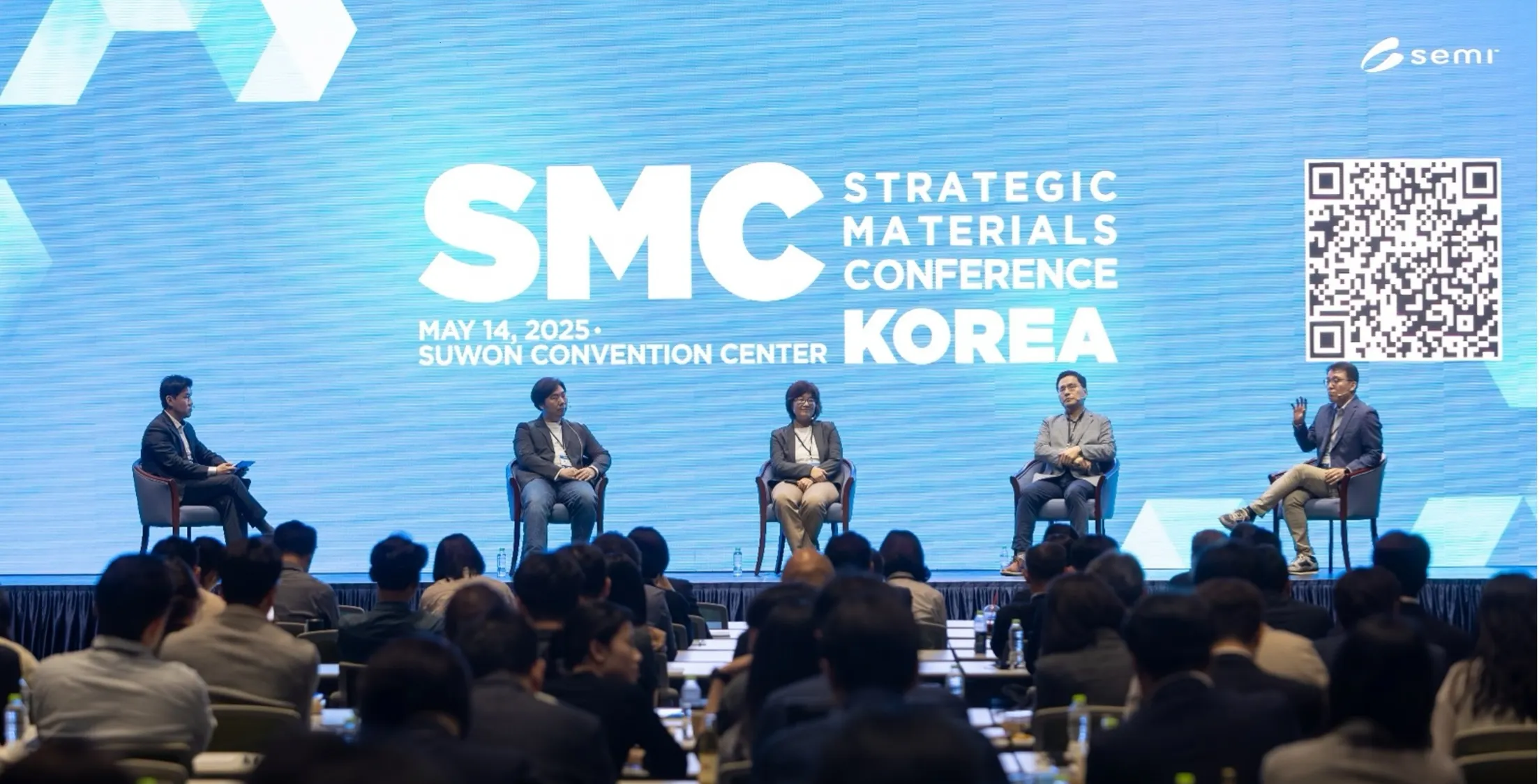
  • 날짜: 2025년 5월 14일(수)
  • 시간: 9:00 - 16:20
  • 장소: 수원컨벤션센터 3층 컨벤션홀 2


NOTICE

  • 아젠다는 연사 사정에 의하여 임의로 변경될 수 있습니다.

  • 등록비에는 행사장에서 도시락으로 제공되는 점심식사가 포함됩니다.
  • 동시통역이 제공됩니다.
  • 발표자료는 연사의 배포 동의를 얻은 자료에 한하여 행사 종료 후 SEMI 통합등록사이트에 로그인하셔서 다운로드하실 수 있습니다.


SPONSORS

SMC-Korea-2023-Sponsor_DW.jpg SMC-Korea-2023-Sponsor_DP.jpg SMC-Korea-2023-Sponsor_JSR.jpg
SMC-Korea-2023-Sponsor_DS_0.jpg SMC-Korea-2023-Sponsor_ET.jpgHuntsman
Air Liquide  

line_2.jpg

CONTACT

대한민국
수원컨벤션센터 3층 컨벤션홀 2

9:00 am - 9:30 am

Welcome Reception

9:30 am - 10:00 am
Sukgu Hong
SukKoo Hong
Head of Material Development Team,
Samsung Electronics

Materials Innovation for 3D DRAM/ CFET

As the era of lateral shrink is coming to a cliff, the need for looking at the remaining axis is uprising - the Z-axis. For DRAM, the introduction of vertical channel is very near, and even the introduction of a full 3D-DRAM is not far away. Fortunately, we have experience of VNAND, which could tell us many things about the difficulties following the 3D stacking structures. Starting from the change in the material we've gone through regarding the conversion of planar to vertical NAND, prospection of the material innovation for 3D-DRAM will be shared. The introduction of materials for the construction of deep holes and lengthy lines will be addressed. Also, needs for innovative sacrificial and auxiliary materials will be presented.

※ 연사정보

10:00 am - 10:25 am
Inhee Lee
Inhee Lee
Program Director / Active Memory Program,
imec

Memory technologies : Status and Scaling

As DRAM scaling approaches fundamental limits, advanced architectures such as 3D DRAM and 4F² DRAM have emerged as promising solutions. The industry initially anticipated the adoption of these technologies around the 1d to 0a nm nodes; however, they remain in development, with mass production likely postponed until the 0b node. For instance, current 3D DRAM samples feature 8–12 layers, while the target is approximately 90 layers. Recent advancements include 3D DRAM with vertical bit-line architecture, demonstrating improved on-current performance and gate control through 5-layered cell stacks utilizing Si/SiGe sacrificial layers and hybrid bonding. Meanwhile, novel 4F² DRAM transistor structures exhibit enhanced operational margins and mitigate floating body effects through dual-gate designs. Additionally, a 3D stackable DRAM architecture with horizontally stacked transistors has been proposed to address challenges such as gate-induced drain leakage (GIDL) and row hammer effects, supported by both experimental and simulation results. Collectively, these innovations underscore the potential of 3D and 4F² DRAM as next-generation solutions to overcome scaling bottlenecks and meet the growing demand for high-density, low-power memory.

※ 연사정보

10:25 am - 10:50 am
Changhwan Choi
Prof. Changhwan Choi
Hanyang University

Materials and Process Technology Perspectives for CFET Device

The development of semiconductor technology can be continuously achieved through the collaboration of materials, processes, devices, and systems, and 3D devices and 3D integration process technologies will be essential in the future. From this perspective, the structural change of semiconductor transistors is expected to evolve from the current Gate-All-Around FET (GAAFET) to a new Complementary FET (CFET) device. This structural change of semiconductor devices requires new materials and process technologies. Various technologies are required, such as Monolithic or Sequential 3D integration, Si/Si or Si/Non-Si substrates, new low-resistivity metals, CMP, Bonding, TSV, and Back-Side Power Network Delivery (BSPDN). In this presentation, we will examine the technological trends from the materials and process perspectives for the development of CFET device technology.

※ 연사정보

10:50 am - 11:15 am
blank
Linghzhi Zhang
Director of Product Management,
Air Liquide Advanced Materials

Si, Ge, B Hydrides for Next Generation Semiconductor Devices – Challenges and Perspectives

For the past six decades, hazardous gas hydrides like GeH4, Si2H6, and B2H6 have been essential to the semiconductor industry. Their high reactivity, strong reducing power, and ability to grow high-quality, carbon-free layers have made them vital for applications ranging from Si and SiGe epitaxy to tungsten metallization. In recent years, new applications and integration schemes have emerged, demanding higher-performance hydride sources for low-temperature Chemical Vapor Deposition (CVD) and epitaxy. This increased global demand drives production investments, despite the challenges of handling, facilitating, and logistics constraints such as limited shelf-life, pyrophoricity, and toxicity. In this talk, we will provide an overview of the current gaseous hydrides landscape and its challenges. We will discuss how the gas industry can ensure the semiconductor industry's continued safe access to these critical materials through enhanced stewardship, optimized supply chains, packaging, and manufacturing techniques. Furthermore, we will provide insights into technology trends towards new-generation, extra-low-temperature epitaxy and high dopant sources, and their potential use in future transistor architectures.

11:15 am - 11:35 am

Networking Break

11:35 am - 12:30 pm

Panel Discussion

12:30 pm - 1:30 pm

Lunch

1:30 pm - 2:00 pm
Prayudi Lianto
Prayudi Lianto
Technology Manager,
Applied Materials

Materials Engineering Innovations to Address HBM Challenges for AI Applications

Emergence of artificial intelligence (AI) is predicted to drive global chip sales to ~$1 trillion revenue by 2030. This surge of AI-targeted chip demand is driving ever-increasing requirement in compute speed to >109 petaFLOPS. High-bandwidth memory (HBM) architecture is well-suited to fulfill this requirement, currently offering >1TB/s bandwidth. To continue improving HBM performance, materials engineering innovations are required in critical packaging building blocks, such as TSV and Hybrid Bonding. Solutions from equipment manufacturer standpoint were presented, in relation to TSV gapfill, low-temperature (<300˚C) hybrid bonding enablement, and bond strength consideration for higher I/O count in the future. Timely solutions to the dynamic HBM integration challenges should be seen holistically and to this end, active partnerships and collaboration across the ecosystem are encouraged.

※ 연사정보

2:00 pm - 2:30 pm
Andy Tuan
Andy Tuan
Managing Director - Asia,
Linx Consulting

Semiconductor Materials Supply Chain and Market Development Trends

The semiconductor industry continues to advance, propelled by growing demand for AI-driven computing and storage technologies and diverse digital applications. However, this growth is tempered by rising economic uncertainty and escalating trade tensions, particularly due to recent U.S. tariff policies, which threaten to disrupt global supply chains. The semiconductor materials sector faces multifaceted challenges, including increasing rapid technological innovation, geopolitical volatility, large-scale capacity expansions and climate change actions. While the market remains relatively stagnant in 2024 compared to 2023, a rebound is anticipated in 2025–2026, driven by long-term demand for advanced computing and storage solutions. A shifting supplier landscape is emerging, marked by the rise of regional players—notably in China—and consolidation among multinational corporations pursuing economies of scale through mergers and acquisitions. Geopolitical pressures are driving localization and dual sourcing, which raise costs, reduce efficiency, and complicate supply chains. This talk highlights the need for a delicate balance between innovation-driven growth and the escalating operational challenges in the semiconductor materials industry.

※ 연사정보

2:30 pm - 2:50 pm

Networking Break

2:50 pm - 3:20 pm
Yohan Ahn
Yohan Ahn
Senior Director,
Entegris

Technological Trends and Necessity of Material Contamination and Filtration for Wafer Defectivity Control in HBM Manufacturing

As the commercialization of artificial intelligence (AI) and the advancement of technologies such as high-performance computing (HPC) and deep learning (DL) progress, the need to process large amounts of data quickly has emerged. Traditional DDR and GDDR memory have limited bandwidth, so HBM, which offers higher performance, has been commercialized, driving the development of new technologies.
Compared to traditional memory chips, HBM has increased chip size and higher defectivity vulnerability due to chip stacking processes. This has led to new technical approaches for wafer defectivity control across the entire material ecosystem.
This presentation reviews the latest trends in filtration/purification technologies aimed at minimizing the impact of particles and impurities in this material ecosystem. By examining current HVM devices and next-generation HBM-related technologies, we aim to contribute to wafer defect control.

※ 연사정보

3:20 pm - 3:50 pm
Mikko Utriainen
Mikko Utriainen
CEO, Ph.D.,
Chipmetrics

Advancing ALD Tool Qualification Using Ultra-High-Aspect-Ratio Test Structures

As semiconductor manufacturers continue the vertical scaling of 3D memory devices, advanced metrology and process control strategies are becoming increasingly essential for maintaining yield and reliability. The rising aspect ratios (AR > 100) of device features present significant challenges for conformal thin-film deposition via atomic layer deposition (ALD). Ultra-thin dielectric films and multilayer stacks—widely used in 3D memory channel holes—are particularly sensitive to process variations. Even minor deviations in ALD process conditions can result in non-uniform film coverage, defect formation, or electrical performance issues, all of which are difficult to detect and monitor within high-aspect-ratio structures.
To address these challenges, Chipmetrics has developed a novel method based on lateral ultra-high-aspect-ratio test structures (PillarHall®) for ALD process development, monitoring, and tool qualification. In the PillarHall® test wafers, the aspect ratio exceeds 1000, enabling practical and non-destructive measurement of film conformality. The method offers a sensitive and scalable solution for improving ALD process qualification, benchmarking tool performance, and enhancing production stability.
This presentation will highlight recent advancements in PillarHall® technology, with a focus on its application in ALD tool qualification and ALD process window control.

※ 연사정보

3:50 pm - 4:20 pm
Deoksin Kil
Deoksin Kil
Senior Fellow/Head of Structuring Material,
SK hynix

The Role and the Challenge of the Process Material for the Future of Semiconductor Industry

There have been lots of technical advances in the fileld of semiconductor industry for the last dacades ever since DRAM and NAND were invented and commercialized. Meanwhile, form factor was changed from 8F2 to 6F2 in DRAM, and the concept of 3D stacking was adopted in NAND flash memory. Furthermore, EUV tool has been adopted and are being successfully used to make the fine pattern in logic and DRAM as well. And also, it has been very long since ALD was taken as a new advanced depostion technology to meet the need for excellent conformality. But all these new process technologies couldn’t have been possible without the advances in process materials such as advanced photo resist, precursors, functional chemicals and CMP slurries. Recently, those process materials are beginning to open the new possibilities for the innovation of process integations, resulting in cost reduction and giving an extra performance to the process tools. In this talk, the role, the current issues and future challenges will be discussed focusing on the process materials in semiconductor industry.
Starting from photo resist, thin and etch resistant resist has been cosistantly required to suppress the pattern collapse and wiggling during the patterning process. Since the EUV was adopted in DRAM and Logic, high sensitivity EUV resist is now being intensively explored to obtain low DtS as well as good CD uniformity to make the best use of the enomoursly high-priced EUV tool in a cost effective way. For the sake of that, even metal-containing resist is also being tried for high quality patterning. Additionally, thick KrF resist is also required at 3D NAND flash memory with the increase of ON stack and especially for the new platform to be. And for the future, the new concept of PR based on small sized polymer will be worth trying and dry type developer would be also necessary to keep the pattern stable without collapse or wiggling.
With regard to the wet chemicals and CMP slurries, advanced functional chemicals are getting more and more important rather than convetnional cleaning chemicals that are used after etch and CMP process. W or Mo recess chemical in 3D NAND would be that very case. Those chemicals should assure the good uniformity in terms of recess amount in the vertical direction. Most of all etch and CMP prcesses need post cleaning steps to clean the residue, but during that, some unwanted part of the surroundings is apt unavoidably to be removed deteriorating the device proformance in the end. Therefore, special clean chemical will be also needed to minimize the unwanted film loss as well as residue removal. When it comes to the slurry, the shape of the abbrasive particles consistently has been changing from sharp and pointed to the rounded one by adopting colloidal synthesis to suppress the scratch during CMP. The size of the abrasive particle tends to get smaller but slurry is required to make up the decreased removal rate by properly regulating components within slurry. With the change of material to be polished such as Mo or Carbon, new slurry for those new materials will be a new drive for CMP related materials.
Precursor and some functional gases have been contributing to the quality improvement or deposition modication of functional materials such as high-k materials in DRAM. As always, there should be more technical areas, in which precursor and gas will be able to play an important role in ASD(Areal Selective Deposition) or ALE(Atomic Layer Etching) process.
Since process materials needs to be considered from the operation of FAB line unlike the process tools, it must be managed well from the aspect of consistent quality control and risk management of supply chain and safety. In the past, process material used to play a simple and supporting role in the process and tools as well. But now, it is becoming a time for the process materials to play a more active role in cost reduction and risk management as well as providing technology for semiconductor industry. Especially, new process materials are also required to meet the needs for low carbon emission during the process and safety issues from the using PFAS containg materials that are hazardous to human body. Way of doing work needs to be also changed in a way that R&D activities have to be shifted to the earlier engagement. And plus, the collaboration between device maker and process material supplier shoud be much closer and earlier than before so that the developed materials can be successfully adopted at a targeted process and a tool for it. As the material supply chain has been becoming very unstable since corona pandemic and US-China trade conflict, it needs to be managed with a good predictability and balance as well in order for consistent and stable supply in case of unexpected issues at a supply chain.

※ 연사정보

4:20 pm

Adjourn

EMS

AI 시대의 도래는 메모리 기술과 반도체 재료의 획기적인 발전을 요구하고 있습니다. 올해 SMC(Strategic Materials Conference) Korea는 AI가 이끄는 기술 혁명에 대응하기 위한 차세대 메모리 기술의 발전과, 이를 뒷받침하는 최신 반도체 재료 및 제조 기술을 다룹니다. 첫 번째 세션에서는 3D DRAM, CFET 등 차세대 메모리 반도체 기술의 진화에 따른 소재 혁신을 논의합니다. 두 번째 세션에서는 HBM 등 최첨단 메모리 제조와 관련된 반도체 재료의 미래에 대해, 글로벌 장비 재료사, 종합 반도체 기업, 반도체 전문 조사 기관 등 다양한 관점에서 심도 있는 논의를 제공합니다. 또한, 모든 연사가 참여하는 패널 토의를 통해 더욱 깊이 있는 의견을 나눌 예정이니 많은 참여 부탁드립니다.

9:00 am - 4:20 pm Off Add to Calendar 2025-05-14 09:00:00 2025-05-14 16:20:00 SMC (Strategic Materials Conference) Korea 2025 AI 시대의 도래는 메모리 기술과 반도체 재료의 획기적인 발전을 요구하고 있습니다. 올해 SMC(Strategic Materials Conference) Korea는 AI가 이끄는 기술 혁명에 대응하기 위한 차세대 메모리 기술의 발전과, 이를 뒷받침하는 최신 반도체 재료 및 제조 기술을 다룹니다. 첫 번째 세션에서는 3D DRAM, CFET 등 차세대 메모리 반도체 기술의 진화에 따른 소재 혁신을 논의합니다. 두 번째 세션에서는 HBM 등 최첨단 메모리 제조와 관련된 반도체 재료의 미래에 대해, 글로벌 장비 재료사, 종합 반도체 기업, 반도체 전문 조사 기관 등 다양한 관점에서 심도 있는 논의를 제공합니다. 또한, 모든 연사가 참여하는 패널 토의를 통해 더욱 깊이 있는 의견을 나눌 예정이니 많은 참여 부탁드립니다. 대한민국 수원컨벤션센터 3층 컨벤션홀 2 SEMI.org [email protected] Asia/Seoul public Asia/Seoul
Event format
Tab Order
Overview
Agenda
Registration
New Tab 1
Travel
Sponsors
Call for Abstracts
Call for Papers
Technology Showcase
Press
New Tab 2
Photo Gallery
Promote in calendar
Off

등록안내

Registration

사전등록은 5월 24일(금) 오후 5시에 마감됩니다.

[사전등록]

· SEMI 회원사: 308,000원
· 비회원사: 363,000원


[현장등록]

· SEMI 회원사: 385,000원
· 비회원사: 385,000원


※ 본 등록비에는 중식 및 리셉션 참가비용이 포함되어 있습니다.

Registration
대한민국 SMC Korea 2025 바로가기 SMC-Korea-2024-Banners-squre.jpg 비즈니스 기술

OVERVIEW

  • 날짜: 2024년 5월 29일(수)
  • 시간: 10:00 - 18:30
  • 장소: 수원컨벤션센터 3층 컨벤션홀 2


NOTICE

  • 아젠다는 연사 사정에 의하여 임의로 변경될 수 있습니다.
  • 행사 종료 후 참석자들에게 연사 동의를 얻은 자료에 한하여 발표자료를 공유드릴 예정입니다.


SPONSORS

SMC-Korea-2023-Sponsor_DW.jpg SMC-Korea-2023-Sponsor_DP.jpg SMC-Korea-2023-Sponsor_JSR.jpg SMC-Korea-2023-Sponsor_ET.jpg
SMC-Korea-2023-Sponsor_DS_0.jpg Air LiquideHuntsman
 
line_2.jpg


CONTACT

대한민국
경기도 수원시
수원컨벤션센터 3층 컨벤션홀 2

10:00 am - 10:05 am
 Hyun-Dae (H. D.) Cho - President, SEMI Korea
HD Cho
President
SEMI Korea

Welcome

10:05 am - 10:35 am
seongtae oh
오성태
펠로우
TEL

Process Technologies for Continuous Scaling of Logic Devices

The rapid growth of AI, big data, IoT, and 5/6G communication necessitates the sophisticated computing power and efficiency of semiconductor devices, driving demand for various components such as HPC, GPU, ASIC, FPGA, and HBM. Semiconductor device and equipment industries are also challenging various new technologies to accommodate such diversifying applications and proceed with sustainable development in the era of AI and ICT.
According to the roadmap over the next 10 years, semiconductor technologies are expected to develop into the scaling technologies to further extend the existing Moore's Law and hybrid device technologies that integrate legacy nodes and advanced nodes into one. Therefore, in this presentation, we will look at the latest logic technology roadmap and introduce new process technologies to implement it.

※ 연사정보

10:35 am - 11:00 am
Wonho Yeon
연원호
Research Fellow
KIEP

US-China Strategic Competition and Semiconductor Export Controls

11:00 am - 11:25 am
Mark Thirsk
Mark Thirsk
Managing Partner
Linx Consulting

Localization Challenges of the Materials Supply Chain

11:25 am - 11:50 pm
Stefan CHITORAGA
Stefan CHITORAGA
Technology and Market Analyst- Packaging & Assembly
Yole Group

Material Trends in Advanced Packaging & Power Module Packaging (video recording)

11:50 pm - 1:00 pm

Lunch

1:00 pm - 1:25 pm
Dr. Montray C. Leavy
Montray C. Leavy
Deputy CTO
Entegris

Materials Innovation Advancing the Angstrom Era

Materials innovation within the Semiconductor industry has been a driving force since the planar 2D MOSFET to the current 3D gate-all-around (GAA) transistor architectures and will continue its criticality as we embark on 500-layer flash memory designs and Angstrom level critical interconnect dimensions. To achieve these once incomprehensible levels of lateral and vertical scaling, device design engineers and manufacturers are increasingly relying on disruptive materials innovation to enable the density and performance gains required at each successive technology node. As the performance requirements for the most advanced devices become more challenging, materials have shown to have an increased contribution to device performance over scaling and design. This has led to a greater portion of the periodic table being incorporated into semiconductor processing.

The integration of new materials, such as novel photoresists, interconnect metals & alloys, ultra-pure polymers, chemically modified polymer membranes, and formulated chemicals, into the chip fabrication increases process complexity and makes yield ramps more challenging. With more process steps in the overall device build, speed to yield and process integrity are more critical than ever to achieve technology qualification schedules. This presentation will focus on Entegris’ approach to materials innovation, the integration of these novel materials coupled with co-optimized solutions enabling industry technology roadmaps and yield requirements while preserving integrity of delivery and process control.

※ 연사정보

1:25 pm - 1:50 pm
Sadaaki Katoh
Sadaaki Katoh
JOINT2 Team Manager
Resonac

Advanced Packaging Materials and Evaluation Platform at Resonac

Resonac has started Packaging Solution Center as new R&D center to propose one-stop solution for customers in 2018 and established the co-creative packaging evaluation platform “JOINT2” with leading companies to accelerate the development of advanced materials, equipment and substrates for 2.xD and 3D package in October, 2021.

2.xD and 3D packages require to connect chips and components in high density, therefore, both wiring pitch and vertical interconnect dimension must be finer and finer. At the same time, in order to achieve better performance, more and more chips are integrated together and thus the package size is increasing. To meet these requirement, we are developing fine vertical/lateral interconnect technology and the study of fabrication and reliability for the extremely large 2.5D advanced package.

The presentation will cover the significance and strengths of JOINT2, and updates on research and development.

※ 연사정보

1:50 pm - 2:15 pm
seonjun heo.png
허성준
Process Engineering Director
Lam Research

Dry Resist for Holistic EUV Patterning

EUV lithography infrastructure has become the critical element of semiconductor industry to enable the device scaling down. It consists of not only light source, optical system but also masks, photoresist. The EUV stochastic effects present challenges to optimizing EUV resist resolution, line edge roughness, and sensitivity simultaneously. To overcome these challenges, Lam introduced the new dry resist combined with the new dry development technology.

Lam’s EUV dry resist, coupled with ASML’s EUV scanners and Lam’s holistic patterning solutions, will extend the patterning roadmap (Moore’s Law) for the next 10 years and beyond by offering a high-resolution, high-fidelity, defectivity-free, and greener solution for ≤32nm pitch L/S, and ≤40nm pitch pillar and contact hole EUV patterning in the fab. EUV dry resist technology also has been validated demonstrating superior dose-to-defectivity for <32nm pitch L/S, well suited for logic applications. Lam’s EUV dry resist is uniquely suited for future HiNA EUV patterning thanks to robust resist thickness scaling while maintaining high etch selectivity and high contrast.

※ 연사정보

2:15 pm - 2:30 pm

Break

2:30 pm - 2:55 pm
김용성
김용성
팀장
SK hynix

Sustainability Challenges of the Semiconductor Industry

As demand for chips surge, the semiconductor industry is struggling to reduce its environmental footprint. While the environmental impacts of semiconductor (and electronic products that depend on them) have mostly been liked to ‘manufacturing’ and ‘use’ phases of products which consume a significant amount of water and energy, the attention is shifting to the 'material extraction’ and ‘end-of-use’ phases of products following concerns over the e-waste issue. In this presentation, I will focus on the latest findings of the global e-waste challenge, what this means from the materials perspective, and its implications to product design and manufacturing. I will also introduce SK hynix's strategy and targets towards improving the circularity of products, and our partnership with customers/vendors to achieve a common goal.

2:55 pm - 3:20 pm
Eun-Ho Sohn
손은호
센터장
KRICT

Trends in Regulation of PFASs (per- and polyfluoroalkyl substances) and Technological Development Strategies

Fluorine compounds exhibit exceptional physical properties that set them apart from other organic materials. Consequently, they have been utilized as core materials to enhance the functionality, performance, and value of products across various key industries including electrical and electronics, semiconductors, displays, and automobiles.
However, on March 22nd of last year, the European Chemicals Agency (ECHA) issued a report imposing restrictions on the usage of over 10,000 types of per- and polyfluoroalkyl substances (PFASs) across all industries, sparking significant upheaval within the sector.
In this presentation, we will learn in detail about the definition of PFAS, and the content, progress, and schedule of PFAS regulations in Europe and the United States, and contemplate the direction of future technology development.

※ 연사정보

3:20 pm - 3:45 pm
김광섭
김광섭
APAC Semiconductor Marketing Manager
Syensqo

Sustainability Opportunities for A Diverse and Secure Fluorinated Material Supply Chain

As semiconductors become more advanced and the fabrication processing conditions more extreme, the essentiality of a sustainable and secure fluorinated material supply chain plays a vital role in the future of semiconductor manufacturing. The principles of developing this supply chain are directly aligned to support the sustainability and emission roadmaps of the semiconductor industry. Syensqo will introduce the following content:
1) Priorities when Specifying Materials for a Sustainable Supply Chain
2) The Key to Sustainability - Application Segmentation
3) Case Studies

※ 연사정보

3:45 pm - 4:10 pm
dupont_Jae Hwan Sim
심재환
R&D manager/Korea R&D EUV team leader
DuPont

Innovating Safe and Sustainable by Design: Strategies and Steps toward Reduction of Substances of Concern in Photolithography Materials

Growing scientific evidences suggest that certain per- and polyfluoroalkyl substances (PFAS) pose global environmental and health risks. In response, global governments are contemplating measures to limit the use of these chemicals in various industries. However, specific types of PFAS are indispensable and no substitutes are currently available for most chip manufacturing applications in the semiconductor industry. Aligned with the objective of Safer and Sustainable by Design, DuPont has launched a comprehensive program to reduce PFAS usage in photoresist and associated lithography materials. In this presentation, we will provide an overview of DuPont's innovative initiatives and technical challenges encountered in this endeavor.

※ 연사정보

4:10 pm - 4:35 pm
Floris Buijzen
Floris Buijzen
Senior Director Product Management
Corbion

CORBION: PURASOLV® ELECT for a more Sustainable Semiconductor Manufacturing

Solvents are used extensively in the semiconductor manufacturing process. Solvents are estimated to be responsible for around 7% of the Scope 3 emissions of the semiconductor industry. The typical solvents that are used are produced from fossil resources and with that not in line with net zero ambitions. For more than 20 years Corbion has been supplying biobased ethyl lactate to the semiconductor industry under it’s brand name PURASOLV® ELECT, meeting the stringent requirements of the industry. Typical applications are photoresist for i/g-line / KrF / ArF / EUV, RRC, Edge bead removal and as thinner. Biobased ethyl lactate is sustainable and safe by design: it is produced from renewable resources, non-toxic and safe to workers, biodegradable and offers a significant carbon footprint reduction compared to incumbent solvents. Switching to biobased ethyl lactate thus enables more sustainable semiconductor manufacturing.

※ 연사정보

4:35 pm - 4:50 pm

Break

4:50 pm - 5:20 pm
ki ill moon
문기일
부사장
SK hynix

Technology and Future of Semiconductor Packaging Materials

The technological advancement of semiconductor materials is a key factor along with the technological advancement of the process. And recently, the importance of Advanced PKG is increasing, and SK Hynix has achieved the result of improving product performance by developing MR-MUF materials. This proves the importance of materials. In the future, there are more packaging challenges for high-speed memory products such as HBM, and I plan to announce Need for material development to satisfy them.

※ 연사정보

5:20 pm - 5:50 pm
Seongjun Park
박성준
팀장/Executive Vice President and Head of Material Development Team
Samsung Electronics

Big Challenges for Small Worlds

The number of transistors in semiconductor chip has been increased twice every two years for more than 50 years, following the famous Moore’s Law and somehow, it was taken to be granted. In reality, it was a big accomplishment with an unimaginable amount of efforts and collaborations, including the development of new materials.

New material has been developed and introduced to improve the performance and capacity of electronic devices through smaller design rules. New Photo Resists (PR) for higher resolution with smaller defects and higher uniformity were developed. And Precursors were also developed to meet the process challenges for the smaller design rules, such as higher aspect ratios. High etch selective Etchant and CMP Slurry with low scratch were requested. And the requirements in new materials are getting tougher and stronger with the evolution of AI, which needs more computing power than ever. Even materials that has never been expected in industry and has been studied only in academia are being actively considered.

Even the worse, the surrounding situation for material development and manufacturing is getting tougher. Environmental regulations are getting tighter. Gases with high global warming potential were begun to be replaced. Recently, EU announced banning PFAS materials in near future and US raised bars for PFAS materials. And carbon zero policy is coming to us slowly but firmly.

In this talk, we will discuss the current status and future direction of material research. We will discuss the development directions to improve the performance of devices and to consider environmental regulations. And we will discuss the virtue of working together as a big one-team to overcome all the obstacles mentioned above in the world of extreme technology.

※ 연사정보

5:50 pm - 6:30 pm

Networking Reception

EMS

Materials Resilience: Navigating Challenges, Embracing Opportunities

현재 반도체 산업은 글로벌 공급망의 안정성과 효율성이 더욱 중요시되고 있습니다. 글로벌 정치적 긴장 상황이 반도체 시장에 영향을 미치고 있으며, 이로 인해 공급망의 취약성이 더욱 드러나는 중입니다. 이에 더해, 지속적인 환경 규제 역시 산업에 미치는 영향이 점점 더 증가하고 있습니다. 친환경 제품과 생산 과정에 대한 요구가 높아지면서 기업들은 이러한 규제 준수와 함께 혁신적인 기술과 솔루션을 도입해야 하는 압박을 받고 있습니다.
이러한 동향들은 반도체 산업에 새로운 도전과 기회를 제시하고 있습니다. SMC Korea는 이러한 이슈들을 반영하여 현재의 시장 상황과 향후 전망에 대한 논의를 진행할 것입니다. 본 행사를 통해 주요 기업들과 전문가들이 서로의 경험과 지식을 공유하고, 함께 혁신적인 솔루션을 모색하며 산업의 미래를 함께 그려나갈 수 있을 것이라 기대합니다. 관심있는 분들의 많은 참여를 부탁드립니다.

10:00 am - 6:30 pm Off Add to Calendar 2024-05-29 10:00:00 2024-05-29 18:30:00 SMC Korea 2024 Materials Resilience: Navigating Challenges, Embracing Opportunities현재 반도체 산업은 글로벌 공급망의 안정성과 효율성이 더욱 중요시되고 있습니다. 글로벌 정치적 긴장 상황이 반도체 시장에 영향을 미치고 있으며, 이로 인해 공급망의 취약성이 더욱 드러나는 중입니다. 이에 더해, 지속적인 환경 규제 역시 산업에 미치는 영향이 점점 더 증가하고 있습니다. 친환경 제품과 생산 과정에 대한 요구가 높아지면서 기업들은 이러한 규제 준수와 함께 혁신적인 기술과 솔루션을 도입해야 하는 압박을 받고 있습니다.이러한 동향들은 반도체 산업에 새로운 도전과 기회를 제시하고 있습니다. SMC Korea는 이러한 이슈들을 반영하여 현재의 시장 상황과 향후 전망에 대한 논의를 진행할 것입니다. 본 행사를 통해 주요 기업들과 전문가들이 서로의 경험과 지식을 공유하고, 함께 혁신적인 솔루션을 모색하며 산업의 미래를 함께 그려나갈 수 있을 것이라 기대합니다. 관심있는 분들의 많은 참여를 부탁드립니다. 대한민국 경기도 수원시 수원컨벤션센터 3층 컨벤션홀 2 SEMI.org [email protected] Asia/Seoul public Asia/Seoul
Event format
Promote in calendar
Off
대한민국 웹사이트-썸네일_1.jpg
Highlighted content

등록 안내

등록이 마감되었습니다.

프로그램 개요

  • 날짜: 4월 29일(목)
  • 시간: 오전 10:00 - 11:00
  • 형태: 온라인 웨비나 (GoToWebinar 사용)
  • 등록비: 무료
  • 언어: 영어


안내사항

  • 등록 신청 후 작성하신 메일로 웨비나 참여 링크가 포함된 등록 확인서가 발송됩니다.
  • 정원 초과 시 등록이 사전에 조기 마감될 수 있습니다.
  • 웨비나가 끝난 후 참석자에 한하여 등록하신 메일로 웨비나 녹화 영상 링크가 발송되며 발송 후 7일까지만 조회가 가능합니다.
  • 본 웨비나를 불법 녹화 및 배포할 경우 저작권법 위반으로 법적 처벌을 받을 수 있습니다.


문의


대한민국

Mike Czerniak.jpg
Mike Czerniak
Environmental Solutions Business Development Manager,
Edwards

Background to SEMI E175

Adreas Frenzel.
Andreas Frenzel
Innovation Manager,
DAS Environmental Expert GmbH

Energy saving communication according to SEMI E175 with burn-wet-abatement

Andreas Neuber
Andreas Neuber
Senior Director,
Applied Materials GmbH

Points to consider during the implementation of energy savings based on sleep mode

EMS Standards

글로벌 경영트렌드인 ESG (지속가능경영)에 첨단 기술 산업계의 관심 및 참여도가 매우 높습니다. 반도체 산업 또한 친환경 반도체 제조를 목표로 지속 가능성과 에너지 효율 증대를 위해 여러 방면에서 최선을 다하고 있습니다. SEMI는 이러한 산업계의 요구를 반영하여, 반도체 팹 내 장비를 효과적으로 제어하여 에너지를 절약할 수 있는 통신표준 개발을 시작하였고, 현재 2개의 표준이 발간되었습니다. 

  • SEMI E167 – 장비 절약 모드 통신 사양 (EESM)
  • SEMI E175 – 서브시스템 에너지 절약 모드 통신 사양 (ESMC)

SEMI Korea는 국내 반도체 산업의 ESG활동에 도움이 되고자, Energy Saving Equipment Communication TF의 활동을 국내 전문가들에게 소개하고자 합니다. 반도체 팹 내 에너지 절약을 위한 표준화 동향을 이해하고, 향후 개선 및 발전을 위한 아이디어를 공유할 수 있는 좋은 기회가 될 것입니다.

10:00 am - 11:00 am Off Add to Calendar 2021-04-29 10:00:00 2021-04-29 11:00:00 [SEMI KOREA WEBINAR] 에너지 절약을 위한 SEMI의 장비 통신표준 글로벌 경영트렌드인 ESG (지속가능경영)에 첨단 기술 산업계의 관심 및 참여도가 매우 높습니다. 반도체 산업 또한 친환경 반도체 제조를 목표로 지속 가능성과 에너지 효율 증대를 위해 여러 방면에서 최선을 다하고 있습니다. SEMI는 이러한 산업계의 요구를 반영하여, 반도체 팹 내 장비를 효과적으로 제어하여 에너지를 절약할 수 있는 통신표준 개발을 시작하였고, 현재 2개의 표준이 발간되었습니다.  SEMI E167 – 장비 절약 모드 통신 사양 (EESM) SEMI E175 – 서브시스템 에너지 절약 모드 통신 사양 (ESMC) SEMI Korea는 국내 반도체 산업의 ESG활동에 도움이 되고자, Energy Saving Equipment Communication TF의 활동을 국내 전문가들에게 소개하고자 합니다. 반도체 팹 내 에너지 절약을 위한 표준화 동향을 이해하고, 향후 개선 및 발전을 위한 아이디어를 공유할 수 있는 좋은 기회가 될 것입니다. 대한민국 SEMI.org [email protected] Asia/Seoul public Asia/Seoul
Event format