





downloadGroupGroupnoun_press release_995423_000000 copyGroupnoun_Feed_96767_000000Group 19noun_pictures_1817522_000000Member company iconResource item iconStore item iconGroup 19Group 19noun_Photo_2085192_000000 Copynoun_presentation_2096081_000000Group 19Group Copy 7noun_webinar_692730_000000Path
Skip to main content
Default Banner Image

SEMI News

As the fight against COVID-19 presses ahead, many healthcare workers, especially those on the front lines, are being pushed to their limits and beyond to ensure our health and safety. To help doctors and nurses combat the virus, SEMI Taiwan mobilized six leading Taiwan semiconductor companies last month to donate personal protective equipment (PPE) designed for industrial operation to medical staff. The gear included powered air purifying respirators (PAPR), half facepiece respirators, head tops, protective coveralls, and air filter canisters.On behalf of the semiconductor industry, SEMI Taiwan worked closely with industry leaders and the government to deploy the direly needed resources to support the domestic medical community. The Taiwan Association of Medical Technologists accepted the donations in the ceremony attended by Taiwan CDC Deputy Director-General Chuang Jen-hsiang. The largesse is the result of public-private partnership to provide medical supplies to 35 hospitals and medical laboratories across Taiwan. Terry Tsao, Global Chief Marketing Officer and President of SEMI Taiwan, and six Taiwan semiconductor companies stepped up to help combat the coronavirus pandemic. TSMC Charity Foundation responded with PPE giveaways in March in a first wave of protective equipment donations to medical personnel. Before long, Vanguard International Semiconductor Corporation (VIS), ​​​​​​​​​​​Macronix, Micron, United Microelectronics Corporation (UMC), and 3M Taiwan also answered the call for more medical equipment for COVID-19 frontliners. Extending the Taiwan semiconductor industry’s rich tradition of making charitable contributions in the region, including financial assistance for emergency relief efforts, the companies donated more than 1,000 pieces of PPE after balancing the giveaway with inventory needs in their fabs. Fab workers responsible for machinery, raw materials, and other goods and gear used in semiconductor manufacturing wear the protective devices. One piece of equipment, powered air purifying respirators (PAPR), features a battery-powered that sends filtered air flowing into a hood or head top covering the wearer’s head or face to protect against respiratory hazards. In healthcare, PAPRs protect medical staff as they test blood and tissue samples for traces of COVID-19. Dr. N.S. Tsai, CEO of TSMC Charity Foundation, notes that respiratory protection equipment can offer integrated protection against multiple hazards and is comfortable for medical technologists working long shifts to wear. Medical facilities across Taiwan quickly depleted PPE supplies after the rapid response to the January outbreak by healthcare providers across the region led to quick containment. The PPE donations were critical in minimizing exposure risks to medical staff. The chip industry’s protective clothing and equipment offered another benefit: Medical technologists found the gear – designed to be worn over long periods in semiconductor manufacturing facilities – comfortable as they worked marathon shifts early in the COVID-19 outbreak. “Coronavirus testing requires a much higher level of protection than is needed in many healthcare settings,” said Chuang Jen-hsiang, the Deputy Director for the Taiwanese Centre for Disease Control (CDC) and the spokesperson of Taiwan Central Epidemic Command Center. “Medical technologists must work in a poorly ventilated labs for more than eight hours a day, causing sweating and damp heat. The high-performance PPEs provided by the industry help healthcare workers breathe more naturally without wearing a mask while greatly reducing infection risk in hot, humid environments.”For their COVID-19 response, Taiwan’s government and well-trained medical workers drew lessons from the SARS outbreak in 2003 to quickly activate emergency management structures to fend off the emerging threat – one that put the Taiwan semiconductor industry and its round-the-clock operations at risk.“Taiwan’s swift response to the COVID-19 was vital in preserving the business continuity that is the lifeblood of the semiconductor manufacturing,” said Terry Tsao, Global Chief Marketing Officer and President of SEMI Taiwan. “We are honored to do our part to support the heroes of this fight – the medical technologists on the front lines – as an expression of our great respect and gratitude for their extraordinary work.”SEMI Taiwan has long partnered with TSMC Charity Foundation to care for people in need, drive positive environmental and social changes, and support emergency aid in Taiwan. The goal our joint corporate social responsibility efforts is to warm the hearts of our people and build a better society.Irene Huang is a public relations and marketing specialist at SEMI Taiwan.
Read More
SEMI estimates there exist about 80,000 surface mount technology (SMT) and printed circuit board assembly (PCBA) manufacturing lines globally. With that many lines, standards are incredibly important to adding and implementing upgrades and harnessing the power of the data going into and out of the equipment on those lines in the pursuit of efficiency and productivity. Standardized communication system backbones allow individual lines to integrate the latest equipment and software and increase their ROI.SEMI is developing a suite of standards for assembly line scenarios, like SMT and PCBA. The new SMT Equipment Link Standards (SEMI SMT-ELS) address Horizontal Communication (HC) between different equipment on the line and Vertical Communication (VC) between equipment and higher-tier hosts (for example, a line controller/equipment host or a factory automation host).Semiconductor Front-end processing vs. flow-oriented processing Flow-oriented processes such as SMT are different than typical semiconductor front-end processing, which contributed to the need for the SMT-ELS suite of standards. In the semiconductor front-end space where SECS/GEM was first utilized, the factory host is very involved with equipment control and the process is very job-centric. In addition to configuring and logging information, the host controls equipment execution and has to handle many job and recipe scenarios. For the SMT case, there is more operator interaction on the line and the factory host is currently not really involved with the control aspect and has minimal data collection requirements. In the front-end space, the Automated Material Handling System (AMHS) can take the material anywhere in the factory, including back to a tool where it had been before. For SMT, there is a very fixed flow on where material can go. The SEMI A1 interface provides a way to simultaneously transfer information about the material and material metadata being handed off to the adjacent equipment. Front-end equipment can buffer material for processing using carriers and internal storage locations. With assembly lines, the product comes in, gets processed, and leaves with minimal queuing. The equipment is also very simple. Sometimes, equipment does not even have a PC. Instead, it is controlled by dedicated real-time systems such as programmable logic controllers (PLCs). In these cases, SECS/GEM imposes too much overhead and infrastructure for the functionality required. Some other considerations: Being job-based, front-end equipment can support more execution permutations. For example: Jobs can be created before or after material arrives at the tool. There are many different carrier validation scenarios to ensure correct material is at the equipment (using either host-based or equipment-based verification). Jobs themselves can support many scenarios with pause, resume, stop, and abort functionality. With SMT lines, There can be up to 10 tracks on the line (although typically there are only one or two and they flow in one direction.) Recipes are pre-downloaded and automatically selected by material data attached to the product when it arrives at the equipment. The SMT-ELS Standards suite consists of: SEMI A1 – Specification for Production Equipment Smart Connection Interface (PESCI) This standard handles point-to-point communications and propagation of messages down the equipment line (similar to a bucket relay), as well as simultaneous material and material data transfer between two pieces of equipment next to each other. SEMI A1.1 - Specification for TCP/IP Interface for PESCI outlines how to implement SEMI A1 with TCP/IP. SEMI A2 – Specification for Surface Mount Assembler Smart Hookup (SMASH) This standard defines how to apply SEMI A1/A1.1 to an Equipment Host (provided by Placement Equipment Suppliers) and equipment communication, as well as equipment to equipment communication.The F-GEM Task Force (under the Japan Automation Technology Technical Committee) is developing a new Standard to support vertical communications using SEMI A1 (and co-existing with SEMI A2) to support a higher-tier host such as the factory automation host that wants to communicate with the line equipment. In the future, this standard could be expanded to support other flow-oriented industries beyond SMT (using only SEMI A1).Systems and vendors need to work from the same version of the standards to communicate with each other properly. To help ensure compatibility, SEMI is applying Freeze version management to the SMT-ELS Standards suite. Freeze Version 0, announced in October 2019 and specifying the 1019 versions of the SMT-ELS standards, was implemented, and the Automation Technology Technical Committee members are working on updates and prototyping for Freeze Version 1.For more information about the SMT-ELS standards, visit the SEMI SMT-ELS website or explore the broader SEMI Standards program. SEMI Standards activities are open to all interested parties, but you must be a registered SEMI Standards Program Member to participate in SEMI Standards meetings. SEMI Standards Program Membership is independent of the Corporate, Associate or Affiliate SEMI memberships, but participants are encouraged to join to help support this vital work for the continued growth of the industry.About the AuthorsTerry Asakawa (Principal, VistaIdeal Consulting) has been involved in developing SEMI Standards for over 25 years, focusing on equipment physical interfaces and communication for semiconductor factories. In recent years, he has turned his focus to communication protocol standards for flow-shop manufacturing. Mr. Asakawa currently co-chairs the Japan Automation Technology Committee and leads the F-GEM Task Force.Albert Fuchigami is Senior Software Developer, at The PEER Group Inc. He is involved in the SEMI Standards development of SMT-ELS so that the effort takes into consideration the differences between front end processing and flow-based assembly lines in collecting data and communicating with factory host systems. He hopes to identify the different use cases and control scenarios, and help users understand the differences, so they know when SECS/GEM and SMT-ELS standards are appropriate.
Read More
On Monday, SEMI led a statement from a coalition of industry groups calling on governments worldwide to harmonize their policies to safely allow essential international travel by essential workers. Cross-border mobility in the semiconductor and microelectronics industry is vital to maintaining manufacturing critical to the production of semiconductor devices that are the foundation of our modern economy, countless economic sectors and each nation’s response to the COVID-19 pandemic. Uniform cross-border travel rules impacting essential businesses in the electronics supply chain are crucial for semiconductor business infrastructure and supply chains to maintain effective operations.To that end, SEMI is urging governments around the world to permit international travel by semiconductor supply chain engineers, technicians and executives with minimal disruption to ensure any fast-tracked procedures apply directly to the semiconductor industry and that any agreements negotiated among countries harmonize global travel procedures and processes. Global supply chains require cross-border travel by key technical personnel and business continuity decision-makers to ensure that essential industry manufacturing and business operations remain efficient, effective and uninterrupted. While the industry continues to implement safety protocols and minimize non-essential travel to stem the spread of COVID-19, highly sophisticated equipment sets and materials usage from multiple nations will at times require specialized expertise that is not present in-country.For example, technicians from a semiconductor manufacturing equipment company typically must travel to semiconductor factories in other countries to install or repair specialized tools in situations that are beyond the expertise of the local field office and too complicated to handle by video conference. Similarly, at times semiconductor-based solutions, such as cloud computing, must be implemented or optimized on-site for the equipment to achieve full capacity. After months of remote access to their overseas operations, it also is critical that executives are able to visit their facilities to evaluate and manage their ongoing operations. In the past month, several countries central to the global electronics supply chain have engaged in both formal and informal talks to ease travel restrictions on personnel from essential industries. China, for example, is negotiating fast-track travel protocols with countries throughout Asia and Europe. On May 1, China and South Korea formalized an agreement that has made significant accommodations for semiconductor industry personnel to travel between the two countries. Last week, China and Singapore reached a similar deal – planned to take effect in early June – prioritizing travel for both executives and technicians.Beyond China, several ad-hoc negotiations are underway involving countries as varied as Taiwan, Vietnam, South Korea, Thailand, Canada, Australia and New Zealand. Multilateral discussions are also afoot with the aim of setting up bubble travel zones featuring standard health and travel protocols within the country blocs. As these disparate agreements between individual countries or small blocs of countries take shape, however, they are likely to create divergent standards that may complicate efforts of global businesses to effectively service their operations and customers, even if such travel is and has been deemed essential.In March, when U.S. states and many governments around the world began implementing stay-at-home orders and closing non-essential business operations, SEMI immediately took a lead role advocating to ensure that that the entire microelectronics supply chain was deemed essential and able to continue operations. In the U.S., nearly every state followed SEMI’s recommendation to adhere to the Department of Homeland Security’s Cybersecurity and Infrastructure Security Agency (CISA) guidelines that included semiconductor manufacturing and its supply chain as essential, or specifically highlighted semiconductor supply chains as essential. Overseas, SEMI advocacy worked to ensure the semiconductor supply chain was deemed essential in every key jurisdiction.The mobility of essential workers is critical to essential business operations in the electronics supply chain. Just as SEMI led the effort to ensure that critical electronics supply chain operations were deemed essential as economies were closing down, SEMI will continue to advocate for uniform essential travel guidelines for critical infrastructure workers as economies reopen. Karl Kailing is manager of Public Policy and Advocacy at SEMI.
Read More

Keynotes for SEMI’s 50th anniversary to highlight technology’s potential to improve prosperity worldwide

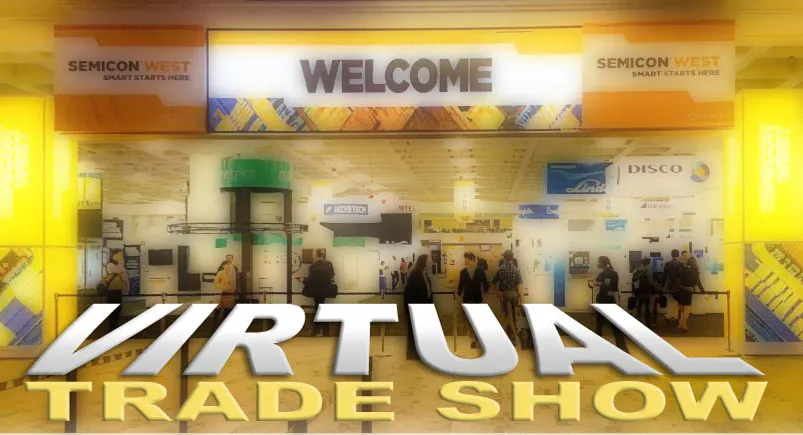
MILPITAS, Calif. – June 3, 2020 – SEMICON West will occur in a virtual format for the first time in its 50-year history, featuring all the world-class talent and leading technologies that have come to symbolize the flagship microelectronics annual conference. Legendary inventors and futurists from around the world will help SEMI examine opportunities for the microelectronics industry to accelerate innovation over the next half century and drive improvements in the quality of human life worldwide.

SEMICON West Logo 292 pixel

The visionaries will highlight a multi-day online conference celebrating 50 years of the information age, July 20-23, conducted globally through both livestream discussions and on-demand presentations. More information and registration are available at www.semiconwest.org.

“This will be the deepest, most extensive online global industry event this year,” said Dave Anderson, president of SEMI Americas and host for the gathering. “As we embrace the cusp of the next industrial revolution, SEMI is gathering industry legends and future leaders for a powerful event headlined by A-list speakers and a full exhibition experience. All the content, interactions and networking opportunities of a physical show – without the associated costs and time of travel – will serve as an added bonus for all participants.”

According to the World Economic Forum, the value of digital transformations worldwide in the new industrial revolution is estimated at $100 trillion in the next 10 years alone. Among the many stunning outgrowths of this disruption, artificial intelligence (AI) is widely expected to have the largest societal impact across industries including automotive, medical, financial, agriculture and energy. Autonomous mobility, ubiquitous connectivity, novel materials and advanced manufacturing technologies will also be key drivers of innovation. The conference’s keynote speakers will explore how these advances will combine to shape next industrial revolution and the new world in which we live and work:

  • Environmental advocate and former U.S. Vice President Al Gore will update attendees on the global challenges our industry can help solve by driving advances in the latest cutting-edge technologies, especially by increasing the energy efficiency of semiconductors and computing.
  • Gary Dickerson, president and CEO of Applied Materials, will highlight the need for Sustainable AI and discuss actions that can be taken by companies throughout the semiconductor and computing value chain, both individually and collectively, to enable a better future.
  • Futurist and author Steve Brown, formerly the futurist and chief evangelist for Intel, will identify six strategic technologies that will shape every business in the 2020s and present the semiconductor manufacturing industry with a roadmap for emerging stronger from the disruptions caused by COVID-19.
  • Ambassador (Ret.) Nicholas Burns from the Harvard Kennedy School of Government will address the changing geopolitical landscape.
  • Lea Gabrielle, special envoy of the Global Engagement Center for the U.S. State Department, will focus on strategic implications for future technologies gleaned from publicly available intelligence forecasts for the national economy.
  • Predicting that the volume of global data will double every 12-18 months, Dr. John E. Kelly III, senior vice president and director, IBM Research, will describe an expected scale of growth that will dwarf previous eras of computing and produce “an enormous number of opportunities” for microelectronics and its wide range of markets.
  • Paul Saffo, forecaster for large-scale and long-term technology change, will discuss “Chasing fire: a glimpse into our accelerating future.” He will look at how to address the gap between accelerating technologies and slower-moving cultural and institutional adaptation, which he views as the single greatest challenge facing society.
  • Featuring lessons from the past half century, industry legend Tetsuro “Terry” Higashi, former Chairman and CEO of Tokyo Electron, navigated TEL through some of the equipment sector’s toughest days as he built a global powerhouse, partially due to his implementation of fully integrated co-development teams in Japan and the U.S.
  • SEMI will announce additional featured speakers leading up to the event.

Co-located content will include the imec Technology Forum (ITF) and the SOI Consortium Forum. Attendees will have the opportunity to connect with exhibitors from SEMICON Southeast Asia in a regional pavilion. Additional sponsored pavilions will feature SMART Manufacturing, SMART MedTech, SMART Mobility, and SMART Workforce. Virtual exhibit booths throughout the detailed, interactive exhibit hall provide the opportunity to network and gather insights just like on a physical show floor – attendees can stop by SMART technology pavilions and exhibitors’ booths to view video content, download informative product information, and converse with supplier representatives.

Attendees can also join technical sessions, participate in one-on-one or group meetings, and interact with colleagues and industry representatives in networking areas. Recorded sessions and exhibitor booth content will remain available on demand 24/7 for weeks after the close of the SEMICON West 2020 Virtual event.

SEMICON West is organized by SEMI Americas to connect more than 2,300 SEMI member companies representing 1.3 million professionals worldwide to advance the technology and business of electronics manufacturing. SEMICON West is celebrating its 50th year as the flagship event for the semiconductor industry. Find more at www.semiconwest.org.

About SEMI
SEMI® connects more than 2,100 member companies and 1.3 million professionals worldwide to advance the technology and business of electronics design and manufacturing. SEMI members are responsible for the innovations in materials, design, equipment, software, devices, and services that enable smarter, faster, more powerful, and more affordable electronic products. Electronic System Design Alliance (ESD Alliance), FlexTech, the Fab Owners Alliance (FOA) and the MEMS & Sensors Industry Group (MSIG) are SEMI Strategic Association Partners, defined communities within SEMI focused on specific technologies. Visit www.semi.org to learn more, contact one of our worldwide offices, and connect with SEMI on LinkedIn and Twitter.

Association Contact

Scott Stevens, Cardinal Communications for SEMI Americas
Email: [email protected]
Phone: +1.512.288.4050

MILPITAS, Calif. – June 2, 2020 – Worldwide semiconductor manufacturing equipment billings contracted 13 percent to US$15.57 billion quarter-over-quarter in Q1 2020 but increased 13 percent year-over-year, SEMI, the global industry association representing the electronics design and manufacturing supply chain, announced today in its Worldwide Semiconductor Equipment Market Statistics (WWSEMS) Report.
The data are gathered jointly with the Semiconductor Equipment Association of Japan (SEAJ) from over 80 global equipment companies that provide data on a monthly basis. The quarterly billings data by region in billions of U.S. dollars, quarter-over-quarter and year-over-year change by region are as follows:

Region

Q12020

Q42019

Q12019

1Q2020/4Q2019

1Q2020/1Q2019

Taiwan

4.02

6.20

3.81

-35%

6%

China

3.50

4.29

2.36

-18%

48%

Korea

3.36

2.30

2.89

46%

16%

North America

1.93

2.28

1.67

-16%

15%

Japan

1.68

1.67

1.55

0%

8%

Europe

0.64

0.47

0.84

36%

-23%

Rest of the World

0.44

0.58

0.67

-23%

-34%

Total

15.57

17.80

13.79

-13%

13%

Source: SEMI (www.semi.org) and  SEAJ (www.seaj.or.jp), June 2020

The SEMI Equipment Market Data Subscription (EMDS) provides comprehensive market data for the global semiconductor equipment market. A subscription includes three reports:

  • Monthly SEMI Billings Report, a perspective on equipment market trends
  • Monthly Worldwide SemiconductorEquipment Market Statistics (WWSEMS), a detailed report of semiconductor equipment billings for seven regions and 24 market segments
  • SEMI Semiconductor Equipment Forecast, an outlook for the semiconductor equipment market.

For more information or to subscribe, please contact the SEMI Industry Research and Statistics Group at [email protected]. More information is also available online.

About SEMI
SEMI® connects more than 2,100 member companies and 1.3 million professionals worldwide to advance the technology and business of electronics design and manufacturing. SEMI members are responsible for the innovations in materials, design, equipment, software, devices, and services that enable smarter, faster, more powerful, and more affordable electronic products. Electronic System Design Alliance (ESD Alliance), FlexTech, the Fab Owners Alliance (FOA) and the MEMS & Sensors Industry Group (MSIG) are SEMI Strategic Association Partners, defined communities within SEMI focused on specific technologies. Visit www.semi.org to learn more, contact one of our worldwide offices, and connect with SEMI on LinkedIn and Twitter.

Association Contact
Michael Hall/SEMI
Phone: 1.408.943.7988
Email: [email protected]


SHANGHAI – June 2, 2020 ─Marking the first major semiconductor industry event of the year with on-site exhibitions and conferences plus live webinars for those unable to attend in person, SEMICON China 2020 will gather industry leaders and visionaries June 27-29 at SNIEC in Shanghai for insights into the latest developments, innovations and trends in the electronics industry. Smart manufacturing, Smart mobility and talent will come into sharp focus as the industry targets these and other growth drivers in the post-virus era. Registration for the webinars is now open. SEMICON China is concurrent with FPD China 2020.

SEMICON China logo 298px

With the health and safety of all exhibitors, speakers and visitors a top SEMI priority, SEMICON China 2020 is implementing all health and safety measures in accordance with government regulations and requirements to protect the well-being of everyone at the event.

SEMICON China 2020 comes as China launches its New Infrastructure post-virus economic stimulus plan to drive growth of artificial intelligence (AI) and 5G networks, improve transportation systems and data centers, build out the electric vehicle (EV) charging infrastructure, and upgrade its electrical grid – all technologies powered by semiconductors. The event will bring together players key to advances in these and other critical semiconductor industry segments. SEMICON China will again feature theme pavilions focused on IC manufacturing, compound semiconductors, the local IC Materials Industry Technology Innovative Alliance (ICMTIA) and workforce development.

The event also coincides with the start of a healthy rebound in China fab investments in the second half of 2020. According to SEMI market research, memory and foundry fab spending will drive a 30 percent increase from the first half of the year.

SEMICON China 2020 On-Site and Online Events

SEMICON China 2020 Online Only Events

SEMICON China 2020 On-Site Only Events

About SEMI
SEMI® connects more than 2,100 member companies and 1.3 million professionals worldwide to advance the technology and business of electronics design and manufacturing. SEMI members are responsible for the innovations in materials, design, equipment, software, devices, and services that enable smarter, faster, more powerful, and more affordable electronic products. Electronic System Design Alliance (ESD Alliance), FlexTech, the Fab Owners Alliance (FOA) and the MEMS & Sensors Industry Group (MSIG) are SEMI Strategic Association Partners, defined communities within SEMI focused on specific technologies. Visit www.semi.org to learn more, contact one of our worldwide offices, and connect with SEMI on LinkedIn and Twitter.

Association Contacts
Cherry Sun
SEMI China
Email: [email protected]
Phone: +86.21.6027.8548

Michael Hall
SEMI Headquarters
Email: [email protected]
Phone: 1.408.943.7988

KUALA LUMPUR, Malaysia ─ 28 May, 2020 ─ SEMICON Southeast Asia 2020 is going virtual as the region’s premiere global electronics manufacturing supply chain exposition and conference continues its rich tradition of gathering industry experts from around the world for critical insights into the semiconductor ecosystem, new business opportunities and collaboration. SEMICON SEA 2020 registration is now open.

SEMICON SEA Logo

The first-ever virtual SEMICON Southeast Asia will begin 20-23 July, 2020 at SEMICON West 2020 with industry leaders and subject matter experts discussing the latest trends, developments and innovations at the Southeast Asia Pavilion. The online event will continue 10-21 August with in-depth technical webinars focusing on trending topics such as sustainable manufacturing and advanced packaging.

“Migrating SEMICON Southeast Asia 2020 to a virtual platform is part of our commitment to the health and safety of our members, exhibitors, guests and employees,” said Bee Bee Ng, president of SEMI Southeast Asia. “Even during these unprecedented times, connecting key microelectronics supply chain players remains as important as ever to ensure the industry seizes the innovation and growth opportunities vital to its growth.”

Featuring multiple virtual exhibitions, the August event will offer online business-matching programmes, networking opportunities for new private-public partnerships and business, and inspiring talent development talks as the industry works to build its workforce to sustain growth and innovation. SEMICON Southeast Asia participants and exhibitors will hear from and interact with visionaries and executives from across the microelectronics supply chain and its markets as the event remains focused on enabling connections and collaborations both regionally and globally.

With the move to a virtual platform, the original event scheduled for 11-13 August, 2020 at (Malaysia International Trade and Exhibition Centre) MITEC, Kuala Lumpur, Malaysia, will no longer be held.

For more details, please visit the SEMICON Southeast Asia website and connect with SEMI Southeast Asia on Facebook or LinkedIn

About SEMI
SEMI® connects more than 2,100 member companies and 1.3 million professionals worldwide to advance the technology and business of electronics design and manufacturing. SEMI members are responsible for the innovations in materials, design, equipment, software, devices, and services that enable smarter, faster, more powerful, and more affordable electronic products. Electronic System Design Alliance (ESD Alliance), FlexTech, the Fab Owners Alliance (FOA) and the MEMS & Sensors Industry Group (MSIG) are SEMI Strategic Association Partners, defined communities within SEMI focused on specific technologies. Visit www.semi.org to learn more, contact one of our worldwide offices, and connect with SEMI on LinkedIn and Twitter.

Press Contact
Reshvinder Kaur
Email: [email protected]
+60-17-275-7985

In many ways it feels like we’ve turned back the hands of time. We are staying at home, playing board games with the family. Outdoors, we can view mountains not seen in decades – air pollution has dropped nearly 20 percent. Neighbors we haven’t met are out walking, a lot. Traffic is relatively sparse.We’re staying up late, sometimes even getting up early, for calls with all regions. Some of us have temporarily suspended our use of cleanroom masks – but now wear them everywhere we go outside of the house. And through virtual meetings, I see I’m not the only one who let the beard grow. Who would’ve thought we’d be able to so quickly and completely change our habits?Clearly, the usual distractions that fill most of our lives have given way to a temporary pause. We have time to reflect, and perhaps gain even greater perspective. I hope that’s been a good thing for you.Through virtual meetings, we seem to be getting access to people not typically in our circle of influence – both up and down the organizational ladder. This pleasant surprise seems to be helping to create a valuable acceleration in how the industry community interacts and progresses.As a testament to the strategic importance of our industry, the fabs continue to produce. This is due in great part to the standards, technologies and their resulting applications that enable those operations. Many parts of our industry supply chain became officially designated as essential businesses. Whether or not we stayed home from the office, we’ve continued to work on our roadmaps for growth beyond the current lull.Empowered by 50 years of technology legacy, we are again demonstrating the capability to manage disruption through collaboration. This is the signature of our industry’s highly regarded business culture. Among what we have learned is that this pandemic has made all of us more vulnerable in a variety of ways, and in turn has accelerated our unity as an industry community like never before.This month, as I brainstormed with a set of industry execs during one of countless Zoom meetings, it was clear that when they gather, they want more than a repackaged version of everyone else’s usual messages about this unusual year.While this type of year certainly wasn’t what we had in mind when we began to construct ways to mark this 50th year of SEMICON West, we’ve taken the bull by the horns and begun to blaze a new trail. The consensus within the industry is that SEMI’s constant, measured communication is netting an increased, and growing, level of trust among our collective, global group that may serve as one of the silver linings of this irregular year.As a result, we’ll lay a new road with the first – and possibly not the last – Virtual SEMICON West. For this inaugural digital format, we’ve secured a set of visionaries offering both legendary and evolutionary talents alike to reveal what we can expect during the next few years. It’ll be unlike any other such gathering before, and there’ll be something for everyone.Despite the pause in time we’ve experienced during our isolation of these recent weeks, the timeless value of collaboration marches on. I look forward to joining you at Virtual SEMICON West, July 20-23.Dave Anderson is president of SEMI Americas.
Read More
In an important step toward resuming business as usual in Japan, Prime Minister Shinzo Abe on May 14 lifted the state of emergency originally scheduled to expire at the end of May for 39 of Japan’s 47 prefectures, marking “the real beginning of our efforts toward a new normal in the era of the coronavirus” as new cases continue to decline. But with Tokyo, Osaka and six other prefectures still under the state of emergency, Abe urged citizens to remain cautious as the nation and world continue to confront the COVID-19 threat. Among criteria the remaining prefectures must meet for a state of emergency suspension is a reduction in new infections to no more than 0.5 cases weekly for every 100,000 citizens. The eight prefectures account for nearly half of Japan’s population and GDP, with Tokyo and Osaka the two largest urban areas in the island nation. Japan expects to contain its economic losses to 38 trillion yen, 15 percent less than the 45 trillion yen hit originally projected. The Japan government has planned a May 21 progress review[1] in the eight prefectures, a timeline that Abe said could lead to the lifting of the state of emergency before the original cutoff at the end of the month, a move that would help stem the drain on the domestic economy.Strict Immigration Controls Restricts International Travel to and from Japan by Supplier EngineersAs I reported on April 21, the Japan Foreign Ministry on March 31 raised its travel advisory to level 3 for 49 regions around the world including the U.S., prohibiting travel from Japan for any purpose. SEMI Japan is urging government officials to exempt Japanese supply chain engineers from the travel ban to allow visits to semiconductor manufacturing facilities in those regions in order to install, start up and service equipment.Starting May 14, Japan blocked immigration of foreign nationals and permanent residents from 100 countries and regions worldwide, a ban applying to anyone who spent time in their home region within 14 days of their planned arrival in Japan. The areas include China, Singapore, South Korea, and Taiwan in Asia; Canada and the U.S.; and Germany, France, Italy, Netherlands, Switzerland and the U.K. in Europe. For the complete list, see the Japan Ministry of Justice’s website.Japan’s immigration ban mirrors restrictions now in place in many other regions around the world. The immigration controls are well-intended – to restrict the spread of COVID-19 – but hamstring the global microelectronics supply chain. For example, the curbs bar engineers from international travel to install new tools and software in fabs. SEMI Japan has stressed the potential chip industry impacts of the ban in ongoing talks with the Ministry of Economy, Trade and Industry and is facilitating discussions between government representatives and SEMI members to help clear the way for travel by critical supply chain workers to Japan. SEMI Supports Members with COVID-19 ResourcesSEMI international headquarters and regional offices are here to help you, our members. For more information on our webinars, surveys, best practices and other information designed to help you meet the challenges of the pandemic, please visit the SEMI Coronavirus Updates Resources page.[1] The May 21 review found three prefectures in western area – Hyogo, Kyoto and Osaka – met the criteria to lift the state of the emergency. Four other prefectures – Chiba, Hokkaido, Saitama and Tokyo – remain under the emergency order that will be reviewed again as early as May 25.Jim Hamajima is president of SEMI Japan.
Read More

MILPITAS, Calif. — May 21, 2020 — North America-based manufacturers of semiconductor equipment posted $2.26 billion in billings worldwide in April 2020 (three-month average basis), according to the April Equipment Market Data Subscription (EMDS) Billings Report published today by SEMI. The billings figure is 2.2 percent higher than the final March 2020 level of $2.21 billion, and is 17.7 percent higher than the April 2019 billings level of $1.92 billion.

semi logo

"April billings of North America-based semiconductor equipment manufacturers reflect healthy equipment demand,” said Ajit Manocha, SEMI president and CEO. “The industry is performing well under extraordinary conditions, though uncertainty persists due to COVID-19 concerns and rising geopolitical tensions.”

The SEMI Billings report uses three-month moving averages of worldwide billings for North American-based semiconductor equipment manufacturers. Billings figures are in millions of U.S. dollars.


Billings
(3-mo. avg.)

Year-Over-Year

November 2019

$2,121.0

9.1%

December 2019

$2,491.7

18.4%

January 2020

$2,340.2

23.4%

February 2020

$2,374.6

27.1%

March 2020 (final)

$2,213.1

21.2%

April 2020 (prelim)

$2,261.9

17.7%

Source: SEMI (www.semi.org), May 2020

SEMI publishes a monthly North American Billings report and issues the Worldwide Semiconductor Equipment Market Statistics (WWSEMS) report in collaboration with the Semiconductor Equipment Association of Japan (SEAJ). The WWSEMS report currently reports billings by 24 equipment segments and by seven end market regions. SEMI also has a long history of tracking semiconductor industry fab investments in detail on a company-by-company and fab-by-fab basis in its World Fab Forecast and SEMI FabView databases. These powerful tools provide access to spending forecasts, capacity ramp, technology transitions, and other information for over 1,000 fabs worldwide. For an overview of available SEMI market data, please visit www.semi.org/en/MarketInfo.

The data contained in this release were compiled by David Powell, Inc., an independent financial services firm, without audit, from data submitted directly by the participants. SEMI and David Powell, Inc. assume no responsibility for the accuracy of the underlying data.

About SEMI

SEMI® connects more than 2,100 member companies and 1.3 million professionals worldwide to advance the technology and business of electronics design and manufacturing. SEMI members are responsible for the innovations in materials, design, equipment, software, devices, and services that enable smarter, faster, more powerful, and more affordable electronic products. Electronic System Design Alliance (ESD Alliance), FlexTech, the Fab Owners Alliance (FOA) and the MEMS & Sensors Industry Group (MSIG) are SEMI Strategic Association Partners, defined communities within SEMI focused on specific technologies. Visit www.semi.org to learn more, contact one of our worldwide offices, and connect with SEMI on LinkedIn and Twitter.

Association Contact

Michael Hall/SEMI
Phone: 1.408.943.7988
Email: [email protected]

Notes

Next SEMI Billings report is June 18, 2020 at 3:00pm Pacific.

For information on SEAJ Billings Express Report, visit www.seaj.or.jp.