downloadGroupGroupnoun_press release_995423_000000 copyGroupnoun_Feed_96767_000000Group 19noun_pictures_1817522_000000Member company iconResource item iconStore item iconGroup 19Group 19noun_Photo_2085192_000000 Copynoun_presentation_2096081_000000Group 19Group Copy 7noun_webinar_692730_000000Path
Skip to main content
Default Banner Image

SEMI Foundation

The semiconductor industry continues to grow at an unprecedented pace and so does the demand for highly skilled employees at all levels in the industry. With the focus on reshoring manufacturing in the United States, we are increasingly faced with two questions: 1) how to identify talent that is ready to work today with the skills and experience that they already have and 2) how to best prepare a workforce for tomorrow, to meet the estimated shortage of 59,000-146,000 technicians and engineers by 2029. The SEMI Foundation – the workforce development arm of SEMI – provides solutions to address the talent gap and more through programs such as SEMI Credentialing. This innovative effort that helps employers identify talent, jobseekers communicate their work readiness, and training and education providers align their programs to industry needs.SEMI Equipment Maintenance Technician CertificationIndustry subject matter experts who provided initial inputs for the Knowledge, Skills, and Abilities (KSA) of an Equipment Maintenance Technician.The SEMI Foundation is building out the first nationally accredited, industry-recognized Equipment Maintenance Technician Certification. In collaboration with industry leaders like Micron, GlobalFoundries, Intel, Western Digital, TEL, Onto Innovation, and others, we have identified the key competencies for equipment maintenance technicians. Individuals from 45 companies across 16 states have provided technical subject matter expertise, resulting in one of the most regionally diverse and comprehensive certification offerings to date. Our partner, NOCTI, an ISO-certified credentialing provider, is in the final stages of developing the certification exam. Our two-part certification exam includes 100 multiple choice questions that assess a candidate’s knowledge of safety, quality, electrical and mechanical principles, maintenance principles, and semiconductor industry awareness, as well as a hands-on electrical and pneumatic skills-based performance task. Educators from 12 community colleges and universities across the United States developed the questions, ensuring the highest academic standards and rigor. This certification will allow job seekers to demonstrate their readiness and create clear pathways into technician roles for qualified individuals regardless of their previous training. Furthermore, the Equipment Maintenance Technician certification will establish a national source of truth for curriculum alignment made available to training providers and educators and ensure relevance and continuity through routine industry review. The SEMI Equipment Maintenance Technician Certification will launch regionally in Spring 2026. National roll-out is scheduled for Fall 2026, and we encourage training and industry partners to connect with us directly to ensure early access to the certification.SEMI Endorsement of Programs and CoursesPartners from 12 community colleges and universities provided their expertise in developing test questions for the SEMI Certification.The SEMI Foundation is endorsing programs that prepare entry-level workers for success in the semiconductor industry. Since 2024, we have endorsed programs at Austin Community College, Foothill College, NY Creates, and WGNStar. These programs, and others like it, are emblematic of what strong partnerships between academia and industry can look like. Learners seeking programs can look to these as options for their education. Receiving SEMI Endorsement for Programs and Courses conveys that: Learners who are new to the semiconductor industry and successfully complete the program will be well-prepared for entry-level roles; Program completers have had exposure to fundamental semiconductor industry information and context, as well as introductory hands-on experience; Completers of these programs have the specific knowledge and skills required for entry level positions; andProgrammatic design and content have been informed through input and feedback from local industry partners.As we continue to expand the portfolio of programs and courses that the SEMI Foundation endorses, we are looking increasingly at programs with strong industry alignment and clear pathways for learners once they complete their training, be that apprenticeships, additional training, or direct access into the workforce.Microcredentials and MoreThe SEMI Foundation is a leader in convening stakeholders across academia and industry in support of workforce development initiatives. This unique ability to bring together diverse perspectives positions us to play a central role in shaping the future of skill validation. Microcredentials address several key changes and trends in training, including the rising costs of education coupled with an increased appetite for hands-on learning opportunities. Microcredentials are stackable, adaptable, and aligned directly with workforce demands. Learners can build competencies step-by-step. Employers can identify specific skill sets with greater precision. Education providers can modernize programs to reflect emerging technologies and evolving roles. We are forming panels and committees to explore the idea of microcredentials, as our partners are looking to us for innovative ways to recognize short-form training programs, amplify opportunities for individuals in up-and-coming regions, and continue to connect our partners in service of workforce solutions. In addition, the SEMI Foundation is exploring the provision of badges to teachers, career counselors, and other educators to demonstrate their knowledge and awareness of semiconductor careers.As we continue to drive solutions and add value to the world of credentials, we look forward to ongoing conversation and collaboration with partners. Every conversation we engage in about credentialing strengthens our offering and ability to provide solutions to the semiconductor industry’s growing workforce demands. Anissa Hamdon-Morison is Manager, Curriculum Developer Training at the SEMI Foundation
Read More
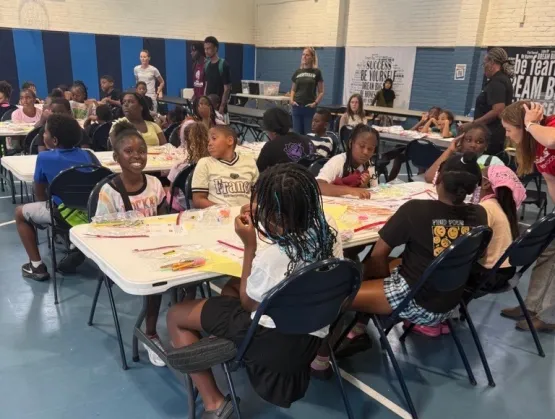
In the summer of 2025, I had the privilege of leading more than a dozen SEMI Foundation STEM summer camps in schools across multiple communities.Each camp brought students face-to-face with hands-on engineering challenges, semiconductor learning modules, and conversations about the careers connected to what they were building.What stood out most wasn’t just the energy in the classrooms; it was the moment students began to see themselves in futures they hadn’t previously imagined. For many, it was their first exposure to the semiconductor industry. Their first time hearing about advanced manufacturing careers. Their first time understanding that a certificate, credential, or engineering degree could lead to a stable, high-quality job shaping the technologies that power modern life.And it reinforced something we believe deeply at the SEMI Foundation, that workforce development does not begin at graduation; it begins in grade school with early awareness and intentional exposure.Starting Earlier: Where the Semiconductor Workforce Truly BeginsBuilding a strong, future-ready semiconductor workforce does not begin in college, or even high school. It begins in the earliest years of science, technology, engineering, and mathematics (STEM) exposure.Since 2003, I have created STEM programming that introduces college majors and career pathways to K–12 students. At the SEMI Foundation, that work now connects directly to one of the most urgent workforce challenges of our time, ensuring the semiconductor industry has the skilled talent needed to support domestic manufacturing expansion and global competitiveness.When elementary and middle school students engage in hands-on STEM experiences, they build confidence. They develop technical vocabulary, critical thinking skills, and resilience. They begin to understand how the devices they use every day are designed and manufactured. That early spark matters, especially in industries like semiconductors, where awareness has historically been limited among younger students.Moving From Exposure to Industry ExplorationAs students progress, programming must move from exposure to exploration.Through SEMI Foundation initiatives, including hands-on camps, classroom modules, and industry-connected programming, students begin to see how semiconductors power everything from smartphones and AI to healthcare systems and clean energy technologies.Middle school and early high school programs should intentionally connect STEM learning to real-world applications:Engineering design challenges tied to semiconductor conceptsProject-based learning informed by industry practicesCareer speakers from manufacturing and technical rolesMentorship that reflects diverse entry points into the industryThis stage is critical for workforce development. Quality hands-on learning must be paired with representation and mentorship. Students need to hear authentic stories about different pathways into technical fields, whether through two-year degrees, apprenticeships, industry certifications, or four-year engineering programs.High School: Where Awareness Becomes PreparationHigh school is where exploration must transition into preparation.Structured career pathways, dual enrollment opportunities, industry certifications, internships, and apprenticeship models create tangible bridges between classroom learning and workforce entry.When students graduate with credentials aligned to high-demand sectors, including advanced manufacturing and semiconductor production, they leave with more than knowledge. They leave with validated skills and industry relevance.This alignment does not happen by accident. It requires coordinated partnerships between K–12 systems, higher education institutions, workforce agencies, and employers. At the SEMI Foundation, we work to support this alignment so curriculum reflects industry needs and students experience clear, navigable pathways into careers.When education and industry move in sync, skills gaps narrow, and regional economies strengthen.Sustaining Momentum: Postsecondary and Employer PartnershipPostsecondary institutions and employers play a pivotal role in sustaining momentum.Stackable credentials, registered apprenticeships, and paid work-based learning models allow students to build competencies while earning income. Clear articulation agreements between high schools, community colleges, and universities reduce talent loss and create seamless transitions. In the semiconductor industry, where technical precision and specialized skills are essential, these structured pathways are not optional. They are foundational.A Long-Term Vision for Semiconductor Workforce GrowthThe semiconductor industry powers nearly every aspect of modern life. But sustaining that innovation requires long-term workforce vision. The students I met in our 2025 summer camps reminded me of what is possible when exposure meets opportunity.When we start early, align intentionally, and collaborate across systems, we do more than prepare a workforce. We cultivate the next generation of innovators who will design, build, and lead the technologies shaping our future.Bia Hamed is Program Manager, Global Education Initiatives at the SEMI Foundation.
Read More
When most people hear “semiconductors,” they think of something abstract: tiny chips, complex equations, cleanrooms hidden behind glass. Relevant, sure, but distant. Compare that to professions like architects or doctors. We can picture their training. We understand their impact. We see a clear path from curiosity to contribution. The semiconductor industry deserves the same clarity and more. Because semiconductors don’t just power devices. They power progress. The semiconductor industry plays a crucial role in sustaining modern life and will remain instrumental in the future. We know this all too well because most of us work within this industry. It isn’t abstract or difficult for us to see how we fit into the grand scheme of this critical industry. It is important to reflect on our initial motivation for entering this field. The technological advancements we are currently developing were likely beyond consideration when we began our careers. Historically, we’ve done a great job of explaining how someone becomes a doctor or an architect: education, residency or apprenticeship, specialization, growth. The semiconductor industry can and must do the same.Imagine clearly mapped pathways that show:High school students how math, science, and technical programs connect to real semiconductor jobsCommunity college and university students how internships, co-ops, and labs translate into manufacturing, design, or research rolesCareer-changers and Veterans how reskilling programs, certifications, and on-the-job training can open doors without starting overWhen people can see the steps, the industry becomes less intimidating and far more inviting.Introducing ChipPathThis is where the SEMI Foundation’s newest platform, ChipPath, comes in! ChipPath, powered by the National Network for Microelectronics Education (NNME) , makes it easier for individuals to understand where they fit today and where they can grow tomorrow. “ChipPath marks a major step forward in our mission to connect people to opportunities in the semiconductor industry,” said Shari Liss, Vice President of Global Workforce Development and Initiatives at SEMI. “By combining career exploration, education pathways, and live job data into one platform, we’re not just helping individuals find jobs, we’re helping them build lifelong careers that drive innovation and impact.”ChipPath helps users explore roles across the semiconductor ecosystem, not just by job title, but by skills, interests, and pathways. A student interested in problem-solving, automation, or precision work can see how those interests translate into manufacturing, technician, or engineering support roles. A career-changer with experience in logistics, quality, or data analysis can quickly identify how their existing skills map to in-demand semiconductor jobs.This shift from “Do I belong here?” to “I can see myself doing this” is foundational. When people can visualize a role that fits them, they are far more likely to pursue it with confidence.Perhaps most importantly, ChipPath doesn’t end with exploration and preparation, it connects talent to actual job openings across SEMI member companies. By serving as a shared access point between job seekers, educators, training providers, and employers, ChipPath strengthens the entire talent ecosystem. Candidates gain visibility into opportunities they may never have discovered on their own. Employers gain access to a broader, more diverse, and better-prepared pool of talent aligned to semiconductor workforce needs.This connection transforms workforce development from a fragmented effort into a coordinated system; one where awareness, training, preparation, and hiring reinforce one another.Access for job seekers doesn’t end once they apply. ChipPath includes resources that help them prepare for the next critical step: the interview. Through guidance on interviewing expectations, communication, and workplace readiness, ChipPath helps candidates show up informed, confident, and prepared to engage. This preparation reduces anxiety for candidates and increases the likelihood of successful matches for employers.When candidates understand how to talk about their skills, experiences, and potential in industry-relevant terms, interviews become more productive, and hiring decisions become clearer.For employers, ChipPath is more than a platform, it has the potential to be a workforce multiplier. It reduces friction for job seekers, improves candidate readiness, and helps align skills with real demand across the industry. By leveraging ChipPath alongside outreach and engagement strategies, employers can help create a talent journey that is easier to navigate, access, and succeed in.When people can see where they fit, understand how to prepare, and connect directly to opportunity, the semiconductor industry becomes within reach.Job seekers today want and need more than just a salary; they want meaningful work and pride in what they do. Our industry offers these opportunities, but we must guide them to find it.Visit http://nnme.org/chippath to explore the platform, build your profile, and take your first step toward a future in semiconductors.Melinda Gomez is Program Manager, Veteran Initiatives at the SEMI Foundation.
Read More
Every November, the U.S. pauses to honor those who have served our nation—the men and women whose dedication, discipline, and teamwork have safeguarded our freedom. The best way to thank veterans is not just with words. It’s with action.In the semiconductor industry, that action means creating pathways for veterans to build meaningful civilian careers where their skills, experience, and values are not only recognized, but celebrated. Through SEMI Foundation’s VetWorks initiative, companies across the industry are doing just that, working together to raise awareness, share best practices, and open doors for the military community.Through VetWorks, SEMI is proud to help veterans find new purpose in powering the technologies of tomorrow. And as more employers recognize the unmatched value of veteran talent, the industry will continue to grow stronger technically, strategically, and culturally.Why Veterans and Semiconductors Are a Natural MatchVeterans bring the kind of precision, accountability, and technical excellence that drive the semiconductor industry forward. From operating complex systems to leading diverse teams under pressure, veterans possess the same qualities that make this industry thrive.Kathy Garner, Director of Talent Acquisition at TEL (Tokyo Electron), notes:“Veterans are well-versed in cutting-edge technology. Today’s military is high-tech, state-of-the-art, and computer-based. Veterans are uniquely matched to our industry as their jobs are highly technical and safety-conscious; they appreciate guidelines, follow directions, and possess a strong sense of team.”This alignment of skills and culture makes veterans not just excellent employees, but invaluable contributors to the semiconductor industry’s mission of powering innovation and national competitiveness.Turning Appreciation into OpportunityAcross the VetWorks Employer Group, companies are transforming gratitude into action by recruiting, training, and supporting veterans and reservists as they transition to civilian careers.“I participate in VetWorks because I believe the brave men and women of our military deserve support and opportunities if they choose to enter the civilian workforce,” said Katie Maloney, Business Line Manager at Edwards Vacuum. “They have sacrificed for our country, and we can help connect them to a rewarding career in the semiconductor industry. This transition is often stressful for military members and their families, despite the fact that veterans are ideally suited for the many roles our industry needs to fill. As a Navy veteran, participation is a small way for me to pay it forward.”“The semiconductor industry is full of veterans,” said Curtis Geroy, Manager of Military Talent Acquisition at Applied Materials and a U.S. Navy Reserve Officer. “Serving as a reservist and having leaders who understand my commitment to duty gives me the extra support needed to meet my reserve obligations.”These stories reflect what’s possible when companies don’t just honor veterans but invest in helping them translate their service into purposeful, future-ready careers.An Industry-Wide EffortMany leading employers are already stepping up and partnering through SEMI VetWorks, including Applied Materials, ASM, ASML, Edwards Vacuum, EMD Electronics, Entegris, KLA, Lam Research, Micron, Polar Semiconductor, TEL, TSMC, and Western Digital, among others.Together, they form a growing network of organizations committed to building awareness within the military community, connecting veterans to open roles, and ensuring every company in the semiconductor ecosystem is ready to support them.Through joint events, outreach to bases, storytelling, and shared best practices, the VetWorks Employer Group is showing that this isn’t just a workforce initiative, it’s a movement to strengthen the entire industry while honoring those who have served.Join the EffortThis Veterans Day, let’s remember: saying “thank you” is important, but hiring, supporting, and championing veterans is even more meaningful.If your company is looking to start or grow its veteran hiring and support programs, SEMI VetWorks can help you connect with partners, share resources, and build sustainable pathways for veterans into your workforce. Download the Employer’s Guide to Military Hiring, learn more and get involved in the SEMI VetWorks initiative. Melinda Gomez is Manager of Military Initiatives at the SEMI Foundation.
Read More
This year, the Women in Semiconductor (WiS) program takes a huge step growing nationally — hosting events in New York, Michigan, Ohio, California, and Arizona. Managed by the SEMI Foundation, the WiS program aims to highlight women’s contributions and leadership in the semiconductor sector and actively address the gender gap to support inclusive workplaces.Over the years, WiS has shifted from an abstract discussion to actionable strategies—focusing on skills like negotiation, strategic decision-making, storytelling, and career advancement. WiS also promotes allyship, inviting and including men to participate as advocates and supporters of women in the industry.Building on the program’s strong momentum, this year highlights the initiative’s growth and impact through expansion across multiple regions – focusing on the theme “Empowerment in Action: Real Strategies for Women’s Success” dedicated toward impactful, actionable programming.The first 2025 WiS program was held in Albany, NY, in conjunction with ASMC on May 8. New WiS programs are scheduled in the following locations:Ann Arbor, Michigan on September 16, 2025Willoughby, Ohio (date to be announced)San Jose, CA on November 20, 2025Phoenix, Arizona on December 11, 2025The WiS is supported by grants from the Kellogg Foundation and the David Lucile Packard Foundation. The programming is also aligned with SEMI Foundation’s Chips Childcare program, which supports childcare-access solutions to strengthen workforce participation—particularly for parents and caregivers. Learn more in our blog: Affordable, Accessible, and Quality Childcare: A Critical Workforce Development Strategy for the Semiconductor Industry.The WiS initiative has evolved into a powerful platform that blends strategic programming, mentorship, allyship, regionally accessible events, and support systems like childcare advocacy. It’s an inspiring example of how consistent focus and innovation can build meaningful change over nearly a decade. If you’re interested in getting involved, contact Bia Hamed at [email protected]. Bia Hamed, Ph.D., is Program Manager for Global Education Initiatives at the SEMI Foundation, focusing on educational programming that supports workforce pipeline building nationally and internationally.
Read More
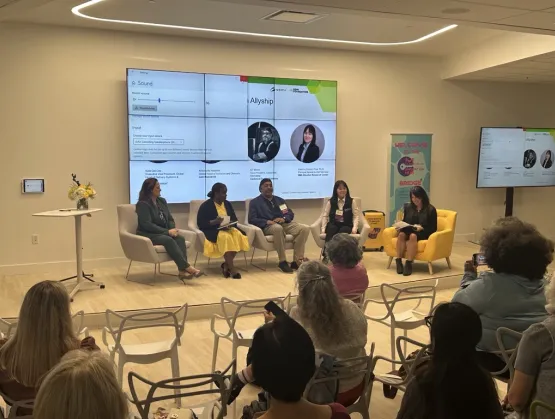
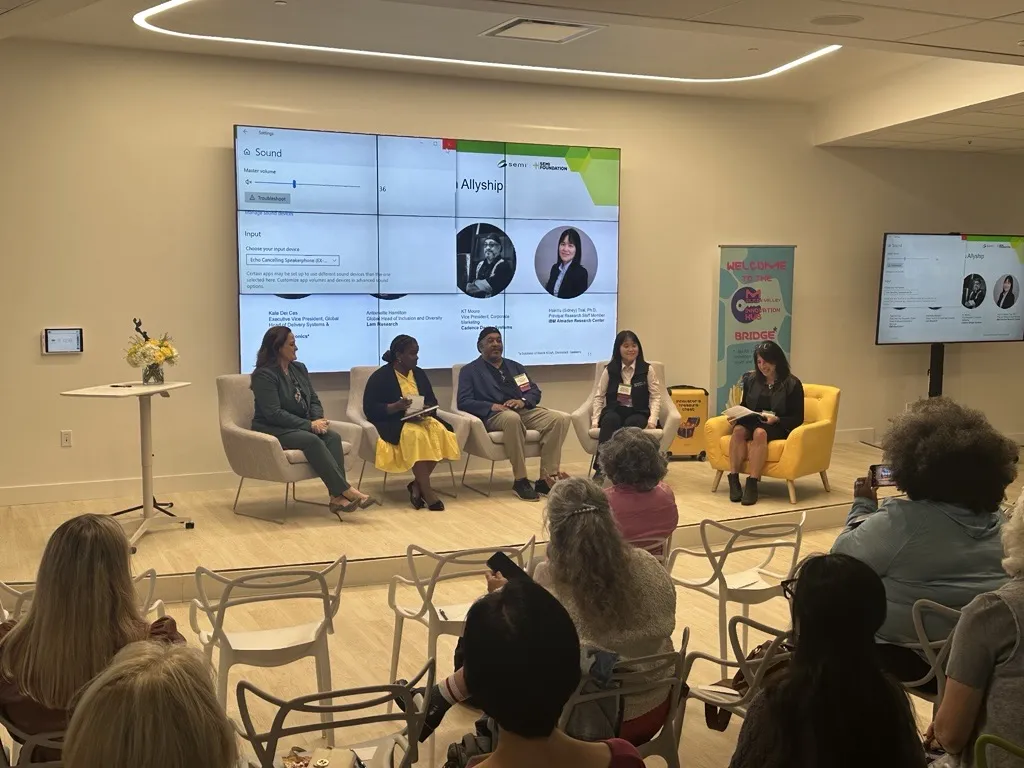
“In today's ever-evolving professional landscape, empowering women and fostering their success is not just necessary—it's essential," said Caryn Veach, a long-time Women in Semiconductors (WiS) committee member. Veach is a strategic account manager at Kokusai Electric Corporation, which sponsored the WiS program in Albany, New York in May. Additional sponsors included Axcelis, Energetiq (a Hamamatsu Company), IBM, Nikon Precision and Onto Innovation.This year’s WiS theme, "Empowerment in Action: Real Strategies for Women’s Success," was designed to provide all attendees with actionable strategies to support women's career growth and representation, as well as lead to greater talent retention and workforce stability. The program, which was open to everyone at the co-located SEMI Advanced Semiconductor Manufacturing Conference, was co-chaired by Joy Racowski, PhD., Strategic Account Sales Engineering Manager - Delivery Systems Services at EMD Electronics and Rosanna Robert, ES Process Engineer ll at TEL Technology Center America.Keynote speaker Jennifer Lynn, Cybersecurity Leader and Research Security Program Manager at IBM Semiconductors emphasized the significance of community in driving change. She stressed the role of Employee Resource Groups (ERGs) as a collective voice to advocate for safer and welcoming workspaces where all individuals feel respected and valued. Some key takeaways from Lynn’s address: champion supportive career initiatives, become a mentor or find a mentor, and be an ally in support of peer success. Shari Liss, Vice President of Global Workforce Development and Initiatives at SEMI, moderated a panel which also highlighted real strategies for women’s success. Panelists from EMD Electronics, Entegris, TEL Technology Center of America and University at Albany focused on actionable strategies which everyone, not only women, can implement to navigate corporate environments. They encouraged WiS participants to challenge norms which penalize specific employees. Panelists invited attendees to discover and embrace what makes them unique and use that as a strength for themselves as well as others. (l-r) WiS panel: Shari Liss, SEMI; Jennifer Braggin, Director, Technology, Office of the CTO, Entegris; Daniel Drellich, Managing Director Sr. Vice President of Business Partnering, EMD Electronics; Kathleen Dunn, PhD, Professor of Nanoscale Science and Engineering, University at Albany; Alex Oscilowski, President, TEL Technology Center AmericaImposter Syndrome is a common challenge to women and those who are new in their career or leadership role. Panelists advised everyone to push through it and support others who might feel this way. Assertiveness is an area which should be seen as a strength rather than a disadvantage, especially for women; it’s important that different voices and opinions are heard. Finally, panelists urged everyone to give credit where it is due and actively support team members and peers.The program concluded with an interactive workshop facilitated by Debbie Gustafson, CEO of Energetiq Technology. Attendees were invited to craft an elevator pitch which could be used when networking or applying for a new job or position. Common elements of a pitch include a concise description of oneself, a unique value proposition and a call to action for one’s audience or employer. WiS was an empowering experience with excellent opportunities to network with female business leaders from around the country as well as recent college graduates and industry professionals from major semiconductor manufacturers. There is something uniquely impactful about coming together with other women and peers who understand the challenges and opportunities of our industry. These events create space for honest conversations, meaningful networking, and a sense of community. It is a reminder that that together we can drive change and support one another in powerful ways. Through grants from the W.K. Kellogg Foundation and the David Lucille Packard Foundation, the SEMI Foundation is expanding Women in Semiconductors programming to several regions around the country. In addition to an event in San Jose, California there will be programs in Arizona, Michigan and Ohio in the second half of 2025. For information on WiS in Michigan, visit https://semiscan.org/event/women-in-semiconductors/.Empowering women in the workplace requires persistent effort and community support. By embracing these strategies and advocating for necessary changes, organizations can pave the way for a more equitable future. And just like the Kokusai Electric embrace of Tai-wa, a Japanese word meaning "synergistic discourse", WiS encourages face-to-face conversations and a willingness to understand others with a sense of empathy and respect for everyone.Margaret Kindling is Senior Program Manager at the SEMI Foundation. She has promoted inclusive workplaces via initiatives like WiS, Semiconductor PRIDE and workforce development programming at SEMICON West, SEMICON India and SEMIEXPO Heartland. After a combined 37 years at SEMI and the SEMI Foundation, she will be retiring in August 2025.
Read More
The SEMI Foundation is undertaking a bold, novel approach to ensuring that the semiconductor industry has the skilled talent it needs to thrive. With a $40 million initial award from the U.S. National Science Foundation together with the U.S. Department of Commerce, and up to $160 million additional funds over the next five years, we have launched the National Network for Microelectronics Education (NNME), which is designed to reshape the landscape of microelectronics education and industry career awareness. The NNME is a federal effort to develop, connect and multiply workforce development activities throughout the nation to meet the needs of the semiconductor industry. The SEMI Foundation now serves as the Operating Hub of the NNME and will support large, multi-state regional coalitions of workforce development performers, called Regional Nodes. Collectively, the Hub and the Nodes will work to transform semiconductor industry training and awareness to provide pathways toward economic opportunity for American workers, and to provide industry the workforce it needs to grow to $1 trillion by the early 2030s.Join the NNMEOn July 16, 2025, we will begin accepting Letters of Interest (LOI) from institutions interested in leading or joining a Regional Node. Read on and visit www.nnme.org for more details.The ChallengeThe semiconductor industry has layered workforce development challenges, including: Greying workforce, with 30% of our workers over 50Aging infrastructure and a significant instructor shortageMicroelectronics curriculum that is often outdated and not aligned with industry needs, leading to critical gaps in learner knowledgeNo standardization of microelectronics learning across the fieldDuplicative and disconnected educational efforts nation-wideAn industry largely invisible to many students and jobseekersThe new industry investments spurred by the CHIPS and Science Act mean tremendous economic opportunity for more workers, bolstered American manufacturing, and a stronger U.S. microelectronics sector. None of this can be fully realized without a much larger and highly skilled workforce trained in today’s and tomorrow’s technologies.There have been numerous local, state, and federal workforce development initiatives to address some of these issues, and highly successful programs in various regions; but these have never been connected in a systemic way. This means people and institutions across the country are working separately to solve a collective problem. The NNME will connect and support these efforts, facilitate cross-regional learning, and braid together resources to illuminate the industry to students and jobseekers nationwide.The Solution“Talent is infrastructure,” said Shari Liss, Vice President of Global Workforce Development and Initiatives of SEMI. “We need skilled and job-ready talent at all educational levels to power the semiconductor industry. We have been working for years with educational and workforce leaders to design this national collective effort and we are thrilled to finally launch this transformative work.”The NNME is designed not as a series of isolated interventions, but as a cohesive, forward-looking national strategy. Grounded in the realities of a high-growth industry and an underprepared workforce system, NNME’s goals respond directly to the needs expressed by semiconductor employers, policymakers, educators, and learners. The NNME will:Design, develop, modernize, and disseminate industry-aligned curricula and share best practices across the networkDevelop regional partnerships and local workforce pipelines including colleges, universities, workforce development programs, labor, community-based organizations, and industry to create a national technical workforce that meets the evolving needs of industryFacilitate apprenticeships, internships, and other applied learning experiencesBuild, host, and update an open-source digital portal that houses the updated industry-aligned curricula for adoption in training programs nationwideConduct a major industry awareness, microelectronics education, and career opportunity campaign including PreK-12 schools and STEM organizationsThe NNME will be comprised of the Coordinating Hub (operated by the SEMI Foundation) and Regional Nodes which will be funded by the Hub. Regional Nodes will be comprised of workforce development performers – industry members, academic institutions, training providers, community-based organizations, and more. Collectively, the Hub and Nodes will execute the above activities with a commitment to information sharing and collaboration, transparency, responsiveness and agility, excellence, and accountability. Finally, the NNME is committed to expanding access to microelectronics careers for Americans from every region and walk of life. NNME initiatives are designed to open doors to technical training and career exploration for high school students, veterans, people returning to work, college students, and others seeking high-quality jobs in this critical industry, as well as provide opportunities for current professionals looking to grow their careers. Call for ParticipationThe SEMI Foundation is soliciting LOIs for performers interested in leading or joining a Regional Node. Information on node requirements and performer eligibility can be found on the NNME website at www.nnme.org. The solicitation goes live on Wednesday, July 16. An informational webinar will be held on Wednesday, July 23, and LOIs will be due on Friday, August 8 at 5 p.m. EDT. The NNME envisions a future in which every American, regardless of where they live or how they start their journey, can pursue a rewarding, well-paying career in microelectronics. The NNME will be instrumental in helping to build a robust and vibrant semiconductor industry by fueling it with a wide range of skilled workers and creating a broad pipeline of future talent. Our intention is to serve as the nation's premier resource for microelectronics education and training, connecting learners to employers, programs to successful outcomes, and empowerment to opportunity. We invite industry members and other workforce partners to join us in this work. Together, we will strengthen the talent pipeline that powers American leadership in semiconductors and advanced manufacturing. For more information, contact us at [email protected] or visit www.nnme.org. Michelle Williams is Executive Director at the SEMI Foundation.
Read More
May is Military Appreciation Month, a time to honor the service and sacrifice of those who’ve worn the uniform — and their families who’ve served alongside them. At SEMI, we believe this recognition must extend beyond appreciation. It should be a commitment to opportunity, support, and action.Through the SEMI VetWorks program, we help transitioning service members, veterans, and military spouses access high-growth careers in the semiconductor and microelectronics industry. We also provide our member companies with the tools and resources they need to successfully recruit, hire, and retain military-connected talent. This Military Appreciation Month, we’re calling on SEMI members to take action — not just in May, but year-round.What SEMI VetWorks OffersVetWorks is more than a program — it’s a network of opportunity that helps bridge the transition from military service to civilian careers. Here’s how we support both job seekers and employers:SEMI VetWorks Guide for EmployersThis guide helps companies understand military experience, translate skills, and develop inclusive hiring strategies that resonate with veterans and military spouses.Monthly Military Resume ReleasesEach month, SEMI VetWorks distributes a curated list of resumes from transitioning service members and military spouses to participating member companies. This direct pipeline provides early access to mission-ready talent.Perla DeBaggis and Melinda Gomez of the SEMI Foundation at Luke AFB Military Hiring EventMilitary Engagement EventsVetWorks hosts and joins industry-specific hiring events, career fairs, and workforce development briefings that connect member companies directly with military-affiliated candidates.careers.semi.org/militaryThis dedicated career portal is designed for veterans and spouses exploring semiconductor industry jobs. It features training resources, employer spotlights, and a streamlined job search experience tailored to the military community.Our Strategic PartnershipsVetWorks also partners with organizations that share our mission to support veterans and military spouses. Together, we provide critical services, from career coaching to job placement and certification programs. These include:Department of Labor’s Employment Navigator Partnership Program (ENPP)We work closely with DOL Navigators who refer transitioning service members to SEMI for career coaching and connection to job opportunities.Marvin Branch of Heroes MAKE America, Melinda Gomez of SEMI VetWorks and Eric Putt of Hiring Our Heroes at Ft Cavazos Semiconductor Information Session Hiring Our Heroes (U.S. Chamber of Commerce Foundation)A national initiative that SEMI VetWorks supports through event participation and career pathway promotion in the semiconductor industry.Heroes MAKE America (Manufacturing Institute)Prepares veterans for advanced manufacturing roles with hands-on training, certifications, and job placement support.NYCREATES Vet S.T.E.P.A New York-based program offering veterans specialized training and certifications for semiconductor manufacturing roles.DOD Military Spouse Employment Partnership (MSEP)Connects military spouses with employment opportunities that offer flexibility and long-term career growth.What SEMI Members Can Do NowSupporting the military community is not only the right thing to do — it’s a strategic investment in a dedicated, adaptable, and highly skilled workforce. Here are five actionable ways your company can get involved:Use the VetWorks Guide to educate HR and hiring managers on how to evaluate military experience.Sign up for our Monthly Resume Release to receive vetted candidates directly from our pipeline.Participate in Military Engagement Events to connect with transitioning service members and spouses.Establish internal support systems, such as military-affiliated Employee Resource Groups (ERGs) or mentorship programs.Review and adjust your benefits policies to better support reservists, National Guard members, and military families (e.g., flexible leave, relocation support, remote work options).These actions not only improve veteran and spouse recruitment — they strengthen your organization’s culture, resilience, and brand reputation.Join Us in Building the FutureThis Military Appreciation Month, we honor those who have served by building pathways for them to thrive in our industry. Through SEMI VetWorks, we’re proud to create those pathways — but we can’t do it without you.Get started today:Visit semi.org/veteransExplore our military to semi careers portalReach out to Melinda Gomez ([email protected]) with the SEMI VetWorks team to learn how your company can get involvedLet’s turn appreciation into action — and build a stronger, more inclusive industry together.Melinda Gomez is Program Manager, Veteran Initiatives at the SEMI Foundation.
Read More
“In technology it’s about the people: getting the best people, retaining them, nurturing a creative environment and helping to find a way to innovate.” Marissa MayerThe annual Women in Semiconductors (WiS) program organized by the SEMI Foundation and held in conjunction with the SEMI Advanced Semiconductor Manufacturing Conference (ASMC) returns for a second year in Albany, New York. This year’s themes are Empowerment in Action and Beyond Buzzwords with a focus on real actions to create success. As in the past, the WiS committee recognizes that everyone needs to be part of these important discussions. Collectively, we are committed to building workplaces that are supportive of all the people who will drive future semiconductor industry growth and success. Meeting the global semiconductor industry’s talent needs to underpin future growth will require continued progress on drawing more women to its workforce. "It’s critical that companies continue to invest in women," Rachel Thomas, CEO, LeanIn.org.WiS co-chairs Samira Bagheri, PhD., Senior Operations Manager at EMD Electronics and Rosanna Robert, ES Process Engineer ll at TEL Technology Center America shared their thoughts about their involvement in the committee, their careers, and why they are excited about this year’s WiS program. SEMI: How did you become involved in the Women in Semiconductors committee and program? Samira Bagheri, PhD., Senior Operations Manager at EMD ElectronicsBagheri: I became involved in WiS through my passion for fostering greater opportunities for everyone in the semiconductor industry. My journey began with my active engagement in employee resource groups (ERGs) at EMD Electronics, particularly the Women’s Success Network, where I led initiatives to support and empower women in STEM. Recognizing the need for a dedicated platform to connect, mentor, and amplify women’s voices in our field, I took on a leadership role within WiS. My involvement has allowed me to collaborate with inspiring women and industry leaders, working together to create meaningful conversations and drive impactful change.Rosanna Robert, ES Process Engineer ll at TEL Technology Center AmericaRobert: I became involved with WiS because of the personal impact I believe I can have, especially with younger girls entering the STEM field. I aim to help improve systems and increase involvement. It’s a great opportunity to collaborate with other companies and colleges. It’s also a great way to look back and see the impact you can make.SEMI: We recently celebrated Women’s History Month and International Women’s Day. How did your company recognize the women at your company? Bagheri: At EMD Electronics, we celebrated Women’s History Month and International Women’s Day with a series of events aimed at recognizing and empowering women in our organization. We hosted panel discussions featuring women leaders, highlighting their career journeys and the challenges they’ve overcome. Additionally, our Women’s Success Network organized networking sessions and workshops focused on leadership development and mentorship. We also reinforced our commitment to inclusion through executive sponsorship and by sharing stories that showcase the invaluable contributions of women in the semiconductor industry.Robert: TEL was able to host multiple seminars during the month of March, covering the national conference for women and providing career talks from one of our female managers. We also had some positive outcomes with our ERGs.SEMI: What can industry leaders do to better engage and inspire female students to pursue a career in the semiconductor industry?Bagheri: Industry leaders play a critical role in shaping the future workforce by actively engaging with female students early in their academic journeys. One of the most effective ways to inspire young women is through mentorship and visibility—having female engineers and leaders share their career paths and experiences can make a huge impact. Hands-on workshops, industry-sponsored hackathons, and participation in organizations like WiS help bridge the gap between education and industry, making the semiconductor field more accessible and appealing.Robert: I believe a great way to get more engagement is through mentorship, scholarships, and funding. Offering scholarships or funding opportunities specifically for women in STEM fields can help with college expenses.SEMI: What was your biggest takeaway from the Women in Semiconductors panel discussion hosted by EMD Electronics last November? Bagheri: The biggest takeaway from our November Women in Semiconductors panel discussion was the power of community and sponsorship. The panelists emphasized that while mentorship is crucial, sponsorship—where leaders actively advocate for women’s career growth—can have an even greater impact. We also had deep conversations about the systemic challenges women face in semiconductor careers and the need for industry-wide initiatives to address these barriers. The event reinforced the importance of building a strong network of support and advocating for policies that create a more inclusive workplace, where everyone has a voice.Robert: It was nice that this program was hybrid so I could join remotely. One of my key takeaways on how to overcome barriers in our workplace is the ability to identify those barriers and figure out how to address them. It’s not just about overcoming them but also approaching them with practical strategies.SEMI: What resources would you recommend to individuals and companies on how to be better allies to women in the workplace?Bagheri: To be better allies, individuals and companies can leverage several resources:Books: Lean In by Sheryl Sandberg, The Memo by Minda Harts, and How Women Rise by Sally Helgesen and Marshall Goldsmith.Training: Workshops and leadership development programs tailored to expand understanding.Networks: Initiatives like WiS, Women in Technology (WIT), and Society of Women Engineers (SWE) provide valuable tools and networking opportunities.Company Initiatives: Establishing mentorship and sponsorship programs, ensuring expanded representation in leadership, and actively promoting work-life balance policies. Being an advocate is an ongoing commitment, and these resources provide a strong foundation for driving meaningful change.Robert: I know there are a few good books out there for people to read, such as Invisible Women by Caroline Criado Perez. There are also great training courses on LinkedIn Learning that individuals can take at their leisure. Additionally, leading by example is a great way for individuals to advocate for others; stand up for women in their companies, and ensure they have a chance to be heard.SEMI: Is there someone who has supported you in your career or been an inspiration?Bagheri: Yes, I’ve been fortunate to have several mentors and sponsors throughout my career. Their leadership, advocacy, and guidance have helped me navigate challenges and seize growth opportunities. Additionally, the women I’ve met through WiS and other ERG initiatives continue to inspire me. Their resilience, innovation, and commitment to making the semiconductor industry more inclusive motivate me to keep pushing for progress.Robert: Support and inspiration come from everywhere. My first mentor hired me not only for my skills but also to give women a chance in the semiconductor field. The inspiration I have comes from a young girl, Francesca. She was always amazed by my work and would frequently ask what I did that day, even though she probably didn’t fully understand. Her curiosity drives me to do better and change the environment for women to explore. Every challenge and barrier I face is one that Francesca and other females can overcome with smiles on their faces. I am inspired to make the industry a welcoming place for her and others!SEMI: What can attendees expect from this year’s Women in Semiconductors scheduled on May 8, 2025 in Albany, New York?Bagheri: This year’s Women in Semiconductors program will be an incredible opportunity to connect, learn, and engage with industry leaders committed to advancing parity among employees in the semiconductor space. Attendees can expect thought-provoking panel discussions, interactive workshops, and networking sessions that provide actionable insights for career growth and leadership. The theme will focus on empowering women and exploring strategies to level up in the workplace. We will also highlight success stories, share best practices, and create a platform for meaningful conversations about the future of women in the semiconductor industry.Robert: This year will be amazing! We’ll discuss key words to grab attention, as well as how to craft a compelling elevator pitch that engages others in a short amount of time.We invite everyone to participate in the upcoming Women in Semiconductors event and learn more about how to become an agent of change. For details and to register, visit the event website. WiS is made possible through generous support of our sponsors: Axcelis, Energetiq, IBM, Kokusai Electric, Nikon Precision and Onto Innovation. Samira Bagheri is a distinguished professional in the field of nanotechnology, holding a Ph.D. in the subject. She has authored over 200 ISI articles, contributing significantly to the advancement of knowledge in materials science and semiconductors. Bagheri was a recipient of SEMI Foundation Excellence in Achievement Award 2024, which recognizes those within the global microelectronics sector who have made significant contributions to advance workforce development initiatives.Rosanna Robert is a Process Engineer at Tokyo Electron. Robert is active in TEL-US Women’s Network, and UPWARDS program with RIT. Prior to joining TEL Technology Center, America she attended University of Albany to obtain her master’s in Nanoscale Engineering. She supports many local church groups along with volunteering at veteran homes and food banks in her Upstate New York Community. Margaret Kindling is Senior Program Manager at the SEMI Foundation. She promotes inclusive workplaces via initiatives like Women in Semiconductors, Semiconductor PRIDE and develops workforce and career programming at SEMICON West and SEMIEXPO Heartland.
Read More
The semiconductor industry is a rapidly expanding sector in the United States with an anticipated 115,000 new jobs by 2030. A projected 67,000 of these in-demand roles will remain unfilled (SIA Workforce Blueprint, 2024), given the current training landscape. To address this workforce challenge, many strategies must be leveraged. One solution is to diversify the education and training needed to move workers into the semiconductor industry. Through semiconductor-specific programming at community colleges and universities, institutions can attract a wide array of learners, and by creating flexible credit, non-credit, degree, diploma, and certificate programs, education providers can meet hiring needs through many pathways. The SEMI Foundation, the workforce development arm of SEMI, is now offering Fundamental Semiconductor Knowledge Certification for high-quality programs that prepare entry-level workers for success in the growing semiconductor industry. SEMI’s Fundamental Semiconductor Knowledge Certification conveys that: Learners who are new to the semiconductor industry and successfully complete the program will be well-prepared for entry-level roles; Program completers have had exposure to fundamental semiconductor industry information and context, as well as introductory hands-on experience;Completers of these programs will have the specific knowledge and skills required for entry level positions; andProgrammatic design and content have been informed through input and feedback from local industry partners.Certified Programs: Spotlight on Austin Community CollegeAustin Community College District (ACC)—located in Austin, TX, was the inaugural recipient of the SEMI Foundation’s Fundamental Semiconductor Knowledge Certification for their Advanced Manufacturing Production (AMP) program. The strength of ACC’s programming is further illustrated by the College’s partnership with America’s Frontier Fund (AFF) Foundation, Merit America, and the Texas Institute for Electronics to expand the AMP program across the United States in 2025. This expansion will allow job seekers to access the SEMI Certified AMP program in a flexible, location-diverse capacity. ACC’s Dr. Laura Marmolejo, Dean of Advanced Manufacturing, and Laura Lucas, Director of Strategic Initiatives, spoke with SEMI Foundation to share the origin story of AMP and provide lessons learned and advice for others who are developing or expanding similar programs. Dr. Laura Marmolejo, Dean of Advanced Manufacturing, and Laura Lucas, Director of Strategic InitiativesKnowledge Sharing: Best Practices and StrategiesWhen asked what other schools can learn from ACC's experience, Dr. Marmolejo and Ms. Lucas focused on three key areas: direct engagement with industry, flexibility on programming and meeting local needs, and developing a pathway that can be clearly communicated to learners and industry alike. Dr. Marmolejo emphasized the importance of developing strong connections with industry. “Start by building these relationships with the company. They need to trust you,” said Dr. Marmolejo.” Ms. Lucas also spoke of how the program's origin and ultimate success emerged from direct engagement with companies. By understanding direct needs at each company, identifying consistent needs between the companies, and identifying ways that the College could support those needs, ACC was able to offer multiple solutions that appealed to both students and employers. Austin Community College offers several ways for learners or jobseekers to deepen their knowledge of the semiconductor industry and advanced manufacturing sector. Learners can begin their journey with the College’s 8-week Advanced Manufacturing Production (AMP) program, upskill with the Core Automation Semiconductor Training (CAST) program, or pursue a bachelor's or associate degree.Another benefit of the close collaboration between ACC and industry is that the College "is understanding where the regional hiring demand is at any given time,” said Ms. Lucas. This awareness, coupled with a mindset of flexibility and adaptability among the instructors and administrators, allows ACC to align programming with local needs, ensuring that jobseekers experience success once they complete their programs. For example, recently in Austin, employers have been focused on upskilling existing employees, so ACC has been able to open more sections of the Semiconductor Technician Advanced Rapid Start (STARS) program for incumbent workers within the local workforce ecosystem. When hiring gaps require more new additions to the industry, ACC will be able to pivot to increased AMP and CAST programming. This awareness of industry needs and the flexibility allows ACC to think about its offerings holistically.Advanced manufacturing students at ACCAnother consideration that schools and faculty can keep in mind when developing programs is how they scaffold programming and communicate the pathways and differences between offerings to external audiences. Internally, the distinctions between programs may feel obvious, but learning how to promote each pathway to learners, and how to differentiate them when seeking employer input is critical. Whether it's AMP, CAST, or STARS, "the topics are the same; what’s different is the level of depth,” explained Dr. Marmolejo. Ensuring learners enroll in the right program for their individual needs and career path will help the College build the right pathways for students from education to career. Clear communication about programming will also inform the industry about the best ways to get and stay involved in course development and iteration. Dr. Marmolejo with advanced manufacturing students at ACCACC’s success in building pathways for students into industry at the local level is evident in the more than 2,800 students enrolled across all advanced manufacturing programs, as well as its upcoming national program expansion for AMP. Other educational institutions and training providers can learn from the best practices and experiences of ACC, and can similarly have their work reviewed and certified by the SEMI Foundation.Press event at ACC in November 2024 to announce the expansion of AMP program nationwide and the awarding of the SEMI Certification.SEMI Certification: Next Steps for Training and Education PartnersSEMI Certification for training programs communicates to learners, jobseekers, and employers that the awarded programs have achieved the highest standards of program excellence in preparing entry-level workers to succeed in the growing semiconductor industry. Through 2025, the SEMI Foundation plans to expand program and course certification to include technician training programs. If you are a training or education partner looking to submit a program for consideration, please complete the SEMI Certificate Screening form. For more information about existing and future SEMI Certification efforts, please contact Anissa Hamdon-Morison at [email protected] or visit SEMI Certified Programs Courses | SCAN.Anissa Hamdon-Morison is the Curriculum and Training Manager at the SEMI Foundation.
Read More