downloadGroupGroupnoun_press release_995423_000000 copyGroupnoun_Feed_96767_000000Group 19noun_pictures_1817522_000000Member company iconResource item iconStore item iconGroup 19Group 19noun_Photo_2085192_000000 Copynoun_presentation_2096081_000000Group 19Group Copy 7noun_webinar_692730_000000Path
Skip to main content
Default Banner Image

SEMI Foundation

What does it mean to identify as LGBTQIA+ in the semiconductor industry? It’s an interesting question to ask, but a difficult one to answer. Because we live in a world in which cisgender heteronormity is assumed, it’s possible to self-identify as LGBTQIA+ without sharing that information publicly. Coworkers and managers might not even realize that their colleague or employee is gay, lesbian, transgender, non-binary or other. Unlike other minorities, notably people of color, LGBTQIA+ people may choose to keep their identities invisible.As I began outreach for this article, I recognized that some people might not want to expose a potential vulnerability to both their co-workers and a broader global audience of SEMI members, so I tried to make them feel more comfortable. I told them I’m a lesbian. I said that I’d send content for their review before publishing. But I quickly discovered that wasn’t enough, despite sweeping cultural and legal advances around LGBTQIA+ attitudes and identity. According to a 2020 Gallup Poll, 5.6% of U.S. adults now identify as LGBTQIA+, up from 4.5% just three years ago. In 2004, Massachusetts became the first U.S. state to legalize same-sex marriage, and in 2015, the U.S. Supreme Court made same-sex marriage legal in all 50 states. The semiconductor industry has been historically conservative. The times, however, are changing. Large chip companies such as AMD, Intel and Lam Research actively support diversity and inclusion efforts across minority groups, including LGBTQIA+, and that’s a good thing, but is it enough? And if not, what actions can SEMI members take to help LGBTQIA+ people in semiconductors feel safe enough to choose visibility?According to Antoinette Hamilton, global head of Inclusion and Diversity at Lam Research, more than 46% of LGBTQIA+ employees in the industry aren’t out in the workplace. That tells us there’s still work to be done, a challenge that Lam is embracing. With its Pride employee resource group (ERG) leading the way, partnerships with organizations such as PFLAG and Out Equal, and recruitment efforts made through organizations such as Out in Science, Technology, Engineering, and Mathematics (oSTEM), Lam has earned a score of 100 on the Human Rights Campaign Foundation’s Corporate Equality Index and was named one of the Best Places to Work for LGBTQ Equality.“At Lam, we understand the importance of empowering employees to bring their authentic self to work,” says Hamilton. “We believe when employees feel valued and included, each person can reach their full potential.”Back in 1992 when Intel paid to relocate Judi Goldstein, her partner and their son from New Jersey to Oregon, mainstream cultural attitudes toward gays and lesbians were very different. According to a June 1992 Gallup poll, only 48% of Americans thought that “gay or lesbian relations between consenting adults should be legal,” with 44% saying they should be illegal. A May 2020 Gallup poll recorded a dramatic shift in attitudes, with 72% affirming the legality of same-sex relations and only 24% opposed.By the late 1990s, Intel had extended domestic partner benefits to same-sex couples. “I registered my partner – now my wife – and our son, and realized that from then on, my whole family would have health insurance through Intel,” says Goldstein, who identifies as a gay woman and uses she/her pronouns. “Both relocating my family and providing family health coverage solidified my attachment to Intel, which was way ahead of other companies at the time.”By 1995, Goldstein became one of the first members of IGLOBE, Intel’s ERG for LGBTQ+ employees. Since that time, she’s observed further progress at Intel, first with the addition of gender identity and expression to Intel’s anti-harassment policy, and later with the inclusion of gender-neutral bathrooms at all major US sites. And advancement didn’t stop there.“We now have international IGLOBE chapters, a celebration of Pride Month in June, company support for the Equality Act and other legislation, a provision for transgender health benefits, and the launch of Self-ID efforts in 2017,” she says.From her start as software engineer more than 32 years ago to her current positions as director of the Open Source Audio and Security Engineering teams, Goldstein has played an instrumental role pioneering new technologies and mentoring other engineers at Intel – in addition to serving as a role model for LGBTQIA+ employees coming through the ranks. Now a grandmother with a five-year-old granddaughter, Goldstein lives in Oregon with her wife of more than 30 and two dogs. Location, Location, LocationAs social animals, we tend to value safe and welcoming places to live. When you’re LGBTQIA+, this may mean moving to an urban area that is more likely to embrace diverse orientations and cultures.After getting his master’s in astrophysics, Chuck Chung had a decision to make. Remain in the same field, which would limit his options on where to live, or get a doctorate in engineering, which would expand them.“In the ‘90s when I was making this choice, things were very different, and I knew that where I worked and lived would have a huge impact on how open I could be,” said Chung. “While I would have loved a career in astrophysics, I realized that engineering would be a more practical choice because I was more likely to find work in a city.”Both personally and professionally, engineering has proved a good choice for Chung. He’s lived in San Francisco and Silicon Valley for the past 18 years, where being out in the workplace is rarely an issue. “I compartmentalize my personal and professional lives when necessary, such as when business colleagues who are overseas talk about their families in casual conversation. Most of the time, though, my identity as a gay man is a non-issue, and I work for a company that really cares.”From his pioneering work in MEMS and genetic sequencing to his current focus on the next generation of microarchitectures at IBM, Chung has long thrived. Now, with a new book on MEMS Product Development – co-authored with two other Ph.D.’s, Alissa Fitzgerald and Carolyn White of A.M. Fitzgerald Associates – the best days of Chung’s career may still be ahead of him. He lives in the Bay area with his husband and their two children.Kunal Garg’s identity didn’t influence his career choices because when he started in semiconductors, he wasn’t out to himself or others. A few years into his engineering career at his former company, Garg realized his identity as a gay man at a time when the national discussion about same-sex marriage was at its apex – leading to some uncomfortable situations at work. “As some of my colleagues and managers openly debated same-sex marriage, they seemed oblivious to the fact that there were LGBTQIA+ people at work,” says Garg. “I knew then that I wanted to steer such conversations in a way that would feel safe and inviting for people like me, who work in this industry while being true to their identities.”Once he’d come out to his family and friends, particularly after he married his husband, Garg wasn’t willing to stay silent at work. “Although it took courage and internal struggle to come out to colleagues, my identity as a gay man wasn’t something I wanted to hide or deny anymore,” he says. “Some people laughed when I mentioned my ‘husband.’ The idea that their colleague, an engineer, an Indian immigrant, a man, could be gay and married to another guy was so foreign, it was almost laughable. Luckily, this didn’t stop me from being myself at work, and over time, these types of conversations became very rare.”Nonetheless, Garg looked around for ways to be part of the LGBTQIA+ engineering community. When he moved to AMD in Austin, he wanted to start with a clean slate. “When my manager called to invite me to join his team at AMD, I casually brought up the fact that my husband was going to need to start looking for a new job in Austin. And, very casually, he asked me what my husband did for a living, and we went on to discuss how Austin would be a great city for us to live in,” says Garg. “The fact that this was such a normal conversation was a big factor in my decision to join AMD.”Soon after starting as a design engineer at AMD, Garg found that LGBTQIA+ engineering community for which he’d been searching. He joined AMD’s Pride ERG, a group that he now chairs. “Being a part of this ERG has been transformational for me on a personal level and has allowed me to connect with my fellow engineers and people in my industry, beyond our mutual love for science and technology.”Become a change agentWhile some chip companies actively promote inclusion and diversity of LGBTQIA+ employees, others still have a long way to go. SEMI and the SEMI Foundation are uniquely positioned to help advance LGBTQIA+ equity issues in the microelectronics industry. "The SEMI Foundation is committed to promoting Diversity, Equity, and Inclusion (DEI) in our industry for the benefit of our workers and our member companies,” says Shari Liss, executive director of the SEMI Foundation. “We are designing programs for human resources departments, company leaders, and DEI allies to make the case for stronger DEI practices that will attract, retain, and promote LGBTQIA+ individuals and other underrepresented groups in our industry. We will soon publish SEMI's Roadmap to Diversity, Equity, and Inclusion and DEI Toolkit, which will contain tools to help companies strengthen their workplace cultures so everyone – including those that identify as LGBTQIA+ – will feel welcome, and will be able to do their best work."“If we want to truly see the semiconductor industry flourish on a global level, we need to push for equitable treatment of LGBTQIA+ and other minority employees,” says Garg. “SEMI can help by educating industry leaders, especially in countries outside North America and Europe, on how diversity and inclusion through policy are vital to their sustained productivity. These workshops and trainings should be data-driven to encourage companies to hire more LGBTQIA+ employees and to create policies that promote the well-being of all employees.”It’s not just at the company level or the industry association level that matters. Just as individuals are necessary change agents in proliferating greater equity among women and people of color, they’re also needed as allies of LGBTQIA+ people.“Like so many of us, I’d love to wave a magic wand to end discrimination based on gender identity or sexual orientation, but like any cultural shift, most change comes in small steps, not in giant leaps,” said Karen Lightman, executive director, Metro21: Smart Cities Institute – Carnegie Mellon University. “Fortunately, it’s easy to help make those small steps by becoming an ally to LGBTQIA+-identified people. When you see an injustice, don’t stay silent. Use your voice. There’s transformative power in that act alone. As one step, I’ve started using my pronouns when I introduce myself and now include them in my digital signature. It’s an easy way for me to express that I am an ally to LGBTQIA+-identified people.”Help us make the change. Use your voice. Get involved. Encourage your company to advocate for LGBTQIA+ inclusion and diversity.Maria Vetrano, principal of Vetrano Communications, is a PR consultant at SEMI Foundation.
Read More
Shari Liss, executive director of the SEMI Foundation, is determined to help more people discover careers in the microelectronics industry. As a woman and longtime leader in both education and tech, she has a keen understanding of how chip industry jobs are often not visible or accessible to many people. To address this, she is spearheading the SEMI Foundation’s Industry Image and Awareness Campaign. I asked Shari to tell me about herself, her passion for this work, and this important campaign.Williams: When did you join SEMI? What were you doing before? What is your background?Liss: I joined the SEMI Foundation as executive director in September of 2019. I came to SEMI from Ignited, where as CEO I recruited, trained, and placed more than 400 educators in summer fellowships at top companies for transformative professional development that grew the Bay Area’s STEM talent pool and workforce pipelines. I'm an educator, a math geek, a mom, a musician, and a passionate advocate for a stronger, more diverse workforce.Williams: What is the Industry Image and Awareness Campaign?Liss: The Industry Image and Awareness Campaign, which SEMI has been running for several years, aims to dramatically increase awareness of the huge breadth of careers in the microelectronics industry and build its talent pipeline. The current campaign includes national media exposure and education that highlights careers in the U.S. microelectronics industry. It has two main components: a PBS documentary about our industry that will reach up to 60 million households, and an interactive website that will walk visitors through STEM career pathways and provide resources that increase industry awareness and interest, particularly among women, veterans and people of color. Integrated with SEMI’s Global Workforce Development Initiative, the website will help connect prospective talent to job openings while also focusing on the industry’s long-term workforce needs. The platform will function as a seamless point of contact, supporting recruiting and retention for employers while also serving those in need of upskilling or reskilling. It will target current industry workers as well as prospective employees, including students, veterans, and workers in other occupations.The two components will be integrated, with video content from the documentary series embedded on the website to provide inspiring stories from people already working in the industry.Williams: Why is this campaign important? What problem is it trying to solve in our industry?Liss: Currently, SEMI member companies have tens of thousands of open positions. These can only be filled if we aggressively and purposely attack the talent gaps. When we talk with students, soldiers and other diverse communities, they have little awareness of the kind of work there is in microelectronics, the jobs that await them, and the industry itself. Our industry generally does not have the same name recognition or understanding as social media or software companies, and many potential workers don't know about us.Students understand what’s on their phones and tablets – Google, Amazon, Facebook, Twitter, LinkedIn, Instagram, TikTok – but they don’t know that microelectronics technology powers all of it! STEM talent is already tough to find. Our industry’s relative invisibility makes it even more difficult to find the workers we need. This campaign aims to enlighten and inspire a new generation of innovative workers to join the microelectronics industry. Williams: Why does the microelectronics industry need a more diverse talent pipeline?Liss: The workforce development challenges we face as an industry are layered. We all know that our industry – and our need for a skilled workforce – will continue to grow. We also know that women and people of color are widely underrepresented. They face systemic barriers that start in grade school and continue through each individual’s professional journey. This is not only a significant problem from a social justice and equity standpoint, but it also hampers our companies and our industry.A large body of research shows that more diverse companies are more innovative, productive, competitive, and profitable. They also have less absenteeism, better retention, and greater company and customer loyalty. Our industry cannot fully thrive without a diverse workforce. That’s why reversing this trend is a priority and will take significant investments and systemic changes throughout the entire workforce pipeline. If we do that, we’ll have more successful companies and a dramatically improved industry over the next decade.Williams: Who are our partners in this effort?Liss: We are working with Roadtrip Nation and CAEL, both affiliates of Strada Education.Roadtrip Nation is an Emmy Award-winning media and career guidance nonprofit, whose mission is to empower people to define their own roads in life. Each year, Roadtrip Nation selects socially relevant topics for its narrative-based storytelling projects. Content from these “roadtrips” is then disseminated across a wide range of education and media channels to inspire the next generation with a more inclusive view of the future of work. Roadtrip Nation is creating the video content and the PBS documentary series focuses on the microelectronics industry.The Council for Adult and Experiential Learning (CAEL) is a nonprofit that helps forge a clear, viable bridge between education and career success, providing solutions that promote sustainable and equitable economic growth. CAEL is creating our interactive online platform that will clarify career pathways and guide users in navigating the learning opportunities that connect them to industry jobs and enable upward mobility and access to leadership roles.Williams: How are we engaging our member companies in this work?Liss: Our members and their talent needs are at the core of this work and informing it every step of the way. We are ensuring that the campaign meets these needs as well as those of our university partners, students and workforce development peers in the industry. Through multiple discovery sessions, we are capturing our members’ ideas, hiring challenges, skill gaps and other insights. The campaign’s member-based steering committee is guiding the project.Williams: What kinds of companies and leadership have been involved so far?Liss: Participation has already been incredible, with 38 member companies having joined us for more than 15 hours of discovery sessions and brainstorming. A dozen member companies participate in the steering committee, which is currently defining career pathways and industry needs.Williams: What are the participating companies saying so far?Liss: The response has been amazing! It is truly an unprecedented collaboration. Participants have been effusive about the experience. Here are some of their observations:“It was such a valuable and meaningful discussion. I was so glad to see that so many people from this industry are on the same page – perception, challenge, target audience, action items.”“I enjoyed the sessions very much and the insights from all participants, it is a valuable and meaningful cause.”“These are complex challenges that our industry faces, but kudos to you and SEMI for delving into the big issues and formulating a way forward to raise visibility and elevate perception for the next generation of leadership!”“This project will turn out great in the end! I am amazed at the progress in just a few days.”“I’m excited to see where this project can lead our industry! Thank you for all your hard work and leadership.”“The sequence of events was well structured, organized and focused. I strongly believe that these will be of great benefit to the industry!”Williams: What is the end result we’re working toward?Liss: Through powerful storytelling, amazing networking opportunities, and targeted marketing and outreach tools, we will reach millions of potential employees and open their eyes to the terrific jobs and careers in our industry. The awareness campaign, the website, the videos and the documentary series are all tools that will also reach parents, teachers, school counselors, and industry influences, all while supporting our member companies in hiring.Williams: When can the industry expect to begin to see results of the campaign?Liss: The Roadtrip Nation documentary series will likely air in the first half of 2022, and we anticipate the CAEL website to be live by mid-2022.Williams: What’s the most interesting or powerful lesson you’ve learned so far?Liss: The most powerful thing that I’ve learned is that no matter the company, the leader, or the employee, they all agree on the critical importance of attracting and retaining talent to sustain innovation and industry growth. Because industry awareness and image is such a vital challenge, it’s creating a shared passion across companies and participants. It’s been exciting to see this alignment.Williams: Why are you such a champion of this? What does it mean to you personally?Liss: Throughout my career, I have sought opportunities to grow and scale my impact in STEM education. From being an educator, to an administrator, to running a California-based STEM education nonprofit supporting educators, and now in my work at SEMI, I have always looked for ways to reach more educators and students. As my career progressed, my roles shifted to not just education content, but how to align industry and education. I am passionate about providing students with learning environments that help them understand how the subject matter applies to the real world. When we connect abstract concepts to real-world applications, the lessons tend to be so much more tangible and accessible to kids. It inspires them to want to keep learning those subjects and makes it more likely that they will be excited about what they are studying.At SEMI, I love that I can help form partnerships between the industry and education providers to amplify these messages. I look forward to working with industry stakeholders to provide career opportunities for diverse populations, for soldiers, and for women returning to work.For more information about the Industry Image and Awareness Campaign, contact Shari at [email protected]. Michelle Williams is deputy director of the SEMI Foundation.
Read More
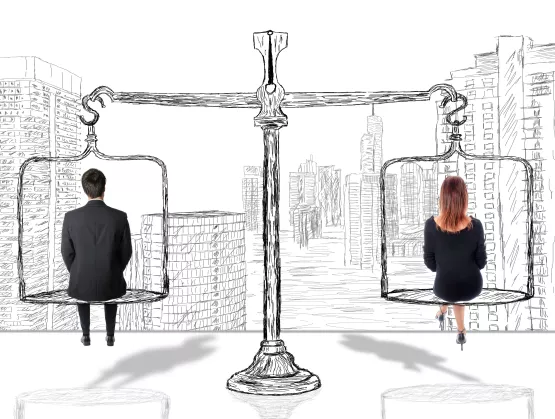
At the SEMI Foundation, we’re taking steps to support a big, audacious goal – achieving gender parity in the microelectronics industry. Dating to its roots at Bell Labs, Fairchild Semiconductor, and Intel in the late 1950s and 1960s, the semiconductor industry was pioneered by men at a time when far fewer women were in the workforce. While women have made major workforce gains since those early days, we’re still far from achieving anything close to an equitable representation of women. According to the U.S. Bureau of Labor, only 11.8% of electrical and electronics engineers – and just 8.7% of mechanical engineers – are women. What’s more, research from the American Association of University Women (AAUW), a non-profit that champions equity for women and girls through advocacy, education, and research, tells us that women drop out of engineering careers more steadily and quickly than men. According to AAUW research, just 30% of women working in engineering are still in the field after 20 years compared to 35% of men. By the time women have been in the field for 30-34 years, that number falls to 19% – while it increases to 39% of men among the same cohort. The small number of women in engineering careers and the fewer still who stay in engineering long term illustrate the troubling gender disparities in the industry. Even with these low numbers, however, there are still women who have managed to not just stay in the industry, but to thrive and lead within it. I talked with four of these women about their professional journeys and how they believe women can be best supported in careers in our industry. The AAUW research report Solving the Equation: The Variables for Women’s Success in Engineering and Computing shows that attrition in engineering is higher among women than men. Passion for math and scienceLam Research VP Gowri Kamarthy took her Ph.D. in chemical engineering from UC Berkeley directly to Lam Research, where she’s spent the past 22 years in technical positions. Today she heads the company’s conductor etch product line.Coming from a family of engineers, including her father and siblings, Dr. Kamarthy had a built-in support system that was essential to her success. She never felt intimidated by male peers after spending her formative years pursuing her passion for math and science.“I may have stood out as a minority in the field of engineering, but there was also a silver lining in standing out,” she said. “People notice you.”Kamarthy realizes that engineering careers are generally perceived as being less compatible with family life, for both women and men.“Anyone who wants work-life balance in an engineering career will have to navigate its special challenges, including the need to work long hours to match the rapid pace of innovation,” Kamarthy said.Drawing from her own experience, Kamarthy offers some career advice. “Perseverance and grit are key to success,” she said. “The other ingredient is luck. I was fortunate to have great bosses at Lam who didn’t see gender first and foremost. Instead, they recognized my ability to deliver on projects and encouraged me to perform at my best.” A love for math and science. The confidence to excel in those subjects. A support system to help her through the bumpy times. These were also truths for Sandy Vos, Ph.D., director of R D at NXP Semiconductors.“I was always good at figuring things out,” says Dr. Vos. “I remember feeling enthralled when I got my first internship because it combined engineering, math, science and manufacturing.” Like Kamarthy, Vos was aware of her status as a woman in a male-dominated field, but it didn’t stop her.“If anything, my gender drove me to prove myself,” Vos said. “And I’ve been fortunate because everywhere I’ve worked, I’ve been a part of a smart and collaborative team.”That doesn’t mean gender never came into play. Whenever it did become an issue, Vos didn’t shy away from hard conversations. She recalls having a conflict on the plant floor with two men who each stood over six feet and were about 100 pounds heavier.“I had a conversation with them, and we figured it out,” she said. “But for a while there, my heart was racing.”Gender felt like a bigger issue when Vos was younger. “Now that I have gray hair, it’s not much of a concern,” Vos said. “But earlier in my career, I started putting Ph.D. on my business card so people would know I could talk technical details.”Though just one of three women in an undergraduate class of 35 engineering students – and with a teaching cohort of all-male professors – Debbie Gustafson anticipated equitable treatment in her college engineering program. She had the same outlook when she began her career in semiconductor manufacturing. But the belief that she’d receive the same treatment as her male peers went largely unfulfilled. This didn’t slow her down. During her first year as CEO of Energetiq, she grew the company’s revenues and valuation. A year later, she steered the company through a successful acquisition by Hamamatsu Photonics. Today Gustafson continues to lead Energetiq as a wholly owned subsidiary, but the road to the top job wasn’t without hurdles. Gustafson muscled through the tough times.“When I started out, I traveled to Japan and Korea when there weren’t other women in technical roles,” she said. “My first meetings were extremely frustrating. I was the only woman in the room, and the men wouldn’t address me. This went on for a year, but I kept coming back and built the relationships.”Now a member of the SEMI Foundation Board of Trustees, Gustafson credits mentors with helping her navigate the nuances of doing business across cultures during those early years.A rocket scientist among usAlissa Fitzgerald might tell you that MEMS isn’t rocket science. But that’s only because she has a Ph.D. in Aeronautics and Astronautics, which actually is rocket science. Dr. Fitzgerald worked at a government laboratory and a large defense contractor before she got her Ph.D. and moved to a MEMS industry startup. Though gaining valuable experience, she found the environments too hierarchical and lacking in career development opportunities for young female engineers. As one of the few women engineers at these heavy-duty engineering firms where, in the 1990’s, there were no women in leadership roles, Dr. Fitzgerald sensed that opportunities for her to advance were remote. Fitzgerald started her own firm rather than climb up the ladder of another company, but it turns out, her motivation had nothing to do with gender.“It was the way engineers were treated like Dilbert,” she said. “I felt like a cog in the wheel, working for corporations that weren’t nurturing or appreciative of engineers.”After years of working for other companies, Fitzgerald founded the eponymous AMFitzgerald Associates, a developer of innovative MEMS and sensor solutions for specialty applications. When gender did come up for Fitzgerald, it manifested in men questioning her technical abilities.“Early in my career, I felt like I had to prove myself worthy, even though my degrees were from MIT and Stanford,” she said.Over 3,000 respondents to the Workplace Experiences Survey, sponsored by the Society of Women Engineers and the Center for WorkLife Law at UC Hastings Law, validate Fitzgerald’s experience. 61% of women vs. 35.1% of white men surveyed cited Prove-It-Again Bias – “having to prove themselves repeatedly to get the same levels of respect and recognition as their colleagues.” For engineers of color, that disparity was even worse. 68% of engineers of color (both women and men) reported Prove-It-Again Bias vs. 35% of white men.“For women and people of color, there’s rarely an assumption of competence,” Fitzgerald said.It’s sad but true that we can’t decouple the challenges women face from the challenges people of color face. Both are dramatically underrepresented as chip companies, and women of color represent the smallest percentage of the industry’s workforce and leadership.Inclusivity mattersWorking toward gender equity isn’t just a case of doing what’s right. It’s a case of doing what’s profitable. Research shows that companies with more women on the board perform better.“Given the pace of innovation in semiconductors, we need people from different backgrounds and perspectives to solve the hard problems challenging our industry,” Kamarthy said.Vos appreciates the fact that SEMI is creating a forum of inclusion.“Inclusion starts when you’re young,” she said. “School-aged kids are already making decisions about a future they see as exciting and possible. Our job is to make sure they have the opportunities to pursue what they envision.”Change won’t come magically, though. Fitzgerald believes companies need to make a concerted effort to attract a diverse population.“While I see a disproportionate number of female applicants, I’m more the exception than the rule,” she said. “When male executives call and ask, ‘How are you finding all these amazing female engineers?’ I say, ‘they’re finding me.’”Elevate the storyAchieving gender parity in microelectronics is a daunting task. Fortunately, access to SEMI’s global membership puts us in a unique position to make this deeply complex story clear and relevant to our members, so we can help support the shift.We’re looking at both the stark numbers of women working in microelectronics and at the lack of longevity of women in engineering. We’re elevating the conversation about childhood education. Why are girls passed over in math and science classes in early grade school, and what is the effect of teachers’ lowered expectations for girls taking these classes? What does it mean to be the only in the room? The only woman, or the only woman of color, on a team or in a meeting room. Feelings of isolation or disengagement – or frustration with Prove-It-Again bias – often lead to turnover in an industry that already struggles with retention.Reverse the trendThere’s much SEMI members can do to work toward gender parity in our industry. Look at recruitment, hiring, retention and promotion processes to see how women fare in them. Consider how to create a company culture of self-awareness and inclusion. Ensure equitable pay. Suggest and request women speakers for keynotes and panels at conferences. And offer workplace flexibility to allow women – who often bear most family responsibilities – to take time off or reconfigure schedules so they can help care for children or ailing parents.It’s time for our industry to reverse the trend of gender inequality. Research shows that companies with greater gender and racial parity are more productive, innovative, and profitable. If we welcome and support women in our companies, we will help women – and our industry – reach their full potential.Get involved with SEMIRegister for the Women in Semiconductors (May 3, 2021). This virtual event will include interactive exploration and discussion on strengthening the roles of women in hybrid and remote work environments. Everyone managing teams or experiencing the gender parity challenges and opportunities will benefit from the fresh thinking and best practices that the Women in Semiconductor program is known for.Participate in the SEMI Mentoring Program. By matching mentees with industry leaders and professionals, SEMI Foundation facilitates one-on-one mentoring relationships that benefit all participants. Whether you are a recent university graduate or growing in your microelectronics career and looking for support, participating in the SEMI Mentoring Program will put you on the right track.Participate in the McKinsey Company 2021 Women in the Workplace Study, which looks at representation and the experience of women in companies across the U.S. and offers recommendations on how to retain and support women. Email [email protected]. Shari Liss is executive director of SEMI Foundation. Connect with her on LinkedIn.
Read More
This February, the U.S. celebrates the 45th anniversary of Black History Month, which highlights the achievements and contributions of Black Americans to our country. It is an important celebration, since those contributions have been historically ignored, marginalized or simply unknown. Their stories, however, abound. Black Americans have contributed tremendously to the technology industry, from Garrett Morgan, who invented the gas masks that protected our soldiers in World War I, to James West, who co-invented microphone technology that is ubiquitous in our electronics.Black History Month is also a complicated celebration, and long criticized for its limited scale. Why would we highlight Black contributions for only one month a year, and why would we separate Black contributions from American contributions? As Morgan Freeman famously said, “Black history is American history.” As a country, we should be elevating the stories and achievements of Black people year-round and using those stories to move our country toward more equity and justice for Black Americans.The origins* of Black History Month are grounded in good intentions. It’s expression, however, can be divisive. But there are many ways we can counteract this.First, we can commit to elevating and celebrating the work, stories, and advancements of Black Americans year-round. Second, we can immerse ourselves in Black history and culture through the eyes of Black Americans. There are extraordinary writers to read – Colson Whitehead’s The Underground Railroad is a masterpiece. Poets like Amanda Gorman are top of mind. And consider artists like Kehinde Wiley, whose portraits hang in the Smithsonian. We can seek out Black voices on our social media feeds and look for Black writers and directors when we next binge on Netflix.We can also consider the experience of Black people within SEMI, and our industry. Black people comprise less than 5% of the U.S. tech workforce, and there are zero – yes, zero – Black CEOs of Fortune 500 tech companies. While this lack of Black representation and leadership undercuts our industry’s capacity for innovation, creativity, and productivity, it is, more importantly, unjust. We will explore the reasons behind this in future blogs.There are extraordinary Black leaders and others in our industry who are leading the charge to create greater diversity, equity and inclusion, but that work should be shouldered by the people who have benefitted from these inequities, not the people who have been held back by them.This February, for Black History Month, I invite you to discover and explore the work of Black creators and thinkers. I also invite you to consider the structures and systems that have led to the inequities in our own industry – and how you can be part of dismantling and rebuilding those systems to create a more just workplace and society.A great place to start is exploring the resources on the Crucial Conversations on the SEMI website. And then, I invite you to consider how we as individuals and how our industry can practice acknowledging and celebrating the contributions of Black Americans throughout the year.* Impactree.com has an excellent short version of the events:“In 1915, historian Carter G. Woodson was frustrated with the underrepresentation of Black Americans in university history classes. Woodson knew Black people had tremendous influence over the infrastructure, culture and history of America, yet their role was solely relegated to that of enslaved people. Along with Jesse E. Moorland, Woodson founded the Association for the Study of Negro Life and History – now called the Association for the Study of African America Life and History (ASALH) – to motivate the inclusion of Black Americans in historical textbooks and discussion. 11 years later, Woodson and the ASALH proposed the second week of February be declared Negro History Week, coinciding with the birthdates of Fredrick Douglass and Abraham Lincoln.50 years later, during the United States’ 1976 Bicentennial, President Gerald Ford recognized Black History Month as a nationally celebrated event to be observed every February. Growing from Negro History Week, Black History Month’s goals echo Woodson’s desire for a more inclusive version of history. In Woodson’s own words, ‘What we need is not a history of selected races or nations, but the history of the world void of national bias, race hate, and religious prejudice.’”Michelle Williams is deputy director of the SEMI Foundation.
Read More
The next time you are on a Microsoft Teams call or write a group email that includes a female colleague, consider this: The next time you pick up the phone to contact her, she might be gone. According to the Women in the Workplace 2020 study by McKinsey Company and LeanIn.org, one in four women are considering leaving their workplaces or downshifting their careers due to work-life challenges stemming from COVID-19, leading to the potential loss of two million women from the American workforce. What is making work so untenable for many women?First, consider the overall U.S. workforce, across all sectors: The industries hardest hit by the pandemic are those dominated by women and people of color: healthcare, retail and hospitality, notably restaurants. These two demographics have been losing their jobs in staggering numbers. In December 2020 alone, according to the National Women’s Law Center, women accounted for 100% of the 156,000 jobs lost that month in the U.S. Second, the double whammy of the closure of daycares and the shift to remote schooling saddled mothers with overwhelming responsibilities. In the tech industry, women faced significant challenges before COVID-19 hit. Although women represent about 47% of entry-level workers in tech, that number dwindles to 20% in C-Suite jobs, with women of color accounting for just 2% of these executive roles. This leads to the challenges of being an “Only” – the only woman or person of color in a team, department or meeting. “Onlys” experience isolation, disengagement and pressure to out-perform male, white colleagues simply to be seen as equals. Women report feeling more exhausted, burned out and excluded than their male colleagues.Layer on the pressures of a pandemic and you’ve got a seriously overstressed female workforce at the breaking point. Fathers and partners are not taking on a fair share of the burden. Fully 40% of working mothers are spending 15+ more hours weekly on household duties than they did prior to the COVID-19 crisis and are more than twice as likely as fathers to worry that their performance at work is being negatively judged because of their caregiving responsibilities. And a survey by Chief, a private club for women executives, reports that, irrespective of added responsibilities at home, 70% of women report that they have taken on more duties at work since the COVID-19 crisis began. So, on top of the anxieties around keeping themselves and their families healthy during a worldwide pandemic, women are simultaneously working more, and doing more at home.Women are critically important in workplaces for a host of reasons. Women in senior-level roles have a profound effect on workplace culture. According to the McKinsey study, women are more likely to embrace and champion employee-friendly policies and programs and to take a stand for gender and racial equity at work. Women also mentor and sponsor other women more than men. If senior-level women leave the workforce, women at all levels will lose their strongest allies. Research also shows that gender-diverse teams – and companies – are more innovative, creative and productive. Inclusive workplaces tend to have higher retention rates and better recruitment rates. To sum up, companies where women are well-represented in leadership are 50% more likely to outperform their peers.As indicated by McKinsey, companies are at a critical crossroads. The choices managers, teams and companies make now will influence the workplace for decades to come. The authors of the study say it best: “If companies recognize the scale of these problems and do all they can to address them, they can help their employees get through this difficult time and even reinvent the way they work so it’s more flexible and sustainable for everyone. If not, the consequences could badly hurt women, business and the economy as a whole. This moment requires long-term thinking, creativity, strong leadership and a laser focus on the value of women to their organizations.”What can managers, teams and companies do? Women in the Workplace 2020 features an excellent Framework for Action, which includes everything from making work more sustainable, to minimizing gender biases, to strengthening employee communications. It is an important resource for any individual, team or company that wants to strengthen their support and retention of women. And – small steps can make a big difference. McKinsey encourages companies to ask a few important questions:Consider the workflow of your team: Is it flexible in a way that supports working parents and care-givers?Are performance expectations equitable across genders?Do the women on your team feel as though they can express difficulties or take PTO if they need to in order to take care of family obligations?Finally, simply acknowledging the realities women are facing is a great first step. For instance, if there are women on your team, you could forward them this article and say, “I didn’t realize how significant this issue was. If there are ways I can further help you navigate this time, please feel free to talk with me about it.” None of us want to find out what happens to our companies if we lose 25% of our female colleagues. We have the opportunity and obligation to reverse this troubling trend, if we act deliberately and intentionally to support the women around us. I invite you to dig into the Women in the Workplace 2020 study, to discuss it with your colleagues, and to determine how all of us can make our workplaces more supportive and inclusive for everyone, for the benefit of female workers and their employers everywhere.We encourage your company to participate in McKinsey’s 2021 Women in the Workplace study and make your voice heard. To enroll, visit Women in the Workplace.For information about the SEMI Foundation’s work in Diversity, Equity, and Inclusion, or if your team would like to support the industry in creating a more equitable workplace, please visit us at www.semifoundation.org, or contact Michelle at [email protected] Williams is deputy director of the SEMI Foundation.
Read More
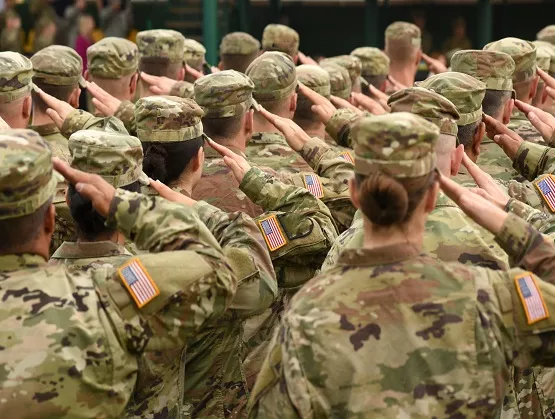
Like TEL, many SEMI member companies have a long history of hiring veterans. We all have done a good job of hiring military personnel who possess the obvious semiconductor industry-related job skills and experience (e.g., avionics, hydraulics, mechanics, and radio frequency (RF)). But as an industry, are we doing enough? Are we missing out on the next employee of the year because we aren’t thinking broadly enough about our workforce? Five years ago, I met a young soldier at a military job fair. The interaction with him was a defining moment for me personally and it inspired me to commit to do more to translate military experience to the civilian workforce. Soldier: “What does TEL do?” Me: (Industry has a bright future, chips are in essentially everything including your military gear, etc.) Soldier: With disappointment, “Well, I don’t suppose I’m qualified to work at your company – since its technology.” Me: “Please stay for another moment, tell me your MOS (Military Occupation Specialty code) and job duties.” Soldier: “Ma’am, I’m a bomb specialist. I disable bombs.” Me: “Okay, let’s see if I get this right. You work with electrical schematics. It’s a given you follow instructions and guidelines, consider safety a p-r-e-t-t-y big deal, work under pressure, and you work with a team. Right?” Soldier: With excitement, “Yes, ma’am. And we have a squadron motto: “We have NO bad days!” Me: “Well then, you have the PERFECT background!” This conversation changed this soldier’s outlook on his career possibilities after exiting the military. He never imagined that the specialized training and experience he received as a bomb specialist would lead him to a role in the high-tech industry. He honestly believed he possessed no value to a civilian employer. It was moving to experience this gap of understanding face-to-face. Yet, this is a typical conversation between recruiters and hiring managers and military members. I could have easily let him walk away. Instead, I chose to invest 10 more minutes to learn more about what this soldier had to offer TEL. What is the key challenge around hiring military veterans? Disconnect. 90% of veterans surveyed faced challenges seeking civilian employment. According to Pew Research Center, only 1% of the entire U.S. population is qualified to join the U.S. military, and .5% (yes, that’s ½ of 1%) serve. This means 99.5% of the U.S. population has no direct working experience with the military. Civilian employers (recruiters, hiring managers, or employees) do not understand what the military does, the technical nature and responsibility of each role, or the extensive training each military member receives. And, veterans do not understand the civilian workspace. We truly have a gap translating military experiences and skills to the civilian workforce and vice versa. What are the benefits hiring military veterans? There are numerous benefits to hiring military veterans. Veterans are well-versed in cutting-edge technology. Today’s military is high-tech, state-of-the-art, and computer-based. Veterans are uniquely matched to our industry. Their jobs are highly technical and soldiers are extremely safety-conscious; they appreciate guidelines, follow directions, and possess a strong sense of team. Veterans are global citizens. Many military veterans have lived and worked in more than one country and speak more than one language. They tend to be culturally astute. Veterans have a winner’s psychology. Military members receive hundreds of hours of professional and technical training. They focus on a higher purpose and win as a team. Veterans practice accountability and leadership. Personal accountability is highly promoted. There is no room for excuses or acceptable reasons for mission failure. Everyone has the opportunity for a leadership role at some level and has modeling of what good leadership looks like. Hiring veterans aid diversity program issues over time. The military is a diverse group with 16% females and 44% people of color. Military personnel come from a wide variety of experiences – from across all 50 U.S. states with a variety of cultural and economic backgrounds. How can SEMI member companies truly effect change? Considering over 200,000 men and women exit the military annually, we have a significant opportunity to effect change by offering careers to those who serve while expanding our industry’s talent pool. Here are some initial ideas to get your company moving towards a more robust military outreach: Participate in the SEMI Foundation’s VetWorks Program: The Foundation is creating a toolkit to help member companies engage, hire, train, and retain veterans. This includes support for veteran-friendly messaging and recruiting, internships, training programs, and job fairs. This work will launch in Q2 of 2021 – contact Margaret Kindling at SEMI for details ([email protected]). Have a smart plan – Determine what positions make sense to focus on for veteran hiring. Start simple and grow your efforts over time. Set metrics for what percentage of your hires will be veterans. Recruiters can use simple key word searches to pull veteran resumes. Your company can attend military job fairs (in person or virtual) either at military installations or hiring events by organizations like Hiring Our Heroes, RecruitMilitary, etc. Offer diversity training related to hiring military veterans that focus on military vs. corporate cultures. Additionally, Society for Human Resources Management (SHRM) Foundation offers a Veterans at Work Certification Program available for all interested participants. Soldier For Life – This is an official U.S. Army program created to help connect current soldiers, retired soldiers, veterans, and their families with education, employment, and health and wellness resources and opportunities. If you are near a military installation, get to know the transition assistance program (TAP) officer or the base commander. You have to be persistent – the relationship will be worth it. Ask your network, including SEMI member companies, if they would share their military installation contacts. This is not a closed talent competition amongst our industry partners. Many companies who have a robust military outreach program are eager to share their stories to help you get started. It is simply the right thing to do to help each other make a difference for those who served. Internships/Mentorships/Fellowships. Ask your local military installation if they offer direct mentorships or internships. A great way to get started with internships is partnering with NAM’S Manufacturing Institute – Heroes MAKE America. Hiring Our Heroes is another great resource for fellowships. Let’s do more for those who served. Interested in starting an industry veteran network to share best practices? Please contact [email protected]. We can do this! Kathy Garner is Manager, Talent Acquisition, Global Mobility, and Contingent Worker Management at TEL. References Bradbard, D. (Institute for Veterans and Military Families, Syracuse University) Schmeling, J. (Student Veterans of America). The Recruitment, Hiring, Retention Engagement of Military Veterans. Retrieved from https://www.shrm.org/foundation/ourwork/initiatives/engaging-and-integrating-military-veterans/pages/veteransguidebook.aspx Parker, K., Cilluffo, A., Stepler, R. 6 Facts about the U.S. Military Changing Demographics. Pew Research Center. Retrieved from https://www.pewresearch.org/fact-tank/2017/04/13/6-facts-about-the-u-s-military-and-its-changing-demographics/ Reynolds, G. Shendruk, A. (2020, July 13). Demographics of the U.S. Military. Council of Foreign Relations. Retrieved from https://www.cfr.org/backgrounder/demographics-us-military Shifting Forward Consulting. Shift to the Civilian SUIT: How Veterans Can Successfully Navigate 3 Job Interview Challenges. (10/17/18). Retrieved from https://cherriedavis.com/veterans-successfully-navigate-3-job-interview-challenges/ SHRM Veteran Panel 2018. Retrieved from https://youtu.be/rgDUAALxTRg SHRM Veteran Panel 2018 Resources Bureau of Labor Statistics https://www.bls.gov/home.htm Heroes MAKE America http://www.themanufacturinginstitute.org/Initiatives/Military-and-Veterans/Heroes-MAKE-America/Heroes-MAKE-America.aspx Hiring Our Heroes https://www.uschamberfoundation.org/hiring-our-heroes Soldier For Life https://soldierforlife.army.mil US Department of Defense https://www.defense.gov/Our-Story/Our-Forces/ USO https://www.uso.org/
Read More
As the semiconductor industry continues to grapple with the widespread effects of the COVID pandemic, at the SEMI Foundation we continue to build programs and initiatives that inspire the next generation of STEM workers and drive new and diverse talent to all of our member companies.Our work to build out the semiconductor workforce centers on creating more diversity, equity, and inclusion within the industry. We want everyone to win. We want students and workers to benefit from these excellent jobs. We want our industry to diversify to increase our productivity, innovation, and our bottom lines. And we want to fulfill the extraordinary potential of electronics to help people around the world in the way they work and live. COVID-19 is hitting certain populations – women, veterans, and Black, Indigenous and other people of color – particularly hard, so our work has never been more timely or important for local communities and the global economy.To that end, we’re going big by generating funding and designing initiatives that will benefit the industry over the long term. The SEMI Foundation’s SEMI VetWorks Program, currently in development, will help U.S. veterans better understand our industry, the careers available to them, and how their skills will transfer to working in microelectronics. The program also provides training portals and mentorship support to smooth their transition to the industry.We’re also working to fund our Women In Industry Network, a major new initiative designed with national partners to significantly increase the representation of women, who today account for just 10-25% of the semiconductor workforce across all roles and functions. What’s more, the SEMI Foundation’s global industry image and awareness campaign is inspiring more young people to enter high-school and university STEM programs and ultimately pursue careers in microelectronics while encouraging current workers to re-skill or up-skill and join the tech workforce.Meanwhile, your High Tech U team continues to connect semiconductor companies with students all over the globe. While we’re eager to get back on the road to meet and inspire students in person, we are excited to provide updates about two of our programs:HTU in the ClassroomWith the transition to online and hybrid learning classrooms, we seized the opportunity to combine STEM activities from SEMI High Tech U with discussion sessions and other projects to help students explore and deepen their understanding of the semiconductor manufacturing process. The 16-week pilot program, called HTU in the Classroom, will launch late next year to introduce high-school students to four key areas of chip production: patterning and layering, the chemistry involved in photolithography, logic gate systems, and computational thinking. These interviews with SEMI member companies will give students a chance to share their new knowledge gained from the class and to ask questions about what life is really like as an engineer, HR professional, or manager in industry.From Sand to SiliconWith silicon the lifeblood of our industry, it is impossible to understand what makes the semiconductor/microelectronics industry tick without knowing more about the companies, processes and technologies that all make it possible. That’s why we are developing a self-guided online journey through the chip manufacturing process for students and educators. This will go beyond reading like a Wikipedia site. Instead, the learning and exploration will feature interactive elements including company videos and links to resources such as fact sheets as well as university and company websites. At each stage, students will get details about the companies and individuals who do the work and the paths the professionals followed to these roles. The big-picture look will show how all the production stages come together to build working devices that power everything from smartphones to data centers.The SEMI Foundation is grateful for your support and partnership as we all work through these unprecedented times and roll out new programs to help build the talent pipeline. To learn more about or support our workforce development programs, please contact Shari Liss, SEMI Foundation’s Executive Director, at [email protected].
Read More