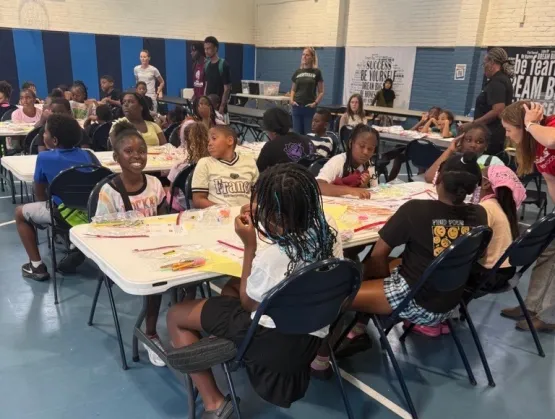
In the summer of 2025, I had the privilege of leading more than a dozen SEMI Foundation STEM summer camps in schools across multiple communities.Each camp brought students face-to-face with hands-on engineering challenges, semiconductor learning modules, and conversations about the careers connected to what they were building.What stood out most wasn’t just the energy in the classrooms; it was the moment students began to see themselves in futures they hadn’t previously imagined. For many, it was their first exposure to the semiconductor industry. Their first time hearing about advanced manufacturing careers. Their first time understanding that a certificate, credential, or engineering degree could lead to a stable, high-quality job shaping the technologies that power modern life.And it reinforced something we believe deeply at the SEMI Foundation, that workforce development does not begin at graduation; it begins in grade school with early awareness and intentional exposure.Starting Earlier: Where the Semiconductor Workforce Truly BeginsBuilding a strong, future-ready semiconductor workforce does not begin in college, or even high school. It begins in the earliest years of science, technology, engineering, and mathematics (STEM) exposure.Since 2003, I have created STEM programming that introduces college majors and career pathways to K–12 students. At the SEMI Foundation, that work now connects directly to one of the most urgent workforce challenges of our time, ensuring the semiconductor industry has the skilled talent needed to support domestic manufacturing expansion and global competitiveness.When elementary and middle school students engage in hands-on STEM experiences, they build confidence. They develop technical vocabulary, critical thinking skills, and resilience. They begin to understand how the devices they use every day are designed and manufactured. That early spark matters, especially in industries like semiconductors, where awareness has historically been limited among younger students.Moving From Exposure to Industry ExplorationAs students progress, programming must move from exposure to exploration.Through SEMI Foundation initiatives, including hands-on camps, classroom modules, and industry-connected programming, students begin to see how semiconductors power everything from smartphones and AI to healthcare systems and clean energy technologies.Middle school and early high school programs should intentionally connect STEM learning to real-world applications:Engineering design challenges tied to semiconductor conceptsProject-based learning informed by industry practicesCareer speakers from manufacturing and technical rolesMentorship that reflects diverse entry points into the industryThis stage is critical for workforce development. Quality hands-on learning must be paired with representation and mentorship. Students need to hear authentic stories about different pathways into technical fields, whether through two-year degrees, apprenticeships, industry certifications, or four-year engineering programs.High School: Where Awareness Becomes PreparationHigh school is where exploration must transition into preparation.Structured career pathways, dual enrollment opportunities, industry certifications, internships, and apprenticeship models create tangible bridges between classroom learning and workforce entry.When students graduate with credentials aligned to high-demand sectors, including advanced manufacturing and semiconductor production, they leave with more than knowledge. They leave with validated skills and industry relevance.This alignment does not happen by accident. It requires coordinated partnerships between K–12 systems, higher education institutions, workforce agencies, and employers. At the SEMI Foundation, we work to support this alignment so curriculum reflects industry needs and students experience clear, navigable pathways into careers.When education and industry move in sync, skills gaps narrow, and regional economies strengthen.Sustaining Momentum: Postsecondary and Employer PartnershipPostsecondary institutions and employers play a pivotal role in sustaining momentum.Stackable credentials, registered apprenticeships, and paid work-based learning models allow students to build competencies while earning income. Clear articulation agreements between high schools, community colleges, and universities reduce talent loss and create seamless transitions. In the semiconductor industry, where technical precision and specialized skills are essential, these structured pathways are not optional. They are foundational.A Long-Term Vision for Semiconductor Workforce GrowthThe semiconductor industry powers nearly every aspect of modern life. But sustaining that innovation requires long-term workforce vision. The students I met in our 2025 summer camps reminded me of what is possible when exposure meets opportunity.When we start early, align intentionally, and collaborate across systems, we do more than prepare a workforce. We cultivate the next generation of innovators who will design, build, and lead the technologies shaping our future.Bia Hamed is Program Manager, Global Education Initiatives at the SEMI Foundation.