downloadGroupGroupnoun_press release_995423_000000 copyGroupnoun_Feed_96767_000000Group 19noun_pictures_1817522_000000Member company iconResource item iconStore item iconGroup 19Group 19noun_Photo_2085192_000000 Copynoun_presentation_2096081_000000Group 19Group Copy 7noun_webinar_692730_000000Path
Skip to main content
Default Banner Image

Anissa Hamdon-Morison

The semiconductor industry continues to grow at an unprecedented pace and so does the demand for highly skilled employees at all levels in the industry. With the focus on reshoring manufacturing in the United States, we are increasingly faced with two questions: 1) how to identify talent that is ready to work today with the skills and experience that they already have and 2) how to best prepare a workforce for tomorrow, to meet the estimated shortage of 59,000-146,000 technicians and engineers by 2029. The SEMI Foundation – the workforce development arm of SEMI – provides solutions to address the talent gap and more through programs such as SEMI Credentialing. This innovative effort that helps employers identify talent, jobseekers communicate their work readiness, and training and education providers align their programs to industry needs.SEMI Equipment Maintenance Technician CertificationIndustry subject matter experts who provided initial inputs for the Knowledge, Skills, and Abilities (KSA) of an Equipment Maintenance Technician.The SEMI Foundation is building out the first nationally accredited, industry-recognized Equipment Maintenance Technician Certification. In collaboration with industry leaders like Micron, GlobalFoundries, Intel, Western Digital, TEL, Onto Innovation, and others, we have identified the key competencies for equipment maintenance technicians. Individuals from 45 companies across 16 states have provided technical subject matter expertise, resulting in one of the most regionally diverse and comprehensive certification offerings to date. Our partner, NOCTI, an ISO-certified credentialing provider, is in the final stages of developing the certification exam. Our two-part certification exam includes 100 multiple choice questions that assess a candidate’s knowledge of safety, quality, electrical and mechanical principles, maintenance principles, and semiconductor industry awareness, as well as a hands-on electrical and pneumatic skills-based performance task. Educators from 12 community colleges and universities across the United States developed the questions, ensuring the highest academic standards and rigor. This certification will allow job seekers to demonstrate their readiness and create clear pathways into technician roles for qualified individuals regardless of their previous training. Furthermore, the Equipment Maintenance Technician certification will establish a national source of truth for curriculum alignment made available to training providers and educators and ensure relevance and continuity through routine industry review. The SEMI Equipment Maintenance Technician Certification will launch regionally in Spring 2026. National roll-out is scheduled for Fall 2026, and we encourage training and industry partners to connect with us directly to ensure early access to the certification.SEMI Endorsement of Programs and CoursesPartners from 12 community colleges and universities provided their expertise in developing test questions for the SEMI Certification.The SEMI Foundation is endorsing programs that prepare entry-level workers for success in the semiconductor industry. Since 2024, we have endorsed programs at Austin Community College, Foothill College, NY Creates, and WGNStar. These programs, and others like it, are emblematic of what strong partnerships between academia and industry can look like. Learners seeking programs can look to these as options for their education. Receiving SEMI Endorsement for Programs and Courses conveys that: Learners who are new to the semiconductor industry and successfully complete the program will be well-prepared for entry-level roles; Program completers have had exposure to fundamental semiconductor industry information and context, as well as introductory hands-on experience; Completers of these programs have the specific knowledge and skills required for entry level positions; andProgrammatic design and content have been informed through input and feedback from local industry partners.As we continue to expand the portfolio of programs and courses that the SEMI Foundation endorses, we are looking increasingly at programs with strong industry alignment and clear pathways for learners once they complete their training, be that apprenticeships, additional training, or direct access into the workforce.Microcredentials and MoreThe SEMI Foundation is a leader in convening stakeholders across academia and industry in support of workforce development initiatives. This unique ability to bring together diverse perspectives positions us to play a central role in shaping the future of skill validation. Microcredentials address several key changes and trends in training, including the rising costs of education coupled with an increased appetite for hands-on learning opportunities. Microcredentials are stackable, adaptable, and aligned directly with workforce demands. Learners can build competencies step-by-step. Employers can identify specific skill sets with greater precision. Education providers can modernize programs to reflect emerging technologies and evolving roles. We are forming panels and committees to explore the idea of microcredentials, as our partners are looking to us for innovative ways to recognize short-form training programs, amplify opportunities for individuals in up-and-coming regions, and continue to connect our partners in service of workforce solutions. In addition, the SEMI Foundation is exploring the provision of badges to teachers, career counselors, and other educators to demonstrate their knowledge and awareness of semiconductor careers.As we continue to drive solutions and add value to the world of credentials, we look forward to ongoing conversation and collaboration with partners. Every conversation we engage in about credentialing strengthens our offering and ability to provide solutions to the semiconductor industry’s growing workforce demands. Anissa Hamdon-Morison is Manager, Curriculum Developer Training at the SEMI Foundation
Read More
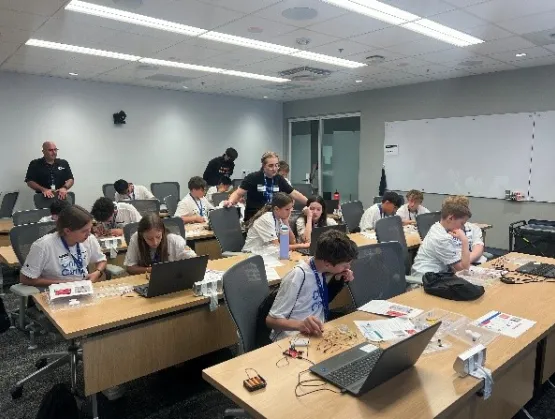
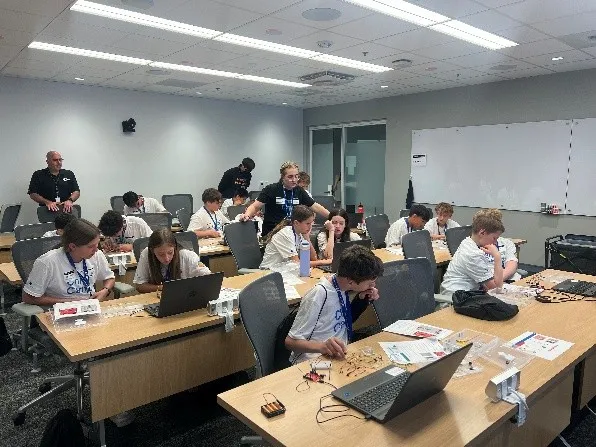
The semiconductor industry is grappling with a critical talent shortage, both globally and within the United States. At the same time, the workplace landscape for high school and college graduates is changing. These dual pressures present an opportunity: to cultivate early career awareness by introducing K–12 students to dynamic, real-world learning experiences that open their eyes to emerging industries—like semiconductors—and the meaningful roles they could play in them.Investing in this early exposure strengthens the long-term talent pipeline for the semiconductor industry and prepares students to meet the demands of a rapidly evolving workforce. However, realizing this vision requires intentional, cross-sector collaboration among educators, industry leaders, workforce boards, and policymakers.One example of this type of collaboration is the ChipWorks Series in Idaho. Boise State University partnered with Micron, the Idaho Workforce Development Council, and the Idaho Digital Learning Alliance to design, develop, and launch the learning experience for middle and high school students in 2024. The ChipWorks Series consists of three courses: Chip, Chip, Hooray!; Introduction to Electrical and Computer Engineering; and Materials Science and Engineering. With the first course launching in Fall 2024, the program has already reached over 220 learners across Idaho – and it’s just getting started. Camille Platts-McPharlin is the Project Manager at the Microelectronics Education and Research Center helping Boise State prepare to expand their programming to a national audience in 2025.The origin of the ChipWorks Series began through a grant with the Idaho Workforce Development Council. “The Council and Boise State University saw an opportunity to address the growing workforce gap by building a pipeline that begins in middle school and goes through adulthood,” said Platts-McPharlin. Development began in 2023 and was shaped by more than 300 voices from industry, academia, and K–12 education. This cross-sector group of stakeholders worked collaboratively to ensure that the lessons were responsive to real-world industry needs and compatible with classroom delivery best practices. Furthermore, the courses are aligned with State and National learning standards as well as ABET standards. Overcoming logistics challenges around open-source resources and existing structures in formal education led to two of the programs being dual credit, setting high school students up for early success in post-secondary. There has been an enthusiastic response from learners across Idaho, and more learners are expected to engage this year, as the third and final course is launched in the fall. Students enroll at their home school, have the support of local teachers, and receive online instruction synchronously from a dedicated teacher through the Idaho Digital Learning Alliance. This model enables a broader group of learners to access the training, regardless of educator understanding of the content. Students learning ChipWorks Series lessons at Micron Chip Camp.The ChipWorks Series is now expanding its reach beyond Idaho. In collaboration with Micron, Platts-McPharlin and the MERC team are working to bring the courses to students in New York. Educators from Syracuse and surrounding districts participated in a week-long professional development event to learn the curriculum and begin the work of bringing it into their local school districts. Teacher training for educators from Idaho and New York. Platts-McPharlin offered words of wisdom for other educators, training providers, or partners who are trying to create industry awareness opportunities earlier in the learning journey. “The key to success is listening closely to stakeholders and balancing the various perspectives. This will result in a quality product,” she said. Her other suggestion: trust the process. While it was challenging to build entirely new programs, the impact it is having on students, their teachers and their families to make them aware of their potential is immense. Programs like ChipWorks offer a powerful solution to the semiconductor industry’s workforce crisis, but they cannot stand alone. For sustained progress, industry leaders, workforce development councils, and educational institutions must work together to co-design scalable, inclusive solutions. This means sharing expertise, investing in infrastructure, and championing long-term talent development—starting in the earliest years of education. For more information on the ChipWorks Series, or to learn how to bring it to your students, please contact Camille Platts-McPharlin: [email protected]. To learn about what the SEMI Foundation is doing to bring together cross-sectoral groups for similar projects, contact Anissa Hamdon-Morison: [email protected] Hamdon-Morison is Training and Curriculum Manager at SEMI Foundation.
Read More
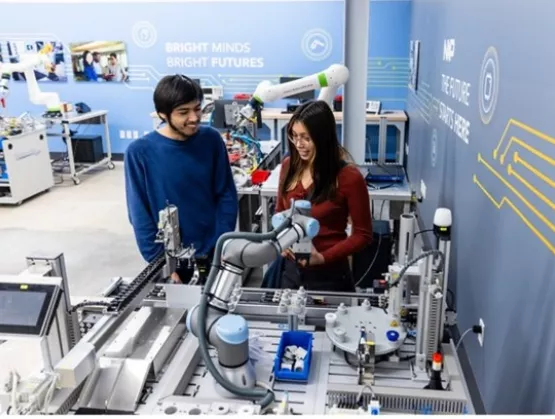
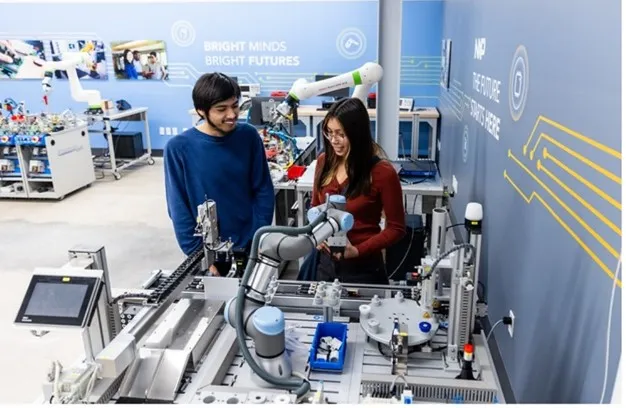
The semiconductor industry is a rapidly expanding sector in the United States with an anticipated 115,000 new jobs by 2030. A projected 67,000 of these in-demand roles will remain unfilled (SIA Workforce Blueprint, 2024), given the current training landscape. To address this workforce challenge, many strategies must be leveraged. One solution is to diversify the education and training needed to move workers into the semiconductor industry. Through semiconductor-specific programming at community colleges and universities, institutions can attract a wide array of learners, and by creating flexible credit, non-credit, degree, diploma, and certificate programs, education providers can meet hiring needs through many pathways. The SEMI Foundation, the workforce development arm of SEMI, is now offering Fundamental Semiconductor Knowledge Certification for high-quality programs that prepare entry-level workers for success in the growing semiconductor industry. SEMI’s Fundamental Semiconductor Knowledge Certification conveys that: Learners who are new to the semiconductor industry and successfully complete the program will be well-prepared for entry-level roles; Program completers have had exposure to fundamental semiconductor industry information and context, as well as introductory hands-on experience;Completers of these programs will have the specific knowledge and skills required for entry level positions; andProgrammatic design and content have been informed through input and feedback from local industry partners.Certified Programs: Spotlight on Austin Community CollegeAustin Community College District (ACC)—located in Austin, TX, was the inaugural recipient of the SEMI Foundation’s Fundamental Semiconductor Knowledge Certification for their Advanced Manufacturing Production (AMP) program. The strength of ACC’s programming is further illustrated by the College’s partnership with America’s Frontier Fund (AFF) Foundation, Merit America, and the Texas Institute for Electronics to expand the AMP program across the United States in 2025. This expansion will allow job seekers to access the SEMI Certified AMP program in a flexible, location-diverse capacity. ACC’s Dr. Laura Marmolejo, Dean of Advanced Manufacturing, and Laura Lucas, Director of Strategic Initiatives, spoke with SEMI Foundation to share the origin story of AMP and provide lessons learned and advice for others who are developing or expanding similar programs. Dr. Laura Marmolejo, Dean of Advanced Manufacturing, and Laura Lucas, Director of Strategic InitiativesKnowledge Sharing: Best Practices and StrategiesWhen asked what other schools can learn from ACC's experience, Dr. Marmolejo and Ms. Lucas focused on three key areas: direct engagement with industry, flexibility on programming and meeting local needs, and developing a pathway that can be clearly communicated to learners and industry alike. Dr. Marmolejo emphasized the importance of developing strong connections with industry. “Start by building these relationships with the company. They need to trust you,” said Dr. Marmolejo.” Ms. Lucas also spoke of how the program's origin and ultimate success emerged from direct engagement with companies. By understanding direct needs at each company, identifying consistent needs between the companies, and identifying ways that the College could support those needs, ACC was able to offer multiple solutions that appealed to both students and employers. Austin Community College offers several ways for learners or jobseekers to deepen their knowledge of the semiconductor industry and advanced manufacturing sector. Learners can begin their journey with the College’s 8-week Advanced Manufacturing Production (AMP) program, upskill with the Core Automation Semiconductor Training (CAST) program, or pursue a bachelor's or associate degree.Another benefit of the close collaboration between ACC and industry is that the College "is understanding where the regional hiring demand is at any given time,” said Ms. Lucas. This awareness, coupled with a mindset of flexibility and adaptability among the instructors and administrators, allows ACC to align programming with local needs, ensuring that jobseekers experience success once they complete their programs. For example, recently in Austin, employers have been focused on upskilling existing employees, so ACC has been able to open more sections of the Semiconductor Technician Advanced Rapid Start (STARS) program for incumbent workers within the local workforce ecosystem. When hiring gaps require more new additions to the industry, ACC will be able to pivot to increased AMP and CAST programming. This awareness of industry needs and the flexibility allows ACC to think about its offerings holistically.Advanced manufacturing students at ACCAnother consideration that schools and faculty can keep in mind when developing programs is how they scaffold programming and communicate the pathways and differences between offerings to external audiences. Internally, the distinctions between programs may feel obvious, but learning how to promote each pathway to learners, and how to differentiate them when seeking employer input is critical. Whether it's AMP, CAST, or STARS, "the topics are the same; what’s different is the level of depth,” explained Dr. Marmolejo. Ensuring learners enroll in the right program for their individual needs and career path will help the College build the right pathways for students from education to career. Clear communication about programming will also inform the industry about the best ways to get and stay involved in course development and iteration. Dr. Marmolejo with advanced manufacturing students at ACCACC’s success in building pathways for students into industry at the local level is evident in the more than 2,800 students enrolled across all advanced manufacturing programs, as well as its upcoming national program expansion for AMP. Other educational institutions and training providers can learn from the best practices and experiences of ACC, and can similarly have their work reviewed and certified by the SEMI Foundation.Press event at ACC in November 2024 to announce the expansion of AMP program nationwide and the awarding of the SEMI Certification.SEMI Certification: Next Steps for Training and Education PartnersSEMI Certification for training programs communicates to learners, jobseekers, and employers that the awarded programs have achieved the highest standards of program excellence in preparing entry-level workers to succeed in the growing semiconductor industry. Through 2025, the SEMI Foundation plans to expand program and course certification to include technician training programs. If you are a training or education partner looking to submit a program for consideration, please complete the SEMI Certificate Screening form. For more information about existing and future SEMI Certification efforts, please contact Anissa Hamdon-Morison at [email protected] or visit SEMI Certified Programs Courses | SCAN.Anissa Hamdon-Morison is the Curriculum and Training Manager at the SEMI Foundation.
Read More