


The excitement was apparent leading up to the SEMI Foundation’s micro-credential development meeting at GateWay Community College in Phoenix. In preparation, we met with several industry leaders to determine which skills they believed were most essential for their entry-level workforce. In addition, we invested in a job task analysis and a field test for our Equipment Maintenance Technician certification.
We felt ready for just about anything, until the massive 5 a.m. thunderstorm hit in the middle of the desert. That was something we hadn’t planned for.
We thought about our carefully scripted agenda for the next three days. Would educational institutions and companies openly discuss their struggles with curriculum, hiring, and retention? Also, would they really share their industry knowledge, best practices, and internal training documents with us?
Through our experience, we know that educators and private sector leaders sometimes speak different languages. Could we bridge that divide and reach an agreement on a pathway that ultimately leads to rewarding careers in semiconductors? Even more fundamentally, could we come together for the good of the industry?
We couldn’t help but wonder: would lightning really strike twice in the desert?
A Better Way to Evaluate Talent
Weather notwithstanding, we could immediately tell this wouldn’t be just another meeting. For starters, the cross-sector engagement was incredible. The meeting convened industry leaders from Advantest, Amkor, EMD, FM Industries, Intel, and TSMC, along with workforce development and training experts, college educators, and SEMI Foundation employees.
Guiding the process was Dr. Tina Koepf from the National Occupational Competency Testing Institute (NOCTI), the leading provider of industry credentials and technical education resources across the United States. Dr. Koepf is a psychometrician with expertise in manufacturing credentials and a doctoral dissertation on high-quality assessments.
For many of the organizations represented, this was their first exposure to the relatively new concept of micro-credentials. Ultimately, the goal of micro-credentials is to help verify an individual’s knowledge and skill level in specific disciplines that have practical, real-world relevance.
To best understand the role of micro-credentials, imagine being a hiring manager trying to choose an entry-level maintenance technician. You’d likely review a series of resumes and hold interviews with candidates that seem promising on paper. But right off the bat, you’re at a disadvantage. You might see a transcript for a mechatronics program, but that person went to a school you’ve never heard of. Another candidate might not have much academic preparation but appears to have related experience in auto mechanics. A third might have military training and experience.
It’ll quickly become apparent that conventional hiring evaluations can only go so far to answer what you really want to know: Which candidate is most prepared to be a productive team member from the start? It’s also important to understand which candidate has the biggest inclination to learn, grow, and succeed.
This is where relevant credentials come in. When credentialing programs are created through industry-wide collaboration, they’re better positioned to offer the knowledge and skills needed for today’s jobs, including process and maintenance technicians, supervisors, and engineers.
Credentials take various forms, with certificates being the most common. Certificates show that an individual has completed a course or program; however, they don’t necessarily communicate what was learned and to what level of mastery.
From there, certifications add another level of verification. Unlike certificates, certifications are based on a standardized assessment of a core body of knowledge. The highest-quality certifications are industry-recognized and third-party validated. In the case of SEMI CredentialingTM, that third party is NOCTI.
Like certifications, micro-credentials still involve rigorous exams set to industry standards, but as the name implies, they’re smaller and focused on specific areas of knowledge and readiness. SEMI’s micro-credentials complement SEMI Certifications and provide another way for job seekers to demonstrate readiness for semiconductor careers.
Based on a survey of semiconductor manufacturers and interviews with HR professionals, training leaders, and subject matter experts, we prioritized four areas of learning for our new and upcoming micro-credentials. These areas include:
- Cleanroom Operations and Safety
- Fab Maintenance, Tools, and Metrology
- Vacuum Technology
- Gas and Chemical Distribution Systems
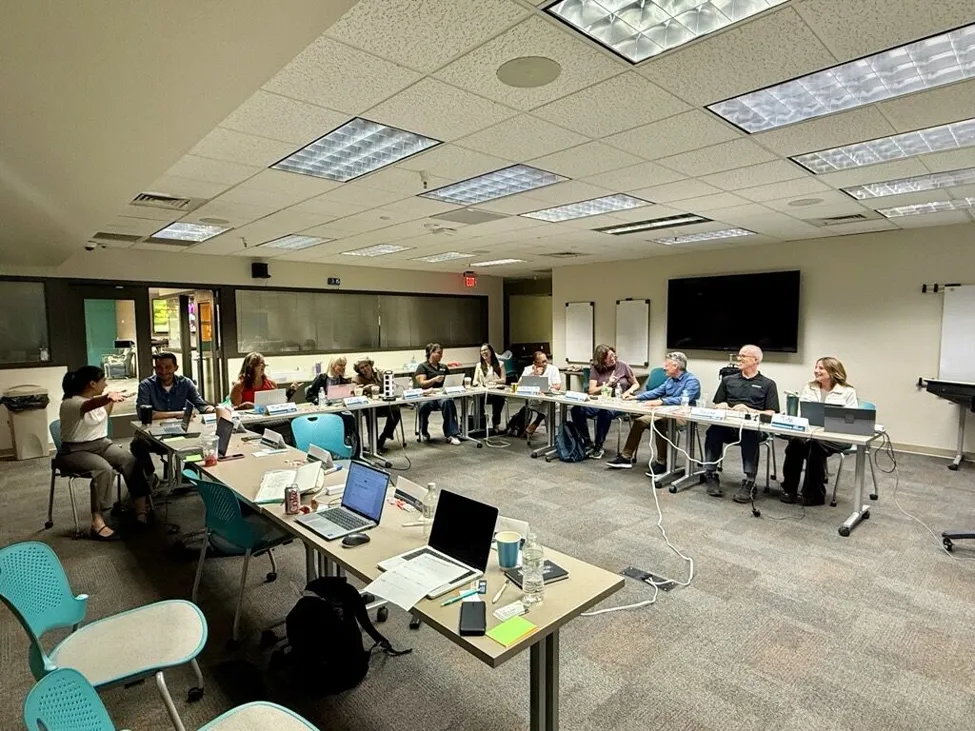
Subject matter experts from industry and academia came together to develop SEMI micro-credentials.
Micro-Credential Development Process
On the day of our meeting, we leveraged the subject matter expertise in the room to build lists of key competencies, prioritize the most important areas for assessment, and write test questions for each of the four micro-credentials. Everyone was amazed at the progress made in just three days.
For Ron Mueller, an engineer at FM Industries and 41-year industry veteran, the workshop exceeded his expectations.
“The collaborative discussions and real-world examples presented in the meeting helped me better understand how micro-credentials can be applied across different technical roles and career pathways while supporting the labor force needed,” he said.
Kate MacArevey-Colello, an engineering instructor based in California, saw equal benefit from her vantage point in higher education. She explained, “I was really impressed at the coordination of the process and the high level of constructive collaboration among the participants. Micro-credentials can help industry by creating clearer pathways into technical careers. For MiraCosta Technology Career Institute, I see micro-credentials as a way to strengthen connections between our programs and a broader range of employers. Micro-credentials can also give students new ways to demonstrate the skills they've developed and help convince employers at semiconductor-related companies that they are good employment prospects.”
GateWay Community College is building a Future48 Workforce Accelerator in Central Phoenix to provide hands-on training in semiconductors. Set to open in 2027, it will be a new resource for Arizona fabs.
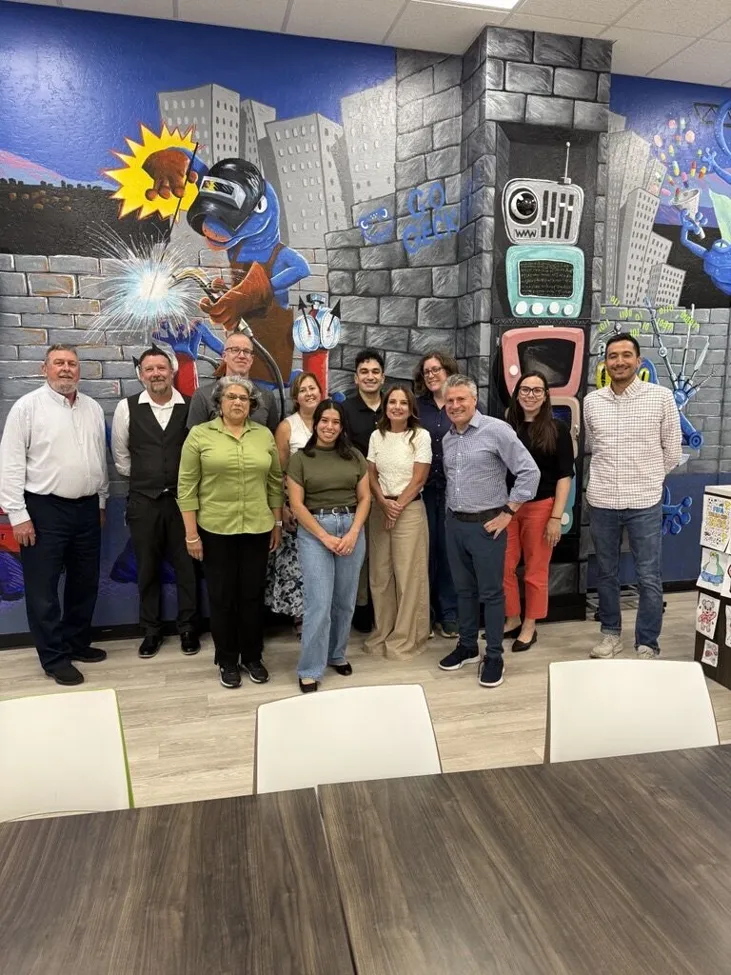
Representatives from FM Industries, GateWay Community College, Advantest, Intel, TSMC, NOCTI, MiraCosta TCI, Amkor (not pictured), and EMD (not pictured) provided technical expertise to develop credentials of value.
What Comes Next?
The SEMI Foundation’s micro-credentials are in the final phases of development. Two of the micro-credentials debuted at SEMICON West, along with the highly anticipated Equipment Maintenance Technician certification.
Want to get involved?
- Job seekers can complete this form to learn more about the Equipment Maintenance Technician certification and SEMI Foundation micro-credentials.
- Colleges and training centers can apply to become testing sites for the Equipment Maintenance Technician certification.
- Employers can provide technical subject matter expertise to our two upcoming micro-credentials: Vacuum Technology and Gas and Chemical Distribution Systems.
Brent Weil is a workforce development consultant and president of Strategic Workforce Partners. Anissa Hamdon-Morison manages curriculum development and training initiatives at the SEMI Foundation.


