downloadGroupGroupnoun_press release_995423_000000 copyGroupnoun_Feed_96767_000000Group 19noun_pictures_1817522_000000Member company iconResource item iconStore item iconGroup 19Group 19noun_Photo_2085192_000000 Copynoun_presentation_2096081_000000Group 19Group Copy 7noun_webinar_692730_000000Path
Skip to main content
Default Banner Image

semiconductor manufacturing

U.S. consumers are flush with cash, the American economy is hurtling back from the depths of the COVID-19 pandemic, and the semiconductor industry is flying high on skyrocketing chip demand, with chip equities soaring since the initial outbreak in early 2020 as virus outbreaks worldwide supercharged demand for the digitization of everything from factories to home offices. “Wow, what a difference a year makes,” said Jennie Raubacher, Global Head of Semiconductor Electronics Investment Banking at Wells Fargo, speaking at a recent SEMI webinar. The two rounds of government stimulus payments in 2020 and 2021 gave many U.S. households the safety net to withstand the heaviest blows dealt by the COVID-19 pandemic and stoked consumer spending that has helped lift a hobbled economy. Durable goods spending in the U.S. has also seen a sharp rebound, surging more than 60% from its April 2020 trough, Raubacher said. The twin forces have driven a blistering U.S. economic recovery after GDP shrunk about 10% by the second quarter of 2020 only to bounce back in the first quarter of this year to roughly $19 trillion, regaining the lost ground to match the GDP charted at the end of 2019. With the U.S. economy continuing to gain steam, inflation has, as expected, edged higher, with price increases particularly acute in used vehicle and lumber markets. Despite surging prices, Wells Fargo sees inflation moderating as durable goods demand slows, easing pressure on interest rates, Raubacher said. Equity Valuations at Record Highs Heady semiconductor stock prices are not new. Over the past 15 years, equity prices of chip companies in the S P 500 have grown more than 460%, outpacing the 230% jump in value of the S P 500 index overall, Raubacher said. And chip stocks continue to shine. Since early 2020, when the spread of COVID-19 hit its rapid clip, the recognition of the growing importance of chips to economies around the world has exploded. That dynamic joined secular technology trends including autonomous driving development, industrial and factory automation, 5G infrastructure buildouts, data center expansions, and smart city and smart home innovation fueled by the Internet of Things (IoT) as key drivers of semiconductor stock valuations. With its price/earnings (PE) ratio now at more than 21x, the S P 500 is well above its historical average of 15x PE. “The S P 500 valuation is at record high any way you look at it, and valuation multiples across the board, currently at 3x Next Twelve Months revenue, have increased dramatically from historical averages,” Raubacher said. Semiconductor stock valuations are on similar trajectory, with the SOXX index now at 15x Next Twelve Months EBITDA (earnings before interest, taxes, depreciation and amortization). “While semiconductor stocks may seem highly valued compared to historical levels, the chip industry has grown faster and expanded profitability by a wider margin than S P 500 companies,” Raubacher said. With that differential, “semiconductor equities are not as expensive as they may seem at first glance.” Earnings expansion and valuation multiple increases for the chip industry over the past 15 years have translated into a more than 500% jump in market capitalization, compared to a 300% increase for the S P 500 excluding chip companies, she said. Chip company revenue growth in the first quarter of 2021 was predictably low due to seasonality, dipping 2.4%, though dropped less than the historical average, Raubacher said. Second-quarter revenue growth for the industry is expected to hew to the historical average of 6%. Semiconductor growth forecasts by market analysts for 2021 range widely from 6% to 17% year-over-year, she added. Chip Companies Raise Capital at Record Pace In 2020 and 2021, semiconductor companies have raised an unprecedented $82 billion in capital to finance maturing debt and acquisitions, a wave that will “likely catalyze further consolidation in the sector,” Raubacher said. None of the financing has stemmed from liquidity crunches. Since Raubacher joined Wells Fargo 10 years ago to lead its semiconductor practice, the group has executed more than 175 transactions including $40 billion in mergers and acquisitions and $360 billion of financing for its semiconductor industry clients. “With a strong macroeconomic backdrop and demand environment, relatively low interest rates, semiconductor companies showing strong business fundamentals and robust valuations, we expect a pickup in M A activity,” she said. Growth Forecast Across Most Semiconductor Applications The next four years will see the chip industry grow across most applications including wireless communications, consumer electronics, transportation and medical. Automotive and industrial/aerospace will lead the way, expanding at an expected compounded annual growth rate of 14% and 10%, respectively, from 2020 to 2025 to “drive a significant portion of the TAM expansion during that period,” Raubacher said. Across all applications, the semiconductor industry is expected to grow at a 6.8% CAGR from 2020 through 2025, adding $183 billion in revenue by the end of the forecast period, she said. ESG Rises in Importance For their part, investors now focus on more than pure business performance when valuing individual companies. The ability of businesses to reduce their carbon footprint, promote workplace diversity and take other steps to serve the greater good as part of Environmental, Social and Governance (ESG) programs are carrying more weight in valuation models. “Investors are paying more and more attention to ESG initiatives and targets,” Raubacher said. “On the debt side, we’re seeing things like green bonds and interest rate reductions tied to ESG targets. Only a few semiconductor companies have incorporated ESG measures into their financing, so it’s still early days. It really comes down to the metrics you can track in your companies and the goals and targets you can commit to. It will be a very company-specific approach rather than an industry standard.” In the chip industry, Raubacher noted that ESG targets are geared not only to manufacturing equipment and processes in fabs and other semiconductor facilities throughout the supply chain, but increasingly also to chips themselves. As technology innovation continues to spur the development of chips to power more electronics for consumers and businesses, their proliferation comes at a cost: greater energy consumption. The upshot is that semiconductor makers are becoming more focused than ever on power-efficient designs to bolster their ESG initiatives, Raubacher said. Many semiconductor players across the supply chain are reducing their carbon footprint by switching to energy-saving equipment and reducing water waste, Raubacher said. At the same time, more semiconductor executives are recognizing the rising importance of highlighting corporate achievements across all aspects of ESG. More Governments See Vital Importance of Semiconductors As shelter-in-place orders took hold in countries worldwide after the initial COVID-19 outbreak, work-from-home offices, online shopping, virtual classes and remote doctor’s visits became the norm. The electronics at the heart of this connectivity – born of both necessity and convenience – and the chips that power them took on outsized importance around the world. Geopolitical skirmishes intensified and supply chains across the semiconductor industry were reimagined and redrawn. Governments jockeyed for advantage in the race to build new semiconductor manufacturing facilities and upped their chip investments. An acute chip shortage that started in the automotive industry and quickly spread to other sectors magnified just how pervasive and vital semiconductors had become in making the world go round. “There’s no question that the semiconductor industry is vitally important to global and national economies as governments around the world now recognize its strategic importance,” Raubacher said. That puts the industry in an even stronger position to help lay the regulatory groundwork for its own future. “There’s a unique opportunity for semiconductor industry executives to shape the public policies that could impact the direction of the industry for the next 30 years,” she said. More than 750 people attended the June 2nd webinar, Surging Chip Demand, Digital Transformation, and the Pandemic – What’s Next?, sponsored by SEMI members Brooks Automation, Hitachi, JECT, KLA and TEL. Sven Smit of McKinsey Company also delivered his talk Leading in COVID-19 Exit at the event.
Read More
When COVID-19 hit the semiconductor industry, SEMI members were confronted with new hurdles to keeping their employees safe and their operations running uninterrupted. We quickly assisted our global membership around the globe by providing a forum for collecting member insights on best practices for operating and safety procedures, supply chain issues and sentiments on business impact and recovery. That forum took the form of surveys we launched in March 2020. We shared the results with the larger SEMI member community to help them cope with the evolving impacts of the pandemic on their businesses. Following is a summary of our 4th survey, issued last month. Regional and Sector Representation Nearly 40% of our respondents represented companies headquartered in North America. Of the respondents, 10% each were from companies headquartered in Taiwan and China; 5% from Korea, 13% from Japan and 20% from European and Middle Eastern members. The largest share of respondents – 40% – develop equipment for semiconductor fabrication, assembly, and test; 21% supply materials to the microelectronics industry; 14% are device makers; 6% supply software and design services; and 3% are OSATs, EMS suppliers or ODMs. Measures Member Are Taking to Continue Operations The May survey found that almost no companies ceased production for any significant length of time. In order to continue operations, companies instituted social distancing and masking requirements, temperature checks, schedule changes, and some contact tracing, all to varying degrees, as shown in Figure 1. In addition, several companies implemented some combination of mandatory testing, bump sensors, air purification and site capacity limits and sequestered foreign workers in separate housing for required quarantines after travelling. Figure 1 All of these measures are routinely discussed during the regular SEMI EHSS COVID-19 Working Group calls. That group consists of facilities, HR managers and others tasked with ensuring safety monitoring and compliance at member companies. Company Vaccination Policies With the pace of vaccine rollouts varying widely around the world, only 5% of respondents are requiring all workers to be vaccinated before returning to the office, and 12% have not yet considered a vaccine policy. The majority of companies are encouraging but not requiring employee vaccinations, and 26% leave the decision to the individual employees. Figure 2 North American companies constituted the majority of the required and encouraged vaccination categories. In Europe, companies fall into the employee decision or encouraged categories but none require vaccinations. Japanese companies primarily leave the vaccination decision to employees, while Chinese companies are split among the required, encouraged and employee decision categories. Clearly, these guidelines are not required by law in each region, but instead fall to employers and local policymakers. Member Readiness for Digital Transformation A solid majority of members reported they have invested in the adoption of digital transformation technologies and practices, though only about 14% expect to continue their digital investments in the coming year. Many respondents have deployed virtual meeting software and have implemented or plan to put in place virtual reality tools for remote diagnostics and predictive modeling for semiconductor manufacturing. Figure 3 Location by Functional Group in Returning Employees to Sites Not surprisingly, manufacturing and distribution staff that could work from home during the pandemic are back on site, and respondents signaled that R D and engineering groups will soon end their remote work, following by finance and procurement. Sales and marketing show the highest percentage of staff working remotely, with sales having the highest number remaining remote for some time to come. Figure 4 Resilience to Further Economic Uncertainty Of the 274 companies responding, 229, or 84%, feel more resilient in the face of further economic uncertainty after their response to COVID-19, though continuing supply chain issues and raw materials shortages ranked among their top concerns, as did rising customer demands, their ability to increase capacity utilization rates, and the increasing demands on employees and facilities overall. Figure 5 Many thanks to all survey respondents over the past year! We’ll keep you up to date on results of future surveys. For more details on the SEMI EHSS COVID-19 Working Group calls, visit the SEMI COVID Response Site. To watch the recording of our most recent CEO Webinar – Surging Chip Demand, Digital Transformation, and the Pandemic – What’s Next? – click here. More than 750 people attended the June 2nd webinar sponsored by SEMI members Brooks Automation, Hitachi, JCET, KLA and TEL. Heidi Hoffman is senior director of Technology Communities marketing at SEMI.
Read More
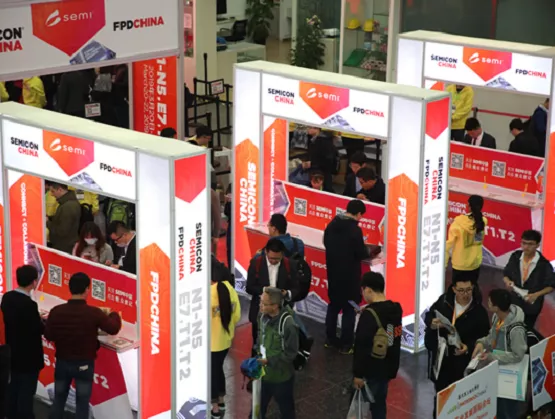
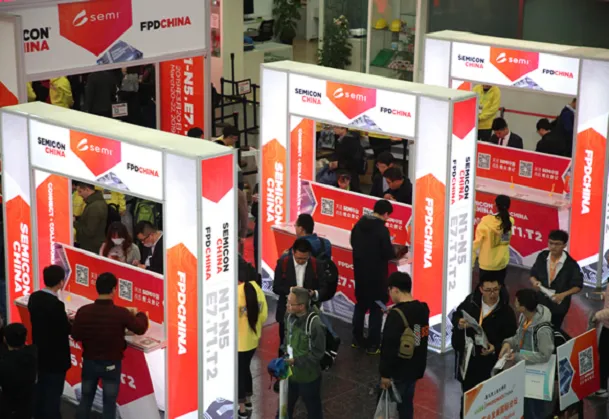
For the second straight year, SEMICON China, among the world’s largest and most influential semiconductor industry events, was the first local tradeshow of its scale held in-person, reflecting China’s rising prominence in the semiconductor industry. After securing approval from the Chinese government to hold large events, SEMI staged SEMICON China 2020 and 2021 with advanced protections against COVID-19 in place. There were no reported infections at either event. Highlights from SEMICON China 2021: Large Scale: Attendance of over 92,000, including more than 66,000 visitors and 25,000 exhibitors. Expo hall totaled 84,500 square meters with about 1,100 exhibiting companies and over 4,000 booths. World-Class Thought Leaders: Strong industry support from key foundries, OSATs, equipment and materials suppliers. Keynote speeches featured world-class industry leaders and head of China’s IC industry fund and global investment consulting agency, who explored the latest global business, technology and market trends and hot domestic investment topics. Concurrent Forums: Forums included SIIP China: SEMI Innovation Investment; Smart Manufacturing; Advanced Manufacturing; Advanced Packaging; Memory; Power Compound Semiconductor; China Display Conference; the all-new Advanced Materials Forum; and China Semiconductor Technology International Conference (CSTIC). Rich Digital Content: SEMICON China’s digital platform provided a rich array of content to attendees around the world including the Grand Opening Keynote and CSTIC, which were broadcast live online. Workforce Development: SEMI China worked closely with industry and government partners to promote SEMI Workforce Development programs to help attract and retain talent for China’s semiconductor industry. SEMICON China again featured the SEMI Workforce Pavilion and SEMI Workforce CXO Talent Forum. Outstanding COVID-19 Protective Measures: SEMICON China deployed advanced testing and monitoring equipment and implemented strict COVID-19 preventative measures to ensure a safe environment for all attendees to network and conduct business. Looking Ahead With the resounding success of SEMICON China 2021, optimism is growing that more physical events will be held with travel restrictions set to ease later this year. The more than 2,500 SEMI members around the world are eager to again network and collaborate face-to-face with customers, suppliers and partners to solve challenges in the microelectronics industry and drive semiconductor innovation that continues to transform how we work and live. That very innovation made many businesses more resilient as the virus spread and enabled people worldwide to work, learn, and shop from home. As SEMI starts to stage other events in-person, we will put in place advanced protective measures against COVID-19 to ensure the safety and well-being of all attendees. As the vaccination roll-out continues worldwide and new COVID-19 strains emerge, SEMI’s flagship SEMICON events are evolving in several ways, most notably with a larger digital presence. In this new era, we offer an international platform for SEMI members and partners across the microelectronics supply chain to collaborate, discuss industry trends, solve common challenges, network, and accelerate business growth through physical, virtual, and hybrid formats. Hybrid events – on-site exhibitions and conferences featuring a digital presence – allow the face-to-face connections so important to the semiconductor industry but also improve the attendee experience by offering an online option with the following benefits: More international accessibility to content live or on-demand Robust interactivity with live-streamed events, allowing more people to participate Greater cost effectiveness to enable companies and people under tight budgets to take advantage of world-class content, including keynote presentations, panel discussions, and technical sessions. In a recent survey of advanced manufacturing businesses, Informa Markets, a multinational publishing, business intelligence, and exhibitions group, found that 93% of respondents are likely to return to in-person events between August and December 2021, signaling a widespread eagerness for the return of live events and face-to-face connections. SEMICONs Scheduled for 2021 In a normal year, each of the seven regions where SEMI operates stages a SEMICON, with the exhibitions spread throughout the year. With the world continuing to combat COVID-19, more SEMICONs have been moved to the second half of 2021 – most of them with a hybrid format so exhibitors and attendees can take advantage of the increasing popularity of online events. After last year’s disruptions to the SEMICON schedule – and with more experience in the new normal – SEMI is excited to welcome the businesses and peers who couldn’t attend the 2020 events back to the in-person and hybrid shows. Innovation never sleeps. And SEMI will continue to evolve its events to help you form the partnerships and make the connections vital to the growth of your company and the industry. For more information about regional SEMICONs, please visit the SEMI events page. About the Author David Ghodsizadeh is the Director of Global Product Marketing at SEMI, where he develops customer-centric strategies to market SEMI Membership, Market Data, Expositions, Smart Initiatives, and Technology Communities to members, partners, and industry peers. Connect with David on LinkedIn.
Read More
Traditionally, defect classification is done manually by operators or using Automated Optical Inspection (AOI) machines, often leading to classification inconsistencies. Also, rules-based AOIs may at times be unable to fully satisfy project requirements due to the rigidity of inspection recipes. SixSense – Breaking the Status Quo with Artificial Intelligence Enter SixSense, an AI-powered defect classification software platform that has been making breakthroughs in defect detection and classification for semiconductors to make manufacturing smarter and more efficient. Founded in 2018, SixSense has already amassed a wealth of experience and chalked up a number of successes such as automating the manual image classification process, reducing manufacturing false rejects, and capturing escapees. Infineon Technologies and GlobalFoundries were amongst the early adopters of SixSense’s platform: classifAI. With Infineon, classifAI has allowed over-rejection rates to be precisely quantified. classifAI – Simple UI, Easy Usage, Powerful Models As a UI-based assistive software platform, classifAI, SixSense’s automated defect classification platform is built with the defect and yield engineer in mind. SixSense takes care of all the back-end complexities – such as coding, algorithm modelling and deployment – to enable end users to get started and use the platform with a simple GUI. The simplified end-to-end AI pipeline offered on the platform includes data labelling to make data AI-ready, model training, and model testing. Ultimately, models are deployed on the production floor for 24/7 inferencing of hundreds of millions of images every year, at scale, across processes, tools and sites. Machine learning models built by the SixSense team have seen strong results, with model accuracy of up to 98% in certain use cases. Track Record of delighting IDMs, Foundries and OSAT Customers SixSense has consistently solved visual inspection problems and enabled the success of IDMs, foundries and OSATs since its inception. The AI technology has helped a range of customers across 100mm-300mm wafer standards, both pure silicon and compound wafers, and caters to specific end-use market requirements such as RF and automotive. Partnerships between startups and established manufacturers are key to actualizing the value of AI in manufacturing. “Our collaboration with AI startup SixSense has enabled us to explore opportunities in yield gain, improving cycle time, and real-time monitoring of process shifts,” said Dato’ Tan Soo Hee, Executive Vice President, Global Backend Operations at Infineon Technologies Asia Pacific. “SixSense has been very attentive to the needs of our engineering team, addressing project requirements using a customer-first approach evident in the design of the intuitive software platform,” said Melvyn Peh, Principal Engineer, Automation-Scan-Pack, Infineon Technologies Asia Pacific. The intelligent annotation module is one of many offered by SixSense, which uses AI to train AI and accelerate the data annotation process by focusing on the semiconductor-specific requirements. Another valuable module in classifAI is advanced analytics that capture the heatmap for defect distribution on the images. Images are stacked on top of each other, with the location of defects aggregated to provide the defect heatmap. Through this, systematic failure patterns were identified that allowed defect engineers to zero in on key sources of failure and assist in root-cause analysis. Infrastructure – Scale Fast, Adapt Quickly, Accelerate Value Creation In the dynamic world of technology, machine learning and AI projects must meet changing infrastructure demands. A cloud-first approach is often favored for the plethora of benefits it offers. “We’re looking forward to a great partnership with SixSense, treading together hand in hand exploring fresh ideas and possibilities,” said Manju Jalali, Vice President of digital manufacturing at GlobalFoundries, who oversees the company-wide roll out of classifAI. For use cases where on-premise deployments are preferred, SixSense offers such options for infrastructure integration, satisfying all possible infrastructure requirements in the market. Contributing to a vibrant innovation ecosystem SixSense was mentioned by Singapore’s Deputy Prime Minister Heng Swee Keat during an event that marked Infineon’s 50th anniversary in Singapore: “I am heartened that Infineon will be investing more than $27 million over three years on an AI initiative in Singapore. Under this initiative, Infineon Singapore will be partnering academia, industry, and local startup SixSense AI to develop new AI solutions and courses.” Explosive Growth of AI in Chip Manufacturing According to a McKinsey Company report, AI contribution to semiconductor company earnings is projected to rise to between $85 billion and $95 billion per year in the coming years. SixSense has been taking great strides in creating value for their semiconductor customers. “SixSense offers tremendous value in a high-growth vertical in the semiconductor industry, marrying the latest deep learning algorithm with the compute power of the cloud,” said Rajan Rajgopal, CEO of DenseLight Semiconductor. “This leads to faster root-cause analysis that helps reduce the cost of non-conformance and improve quality.” Dominic Teo is Enterprise Business Development Representative at SixSense. He can be reached at [email protected].
Read More
A change is underway in the manufacturing sector as the use of curvilinear shapes on photomasks grows, leading to the real possibility of curvilinear shapes in designs. It may just be the start of a revolution away from Manhattan or rectangular shapes to curvilinear shapes. Changing the physical design infrastructure to be curvilinear seems too daunting a task. Are curvilinear shapes in designs a real possibility? I turned to Aki Fujimura, CEO of D2S, a member of the ESD Alliance, a SEMI Technology Community, to further explain the shape of the future. Smith: What is the difference between Manhattan and curvilinear shapes? Fujimura: Manufactured masks and wafers are all curvilinear, even if the input CAD geometries are rectilinear (shown in Figure 1). It’s always been true that nature can’t make 90-degree turns, so sharp corners were always a matter of how closely you looked. These days, at the leading-edge nodes and their required resolutions, wafers and even masks are all visibly curvilinear as you can see in the graphic on the left in Figure 2. Since the 1980s, both chip design and chip manufacturing systems have used axis-aligned rectangles, or “Manhattan” geometries, because 1) that was sufficient to design transistors and interconnect for the most part, and 2) CPU-based computer algorithms can be made much more efficient for Manhattan geometries. Curvilinear shapes can be piecewise linear polygons of some resolution, or spline-like formats that are curvilinear at any resolution, or specific curved patterns like circles and ovals. Figure 1: All shapes on masks and wafers are curvilinear, even if the input geometries are Manhattan. Source: D2S Smith: What are the benefits of curvilinear masks? Fujimura: The manufacturing side of the semiconductor community knows that the best possible process window for wafer lithography is obtained by using curvilinear correction of mask shapes instead of Manhattan shapes. There have been numerous studies on the topic over several decades. The technique to generate purely curvilinear mask shapes is known as inverse lithography technology or ILT and is an advanced form of optical proximity correction (OPC). At a February 2020 eBeam Initiative event, Micron Technology presented a study showing process window improvement up to 85% for advanced memory designs as a result of using curvilinear ILT (shown in Figure 2). Additionally, Ryan Pearman from D2S presented a study at Photomask Japan 2019 showing that it is preferable to move toward a completely curvilinear paradigm, not only because ILT is better, but because the mask manufactured will have reduced variability. Figure 2: Micron Technology explained the benefits of curvilinear mask shapes for advanced memory at the eBeam Initiative event during 2020 SPIE Advanced Lithography Conference. Source: Micron Technology Smith: If the benefits have been known for decades, why is it happening only now? Fujimura: Several things happened at the same time. Multi-beam mask writing is now available. GPU acceleration for general computing has become mainstream. And wafer process window (resilience to manufacturing variation) is increasingly a problem for the leading-edge nodes as we are in the 5nm node, going to 3nm. Curvilinear ILT is needed much more now than before, will soon be needed for EUV lithography too, and is now possible because of multi-beam mask writing and GPU acceleration. Smith: Curvilinear mask shapes enable curvilinear design shapes too? Fujimura: Adoption of curvilinear mask shapes is the first step in targeting curvilinear shapes on wafers. Without curvilinear masks, it is difficult to target and reliably manufacture curvilinear designs. Curvilinear ILT works in the pixel-space to output the desired mask shape to maximize the process window for wafer lithography. A side effect of curvilinear ILT is that it can also take curvilinear targets as input. ILT, most likely GPU-accelerated ILT, works with rasterized input data, so the ILT algorithm itself is not affected even in runtime by having any amount of curvilinear design data. The resulting mask shapes are written in multi-beam mask writers, which write pixels with doses. They too will write curvilinear masks at the same speed as Manhattan masks. Suddenly now, curvilinear designs can be handled by chip manufacturing equally well for the first time in about 30 years. Smith: But curvilinear designs would be hard, right? There are a lot of tools that depend on the Manhattan assumption. Fujimura: Yes, you’re right. We’re not going to suddenly see chips that have curvilinear routing all over the place, or curvilinear intra-connect in standard cells or memory cells. The entire physical design infrastructure that includes place and route, timing, custom layout, parasitic extraction and design rule checking moving to curvilinear design all at once is extremely unlikely. Could portions of these problems be tackled for specific cases over time as “hot spot” solutions? With GPU-accelerated SPICE being available now, as an example, if GPU acceleration is adopted for design, the same transformation that happened in manufacturing can (gradually) happen in design too. The key question is whether it’s worth the trouble. Smith: Is it worth the trouble? Fujimura: I don’t know if it’s worth the trouble for the entire infrastructure. For hot spots, “hot” for various reasons, there are certainly benefits. Jogging a 32-bit bus by one grid is certainly much more economical space-wise with curvilinear shapes. Inside standard cells or memory cells, there are certain types of features that pack better with curvilinear designs. In general, interconnect is the limiter to chip size of course, but there are always critical areas that could use help to shrink. There are manufacturability benefits as well. In general, when something changes so drastically as this for the first time in 30 years, there’s bound to be some innovation that takes advantage of the discontinuity. Let’s see what the combined capitalistic power of the entire community might be able to come up with. The first thing is to let everyone know that curvilinear designs will be manufacturable today. Hear insights from other leading electronic system design industry CEOs at the SEMI ESD Alliance CEO Outlook on May 18, 2021, 2:00pm-3:00pm PDT. Panelists will discuss the state of the industry along with their views of the outlook for the coming years. Registration is free for SEMI members. About Bob Smith Robert (Bob) Smith is executive director of the ESD Alliance, a SEMI Technology Community. He is responsible for the management and operations of the ESD Alliance, an international association of companies providing goods and services throughout the semiconductor design ecosystem.
Read More
Shari Liss, executive director of the SEMI Foundation, is determined to help more people discover careers in the microelectronics industry. As a woman and longtime leader in both education and tech, she has a keen understanding of how chip industry jobs are often not visible or accessible to many people. To address this, she is spearheading the SEMI Foundation’s Industry Image and Awareness Campaign. I asked Shari to tell me about herself, her passion for this work, and this important campaign.Williams: When did you join SEMI? What were you doing before? What is your background?Liss: I joined the SEMI Foundation as executive director in September of 2019. I came to SEMI from Ignited, where as CEO I recruited, trained, and placed more than 400 educators in summer fellowships at top companies for transformative professional development that grew the Bay Area’s STEM talent pool and workforce pipelines. I'm an educator, a math geek, a mom, a musician, and a passionate advocate for a stronger, more diverse workforce.Williams: What is the Industry Image and Awareness Campaign?Liss: The Industry Image and Awareness Campaign, which SEMI has been running for several years, aims to dramatically increase awareness of the huge breadth of careers in the microelectronics industry and build its talent pipeline. The current campaign includes national media exposure and education that highlights careers in the U.S. microelectronics industry. It has two main components: a PBS documentary about our industry that will reach up to 60 million households, and an interactive website that will walk visitors through STEM career pathways and provide resources that increase industry awareness and interest, particularly among women, veterans and people of color. Integrated with SEMI’s Global Workforce Development Initiative, the website will help connect prospective talent to job openings while also focusing on the industry’s long-term workforce needs. The platform will function as a seamless point of contact, supporting recruiting and retention for employers while also serving those in need of upskilling or reskilling. It will target current industry workers as well as prospective employees, including students, veterans, and workers in other occupations.The two components will be integrated, with video content from the documentary series embedded on the website to provide inspiring stories from people already working in the industry.Williams: Why is this campaign important? What problem is it trying to solve in our industry?Liss: Currently, SEMI member companies have tens of thousands of open positions. These can only be filled if we aggressively and purposely attack the talent gaps. When we talk with students, soldiers and other diverse communities, they have little awareness of the kind of work there is in microelectronics, the jobs that await them, and the industry itself. Our industry generally does not have the same name recognition or understanding as social media or software companies, and many potential workers don't know about us.Students understand what’s on their phones and tablets – Google, Amazon, Facebook, Twitter, LinkedIn, Instagram, TikTok – but they don’t know that microelectronics technology powers all of it! STEM talent is already tough to find. Our industry’s relative invisibility makes it even more difficult to find the workers we need. This campaign aims to enlighten and inspire a new generation of innovative workers to join the microelectronics industry. Williams: Why does the microelectronics industry need a more diverse talent pipeline?Liss: The workforce development challenges we face as an industry are layered. We all know that our industry – and our need for a skilled workforce – will continue to grow. We also know that women and people of color are widely underrepresented. They face systemic barriers that start in grade school and continue through each individual’s professional journey. This is not only a significant problem from a social justice and equity standpoint, but it also hampers our companies and our industry.A large body of research shows that more diverse companies are more innovative, productive, competitive, and profitable. They also have less absenteeism, better retention, and greater company and customer loyalty. Our industry cannot fully thrive without a diverse workforce. That’s why reversing this trend is a priority and will take significant investments and systemic changes throughout the entire workforce pipeline. If we do that, we’ll have more successful companies and a dramatically improved industry over the next decade.Williams: Who are our partners in this effort?Liss: We are working with Roadtrip Nation and CAEL, both affiliates of Strada Education.Roadtrip Nation is an Emmy Award-winning media and career guidance nonprofit, whose mission is to empower people to define their own roads in life. Each year, Roadtrip Nation selects socially relevant topics for its narrative-based storytelling projects. Content from these “roadtrips” is then disseminated across a wide range of education and media channels to inspire the next generation with a more inclusive view of the future of work. Roadtrip Nation is creating the video content and the PBS documentary series focuses on the microelectronics industry.The Council for Adult and Experiential Learning (CAEL) is a nonprofit that helps forge a clear, viable bridge between education and career success, providing solutions that promote sustainable and equitable economic growth. CAEL is creating our interactive online platform that will clarify career pathways and guide users in navigating the learning opportunities that connect them to industry jobs and enable upward mobility and access to leadership roles.Williams: How are we engaging our member companies in this work?Liss: Our members and their talent needs are at the core of this work and informing it every step of the way. We are ensuring that the campaign meets these needs as well as those of our university partners, students and workforce development peers in the industry. Through multiple discovery sessions, we are capturing our members’ ideas, hiring challenges, skill gaps and other insights. The campaign’s member-based steering committee is guiding the project.Williams: What kinds of companies and leadership have been involved so far?Liss: Participation has already been incredible, with 38 member companies having joined us for more than 15 hours of discovery sessions and brainstorming. A dozen member companies participate in the steering committee, which is currently defining career pathways and industry needs.Williams: What are the participating companies saying so far?Liss: The response has been amazing! It is truly an unprecedented collaboration. Participants have been effusive about the experience. Here are some of their observations:“It was such a valuable and meaningful discussion. I was so glad to see that so many people from this industry are on the same page – perception, challenge, target audience, action items.”“I enjoyed the sessions very much and the insights from all participants, it is a valuable and meaningful cause.”“These are complex challenges that our industry faces, but kudos to you and SEMI for delving into the big issues and formulating a way forward to raise visibility and elevate perception for the next generation of leadership!”“This project will turn out great in the end! I am amazed at the progress in just a few days.”“I’m excited to see where this project can lead our industry! Thank you for all your hard work and leadership.”“The sequence of events was well structured, organized and focused. I strongly believe that these will be of great benefit to the industry!”Williams: What is the end result we’re working toward?Liss: Through powerful storytelling, amazing networking opportunities, and targeted marketing and outreach tools, we will reach millions of potential employees and open their eyes to the terrific jobs and careers in our industry. The awareness campaign, the website, the videos and the documentary series are all tools that will also reach parents, teachers, school counselors, and industry influences, all while supporting our member companies in hiring.Williams: When can the industry expect to begin to see results of the campaign?Liss: The Roadtrip Nation documentary series will likely air in the first half of 2022, and we anticipate the CAEL website to be live by mid-2022.Williams: What’s the most interesting or powerful lesson you’ve learned so far?Liss: The most powerful thing that I’ve learned is that no matter the company, the leader, or the employee, they all agree on the critical importance of attracting and retaining talent to sustain innovation and industry growth. Because industry awareness and image is such a vital challenge, it’s creating a shared passion across companies and participants. It’s been exciting to see this alignment.Williams: Why are you such a champion of this? What does it mean to you personally?Liss: Throughout my career, I have sought opportunities to grow and scale my impact in STEM education. From being an educator, to an administrator, to running a California-based STEM education nonprofit supporting educators, and now in my work at SEMI, I have always looked for ways to reach more educators and students. As my career progressed, my roles shifted to not just education content, but how to align industry and education. I am passionate about providing students with learning environments that help them understand how the subject matter applies to the real world. When we connect abstract concepts to real-world applications, the lessons tend to be so much more tangible and accessible to kids. It inspires them to want to keep learning those subjects and makes it more likely that they will be excited about what they are studying.At SEMI, I love that I can help form partnerships between the industry and education providers to amplify these messages. I look forward to working with industry stakeholders to provide career opportunities for diverse populations, for soldiers, and for women returning to work.For more information about the Industry Image and Awareness Campaign, contact Shari at [email protected]. Michelle Williams is deputy director of the SEMI Foundation.
Read More