downloadGroupGroupnoun_press release_995423_000000 copyGroupnoun_Feed_96767_000000Group 19noun_pictures_1817522_000000Member company iconResource item iconStore item iconGroup 19Group 19noun_Photo_2085192_000000 Copynoun_presentation_2096081_000000Group 19Group Copy 7noun_webinar_692730_000000Path
Skip to main content
The SOI Consortium’s next annual event in Japan takes place on the 30th and 31st of October in Yokohama. Both days of the SOI Design Symposium will take place in the Yokohama Landmark Tower. The event is complimentary, however pre-registration is required – just follow the link here. Rest assured that in addition to the excellent program, the agenda provides ample time for networking.Wednesday, October 30 -- RF and ULP on SOI: IP ProductsOctober 30th showcases industry leaders with ULP IoT applications by NXP, and opportunities in the RF space by STMicroelectronics and Toshiba. The strong development of the design and EDA platform is discussed by ARM, Silvaco, Attopsemi and Dolphin. GlobalFoundries will present on their predictive reliability platform for RF, while Incize discusses the criticality of RF characterization and Secure-IC addresses to important topic of IC security.The day finishes with an overview of the SOI ecosystem by the SOI Industry Consortium. (See the full agenda here.)Thursday, October 31st -- SOI Enabling Photonics and Power InnovationWe start the day with two keynotes on High Voltage SOI electronics for automotive by NXP followed by Soitec on engineered substrate solutions. The Silvaco overview on RF modeling and SOI NB-IoT by SITRI promises to be very interesting. Then the day will offer a deep dive into Photonics touching applications with Cisco, foundry offerings with TowerJazz and GlobalFoundries, EDA with Cadence, and advanced SOI Photonic solutions by Leti-CEA. An ecosystem and market outlook by Soitec wraps-up the day. (See the full agenda here.)We look forward to seeing you there!
Read More
The ESG MarketElectronic Gases represents the largest percentage of the spend on chemicals and materials by semiconductor producers. Taken altogether, the spend on Electronic Gases was almost $6 billion worldwide in 2018. Recent critical shortages of key gases have impacted the industry tremendously and, in some cases, has also limited output. The Electronic Specialty Gas (ESG) market, while a small segment of the global gas market, is one of the most complex and least understood market segments of the electronic chemicals and materials landscape. Linx Consulting estimates that the ESG market totaled nearly $3.4 billion in 2018, up from roughly $3.1 billion in 2017 with a growth rate of 10 percent last year. Growth was driven by rising demand and the increasing use of higher-value products in applications such as etch and specialized deposition. ESGs are used in the manufacture of electronic devices that are subsequently assembled in systems and in a variety of processes such as film deposition, film etching, substrate doping and chamber cleaning. The devices – semiconductors, LEDs, and displays – are processed on larger substrates, and then separated before assembly.Key differentiators for ESGs are not only the technical complexity of the gases and mixtures supplied, but the purity and consistency demands placed on the gas supply. Product purity and consistency, often at the limits of analytical capability, must go hand in hand with rigorous application of statistical process control in manufacturing and absolute delivery reliability. ESGs include fluorocarbons, hydrocarbons, deposition precursors, dopants, corrosives (halides/hydrates) and rare gas mixtures.The key end-use markets for ESGs include semiconductor wafer fabrication, flat panel display (FPD) manufacture, compound semiconductors / LEDs production and Photovoltaics cell manufacture, as illustrated below in Figure 1. Figure 1 - ESG Market by End-Use Applications Source: Linx Consulting The semiconductor industry is the largest user of ESGs and has the most diverse ESG requirements in terms of products, package sizes and purity requirements. The semiconductor industry uses all the different specialty gases produced. Purities are typically 4N and above and the packages can range from small cylinders to tonner/Y packages to tube trailers. The ESG market is global, with key demand centers in China, Europe, Japan, Korea, Southeast Asia, Taiwan and the United States. The Flat Panel Display (FPD) community is the second largest user group for ESGs. However, the breadth of ESG products used in FPD fabs is much more limited than in the semiconductor industry. Key product applications include silicon sources, dopants, oxidation and nitridation sources, chamber cleans, and etchants. ESG use has grown with the development of the FPD industry across both TFT-LCD segment and AMOLED segment, with many large end users in Korea, China, Taiwan, and Japan. Korea and China boast large ESG supply infrastructures geared towards serving the FPD industry. Early on, these countries targeted the development of the FPD industry and the associated value chain, so there has been large-scale development of required ESG products such as NF3 and silicon precursors. When we review the markets in aggregate, coupled with the geographic intensity of the electronics industry in Asia, it is unsurprising that a vast majority of the ESG market would be in Asia, as illustrated in Figure 2, below.Figure 2 - ESG Market by Key RegionSource: Linx Consulting Key ApplicationsThe applications for ESGs can be readily tied to major thin film fab processes that are commonly used in the microelectronics industry. The processes include dielectric and metal etch, dielectric deposition, metal deposition such as titanium or tungsten, deposition of non-silicon materials such as hard masks etc., dopants for thermal diffusion methods and ion implantation, reactor chamber cleaning; as well as some other specialty applications. This is illustrated in Figure 3 below. Figure 3 - Applications for ESGsSource: Linx Consulting Clearly there is a close tie-in for ESGs into thin film deposition (CVD and chamber cleaning) and etch processing. In the future, the industry will increase its use of ESGs with novel deposition and etch processes. New applications may include lower temperature deposition, high deposition rate processes, flowable CVD films for high aspect ratio structures, and high selectivity deep etching with greater uniformity. All these processes improve device performance and will rely on ESGs and rare gases as enablers. Outlook for ESGsOverall, we believe that the ESG market will grow at a compound rate of about 6 percent over the next five years. Currently the largest six suppliers – Versum Materials, SK Materials, MTG/TNS, Air Liquide, Linde/Praxair, and KDK – control about half of the overall market, with about 50 suppliers accounting for the other half of the market. We anticipate that as the industry continues to grow, we will continue to see changes in the supplier base with both continuing consolidation and new regional suppliers emerging as unique technologies and value-added capabilities enter the market.For More InformationThis article is based on insights and analysis from Linx Consulting’s Electronic Specialty Gas report. The annual report is considered the leading industry source for comprehensive information about demand for specialty gases used in the electronics industry. We track more than 60 different ESG products used across the global semiconductor, flat panel display, solar and compound semiconductor industries.For more information, please contact [email protected], or Mike Corbett at +1 973 698 2331, Mark Thirsk at +617 273 8837, or Andy Tuan + 886 952 111222, or visit Linx Consulting.Interested in engaging with the electronic materials supply chain? The Electronic Materials Group (EMG) is a SEMI technology community representing SEMI member companies that provide substrates, polymers, metals, organic and inorganic materials, chemicals, and gases developed for electronics manufacturing. Linx Consulting has been a longtime member and supporter of the SEMI Electronic Materials Group.Mike Corbett is managing partner and Andy Tuan is managing director, Asia, at Linx Consulting.
Read More
Back in February of this year, we launched SEMI Works™, a landmark SEMI program designed to grow and sustain the electronics industry talent pipeline from the ground up. But it was much more than a program launch. The introduction was a resounding statement of our passionate commitment to workforce development and its incontrovertible importance to the future of the microelectronics industry. No one’s passion for workforce development burns brighter than SEMI CEO Ajit Manocha’s. In April, he reiterated SEMI’s focus to make good on this commitment and laid out the broad outlines of SEMI Works. From the outset, our sights have been firmly fixed on execution. The National Science Foundation (NSF), a United States government agency that supports fundamental research and education in science and engineering, recently lent its support to SEMI Works with a $6 million investment to develop a scalable, sustainable apparatus to meet current and future talent requirements of the end-to-end electronics manufacturing industry. And more financial backing – this time from abroad – could well be in the offing. We are pressing ahead to develop the infrastructure to connect talent, industry and education providers at scale. We are expanding proven programs for exciting and engaging students in experiential learning opportunities at a young age. And we are paving the way to offer career and educational pathways through high school, college and adult and veteran training. Regional partners are essential to scaling these programs, and to date we have identified three regions for pilots to develop the infrastructure and business model that will be heartbeat of SEMI Works.Moore’s Law is losing steam, raising hard questions about the semiconductor industry’s ability to maintain its swift pace of innovation. The clarion call for chipmakers is to design ever smaller electronic circuits with higher processing power for devices with shrinking form factors. More computing muscle is crucial to advances in smart manufacturing, medtech, quantum computing, artificial intelligence (AI), 5G and the IoT – all technologies that generate and consume staggering amounts of data.Yet no obstacle to industry growth stands as tall as the brick wall of the talent shortage. A highly skilled workforce is essential to invention. As an industry, we’ll only be equal to the world’s greatest challenges by recruiting, training and retaining the best and brightest.At this critical juncture in what is the world’s most strategic industry, the public and private sectors must work collaboratively to leverage their collective strength to produce the talent required to power technology development today and well into the future.In 2020 SEMI will mark 50 years of facilitating collaborations to mint new technologies and markets. We are uniquely positioned, with our members, to lead what history may one day record as our most important effort to date, a push that could impact the world for decades to come. The industry needs a lasting solution to expand and sustain its talent pipeline. SEMI is taking decisive action with SEMI Works. Mike Russo is vice president of Global Industry Advocacy at SEMI.
Read More
The 45th (yes!) IEEE SOI Conference takes place 14-17 October 2019 in San Jose. Now called S3S –since it also covers 3D and subthreshold – it’s a networking event par excellence: a unique opportunity to meet firsthand the movers and shakers in the SOI ecosystem and the giants of R D. As always, it has a strong technical program you won’t want to miss. Plus this year there’s a full-day short course dedicated to FD-SOI design, and half-day tutorial on RF design. Get all the details and registration info at http://s3sconference.org/.The SOI Consortium’s own Executive Co-director Jon Cheek of NXP is one of the keynoters. In fact the consortium membership is extremely present at this event, with over half our member organizations having a hand in it. There’s a plenary talk by GF’s CTO/VP Subramani Kengeri, keynotes by ST Fellow Andreia Cathelin and NXP Fellow Rob Cosaro, and invited talks from Arm, Samsung and Dolphin Design, for example. And this year’s General Chair is Incize CEO Mostafa Emam. Focus Sessions #12 and 13 are all about FDSOI Platforms and Products, with invited speakers from Renesas, NXP, ST, ARM, GF, Huali and Dolphin Design, while focus Session #2 is all about RF-SOI. Here’s the agenda for the FD-SOI Design short course (which takes place on Thursday, 17 October):Short Course Opening and Welcome Philippe Flatresse, Business Development Marketing Director, Dolphin DesignGLOBALFOUNDRIES 22FDXTM Technology and Body Bias Compensation to Enable New Design Optimization Strategies Joerg Winkler, Fellow Design Engineer, GLOBALFOUNDRIESEmbedded Flash Memory Technologies and Applications in Advanced Nodes Memories Koji Nii, Vice President, Global Marketing Sales, Floadia CorporationEnabling the Adaptive Body Bias in Modern IoT Applications Vincent Huard, CTO, Dolphin DesignSoC Design Realization with Adaptive Body Bias Kripa Venkatachalam, IC Design Practice Director, Mentor Graphics Didier Roland, Application Engineers Manager, Mentor GraphicsAnalog Design Techniques for Microprocessors in FD-SOI: Power-Management, PVT Monitoring and Data Conversion Edevaldo Pereira Da Silva Junior, Senior Principal Engineer, NXP Semiconductors MPU/MCU R DLow Power Solutions for SoC Architectures Antonio Pullini, Senior Hardware Designer, GreenWaves TechnologiesSOI to RF Sidina Wane, CEO, eV-technologiesIf you know the way to San Jose, you'll want to be at S3S 2019, for sure!
Read More
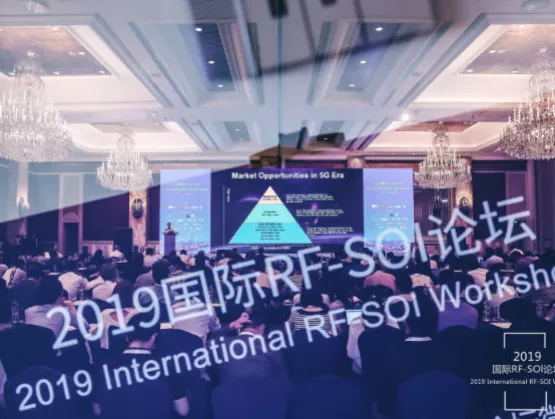
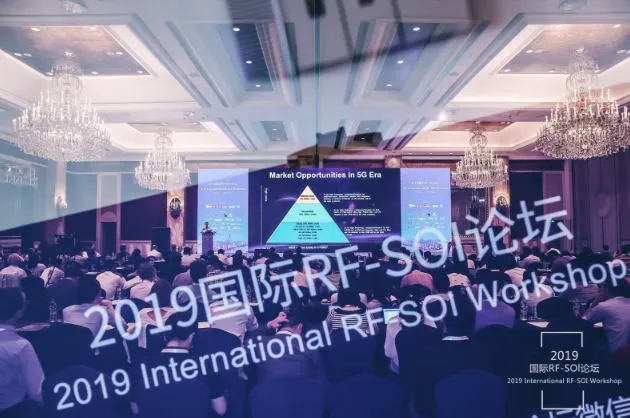
The recent SOI Consortium’s FD-SOI and RF-SOI events (Shanghai, September 2019) were record-breakers, with attendance approaching 1000 over the two days. The event was extensively covered in the China tech press, which often cited the opportunities SOI-based technologies offer for technology leadership. Indeed, as SOI Consortium Executive Co-Director Carlos Mazure noted in a follow-up press conference, the SOI technology drivers dovetail perfectly with the semiconductor industry’s top growth drivers*: IoT, 5G/smartphones, AI/ML and automotive. Here are the takeaways he cited from the China events:SOI for AIoT, consumer and automotive: the FD-SOI ecosystem is in place (substrate supply, foundry offering, EDA and design IP). The 1st wave of adoption is ramping at NXP, STMicroelectronics, Sony, Rockchip, Synaptics, Renesas and more Fast followers are lining up, with the number of tape-outs increasing at Samsung and GlobalFoundries SOI for 5G: development is driven by the need for low cost, low latency and high data throughput the SOI ecosystem for 4G/5G technologies is in place with a strong market pull RF-SOI, the reference FEM 4G technology, will extend its benefits to sub-6Ghz: low power consumption, high linearity, low insertion loss, co-integration of RF components. 5G mmWave requirements are addressed by multiple SOI platforms (RF-SOI, PD-SOI and FD-SOI) enabling integrated analog mixed signal solutions at low power consumption. Two RF-SOI luminaries were honored at a post-event dinner sponsored by China wafer purveyor, Simgui. Jim Cable, Chairman and CTO of pSemi, a Murata Company, and Herb Huang, CEO and GM of Ninbo Semiconductor received awards for their contributions to the advancement of RF-SOI (more on this later). There’s an enormous amount to tell you about from the conferences, so this will be the first round-up post of several.Gitae Jeong, SVP, Samsung Electronics (Courtesy: VeriSilicon live.photoplus.cn) But briefly, in his talk entitled, "IoT Platform with FDSOI", the main points made by Gitae Jeong, SVP, Samsung Electronics were: 28FDS is fully mature. It has the same design rules as bulk, has an integrated security key, a wide range of packaging options for IoT, and a design guide that makes back biasing easier and simpler with complete IP solutions. 18FDS development is on track for this year, with 14nm BEOL and a 35% increase in performance, a 55% decrease in power (!) and a 35% decrease in area compared to 28nm. 1st products are now shipping with eMRAM on 28FDS with yields over 90%, operating temperatures have been extended to 125C for automotive, and a 1Gb version has been demo’d. 1st 5G products mmWave products on 28FDS are now available Americo Lemos, SVP, GlobalFoundries (Courtesy: VeriSilicon live.photoplus.cn)In his talk, "Leading Industry Innovation by Differentiated SOI-based Solutions", key takeaways made by Americo Lemos, SVP, GlobalFoundries included:They have leadership in RF-SOI, with over 50 billion chips shipped 22FDX (FD-SOI) is in production. Last year they had 14 tape-outs, this year they had 26 – half of which are for companies in China. By the end of this year they’ll have shipped 100 million good dies to customers, marking the full transition from ramp to volume. In the ecosystem, they’ve got 285 IP titles from providers worldwide, with more announcements coming soon. Work continues on 12FDX – more to come on this. Edge AI is the next growth engine for IoT, combining vision + voice + audio, with China coming in strongly with ultra-low-power design for home connectivity, industrial, personal and medical applications. The RF-SOI day was lead off by the reading a letter from Dr. Xi Wang. The leading proponent of SOI in China for over a decade as head of the Shanghai Academy of Sciences, he’s now the country’s Vice-Minister of Science Technology. Until this year, he’s always had the first keynote at the SOI Consortium events in China, but this time he was in a meeting with the VP of Russia. However, his warm letter confirmed his support for the SOI ecosystem, especially the role of SOI-based technologies for China in the 5G era. Danni Song, China Mobile Project Leader. (Courtesy: Simgui live.photoplus.cn) This was followed by a talk by the ever popular and insightful Project Leader Danni Song of China Mobile, the largest of the operators there. China issued 5G licenses in May 2019 as the country gears up for 5G commerce. By next year, 5G will be deployed in all cities above the prefecture level. For now, it’s all about sub-6GHz. The challenge, she noted, is in power consumption, which is 2-3x that of 4G in base stations and devices. They see two development spaces: one for consumer and one for verticals, and have teamed up with Sprint on a 5GS (S being for Superior) module. They released a basic modem chip and dongle in June, and a smart chip is coming. She suggests people consult the China Mobile white paper on 5GS for more info. We’ll cover the many other presentations over the next few weeks – so stay tuned! --------*as cited in a 2019 CEO survey by KPMG/GSA.
Read More