downloadGroupGroupnoun_press release_995423_000000 copyGroupnoun_Feed_96767_000000Group 19noun_pictures_1817522_000000Member company iconResource item iconStore item iconGroup 19Group 19noun_Photo_2085192_000000 Copynoun_presentation_2096081_000000Group 19Group Copy 7noun_webinar_692730_000000Path
Skip to main content
Default Banner Image

Technology and Trends

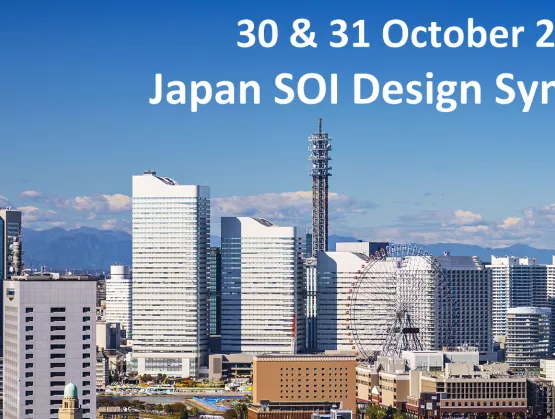
The SOI Consortium’s next annual event in Japan takes place on the 30th and 31st of October in Yokohama. Both days of the SOI Design Symposium will take place in the Yokohama Landmark Tower. The event is complimentary, however pre-registration is required – just follow the link here. Rest assured that in addition to the excellent program, the agenda provides ample time for networking.Wednesday, October 30 -- RF and ULP on SOI: IP ProductsOctober 30th showcases industry leaders with ULP IoT applications by NXP, and opportunities in the RF space by STMicroelectronics and Toshiba. The strong development of the design and EDA platform is discussed by ARM, Silvaco, Attopsemi and Dolphin. GlobalFoundries will present on their predictive reliability platform for RF, while Incize discusses the criticality of RF characterization and Secure-IC addresses to important topic of IC security.The day finishes with an overview of the SOI ecosystem by the SOI Industry Consortium. (See the full agenda here.)Thursday, October 31st -- SOI Enabling Photonics and Power InnovationWe start the day with two keynotes on High Voltage SOI electronics for automotive by NXP followed by Soitec on engineered substrate solutions. The Silvaco overview on RF modeling and SOI NB-IoT by SITRI promises to be very interesting. Then the day will offer a deep dive into Photonics touching applications with Cisco, foundry offerings with TowerJazz and GlobalFoundries, EDA with Cadence, and advanced SOI Photonic solutions by Leti-CEA. An ecosystem and market outlook by Soitec wraps-up the day. (See the full agenda here.)We look forward to seeing you there!
Read More
The ESG MarketElectronic Gases represents the largest percentage of the spend on chemicals and materials by semiconductor producers. Taken altogether, the spend on Electronic Gases was almost $6 billion worldwide in 2018. Recent critical shortages of key gases have impacted the industry tremendously and, in some cases, has also limited output. The Electronic Specialty Gas (ESG) market, while a small segment of the global gas market, is one of the most complex and least understood market segments of the electronic chemicals and materials landscape. Linx Consulting estimates that the ESG market totaled nearly $3.4 billion in 2018, up from roughly $3.1 billion in 2017 with a growth rate of 10 percent last year. Growth was driven by rising demand and the increasing use of higher-value products in applications such as etch and specialized deposition. ESGs are used in the manufacture of electronic devices that are subsequently assembled in systems and in a variety of processes such as film deposition, film etching, substrate doping and chamber cleaning. The devices – semiconductors, LEDs, and displays – are processed on larger substrates, and then separated before assembly.Key differentiators for ESGs are not only the technical complexity of the gases and mixtures supplied, but the purity and consistency demands placed on the gas supply. Product purity and consistency, often at the limits of analytical capability, must go hand in hand with rigorous application of statistical process control in manufacturing and absolute delivery reliability. ESGs include fluorocarbons, hydrocarbons, deposition precursors, dopants, corrosives (halides/hydrates) and rare gas mixtures.The key end-use markets for ESGs include semiconductor wafer fabrication, flat panel display (FPD) manufacture, compound semiconductors / LEDs production and Photovoltaics cell manufacture, as illustrated below in Figure 1. Figure 1 - ESG Market by End-Use Applications Source: Linx Consulting The semiconductor industry is the largest user of ESGs and has the most diverse ESG requirements in terms of products, package sizes and purity requirements. The semiconductor industry uses all the different specialty gases produced. Purities are typically 4N and above and the packages can range from small cylinders to tonner/Y packages to tube trailers. The ESG market is global, with key demand centers in China, Europe, Japan, Korea, Southeast Asia, Taiwan and the United States. The Flat Panel Display (FPD) community is the second largest user group for ESGs. However, the breadth of ESG products used in FPD fabs is much more limited than in the semiconductor industry. Key product applications include silicon sources, dopants, oxidation and nitridation sources, chamber cleans, and etchants. ESG use has grown with the development of the FPD industry across both TFT-LCD segment and AMOLED segment, with many large end users in Korea, China, Taiwan, and Japan. Korea and China boast large ESG supply infrastructures geared towards serving the FPD industry. Early on, these countries targeted the development of the FPD industry and the associated value chain, so there has been large-scale development of required ESG products such as NF3 and silicon precursors. When we review the markets in aggregate, coupled with the geographic intensity of the electronics industry in Asia, it is unsurprising that a vast majority of the ESG market would be in Asia, as illustrated in Figure 2, below.Figure 2 - ESG Market by Key RegionSource: Linx Consulting Key ApplicationsThe applications for ESGs can be readily tied to major thin film fab processes that are commonly used in the microelectronics industry. The processes include dielectric and metal etch, dielectric deposition, metal deposition such as titanium or tungsten, deposition of non-silicon materials such as hard masks etc., dopants for thermal diffusion methods and ion implantation, reactor chamber cleaning; as well as some other specialty applications. This is illustrated in Figure 3 below. Figure 3 - Applications for ESGsSource: Linx Consulting Clearly there is a close tie-in for ESGs into thin film deposition (CVD and chamber cleaning) and etch processing. In the future, the industry will increase its use of ESGs with novel deposition and etch processes. New applications may include lower temperature deposition, high deposition rate processes, flowable CVD films for high aspect ratio structures, and high selectivity deep etching with greater uniformity. All these processes improve device performance and will rely on ESGs and rare gases as enablers. Outlook for ESGsOverall, we believe that the ESG market will grow at a compound rate of about 6 percent over the next five years. Currently the largest six suppliers – Versum Materials, SK Materials, MTG/TNS, Air Liquide, Linde/Praxair, and KDK – control about half of the overall market, with about 50 suppliers accounting for the other half of the market. We anticipate that as the industry continues to grow, we will continue to see changes in the supplier base with both continuing consolidation and new regional suppliers emerging as unique technologies and value-added capabilities enter the market.For More InformationThis article is based on insights and analysis from Linx Consulting’s Electronic Specialty Gas report. The annual report is considered the leading industry source for comprehensive information about demand for specialty gases used in the electronics industry. We track more than 60 different ESG products used across the global semiconductor, flat panel display, solar and compound semiconductor industries.For more information, please contact [email protected], or Mike Corbett at +1 973 698 2331, Mark Thirsk at +617 273 8837, or Andy Tuan + 886 952 111222, or visit Linx Consulting.Interested in engaging with the electronic materials supply chain? The Electronic Materials Group (EMG) is a SEMI technology community representing SEMI member companies that provide substrates, polymers, metals, organic and inorganic materials, chemicals, and gases developed for electronics manufacturing. Linx Consulting has been a longtime member and supporter of the SEMI Electronic Materials Group.Mike Corbett is managing partner and Andy Tuan is managing director, Asia, at Linx Consulting.
Read More
The 45th (yes!) IEEE SOI Conference takes place 14-17 October 2019 in San Jose. Now called S3S –since it also covers 3D and subthreshold – it’s a networking event par excellence: a unique opportunity to meet firsthand the movers and shakers in the SOI ecosystem and the giants of R D. As always, it has a strong technical program you won’t want to miss. Plus this year there’s a full-day short course dedicated to FD-SOI design, and half-day tutorial on RF design. Get all the details and registration info at http://s3sconference.org/.The SOI Consortium’s own Executive Co-director Jon Cheek of NXP is one of the keynoters. In fact the consortium membership is extremely present at this event, with over half our member organizations having a hand in it. There’s a plenary talk by GF’s CTO/VP Subramani Kengeri, keynotes by ST Fellow Andreia Cathelin and NXP Fellow Rob Cosaro, and invited talks from Arm, Samsung and Dolphin Design, for example. And this year’s General Chair is Incize CEO Mostafa Emam. Focus Sessions #12 and 13 are all about FDSOI Platforms and Products, with invited speakers from Renesas, NXP, ST, ARM, GF, Huali and Dolphin Design, while focus Session #2 is all about RF-SOI. Here’s the agenda for the FD-SOI Design short course (which takes place on Thursday, 17 October):Short Course Opening and Welcome Philippe Flatresse, Business Development Marketing Director, Dolphin DesignGLOBALFOUNDRIES 22FDXTM Technology and Body Bias Compensation to Enable New Design Optimization Strategies Joerg Winkler, Fellow Design Engineer, GLOBALFOUNDRIESEmbedded Flash Memory Technologies and Applications in Advanced Nodes Memories Koji Nii, Vice President, Global Marketing Sales, Floadia CorporationEnabling the Adaptive Body Bias in Modern IoT Applications Vincent Huard, CTO, Dolphin DesignSoC Design Realization with Adaptive Body Bias Kripa Venkatachalam, IC Design Practice Director, Mentor Graphics Didier Roland, Application Engineers Manager, Mentor GraphicsAnalog Design Techniques for Microprocessors in FD-SOI: Power-Management, PVT Monitoring and Data Conversion Edevaldo Pereira Da Silva Junior, Senior Principal Engineer, NXP Semiconductors MPU/MCU R DLow Power Solutions for SoC Architectures Antonio Pullini, Senior Hardware Designer, GreenWaves TechnologiesSOI to RF Sidina Wane, CEO, eV-technologiesIf you know the way to San Jose, you'll want to be at S3S 2019, for sure!
Read More
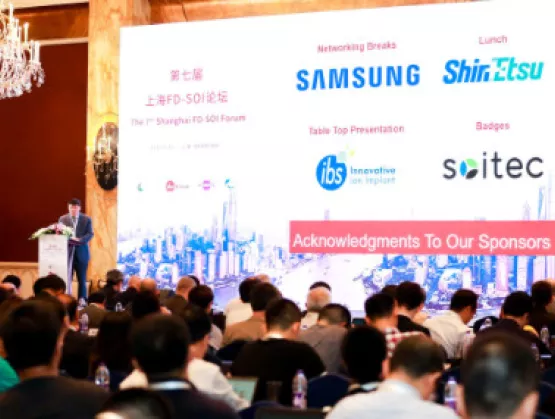
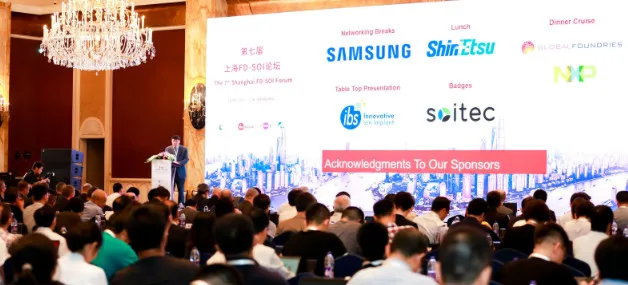
The recent SOI Consortium’s FD-SOI and RF-SOI events (Shanghai, September 2019) were record-breakers, with attendance approaching 1000 over the two days. The event was extensively covered in the China tech press, which often cited the opportunities SOI-based technologies offer for technology leadership. Indeed, as SOI Consortium Executive Co-Director Carlos Mazure noted in a follow-up press conference, the SOI technology drivers dovetail perfectly with the semiconductor industry’s top growth drivers*: IoT, 5G/smartphones, AI/ML and automotive. Here are the takeaways he cited from the China events:SOI for AIoT, consumer and automotive: the FD-SOI ecosystem is in place (substrate supply, foundry offering, EDA and design IP). The 1st wave of adoption is ramping at NXP, STMicroelectronics, Sony, Rockchip, Synaptics, Renesas and more Fast followers are lining up, with the number of tape-outs increasing at Samsung and GlobalFoundries SOI for 5G: development is driven by the need for low cost, low latency and high data throughput the SOI ecosystem for 4G/5G technologies is in place with a strong market pull RF-SOI, the reference FEM 4G technology, will extend its benefits to sub-6Ghz: low power consumption, high linearity, low insertion loss, co-integration of RF components. 5G mmWave requirements are addressed by multiple SOI platforms (RF-SOI, PD-SOI and FD-SOI) enabling integrated analog mixed signal solutions at low power consumption. Two RF-SOI luminaries were honored at a post-event dinner sponsored by China wafer purveyor, Simgui. Jim Cable, Chairman and CTO of pSemi, a Murata Company, and Herb Huang, CEO and GM of Ninbo Semiconductor received awards for their contributions to the advancement of RF-SOI (more on this later). There’s an enormous amount to tell you about from the conferences, so this will be the first round-up post of several.Gitae Jeong, SVP, Samsung Electronics (Courtesy: VeriSilicon live.photoplus.cn) But briefly, in his talk entitled, "IoT Platform with FDSOI", the main points made by Gitae Jeong, SVP, Samsung Electronics were: 28FDS is fully mature. It has the same design rules as bulk, has an integrated security key, a wide range of packaging options for IoT, and a design guide that makes back biasing easier and simpler with complete IP solutions. 18FDS development is on track for this year, with 14nm BEOL and a 35% increase in performance, a 55% decrease in power (!) and a 35% decrease in area compared to 28nm. 1st products are now shipping with eMRAM on 28FDS with yields over 90%, operating temperatures have been extended to 125C for automotive, and a 1Gb version has been demo’d. 1st 5G products mmWave products on 28FDS are now available Americo Lemos, SVP, GlobalFoundries (Courtesy: VeriSilicon live.photoplus.cn)In his talk, "Leading Industry Innovation by Differentiated SOI-based Solutions", key takeaways made by Americo Lemos, SVP, GlobalFoundries included:They have leadership in RF-SOI, with over 50 billion chips shipped 22FDX (FD-SOI) is in production. Last year they had 14 tape-outs, this year they had 26 – half of which are for companies in China. By the end of this year they’ll have shipped 100 million good dies to customers, marking the full transition from ramp to volume. In the ecosystem, they’ve got 285 IP titles from providers worldwide, with more announcements coming soon. Work continues on 12FDX – more to come on this. Edge AI is the next growth engine for IoT, combining vision + voice + audio, with China coming in strongly with ultra-low-power design for home connectivity, industrial, personal and medical applications. The RF-SOI day was lead off by the reading a letter from Dr. Xi Wang. The leading proponent of SOI in China for over a decade as head of the Shanghai Academy of Sciences, he’s now the country’s Vice-Minister of Science Technology. Until this year, he’s always had the first keynote at the SOI Consortium events in China, but this time he was in a meeting with the VP of Russia. However, his warm letter confirmed his support for the SOI ecosystem, especially the role of SOI-based technologies for China in the 5G era. Danni Song, China Mobile Project Leader. (Courtesy: Simgui live.photoplus.cn) This was followed by a talk by the ever popular and insightful Project Leader Danni Song of China Mobile, the largest of the operators there. China issued 5G licenses in May 2019 as the country gears up for 5G commerce. By next year, 5G will be deployed in all cities above the prefecture level. For now, it’s all about sub-6GHz. The challenge, she noted, is in power consumption, which is 2-3x that of 4G in base stations and devices. They see two development spaces: one for consumer and one for verticals, and have teamed up with Sprint on a 5GS (S being for Superior) module. They released a basic modem chip and dongle in June, and a smart chip is coming. She suggests people consult the China Mobile white paper on 5GS for more info. We’ll cover the many other presentations over the next few weeks – so stay tuned! --------*as cited in a 2019 CEO survey by KPMG/GSA.
Read More
Smart cities of the digital future will employ systems enabled by MEMS and sensors in wide-ranging ways. From wearable sensors that monitor personal health and wellness and environmental sensors that assess air quality to autonomous micro-transit systems that are efficient and environmentally sustainable, MEMS and sensors are critically important to living in smart societies.SEMI’s Nishita Rao spoke with Albert P. Pisano, Professor and Dean at UC San Diego Jacobs School of Engineering ahead of his October 24 closing keynote presentation, MEMS and Systems in the Digital Future, at MEMS Sensors Executive Congress, October 22-24, 2019, at Coronado Island Marriott Resort Spa in Coronado, Calif.Join us at MSEC to meet Albert Pisano and other industry influencers driving MEMS and sensors innovations. Registration is open.SEMI: What are some of the most important large-scale system needs of the digital future – and why is MEMS so important in meeting these needs?Pisano: My vision of the digital future is an optimistic one, in which technology is used to assist people in their pursuit of health and happiness. In that digital future, I expect disruption in several key industries that depend on large-scale systems enabled by MEMS – healthcare, retail, transportation and education.Driving these disruptive forces across all four industries is the demand for more relevant real-time information, collected via inconspicuous technologies. Small in size and weight and low in power consumption, what technology other than MEMS delivers these combined attributes?SEMI: How do you envision MEMS in smart cities? What applications and devices will change the human experience in cities?Pisano: Smart cities, by my definition, are cities in which the four basic industries – healthcare, retail, transportation, and education – are implemented in their disrupted form.Take healthcare, for example. The adoption of MEMS chemical sensors in a wearable format will revolutionize human health monitoring. These sensors will not only improve individual health but also mitigate the spread of disease.In transportation, the coming of semi- or fully autonomous vehicles (as well as the general upgrading of all mass-transit vehicles) will give commuters additional time to pursue their interests while en route. A coming revolution of data connectivity to all vehicles will spur the rise of work, study and entertainment options available to people in transit. MEMS in the communication channels as well as in the vehicles will play an essential role in streaming personal data to travelers.SEMI: Could you help us visualize a disruptive application in one of these industries, say healthcare? Pisano: Healthcare is a particularly compelling area because MEMS offers life-enhancing, even life-saving, functionality that will significantly improve the quality of life of some people. MEMS allows us to design consumable wearable sensors that allow individuals to unobtrusively and non-invasively obtain biochemical data, such as potassium, sodium and sugar levels in the body fluid, as well as metabolic indicators such as lactic acid. Further, MEMS-based devices can perform EKG and EEG functions as well as monitor blood pressure in deep body veins in non-medical settings. This higher level of medical-grade data (not just casual data such as an approximate number of steps taken) will allow departments of public health to identify the early onset of individual disease.SEMI: What new forms of wireless communications will affect MEMS-enabled systems in the digital future?Pisano: Most visions of a digital future include wireless communication, but as the spectrum becomes ever more crowded, and as the need for unregulated, negotiated spectrum access increases, we will experience greater pressure to consider other forms of communication, such as inductive, optical and sonic. MEMS sensors are the only technical alternative to these other forms of communication in that they provide acceptable SWAP (size, weight and power). This will spawn battery-powered solutions with significant operational time. A good example is wireless telemetry of human physiological data from the skin. Only MEMS technology can reduce sensor-consumed power to below one microwatt. At this low level, energy harvest from the skin itself is sufficient to power the sensor!SEMI: How is the UCSD campus a living laboratory for intelligent sensing devices and systems?Pisano: Progressive universities, such as the University of California San Diego, understand that they are microcosms of small cities. They have populations during the day of approximately 65,000 people, a myriad of vehicles and a concentrated group of people.Many functions on campus mirror that of a small city. Lecture halls are similar to movie theatres. Student stores and centers are similar to shopping malls. Student residence halls are similar to apartment houses. Many campuses have medical centers, with their own emergency health services and hospitals. As a microcosm of a small city, it is only natural to think of the university as a wonderful living laboratory that allows us to test out new technologies at scale.Clearly, autonomous transit and wearable sensors have potential for uptake in this community. And that’s just scratching the surface. Package delivery (dinner to a dorm room, perhaps?), parking-spot location assistance, and even location-independent data streaming for classroom lectures are just a few possible examples of applications that we can test in a university environment.SEMI: How can the MEMS and sensors industry help researchers and innovators realize the digital future?Pisano: As a MEMS practitioner for almost 30 years, I fully understand the need to focus at the device level to ensure that the MEMS design meets SWAP and other requirements. But I truly believe that MEMS designers must learn to think more about subsystem and system issues, since the future of MEMS will be won by those who cannot only design the device right, but who can design the right device. By taking a much more market- and system-oriented approach to MEMS design thinking, companies in this industry will realize greater success.Register now to connect with Albert Pisano at MSEC and visit his UCSD page for more information.Albert P. Pisano, Ph.D., began his service as Dean of the Jacobs School of Engineering in 2013. He holds the Walter J. Zable Chair in Engineering and serves on the faculty of the departments of mechanical and aerospace engineering and of electrical and computer engineering. Pisano is an elected member of the National Academy of Engineering for contributions to the design, fabrication, commercialization, and educational aspects of MEMS, and is a Fellow of the ASME.Prior to his appointment at UCSD, Pisano served on the UC Berkeley faculty for 30 years, where he held the FANUC Endowed Chair of Mechanical Systems. Pisano was the senior co-director of the Berkeley Sensor Actuator Center (an NSF Industry-University Cooperative Research Center), director of the Electronics Research Laboratory (UC Berkeley’s largest organized research unit), and faculty head of the Program Office for Operational Excellence, among other leadership positions. From 1997 to 1999, Pisano was a program manager for the MEMS Program at the Defense Advanced Research Projects Agency (DARPA). Pisano held several research positions prior to joining academia.Pisano is a co-inventor listed on more than 36 patents in MEMS and has co-authored more than 400 archival publications. Pisano also is a co-founder of 10 startup companies in the areas of transdermal drug delivery, transvascular drug delivery, sensorized catheters, MEMS manufacturing equipment, MEMS RF devices and MEMS motion sensors. Visit his faculty page to learn more about his research interests.MEMS Sensors Industry Group, a SEMI technology community representing the global MEMS and sensors supply chain, hosts the annual MEMS Sensors Executive Congress. To learn how MSIG enables professionals in the MEMS and sensors industry to innovate, address common challenges and accelerate business results, visit us today.Nishita Rao is marketing manager for technology communities at SEMI.
Read More
Software for sensors has evolved from simply reading out and evaluating sensor data to making intelligent decisions based on that data, a transformation enabled by new software synthesis and artificial intelligence (AI) technologies. Together, they make consumer devices smarter, dramatically improving the user experience through greater interactivity and higher levels of automated personalization.SEMI’s Nishita Rao spoke with Stefan Finkbeiner, CEO and General Manager at Bosch Sensortec, who will explore the topic in his October 23 keynote, How Software Makes MEMS Sensors into Smart Systems, at MEMS Sensors Executive Congress (MSEC), October 22-24, 2019, at the Coronado Island Marriott Resort Spa in Coronado, Calif.Join us at MSEC to meet Bosch Sensortec and other industry influencers driving MEMS and sensors innovations. Registration is open.SEMI: What is the relationship between MEMS sensors suppliers and specialized software synthesis providers?Finkbeiner: Collaboration is a key driver for innovation in sensor software. There are already several fruitful collaborations between MEMS sensors suppliers and specialized software providers, which are mostly startups. Collaborations with providers of simulation and evaluation tools as well as with well-known universities in the field of AI are starting to show positive results.Domain expertise is also critical for developing smart sensor software, making it essential to future sensing solutions.SEMI: How does software synthesis relate to sensor fusion?Finkbeiner: Put simply, software synthesis refers to ways of automatically generating code based on domain knowledge and given constraints for specific product versions. Sensor fusion combines sensor data from different kinds of sources in order to improve the results.Software synthesis techniques enable a level of automation that creates new opportunities for more complex sensor fusion, which was formerly out of reach when using traditional approaches that involved, for example, big data and a large number of potential data sources.The traditional sensor fusion toolset can now be further extended by machine learning techniques that help to determine which sources are more reliable than others and how to combine data streams. This topic and others are still active areas of research. A wearable device with motion detection is a case in point. With unsupervised learning, the device could identify short versus long cyclically repeating motions and treat them differently from other types of motion. SEMI: How is the new software synthesis-AI approach different from previous approaches? To what degree will the new approach open up new applications?Finkbeiner: Traditionally, technology companies have used cloud computing for data storage and machine learning on aggregated user data. In that model, MEMS sensors generate large amounts of data that power-hungry hardware (such as digital signal processors) must process. In addition, machine learning generally requires lots of power-hungry cloud nodes with GPUs. This model, however, is not the best option for many users. Just think for a moment about all the scenarios in battery-powered devices where frequent battery charging frustrates users.Leveraging both software synthesis and AI techniques in MEMS sensors is therefore a very promising approach because it supports improved recognition and learning inside the sensor. This means that user-specific data isn’t transferred to the cloud. Instead, it remains private inside the sensor. This improves existing applications that learn all the time and opens up new opportunities for applications such as smart clothing, predicting a product’s lifespan, detecting whether a window or door is open or closed – all without server connectivity.SEMI: How will such software adapt to the individual user?Finkbeiner: Devices will offer much more personalized information to users. For example, optimizing a step counter to match the height, age or Body Mass Index (BMI) of a user – or to adapt to a user’s environment (is the person running on a beach, hiking up a mountain or strolling in a park?) – will provide more accurate information on calories burned. Not every step is created equal, and both pre-loaded personal data as well as real-world environmental data will prove that some steps consume a lot more energy than others.SEMI: What would you like MSEC attendees to take away from your presentation?Finkbeiner: I want to introduce the journey of software development by illustrating specific use case examples. I would also like to offer my outlook on the role of software and AI in MEMS sensors to help increase their adoption in current and new applications. Ultimately, I think it’s important to raise awareness in our industry on why we should embrace the use of software and AI.Connect with Stefan Finkbeiner at MSEC or via LinkedIn. Get more information on Bosch Sensortec products and solutions online.Stefan Finkbeiner, Ph.D., CEO and General Manager, Bosch Sensortec, was appointed CEO of Bosch Sensortec in 2012. He joined the Robert Bosch GmbH in 1995 and has been working in different positions related to the research, development, manufacturing, and marketing of sensors for more than 20 years. His senior positions at Bosch have included director of marketing for sensors, director of corporate research in microsystems technology, and vice president of engineering for sensors.Finkbeiner received his Diploma in Physics from the University of Karlsruhe in 1992 before studying at the Max-Planck-Institute in Stuttgart, where he earned his Ph.D. in Physics in 1995. In 2015, Finkbeiner received the prestigious lifetime achievement award from the MEMS Sensors Industry Group (MSIG), a SEMI technology community.Bosch Sensortec is a member of MEMS Sensors Industry Group, the industry association representing the global MEMS and sensors supply chain. To learn more about how MSIG enables professionals in the MEMS and sensors industry to innovate, address common challenges and accelerate business results, visit us today.Nishita Rao is marketing manager for technology communities at SEMI.
Read More